
Nearly one in four houseplants shed buds under stress — a common but reversible response that conserves energy when conditions shift.
If your blooms look healthy yet stall, drop, or never open, this is usually a stress signal, not bad luck. We focus on flowering houseplants and the specific cues that interrupt development.
This short guide previews nine likely reasons: light, temperature, humidity, watering/root stress, nutrients and fertilizer timing, pH or mix issues, pests, disease, and shock from moving or repotting.
The flowering process needs steady conditions. Small changes — a vent blast, a cooler night, or missed watering — can halt momentum. Often one or two targeted fixes restore energy and keep buds progressing.
We’ll include practical checks, fast fixes, and long-term tips to reduce repeat flower drop and help your plants rebound with fuller blooms.
Key Takeaways
- Bud loss is usually a stress response and often reversible.
- Check light, temperature, humidity, and steady watering first.
- Balance nutrients; slow-release feeding is kinder than heavy liquid feeds.
- Inspect for pests or disease and treat quickly to save energy for blooms.
- For details on common triggers and fixes, see this guide to bud drop causes and fixes.
What “flower drop” looks like indoors and when it’s normal
Spotting the difference between aborted buds and finished blooms helps you find the cause fast.
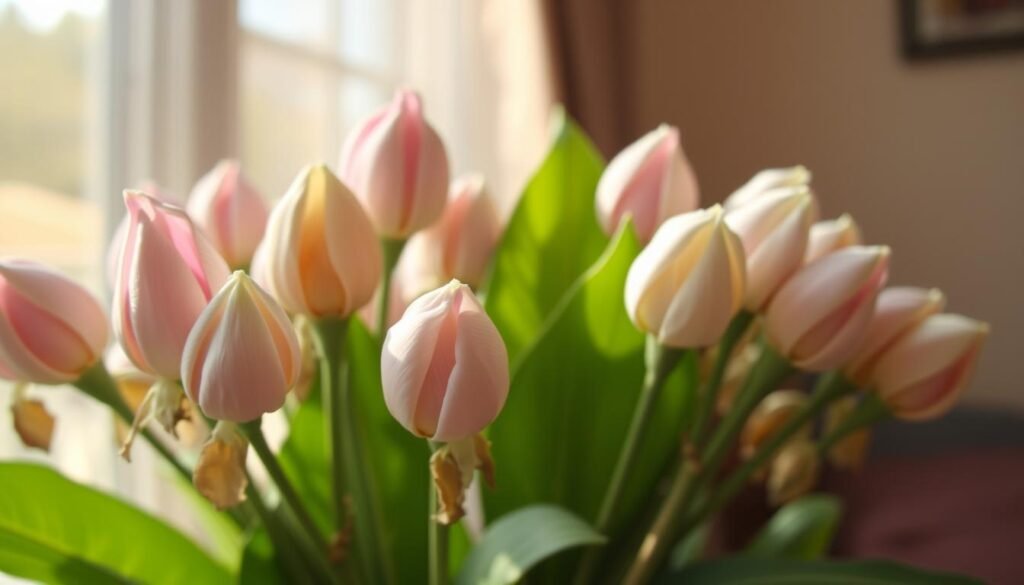
Bud drop (abscission) is when tight buds yellow, shrivel, or pop off with a clean snap before any petals open. This often happens within days of bud formation and usually signals an environmental issue.
Bud drop vs. open blooms dropping
Tight buds that brown or fall are different from open blooms that age and fall after a short display. Open blooms usually drop after a few days or weeks, and that is part of the natural cycle.
Normal shedding vs. a stress signal
Normal shedding looks steady: older blooms fall while new buds form and leaves stay firm. Growth continues and overall vigor stays steady.
Stress patterns show clusters of buds aborting, repeated losses, curled or yellowing leaves, and slowed growth. These are strong signs to check light, temperature, humidity, or pests.
- Rule of thumb: One or two dropped blooms can be normal.
- Repeated bud loss is a clear cue to investigate conditions and address the likely reasons.
- Note timing: early drop points to light, temp, or humidity; late drop points to pests, disease, or nutrition.
| Symptom | Timing | Likely cause | Quick check |
|---|---|---|---|
| Tight buds yellow/shrivel | Days after forming | Light, temp, humidity stress | Scan exposure and vents |
| Multiple buds drop | Any stage | Pests, disease, nutrition | Inspect buds and undersides |
| Open blooms fall after weeks | Days–weeks | Normal aging | Watch for new bud set |
flowers falling off indoor plant why: quick diagnosis before you change anything
Before you alter light, water, or feed, pause and look closely. A short inspection often reveals whether the issue is environmental, pests, or nutrition. Making multiple changes at once can add stress and hide the real problem.
Check the timing of the drop. Buds that abort within days usually point to lighting, temperature, or low humidity. Buds that fail later often indicate nutrient problems or pests.
Scan buds, petals, and leaves for clues
Look for shriveled buds — that suggests dry air or underwatering. Mushy stems or a sour soil smell points to overwatering and root trouble.
Streaked or blotched petals often mean thrips. Sticky residue signals aphids. Fine webbing shows spider mites. Gray fuzz is a sign of botrytis.
Review recent changes in location, watering, and feeding
List any changes in the last 7–14 days: moved near a window, heater on, AC running, missed watering, new fertilizer, or repotting. These notes help narrow the cause.
“Take photos and notes so you can see if a single fix helps over two weeks.”
- Pause and check before acting.
- Use timing to guide diagnosis.
- Do a quick leaf scan: yellowing between veins hints at nutrient uptake issues; curled edges suggest low humidity.
| Quick check | What to look for | Likely cause |
|---|---|---|
| Timing | Early vs. late bud loss | Environmental vs. pests/nutrition |
| Bud/petal inspection | Shriveled, streaks, sticky | Dry air, thrips, aphids |
| Soil/stem smell | Sour smell, mushy stem | Overwatering, root rot |
Light problems that stop flowering and trigger bud drop
A steady, right-strength light source often decides whether buds make it to full bloom.
Light is fuel for the flowering process. Without enough energy, a plant will conserve resources and shed buds to survive.
Too little light indoors
Low light leads to leggy growth, fewer buds, and small leaves. Buds may stall and then drop before opening.
Too much direct sun through a window
Strong sun through glass creates hot spots. Leaves can scorch and buds can crisp quickly from rapid drying.
Lighting consistency and duration during bloom
Sudden moves from a dim corner to bright sun often trigger abscission. Change placement slowly over several days to avoid shock.
Short winter days in many US homes reduce bloom performance. A timed grow light can restore steady conditions and keep the process moving.
“Treat light like a schedule: regular hours and steady intensity protect developing buds.”
- Placement tip: Bright, indirect light near an east window or filtered south exposure is ideal for many varieties.
- Use supplemental lighting when natural sunlight is weak or days are short.
| Issue | Symptom | Quick fix |
|---|---|---|
| Too little light | Leggy stems, stalled buds | Move to brighter spot or add grow light |
| Too much direct sun | Scorched patches, crisp buds | Filter with sheer curtain or shift slightly back |
| Inconsistent lighting | Sudden bud drop | Adjust exposure gradually over 3–7 days |
Temperature stress and sudden fluctuations
Rapid changes in heat or cold inside a home can stop buds from opening and stress the plant. A steady range of about 65–75°F (18–24°C) suits many flowering houseplants and keeps the flowering process moving.
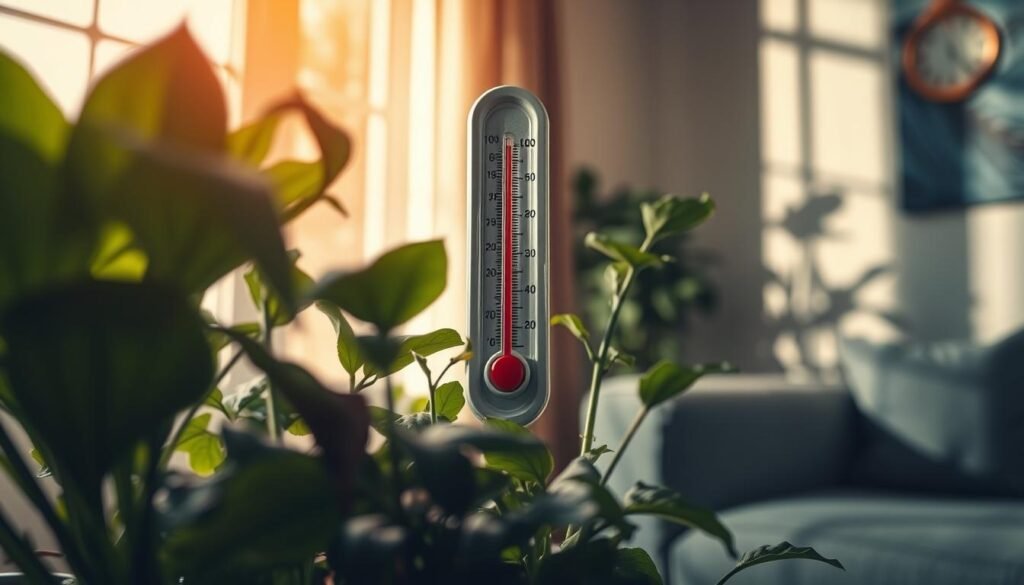
Stable indoor target range
Keep daytime and nighttime temperatures steady rather than shifting sharply. Brief swings are normal, but repeated large swings interrupt development.
Why windows, doors, and vents cause problems
Cold glass at night, hot sun patches midday, and drafts at exterior doors create microclimate swings. HVAC vents and space heaters blow hot, dry air that can trigger bud loss.
Extreme heat or cold that stops blooming
Outdoor data show bloom drop climbs above ~85°F (29°C) or when nights dip below ~55°F (12°C). In a home, those edges will pause the process.
“Stabilizing the spot often restores momentum within a couple of weeks.”
- Symptoms: buds yellow or open small and drop early.
- Fixes: move pots 2–4 feet from drafty windows/doors, redirect vents, and avoid radiators.
- Tip: aim for steady day-to-night changes, not quick swings.
Low humidity and dry air that shrivels buds
Buds are more vulnerable than leaves when indoor air dries out fast. During the budding stage, tiny tissues lose moisture more quickly. That makes them prone to shriveling and dropping before they open.
Common indoor sources of dry air
Winter heating, forced-air HVAC, fireplaces, and vents that blow hot air create low local humidity. These are typical causes in many US homes.
Moisture stress signs on buds and leaves
Look for crispy bud edges, papery buds, browning leaf tips, and blooms that open misshapen or briefly. Those are clear signs of moisture stress.
Simple ways to raise humidity without overwatering soil
- Use a pebble tray: keep the pot above the waterline to avoid soggy soil.
- Group pots together so they create a microclimate.
- Run a small room humidifier nearby, not on the shelf.
- Mist sparingly and monitor soil—don’t increase watering to fix dry air.
Gentle, steady humidity improvements help buds recover without adding root stress.
Watering issues and root stress
Roots need steady moisture to feed developing buds, and extremes interrupt that flow.
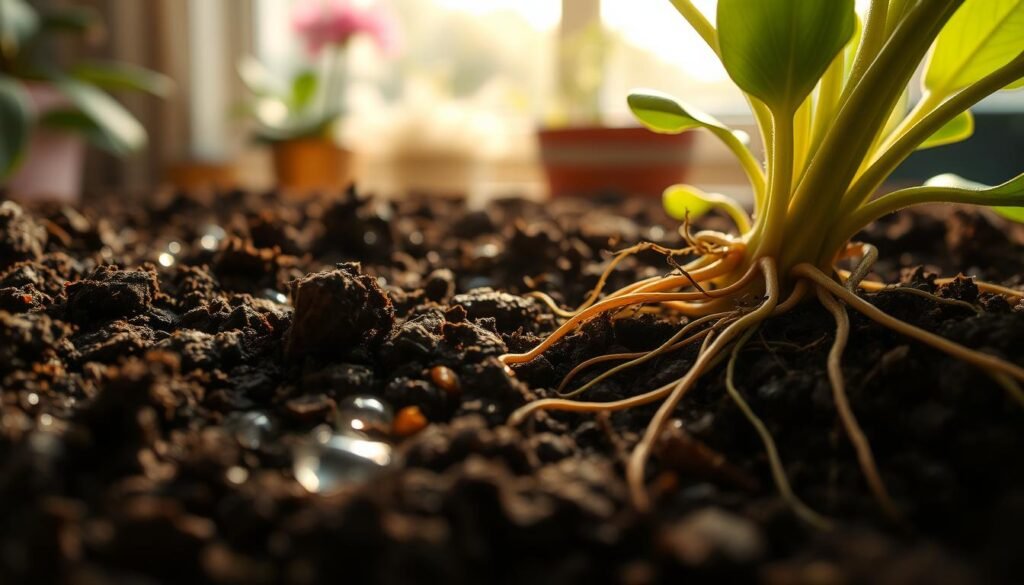
Letting the pot dry too much
When pots dry fully, buds can abort to conserve energy. Common signs include a lightweight pot, soil pulling away from the rim, and droopy leaves that perk after a single drink.
Overwatering and oxygen-starved roots
Soggy mix reduces oxygen and invites root rot. Watch for constantly wet soil, fungus gnats, a musty smell, yellowing leaves, and buds that drop even though the pot stays damp.
How to keep soil evenly moist
Water thoroughly until runoff, then empty the saucer so roots are not sitting in water. Wait until the top inch of soil dries before the next session; adjust that interval by species and pot size.
Drainage checks to prevent repeat flower drop
Confirm a clear drainage hole and a free-draining potting mix that won’t compact. Avoid filling the bottom with stones—this creates a perched water table. Use a breathable pot or add grit to speed flow.
Healthy roots deliver steady uptake; that steady supply keeps buds attached and improves bloom longevity.
Quick tips: check weight before watering, smell the soil for mustiness, and swap to a lighter mix if water pools. These small actions cut root stress and lower the chance of flower drop.
Nutrient problems and fertilizer timing
A plant’s nutrient reserves often decide if developing buds reach full opening. Flowering needs steady fuel. When the root zone lacks key elements, a plant will shed buds to save energy.
Low fertility and missing bloom-support elements
Signs of too little feed include pale leaves, slow growth, and repeated bud failure in older mixes. Refreshing the soil or adding balanced nutrients several weeks before expected bloom helps the plant build reserves.
Overfertilizing and salt stress
Too much fertilizer causes salt buildup and root burn. That creates stress and can make buds drop suddenly. Follow label rates and avoid heavy, late feeding during bud set.
Safer, steady feeding approaches
Many gardeners prefer compost top-dressing or a slow-release option in spring and midsummer. These give steady nutrients and fewer spikes than frequent liquid feeds.
If you suspect overfeeding, flush the pot with water (only if drainage is clear) and pause feeds until the plant stabilizes.
Soil pH, potting mix quality, and nutrient uptake
Roots can have everything they need in the soil but still miss key elements if pH blocks uptake. This is a common reason buds stop developing even when light and water seem right.
How pH affects access to nutrients
Think of pH as a gate that controls how easily nutrients move from the mix into the root system. If the range is wrong for a given species, iron, magnesium, or other elements become locked up.
That means fertilizer may be present yet unavailable. A quick pH check can reveal that hidden problem and point to simple fixes.
When to suspect pH or mix issues
Suspect this when you feed on schedule but the plant shows deficiency signs and keeps dropping buds. Also watch for compacted or hydrophobic mix and poor drainage.
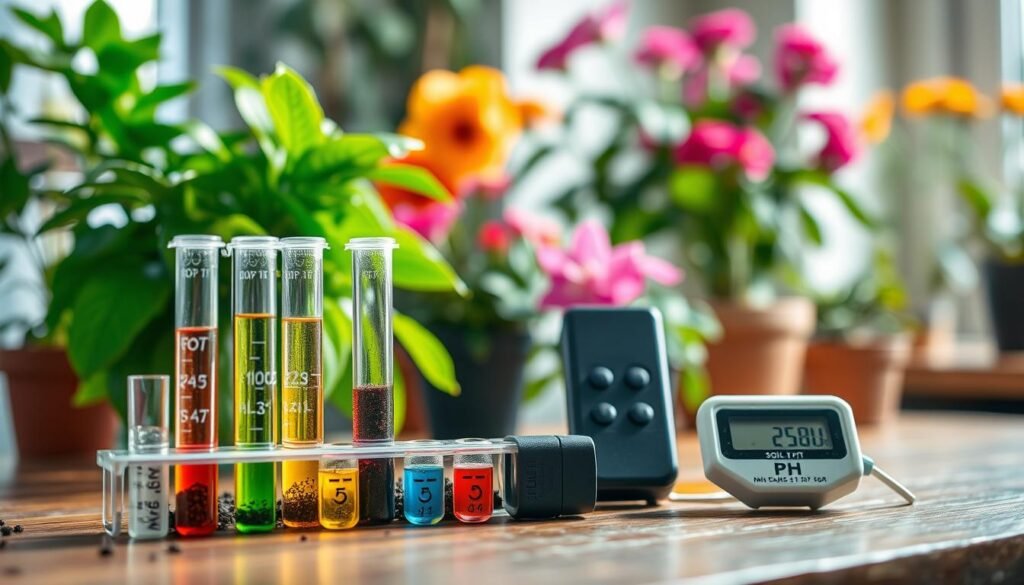
Practical steps for diagnosis and repair
- Test: use an inexpensive pH kit or meter and compare results to the tag or a care guide for your species.
- Refresh vs. amend: refresh the potting mix if it is old, compacted, or drains poorly. Amend only when structure is sound but nutrition needs a boost.
- Go slow: major mix changes can stress roots and extend recovery by several weeks. Re-pot gradually or refresh in stages when possible.
“Match the soil range to the species on the tag, and you’ll often restore steady bloom set without extra feeding.”
Pests and diseases that cause flower and bud drop
Hidden pests and opportunistic fungi are a common cause when buds stop developing and seem to vanish without an obvious reason. These attackers damage tender tissues and the host responds by shedding buds to conserve resources.
Thrips and the classic petal streaking
Thrips feed inside tight buds, so damage shows before you can easily see the insects. Look for blotching and streaks on petals and misshapen blooms.
Because thrips hide in cavities, removal of affected buds and careful rinsing are often needed. Spinosad is a referenced option for control, but read labels for indoor use and reapplication intervals.
Aphids, spider mites, and where to check
Check undersides of leaves, tender tips, and bud clusters. Sticky residue suggests aphids. Fine webbing or speckled leaves points to spider mites.
Isolate the pot, rinse foliage, and prune severe cases. Insecticidal soap or neem can help when used as directed.
Fungal issues that trigger abscission
Gray fuzzy mold (botrytis), a powdery coating, or buds rotting at the base are red flags. Fungi make tissue collapse and prompt the host to drop buds.
Hygiene and low-tox control steps
- Remove and discard fallen petals and infected buds promptly.
- Increase airflow and reduce overcrowding to lower disease risk.
- Rinse or spray with water to dislodge small insects and repeat checks over two weeks.
“Good hygiene and early detection cut losses and let healthy growth recover faster.”
| Issue | Signs | Where to inspect | Low-tox control |
|---|---|---|---|
| Thrips | Petal streaking, blotches | Inside buds, flower petals | Remove buds, rinse, consider spinosad carefully |
| Aphids | Sticky residue, clusters | Leaf undersides, new growth | Rinse, insecticidal soap, isolate |
| Spider mites | Speckling, fine webbing | Leaf undersides, bud clusters | Increase humidity, rinse, miticide if needed |
| Fungal (botrytis/mildew) | Gray mold, powdery coating, rot | Buds and nearby leaves | Prune, improve airflow, reduce humidity |
Repotting, moving, and other indoor “shock” factors
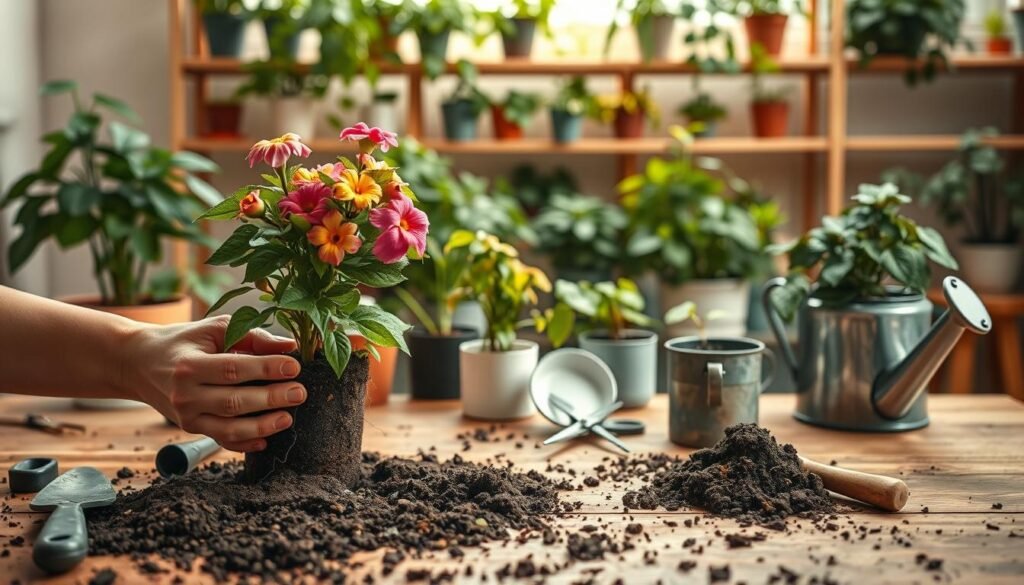
Sometimes a seemingly helpful change forces a plant to reroute energy to settle in. Even positive adjustments — a larger pot or brighter room — can cause brief shock. The root system and shoots must rebalance, and buds are often the first sacrificial tissue.
Transplant shock and disrupted roots
When roots are disturbed, water and nutrient uptake falls. That reduced flow makes the host drop buds to protect core growth.
How to acclimate a specimen to a new spot
- Move in stages: shift a few feet at a time or increase light over several days.
- Aim for steady changes in lighting and temperature to cut stress.
- Use a similar potting mix and avoid major feed or prune right after repotting.
Support and pruning to redirect energy back to blooms
Stake or cage top-heavy stems so heavy clusters don’t snap. Remove damaged or diseased growth to let the plant redirect energy to healthy buds and future flowering.
“Gentle moves and thoughtful support often restore bloom momentum within one to three weeks.”
| Issue | Symptom | Quick action | Timing advice |
|---|---|---|---|
| Repotting shock | Wilting, dropped buds | Water lightly, leave pot slightly shaded | Avoid repotting at peak budding when possible |
| Sudden location change | Stalled buds, leaf yellowing | Return gradually via staged moves | Increase exposure over 3–7 days |
| Top-heavy stems | Snapped branches, lost clusters | Stake or cage; prune excess weight | Install supports before major growth pushes |
| Damaged growth | Brown tips, diseased shoots | Prune and discard affected tissue | Prune after recovery begins to redirect energy |
Conclusion
Most cases of bud loss trace back to a few easy-to-check stresses that you can fix fast. A stressed plant will drop buds or stop making new ones when light, temperature, or humidity swing. Simple stabilizing steps often reverse the trend.
Order of operations: first steady the light and temperature, then raise humidity if needed. Next, check watering and the soil mix. After that, adjust fertilizer and test pH. Finally, inspect for pests and diseases before using stronger treatments.
Quick checklist: a steady spot away from drafts, bright but filtered light, evenly moist (not soggy) soil, gentle feeding, and weekly inspections. Keep notes so you can see what helps.
Be patient. Fix one factor, give the plant time, and most plants resume healthy flowers within weeks. Observe, adjust, and enjoy the recovery—these tips pay off.