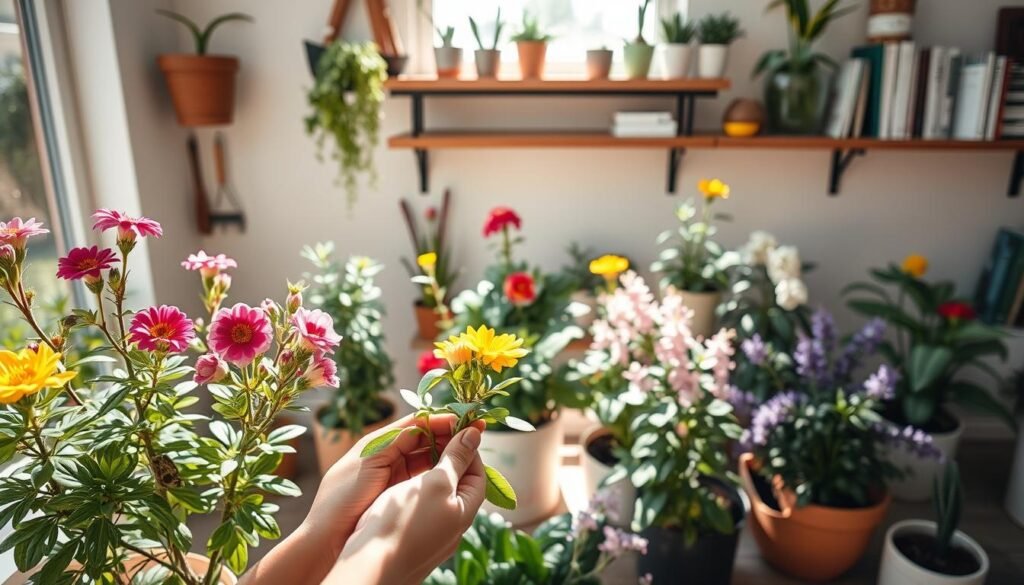
deadheading indoor flowering plants

How to Propagate Indoor Flowering Plants: Simple Methods That Work

Surprising fact: removing spent blooms can boost reblooming rates by up to 40% in many common house varieties.

This short guide explains what that routine looks like when your green companions live on windowsills, shelves, or under grow lights. You’ll learn clear, repeatable steps that save time and bring more flowers now.

Think of the task as a small habit that keeps a plant from wasting energy on seed. When a specimen isn’t finishing seed production, it often sends energy into new growth and more blooms. Some modern varieties are self-cleaning, but a tidy trim still improves appearance.

We’ll cover when to act, where to cut for single blooms, clusters, spikes, and long stalks, and how to handle stems gently. Clean cutting tools and careful handling protect buds and reduce disease.

Key Takeaways

  • Removing spent blooms is a quick, repeatable habit that can increase flowers.
  • Know where to cut: techniques differ for clusters, spikes, and single stems.
  • Some varieties need little or no trimming, but neatness still helps appearance.
  • Use clean tools and gentle handling to protect new buds.
  • This guide focuses on present care for potted and windowsill specimens, not outdoor beds.

What Deadheading Is and Why It Helps Indoor Plants Bloom More

A quick trim of faded heads sends a clear signal to a plant to shift resources into new growth. In simple terms, this routine removes old blooms and any developing seed so the specimen can make more buds.

Deadheading vs. pruning

Quick task vs. shaping and health cuts

Deadheading is targeted and fast. Pruning reshapes and improves long-term health. Use the first to nudge rebloom; save pruning for structural changes.

How removing spent flowers redirects energy

Flowers exist to make seed. Once a seed forms, the plant channels energy into maturation instead of new blooms. Removing that seed structure frees up resources for more color.
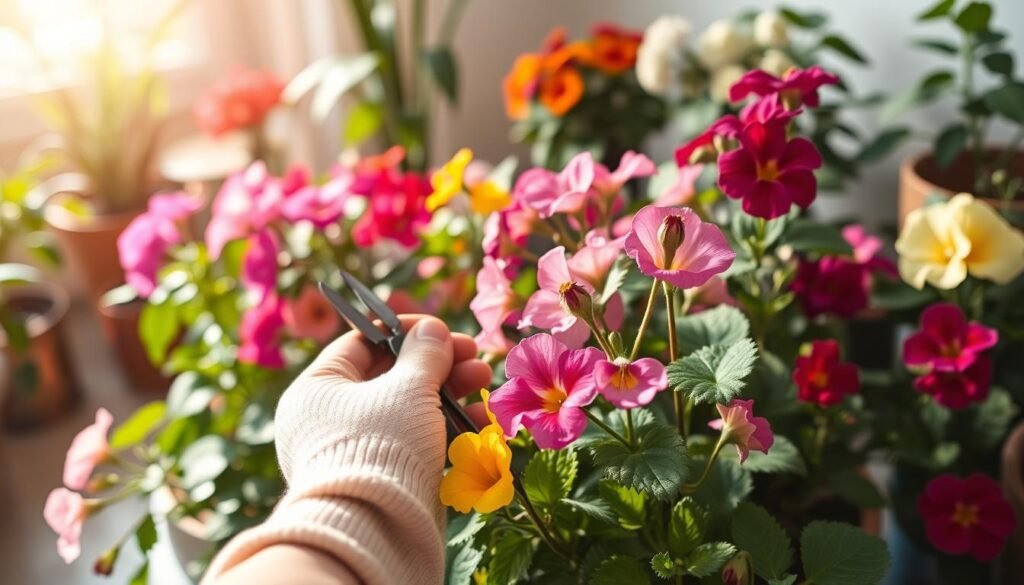
A close-up view of a person gently deadheading vibrant indoor flowering plants, showcasing various blossoms such as petunias and geraniums being trimmed back. The foreground features a pair of hands, wearing modest gardening gloves, carefully removing wilted flowers with pruning shears. In the middle ground, healthy green leaves and colorful blooms radiate life, highlighting the contrast between fresh and faded petals. The background consists of softly diffused natural light pouring in through a nearby window, creating a warm, inviting atmosphere in a cozy indoor setting filled with potted plants. The overall mood conveys a sense of nurturing and care, illustrating the importance of proper plant maintenance for enhanced blooming.

Why pulling petals isn’t enough

Pulling off petals can leave the swollen seed pod behind. If the pod stays, the plant still spends energy on seeds. Be sure to remove the entire spent head or bulge.

When the task is optional

Some sterile or self-cleaning varieties keep producing without routine care. Still, removing spent blooms tidies containers and can boost repeat performance when light and pot resources are limited.

When to Deadhead Indoors for the Best Results

Watch faded blooms closely: timely removal keeps a container tidy and encourages new buds.
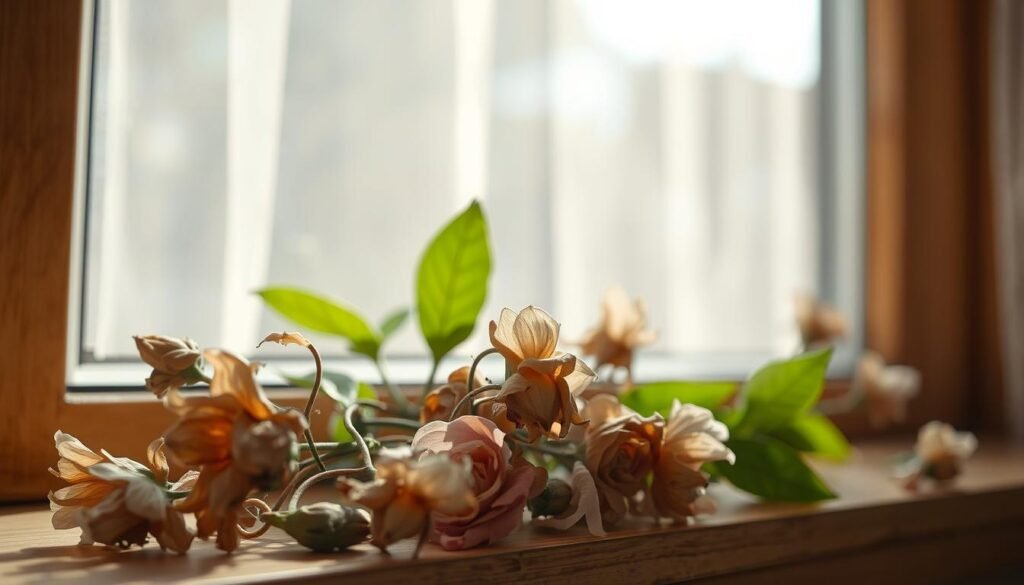
A close-up view of spent flowering plants, showcasing wilted petals and fading colors, resting on a wooden windowsill. In the foreground, dried blossoms in shades of brown and soft pink, their edges curling, create a sense of fragility. The middle ground features a few green leaves, still vibrant and healthy, hinting at the potential for new growth. In the background, soft natural light filters through sheer curtains, casting a gentle glow and creating delicate shadows. The atmosphere is tranquil and contemplative, evoking a feeling of care and attention towards plant maintenance. Shot with a 50mm lens, with a shallow depth of field to emphasize the detail of the spent flowers while softly blurring the background for a painterly effect.

On-time checks mean trimming when a flower looks scruffy or begins to fade — not waiting until a pot is full of brown heads. For heavy bloomers, this can be a daily task. For most, a weekly pass works well. Slow bloomers can be handled as needed.

Seasonal cues that still matter

Shorter days and lower light slow recovery. In winter, cut back gently and expect slower growth. In spring and summer, brighter windows and longer days speed the return of new buds and a faster bloom cycle.

  • If you spot a seed pod forming, prioritize removing it promptly.
  • Missing a few days usually won’t harm flowering, but regular checks reduce seed set.
  • Consistent timing also prevents mess from dropped petals on shelves.
Type Check frequency Typical recovery Best season
Heavy bloomers Daily (days) Fast (new growth in a week) spring / summer
Most house varieties Weekly (week) Moderate (weeks) spring / summer
Slow bloomers As needed Slow (long season) season-dependent

Simple rule: if a flower is only slightly faded, wait until your next check. If a seed bulge appears, remove spent heads right away to keep energy focused on new growth.

Deadheading Indoor Flowering Plants Step-by-Step

A precise snip can turn a tired stalk into a source of new buds. Start by choosing the right tool for the job.

Tools to use: fingers work for soft stems. Use snips or scissors for precision. Reach for secateurs for thicker stems and shears for larger tidy-ups.

Where to cut: follow the spent bloom down the stem and cut just above the next leaf, visible bud, or side shoot. This leaves a clean node that will push fresh growth.
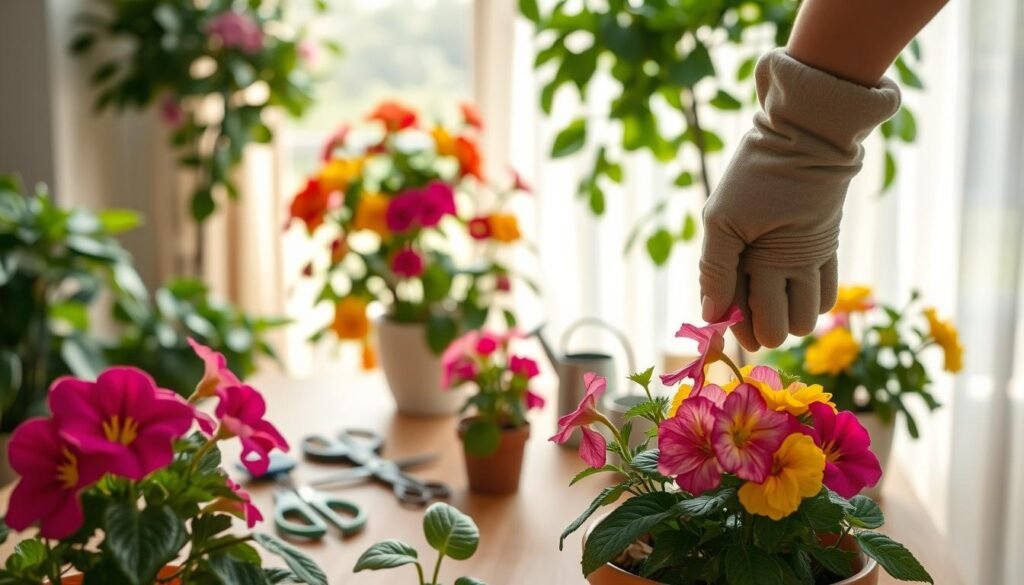
A close-up scene of a person gently deadheading indoor flowering plants, focusing on vibrant blooms like petunias and geraniums. The foreground features a well-manicured potted plant, with spent flowers being carefully pinched off by a hand wearing garden gloves. The colors of the petals vary from deep pinks to bright yellows. In the middle ground, a wooden table is adorned with gardening tools such as scissors, a small pot, and a watering can. The background showcases a softly lit room filled with lush green foliage and some sunlight filtering through sheer curtains, creating a warm and inviting atmosphere. The image should have a soft focus on the person’s hand to emphasize the delicate action of deadheading, highlighting the nurturing aspect of plant care.

Short stems vs. long stalks

For short stems, remove only the spent bloom or seed pod. For long stalks, cut the entire flower stalk as low as possible without harming surrounding leaves.

Spikes and clusters

Remove individual faded flowers to keep the head tidy. Once the final flower fades, make a finishing cut at the base of the spike or cluster.

  • Keep blades clean for crisp cuts and faster healing.
  • Angle cuts so stubs are less visible and the pot looks natural.
  • Support the stem with one hand to protect nearby buds when you cut.
  • For petal-heavy blooms, cup the flower as you cut to stop mess.
Scenario Tool Cut location
Soft stems Fingers / snips Above next leaf or bud
Thick stemmed Scissors / secateurs Near base, clear of leaves
Spikes & clusters Snips / shears Individual flowers, then base of head

Success check: no seed pod remains and a tidy node is left to push new growth. For more care tips, see our care tips.

Plant-by-Plant Deadheading Techniques for Common Blooming Houseplants

Some compact bloomers need a quick pinch; others do better with a tidy midseason cut to reset growth.
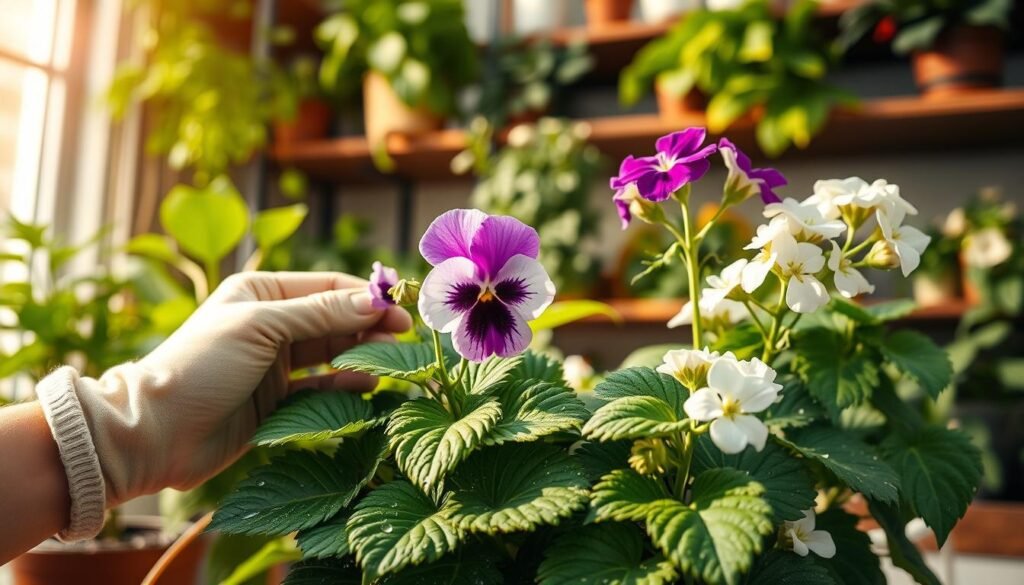
A close-up composition centered on a pair of hands gently deadheading flowering houseplants, focusing on a vibrant African violet and a lush geranium. The hands, wearing simple gardening gloves, pluck faded blooms, showcasing the technique of deadheading. Surrounding the plants are rich, green leaves with droplets of water, indicating recent misting. The background features softly blurred shelves with various indoor plants, hinting at a nurturing indoor gardening environment. The lighting is warm and natural, with soft sunlight filtering through a nearby window, creating a serene and inviting atmosphere. Use a slight tilt-angle lens to emphasize the action, while maintaining a depth of field that showcases the intricacies of the flowers and foliage.

Pinch-and-snap group

Soft stems respond well to a quick pinch. Remove the faded flower and its small stalk in one motion. This is ideal for petunias and geranium-style pots.

Cut-back candidates

When a specimen gets leggy, a strategic cut back restores shape. Trim stems to just above a leaf node to encourage denser foliage and more buds.

Roses and rose-type blooms

Cup heavy blooms to catch falling petals, then cut the spent head back to the next healthy leaf. This helps repeat bloom and keeps the area tidy.

Foliage-first varieties

Some pots are grown for foliage. Removing flower stalks preserves leaf quality and appearance. Cut spikes early if leaves look tired.

When not to deadhead

Skip trimming if you want decorative seedheads or plan to save seed. Also, don’t bother for types that bloom once and then rest.

Goal Action Result
More flowers Deadhead faded blooms quickly Faster new growth
Better shape Cut back leggy stems Denser foliage, more buds
Leaf quality Remove flower stalks on foliage-first pots Improved appearance

Conclusion

A small routine of trimming tired flowers often leads to steadier bloom cycles and healthier growth.

The main takeaway: removing the seed‑forming part of faded heads is a simple task that usually brings more blooms and keeps pots neat.

Do this early in the active season, especially in spring. Quick checks stop a plant from wasting energy on seed and help maintain a steady bloom rhythm.

How to do it: pinch soft stems, cut thicker stems just above a leaf or bud so fresh growth can push through. The payoff is better appearance and less petal drop.

Not every specimen reblooms after one flush, and that’s fine. A weekly habit is an easy, low‑stress way to support growth and enjoy more color over time.

FAQ

What does deadheading mean and why should I do it for my indoor blooms?

Deadheading is the removal of spent flowers to stop seed formation. That redirects a plant’s energy into new buds and foliage, so you get more repeat bloom and a tidier appearance. It’s a quick way to boost flowering without extra fertilizer or drastic pruning.

How is deadheading different from regular pruning?

Deadheading targets only faded blooms or spent flower stalks, while pruning shapes the plant, removes dead wood, and controls size. Deadheading is a light, frequent task focused on encouraging more flowers; pruning is larger, occasional cuts for health and structure.

Is pulling off petals enough, or do I need to cut deeper?

Simply pulling petals usually isn’t enough. You should remove the developing seed pod or cut back to the next healthy bud or leaf node. That prevents seed formation and signals the plant to produce fresh blooms instead.

Which tools should I use when trimming spent flowers?

Use clean fingers for soft-stemmed varieties, and sharp snips, scissors, or small secateurs for tougher stems. For woody or very thick stalks, pruning shears work best. Clean tools help prevent disease spread.

Where exactly should I make the cut on the stem?

Cut just above the next leaf, bud, or side shoot. This encourages a side branch to grow and keeps new growth compact and well-placed. Avoid leaving long stubs or cutting into bare wood unless you’re pruning.

How often should I remove spent blooms from houseplants?

It depends on the species. Check regularly and remove faded flowers as they appear—daily for fast-blooming annuals, weekly for many common houseplants. Monitoring every few days keeps the plant looking its best and reduces pest or disease risks.

Do seasonal cues matter for indoor flowering even with stable conditions?

Yes. Many plants still follow seasonal growth cycles tied to light and temperature. They may slow or stop reblooming in winter. Adjust expectations and reduce deadheading frequency during natural low-growth periods.

How do I handle long stalks or whole flower stems?

For tall stalks, decide whether to trim each faded head or remove the entire stalk. Cutting the whole stalk back to a healthy node often encourages stronger, more compact regrowth. For spikes and clusters, trim after the last flower fades.

Which houseplants are best pinched or snapped instead of cut?

Soft-stemmed, herbaceous varieties—like many annuals and tender perennials—respond well to pinching or snapping. Use your thumb and forefinger to remove spent blooms on thin stems; it’s quick and prevents damage to adjacent buds.

Are there plants I should not remove spent flowers from?

Yes. Some species produce attractive seedheads used for decoration or wildlife food, and others won’t rebloom after a flush, so removing flowers offers no benefit. Also, conserve seedheads if you want to save seed for future plants.

How do I deadhead roses and rose-type blooms indoors without causing mess?

Cut back to a strong outward-facing bud about 1/4 inch above the node, and remove fallen petals promptly to avoid staining or rot. Use sharp secateurs and make clean angled cuts to shed water and encourage air circulation.

Will removing flower spikes harm foliage-first houseplants?

Removing a flower spike can preserve leaf quality if blooms stress the foliage. When blooms are more decorative than functional, cutting the spike back to the base helps the plant focus on healthy leaves and root growth.

How do I avoid damaging nearby buds when cleaning up spent flowers?

Work slowly and use precise tools. Support the stem with one hand, make small angled cuts just above a bud with the other, and keep shears parallel to the stem to avoid crushing adjacent growth.

Can deadheading reduce pest and disease problems?

Yes. Removing faded blooms and decaying petals reduces hiding spots for pests and lowers moisture around stems that can invite fungal infections. Regular cleanup keeps foliage healthier and improves air circulation.

How do I manage leggy growth while encouraging new blooms?

Cut back long, bare stems to a leaf node or side shoot to encourage bushier growth. Combine light pruning with regular removal of spent flowers to redirect energy into compact, flowering shoots rather than long, woody stalks.

Comments

No comments yet. Why don’t you start the discussion?

Leave a Reply

Your email address will not be published. Required fields are marked *