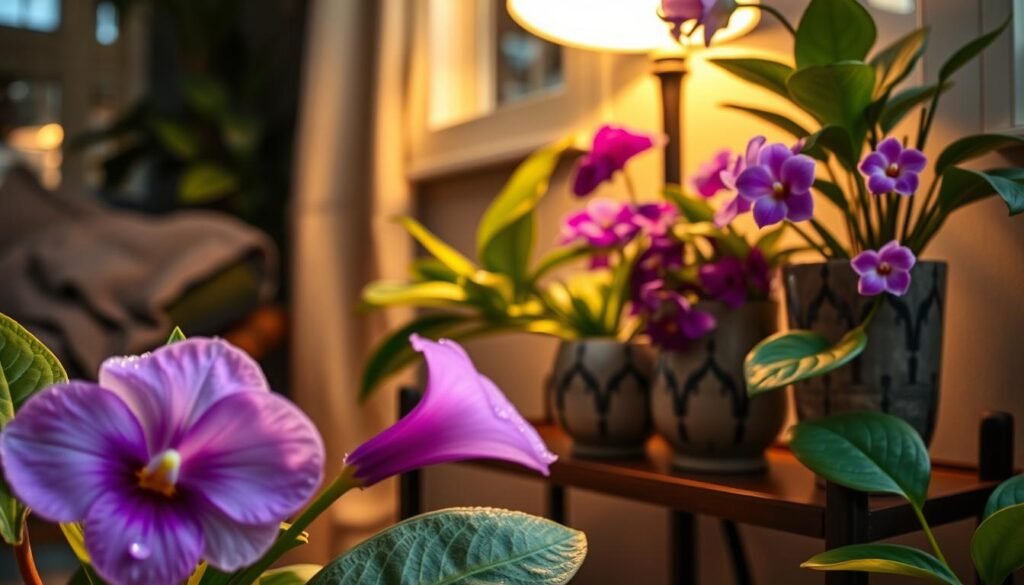

Want color in a dim room without false promises? This guide shows realistic choices that will bloom in gentler conditions. I explain what a reasonable expectation looks like and where blooms are possible.
Remember: dim does not mean dark. All flowering house species need some degree of indirect light to set buds. Truly windowless corners rarely produce vigorous blooms, no matter the seller’s pitch.
I’ll cover reliable bloomers, those that need a short brighter stint, seasonal bloomers for holidays, and long-lasting bracts that mimic flowers. You’ll get simple care tips for watering, soil, and humidity tailored to modest exposure.
Safety matters too. I’ll note which options are safe around pets and kids so you can add color to a bedroom, office, or bathroom without worry. Expect clear, practical advice so your space can enjoy real blooms, not empty promises.
Key Takeaways
- Real blooms need some indirect light; no light means no flowers.
- We list realistic varieties that perform in gentler exposure.
- Simple watering, soil, and humidity tips help success.
- Some species need a short bright period to trigger buds.
- Safety notes cover common household and pet concerns.
What “Low Light” Really Means for Indoor Flowers
Understanding what gardeners call “low light” helps set realistic expectations for color in dim rooms.
Think of modest brightness as a spot where you can read without squinting during the day, but you wouldn’t call it a bright window. That level of exposure matters because most blooms need steady indirect light to form buds and feed growth.
Low isn’t no light: why blooms still need indirect light
Flowering is energy-expensive. A plant can keep green foliage alive with modest exposure, yet lack the reserves to produce flowers. In short, surviving and blooming are different goals under the same conditions.
Why many houseplants survive in dim rooms but won’t flower
Think of survival as maintenance mode. Leaves stay, growth slows, and reproduction (blooming) is often postponed until the plant gets brighter periods of light or more favorable conditions.
How long-lasting blooms differ from bracts and “peace-lily-like” flowers
True flowers are reproductive and often short-lived. Bracts are colored leaf structures that hold color for weeks or months and are a smart way to add stable color to dim spaces.
The familiar spathe/spadix form—seen in the peace lily—looks like a single petal wrapped around a finger-like spike. These structures are often more about form than long, vivid color, so expect modest, elegant displays rather than bright, long-lasting blooms.
| Feature | True Flower | Bract | Spathe/Spadix (peace-lily-like) |
|---|---|---|---|
| Purpose | Reproduction | Attracts attention, not always reproductive | Protects/reveals reproductive spike |
| Color Longevity | Days to weeks | Weeks to months | Weeks, usually white/cream/green |
| Best in | Brighter indirect light | Modest to medium exposure | Modest exposure, occasional brighter periods |
| Good option for dim rooms? | Sometimes (with a light boost) | Yes — reliable color | Yes — subtle, elegant display |
- Reality check: Tolerance is not peak performance. Most bloomers do best with some brighter indirect sunlight part of the year.
- In upcoming lists, choices are labeled by those that bloom reliably and those that need a seasonal boost to show color.
How to Tell If Your Room Has Low, Medium, or Bright Indirect Light
A quick check saves guesswork and helps match a houseplant to the right spot. Start with window direction and a simple shadow test, then confirm with a meter or app. Measure where the pot will sit and at leaf height, not the sill.
Window direction cues for US homes
North windows give the least sun and suit shade-tolerant choices. East windows bring gentle morning rays. South can be bright and may need a sheer to filter strong beams. West delivers intense afternoon sun.
Why your eyes misread brightness
Your vision adapts quickly, so a corner can feel bright even when energy is too low for buds. That causes the common “my plant should be fine there” mistake.
Using a light meter for accurate levels
Do a shadow test first: a soft shadow = medium; a sharp shadow = bright. For accuracy, use a meter or a phone app as a rough proxy. Measure at plant height, in the exact area, and at different times. Medium or bright indirect light raises the chance of buds and repeat blooms; very low spots usually support foliage only.
Quick Setup Tips to Get More Blooms Without Moving House
Small, targeted changes to lighting and placement can boost blooms without rearranging a room. These tweaks are simple, budget-friendly, and friendly to busy schedules.
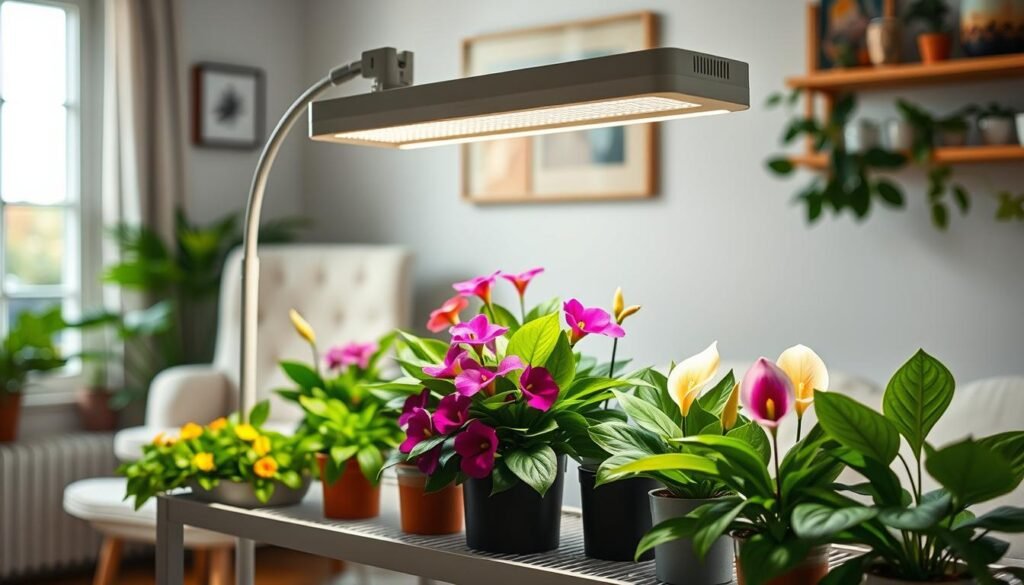
Make subtle grow lighting blend in. Swap a standard bulb for a grow bulb in a decorative lamp, or add a compact desk grow light for a shelf. Keep the lamp within a few inches of the pot so the extra energy matters, and watch for heat.
Rotate for balanced growth
Turn a plant weekly or every two weeks. This prevents one-sided stretching and encourages fuller growth and better bud set.
Avoid sudden sun exposure
Even species that tolerate low rooms can scorch when moved into direct sunlight. Introduce brighter sunlight slowly over several days to avoid burned leaves.
Quick wins that boost bloom chances
- Give pots a short “bright stint” for a few months to trigger buds, then return to display spots.
- Wipe dusty leaves to improve light capture.
- Keep pots slightly closer to windows, but not touching cold glass in winter.
“Small steps in lighting and care often deliver the biggest rewards.”
low light indoor flowering plants that bloom most reliably
Here are the most forgiving bloomers that will reliably add color to rooms with modest exposure.
Peace lily (Spathiphyllum spp.)
Peace lilies tolerate shade well and keep neat foliage with minimal fuss. The white spathe and central spadix look like a single elegant bloom and often appear after a few months of brighter, indirect light. Once set, this species will tolerate reduced light and still rebloom occasionally.
Kalanchoe (Kalanchoe blossfeldiana)
This succulent-like houseplant is tough and low-maintenance. It blooms reliably indoors and fares well with moderate care. Let the soil dry slightly between waterings and avoid soggy mix to keep buds healthy.
Impatiens (Impatiens spp.)
Impatiens will produce frequent flowers even when growth stretches. They do best with occasional brighter periods to stay bushy. Pinch back long stems to encourage branching and more blooms.
- Micro-tips: Don’t overwater in dim spots and always use a pot with drainage.
- Who should choose what: peace lily for beginners, kalanchoe for busy schedules, impatiens for maximum blooms with light pruning.
“Pick forgiving species and give them simple, steady care for the best chance at real blooms.”
Low-Light Favorites That Bloom After a Short “Brighter Stint”
For renters or shelf gardeners, a brief stint in stronger exposure is the trick to coax real blooms. Rotate a pot into brighter indirect light for a few months, then return it to its display spot once buds set.
African violet (Saintpaulia relatives)
Small plant, big color range. These easy houseplants need bright, indirect sun for several months to set many buds.
Keep water off fuzzy leaves to avoid brown spots.
A small grow lamp about eight inches away works well for winter boosts.
Anthurium (Anthurium andraeanum)
Anthuriums may bloom in dim rooms, but spathes can look muted or greenish.
A period of brighter indirect exposure restores stronger color and more consistent blooms.
Treat foliage gently and avoid sudden sun shifts.
Begonia (Begonia spp.)
Many begonias are prized for foliage first.
A few months of gentle morning sun often encourages flowers on showy hybrids like Dragon Wing®.
Some varieties are better bloomers indoors, so check tags for flowering habit.
Orchids that tolerate lower exposure
Phalaenopsis, Paphiopedilum, and Miltoniopsis often tolerate dimmer spots better than people expect.
They prefer steady conditions and filtered indirect sun to set spikes.
Consistent temperature and modest humidity help reblooming.
Hoya carnosa
Give this waxy-leafed climber bright indirect light to trigger fragrant clusters, then move it back to a quieter shelf to admire the blooms.
Do not overwater while it sits in dimmer conditions; let the mix dry a touch between waterings.
“A planned brighter stint is the best compromise for limited window space.”
| Species | Brighter Stint Need | Best Follow-up Spot |
|---|---|---|
| African violet | Several months, filtered sun or grow lamp ~8 inches | Warm shelf with indirect exposure |
| Anthurium | Short period to deepen spathe color | Moderate corner away from direct beams |
| Begonia | Gentle morning sun encourages blooms | Bright shelf or east-facing spot then return |
| Orchid (Phal./Paph./Milton.) | Consistent bright-indirect for spike formation | Stable indoor windowsill with filtered sun |
| Hoya carnosa | Brief bright stretch to induce clusters | Back to a dimmer hang for display; water sparingly |
Holiday Bloomers That Prefer Low Light or Darkness to Set Buds
Seasonal favorites often respond to day length rather than sheer brightness. That makes some winter choices perfect when windows are modest or when nights run long.
Why they’re seasonal heroes: These species use short days and extended darkness to trigger buds. Timing, not constant strong light, starts the show.
Christmas cactus and holiday cacti
Holiday cacti set buds with consistent long nights. Give them about 12–14 hours of uninterrupted darkness for several weeks.
Avoid moving the pot or exposing it to porch lamps at night—both stop bud formation. Once buds appear, return to normal daily light and steady temperatures to extend bloom life.
Poinsettia basics
Poinsettia color comes from bracts, not true flowers. Long nights trigger bract color; after they change, these houseplants stay decorative even in a low light room for months.
- Holiday schedule: start long nights in October–November for winter color; resume normal exposure after buds or bracts set.
- Display tips: keep away from heating vents and drafts; water sparingly since pots dry slower in dimmer spots.
- Realistic note: maintaining next year’s show needs strict night control months before buds form.
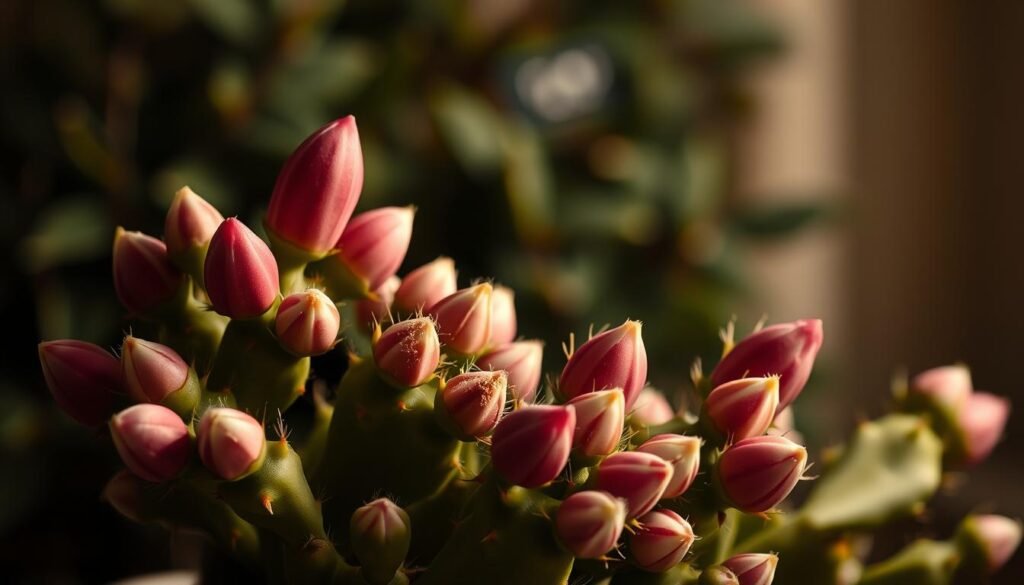
| Species | Trigger | Best follow-up |
|---|---|---|
| Christmas cactus | 12–14 hrs darkness for 4–6 weeks | Stable room, avoid night light, moderate watering |
| Poinsettia | Long nights begin Oct–Nov for winter color | Keep away from vents, low placement after bracts form |
| Other holiday cacti | Consistent short days, steady temps | Do not move during bud set; gentle care extends blooms |
“Control the calendar more than the window to get reliable holiday color.”
Color-Forward “Flower Look” Plants for Dim Rooms (Bracts That Last)
Bracts give you lasting color where true flowers often fade too fast — bromeliads excel at this role.
Bromeliads (Guzmania, Aechmea, Vriesea) are grown for showy bracts that stay vivid for months. What you admire is usually a colored spike of bracts; the real flowers are small and brief.
Apple-in-a-bag method: place the plant in a clear plastic bag with one apple, seal for three days, then remove. Ethylene gas from the apple helps trigger a bloom; expect a center spike to develop in 6 weeks to 3 months.
Success looks like a firm central spike and deepening colors, even if the room has modest exposure. After the bloom fades the mother plant will decline, but it will produce pups you can separate and grow on.
Care tips: avoid soggy soil, keep moisture and humidity steady, and follow species guidance about filling the rosette with water. Bromeliads are the best instant-color option for dim displays and make a dramatic, low-effort focal point.
Hanging and Trailing Bloomers for Low-Light Spots
Elevated displays make the most of high corners, shelves, and hooks. Trailing varieties add movement and, with the right care, occasional flowers that brighten a room.
Lipstick plant (Aeschynanthus radicans)
Lipstick needs several hours of bright indirect light to set buds—about 4–6 hours works best. Once it blooms, you can move the plant back to a quieter spot for display.
Pinch back stems to encourage fuller trails. Watch hanging pots: they dry faster, so check moisture and water when the top inch feels dry.
Fuchsia spp.
Fuchsia rewards humid rooms and gentle morning sun in spring. Bathrooms that get soft light are ideal because added humidity improves bud set and bloom longevity.
Remove spent flowers and trim tips to keep the trail tidy. If your room sits far from a window, a discreet grow bulb above the basket helps without stealing the show.
| Species | Key Need | Best Spot |
|---|---|---|
| Aeschynanthus radicans | 4–6 hrs bright indirect light to set buds | Near an east-facing window or bright shelf |
| Fuchsia spp. | Morning sun + higher humidity | Bathroom or humid corner with gentle spring light |
“Hang where you can give a seasonal brighter stint; the results are worth the small effort.”
Seasonal Stars for Short-Term Low Light Indoors
Seasonal stars give short, reliable bursts of color in winter and early spring. Treat them as temporary guests: display where you need cheer, then return them to brighter or cooler care so they stay healthy.
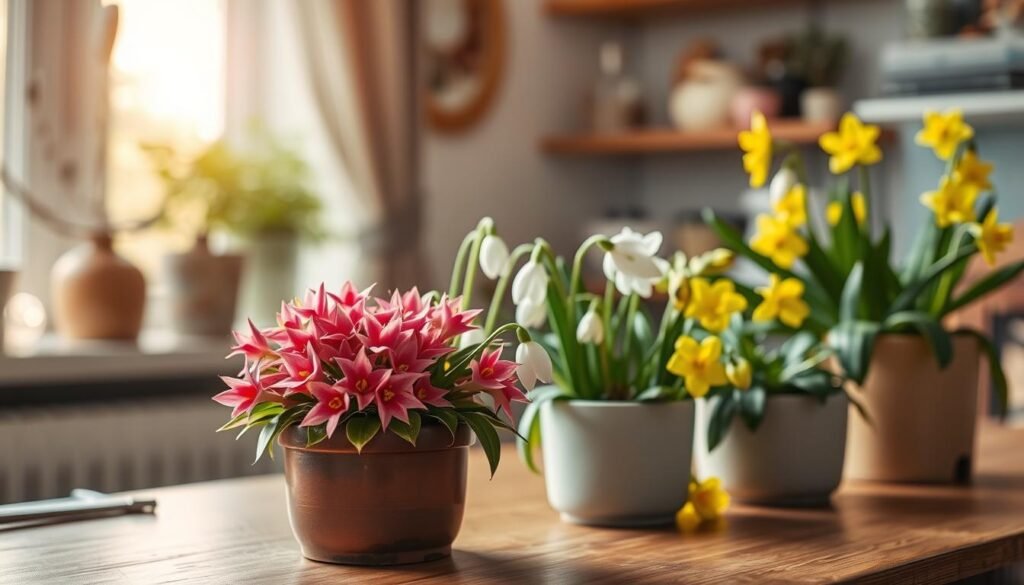
Primrose (Primula spp.)
Primroses brighten a room for several weeks to a month. Enjoy blooms in a dimmer spot briefly, but move them to brighter exposure or back outdoors after flowering to avoid decline.
Cyclamen (Cyclamen persicum and select hybrids)
Cyclamen do best in cooler rooms and respond well to an east window for bud set. Choose varieties labeled for pot culture; not all cultivars behave the same, so pick garden-friendly types that suit seasonal indoor displays.
Amaryllis (Hippeastrum spp.)
Use a two-phase approach for amaryllis: give several hours of direct sunlight or a sunny window to start the stalks, then move the pot deeper into the room once flowers open. Avoid heat sources that shorten bloom life.
“Plan a rotating gallery of seasonal bloomers — swap started bulbs and pots into display spots for the best results.”
| Species | Best Timing | Initial Need | Follow-up Care |
|---|---|---|---|
| Primula spp. | Winter–early spring | Moderate sun for bud health | Move to brighter spot after 2–6 weeks |
| Cyclamen persicum | Winter | Cool spot + east window for buds | Keep cool; avoid warm drafts |
| Hippeastrum spp. | Late winter–spring | Several hours direct sunlight to initiate | Return to a dimmer display once stalks bloom |
Best Low-Light Bloomers by Room in Your Home
Matching species to a room’s conditions saves effort and boosts the chance of real color. Below are practical picks keyed to common home areas so you can place each specimen where it will thrive.
Bedrooms and living rooms
Choose steady performers that tolerate modest exposure and show green leaves plus occasional flowers. A peace lily offers elegant spathes and easy care. Anthurium adds glossy foliage and long-lasting bracts for subtle color.
Bromeliads give a center spike of color that lasts for months and works well on a coffee table or shelf away from harsh sun.
Bathrooms and higher-humidity areas
Humidity helps tropicals bloom. A hanging fuchsia thrives in moist air and keeps leaf edges from drying out.
Place hanging options where moisture accumulates, but avoid constant splashes and keep airflow gentle.
Offices and desks
Pick compact bloomers for a small workspace. African violets stay small and respond well to a small grow lamp placed about eight inches above the pot.
Rotate the pot weekly for even growth and to prevent one-sided stretching.
| Room / Space | Top Picks | Placement Tips |
|---|---|---|
| Bedroom / Living room | Peace lily, Anthurium, Bromeliad | Keep back from cold glass; avoid direct HVAC drafts; bright stint seasonally |
| Bathroom / Humid areas | Hanging Fuchsia, tropical bromeliads | Hang near shower light but not in direct spray; humidity prevents crispy edges |
| Office / Desk | African violet, small begonias | Use a small grow lamp ~8″ away; rotate weekly; choose compact pots |
“Use a short brighter stint—a month on a sunny sill—then return a pot to its regular room to keep blooms coming.”
Care Basics in Low Light: Water, Soil, and Drainage
When growth slows, your watering and mix must slow too—mistakes here cause most indoor declines. Match your routine to reduced energy the pot has for growth. That keeps roots healthy and gives any future blooms a fighting chance.
Why slower growth means less watering
Plants use less water when growth is slow. That means soil stays moist longer. The number-one mistake is watering on a bright-schedule; wet mix and low evaporation invite root rot.
Soil and potting mix basics to avoid root rot
Use a free-draining mix that combines peat or coir with perlite or coarse sand. Good mixes hold some moisture but also allow air around roots.
Always choose a pot with drainage holes and avoid saucers that trap standing water for long periods.
How to spot thirst vs overwatering
Check the top inch of soil before you water. If it feels dry, water; if it is damp, wait.
- Thirst: drooping with dry mix, crisp leaf edges.
- Too wet: yellow leaves, mushy stems, or a sour smell from the potting medium.
Plant-specific caution: avoid splashing water on African violet leaves—moisture on fuzzy leaves causes brown spots and blemishes.
“In dimmer rooms, care should be slower and steadier: less fertilizer, less water, and more patience.”
| Issue | Cause | Fix |
|---|---|---|
| Yellowing leaves | Soil constantly wet | Reduce water, repot to free-draining mix, check drainage |
| Drooping but dry mix | Underwatering | Water thoroughly until excess drains, keep regular checks |
| Brown spots on fuzzy leaves | Water sits on leaf surface | Avoid overhead watering; water at soil level; use room-temperature water |
| Slow growth and compact roots | Dense, poorly aerated mix | Repot in aerated soil with perlite; increase time between waterings |
Humidity and Temperature Tips for Better Blooms and Healthier Leaves
A stable room—without drafts or big swings—lets a plant save energy and build reserves for future blooms. Good temperature and humidity reduce stress and prevent leaf damage that can stall flowering later on.
Why it matters: steady warmth helps metabolic activity, while steady moisture in the air keeps foliage supple. Healthy green leaves mean more stored energy for buds when light improves.
Filtered warmth and humidity: African violet comfort zone
African violet prefers warm, steady conditions and filtered sun. Keep room temperatures in a cozy range and avoid cold drafts.
Water at the soil surface and avoid wetting fuzzy leaves to prevent brown spots. Clean, unblemished leaves help the plant use energy efficiently for blooms.
Keeping calathea and prayer varieties lush
Calathea and other prayer species rarely bloom in rooms, so focus on foliage health instead. Higher humidity and stable temperatures keep leaf patterns bold and edges crisp.
Place these near a bathroom window, group them with other houseplants, or run a small humidifier in winter. Avoid vent blasts and open windows that cause curled or crispy leaves.
- Quick tips: keep temperature steady, raise ambient moisture, and shield pots from direct drafts.
- Healthy leaves = stored energy; when you give a brighter stretch, the plant is ready to convert that energy into flowers.
“Protect the leaves first—flowers will follow when conditions and light improve.”
How to Encourage Reblooming Indoors
A planned stint by a brighter window often resets a plant’s energy so it can bloom again.
Seasonal “boost” strategy
Move pots to the brightest available window for 6–12 weeks in late winter into spring. This builds reserves, sets buds, then return the pots to their usual spots once buds form.
Orchid reblooming basics
After flowers fall, trim the spent spike if it is brown. If it stays green, leave it for a chance at a side shoot. A gentle temperature drop at night often encourages a new spike on many common orchid types.
Fertilize and water wisely
Feed sparingly in winter or dim months — use a diluted formula at half strength every 6–8 weeks. Match water and soil routines: keep mix airy and let the top dry between sessions so roots stay healthy during bloom attempts.
“Short, timed boosts of brighter exposure are the most reliable way to coax repeat color.”
| Step | Timing | Key action |
|---|---|---|
| Seasonal boost | Late winter–spring | 6–12 weeks by a bright window |
| Orchid care | After bloom | Trim spike if brown; cooler nights to trigger spike |
| Fertilize | Avoid winter excess | Half-strength, infrequent feed |
| Root health | All year | Well-aerated soil; appropriate water schedule |
Leaf and Flower Troubleshooting in Low Light
Simple clues from a plant’s leaves point to whether it needs a brighter spot, different watering, or vetting for pests.
Leggy growth and stretched stems: when to move closer to a window
If stems stretch and foliage spaces out, this is usually a light issue. Move the pot a little closer to a window for a few weeks.
Rotate weekly so growth evens out. A small change in placement often restores compact growth without other fixes.
Brown spots, fading bracts, and scorched leaves: common causes
Brown spots can mean water sat on fuzzy leaves, inconsistent watering, or cold drafts. For African violets, water at soil level only.
Fading bracts — on bromeliads or poinsettias — is often normal aging, but heat, too much sun, or dehydration speeds it up.
Scorch appears when a shade-adapted plant is suddenly exposed to direct sun by a south or west window. Acclimate slowly: move to filtered sun, then to brighter exposure over a week.
Muted flower color in anthurium and similar bloomers
Anthurium spathes may look pale under weak energy. Give a focused brighter stint by a sunny window for 4–8 weeks to restore deeper color.
“Check light placement, then watering, then temperature, then pests before you panic.”
| Issue | Likely cause | Quick fix |
|---|---|---|
| Leggy stems | Insufficient light near window | Move pot closer; rotate weekly |
| Brown spots | Water on leaves / cold drafts | Water at soil, remove damaged leaves |
| Faded bracts | Age, heat, or dehydration | Improve humidity; steady watering |
| Scorched leaves | Sudden direct sun | Acclimate over several days |
Pet and People Safety: Toxicity to Know Before You Buy
Before you buy, consider safety as part of routine plant care—some popular choices are toxic to people and pets.
Common toxic picks to watch for: peace lily, anthurium, and many begonia types can irritate mouths, cause drooling, or trigger throat swelling if chewed. These houseplants are common in stores and homes, so knowing the name helps you decide before bringing one inside.
Toxic usually means a risk from chewing or ingestion. Curious kids and pets are most at risk because nibbling leaves or soil can deliver compounds that cause upset. Reactions range from mild irritation to more serious symptoms that need a vet or doctor.
Safe placement and buying habits
- Keep risky specimens on high shelves, in hanging baskets, or inside plant cabinets in rooms pets can’t access.
- Match placement to behavior: cats that nibble need out-of-reach hooks; dogs that tip pots need heavier stands or closed rooms.
- Always keep the plant tag, note the botanical name, and confirm toxicity before purchase.
| Species | Risk | Quick action |
|---|---|---|
| peace lily | Mouth/throat irritation | Move high; call vet if ingested |
| anthurium | Skin/ingestion irritation | Place away from reach; store tag |
| begonia (many types) | Mouth irritation, vomiting | Use closed rooms or hang baskets |
“You can still enjoy colorful pots safely with simple placement and awareness.”
Buying Tips: Choosing Varieties That Perform Indoors
Buying the right specimen starts before you pay for it. A few minutes of checking tags and the pot will raise your odds of real color, not just a pretty impulse buy.
What to check on the tag: light needs, mature size, and bloom season
Read the tag carefully. Confirm the required light and the mature size so the plant fits the planned spot.
Tags also list bloom season and care notes. That tells you if a specimen will bloom where you want it or needs a brighter stint.
Picking proven bloomers and hybrids
Not every begonia or orchid performs the same indoors. Seek named hybrids known for indoor success — some begonias are foliage-first, while others are bred to bloom reliably.
For orchids, favor Phalaenopsis or Paphiopedilum types that tolerate gentler exposure rather than impulse high-sun species.
Quick inspection tips at purchase
- Look for healthy leaves and no mushy stems.
- Check for fungus gnats or damp, sour soil.
- Avoid pots with buds already dropping or browned.
“Match the tag to your room. Plan a window spot or use a small grow bulb about 8–12 inches away if needed.”
| What to check | Why it matters | How to act |
|---|---|---|
| Light needs | Sets bloom and vigor | Pick a variety that fits your room or plan a bulb |
| Mature size | Prevents future crowding | Choose a size that fits shelves or stands |
| Bloom season | Timing matters for color | Buy for the season you want color |
Shop like someone who gardens: favor proven varieties, read tags, and inspect the pot before you bring the houseplant home.
Conclusion
Simple strategies—honest light checks, occasional bright stints, and tidy care—turn a quiet corner into a cheerful spot.
Low light can still support real color when you match the right plants to the room and give a little indirect light support. Measure exposure, plan a short brighter stint or discreet grow lamp, and keep soil and water routines gentle.
Expect slower growth: that means less water, careful soil mix and patient care. Start with one or two reliable choices—try a peace lily or kalanchoe first—then experiment with more sensitive options.
Even occasional flowers and healthy green leaves bring lasting beauty. Assess one room’s conditions today and pick a match from the list to see better results.