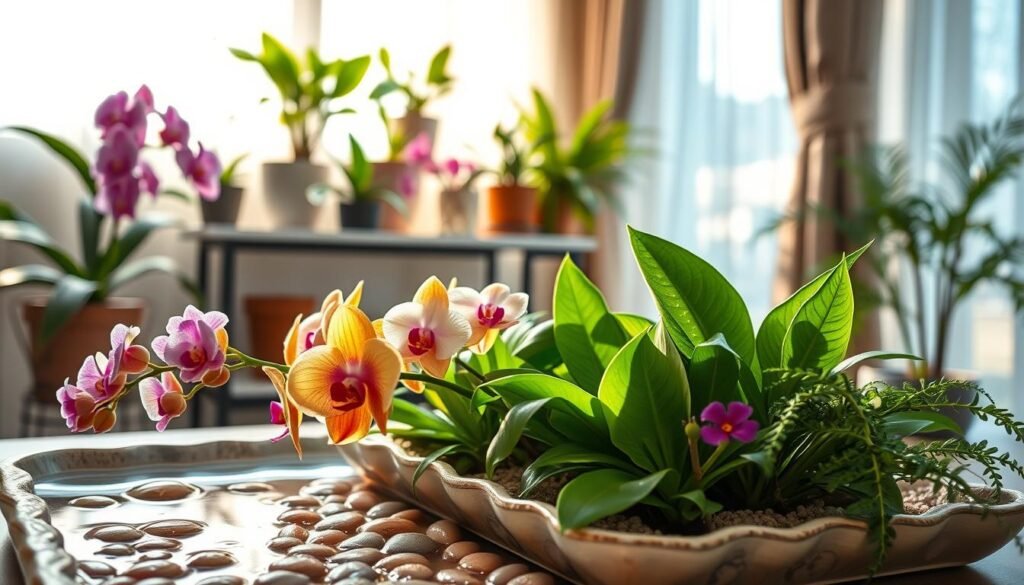

Many houseplants come from humid jungle environments, so air moisture matters as much as watering when you want lasting blooms. Winter heating in U.S. homes can dry the air and stress plants, making small adjustments vital.
This guide shows practical ways to raise moisture around plants without creating mold risks. You’ll learn simple methods like a humidifier, pebble tray, grouping pots, and smart room placement. Each tactic gently affects microclimates near leaves and soil.
Most homes run drier than many plants’ native conditions, especially during cold months. Understanding levels and balance is the key to healthier growth and fewer problems.
The goal is two-sided: raise moisture enough to help plants, but avoid constant wet surfaces that can invite mildew or mold. We’ll also stress monitoring tools so you can adjust rather than guess.
Key Takeaways
- Air moisture supports lush growth as much as watering does.
- You can increase humidity safely using humidifiers, trays, and grouping.
- Watch levels and room placement to avoid mold-prone conditions.
- Winter heating makes U.S. homes especially dry for many species.
- Use simple monitoring to keep a healthy balance for plants and home.
Understanding ideal humidity levels for indoor flowers
Many popular houseplants come from moist, shaded forests, so room air often falls short of what they prefer. That gap affects leaf health, steady growth, and whether buds hold or drop. A little attention to air moisture can prevent stress and keep blooms lasting longer.
Why plants benefit from moist air
Leaves exchange gases and lose water through tiny pores. When the air is very dry, that process speeds up and plants can wilt or drop buds. Keeping a steady level helps leaves stay supple and reduces shock during growth.
What ideal humidity looks like
“Humidity levels” often mean the percent of water vapor in the air. Many houseplants thrive in moderate ranges, while tropical plants prefer high humidity and a warmer, stable microclimate. Set realistic targets: most species do well with consistent baseline values, not extreme swings.
Why winter heating dries the air
Central heat, space heaters, and fireplaces lower indoor moisture during winter. Rooms can feel warm but leave leaves parched even when soil is damp. Increasing humidity works best when paired with good airflow and proper watering habits to avoid other issues.
Signs your plants need more humidity vs. warning signs of mold
Watch the leaves closely—small changes often reveal whether your plants are thirsty or being overcared for. A quick visual check saves time and prevents bigger problems.
Low-moisture signals to spot
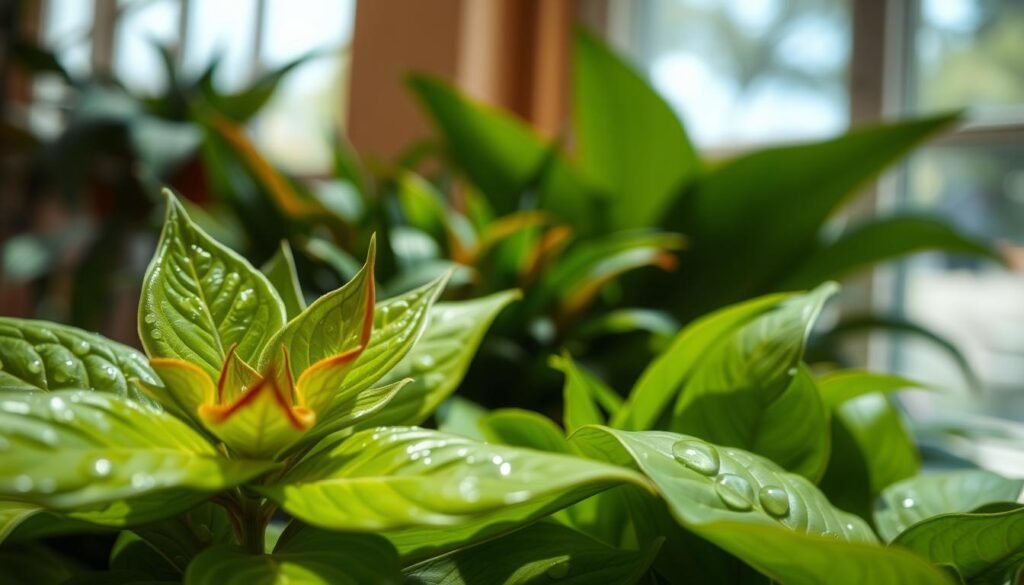
Look for brown or yellow edges and brittle tips on leaves. These often mean the air is too dry even when you think you water enough.
Crispy foliage, wilting, or stunted new growth are other clear signs. Buds that dry up before opening usually point to dry conditions rather than a feeding issue.
Too-wet warning indicators
Fuzzy white or gray mold on stems, leaves, or blooms signals poor airflow and excess moisture. Soft, slightly yellow stems can turn to rot quickly.
Black spots on leaves often appear in persistently damp conditions. When you see them, slow down and reassess watering, drainage, and airflow.
Tools that make diagnosis simple
- Use a hygrometer to check humidity levels near your plants and set a realistic target range.
- A moisture meter reads soil moisture so you can tell dry air issues from overwatering problems.
Quick decision rule: if air is dry but soil reads moist, boost moisture around the plant. If soil stays wet and stems soften, improve drainage, reduce watering, and increase airflow.
Humidity for indoor flowers: reliable ways to increase humidity safely
A few targeted habits give plants a steadier, healthier microclimate in any room. Use steady methods first, then add quick boosts when needed. That approach raises moisture without creating constantly wet surfaces that invite mold.
Use a humidifier the smart way
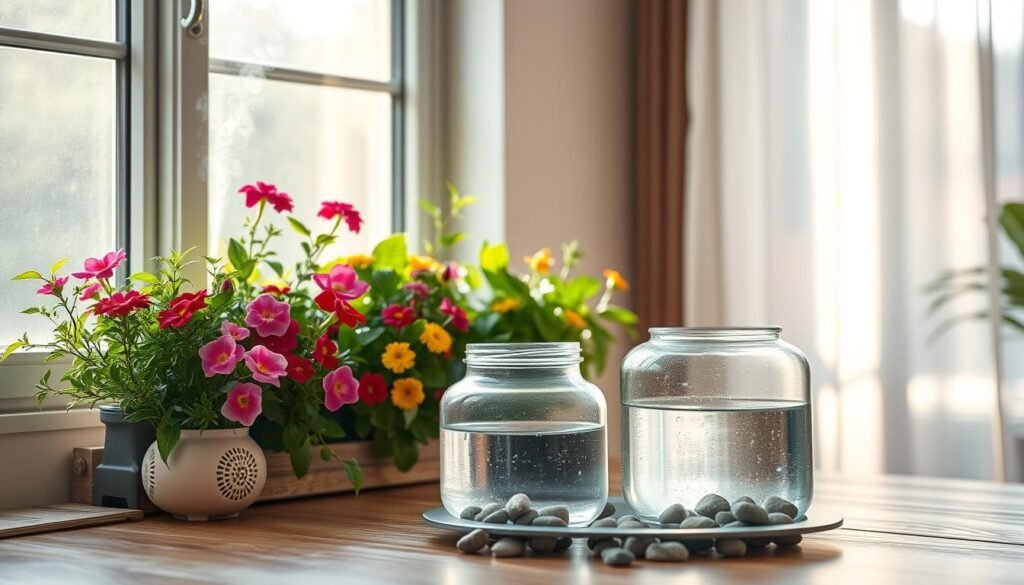
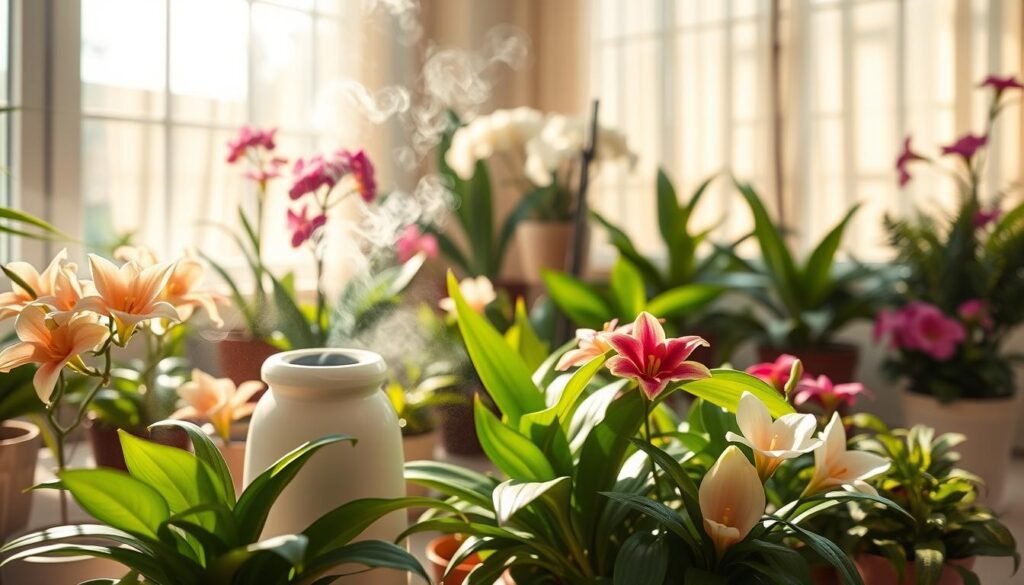
The most reliable way to increase humidity is a properly sized humidifier placed near a group of pots, not aimed directly at leaves. Pick a filterless model to cut the risk of stale filters and odors.
Choose capacity to match room size and favor units with simple parts for easy cleaning. Regular cleaning prevents buildup and keeps devices running safely.
Pebble trays: step-by-step setup
Use a shallow waterproof tray and add clean pebbles. Pour water until it just reaches the pebble tops—below the pot base—so roots aren’t sitting in water.
Trays work best on a shelf or side table as a localized, gentle way to boost humidity without changing the whole room.
Grouping and room placement
Group plants together and arrange heights so leaves form a shared pocket of moist air. Add a shallow dish of water in the center to give a little extra evaporation.
Place plants in naturally humid rooms like the bathroom, kitchen, or laundry area when light allows. Balance light needs with moisture to find the best spot.
Showers, misting, and quick boosts
Occasional lukewarm showers or baths clean dust from leaves and add moisture. This routine discourages pests and improves gas exchange.
Misting plants gives a short-lived lift; use a fine spray during the day and avoid soaking leaves until they drip. Treat misting as a temporary boost rather than your main strategy.
How to increase humidity without mold or mildew in your home environment
A healthy plant zone balances added moisture with steady airflow. Pair higher humidity with ventilation so the room never feels stagnant or damp. Good movement prevents spores from settling and stops mildew before it starts.
Stop mold before it starts
Do not crowd pots. Space allows air to flow around stems and under leaves. Avoid placing moisture sources where condensation forms on windows or walls.
Never mist fuzzy-leaf plants
Do not mist African violets, Purple Heart, or Philodendron micans ‘Velvet’. Hairs on these leaves trap water and lead to spotting and disease. Use room-level moisture boosts rather than direct sprays on fuzzy foliage.
Humidifier hygiene
Empty and rinse daily. Do a deep clean weekly to remove scale and prevent smells. Clean units keep the environment fresh and reduce microbial buildup.
Pebble tray maintenance
Rinse pebbles and scrub trays every few weeks. Algae can grow quickly, so treat trays as a reusable, cleanable tool—not a set-and-forget item.
Balance humidity with watering
Dry air can crisp leaves even when soil is moist. Conversely, overwatering creates soft stems and rot even in ideal conditions. Diagnose before you treat: check both air and soil before changing care routines.
Room-by-room setup for healthy indoor humidity (especially in winter)
Placing pots in the right room can make a quick difference to plant health in winter. Think of each room as a microclimate: some hold more moisture naturally, while heated living spaces dry out fast.
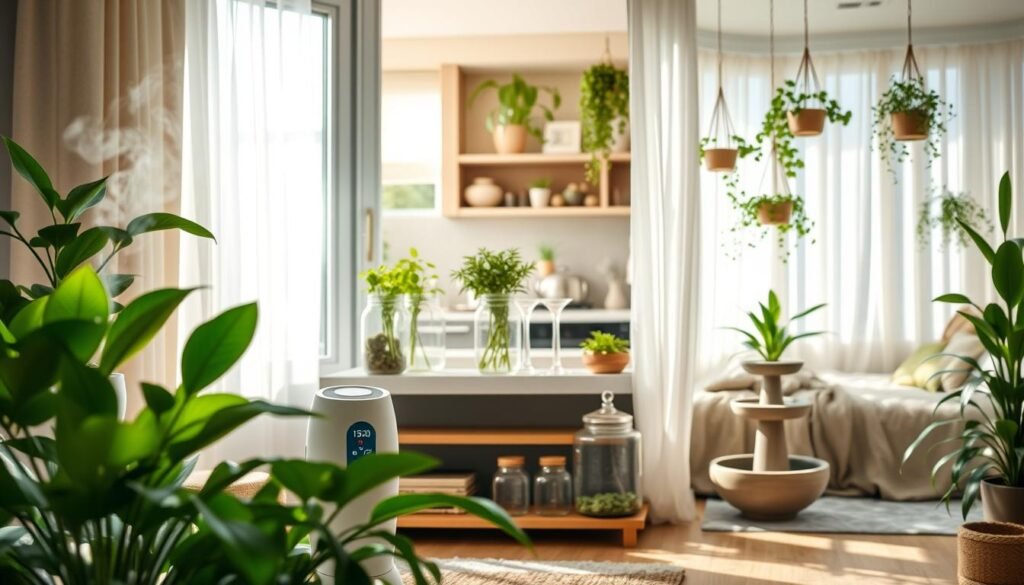
Where to place plants: light + moisture trade-offs
Bright windows can be the driest spots during the day. A sunny sill may give light but low air moisture.
Choose a spot that balances light and moisture needs. If light is excellent but air is dry, add a humidifier or pebble tray nearby.
Bathroom plant matching: tropical plants vs. low-light houseplants
Bathrooms with a window often make good homes for tropical plants that dislike dry winter air.
Sunny bathrooms (south, east, or west) support sun-loving tropical plants. North-facing baths suit low-light houseplants like pothos, ZZ plant, spider plant, snake plant, and calathea.
Creating a small high humidity zone
Group plants on a shelf or stand to form a shared pocket of moister air. Place pots close together but not touching for airflow.
Add a shallow dish of water nearby to give gentle evaporation and a quick boost humidity without wetting leaves directly.
| Room | Light | Best plant types | Practical tip |
|---|---|---|---|
| Bathroom (window) | Sunny or low | Tropical plants, pothos, calathea | Use window light; group plants; dish of water |
| Kitchen | Bright to moderate | Herb-like houseplants, tropicals | Keep near sink but avoid steam buildup on leaves |
| Living room (heated) | Bright | Sun lovers with extra care | Use humidifier or trays; check humidity levels |
Conclusion
, You can protect blooms and foliage with steady attention and a few reliable tools.
Main takeaway: raise moisture around your pots thoughtfully while preventing mold by keeping air moving, cleaning devices, and avoiding constantly wet leaves.
Measure first with a hygrometer and a soil meter. Adjust slowly and watch how leaves and buds respond over two weeks. Pick one primary method—often a room humidifier—and one supporting method such as grouping pots, pebble trays, or rotating plants into a bathroom with a window.
Tropical species usually prefer higher humidity levels than common houseplants. Quick diagnostic rule: if the air is dry but soil reads fine, raise moisture; if soil stays soggy and stems soften, fix drainage and watering before adding more moisture.
Keep tools clean, keep air moving, and check your plants as seasons change.