
This guide helps you hit the ideal temperature for flowering houseplants so buds form reliably and stay put. In real homes, “indoor blooms” are the flowering plants on windowsills, shelves, and bright corners that reward a little care.
Many bloomers do best around 60–75°F (15–24°C) by day and 55–65°F (13–18°C) at night. Nights 10–15°F cooler than day often cue bud set. Stability matters more than a single perfect number.
Temperature works with light, humidity, and airflow to encourage buds or cause bud drop. This article shows how to manage the plant zone—the air right next to your pot—in typical U.S. homes with central heat, AC, radiators, or drafty windows.
Preview: you’ll learn what temps encourage bud initiation, what triggers bud drop, and practical fixes you can use today.
Key Takeaways
- Day/night warmth and a cooler night help many flowering plants set buds.
- Consistent conditions beat single “perfect” numbers every time.
- Think in plant zones, not just the room reading.
- Light, humidity, and airflow matter as much as heat.
- Advice fits common U.S. heating and cooling setups.
Why Temperature Matters for Indoor Flowering and Bud Formation
Simple shifts in daily heat and nightly coolness can change a plant’s priorities from growth to reproduction.
How indoor heat and cold influence plant growth, energy use, and flowering
As rooms warm, a plant’s respiration rises and it burns more energy. That means it needs more light to “pay” for new leaves, roots, and buds.
Cold slows metabolism, limits nutrient and water movement, and can stall bud development even when foliage looks healthy.
Why consistency beats “perfect” numbers in the home environment
Steady conditions reduce stress and lower the risk of dropped or aborted buds. Sudden swings—doors opening, heat cycling, or sunbeams moving—push plants to spend energy on survival instead of blooms.
The goal is steady, plant-appropriate conditions over time rather than chasing a single exact number every hour.
| Condition | Short-term effect | What to watch for |
|---|---|---|
| Warm, stable | Higher respiration; blooms if light matches demand | Fast growth; no yellowing if light is adequate |
| Cool, steady | Slower metabolism; buds may form slowly | Stunted growth; delayed flowering |
| Variable (spikes/drafts) | Stress that halts buds and causes leaf drop | Aborted buds; brown edges; irregular growth |
Next: use simple tools and placement tweaks to match light to plant needs and keep the room conditions steady. The steps ahead show how to do that now.
Ideal temperature for flowering houseplants: the target day-and-night range
Aim for a steady day-to-night band that keeps energy use balanced and buds intact.
Recommended daytime temperatures for most indoor bloomers
Most houseplants do well when daytime temps sit around 60–75°F (15–24°C). This gives plants enough warmth to photosynthesize and make energy for buds.
Quick check: consult the plant tag for species specifics before changing placement.
Recommended nighttime temperatures and why cooler nights help
Night lows of roughly 55–65°F (13–18°C) help plants recover from daytime water loss. Cooler nights reduce stress and support the hormonal signals that set buds.
How much day-to-night difference is healthy for buds
A drop of about 10–15°F between day and night is healthy for many bloomers. Bigger swings can shock sensitive pots, so aim for steady shifts.
When sunny days push room temperatures higher than normal
Direct sunlight and west-facing exposure can raise room temps by ~10°F. If that dries buds, add shade or move the pot a few feet back. Higher daytime temps are acceptable only if light, airflow, and humidity keep pace.
| Aspect | Target | Why it matters |
|---|---|---|
| Day | 60–75°F (15–24°C) | Energy for growth and bloom |
| Night | 55–65°F (13–18°C) | Recovery and bud set |
| Day–night drop | 10–15°F (6–8°C) | Signals flowering; avoids shock |
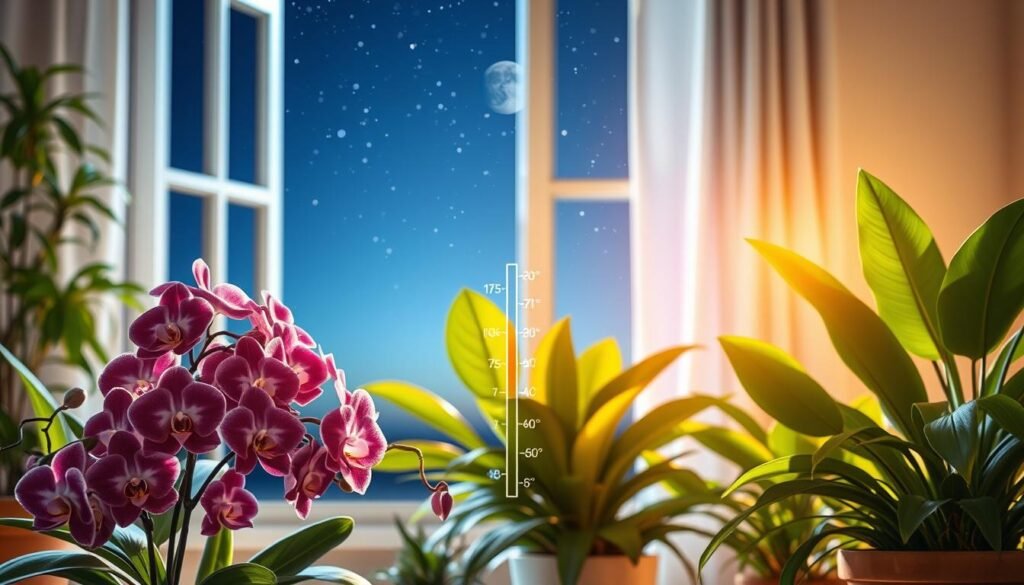
What Temperatures Trigger Buds and More Flowers Indoors
Plants sense patterns, not single readings. A steady rhythm of warmer days and slightly cooler nights nudges many indoor species toward bud set. That signal tells a plant it can shift energy from leaf production to making flowers.
Warm days plus slightly cooler nights as a natural flowering signal
Comfortable daytime warmth with a modest night drop encourages the hormones that start bud formation. Keep changes gradual; sudden swings stress plants and can cause buds to abort.
Matching heat to light so plants can “afford” to bloom
If you raise the room heat, raise the light level too. Higher warmth increases respiration and the plant needs more light or stronger lights to fuel plant growth and flowering. In dim rooms, keep heat lower to avoid weak growth and poor flowers.
Adjusting conditions as plants move into flowering and peak bloom
When buds appear, hold the pot in a stable spot and keep moisture even. Slightly lower humidity and gentle airflow during peak bloom can improve bloom quality and cut fungal risk.
| Stage | Target day–night pattern | Practical tip |
|---|---|---|
| Bud initiation | Warm day / slightly cooler night | Avoid drafts; steady placement |
| Bud development | Consistent warmth with good light | Match lights or sunlight to heat |
| Peak bloom | Stable temps, lower humidity | Provide airflow; reduce sudden moves |
Temperature Fluctuations That Cause Bud Drop (and How to Prevent Them)
Sharp swings in the local air around a pot trigger most bud losses. Buds dehydrate and fall faster than mature leaves when conditions change suddenly. Keep the plant zone steady during bud set and peak bloom.
Cold drafts near windows, doors, and entryways
Common triggers in a typical home include cold gusts from entryways and thin windows. Pull pots back from glass at night, seal drafty frames, and avoid placing bloomers where doors open frequently.
Hot blasts from vents, radiators, and registers
Heat blasts dry buds quickly. Redirect vents, add deflectors, and keep pots out of the hot air path from forced-air systems and radiators.
Heat spikes from direct sun and west exposure
West sun can raise a room’s spot temps and scorch buds. Use sheer curtains, move plants a foot or two back from the glass, and rotate to equalize exposure.
Why sudden moves between rooms can shock buds
“Buds react to changes in humidity, light, and temperature faster than leaves.”
When you move a plant, it must rebalance water and hormones. Acclimate over several days, keep the routine steady, and make small shifts rather than abrupt moves.
- Most common bud-drop triggers: cold drafts, vent blasts, and sudden sun-driven spikes.
- Quick prevention tips: reposition pots, seal drafts, use shades, and avoid the hot air path.
Recognizing Temperature Stress Before You Lose Buds
A quick look at leaves often shows the earliest signs that a pot is struggling with heat or cold. Catching symptoms early gives you time to act and save buds. Check the air near the foliage, not just the room thermostat.
Wilting, drooping, yellowing, and browning
Wilting and drooping linked to dry, hot air
Wilting and drooping usually mean the plant zone is too dry or air is too warm. Leaves may feel limp even when soil is moist. Reposition and raise humidity before buds suffer.
Cold shock: translucent leaves and sudden drop
Low exposure can make leaves look translucent, then yellow quickly and fall. This rapid leaf loss follows brief contact with cold glass or drafty frames.
Chronic warmth and weak, spindly growth
When a pot sits too warm for long, internodes stretch and the plant becomes leggy. That weak growth can’t support many blooms later on.
Heat stress: curling and stunting
High temperatures force leaves to curl inward and plants to stop developing. Stunted plants produce fewer buds and recover slowly.
Quick checks before you blame fertilizer: measure the air near leaves, scan for drafts or vents, and note sun spikes. Acting early prevents lasting damage and preserves bloom potential.
| Symptom | Likely cause | Action |
|---|---|---|
| Wilting/droop | Dry, warm air | Raise humidity; move from vents |
| Translucent yellow leaves | Cold exposure | Relocate from glass; seal drafts |
| Spindly stems | Chronic warmth / low light | Lower heat or add light; prune |
| Leaf curling | Heat stress | Cool the plant zone; increase airflow |
Dialing In the Indoor Environment: Humidity, Light, and Airflow
Controlling moisture, light exposure, and air movement helps buds mature without stress.
Humidity targets that protect buds
Aim for roughly 40–60% humidity for most common bloomers. During peak production, keep levels near 35–50% to limit fungal risks while supporting flowers.
Why winter drags levels down and what to watch for
Heated indoor air drops relative humidity; many U.S. homes fall under 20% in winter. Low humidity causes leaf drying, curling, crispy tips, and faded flowers.
Light exposure and local heat
Direct sunlight at a window can raise the plant zone well above the room reading. Adjust placement so strong sun and warm air don’t combine to dry buds.
Airflow basics
Gentle circulation from an oscillating fan evens out hot spots and reduces stagnant pockets. Good air movement prevents heat buildup and lowers disease risk.
- Quick fixes: room humidifier (most effective), pebble tray (limited effect), and move pots away from radiators or vents.
- Monitor temperature humidity together and keep conditions steady near the foliage.
Room-by-Room Placement Tips to Stabilize Temperatures
Pick steady spots in your home where air moves little and light stays consistent. Small moves can cut draft stress and heat spikes that harm buds. Below are clear tips to help you choose the right room and spot.
Where to keep flowering pots to avoid drafts and heat sources
Living rooms, bedrooms, and home offices often offer the best conditions: bright spots away from exterior doors and vent paths. Keep pots an arm’s length from frequently opened windows and doors.
Find draft lanes by holding a lit incense stick near baseboards, door frames, and windows. If the smoke flickers, that’s a draft lane to avoid.
Using curtains and shades to control sunlight and swings
Sheer curtains and roller shades cut midday sun and reduce sudden heat spikes without losing good light. Move plants a foot back from glass to soften harsh west sun exposure.
Bathrooms and kitchens: humidity-friendly rooms
Bathrooms and kitchens can help humidity-loving plants because steam raises local moisture. Ensure light is adequate—bright bathrooms or a spot near an east window work best.
- Use plant stands to lift pots off cold floors and away from baseboard heaters.
- Prioritize stability once buds form; avoid changing rooms during bud set.
- East-facing windows suit many bloomers; west exposure risks overheating.
| Room | Best spot | Quick reason |
|---|---|---|
| Living room | Bright corner away from doors | Stable light; fewer drafts |
| Bedroom | Window ledge with morning sun | Even night cooling; steady conditions |
| Home office | Desk shelf set back from vents | Consistent placement; moderate light |
| Bathroom/Kitchen | Near a window or counter with light | Higher humidity; steam helps buds |
How to Monitor and Control Temperature in Real Homes
Measure what matters. Place a small thermometer/hygrometer at canopy height to read the plant zone, not the wall thermostat. That gives real data on the air your pot sees.
Using a thermometer and humidity monitor to track your plant zone
Log daily highs and lows and note night dips near windows. Watch humidity and humidity levels during heating season; low RH often coincides with bud stress.
Tip: record readings at the same times each day for a week to spot patterns.
Ventilation and extraction strategies to remove heat buildup
Open a window briefly to exchange hot air or run the bathroom fan to pull warm pockets away from plants. An oscillating fan evens out temperatures and prevents hot spots.
When to use AC, space heaters, humidifiers, and dehumidifiers
Use AC for persistent high daytime heat that dries buds. A small space heater can stop cold-night dips in winter rooms.
Choose a humidifier when indoor humidity falls below your target; use a dehumidifier when crowded plant corners or flowering stages raise fungal risk.
Fan and temperature controllers for hands-off stability
Plug a fan or heater into a temperature controller to switch devices on at set points. This keeps conditions steady for anyone growing plants more intensively.
Keep water reservoirs clean and avoid wet leaves overnight when using humidifiers or syringe-misting. Misting works best early so foliage dries quickly.
| Issue | Simple control | When to use |
|---|---|---|
| Hot spot near window | Oscillating fan or open window | Direct sun raises local temperatures |
| Night cold dip | Small space heater or move pot inward | Thin single-pane glass or drafty frames |
| Low humidity | Portable humidifier or pebble tray | Winter heat drops indoor humidity |
| Too humid during bloom | Dehumidifier and extra airflow | Crowded pots or bathroom placement |
Conclusion
Stability in the air around the pot matters more than chasing a single exact reading on a thermostat.
Target ranges are simple: many bloomers thrive with daytime temps near 60–75°F and night lows about 55–65°F, often 10–15°F cooler than day. Aim for roughly 40–60% humidity; levels under 20% often harm most plants, though succulents tolerate lower moisture.
Protect the day/night pattern and avoid sudden swings from sun, vents, or drafts. Keep soil moisture steady—neither soggy nor bone dry—since water extremes worsen bud issues. Remember species differences; check tags before large changes.
Quick prevention checklist: stable placement, adequate light, 40–60% humidity, gentle airflow, and regular pest checks. Pick one small tweak this week—move a pot, add a sheer curtain, or use a hygrometer—and build better blooms over time.