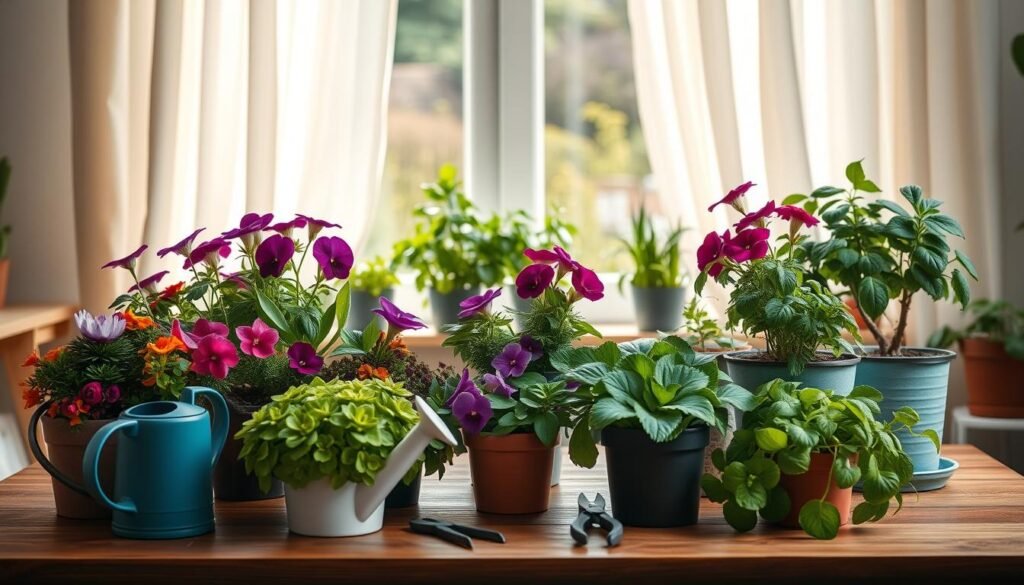

Surprising fact: many houseplant owners cut away nearly a third of growth in one go, and that stress can cut bloom cycles in half.
Pruning is often the missing step that keeps a plant healthy and blooming. This short guide gives a clear, friendly set of rules for gentle, effective trimming that helps avoid panic-cutting.
You will learn a simple plan: picture the final shape, use clean, sharp tools disinfected with alcohol or a mild bleach solution, and remove only small amounts at a time. A good rule is to cut no more than about 20–30% in one session.
This approach blends health care and training. We treat pruning for disease control and future growth, and trimming for shape. Expect tips on timing, where to cut, angles, deadheading for blooms, and special exceptions like orchids and snake plant.
What you need: a clean cutting tool, a plan for the final shape, and a minute to spot new growth points before making the first cut. Follow these rules and you’ll see fuller foliage, fewer pests, and more reliable bloom cycles.
Key Takeaways
- Visualize the final shape before making any cuts.
- Use clean, sharp tools; disinfect between cuts.
- Remove only 20–30% of growth per session to prevent stress.
- Prune for health and train growth; trim for shape in the same visit.
- Timing, cut angle, and node placement matter for rebound and blooms.
Why pruning matters for indoor flowering plants and houseplants
A few careful cuts can reset a plant’s priorities and spark healthier growth.

Health benefits
Removing yellow or damaged leaves lowers hiding spots for pests and cuts the risk of disease spreading through foliage. Use clean pruners and make a precise cut at the base of the leaf rather than tearing. That leaves a neat wound that heals faster.
Growth benefits
Deadheading spent blooms stops a plant from wasting energy on dying parts. That energy shifts toward new growth and future buds. Indoors, light is limited, so removing weak foliage helps the plant use available light more efficiently for stronger growth.
Shape benefits
Houseplants often stretch toward windows and become spindly. Strategic trimming balances mass and corrects lean. A better structure improves airflow through the leaves, which further reduces disease pressure.
“Resetting a plant’s focus means it can spend energy on what will thrive next.”
Result: a healthier, well-shaped specimen is more likely to produce steady blooms through its natural cycle.
When to prune for the best blooms and fastest recovery
Timing your cuts matters more than their size when you want strong blooms and quick recovery.
Keep this simple rule in mind: do major shaping before active growth starts so the plant can rebound during the growing season.
Late winter into early spring
Major reshaping—reducing size, removing long stems, or changing structure—belongs in late winter or early spring. Daylight rises, and new shoots form faster.
Light touch year-round
Small tidying cuts are fine any time, including winter. Remove dead leaves, spent blooms, or a failing stem. In low-light months, be conservative so the specimen avoids extra stress.
Cutting back after summer outdoor time
If you move container specimens outdoors for spring summer care, plan on cutting back before bringing them inside. That helps them fit your home and keeps windows clear for other growth.
- Remember: major work in late winter–early spring; light touch any season.
- Check for recent stress—repotting, pests, or drought—before heavy cutting.
- Less is often more when aiming for best blooms; restraint reduces shock.
“The right timing and gentle restraint are what let a plant set buds without wasting energy.”
Next: knowing when is only half the battle — the next section explains exactly where to cut so regrowth heads in the direction you want.
Prep before you cut: assess the plant and choose the right tools
A quick visual check can spare a plant weeks of recovery and keep new growth on track.

Step back and take a 60-second assessment
Stand three feet away and rotate the pot. Look for uneven fullness, a one-sided lean toward light, or crowded interior stems.
If foliage is dying or discolored, mark those stems for removal first. Decide the ideal final shape before any cuts.
Spot leaf nodes and latent buds
Find the leaf node—the point where a leaf meets a stem. New growth usually sprouts from that node or nearby buds.
Latent buds are hidden growth points that often wake after a cut. Cutting just above a node guides new shoots the right way.
Match tools to the job and keep them clean
Use pruning shears for thicker branches and kitchen scissors for slender stems. Pinch soft growth with fingers for small shaping jobs.
Keep blades sharp; dull tools tear a stem and slow healing. Wipe metal with alcohol or a mild bleach-and-water solution between uses to reduce disease risk.
“A clean, sharp cut is plant health work, not just neatness.”
- Tip: remember that most plants grow from the tip down—removing dominant tips helps create a bushier shape.
How to prune indoor flowering plants without stressing them
Precision matters: make cuts that guide recovery instead of forcing it. Start by spotting the nearest leaf node; trim just above that point so new growth has a clear place to emerge.
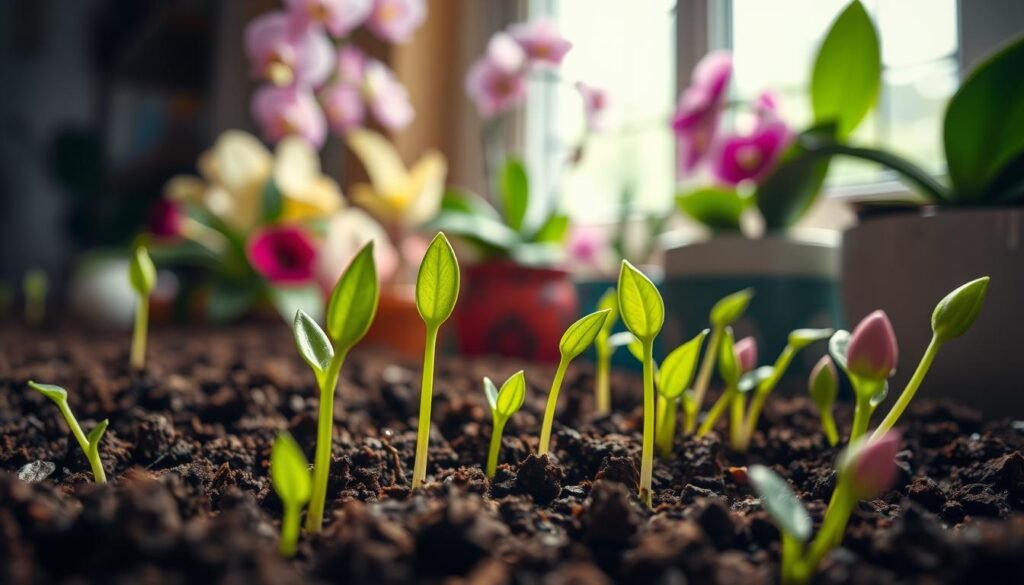
Where and how to cut
Aim for a 45-degree angle, slanting the cut away from the node. That keeps water off the wound and lowers rot risk.
How much to remove
Follow the 1/3 rule: remove no more than one-quarter to one-third of healthy mass in a session. Dead or dying material is an exception and counts as cleanup, not part of the limit.
Handling thicker stems and shaping
For large stems, cut close to the main stem or the plant base for a clean structure. To encourage bushier growth, snip dominant buds and stagger lengths—some cuts shallow, some deeper, some to the base.
Finish with cleanup
Clip away dead leaves and stems. If a stem is rotten at the root, pull it free and let the soil dry before the next watering. This helps the plant focus energy on healthy new shoots.
| Task | Action | Why it matters |
|---|---|---|
| Find node | Cut just above leaf node | Guides new stems and future blooms |
| Angle | 45° away from node | Prevents moisture buildup and rot |
| Amount | 1/4–1/3 rule | Limits shock and supports steady growth |
| Large stems | Cut to main stem/base | Keeps structure tidy and strong |
| Cleanup | Remove dead, let soil dry | Reduces disease and speeds recovery |
Pruning for flowers: deadheading, bloom cycles, and keeping buds intact
Deadheading keeps a plant focused on making new blooms instead of feeding spent ones.
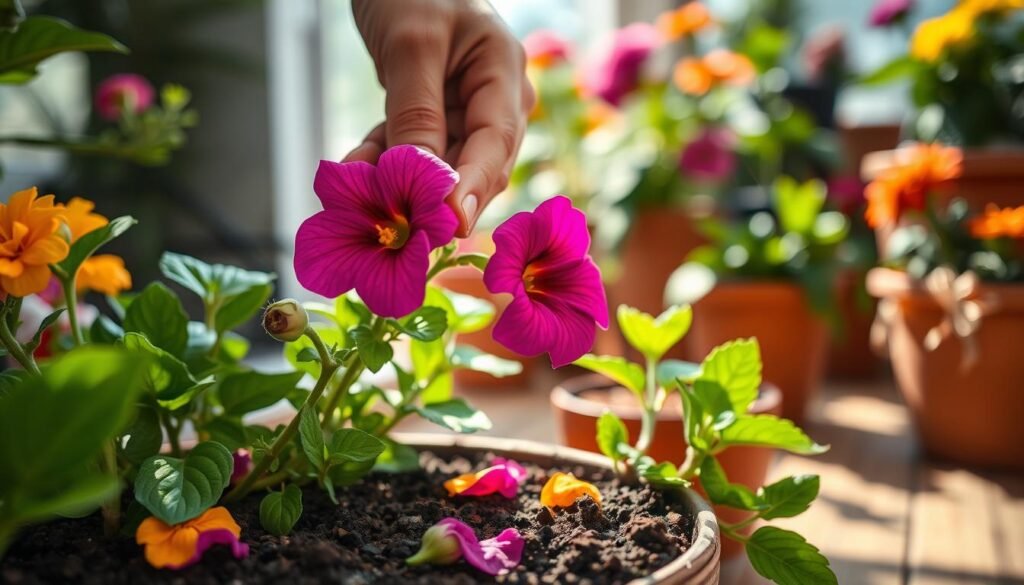
Deadheading 101
In one sentence: it’s pruning for flowers—removing spent blooms so the plant can keep blooming instead of feeding dying flowers.
Beginner action: pinch off or clip spent flowers back as close to the main stem as possible for a neat finish and better energy use.
Timing around buds
Some flowering houseplants set buds weeks in advance. Random cuts can remove the next round of blooms.
Before you cut, scan stems near nodes for swelling buds or tips that look different from leaves. Protect those and skip structural cuts nearby.
Orchid note
Many orchids should only lose dead flower spikes. Cut the spike at the point where it emerges from the leaves and wait for the next cycle.
Season-aware shaping
Save bigger shaping for spring or summer when active growth helps recovery. Rampant growers on a sunny sill often respond best during spring summer care.
“When in doubt, deadhead spent blooms first and delay major shaping until you see a clear bud pattern.”
Plant types that need special pruning rules indoors
Some houseplants need special care when you trim them; one wrong cut can change months of growth.
Vines and trailing varieties
Train wandering stems along a support and clip back runners that crowd shelves. Healthy vines can grow fast, so major cutting back works best in spring and summer when growth resumes.
Plants that should not be cut hard
Palms and Norfolk Island pine rely on a single terminal bud. Removing that bud can halt new growth and may kill the specimen.
Snake plant and ZZ plant grow slowly. Remove only dead or damaged foliage; topping healthy crowns often won’t regrow the same way.
Woody and bloom-friendly houseplants
Holiday cactus benefits from pinching leggy segments after bloom cycles to increase fullness and future blooms. Rubber plant responds well to height reduction for a fuller shape.
Quick decision tool: if a specimen branches from nodes it is usually prune-friendly; if it grows from a crown or single point, be cautious.
| Category | Example | Best action |
|---|---|---|
| Train and trim | Pothos, ivy | Guide on support; cut back in spring/summer |
| Do not hard cut | Palms, Norfolk Island pine | Avoid removing terminal bud; only tidy damaged fronds |
| Slow regrowth | Snake plant, ZZ | Remove only dead parts; no top cuts |
| Responds well | Holiday cactus, rubber plant | Pinch or shear after bloom for shape |
Conclusion
Short, regular check-ins on shape and light keep growth steady and stress low.
Choose the right time: major work in late winter and early spring, light cleanup any season. Assess form, then make clean, guided cuts just above nodes at a 45° angle. Keep tools sharp and disinfected and follow the 1/3 rule so a plant avoids shock.
Focus on small gains: iterative pruning delivers fuller houseplants, more reliable blooms, and steady new growth. Respect special cases—palms, Norfolk Island pine, snake plant, ZZ, and many orchids need different care. Aftercare matters: proper light, normal watering, and dry soil if rot appeared. Save healthy cuttings in water or soil for propagation and you’ll add value from every session.