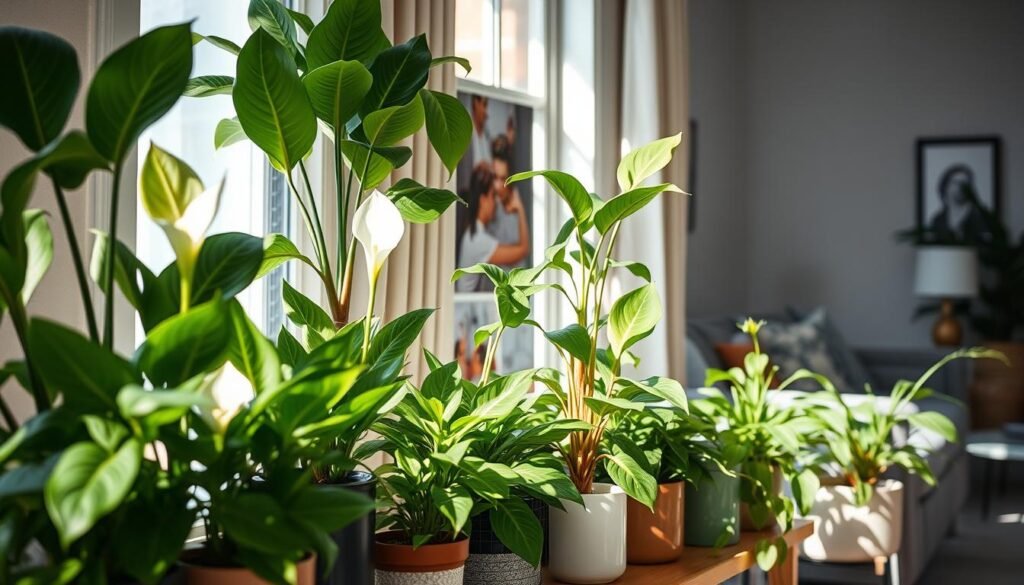

Surprising fact: a north-facing window can offer 1,000–5,000 lux — enough for many houseplants to photosynthesize without scorching their leaves, while direct sun can hit roughly 100,000 lux.
This guide helps you pick flowers and foliage that thrive in protected, filtered sun and shows how the right potting mix and drainage promote steady root growth.
Start by finding the brightest workable spot in your home and confirming it’s filtered rather than direct. Match each plant by its tolerance so you avoid burned leaves or stalled blooms.
We’ll cover easy starter picks, foliage-first favorites, blooming varieties, and larger statement houseplant choices that still need shelter from harsh sun. You don’t need fancy meters — simple checks of window direction, distance in feet, and visible behavior give reliable cues.
Consistency matters: keeping blinds or curtains set the same way helps plants adapt and reduces risk in rooms with strong daytime sun.
Key Takeaways
- Find a filtered-sun spot near a window and avoid harsh direct sun.
- Choose potting soil with good drainage to protect roots and encourage growth.
- Match plant tolerance to real conditions using distance and visible cues.
- Cover common categories: beginner, foliage, flowering, and larger varieties.
- Keep window treatments consistent to reduce stress and watering errors.
What bright indirect light actually means for indoor plants
A quick eye test can tell you if a window spot will fuel steady growth or scorch foliage.
Direct vs. indirect sun: Check shadows. Sharp, defined shadows mean a beam of sun is landing on a pot. Soft, diffuse shadows mean the sun is filtered and safe for many species.
The reason leaves burn is simple: intense sun plus heat damages leaf tissue. Tender foliage can yellow, crisp, or fade when exposed to a hot beam for hours.
How bright is bright indirect? It’s roughly 1,000–5,000 lux — enough that you can read comfortably during the day without a sunbeam hitting the plant.
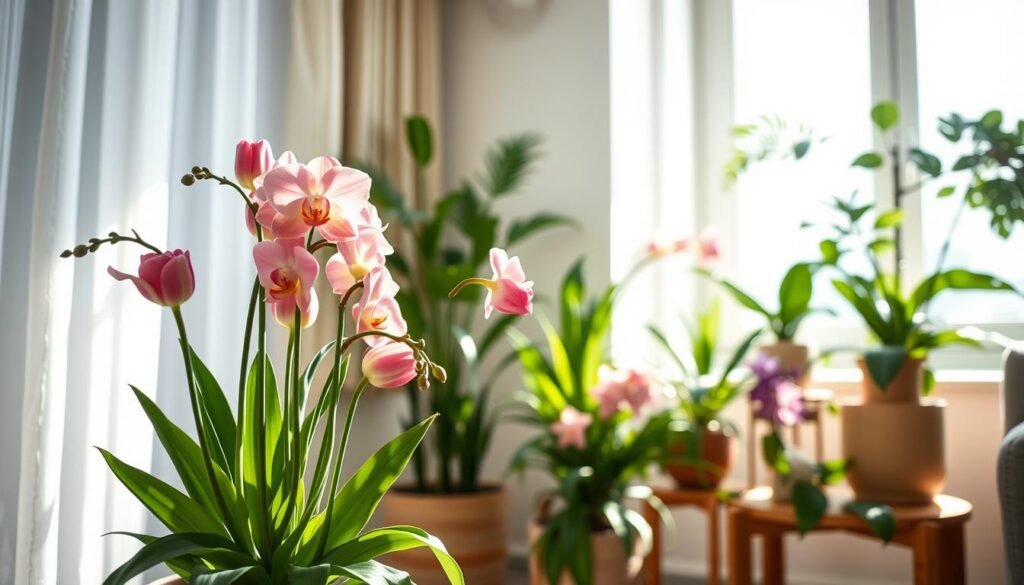
- Near a north-facing window a few feet back: gentle and steady.
- Behind a thin sheer curtain: diffuses a strong sun so leaves stay cool.
- In dappled shade under a tree canopy outdoors as a visual model for room placement.
This category is a spectrum: the same room can move from safe to harsh depending on season and sun angle. Many houseplants thrive when they get steady, filtered exposure rather than direct beams.
Next up: the easiest way to dial this in is to check window direction, measure distance from glass, and note daily timing — see tips on choosing flowering houseplants for bright indirect light here.
How to find the right light conditions in your home
Know your windows. Label each as north, east, south, or west and note how the sun moves across them through the day. North-facing rooms often have the lowest levels and may never get direct sun, while east windows give gentle morning rays.
Use the “first six feet” rule: in south and west rooms the area closest to the glass can get intense sun. Move a pot a few feet back and the exposure changes quickly, often to safe, diffuse conditions.
Test a spot by watching shadows at different times. If you see hard beams land on leaves, the spot gets direct sun at some hour. Soft, diffuse shadows mean better conditions for many houseplant types.
Common obstructions and seasonal shifts
Trees, nearby buildings, blinds, and small windows cut usable light levels. Reflective surfaces can boost brightness, while heavy curtains reduce it.
Seasonal change matters. Winter brings lower hours and weaker intensity; deciduous trees can raise winter sun when leaves drop. Summer increases risk of scorching and may require more frequent watering.
Quick signs your plant needs a change
- Stretching or pale new growth = too little light.
- Bleached, crisp, or discolored edges = too much direct sun.
- Slow growth or changes in leaf color often point to placement or care adjustments.
Keep conditions steady: consistent blinds or curtain settings help your plant adapt. Often the easiest fix is a small move of a few feet rather than a big care overhaul.
bright indirect light indoor plants that are easiest for beginners
Choose a protected window spot that gets steady, gentle sun without harsh beams. This starter pack suits busy homes and first-time caretakers. These selections forgive missed watering and variable daily conditions.
Snake plant (Sansevieria) — Thrives across a wide range, from low to brighter indirect exposure. It stores water in stiff leaves, so occasional neglect usually won’t harm it. Place a pot a few feet from a window to keep leaves crisp.
ZZ plant — Glossy foliage and excellent drought tolerance make this a low-fuss favorite. It handles missed water better than many houseplant varieties and tolerates typical room temperatures.
Peace lily (Spathiphyllum) — Known for reliable foliage and seasonal blooms when given a spot with protected, brighter conditions. Watering cues: drooping leaves perk back after a drink, so use that as your signal.
Cast iron plant (Aspidistra) — A rugged choice for moderate filtered exposures in living rooms or bedrooms. It tolerates cooler temperatures and slower growth, so you can forget a watering now and then.
| Variety | Best spot | Watering | Why it’s beginner-friendly |
|---|---|---|---|
| Snake plant | Few feet from a window | Every 2–6 weeks | Stores water; wide tolerance |
| ZZ plant | Protected shelf or corner | Every 2–8 weeks | Drought proof; glossy foliage |
| Peace lily | Bright, protected window | Weekly when actively growing | Reliable foliage; blooms with proper spot |
| Cast iron plant | Moderate filtered exposure | Every 2–4 weeks | Tough; slow and steady growth |
Quick tips: start near that protected window and nudge pots a foot or two if leaves stretch or fade. Water less in winter, and use growth changes as your cue to adjust placement.
Best foliage-first houseplants for bright indirect light
If your priority is color and texture, choose houseplants that show off foliage all year. Foliage-first means you pick species for bold leaves, pattern, and shape rather than blooms. These choices thrive in a protected window spot that gets steady, filtered sun.
Calathea and prayer plant (Maranta) — Known for striking patterns and the nightly leaf folding. They prefer steady, mild exposure to avoid stressed leaves. Keep soil even and humidity moderate.
Chinese evergreen — Colorful varieties tolerate a range of exposure and forgive occasional care lapses. This makes them a practical pick when room conditions shift through the year.
Pothos — Great for shelves and hanging baskets thanks to trailing growth. It tolerates low to medium rooms but grows faster with more moderate light. Water when the top inch of soil dries.
Philodendron — Fast, easy growth in medium-to-brighter rooms. It copes if your spot dips toward lower exposure, yet rewards extra hours of gentle sun with quicker new growth.
Dracaena (wide-leaf varieties) — An upright option for corners near windows. It adds height without demanding direct sun and fits well where you want structure.
Ferns and selaginella — Offer lush texture and prefer steady moisture and higher humidity. Place them where humidity is easier to maintain, such as bathrooms or near a humidifier.
Avoid the risk: if you see sun patches hitting leaves for hours, add a sheer curtain or move pots back a few feet to protect sensitive foliage.
Blooming indoor plants that love bright indirect light
When blooms are your goal, solving light issues comes first—most flower production follows proper exposure.
Many flowering houseplants need more usable sun than foliage-only varieties, yet they still avoid hot beams. Start near a protected window and watch buds for several weeks before changing care.
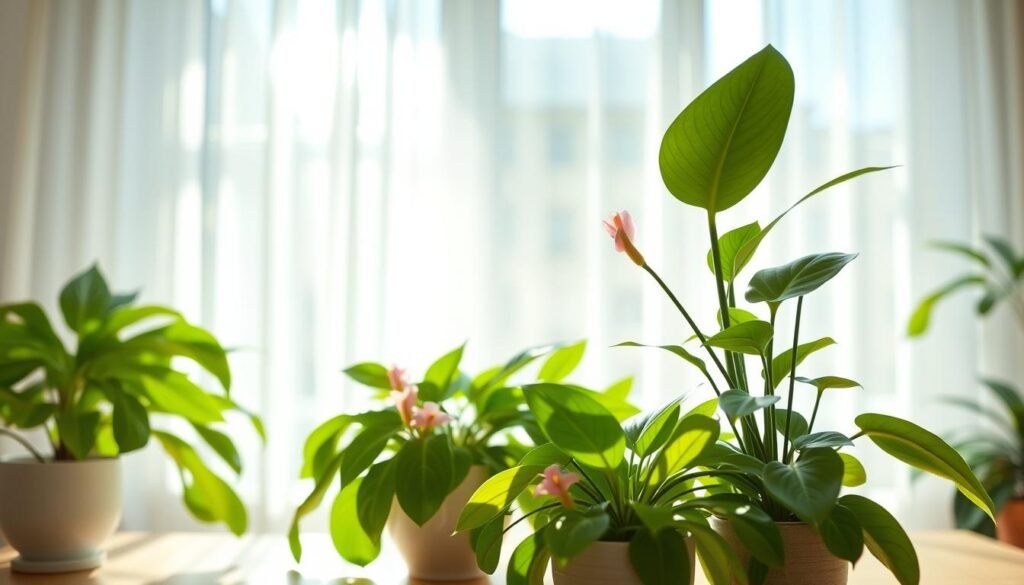
African violet: steady flowers with gentle, filtered light
African violets bloom best with soft, even sun that reaches the pot for several hours. Keep the soil evenly moist and avoid getting water on crowns to prevent rot.
Anthurium: colorful spathes with bright, protected light
Anthuriums reward a spot that offers strong but filtered sun. Proper exposure keeps spathes vivid and leaves glossy without scorching.
Phalaenopsis orchid: long-lasting blooms near a bright window
Phalaenopsis do well placed a foot or two back from glass or behind a sheer curtain. They need steady day hours to set and hold blooms for weeks.
Placement framework: start in a bright spot, monitor new leaves and flowers for a few weeks, then adjust position by feet rather than moving rooms. Minor shifts usually fix problems.
Care tied to light: in lower light, cut back watering and be patient with bloom timing. When days lengthen, expect more growth and flowering.
Warning: if leaves show discoloration or crisp edges, the risk is too much sun—filter or move the pot a few feet back.
| Variety | Best window spot | Hours of usable sun | Watering |
|---|---|---|---|
| African violet | Protected east or north-facing shelf | 4–6 hours | Keep evenly moist; avoid crown wetting |
| Anthurium | Bright, filtered near a window | 6–8 hours | Moderate; allow top inch to dry |
| Phalaenopsis orchid | Back from bright window or behind sheer | 8–10 hours (filtered) | Every 1–2 weeks; reduce in winter |
For compact, flowering options that work well on desks and shelves, see our guide to compact options compact flowering houseplants.
Statement plants for brighter rooms that still need indirect light protection
Big foliage makes a statement, but large leaves show scorch or brown edges fast if a sun stripe hits them. Place these specimens where they get steady, filtered exposure and stable temperatures.
Alocasia (elephant ears): big-leaf drama plus humidity needs
Alocasia loves a well-lit corner and high humidity. Use a humidifier or mist regularly to keep glossy leaves healthy and reduce browning at the margins.
Rubber plant
Rubber trees develop their best color near east- or west-facing windows. Protect them from chills—keep temps above about 65°F and away from drafty vents.
Fiddle leaf fig
Fiddle leaf figs reward bright exposure with strong growth but dislike cold drafts and sudden moves. Morning or late-day sun is safer than hot afternoon rays.
Kentia and rhapis palms
These palms add height without demanding harsh beams. Set them a few feet back from glass to avoid scorch and keep air circulation steady.
Autograph tree (Clusia)
Clusia offers trendy, leathery leaves and prefers medium-to-brighter filtered sun. Direct beams can burn foliage, so add sheer curtains or move pots out of the hot stripe.
Quick placement tips:
- Count how many hours a sun patch crosses the floor near the pot.
- Use sheer curtains at midday and rotate pots weekly for even growth.
- Move plants a few feet back if leaves show pale or crispy spots.
Conclusion
,Aim for filtered sun on leaves rather than direct beams. That simple rule helps most houseplant varieties grow steadily and avoid scorch.
Start with one trial by a single window. Watch how the sun moves during the day and note any harsh beams or long sun patches lasting several hours.
Use small moves or a sheer curtain to soften exposure. Easy wins like the snake plant and peace lily forgive mistakes while you learn watering and placement.
Let plant behavior be your guide: stretching means more usable exposure, while discoloration or crisping means dial it back. Revisit placement and watering with each season so your houseplant stays steady year-round.
Pick one from the list, place it thoughtfully, and tweak over two weeks rather than making big changes overnight.