
Surprising fact: the market for rustic planters is growing at a 6.8% CAGR through 2030, showing how many people want natural touches in their homes.
We believe a well-chosen arrangement can turn any room into a calm retreat. Using planters, a wood box, or a small grouping of succulents adds warmth and texture to a living space.
We recommend mixing faux greens with real flowers to keep things lush without extra upkeep. This approach works great in a bathroom or a tight corner where space is limited.
Our selection of indoor planters and curated arrangements aims to make your home feel inviting and modern. In the paragraphs ahead, we’ll share simple, stylish ideas to lift your design with low-maintenance charm.
Key Takeaways
- Market growth shows rising interest in natural planter styles.
- Mixing faux and real elements creates low-maintenance beauty.
- Succulents, wood accents, and boxes warm up small spaces.
- Indoor planters suit bathrooms and compact corners well.
- We’ll guide you to simple arrangements that feel cozy and modern.
Why We Love the Rustic Indoor Flower Display Aesthetic
We love how natural planters bring warmth and texture to every room in the home.
Market trends back this up: demand for these planters is growing at a 6.8% CAGR through 2030. Many new launches use reclaimed wood and recycled metals. That sustainable focus now makes up about 68% of the sector.
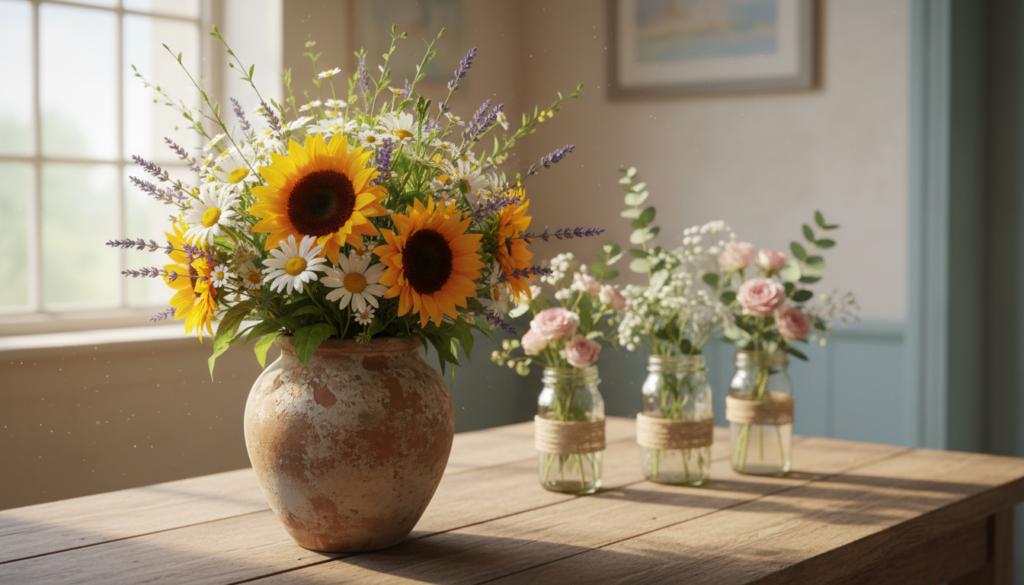
We admire the soft appeal this style gives small spaces. Even a simple bathroom can feel like a spa when you add a ceramic vessel or a wood box with a mixed arrangement.
Our go-to approach mixes faux succulents with real flowers for low upkeep and visual depth. Decorative planters tie the look together and make the design feel intentional.
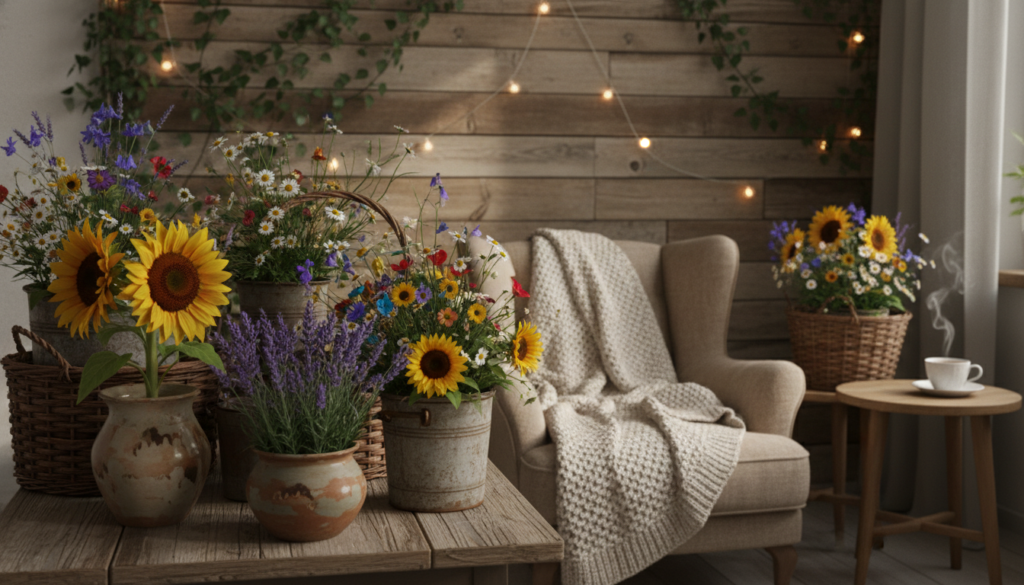
- Use reclaimed materials for authenticity.
- Combine faux and fresh elements for balance.
- Choose vessels that match your room’s scale.
| Feature | Why it matters | Quick tip |
|---|---|---|
| Reclaimed wood | Eco-friendly and textured | Pair with ceramic pots |
| Faux + real mix | Low maintenance, full look | Add one real bloom for scent |
| Decorative planters | Cohesive room design | Match to other finishes |
Essential Materials for a Cozy Home Atmosphere
A few smart material choices make your planters both beautiful and practical. We focus on pieces that add warmth while protecting your plants and surfaces. Choosing the right pots and finishes keeps arrangements healthy and your rooms inviting.
Natural Wood and Rattan
Asia-Pacific leads production and supplies high-quality rattan and wood used in many planters and plant pots. We like wood boxes and woven baskets because they add texture without overpowering a room.
Rattan is lightweight and pairs well with ceramic pots. A small wood box on a table creates a cozy nook for succulents or a mixed arrangement.
Ceramic and Metal Finishes
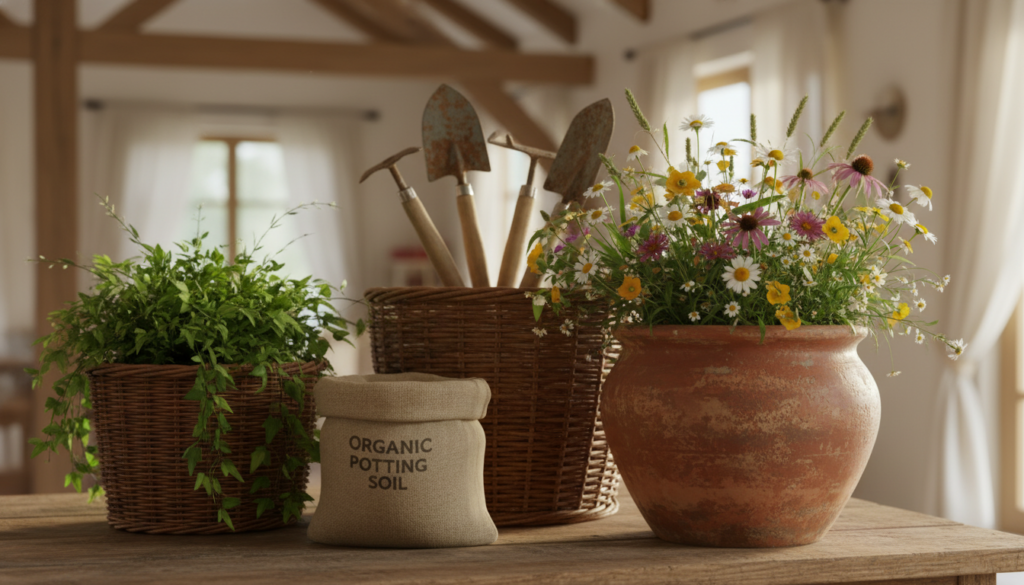
Ceramic planters and terracotta pots offer natural porosity, which helps soil dry evenly and keeps indoor plants healthy. When we choose ceramic, we always check for a lead-free finish to protect people and pets.
A well-placed metal pot on a side table works as a bold decorative accent. Combining ceramic and wood materials creates balanced design that suits flowers, succulents, or faux greens.
- Quick tips: Use terracotta for breathability; add a saucer for table protection.
- Mix textures—wood + ceramic—to make planters feel intentional.
- Pick the right plant pots for small spaces like a bathroom or tight corner.
| Material | Benefit | Best use |
|---|---|---|
| Wood / Rattan | Warm texture, lightweight | Boxes, baskets on tables |
| Ceramic / Terracotta | Porous, plant-friendly | Plant pots for succulents and flowers |
| Metal | Durable, decorative | Accent pots on side tables |
Top Product Picks for Your Floral Arrangements
Choosing the right pots and planters sets the tone for any centerpiece or shelf. We picked three styles that balance price, finish, and versatility so you can match pieces to your room’s planters and plants.
Handmade Woven Baskets
These basket planters start at about $3.15 and add warm texture to tabletops and boxes. We like them for faux succulents or small plant pots because they’re lightweight and affordable.
Vintage Metal Pedestal Vases
A metal vase priced from $5.44 to $9.07 lifts any table into a formal centerpiece. The pedestal finish suits a black or natural design and works well with both real flowers and faux stems.
Rustic Ceramic Clay Pots
Our ceramic planters range from $58.48 to $64.80. These clay pots offer durability and a classic terracotta feel. Use them as single centerpieces or on a plant stand for layered height.
Quick tips: Pair a basket with a ceramic pot for contrast. Use a metal vase for taller stems. Choose a planter pot with a saucer to protect surfaces.
| Product | Price | Best use |
|---|---|---|
| Handmade Woven Basket | $3.15 | Small plant pots, faux succulents, table accents |
| Vintage Metal Pedestal Vase | $5.44–$9.07 | Centerpiece on a table, single-stem flower vase |
| Ceramic Clay Pot | $58.48–$64.80 | Durable planter pot, terracotta-look for larger plants |
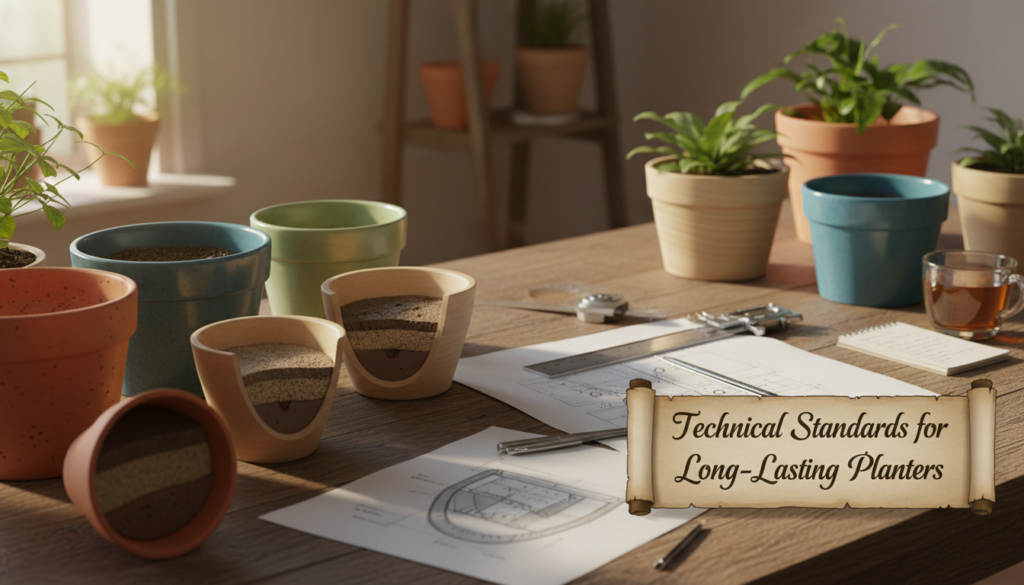
Technical Standards for Long-Lasting Planters
Longevity in any planter begins with standards for drainage, material safety, and strength. We check specs first so our pots and planter pots protect plants and look great for years.
Ensuring Proper Drainage and Safety
Drainage matters: always prioritize planters with ISO 26345-certified drainage holes to prevent root rot in plants and flower pots.
For ceramic planters and metal pots, confirm REACH and CPSIA compliance. These rules ensure lead-free finishes and safer use around people and pets.
We recommend terracotta with 20–30% porosity for balanced water retention in plant pots and succulent arrangements. That porosity helps a plant’s roots breathe without drying out too fast.
- Structural integrity: large ceramic designs should meet a minimum 50kg/m² rating for long-term home use.
- Drainage practice: pair a saucer or liner with certified holes when you place a planter on wood or fabric surfaces.
- Material choice: choose metal or ceramic planters with verified finishes to avoid toxins in the home.
| Standard | Why it matters | Quick check |
|---|---|---|
| ISO 26345 drainage | Prevents root rot | Look for certified holes |
| REACH / CPSIA finish | Lead-free safety | Verify labels or specs |
| Terracotta porosity | Optimal water balance | 20–30% porosity recommended |
Practical tip: combine these standards with smart styling. For more creative container ideas and safe use, see our guide on creative container ideas.
Creative Ways to Style Your Indoor Greenery
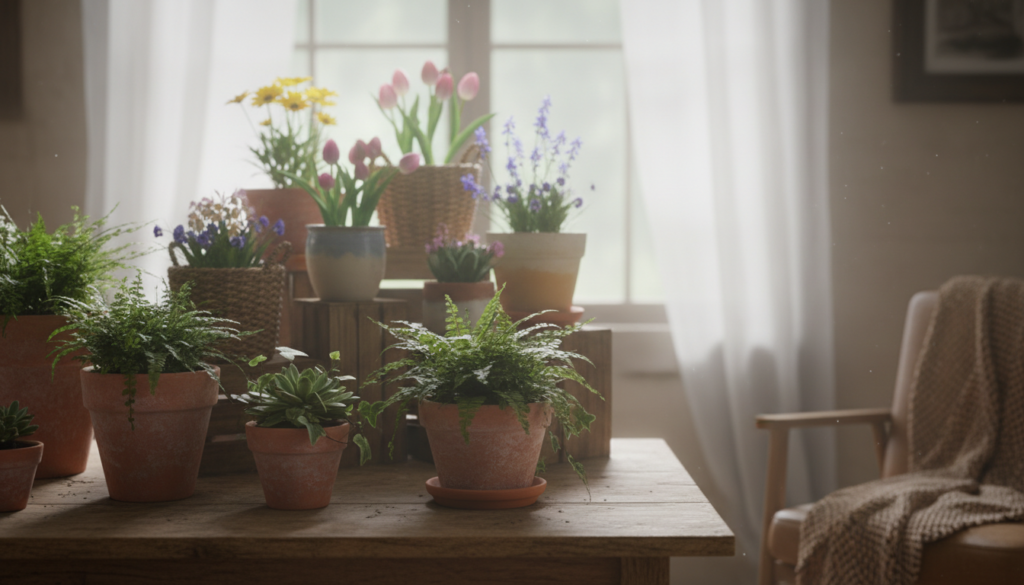
Styling pots by size and finish creates a curated look that feels effortless. Start by grouping planters of different heights on a table to build depth and interest.
Mix ceramic pots with a small wood box planter to add texture and balance. A metal vase makes a striking centerpiece, especially with faux flowers for low upkeep.
For harmony, use matching plant pots in a bathroom or living room. This creates a calm, cohesive design that ties other decor together.
Place a plant on a stand to lift the eye and make a focal point. Add a unique planter pot or decorative flower vase to showcase succulents and tiny blooms.
| Styling Tip | Best Use | Quick Swap |
|---|---|---|
| Grouped pots by size | Table centerpieces, shelves | Mix ceramic + wood box |
| Metal vase centerpiece | Dining table or console | Use faux flowers for low care |
| Elevated plant | Corners, entryways | Add a plant stand for focus |
Conclusion
Strong, we hope this guide sparks fresh ideas for your home decor. Choose a planter and plant pots that suit your room and scale. A well-made flower vase or ceramic pot lifts a corner and adds texture.
Prioritize safety and drainage so your plants and flowers thrive for years. Mix faux stems with real blooms or succulents for easy upkeep and rich arrangements. Try wood, metal, or ceramic pieces to vary the look.
Thank you for reading. Experiment with small swaps and thoughtful design to create a cozy space that reflects your home and style.