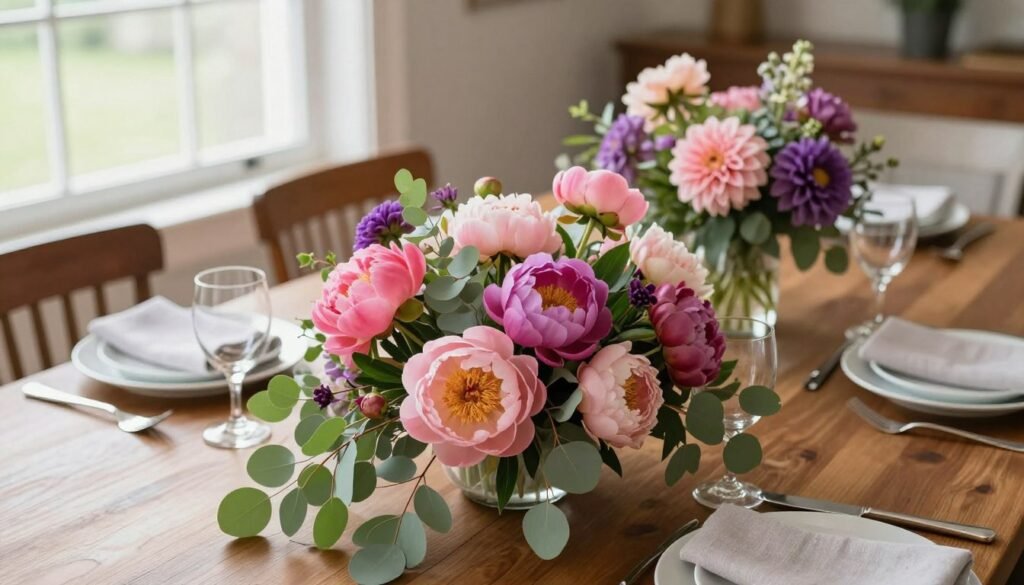
indoor flower display dining table

Indoor Flower Display Ideas for Dining Tables

63% of hosts say a quick centerpiece changed the entire mood of a meal, and we see why.

We remember the past when a simple wood top could feel plain until a vase and the right blooms arrived. Karen Weir-Jimerson from Costa Farms notes that adding a fern to a dark wood table can instantly lift the room’s vibe.

In this piece, we share easy ways to turn a plain surface into a welcoming place for guests. We focus on practical tips for a tasteful arrangement, from roses and peonies to succulents and orchids.

Whether you plan a party or a quiet evening, a well-chosen centerpiece adds charm and elegance.

Key Takeaways

  • Small additions can shift the room’s mood and atmosphere quickly.
  • Choose a vase and plant that suit your wood finish and interior design.
  • Rex begonias or succulents make festive centerpieces with low upkeep.
  • Balance water, light, and placement to keep arrangements fresh longer.
  • We aim to help you create a confident table setting for any event.

Timeless Inspiration for Your Indoor Flower Display Dining Table

Switching a narrow white plank for a wider Mission-style oak surface often changes the whole room’s balance and mood. We found Karen Weir-Jimerson’s note useful when we planned scale and finish for a classic setting.
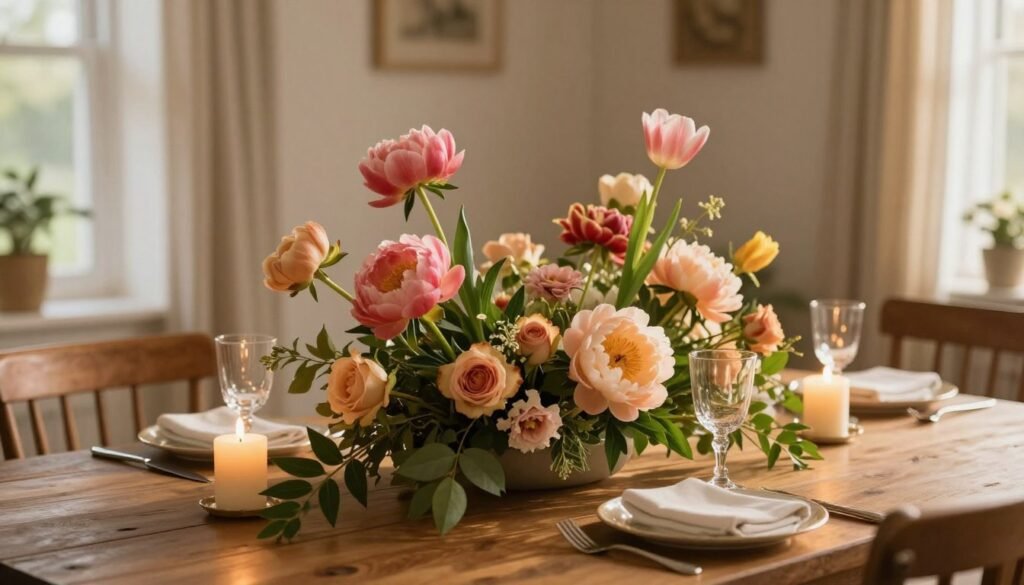
A beautifully arranged dining table centerpiece featuring a mix of vibrant seasonal flowers in varying heights, such as peonies, roses, and tulips, complemented by lush greenery. The centerpiece should be positioned prominently at the center of a rustic wooden dining table, adorned with elegant tableware and soft, flickering candlelight. In the background, a softly blurred setting of a warm, inviting dining room with neutral-colored walls and natural light filtering through sheer curtains enhances the atmosphere. The lighting is golden hour, casting a warm glow over the scene, creating a serene and inviting mood. Focused at a slightly elevated angle to capture the richness of the flowers and the delicate details of the table setting, evoking timeless elegance and inspiration for indoor floral displays.

We favor an evergreen centerpiece that lasts through the year. It keeps the room fresh and lets us tweak color and texture by season. Choosing the right vase matters: a sturdy vessel holds water well and keeps stems upright during any party.

  • Scale matters: match arrangement size to the surface so the setting feels balanced.
  • Wood as foundation: the grain and color set the tone for elegance and charm.
  • Roses and variety: we combine roses with mixed stems for a refined atmosphere.
Element Why it matters Quick tip
Vase size Keeps stems hydrated and proportional Choose a low wide vase for larger surfaces
Arrangement scale Balances the room and avoids overwhelm Measure one-third to half the surface width
Evergreen base Provides year-round structure and charm Swap accents seasonally for fresh vibe

Our approach blends past design cues with modern ease, so each setting feels welcoming and elegant.

Selecting the Right Plants Based on Light Conditions

Light is the single biggest factor when we choose greenery for a dining room setting. First, we assess how much sun the room gets at different times of the day. That simple check guides everything from the centerpiece choice to how much water each plant needs.
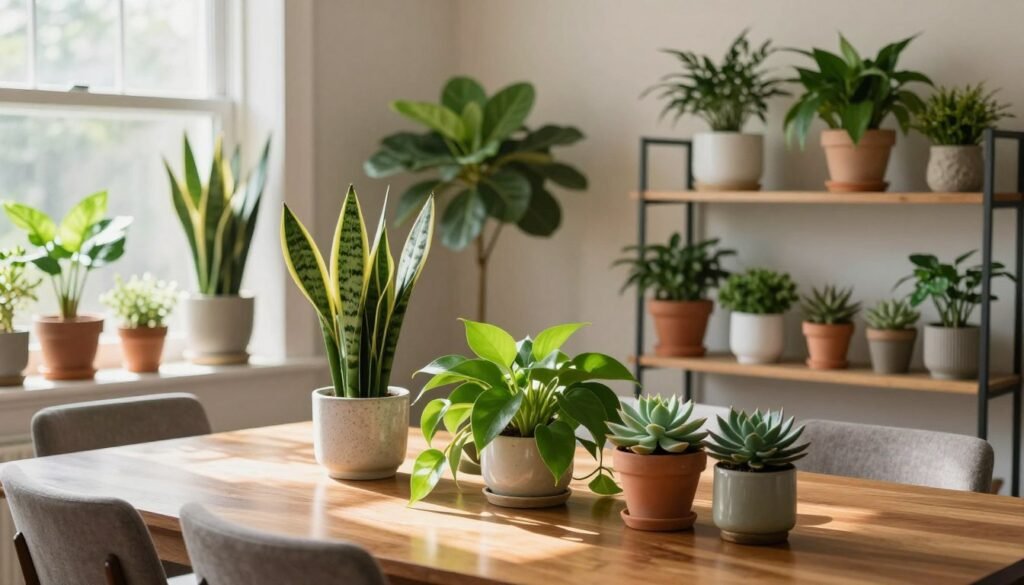
A beautifully arranged dining room showcasing a selection of potted plants suited for varying light conditions. In the foreground, a polished wooden dining table adorned with a vibrant centerpiece featuring a mix of low-light and bright-light plants, such as a snake plant, pothos, and succulents. The middle ground includes stylish shelves with different types of planters, blending elegant ceramic and rustic terracotta, displaying how various plants adapt to their surroundings. Soft natural light streams in from large windows, casting gentle shadows and creating a tranquil and inviting atmosphere. The background features subtle, warm-colored walls that enhance the lush greenery. Captured from a slightly elevated angle, this image evokes a sense of harmony between nature and interior decor, perfect for cultivating an indoor floral display.

Direct Sunlight Favorites

For bright, sunny spots we pick hardy options like croton, succulents, cacti, and yucca. These thrive when a table or windowsill gets long sun stretches. We place succulents in shallow pots and keep an eye on water to avoid rot.

Bright Indirect Light Options

In rooms with filtered light, palms, dracaena, lucky bamboo, ficus, nerve plant, hoya, and zebra plant work well. We add roses or other colorful blooms to these arrangements for seasonal contrast. A sturdy vase or pot helps keep the centerpiece steady.

Low Light Varieties

North-facing spots suit snake plants, ZZ plants, calathea, ferns, and orchids. By grouping orchids with other low-light greens, we create a lush look even in dim corners. We also rotate decor with the time of year to protect plant health and keep the room lively.

Creative Floral Arrangements for Every Dining Experience

A well-made arrangement can turn a simple place into a memorable meal in minutes.

We mix seasonal blooms with high-quality faux silk stems to build centerpieces that last through any dining experience. For height and drama, we arrange rustic 36″ pomegranate stems in a tall vase. That single move lifts the whole setting and creates a striking focal point.
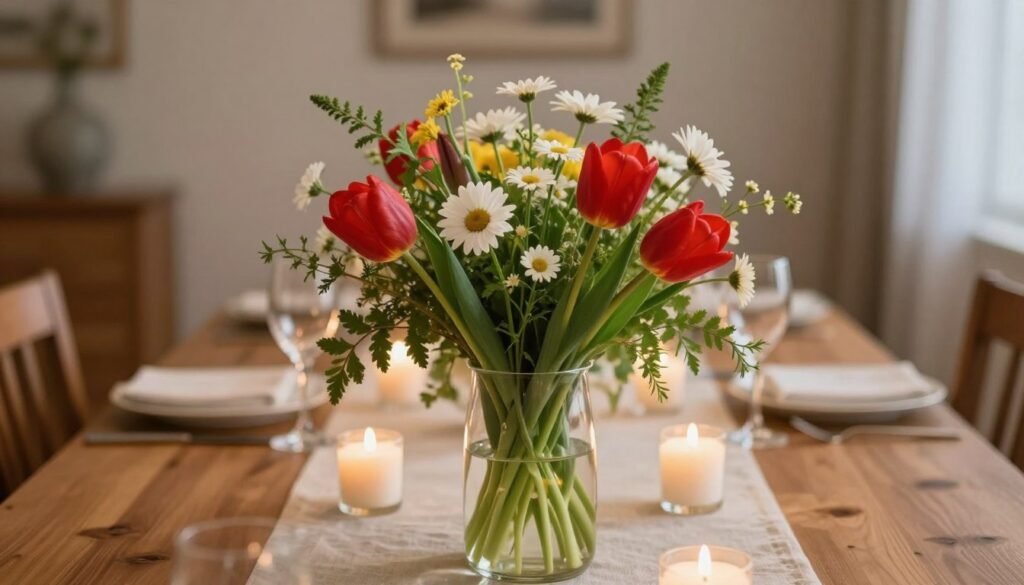
A beautifully arranged centerpiece for a dining table, showcasing an assortment of vibrant flowers in various stages of bloom. In the foreground, a tall glass vase filled with striking red tulips, white daisies, and lush greenery creates a focal point. Surrounding the vase, delicate white candles add a warm, inviting glow. In the middle ground, a soft, neutral table runner enhances the overall elegance. The background features a softly blurred glimpse of a cozy dining room, with warm wood accents and soft lighting, creating an intimate atmosphere. Capture this scene with a shallow depth of field to highlight the centerpiece while softly blurring the background, evoking a sense of warmth and creativity for every dining experience.

Incorporating Seasonal Blooms and Faux Silk Flowers

Peonies and succulents give contrast: soft petals with modern texture. We often pair real peonies with real-touch artificial roses to cut maintenance and keep the centerpiece fresh without daily water care.

When we design for an event, we tune color and texture to the room and season. We change arrangements with the time of year so each meal feels new and inviting.

  • Use a tall vase for 36″ stems to create vertical interest.
  • Mix faux silk bouquets with succulents for a modern, low-care look.
  • Lean on artificial roses when water access is limited or for long-lasting decor.

For more on our process and tips, see about our design approach: about our design approach.

Conclusion: Elevating Your Dining Room Atmosphere

Choosing one thoughtful arrangement lifts the whole atmosphere of your space. We hope this guide sparks new ideas to refine your table and room with confidence.

By picking the right plant or flowers, you can keep a welcoming table setting all year. A sturdy vase and a simple centerpiece make the setting feel intentional and calm.

We want our content to help you maintain a stunning setting across styles. Try fresh blooms or long-lasting pieces, and keep experimenting so every meal carries a relaxed, warm vibe.


FAQ

What size arrangement works best for our dining table?

We recommend a centerpiece that stays low enough to let guests see each other across the table. For most rectangular and round tops, an arrangement about 8–12 inches high and proportionate to the table’s length keeps the setting balanced and comfortable during meals.

How do we choose plants and roses based on light in our dining room?

Match plants to the room’s light. For bright, direct sun, succulents and orchids thrive. For bright indirect light, peonies, hydrangeas, and mixed leafy stems work well. In low-light conditions, consider pothos, snake plant, or faux silk stems for reliable charm without stress.

Can we use fresh blooms and faux silk flowers together?

Yes—combining fresh stems with high-quality faux silk adds texture and extends visual life. We suggest placing fresh roses or peonies in the focal area and surrounding them with silk greenery to maintain a cohesive, long-lasting centerpiece.

How often should we change or refresh our centerpiece?

Swap or refresh the arrangement every 1–2 weeks for fresh cut blooms. If using potted plants or succulents, we advise rotating or pruning monthly and checking water and light needs regularly to keep the vibe lively and healthy.

What vases or containers best suit different dining styles?

For modern wood or minimalist interiors, go with clear glass or ceramic vessels. Vintage or rustic rooms pair well with metal pitchers or wooden boxes. Low bowls work for casual meals, while tall narrow vases suit long banquet-style setups—just keep height in check.

How do we maintain water and plant health without creating mess at mealtimes?

Use a water-filled liner or a sealed container inside a decorative holder to prevent spills. Trim stems at an angle, change water every few days, and add a small floral preservative. For potted plants, use a saucer to catch overflow and wipe the table surface regularly.

What flowers create an elegant mood for a dinner party?

Peonies, roses, orchids, and ranunculus bring refined charm. Mix these with soft greenery and a few textured accents like eucalyptus or berries to add depth. Keep colors coordinated with the room’s palette for a cohesive, inviting atmosphere.

How can we adapt arrangements for different events or seasons?

Swap focal blooms by season—tulips and daffodils in spring, sunflowers and dahlias in summer, chrysanthemums in fall, and amaryllis in winter. Change ribbons, runners, or candle pairings to match the event mood without overhauling the whole setup.

Are there easy centerpiece designs for small meal spaces?

Yes. Opt for a single small vase with a tight cluster of stems, a row of mini bud vases, or a low greenery garland. These options preserve surface area while delivering style and a pleasant scent without crowding the place settings.

How do we incorporate succulents and herbs for a functional look?

Plant succulents in shallow dishes grouped with decorative stones for a clean, modern look. For edible appeal, arrange herbs like rosemary and basil in small pots—use them during the meal and rotate them outdoors occasionally for fresh growth.

Comments

No comments yet. Why don’t you start the discussion?

Leave a Reply

Your email address will not be published. Required fields are marked *