
Did you know that unused ceiling space can increase your plant capacity by up to 40%? That simple swap from floor pots to overhead planters changes the scale of a room fast. We find this approach turns tight apartments and small houses into lush, restful spaces.
We recommend starting with a light check. Match each plant to the room’s sun levels so foliage stays vibrant and air quality improves.
From ladder plant stands to tiny terrarium homes, our ideas show how to use vertical space and ceiling mounts to create a living garden without losing floor room.
Whether you are new to this or have a green thumb, we guide you through easy planter choices and placements that boost mood and refresh your home.
Key Takeaways
- Use ceiling and vertical space to add more plants without crowding the floor.
- Assess light in each room before choosing planters or plant types.
- Mix ladder stands, terrariums, and hanging planters for depth and texture.
- Proper placement improves air and creates a calming focal point.
- Start small and expand your indoor hanging garden as you learn.
- We emphasize easy care ideas for busy households.
Elevating Your Home Decor with Hanging Flowers
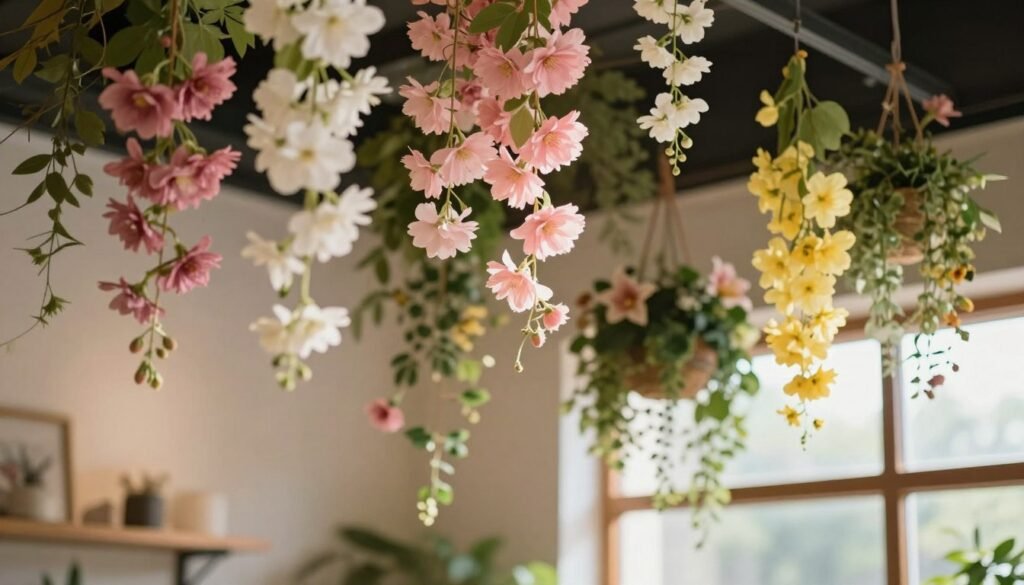
Bringing trailing greenery into your ceilings adds instant texture and warmth to any room. Creating a foliage-friendly home has become very popular over the last few years.
We find that elevating your home decor with hanging plants is a simple yet sophisticated way to add life and texture. Many people love the look of vines suspended from the ceiling because they add motion and depth that regular pots cannot match.
Our team suggests picking houseplants that match your furniture and color palette. That way the arrangement feels like a natural extension of your home. When you hang a plant, you draw the eye upward and make rooms feel more spacious and welcoming.
“A suspended pot can turn a blank corner into a focal point,” — our design lead.
Trends show strong growth in people sharing their setups on social platforms. By choosing species that suit light and style, you can craft a cohesive look that lifts the whole room.
Assessing Your Indoor Space for Hanging Displays
Begin with a quick walk-through to note sun patterns and airflow before you install any hardware.
We check each room for light and moisture. Measure window exposure at different times of day. Note areas that stay cooler or warmer.
Next, confirm structural safety. Make sure the ceiling can hold the weight of heavy ceramic or terracotta planters. We advise finding a stud or using a rated anchor for heavier loads.
Measure vertical space so the plant has room to trail without blocking walkways or furniture. Boston ferns should be kept well below the top of the ceiling to allow proper air circulation and avoid fungal issues.
- Choose the room with best natural light and stable humidity.
- Verify ceiling support and use proper anchors for weight.
- Confirm trailing length won’t obstruct movement.
- Monitor humidity if you live in a dry climate.
- Identify empty vertical areas that add depth to your home.
| Checklist | What to Measure | Why It Matters |
|---|---|---|
| Light | Window exposure, hours of sun | Matches plant needs and prevents burning |
| Support | Ceiling joist strength, anchor rating | Prevents falls and protects fixtures |
| Clearance | Height from ceiling to floor, walkways | Ensures safe trailing and traffic flow |
| Humidity | Room moisture level | Keeps plants healthy and reduces pests |
Selecting the Best Hanging Flowers Indoor Display Options
Picking the right species starts with knowing how much sun and air movement each spot receives. We want you to match a houseplant to the room so it thrives and adds style.
Choosing the Right Variety
Golden pothos is a top choice for many because its golden-yellow leaves bring a warm touch and it adapts to varied light. For humid rooms, arrowhead plants perform well and prefer bathroom or kitchen conditions.
Matching Light Conditions
Consider how much indirect light a shelf or corner gets across the day. Test a few spots to see how a plant reacts to sun and drafts before committing.
- Pick types that fit your care style; some need rich soil and regular water while others are forgiving.
- If you use a hanging basket, ensure proper drainage to protect roots and soil health.
- Choose between bushy foliage or long, elegant vines to suit your decor.
We recommend testing locations and observing for two weeks to decide on the best indoor hanging option.
Low Maintenance Air Plants for Minimalist Spaces
A single sculptural air plant can anchor a clean-lined room without crowding useful surface area. We love the Tillandsia xerographica for its ornate silver leaves that curl into a donut-like rosette. It reads like living art and fits modern, uncluttered rooms.
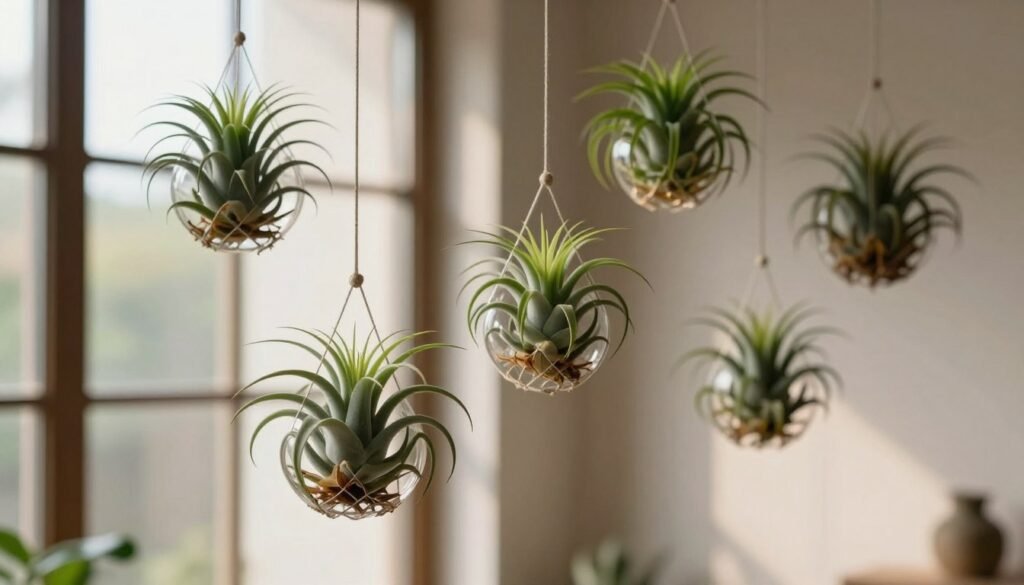
Because these plants do not need soil, we often mount them on driftwood or tuck them into glass terrariums to save space. This makes them ideal where floor real estate is limited.
- Low effort: soak the air plant every two weeks or mist it more often during dry months.
- Light needs: bright, filtered light keeps leaves firm and silvery without burning.
- Air flow: ensure good circulation so moisture doesn’t sit on the foliage and cause rot.
“Choose epiphytes that suit your routine—few chores, big visual impact.”
These tiny additions let us enjoy greenery without pots, heavy soil, or complex watering. They save space, require minimal care, and add a calm, modern touch to any room.
Trailing Vines for Dramatic Living Room Impact
Long, trailing vines can turn a living room corner into an instant focal point. We recommend pothos or heartleaf philodendron when you want a bold, green look that feels natural and relaxed.
Pothos and Philodendron Care
Pothos varieties such as Golden, Neon, and Marble Queen offer striking color variations and vigorous growth. The heartleaf philodendron has glossy, green heart-shaped leaves that soften modern lines.
- Use a sturdy basket to let long vines cascade and fill empty vertical space.
- Water only when the top inch of soil is dry to the touch to prevent root rot.
- Place plants in bright, indirect light to keep color rich without burning leaves.
- Prune regularly to encourage fuller growth and avoid legginess.
- Group several pots to create a lush, jungle-like atmosphere in your room.
For more ideas on using trailing greenery to add vertical interest, see our guide on trailing flowering plants.
Fern Varieties That Thrive in Hanging Baskets
Ferns reward simple care with lush fronds that trail and fill a hanging basket beautifully.
Boston ferns are pet-safe and help purify the air. We recommend them as one of the best indoor hanging plants when you can keep humidity high.
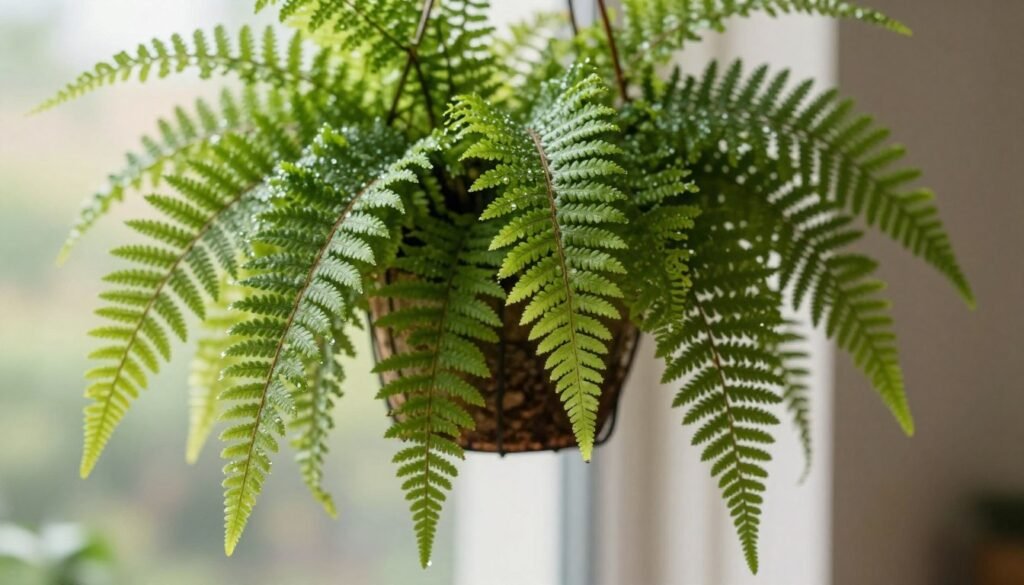
Bird’s nest ferns come from tropical rainforests and love moisture. Keep the soil consistently moist but not waterlogged to avoid root rot.
- Place ferns in bright, indirect light; direct sun will scorch delicate leaves.
- The blue star fern is a sturdier alternative and suits a wider range of rooms.
- Misting or placing the basket in a humid room mimics their natural habitat.
| Variety | Light | Soil & Water | Notes |
|---|---|---|---|
| Boston fern | Bright, indirect | Keep soil moist; moderate water | Pet-safe; air-purifying |
| Bird’s nest fern | Filtered light | Even moisture; avoid soggy roots | Loves humidity; tropical origin |
| Blue star fern | Low to bright, indirect | Moderate watering; well-draining soil | Hardier choice for baskets |
By matching light, soil, and humidity, we enjoy ferns that unfurl dramatic fronds and soften any room.
Succulents That Love Bright Sunlight
Sun-loving succulents are ideal when you want drama with minimal fuss. We place them where steady sunlight and good air flow meet. These plants store water in thick leaves, so they need bright light and fast-draining soil.
String of Pearls Maintenance
String of Pearls Care
The string of pearls is a must-have for any room that gets bright, indirect sunlight. We let the soil dry completely between each water to prevent rot. With consistent light and slightly reduced water in winter, this string can bloom small white flowers.
Burro’s Tail Placement
Burro’s tail features long stems with juicy leaves that look like teardrops. We hang it from a high ceiling so vines can trail freely. Handle it gently—leaves drop with the slightest touch from a person or pet.
- Tip: place succulents in a sunny spot for best bead-like foliage.
- Tip: use quick-draining soil and avoid excess water.
Flowering Plants for a Pop of Color
A burst of color can change the mood of a room in seconds. We use bold species to give a living room a focal point without cluttering surfaces.
The chenille plant grows up to six feet at home and offers fuzzy red flowers that create a striking contrast to green leaves. It brings vivid color and a playful texture that people notice right away.
The arrowhead plant adds variety with heart-shaped leaves that shift from green to pink and burgundy as it matures. Its long vines fill vertical gaps and soften corners.
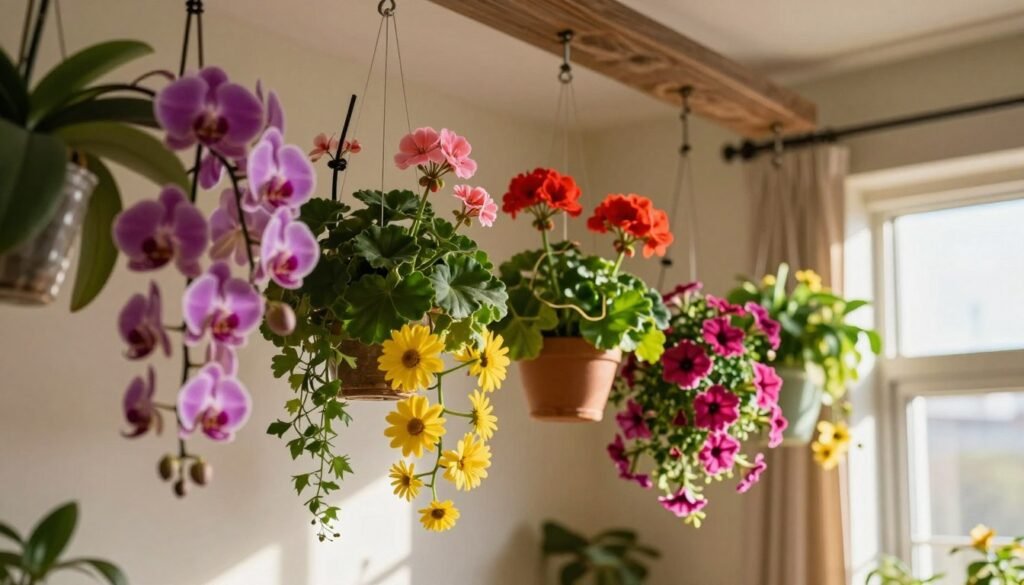
- Placement: bright, indirect light keeps blooms and foliage healthy.
- Humidity & soil: maintain steady humidity and keep soil moist but not soggy.
- Care: prune the chenille regularly to encourage new growth and a fuller look.
- Use: place these plants near seating to create a lively conversation starter.
With the right care, these colorful species make a room feel living and warm while staying easy to manage.
Essential Care Tips for Healthy Hanging Plants
Good care starts with a routine you can stick to. We keep tips simple so maintaining best indoor hanging options fits into a busy life.
Watering Schedules
We believe a consistent watering plan is the most important step. Check the soil with your finger. Water only when the top two inches feel dry.
- Adjust frequency by pot size, light, and plant type.
- Let excess water drain from planters to avoid root rot.
Soil Requirements
Use well-draining soil. A fast-draining mix protects roots and keeps the air around them healthy. Succulents and string types need gritier blends; ferns prefer mixes that hold a bit more moisture.
Pruning for Growth
Prune regularly to shape pothos, fern fronds, or trailing vines. Cutting back encourages fuller growth and more flowers on blooming varieties.
Take time each month to inspect for pests or yellowing leaves; early fixes save time and plants.
Creative Mounting Methods for Epiphytes
Mounting epiphytes turns a blank wall into a living work of art. We love how a staghorn fern mounted on wood creates a dramatic, natural look that highlights its horn-like leaves.
Epiphytes cling to other plants and bark in the wild, so copying that setup helps them thrive at home. We give the roots time to attach and form a secure bond before moving the piece.
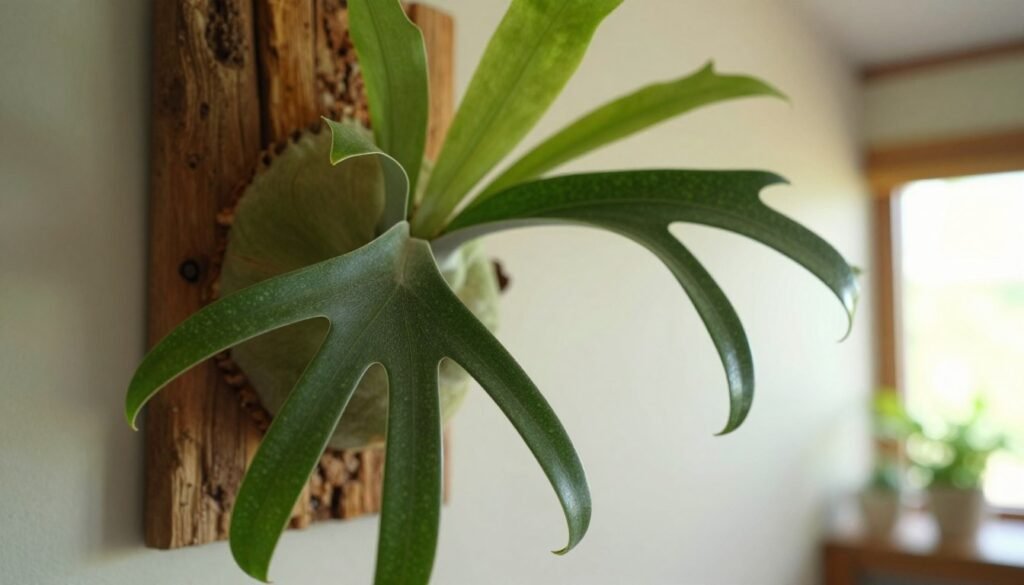
Because these species absorb moisture from the air, place mounts where humidity is steady and bright, filtered sunlight reaches the plant. For deep hydration, soak the whole mount for 10–15 minutes once a week.
- Mount a staghorn on a board for a sculptural, wall-mounted focal point.
- Fix air plant sections to decorative boards for a minimalist, space-saving look.
- Allow attachment time so roots can secure to the wood for long-term health.
| Method | Best For | Care Tip |
|---|---|---|
| Mounted on wood | Staghorn fern, fern mats | Soak weekly; keep humidity steady |
| Decorative board | Air plant clusters | Bright, filtered light; mist between soaks |
| Mixed panels | Small epiphyte groups | Rotate for even sunlight; allow roots to attach |
“Give mounts time to settle; the plant rewards patience with healthy growth.”
Styling Your Home with Macrame and Containers
We believe a few well-chosen containers and a knot or two can change the whole look of a room. Small craft projects give big rewards and help us show off favorite plants in new ways.
DIY Kokedama Ideas
Try a simple macrame hanger to lift a ceramic pot or woven basket. The knots frame trailing foliage and create a cozy, boho look that suits many living rooms.
Kokedama is a string garden method where roots are wrapped in moss and tied with string. It makes a sculptural, low-footprint piece you can suspend or place on a shelf.
- Group several baskets and planters at varied heights to add depth and texture.
- Choose ceramic or woven containers to match your decor and boost the overall aesthetic.
- Experiment with macrame patterns and lengths to showcase a pothos or other houseplants.
| Container | Best For | Style Notes |
|---|---|---|
| Ceramic pot | Bright rooms, succulents | Polished, modern look; pairs well with simple knots |
| Woven basket | Ferns, trailing vines | Warm, rustic texture; good for layered groupings |
| Kokedama moss ball | Small tropical plant | Minimal footprint; artistic and tactile |
“Mix containers and heights to create a living composition that feels intentional.”
Managing Humidity and Air Circulation
Controlling humidity and air flow prevents dry, yellowing leaves and fungal problems. We check both before we pick a spot for any hanging pot.
Boston ferns need good air movement and should not sit tight against the ceiling. That restriction blocks circulation and raises the risk of rot.
If your home runs dry, use a small humidifier or group plants together to build a humid microclimate. This helps fronds and broader leaves stay healthy.
- Monitor soil moisture and adjust how much water you give.
- Place your plant where a gentle breeze reaches it—near a window or a fan on low.
- Keep enough space above pots so air moves freely around the root zone.
“Maintain steady conditions and your plants will reward you with lush growth through seasonal changes.”
Troubleshooting Common Hanging Plant Issues
Small signs of stress on a plant often reveal the root cause before problems get worse. We check plants regularly so minor issues don’t become major repairs.
Look for yellowing leaves, drooping stems, or slow growth. Yellow fronds on a bird’s nest fern often mean too much direct light. Overwatering can rot roots in trailing jade and similar species.
- Touch the soil before you water—many problems come from too much water.
- If a pothos or fern isn’t growing, test light levels and loosen compacted soil.
- Wipe leaves with a damp cloth; pests hide on the underside.
- Increase humidity or adjust the water schedule for a staghorn that looks weak.
- Check planters and strings for secure fittings so a fall doesn’t damage the plant or room decor.
By spotting issues early, we keep our houseplants healthy and save time on repairs.
Conclusion
Conclusion
To close, small choices about light and placement make a big difference for your home garden. We encourage simple routines that check light, water, and air. These habits keep leaves healthy and create a calm, living focal point. Try grouping a few plants and varying height for more depth.
Try a staghorn fern or a string of pearls where light and humidity suit them. Follow our care tips for succulents and color-seeking species so they thrive. Experiment with mounting methods and macramé to craft a green space that fits your style. Thanks for joining us—enjoy growing your own suspended sanctuary.