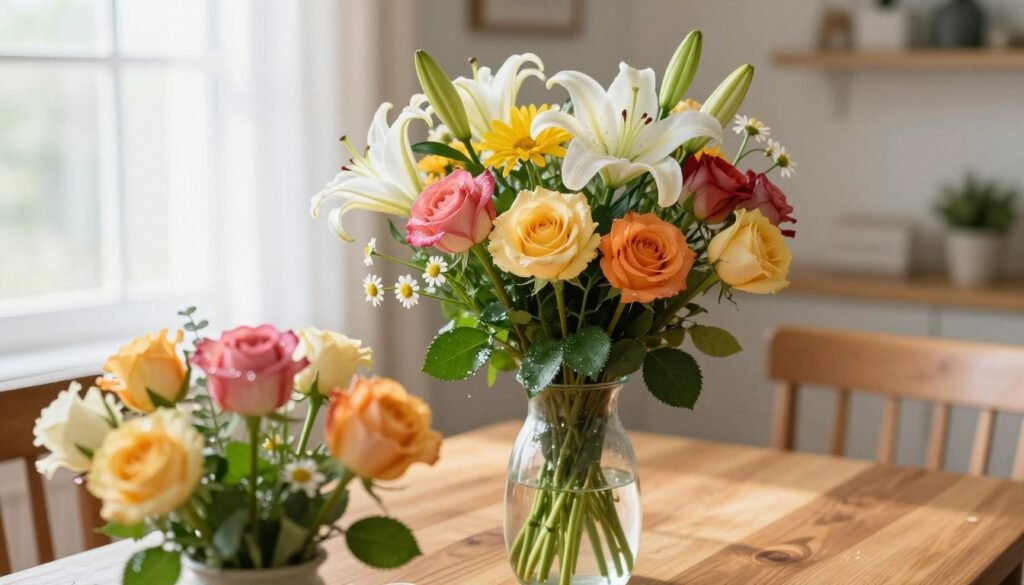
keep flowers fresh indoors

How to Keep Flowers Fresh Longer Indoors

Surprising fact: we learned that properly trimmed stems and clean water doubled the vase life of many bouquets in our tests with Juliana Renee Photography.

We tested simple techniques that helped flowers last far longer than expected. Our goal is to share clear, practical flower care that any of us can use at home.

This short guide explains how to cut stems, change water, and arrange blooms so a bouquet stays vibrant for many days. We describe the small steps that made the biggest difference in our trials.

Whether you received a gift or snipped blooms from your garden, these friendly, proven tips will help your arrangement look better for longer. We focus on easy routines and quick fixes that fit everyday life.

Key Takeaways

  • Trim stems and remove lower leaves before placing in a vase.
  • Use clean water and refresh it every other day.
  • Place bouquets away from heat and direct sun.
  • Re-cut stems if blooms begin to droop.
  • Small, regular care routines extend the life of cut flowers.

Understanding the Biology of Cut Flowers

Cut stems remain alive in surprising ways; their xylem acts like tiny capillaries that try to move water from the vase into the bloom.

We learned that the xylem can clog with air, dirt, or bacteria, which blocks water flow and shortens vase life. Osmosis powers water movement, but it stalls when water pH or salt balance is off.

Cut flowers continue to respire and burn stored sugar. When home heat rises, that respiration speeds up and the bouquet uses its reserves faster.
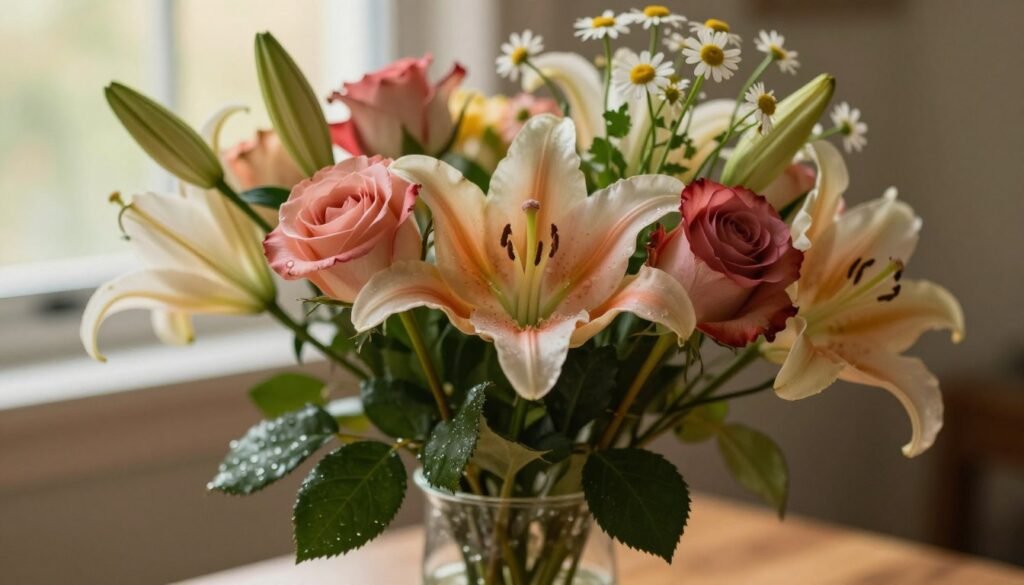
A close-up of various cut flowers, including roses, lilies, and daisies, arranged in a clear glass vase filled with water, showcasing their biological structures like stems, leaves, and petals. The foreground features water droplets on the leaves, emphasizing freshness. In the middle, the vibrant colors of the flowers bloom, displaying details like subtle texture variations and the intricacies of their petal edges. The background softly blurs with a warm, inviting light filtering through a nearby window, creating a natural and serene atmosphere. The angle is slightly elevated, capturing the beauty and complexity of cut flowers while maintaining an elegant, scientific feel to illustrate the biology of cut flowers effectively. The lighting is soft and warm, enhancing the colors and textures without harsh contrasts.

We treat water as more than a filler; clean water reduces bacteria and helps the stem stay open. Small changes in environment and time since the cut slow respiration and extend growth in the bloom.

  • Xylem care: prevent air and bacteria from blocking the stem.
  • Water quality: proper pH and low salts keep osmosis working.
  • Temperature: lower heat slows sugar use and prolongs life.

Best Practices to Keep Flowers Fresh Indoors

Small changes in light, air, and temperature made a big difference in how long our bouquets stayed vibrant.

Environmental Factors

Place a vase where the room stays cool and steady. Direct sunlight and heat from appliances speed dehydration and shorten life.

Avoid open windows, heating vents, and ceiling fans that blast air across stems. These drafts dry petals and stress blooms.
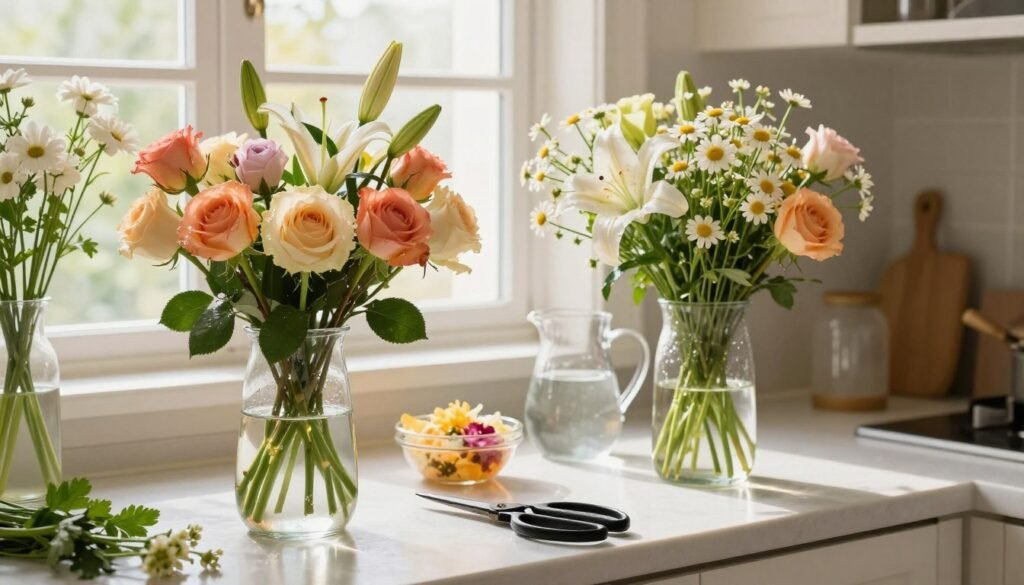
A vibrant, well-lit kitchen countertop adorned with a variety of fresh flowers in different stages of bloom. In the foreground, a clear glass vase filled with water showcases roses, lilies, and daisies, their petals glistening with droplets of water. A pair of gardening scissors rests beside the vase, suggesting recent care. In the middle ground, a small bowl of flower food and a pitcher of fresh water provide visible elements of flower maintenance. The background features a sunlit window with sheer curtains, allowing gentle, diffused natural light to bathe the scene, creating a warm and inviting atmosphere. The mood is refreshing and peaceful, emphasizing the joy and beauty of keeping flowers fresh indoors.

Check your arrangement daily. Remove any leaves that sit below the water level to reduce bacteria and rot.

The Role of Ethylene Gas

“Ripening fruit releases ethylene gas, which can dull petal color and keep buds from opening.”

We always place bouquets away from fruit for this reason. If you want roses or mixed blooms to last longer, keep them out of kitchens and fruit bowls.

  • Change water every two to three days and add flower food when available.
  • Trim stems slightly when you refresh the vase to improve uptake.
  • Do a quick daily check for dead leaves to prevent bacterial growth.

yellow leaves often signal rot or ethylene exposure and should be removed at once.

Essential Tools and Cutting Techniques

Good tools and a clean cut are the foundation of proper flower care. We always start at the sink with sharp, sanitized garden shears. A precise tool prevents crushing and helps the stem drink.

Proper Stem Preparation

Trim one to two inches from the base of each stem at a 45-degree angle. This angle creates more surface area for water uptake and reduces the chance of air blocking the vascular channels.

Never use ordinary household scissors. They can crush the stem and stop water flow. We use clean shears and make one swift cut for each stem.

“Failing to cut stems is one of the most common mistakes people make after receiving a new bouquet.”

Remove any leaves that would sit below the water line. Submerged leaves rot and raise bacteria levels in the vase. Keeping the water clear helps stems drink and extends the life of the bouquet.

  • Use sharp garden shears for a clean 45-degree cut.
  • Strip submerged leaves to prevent foul water and bacterial growth.
  • Trim again when you refresh the water to maintain good water uptake.

Managing Water Quality and Temperature

Water and temperature are the two simple controls that most affect how well a bouquet lasts in a vase. We focus on small, repeatable steps that improve uptake and slow decline.

The Importance of Lukewarm Water

Use lukewarm water between 100°F and 110°F when you first arrange cut stems. Warmer molecules move faster and help stems absorb fluid more quickly.

  • Start with 100–110°F water for best uptake.
  • For long-term display, cool the vase slightly—ice cubes work in a bucket to slow blooms.
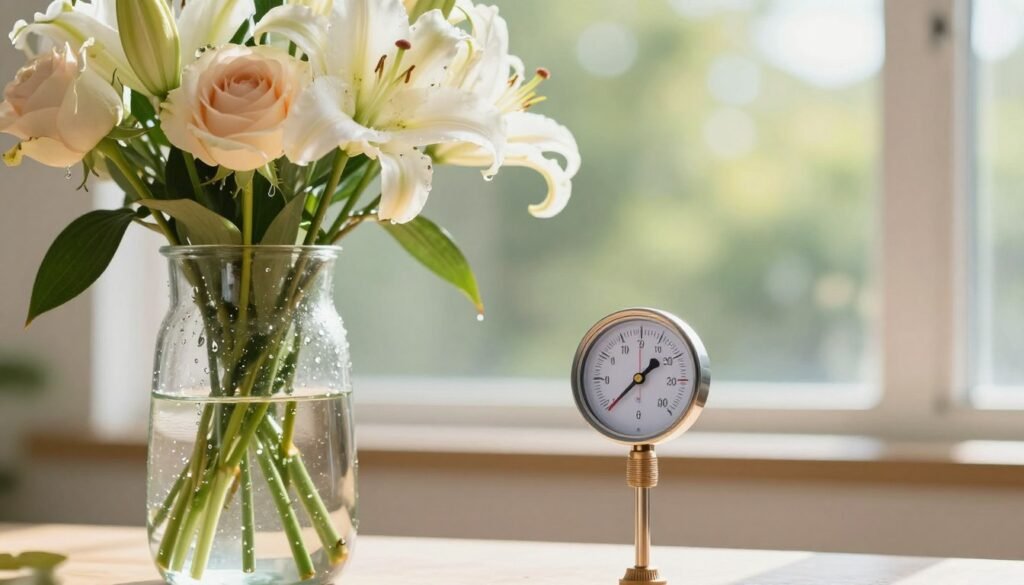
A serene image illustrating the concept of water quality for flowers, featuring a clear glass vase filled with fresh flowers, such as roses and lilies, prominently in the foreground. The vase showcases pristine water with subtle reflections, emphasizing clarity and cleanliness. In the middle ground, a temperature gauge subtly indicates ideal water temperature, while droplets of condensation glisten on the vase, enhancing the freshness theme. In the background, soft-focus greenery and light-filtering through a window suggest a sunny indoor environment, contributing to a warm and inviting atmosphere. The lighting is bright yet diffused, creating a tranquil scene ideal for maintaining flowers. The overall mood encapsulates freshness and care in flower maintenance, highlighting the importance of water quality for longevity.

Using Flower Food

Flower food supplies carbs, acidifiers, and biocides that cut flowers need. If you do not have commercial packets, add 1 teaspoon sugar and 1 teaspoon bleach per quart, plus 2 teaspoons lemon juice.

Preventing Bacterial Growth

Clean the vase thoroughly and change water and flower food every two to three days. This reduces bacteria that block the stem channels and ruin petals.

Action Purpose Effect on stems
Lukewarm first fill Faster uptake Improves initial hydration
Flower food or DIY mix Nutrition + biocide Slows decline, aids opening
Vase cleaning & change water Remove bacteria Keeps xylem open

Creative Household Remedies for Longevity

Simple fridge time and pantry mixes proved surprisingly effective at slowing decline. We tried remedies that used items most people already have.
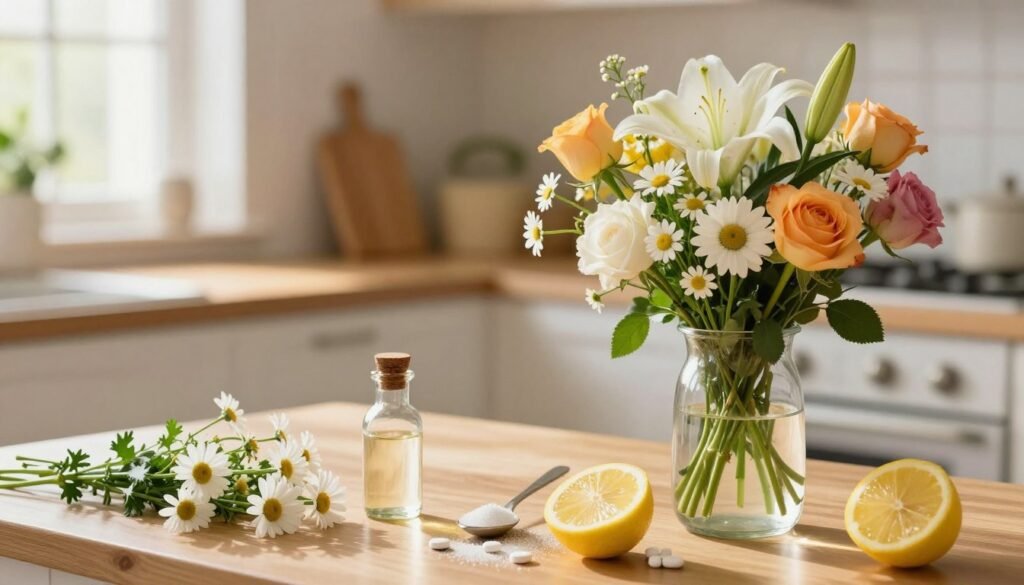
A vibrant arrangement of assorted flowers displaying unique, creative household remedies aimed at prolonging their freshness, such as a small bottle of vinegar and a spoon of sugar creatively placed beside a bouquet. In the foreground, fresh daisies, roses, and lilies burst with color, delicately arranged in a clear glass vase filled with water. In the middle ground, ingredients like lemon slices and aspirin tablets artfully scattered, hinting at natural solutions for longevity. The background softly fades into a warm, sunlit kitchen setting with wooden countertops and gentle sunlight filtering through a window, creating a serene and inviting atmosphere. Use soft focus to emphasize the flowers and remedies while maintaining a cozy, inspiring mood. Aim for warm lighting that enhances the colors of the flowers, conveying freshness and vitality.

Fridge overnight: Proflowers found chilling a bouquet each night gave the best results. We stored arrangements in a cool fridge and saw blooms last far longer, sometimes up to ten days.

Adding a splash of soda supplied extra sugar to the water and helped some stems stay turgid through day 10. We used small amounts so the liquid did not become a bacterial feast.

“Hairspray damages petals and does not extend vase life; avoid it.”

We also tested vodka and found tiny doses can slow ethylene gas production. Ethylene speeds ripening, so this trick helped roses and mixed bouquets hold color.

Remedy How to use Effect
Fridge overnight Place covered bouquet in fridge each night Extends life up to 10 days
Soda splash Add 1–2 tablespoons to vase water Provides sugar, improves bloom vigor
Bleach Add 1/4 teaspoon per quart of water Reduces bacteria, clears water
Vodka Few drops per vase Slows ethylene, delays wilting

Safety note: use bleach sparingly and always change water every other day. For issues like root-rot or rotting leaves in potted plants, see our guide on root-rot prevention.

Conclusion

We found that a few careful steps at the sink and a steady schedule of care stretched vase life for most arrangements.

Follow simple tips: trim the stem, refresh the water regularly, and store the bouquet away from heat. These small actions help blooms stay vibrant longer.

Consistent routines matter. With good tools and regular checks you can make garden cuts and store-bought flowers last. Our advice focuses on practical steps anyone can use at home.

Thank you for joining us as we explored how to extend the life of your favorite floral displays. We hope these tips make caring for your arrangements easier and more rewarding.


FAQ

How do we prepare stems to help bouquets last longer?

We recut stems at a 45-degree angle with a sharp knife or shears, removing about an inch. Cutting diagonally increases water uptake by preventing the stem from sitting flat on the vase bottom. We strip leaves that fall below the water line to reduce decay and bacterial growth.

What water temperature works best for cut arrangements?

We use lukewarm water for most mixed bouquets because it helps flowers drink more easily than cold water. For bulbs and certain spring blooms, slightly cooler water can be better. Always fill the vase so stems have enough contact for steady water uptake.

Is commercial flower food necessary, and how does it work?

We recommend using commercial flower food when available. It supplies sugar for energy, acidifies the water to improve uptake, and contains biocides to slow bacterial growth. Follow package directions and renew the solution each time we change the water.

How often should we change the water and clean the vase?

We change water every two days or sooner if it looks cloudy. Each time, we clean the vase with warm, soapy water or a mild bleach solution (one teaspoon bleach per quart) to remove bacteria and algae that block stems.

What household remedies help extend bloom life if we don’t have flower food?

We can add a teaspoon of sugar and a few drops of bleach to a quart of water, or use a crushed aspirin or a vitamin C tablet as a short-term preservative. Freshly squeezed lemon juice with a pinch of sugar also works, but use these sparingly and change water regularly.

How does room temperature and sunlight affect the life of cut blooms?

We keep arrangements out of direct sunlight and away from heating vents. Cooler rooms slow respiration and delay petal drop. High heat increases water loss and speeds wilting, while direct sun can overheat delicate blooms.

What is ethylene gas and how do we protect bouquets from it?

Ethylene is a natural plant hormone released by ripening fruit and some houseplants that accelerates aging in cut blooms. We keep bouquets away from fruit bowls, ripening bananas, and gas sources. Removing damaged blooms also reduces ethylene production within the arrangement.

Can we mix different types of plants in one vase?

We can, but some species release ethylene or have different water needs. For example, roses prefer slightly acidic water, while some tropical blooms may need warmer temperatures. Grouping like with like often yields longer life for the whole display.

How do we prevent bacterial growth in vase water besides using preservatives?

We remove fallen petals and leaves daily, avoid overfilling the vase so water stays fresh, and sanitize tools before re-cutting stems. Using distilled or filtered water can reduce microorganisms and minerals that encourage bacterial buildup.

Are there special tips for caring for roses and other woody-stemmed blooms?

We strip extra foliage from rose stems and recut them under water to prevent air from entering the xylem. For woody stems, we may slightly crush the base or remove a small outer section to reopen clogged vessels and improve water uptake.

Will adding fruit to the room harm a bouquet?

Yes, ripe fruit emits ethylene gas which speeds petal drop and leaf yellowing. We keep fruit separate from arrangements and dispose of overripe pieces promptly to protect nearby stems and blooms.

How much should we trim stems over the life of an arrangement?

We recut stems every two to three days when changing the water, removing about a half inch each time. Fresh cuts reopen the water channels and help stems absorb the solution more effectively.

Do leaves in the water matter, and should we remove them?

We always remove leaves that would sit below the water line. Submerged foliage decomposes quickly, raising bacterial counts and clouding the water, which reduces the vase life of the entire bouquet.

Can temperature shocks like placing bouquets in cold rooms help them last longer?

We avoid extreme temperature swings. Cooler temperatures (not freezing) slow metabolism and extend life, but rapid shifts can stress tissue. Overnight placement in a cool spot or a floral cooler helps, provided the temperature remains steady.

How do we spot and remove dying blooms to help the rest of the arrangement?

We check for brown edges, limp petals, or a bad odor. Promptly removing faded flowers prevents the release of decay-related ethylene and reduces bacterial load, keeping healthy stems vibrant longer.

What vase shapes and sizes work best for water uptake and arrangement stability?

We choose a vase that supports stems without crowding them; tighter groupings can help some arrangements but may trap moisture and bacteria. A taller vase suits long stems, while a wider one allows air circulation around the base.

Comments

No comments yet. Why don’t you start the discussion?

Leave a Reply

Your email address will not be published. Required fields are marked *