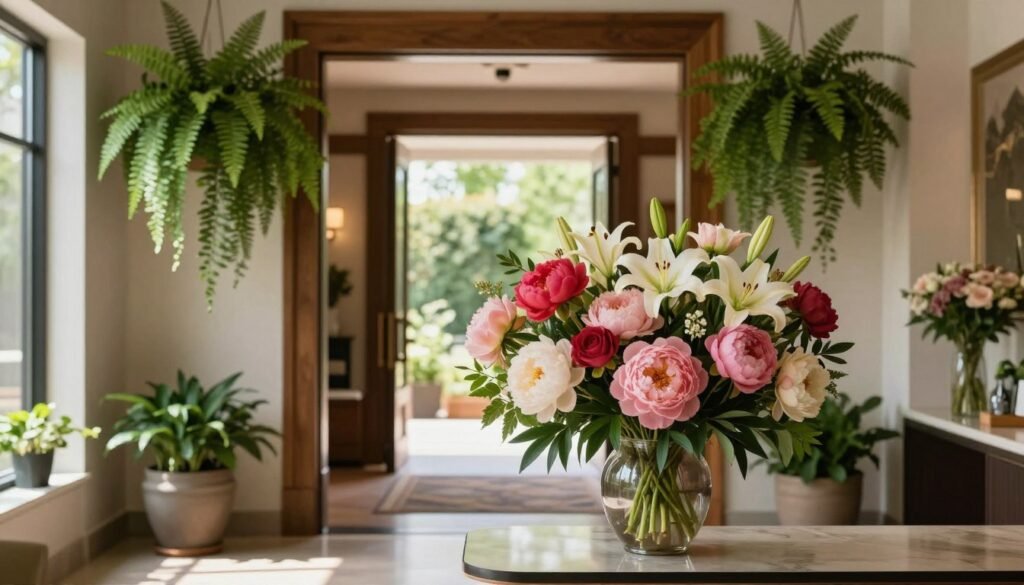

Did you know a simple arrangement can change a guest’s first impression by 70%? We believe a welcoming entrance sets the tone for the rest of your home.
We curated creative ways to turn a plain foyer into a striking spot that reflects your personal style. Whether you have a roomy hall or a narrow corridor, the right table piece can elevate your home decor instantly.
Our team will guide you through choosing the best vessels, mixing textures, and placing pieces so plants and blooms look intentional and styled. We focus on simple techniques that make a lasting impression without feeling fussy.
Ready to refresh your entrance? Learn more about our approach and expertise at About Blotanic, and let’s craft an inviting setup that guests notice the moment they step inside.
Key Takeaways
- Small tweaks to a table or shelf can dramatically boost curb appeal.
- Mix vessels and textures for a professional, lived-in feel.
- Even narrow entryways can host striking arrangements.
- We recommend pieces that are easy to style and maintain.
- Our tips help you welcome guests with confidence and charm.
Assessing Your Entryway Environment
A quick environmental check helps us match the right greenery to the specific conditions at your door.
Light Conditions
First, note how much natural light the space receives across a day. If you have a sidelights or a window, that usually means more options for houseplants that add a living touch.
Before you buy, think about which spots get bright morning sun, which get indirect light, and which stay dim. This helps your plants thrive and reduces extra care later.
“Placing a plant behind an open door can protect it from cold air drafts.”
Space Constraints
Measure the path from the door to the next room to avoid crowding. A large pot can block traffic or make a small spot feel cramped.
- Check air flow and temperature swings near the entry — sudden drafts can harm a houseplant.
- Choose the right scale so the piece adds a welcoming touch without getting in the way.
We find that taking time to evaluate light, space, and air quality helps you avoid common mistakes when decorating your home with plants.
Selecting the Perfect Indoor Flower Display Entryway
Begin with a single focal piece — a slim table or a rolling cart — then build around it.
We choose vessels and table decor that echo the room’s color and overall design. This keeps the look cohesive and intentional.
Pick a mix of plants in varying heights. A taller specimen anchors the scheme. A low pot or a tray of small pots balances the top.
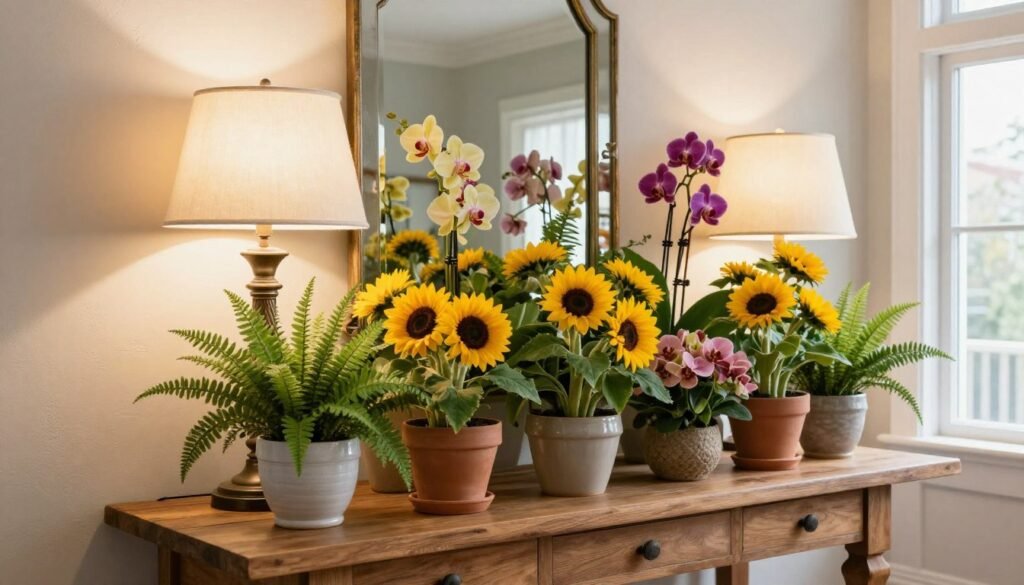
A styled surface should be useful, too. Use one corner for keys or mail so the setup becomes a practical part of your home.
- Match plant varieties to your room’s palette.
- Layer heights to create visual interest.
- Choose containers that add texture and a bit of personality.
With careful choices, your entryway will feel welcoming and polished. Small changes make a big look.
Utilizing Vertical Space for Trailing Foliage
Make the most of vertical corners to add lush, cascading life above your hall table. We love this approach because it opens up the floor space and gives the room a layered, intentional look.
Hanging Plant Techniques
Choose sturdy hardware. Use a ceiling hook or wall bracket rated for the pot weight and check studs or anchors before drilling.
Pothos is a top pick for hanging pots. It adapts to low to medium light, tolerates brief neglect, and creates graceful trailing foliage.
Position hooks so vines can cascade without blocking traffic. By drawing the eye upward, you make the entryway feel larger and more welcoming.
- Use a mix of macramé, metal hangers, or shelf brackets for variety.
- Rotate pots occasionally so growth stays even and healthy.
- Securely fasten hooks to keep your living plants safe as they grow.
These ideas let us add a strong vertical element without crowding the floor. A few hanging pieces provide a bold, cascading welcome that greets guests as they arrive.
Incorporating Furniture for Layered Displays
A well-chosen piece of furniture lets us build layered vignettes that feel intentional and lived-in.
Use a console table or a bar cart as a base. These pieces add plenty of depth to the entryway while offering a bit of storage for keys and mail.
Place plants at varied heights: a tall pot on the floor, a medium one on the table, and a small pot on a stack of books.
“A layered arrangement makes a small space read as curated, not cluttered.”
Layering helps the room feel cohesive. A table can anchor a scene in the living room or foyer and make the entire home feel more organized.
- Mix textures: ceramic, metal, and woven baskets.
- Use trays to group small objects and keep the surface tidy.
- Rotate plants and decor seasonally for fresh style.
| Furniture | Best Use | Storage |
|---|---|---|
| Console Table | Anchor a central vignette | Medium—drawers or shelves |
| Bar Cart | Mobile styling and tiers | Low—open shelves |
| Small Side Table | Perfect for narrow spaces | Minimal—surface only |
Choosing Low Light Varieties for Darker Foyers
When a hallway lacks sun, we choose hardy varieties that bring life without fuss. Low light doesn’t mean dull; the right selections add texture, color, and cleaner air near the door.
Snake Plant Benefits
Snake plant is a top pick for shaded spots. It comes in many sizes, from about 6 inches to 3 feet tall, so you can find one for a tabletop or the floor.
It tolerates low light and needs very little water. That makes it ideal where a window is small or absent and you want a low-maintenance living accent.
Chinese Evergreen Varieties
Chinese evergreens like ‘Red Valentine’ add variegated color without demanding sunlight. They brighten a narrow space and help houseplants thrive with minimal care.
We also recommend ZZ plants for very dim nooks and a corn plant when you want height near the door.
- Pick snake plant sizes to match your spot — tabletop or floor.
- Choose a ZZ or Chinese evergreen for color and resilience.
- Place a corn plant on a table or on the floor for vertical interest.
| Species | Light Tolerance | Water Needs |
|---|---|---|
| Snake Plant | Low to medium | Very low — allow soil to dry |
| Chinese Evergreen (‘Red Valentine’) | Low | Moderate — keep slightly moist |
| ZZ Plant | Low | Infrequent — dry top inch before water |
| Corn Plant (Dracaena) | Low to medium | Moderate — tolerates occasional drought |
Adding Seasonal Color with Blooming Plants
Bright, seasonal blooms can transform a small hall into a cheerful welcome that changes with the calendar. We like to add a single, well-placed plant on a table to introduce instant color and personality to the entryway.
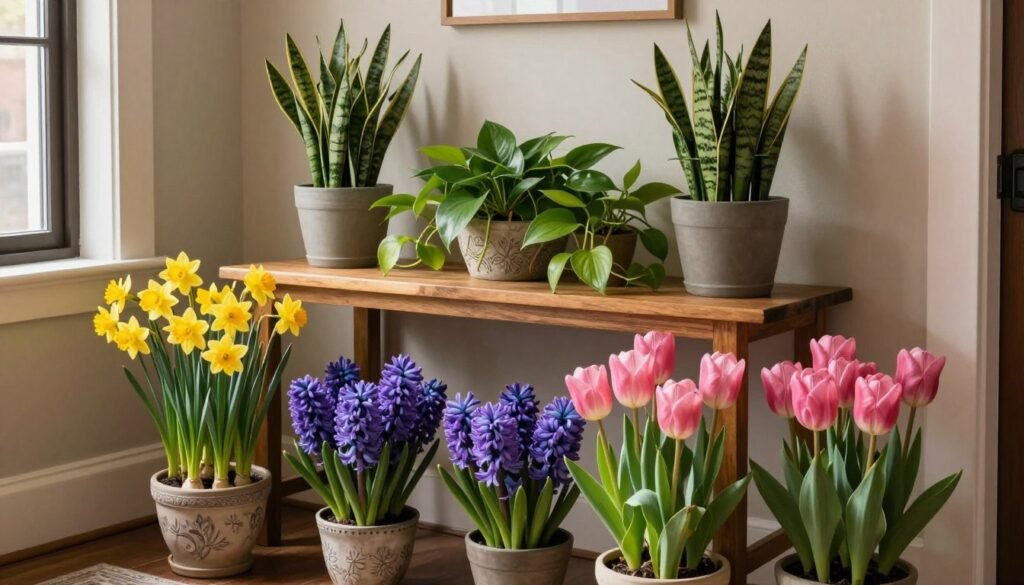
Moth orchids (Phalaenopsis spp.) are a favorite for this role. Their blooms last for several weeks, so a moth orchid often reads like a long-lasting arrangement rather than a short-lived accent.
Choose blooming varieties that match your room’s light and water needs. Place pots where they get gentle, indirect light and water according to the species’ guidelines. This keeps houseplants healthy and vibrant in your home.
- Use orchids or other seasonal blooms for a steady pop of color.
- Mix plants with colorful foliage for added texture and interest.
- Rotate blooming houseplants every season to keep ideas fresh.
We recommend small swaps throughout the year so the entrance feels current. With thoughtful placement and simple care, flowers and foliage make a big impact without much fuss.
Styling with Decorative Containers and Baskets
A mix of materials—metal, wicker, ceramic—helps us shape a layered and tactile welcome. We use containers to add texture and to make the entryway feel curated, not cluttered.
Choose pieces that work for your table and your flow. A woven basket hides mail and shoes. A low bowl holds keys and a small plant for a quick green note.
Choosing Material and Texture
We favor mixing finishes. Matte ceramic grounds a scene. A touch of gold adds polish and works well with rustic baskets.
- Use baskets to store items out of sight and keep the table or cart tidy.
- Air plants (Tillandsia spp.) live in bowls and need no soil, so they are easy to keep on hand.
- Buy containers in a range of sizes to fit different plants and needs.
By combining materials and textures, we create a cohesive look that ties accessories together. Baskets add warmth and are a simple way to bring plenty of personality to the space.
Creating a Cohesive Look with Unified Design
A unified palette brings calm to a busy hall and makes each piece feel intentional. We aim to connect plants, art, and accessories so the whole space reads as one thoughtful design.
Group pots of the same color or material to anchor the scheme. Matching containers on a single table turns varied plants into a deliberate arrangement.
Introduce contrast with foliage shapes and tones. A broad-leaf specimen next to fine, feathery leaves adds interest without cluttering the walls or surface.
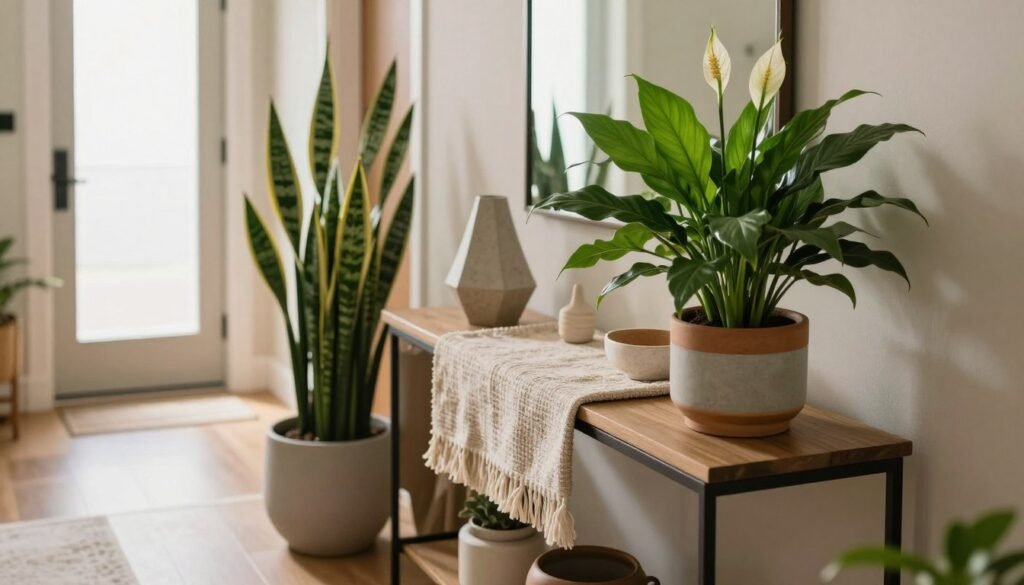
Keep accessories consistent. Use similar metals or woven textures for trays, frames, and baskets so small items support the overall look.
- Use your table as a base to tie plants and art together.
- Limit your color accents to one or two hues for a polished look.
- Place art at eye level to create a clear visual line above your plants.
We find that a unified approach makes a small hall feel professional and welcoming. Simple choices—matching pots, layered foliage, and consistent accessories—deliver a cohesive, inviting atmosphere.
Maximizing Small Nooks with Multi-Purpose Decor
Turn a tiny corner into a useful, styled spot with furniture that pulls double duty in your entryway.
We often pick a slim desk or narrow console as the base. A simple table gives us a tabletop for keys and a table for a small plant without taking over the room.
By adding a lamp or a piece of art, the corner feels complete and intentional. Choose plants in varied sizes so they fit the shelf, surface, or floor and do not overwhelm the spot.
Hardy houseplants improve indoor air and bring living texture to a compact area. A few well-chosen plants give plenty of life while staying low-maintenance.
- Use drawers or baskets beneath a desk for mail and gloves.
- Keep taller pots on the floor and smaller pots on a shelf to layer height.
- Pick a lamp with soft light to support low-light plants and the mood of the room.
| Piece | Best Use | Ideal Plant Sizes |
|---|---|---|
| Narrow Console | Surface + storage baskets | Small to medium tabletop plants |
| Slim Desk | Mail station + styling | Small potted plants, trailing on bookshelf |
| Tiered Shelf | Layered display, keeps floor clear | Mix of tabletop and tall floor pots |
Refreshing Your Space with Artful Accents
We believe a well-placed painting or a bright vase can give the room a new focal point and instant energy.
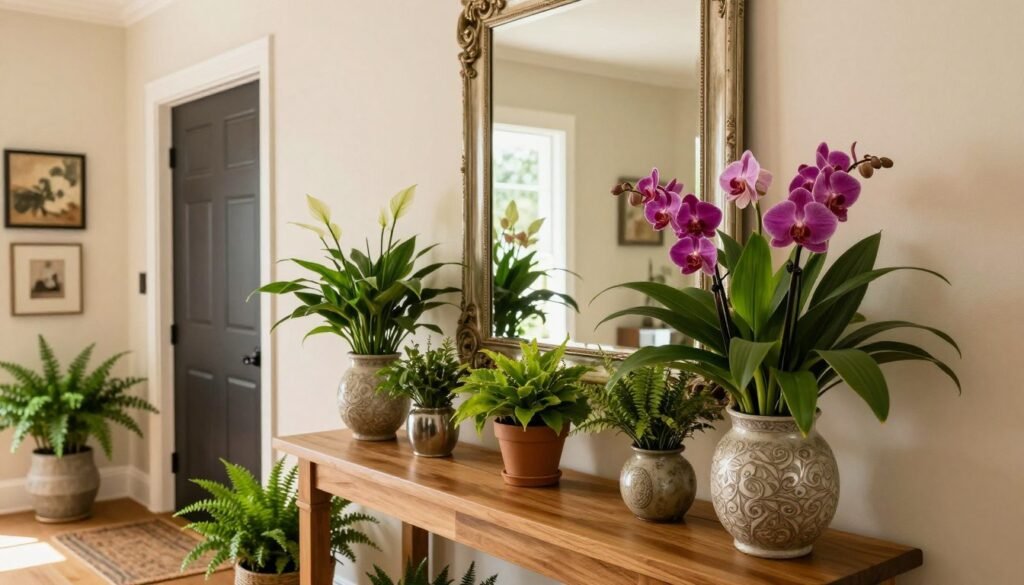
Add a bit of color through accessories to create a pop that draws the eye. A colorful runner, a sculptural bowl, or a vivid cushion helps the table feel curated and lively.
Hang art on the walls to build a gallery-like feel that complements plants and small arrangements. A framed print links the entryway to the living room and makes the whole home read as one thoughtful design.
A fresh bouquet or a statement plant makes a perfect centerpiece for a hall table. We swap pieces seasonally so the look stays current without much fuss.
“Artful accents let personality lead the design.”
- Use one bold art piece to anchor the scheme.
- Choose accessories that echo your color palette.
- Rotate blooms or plants for an easy refresh.
| Accent | Best Use | Impact |
|---|---|---|
| Large Framed Art | Above a console or table | Creates a strong focal and ties walls to decor |
| Colorful Vase with Flowers | Centerpiece on a table | Adds seasonal color and soft texture |
| Small Sculptural Accessory | Grouped with plants on a shelf | Gives personality and a subtle pop |
Essential Care Tips for Healthy Entryway Plants
Keeping plants healthy near your door is simple when you follow a few steady habits. We focus on easy routines that fit daily life so houseplants stay vibrant and welcoming for guests.
Watering Schedules
Keep a consistent rhythm. Most plants prefer regular checks rather than rigid calendars. Feel the top inch of soil; water when it feels dry for plants that like light moisture.
Peace lilies give a clear signal — they droop when thirsty and bounce back after you water. We keep a watering can on hand so quick top-ups are easy.
Managing Drafts
Protecting plants from cold or hot drafts helps them thrive. Lisa Eldred Steinkopf suggests placing pots behind a door to shield them from sudden air shifts.
Avoid high-traffic spots where temperature swings occur. A protected corner near a table or on the floor keeps living accents stable and healthy.
Pruning for Growth
Regular pruning keeps shape and encourages new growth. Trim yellowed leaves and spent blooms by hand to keep plants tidy.
We prune gently and check stems for pests or rot. Healthy maintenance ensures your plants remain a graceful part of the table scene and the whole room’s air quality stays better for guests.
“Placing a plant behind an open door can protect it from cold air drafts.”
| Care Task | Frequency | Why it Helps |
|---|---|---|
| Soil check & watering | Weekly — adjust by species | Prevents over- or under-watering; keeps plants thrive |
| Draft protection | Seasonal placement review | Prevents temperature stress and leaf damage |
| Pruning & cleanup | Every 4–8 weeks | Encourages growth and removes pests or dead foliage |
Final Thoughts on Welcoming Guests with Greenery
A simple table and a well-chosen plant can tell a powerful design story. We hope these ideas inspire you to shape a warm entryway that reflects your style.
By arranging a thoughtful table vignette and picking resilient plants, you make a strong first impression on every visitor. Keep the space useful and inviting so decor feels lived-in, not staged.
Experiment with a few combinations until the layout feels right for your home. Thank you for joining us — we look forward to seeing how these ideas help you greet guests with warmth and personality.