
Did you know that recent Cyber Monday sales offered up to 50% off decor items, sparking a surge in cozy room makeovers across the United States?
We believe turning your personal space into a calm sanctuary can lift your daily mood and improve quality of life. We have spent years researching botanical arrangements and trusted trends like the Classic Blue Series to help readers refresh their rooms.
In this guide we share one two practical ideas to bring gentle color and natural texture into your home. Our curated tips combine simple arrangements, smart placement, and easy care so you can enjoy beautiful blooms without stress.
Read on for quick, friendly suggestions that make creating a peaceful retreat simple and rewarding.
Key Takeaways
- Small botanical accents can boost comfort and mood in your bedroom.
- We recommend simple arrangements for lower upkeep and more impact.
- Budget-friendly finds from recent sales make updates easier.
- Classic color schemes help create a cohesive, restful space.
- This guide offers practical steps to add life and charm to your home.
Creating a Peaceful Indoor Flower Display Bedroom Sanctuary
We find that thoughtful plant placement and simple design choices change how a space feels. Our goal here is to pair practical care with a gentle aesthetic that fits your home and routine.
Design Principles
Choose calm colors and soft shapes. We suggest plants that echo your room palette so the green becomes a subtle touch, not a focal fight.
Over the past few years, trends have shifted toward natural elements. This idea helps create a restful atmosphere with low fuss and long-term appeal.
Choosing the Right Spot
Placement is the first way to make sure a plant thrives. Many plants, including Boston ferns, do best between 60–85 °F and near a window for bright, indirect light.
Consider the Living Lace® Twirly Whirly™ for compact fronds that add whimsy without crowding your place.
Tip: Pick a spot that matches a plant’s light needs and your daily habits. A well-placed fern will reward you for years.
- Pick plants that complement your bedroom design for a cohesive feel.
- Place a plant near a window to ensure steady light and health.
- Arrange groups to add a soft touch and define restful corners.
Selecting Plants for Better Air Quality
Our picks focus on proven houseplants that actively cleanse the air around your resting space.
Snake plant removes common toxins like formaldehyde, benzene, and xylene. The hardy spider plant is often called one of the one best choices for filtering formaldehyde and benzene.
Chinese evergreen adds durable, low‑fuss purification. Philodendron ranks among the best air‑purifying houseplants and can support better sleep quality.
“Research shows certain houseplants can significantly reduce volatile organic compounds in your home.”
- We prioritize houseplants backed by studies that lower VOCs.
- Each plant is chosen for toxin removal and aesthetic value.
- Integrating these plants helps create a cleaner, more refreshing atmosphere for nightly rest.
- Our selection ensures every plant contributes to a healthier home climate for your family.
Elegant Ferns for Soothing Sleeping Spaces
A well-chosen fern can turn a simple corner into a calm, breathing refuge. We love the Boston fern for its drooping, feather-shaped leaves and trailing habit.
Why choose a fern? This plant, also known as the sword fern, is one best way to add a soothing touch and help clean the air in your home. Placing it near a window gives the bright, indirect light it needs for lush growth.
Humidity Requirements
Ferns come from humid forests and do best with steady moisture in the air. The Living Lace® Twirly Whirly™ Nephrolepis exaltata thrives between 60–85 °F and benefits from regular misting.
- Display a Boston fern in a hanging basket near window light to let fronds trail freely.
- Mist leaves regularly to keep humidity consistent and healthy.
- Try a shelf placement so the plant can spill down and soften the space.
| Feature | Best Condition | Placement Tip |
|---|---|---|
| Light | Bright, indirect light | Near a north or east window |
| Humidity | High; regular misting | Group with other plants or use a tray of water |
| Style | Hanging or trailing | Hanging basket or high shelf to let fronds fall |
Hardy Snake Plants for Minimalist Decor
Choose a hardy plant with vertical form when you want a clean, modern touch that needs little care. The snake plant, also known as Sansevieria, suits minimalist decor and small spaces.
Austere Luster™ Superba offers sword-shaped leaves with dark green and silver bands. Its upright habit makes it ideal on a dresser top or standing on the floor to save space and add structure.
These plants tolerate low light and need very little water. They remove common air toxins and require minimal fertilizer, making them a top houseplant choice for busy households.
Tip: Water sparingly and let the soil dry between waterings to keep leaves healthy and vibrant.
- We love this plant for its minimalist look and ease of care.
- Place it where it can get indirect light for best growth.
- It’s perfect for anyone who wants stylish decor with low maintenance.
For more on our plant picks and care approach, learn more about our approach.
Trailing Pothos for Cozy Corners
A cascading pothos brings motion and warmth to small, overlooked spots in your room.
We like the Beautifall® Snowy Morning Epipremnum aureum because it adapts from low to high light. This hardy plant has glossy, trailing vines that drape over dressers, shelves, or hanging planters.
Care tip: Let the soil dry between waterings to prevent root rot. Eldred Steinkopf notes pothos works well in lower light situations, making it a smart choice for many spaces.
“Pothos is a good choice for a lower light situation in your bedroom or living room.”
We suggest hanging a pothos in a basket next to a cozy bedroom chair. Let vines trail from a high shelf near a window to soften edges and add a lived-in feel.
- Use pothos to fill a corner; it’s an adaptable plant.
- Great idea for rooms with limited natural light.
- Let vines trail down from high placement for a relaxed look.
- The plant brings comfort and warmth to your home.
| Feature | Benefit | Placement Tip |
|---|---|---|
| Light tolerance | Low to high light | Near a window or shaded shelf |
| Growth habit | Glossy, trailing vines | Hanging basket or high shelf |
| Watering | Dry slightly between waterings | Check top 1–2 inches of soil |
Architectural Fig Trees as Focal Points
The umbrella fig adds drama with broad, horizontal branches and oversized glossy leaves.
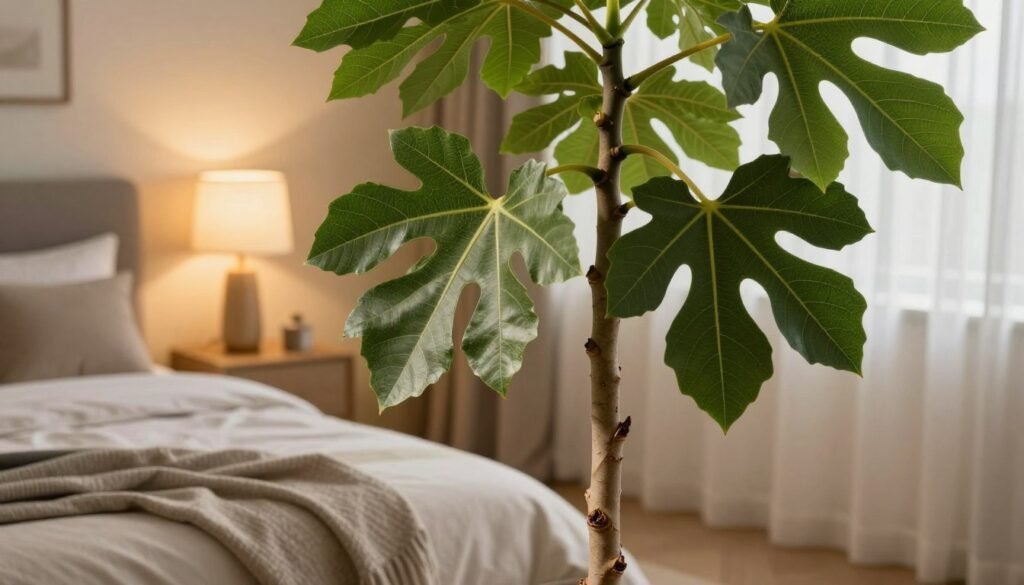
The Lily Pads™ Umbellata, Ficus umbellata, has elegant horizontal branching and huge, glossy foliage that resembles lily pads.
As a tree-like houseplant it has grown in popularity over the past few years. We recommend placing this specimen near a bedroom window on a plant stand to show its structure.
This plant needs medium to high light and temps between 60–85 °F to keep its architectural presence. It brings height and a sculptural touch to a small space and the rest of your home.
Tip: Give the fig room to breathe so its branches and broad leaves can read as a single, striking form.
- Choose a tall stand to emphasize the tree habit and let lower furniture sit back.
- Place where it receives steady, bright light to reach full size and shape.
- Rotate the pot occasionally so growth stays balanced and sculptural.
| Feature | Needs | Placement Tip |
|---|---|---|
| Light | Medium to high | Near a bright window but out of direct harsh sun |
| Temperature | 60–85 °F | Keep away from drafts and cold vents |
| Style | Tree-like, bold leaves | Use a stand to make it a focal point in the room |
Variegated Monstera for Modern Style
We love the Mysteria® Spotsylvania™ Monstera deliciosa for its striking green-and-white variegation and sculptural form.
The plant—often called Thai Constellation—develops heart-shaped leaves with characteristic splits and holes as it grows. These patterned leaves create instant modern appeal and a soft focal point for a cozy room.
Give this vining houseplant a moss pole to climb. A pole supports upright growth and showcases the leaf pattern, making the piece feel more like purposeful design than a random accent.
Monstera prefers low to medium light and steady temperatures between 60–85 °F. Keep soil moderately moist and be ready to water when the top layer starts to dry out.
- We adore this plant for its modern design and unique color contrast.
- It performs well in a bedroom or home office as a stylish focal point.
- With a moss pole and simple care, this plant rewards collectors and newcomers alike.
Rubber Plants for Dramatic Height
We often pick a tall plant to add height and visual drama without taking up floor space.
Chroma® Belize Rubber Plant (Ficus elastica) is a variegated variety with dark‑green leaves splashed with pink and cream.
This tree-like plant has an upright habit and thick, glossy leaves that bring instant drama to a small bedroom. It thrives in bright, filtered morning light but tolerates lower light if needed.
Water when the topsoil feels slightly dry—roughly once a week for most homes. Its robust form makes the rubber plant one best choice for anyone wanting a hardy focal piece.
“Place it where it gets steady light and rotate the pot every few weeks for even growth.”
- We recommend this plant for dramatic height and striking variegated color.
- Its glossy leaves help improve air quality while serving as a bold visual feature.
- Put it near a bright window to keep its variegation vibrant and strong.
Prayer Plants for Nighttime Movement
There’s a quiet magic when certain plants move after dusk, adding a living rhythm to the room.
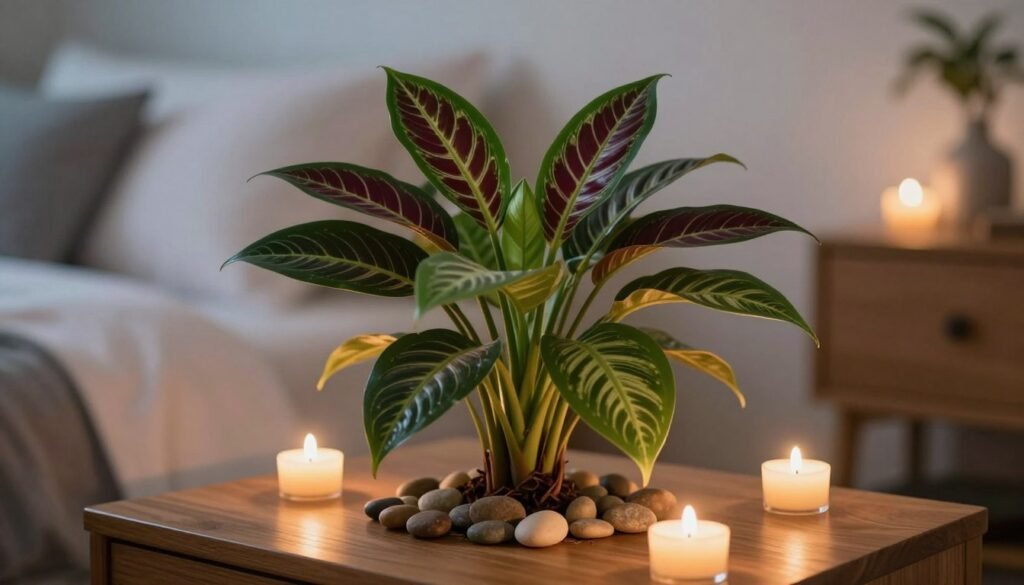
Color Full® Freddie Calathea concinna is named for the way its leaves fold up at night, resembling praying hands. The foliage shows alternating v-shaped bands of dark green and soft green or silver, giving clear pattern and color that pops in small spaces.
This gentle houseplant tolerates low to medium light and helps filter common toxins from the air near where we sleep. We like to place this compact Calathea on a vanity or dresser so the nightly movement is easy to enjoy.
- Dynamic motion: We are fascinated by plants that change at night and bring calm rhythm to a room.
- Style spot: Its patterns and colors make it a standout addition to any home collection.
- Care tip: Keep this plant in low to medium light to preserve vivid leaf patterns.
“The prayer plant is a gentle, soothing companion that brings a sense of wonder to your bedroom sanctuary.”
Fragrant Herbs for a Calming Atmosphere
Adding fragrant herbs near a sunny spot invites calm and clearer breathing at night. We like small pots that sit on a sill or stand so scent and function work together.
Lemon Balm Benefits
Lemon balm has a gentle, citrusy scent that eases anxiety and can help relieve insomnia. We recommend placing lemon balm near a window so it gets four to six hours of sunlight each day.
That simple placement helps the plant thrive and releases its calming aroma when you rest. It’s an easy way to add life to your room without fuss.
Mint for Allergy Relief
Mint acts as a natural decongestant and can help clear nasal passages. We often note it reduces snoring and supports better sleep when kept close by.
Rosemary also deserves a mention—its antioxidants and carnosic acid help fight airborne toxins in your home. Together, these herbs make a compact garden that refreshes air and mood.
- Keep lemon balm and mint near window light for best scent and growth.
- These plants boost comfort during the summer when allergies flare.
- Each herb works as a natural flower alternative to help you relax after a long day.
- Place herbs in a sunny spot so they thrive and provide lasting benefits.
- We love how fragrant herbs turn a simple place into a healing garden.
Tip: Rotate pots a few times a week so light reaches all sides and scents stay vibrant.
Charming Orchids for Small Spaces
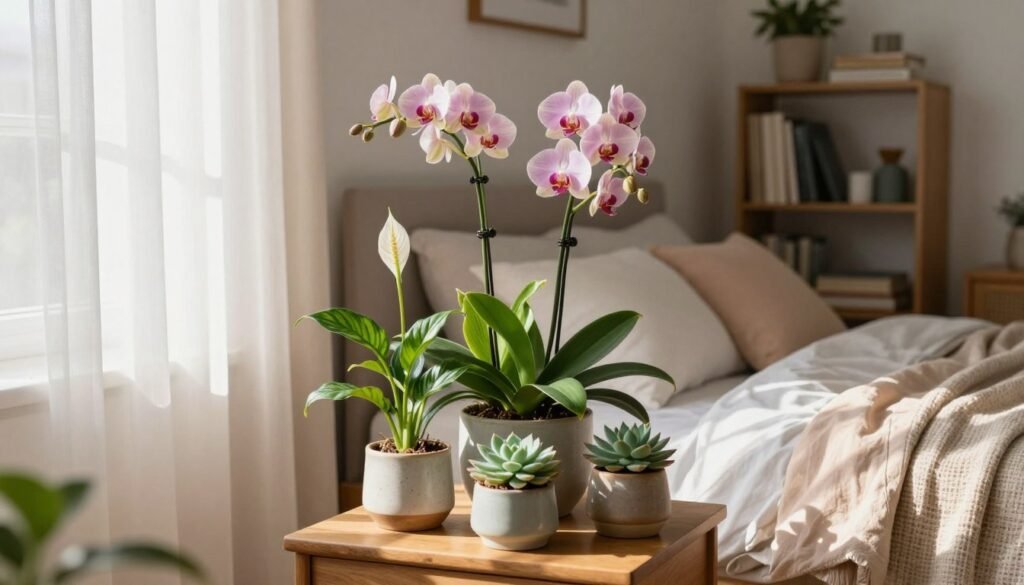
A single orchid can lift a room’s mood with elegant blooms and simple care. We recommend them as a tasteful way to add a pop of color without crowding a nightstand or shelf.
Orchids are hypoallergenic and can help clean the air, according to Christopher Satch, founder and CEO of NYC Plant Help. Place one near a bright window but out of direct sun so it benefits from bright indirect light and keeps producing healthy flowers.
High-quality orchids often live for years when given steady light and gentle care. They fit easily in a tight space and bring refined colors that feel serene and polished.
- We suggest placing orchids on a nightstand or windowsill for easy viewing.
- They offer a sophisticated look for anyone who wants low-footprint elegance.
- The delicate blooms bring calm and refinement to your room.
| Feature | Benefit | Placement Tip |
|---|---|---|
| Light | Promotes repeated blooms | Bright, indirect light near a window |
| Size | Fits small spaces | Nightstand, sill, or narrow shelf |
| Air impact | Hypoallergenic; aids air quality | Keep in a ventilated spot away from drafts |
Peace Lilies for Floral Elegance
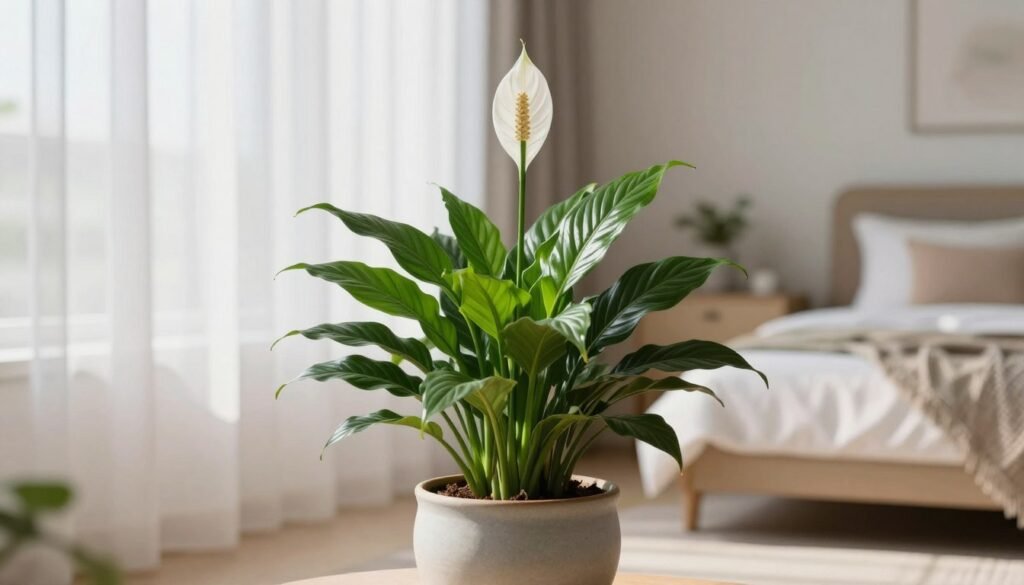
Peace lilies bring a timeless calm with glossy leaves and graceful white blooms. We recommend them as a simple way to add elegance to a cozy room without heavy upkeep.
These plants prefer bright, indirect sunlight and should be watered when the top inch of soil is dry. Proper water management is the best way to keep the foliage lush and the blooms consistent.
Peace lilies are also prized for their ability to purify the air in your home. The dark green leaves provide a dramatic backdrop for the striking white flowers, making them ideal near a dresser or nightstand.
“If you like flowers, a peace lily would work well in your bedroom.” — Eldred Steinkopf
- Elegant and efficient: We love the peace lily for its floral elegance and air-cleansing power.
- Classic touch: A graceful way to introduce a classic flower into your home decor.
- Simple care: Water when the soil is dry to keep leaves looking lush and green.
- Best spot: Place in indirect light to encourage steady blooming.
- Timeless pick: A lasting, gentle choice for anyone seeking calm and style.
| Feature | Best Practice | Placement Tip |
|---|---|---|
| Light | Bright, indirect sunlight | Near an east or north window, out of direct sun |
| Water | When top 1 inch of soil feels dry | Use a tray to avoid soggy roots; allow slight drying between waterings |
| Air benefit | Removes common indoor pollutants | Keep in room where you sleep or relax for cleaner air |
Versatile Spider Plants for Hanging Displays
A suspended planter offers drama and ease—perfect for bringing streaked green and white leaves into a room.
Spider plants produce oxygen at night, so they can help create a more restful sleep environment. Urban Arches® Pixie Punk™ Chlorophytum comosum brings bright green and white variegation that adds classic elegance and fresh colors to your home.
These plants prefer bright, indirect light and average moisture in the soil. Ensure the soil is well-drained to keep the plant healthy and producing baby spiders and occasional flowers.
“Spider plants are a great choice if you like the look of hanging plants.” — Eldred Steinkopf
- Use hanging baskets to let arching leaves trail from a high ceiling for a soft, living curtain.
- This is a simple idea for rooms that need vertical interest without taking up floor space.
- Place where they get steady, indirect light and check soil moisture weekly.
- The plant’s baby spiders on long stems create natural new pots and add charm.
| Feature | Care | Placement Tip |
|---|---|---|
| Light | Bright, indirect | Hang near an east or north-facing window |
| Water | Moderate; let top layer dry | Water when top 1–2 inches of soil feel dry |
| Growth | Arching leaves, baby offsets | Hang high so vines can trail down into the room |
Low Maintenance Air Plants for Modern Shelving
Air plants bring a sculptural, almost futuristic touch to shelving while needing almost no fuss. We like them because they require no soil and fit clean, modern shelves in a small bedroom space.
Minimal care: mist weekly or soak briefly every 10–14 days. Give bright light and good air circulation so plants stay vibrant in your home.
“Air plants help create cleaner air, which can support better sinus health.” — Cody Rasmussen
Design idea: group a few on an open shelf or mount them on driftwood to create a living vignette. They act as a unique flower alternative and add a modern, minimalist touch.
- Require no soil, so shelves stay tidy.
- Improve air quality with very little effort.
- Best placed where they get bright, indirect light.
| Feature | Care | Best Placement |
|---|---|---|
| Water | Weekly mist or 10–14 day soak | On a shelf near bright, indirect light |
| Light | Bright, indirect | East or north-facing shelf |
| Soil | Not required | Mount, bowl, or open shelf |
Essential Care Tips for Bedroom Greenery
Simple, consistent care is the quickest route to long‑lasting, vibrant houseplants in your space. Below we outline practical routines for watering, light, and soil so your plants reward you over time.
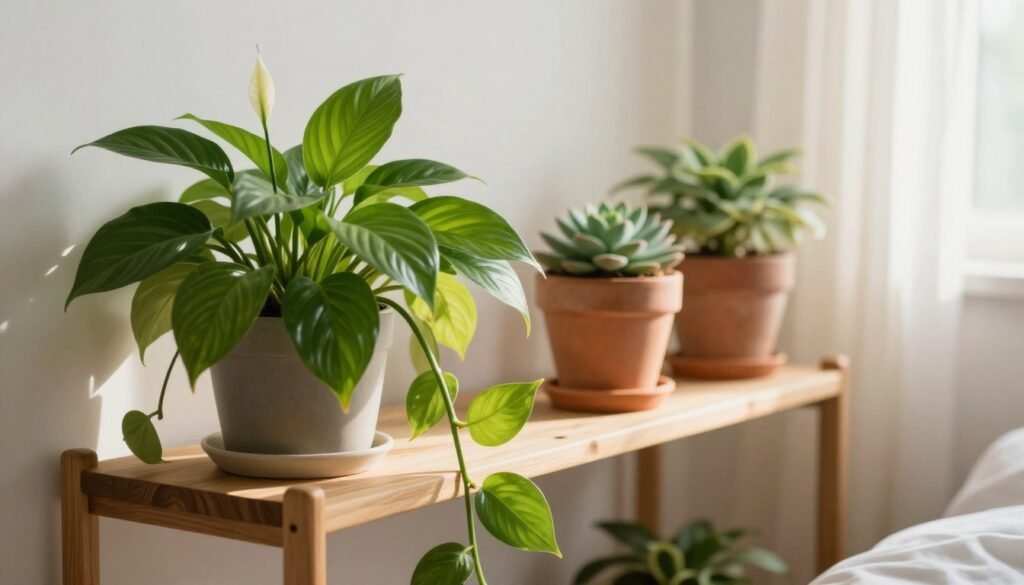
Watering Schedules
Set a steady rhythm. Water deeply but less often so roots grow strong.
Check the top 1–2 inches of soil; if it is dry, add water. During summer, expect to water more often because warmer days speed evaporation.
Light Exposure
One two of the most important factors in plant care are light and water management.
Observe how many hours of light your room gets each day and match each plant to its needs. Rotate pots occasionally so growth stays even.
Soil Health
Use well‑draining soil to avoid soggy roots and slow decline. Refresh the top layer or repot every 12–18 months to restore nutrients and life.
Tip: Healthy soil and regular watering are the best way to keep flowers and houseplants thriving in your home.
- Keep a simple watering calendar to track time between waterings.
- Monitor light windowsill hours and move plants seasonally.
- Choose quality potting soil and add perlite for better drainage.
Conclusion
Let these ideas help you shape a calm, welcoming retreat that fits your daily routine.
We hope this guide inspired you to bring life, color, and gentle greenery into your bedroom. By choosing the right plants and simple care routines, you can enjoy soft blooms and healthy foliage every day.
Whether you favor elegant flower accents or hardy foliage, there is a perfect design for every home and lifestyle. Keep consistent watering and light habits, especially through the summer, and your plants will reward you with beauty and better air.
Start small, enjoy the process, and let these choices refresh your home decor and lift your daily mood.