
Did you know that surveys show nearly 70% of people report a mood lift after adding plants to a wet room? We found that small botanical choices can change daily routines into moments of calm.
On our page published 20 April 2023, we explain how flowers bring fresh scent and life to any room in the home. We believe a well-planned indoor setup can turn your shower time into a spa-like ritual.
Whether you have a compact shower stall or a roomy suite, our ideas help you choose arrangements that thrive in humid spaces. We focus on practical tips that make a single bloom or a rich bouquet transform your home sanctuary.
Our goal is to help you craft a vibrant oasis that feels like a professional home spa, where every rinse is framed by natural beauty and lasting scent.
Key Takeaways
- Adding plant elements near the shower boosts mood and fragrance.
- We guide you to arrangements suited for humid room conditions.
- Small blooms can have big visual impact in compact spaces.
- Our tips work for both modest showers and large master suites.
- Follow simple care steps to keep displays fresh and inviting.
Why Your Bathroom Needs a Floral Refresh
We often find a few well-chosen blooms can completely revive a small wet room. Adding real stems gives a level of freshness that diffusers and electric sprayers rarely match.
Lavender of Provence is our top pick for spots near a sunny window. Its fragrant clusters add color and scent while tolerating humid air around the shower.
- Natural scent improves olfactory pleasure every time you enter the room.
- The right blooms turn a standard shower into a calm, luxurious sanctuary.
- Choosing hardy species helps keep your space beautiful year-round.
On this page we explain why living elements matter to your decor and overall environment. Natural flowers provide a genuine touch that beats synthetic alternatives for a truly relaxing bathroom space.
Choosing the Best Indoor Flower Display Bathroom Options
Start by matching each plant’s light needs to the layout of your room. We focus on species that love humidity and still look like a purposeful piece in your design.
Selecting Tropical Varieties
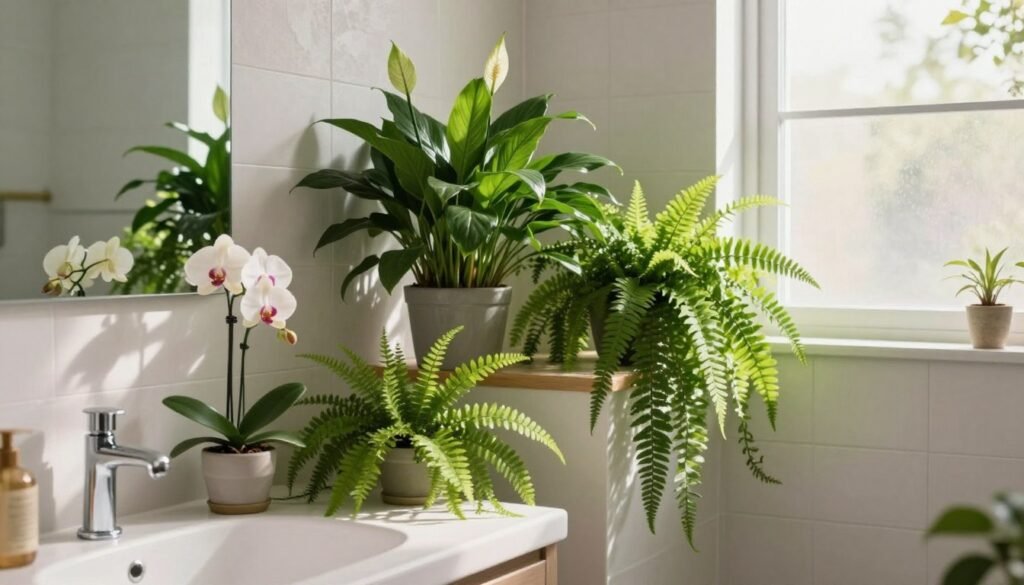
The Aluminum plant (Pilea cadierei) thrives in moderate to high humidity and prefers bright, indirect sunlight. It adapts well to steam from a shower and makes an easy centerpiece for small arrangements.
Considering Light Requirements
When choosing plants for your bathroom, consider the exact light conditions near windows and fixtures. Our page shows that matching each flower’s needs to available light keeps growth healthy all year.
- Pick tropical varieties for warm, humid conditions.
- Prioritize species that tolerate low or indirect light.
- Plan your design so plants receive consistent bright, indirect sun where possible.
| Species | Light | Humidity |
|---|---|---|
| Pilea cadierei | Bright, indirect | High (shower-friendly) |
| Peace Lily | Low to bright, indirect | High |
| Philodendron | Low to moderate | Moderate to high |
For more specific picks, see our guide to bathroom blooms. Choosing the right species is the key idea for a sustainable, beautiful room.
Essential Care Tips for Healthy Bathroom Blooms
Routine trimming and fresh water are the foundation of long-lasting arrangements. We always cut stems at a diagonal and remove any leaves that would sit below the water line. This reduces bacteria and helps stems drink more efficiently.
Buy blooms that are still closed in the bud so they open slowly and last longer in the humid space. Fill vases with room-temperature water and change it every two to three days.
Pruning and Watering Best Practices
Prune spent petals and trim stems to encourage steady uptake of water. Check the needs of your specific plants regularly, since a shower area can speed up how fast they drink.
- Remove all leaves below the water to prevent cloudiness and rot.
- Keep water fresh and topped up at the right time to avoid stress.
- Prune lightly to shape stems and extend vase life.
Proper care at the right time will keep your flowers and plants vibrant and fragrant. Follow these steps and you’ll enjoy healthy blooms for many days after purchase.
Creative Ways to Repurpose Household Items as Vases
We love rescuing vintage tools and tins from the garage and using them as creative vases around the shower. This approach adds charm and saves money while giving old items a new life.
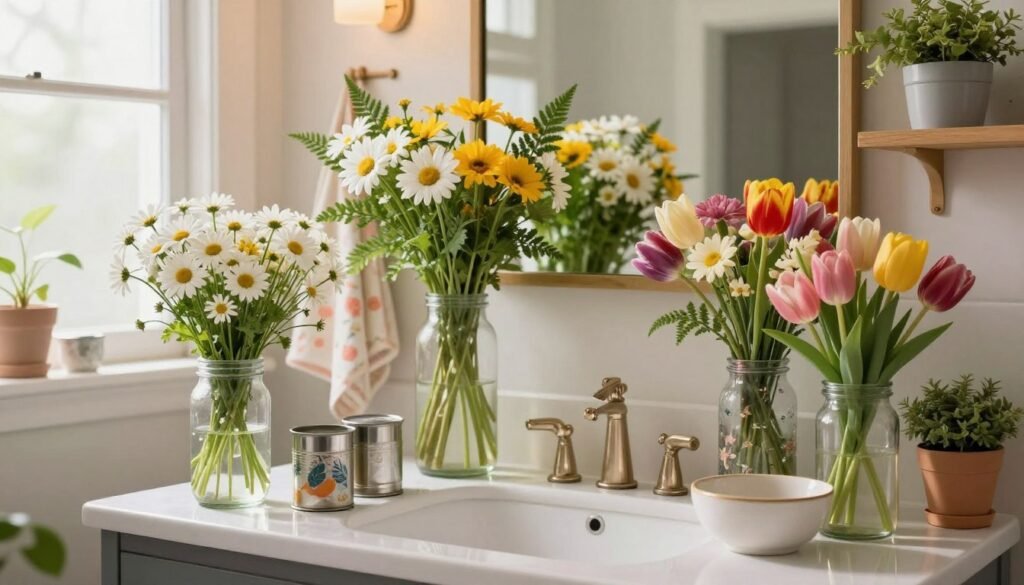
Try simple swaps: a teapot or colorful jug works well as a small vase on a shelf. An old bottle or tin bucket becomes a bold piece when filled with fresh flowers and water.
We encourage you to hunt through storage for metal tools that can hold stems. These unexpected containers make unique arrangements and add personality to your home decor.
- Place a vintage vase near towels to save space and add a soft touch.
- Experiment with materials to see which vase suits your shower area best.
- Use seasonal blooms to refresh the room without spending much time or money.
With creativity, everyday objects transform a plain room into a curated, elegant space.
The Elegance of Orchids in Humid Spaces
Orchids thrive where steam and soft light meet, giving any space a refined feel.
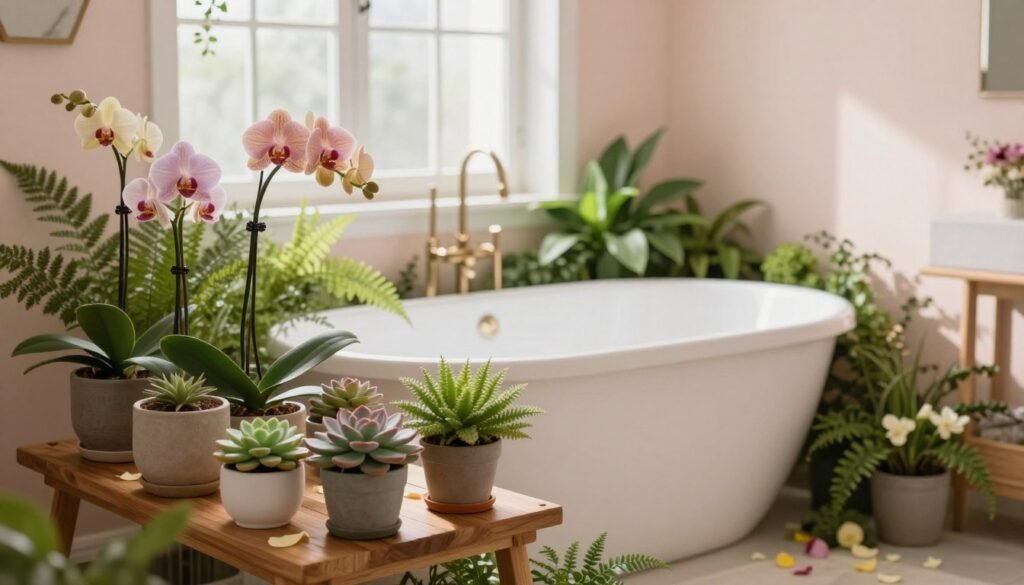
We believe orchids are the ultimate choice to add elegance to your bathroom. Their long green leaves and sculpted blooms bring gentle beauty and quiet luxury to a shower corner.
Try a small wooden staircase as a multi-tiered stand. Placing orchids on steps near a window uses vertical space and creates a striking focal point on the side of your vanity.
Orchids handle moisture well and enjoy the warm, humid environment that a shower provides. Give them bright, indirect light and allow pots to dry slightly between waterings to prolong blooms.
Group a few varieties together for contrast in color and form. Over time, these exotic plants will reward you with lasting flowers and a sense of calm that transforms ordinary spaces into a sanctuary.
Balancing Floral Arrangements with Ambient Lighting
Ambient light can turn soft pastels into bold accents or mute bright tones—place stems where that shift works for you.
Choose petal colors that echo your existing palette so the overall look feels calm and coordinated. We suggest matching hues to towels, tiles, or paint to keep the room cohesive.
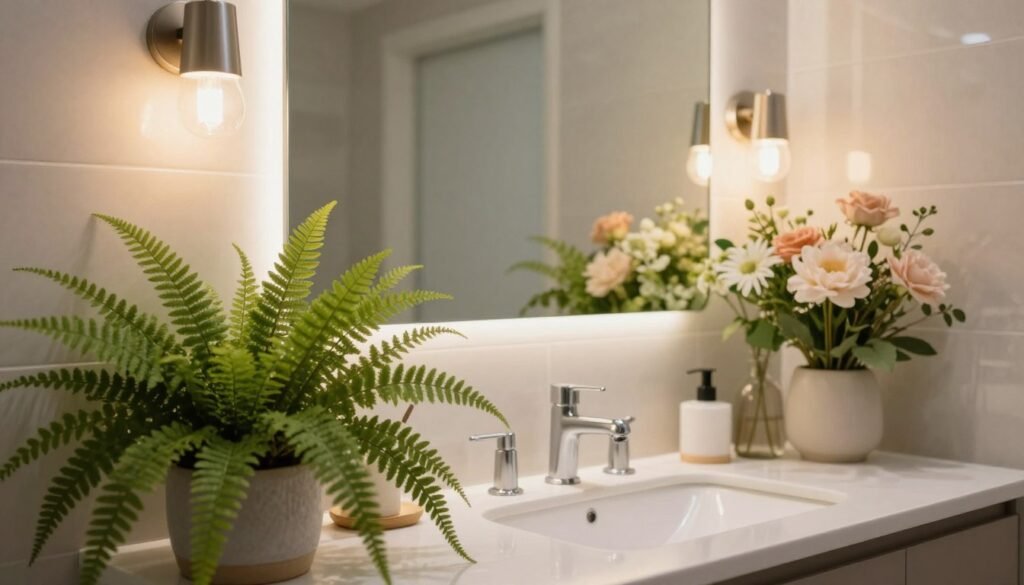
Think about how light moves through the space. Morning sun, midday brightness, and evening fixtures change how colors read. Position an arrangement where changing light highlights your shower area at key times.
- Place stems near a light source to draw the eye to the shower niche.
- Use soft, warm bulbs to boost natural tones and make petals feel richer.
- Pick blooms whose colors work with fixtures and textiles for visual harmony.
The right light is the secret to turning simple floral arrangements into a focal point. With careful color choices and smart placement, we keep our bathroom a balanced and inviting space.
Incorporating Hanging Planters for Vertical Interest
Hanging planters add instant vertical interest and free up floor area in compact city homes. They are a smart way to add green texture without crowding counters or shelves.
Choosing trailing vines is the first step. Pick ivy, Boston fern, or pothos—species that enjoy steam and indirect light.
Choosing Trailing Vines
We recommend vines that tolerate moisture and can drape naturally near a window or the side of your shower. These plants create a soft, garden-like feeling and complement towels and tile.
Installing Ceiling Hooks
Use proper ceiling hooks or wall brackets rated for the pot weight. Install them above the shower side or near a bright window so vines get light and humidity together.
- Save floor space: suspend pots to make small spaces feel bigger.
- Place near shower: hanging near steam helps tropical leaves thrive.
- Layer heights: hang at varied levels to draw the eye upward.
| Plant | Light | Best Placement |
|---|---|---|
| Ivy (Hedera) | Bright, indirect | Near window or shower side |
| Boston Fern | Low to bright, indirect | Above towel rack or beside vanity |
| Pothos | Low to bright, indirect | Hanging cluster near steam source |
Hanging planters are one of the easiest ways to bring a little bit of garden into your home. They make the room feel intentional and calm with minimal effort—a simple thing that changes daily routines for the better.
The Charm of Aquatic Flowers and Hydroponics
Transparent pots turn bulbs into a visual feature. We love how tulips and hyacinths look when their roots and bulbs are visible through clear containers.
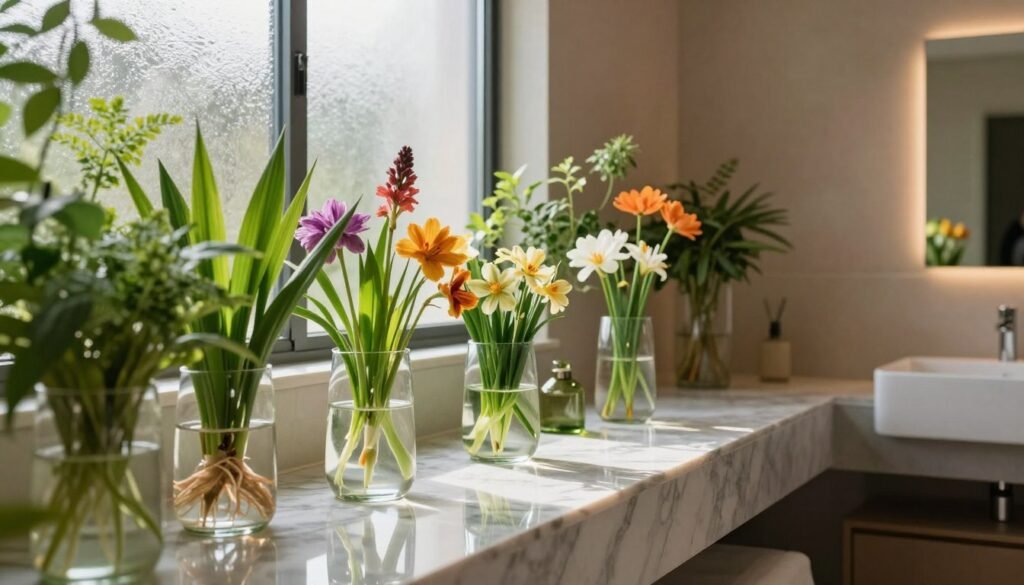
Use hydroponics and water-based setups as striking accessories. Grow bulbs in a solution of water and liquid fertilizer for healthy growth. These plants add vibrant colors and simple beauty next to a shower or sink.
- Clear vases let you watch roots develop and add a lively element to the room.
- Repurpose teapots or tureens as a vase for a playful, original accessory.
- Hydroponics keeps things tidy—no soil, less mess, and easy maintenance.
| Bulb | Container | Care |
|---|---|---|
| Tulip | Transparent pot or vase | Change water every 3 days, add liquid fertilizer |
| Hyacinth | Clear glass or teapot | Keep in bright, indirect light; fresh water + nutrients |
| Mixed bulbs | Clustered vase | Rotate for even light; top up water as needed |
Designing a Stunning Vertical Garden Wall
A vertical garden wall turns a plain wall into an instant focal point that breathes life into a small room. We find modular systems are ideal for tight spaces because they stack pots and planters without using the floor.
Place your garden near a window when possible so natural light helps plants and flowers produce fuller blooms. In bathrooms with little sun, we add quality artificial light to keep growth steady.
These walls work beautifully beside a shower where steam boosts humidity and keeps foliage vibrant. The vertical approach lets us mix textures and colors to create a living mural that feels like a private oasis.
For a neat finish, choose modular panels that let you swap pots for seasonal ideas. A well-planned vertical garden maximizes visual impact, saves space, and raises the whole room’s design without a major renovation.
Mixing Flowers and Candles for a Spa Atmosphere
Combining gentle candle glow with natural stems turns everyday time into a quiet, fragrant pause. We recommend placing a small arrangement near the shower so scent and steam work together.
A few candles and a tidy bouquet deliver both visual beauty and lasting freshness. The soft light from candles highlights petal colors and brings a warm touch to towels and tile.
We find that pairing scented candles with living stems helps purify the air and reduce unwanted odors. Choose floral arrangements with complementary hues to keep the palette calm and cohesive.
- Place an arrangement beside a low candle cluster for layered scent and soft light.
- Match colors to towels to make the space feel coordinated and restful.
- Rotate candles and plants so each use feels intentional and spa-like.
These simple additions elevate decor and create a small ritual. With careful choices, your room will feel like a professional spa every single time you enter.
Selecting Pet-Friendly Plants for Your Sanctuary
When we add plants near a water source, pet-safe options come first. Our goal is to keep the room calm and safe for every member of the family.
Safety Considerations for Household Pets
We prioritize non-toxic varieties that thrive in humid conditions by the shower. The Kangaroo Fern is one of our top picks.
The Kangaroo Fern loves steam and mist. It is nontoxic to cats and dogs and fits well on the side of a vanity or a high shelf.
- Choose plants rated safe for pets and suited to the room’s light and humidity needs.
- Keep pots where pets can’t chew on leaves or knock over water-filled containers.
- Regularly check care guides so each plant enjoys a long, healthy life with you.
Creating a sanctuary means you should never worry about pet safety while enjoying the space. With careful choices we add life without risk, making the home feel natural and welcoming.
Conclusion
Let these ideas inspire a simple makeover that brings calm and scent to your space.
We hope this page has given you the tools and confidence to refresh your room with living accents that suit your style.
By choosing the right plants and placements, you can lift your daily shower routine into a short, spa-like pause.
Remember to match light and humidity to each pick and to get creative with vases and planters for a personal touch.
Whether you opt for a vertical garden or a single orchid, small additions make a big difference in feel and scent.
Thank you for reading our guide — we look forward to seeing how you bring these ideas into your home.