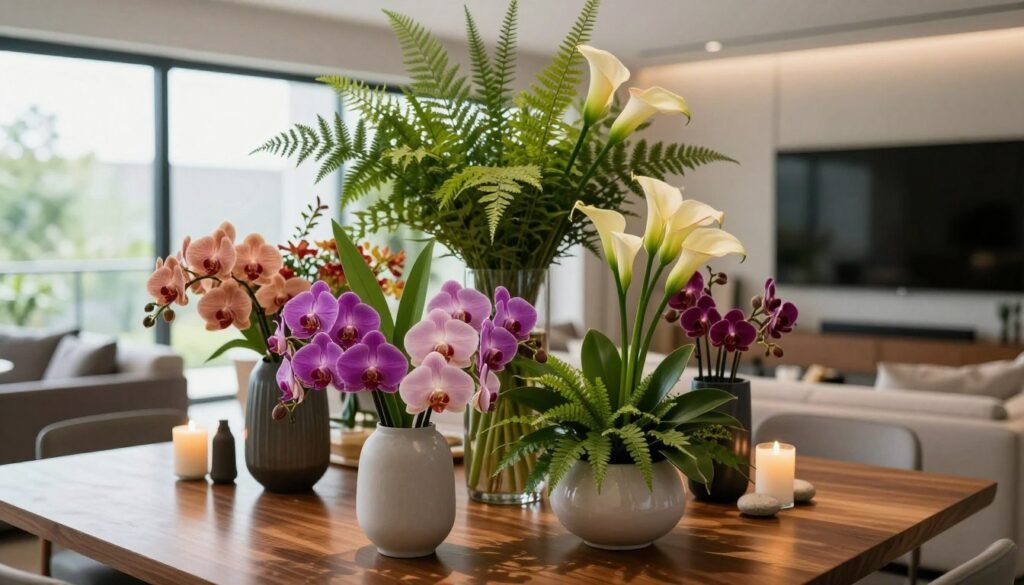

Surprising fact: 78% of U.S. homeowners say adding plants and accents changed how their home feels within days.
We believe a well-chosen arrangement can lift mood, add color, and change a room without renovation. Our guide shows how to pick the right pieces and place them so your space feels inviting and up-to-date.
We focus on practical tips that blend professional design principles with simple swaps anyone can make. Small edits — new pots, layered textures, and smart placement — can refresh every corner of your living area.
Our goal is to help you create a welcoming and polished look that reflects current trends this season. We share selection advice, styling ideas, and easy steps to keep your rooms feeling warm and stylish.
Key Takeaways
- Thoughtful accents can transform a room fast.
- Choose pieces that complement your home’s palette and scale.
- Simple swaps often beat full renovations for impact.
- Use texture and color to create depth and warmth.
- We provide design rules that are easy to apply this season.
Elevating Your Home with Modern Indoor Flower Display Trends
A curated mix of planters and plants can transform a workspace or living room in just a few thoughtful steps.
NMN Designs offers a focused collection of 32 pieces that work equally well in a home or an office. We suggest mixing several indoor planters to create a cohesive style that links professional and personal spaces.
By choosing the right greenery, you can soften sharp architectural lines while keeping a clean design language. Grouping pots and plants together builds a lush, welcoming feel without clutter.
“A small grouping of containers often reads as intentional and polished—perfect for both offices and living areas.”
- 32 products in the NMN Designs collection crafted for versatile use.
- Use mixed planters to bridge office formality and home comfort.
- Group different sizes and textures of pots to enhance depth and greenery.
- These containers fit diverse spaces while remaining functional and stylish.
We recommend starting with two or three planters per zone to test scale and flow before expanding to larger arrangements.
Choosing the Right Materials for Your Planters
Material choice matters: it affects longevity, appearance, and how well your plants thrive. Before you buy, think about weight, porosity, and how each material handles moisture.
Ceramic vs. plastic
Ceramic pots feel substantial and often look more refined. They are porous, so they help soil dry between waterings. That can guard roots against rot.
Plastic planters are lightweight and budget-friendly. They retain moisture longer and are easier to move. Many plastic options are durable and come in a wide range of finishes.
Durability Factors
We tested 10 stylish indoor planters made from steel, plastic, concrete, and ceramic. Each material performs differently under wear and tear.
- Consider weight if you place a pot on shelves or stands.
- Porosity influences watering frequency and root health.
- Check for UV resistance and chips—especially if a piece is on sale.
Tip: Matching the right indoor planter material to your plant type keeps greenery healthy and your space looking cohesive.
Sleek Stainless Steel and Metal Options
Stainless steel planters add a clean, industrial touch that holds up to daily use.
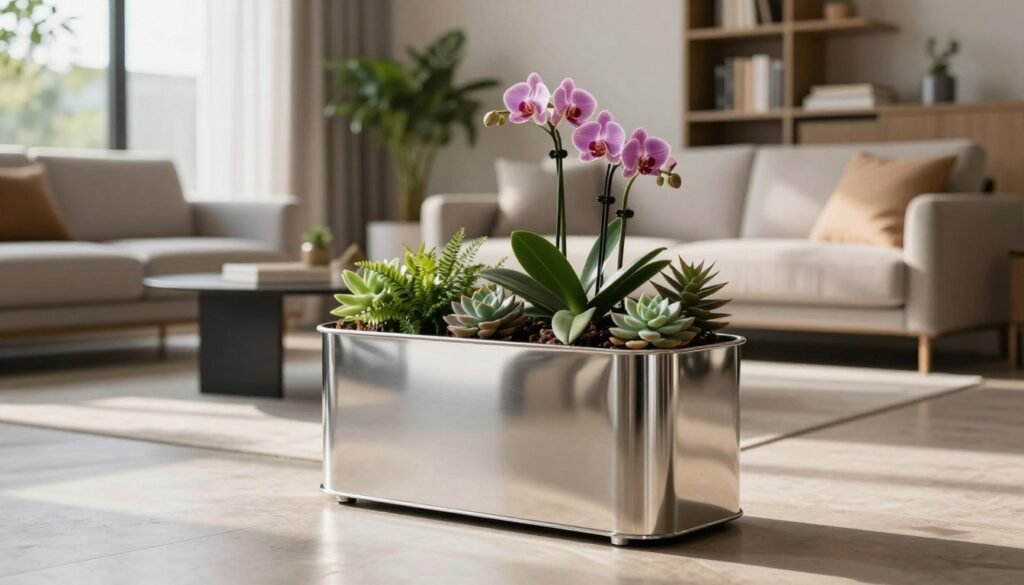
Our collection of steel and metal planters serves as both function and art. Each metal planter is crafted to be a statement piece.
We often pair a pot with a sturdy stand to lift greenery for better sight lines. Adding a stand creates height and gives each piece room to breathe in the space.
Several pots are on sale right now, so you can invest in corrosion-resistant steel without overspending. The minimalist lines of these metal containers suit many palettes and keep care simple.
Use mixed heights and a few stands to shape an intentional grouping. That variation turns every planter into a focal element while keeping the overall look cohesive and durable.
The Beauty of Lightweight Fiberglass Containers
Fiberglass containers let us achieve sculptural shapes while keeping pieces easy to move. They mimic the look of heavy stone without the backache that comes with bulky planters.
Benefits of Fiberglass
Lightweight and durable: These pots resist chips and cracking, so they last through seasonal changes. We can lift and rearrange them without asking for help.
Low maintenance: Fiberglass pots are simple to clean and drain well when paired with the right liners. That helps our plants stay healthy and gives us more time to enjoy the room.
- They offer stone-like texture with much less weight.
- Many fiberglass planters are on sale now, making upgrades affordable.
- Versatile shapes fit shelves, stands, and open corners.
| Feature | Benefit | Best Use |
|---|---|---|
| Weight | Easy to move | Frequent rearranging |
| Durability | Resists chips | High-traffic rooms |
| Finish | Stone look | Living areas and planters for office |
Incorporating Organic Wood Bases
Adding a wood base gives planters a gentle, grounded look that feels inviting in any room.
We use wood to add natural warmth that balances cooler materials. A wood accent softens metal or ceramic and makes the whole space feel more lived in.
Contrast matters: pairing sleek pots with a wood base creates a refined design that reads both grounded and fresh. The result is a layered style that works across living rooms and offices.
Each base is crafted to give a stable foundation. That stability protects your plants and keeps arrangements secure on shelves and stands.
Texture is key: wood introduces an organic surface that complements rich greens and bright colors. By blending wood and other materials, we build a cohesive design that reflects personal taste and everyday life.
- Choose durable wood with a sealed finish for long-lasting use.
- Match base scale to pot size to keep proportions balanced.
- Use mixed materials to create a balanced, stylish space.
Architectural Shapes for Contemporary Spaces
Well-chosen cubes and boxes bring order and a sculptural quality to living spaces. We look for pieces that define corners, frame seating areas, and create a clear visual rhythm across a room.
Cube Designs
Cube planters offer a bold, graphic presence. They work best with tall, linear plants that echo the pot’s vertical lines.
Tip: Pair a cube planter with a round pot nearby to soften edges and add flow.
Rectangular Boxes
Rectangular boxes create clean runs along shelves, windowsills, or console tables. They help us build uniform rows that feel organized and calm.
“A box design gives a crisp, ordered look that anchors an arrangement.”
- Match plant habit to the container: narrow pots for slender stems, wider boxes for bushy plants.
- Mix boxes and cubes to form layered groupings that draw the eye across the room.
- Choose pots that emphasize geometric shape to highlight form over fuss.
| Shape | Best Plant Type | Best Use |
|---|---|---|
| Cube | Tall, slender plants (e.g., snake plant) | Corner anchors, floor groupings |
| Rectangular box | Bushy or trailing plants (e.g., pothos) | Windowsills, long consoles |
| Round pot | Compact, rosette or bushy plants (e.g., peperomia) | Softening sharp lines, tabletops |
Selecting the Perfect Artificial Floral Arrangements
Artificial arrangements give us lasting color and texture without the upkeep of fresh bouquets.
Start by studying color and texture. We look for stems and foliage that mimic real growth patterns. That attention to detail makes a big difference at a glance.
Choose high-quality materials such as silk or real-touch. These hold their shape, resist fading, and feel more natural to the eye.
Consider scale next. Match the size of the piece to your furniture so the arrangement feels balanced. A too-large bouquet overwhelms; too small looks lost.
Focus on realism: lifelike stems, varied leaf shapes, and natural bends create credible motion and shadow. Those traits keep the piece convincing year-round.
- Pick durable fabrics and UV-safe dyes to avoid quick wear.
- Mix heights and textures for a more authentic composition.
- Use a neutral vase that complements existing décor.
With careful curation, we enjoy the elegance of fresh-looking blooms any season—without watering or sunlight concerns.
Styling Table Centerpieces for Dining Rooms
A well-styled table centerpiece sets tone and invites conversation before the first course arrives. We favor pieces that balance height and texture so the table feels complete without blocking sight lines.
Choosing Silk Flowers
We recommend silk for lasting beauty. Silk keeps a centerpiece pristine through long dinners and repeated use. It handles handling and bright lights better than delicate fresh stems.
- Classic look: use 12 branches of white rose flowers for an elegant, timeless centerpiece that suits a formal or casual home.
- Rustic height: add a 36″ tall artificial pomegranate fruit stem to create vertical interest and tactile contrast in the room.
- Durability: high-quality silk materials resist fading and hold shape so your centerpiece looks great between gatherings.
- Mood match: choose a simple bouquet for an intimate dinner or a dramatic mix for festive evenings; let the centerpiece reflect the room’s energy.
“A thoughtful centerpiece ties linens, lighting, and seating into one harmonious scene.”
We find that the right silk arrangement makes every meal feel considered. It brings a warm, lived-in touch to the home while standing up to real life.
Creating Dramatic Focal Points with Large Floor Planters
Large pots make a bold visual claim and give plants the space to truly thrive.
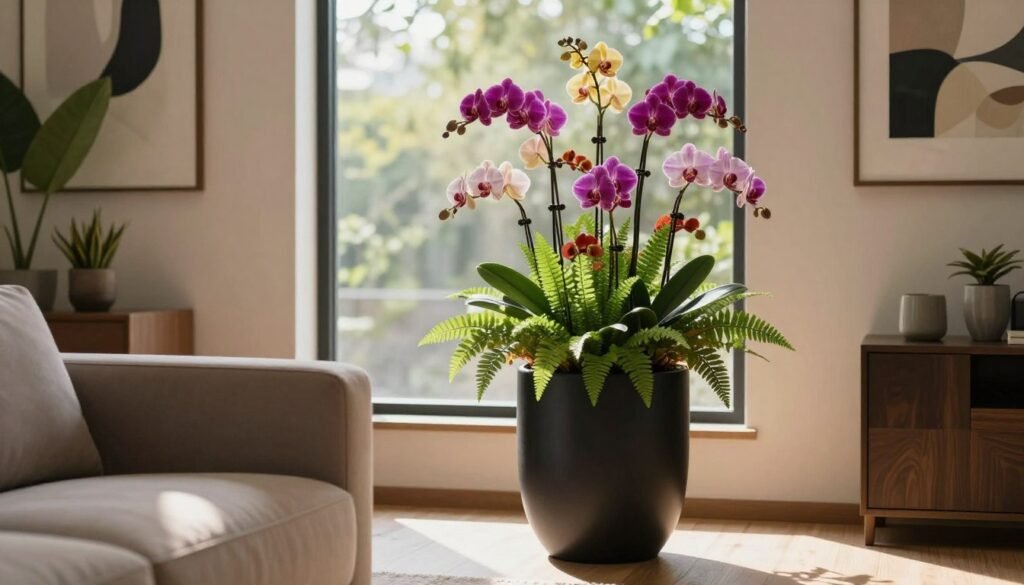
Use a sturdy stand to lift a planter and add height. A raised pot creates sightlines and keeps the plant from feeling lost in a corner.
Choose a container sized for big specimens. These planters let substantial plants show off lush greenery and strong form.
Place the pot where it defines the room’s style. A single large planter can set tone, add beauty, and become a true statement in the space.
| Material | Best Plant | Visual Impact | Recommended Stand Height |
|---|---|---|---|
| Ceramic | Fiddle leaf fig | High gloss, refined beauty | 12–18 in |
| Fiberglass | Monstera | Stone look, light weight | 10–16 in |
| Metal | Rubber plant | Bold, sculptural statement | 14–20 in |
Our selection balances function and form so your plants stay healthy and your room gains lasting beauty.
Enhancing Your Living Room Aesthetic
A few well-placed plants can instantly make your living room feel calmer and more inviting. We suggest matching plant size to furniture scale so each piece feels intentional in the space.
Choose indoor plants that suit your room’s light. Low-light species work well near sofas, while brighter windows suit taller, fuller plants. This keeps greenery vibrant and low maintenance.
Arrange for depth: layer a tall plant at the back, a medium pot on a side table, and a small plant on a shelf. That mix adds texture and visual rhythm without crowding.
- Balance: place plants to frame seating and soften hard lines.
- Texture: mix leafy and structural plants for contrast.
- Flow: leave breathing room so the living room reads calm and cohesive.
Bedroom Floral Decor Ideas
A calm bedroom starts with small, thoughtful accents that invite rest.
We suggest soft-colored indoor arrangements that feel soothing and subtle. Pale tones and gentle textures help the room feel restful without competing with bedding or art.
Place a small, elegant piece on a nightstand to welcome you each morning. A single, well-scaled arrangement adds warmth and a personal touch without cluttering the surface.
Choose high-quality artificial stems when you want beauty with zero upkeep. Realistic materials keep the look natural and let you enjoy color and form year-round.
Coordinate colors with sheets and throws to create a calm palette. Matching tones ties the room together and keeps the space peaceful.
| Tip | Why it works | Best for |
|---|---|---|
| Soft palette | Promotes rest | Small bedrooms |
| Nightstand piece | Gentle welcome | Bedside tables |
| Realistic artificial stems | No care needed | Low-light rooms |
Versatile Indoor and Outdoor Planter Designs
Versatile planters let us move a statement piece from porch to parlor without a second thought.
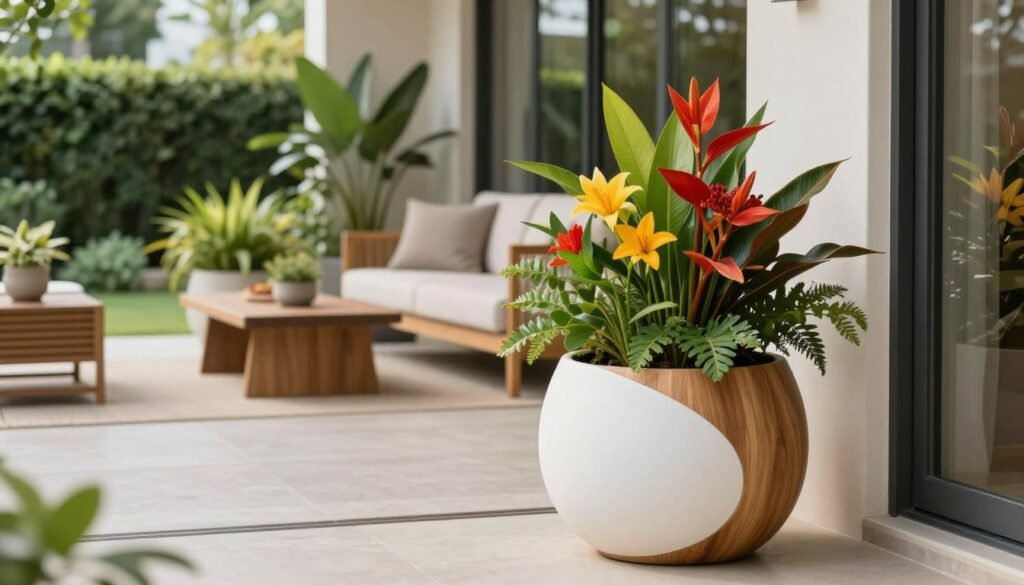
Our collection of indoor outdoor planter options is engineered to resist sun, rain, and changing temperatures.
We offer 16 front porch planter ideas that use durable metal and box shapes to create an inviting entrance. These pots work equally well on a covered porch and inside a living room.
Choosing a pot that fits both settings gives you real flexibility in how you style a space. Swap pieces seasonally or move them for events without worrying about wear.
Many of these metal designs are on sale, so you can refresh entryways and interiors at once. We prioritize long-lasting materials so your porch and indoor areas stay polished through every season.
- Durability: metal and boxed forms hold up outdoors and look refined indoors.
- Flexibility: indoor outdoor options let you reuse the same pots across spaces.
- Value: sale pricing makes high-quality designs accessible now.
The Importance of Drainage Holes and Functionality
Good drainage is the single feature that separates a pretty pot from a healthy home for plants.
Drainage holes prevent root rot by letting excess water leave the soil. That flow keeps roots oxygenated and reduces pests and fungus.
We always check for drainage holes before buying any metal or ceramic planter. A beautiful finish should never block water runoff or trap moisture against roots.
Function matters as much as form. A thoughtful design balances looks with practical features like a raised base, removable liners, or an internal reservoir.
- Protect floors: proper drainage keeps your space clean and avoids stains.
- Save time: fewer overwatered plants means less maintenance for us.
- Pick wisely: choose pots that pair good design with clear drainage solutions.
Our experts prioritize functionality in every recommendation so your plants thrive and your room stays tidy. Investing in a well-made planter with reliable drainage holes pays off in health and ease.
Seasonal Flower Arrangement Inspiration
Simple seasonal swaps keep our home feeling fresh and in tune with nature. We update arrangements to reflect changing colors and moods through the year.
In spring, we favor bright blooms and crisp greens to bring a vibrant energy into the living area. Short stems, soft pastels, and airy textures mimic thawing weather and new growth.
When autumn arrives, we switch to deep-toned stems that add warmth and richness. Burnt orange, burgundy, and muted golds help the room feel cozy without changing furniture.
Rotate arrangements seasonally to keep your living space current. Small swaps—a different vase, trimmed stems, or a new grouping—give the senses something fresh.
“By mixing types and colors each season, we celebrate nature and keep our decor lively.”
- Mix textures: pair soft blooms with structured stems for balance.
- Match scale: size arrangements to the room so they feel intentional.
- Rotate often: a seasonal refresh makes the home feel new without big costs.
Tips for Maintaining Your Indoor Greenery
With a few simple steps, we preserve the life and look of every planter and stand in our home.
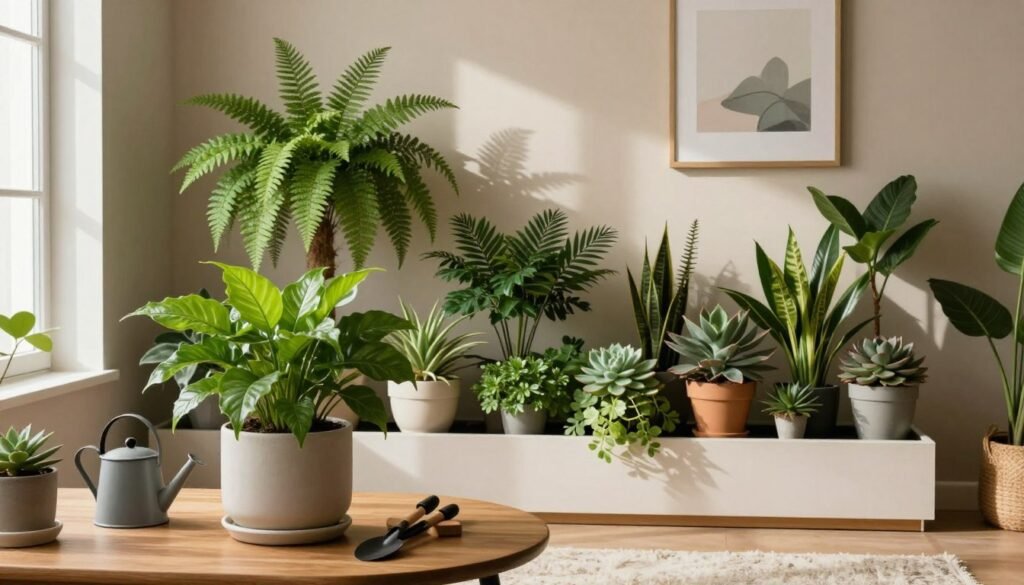
Check each plant weekly. Look for new growth, pests, and dry soil, especially for pieces on a high shelf or mounted on a wall.
Choose the right planter and place the stand so air and light reach roots. Proper airflow reduces rot and keeps foliage lively.
After receiving items via shipping, wipe down surfaces to remove dust and packing residue. Our about our product guide covers safe cleaners and quick fixes for scuffs.
- Clean pots gently with a soft cloth and mild soap.
- Rotate plants for even light exposure.
- Check drainage and lift pots off saucers when watering heavily.
When a sale rolls around, use our exclusive code to stock up on care items and replacement liners. These small steps keep every planter, product, and plant healthy and beautiful.
Conclusion
Use small, intentional choices to bring personality and lasting value to every corner of your home. A few well picked pieces can change how a room feels without adding work or expense.
By selecting the right materials and shapes, we create a cohesive look that feels calm and inviting. Keep form and function in balance so plants thrive and your space stays tidy.
Let personal taste lead: choose pieces that reflect you while supporting healthy growth. Explore our curated products to find items that bring joy and freshness to your home today.
Thank you for joining us on this journey to make your home more vibrant, stylish, and livable.