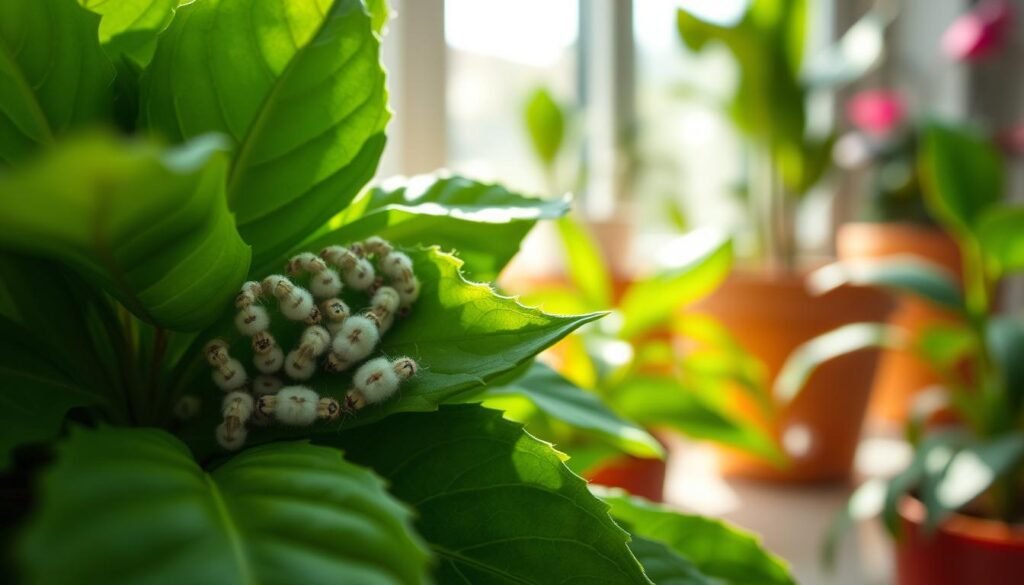

Surprising fact: A single cottony pest can spread across a shelf of houseplants in under a month if left unchecked.
Ten minutes a week is all you need for a fast, reliable habit that spots issues early and stops infestations before they grow. This short routine focuses on quick checks, containment, and repeat steps that break the pest life cycle.
These pests are small, white, sap-sucking insects with a powdery wax coat. They thrive in steady home temperatures and humidity, making houseplants a common target across the United States right now.
In this guide you’ll find a clear flow: identify → contain → mechanically remove → spot-kill → spray treatment → escalate only if needed → prevent. The goal is not just to kill adults but to interrupt eggs and crawlers with repeat care.
Safety first: test any product on one leaf, and keep treated foliage out of harsh sun while wet. You’ll also get a simple weekly checklist that helps you get rid of pests without turning plant care into a full-time job.
Key Takeaways
- Ten minutes each week can prevent a major infestation.
- Know the pest: small, white, waxy, and persistent in homes.
- Follow a step-by-step routine that targets all life stages.
- Use safe, repeatable treatments and test on one leaf first.
- Contain and act fast—escalate only if repeat treatment fails.
Why mealybugs are so common on houseplants right now
Warm, steady room conditions and crowded displays give tiny cottony feeders a constant, cozy home. Year-round mild temperatures let them reproduce without a cold pause, and low airflow plus steady humidity make survival easy.
Indoor-friendly conditions: mild temperatures and steady humidity
Stable temperatures mean no winter dieback. Mild night temperatures around 60°F can slow them, so cooler nights help.
Their waxy coating protects against drying and shields many water-based sprays, making control harder.
How these pests spread through your home
Most outbreaks start when someone brings home new plants from a nursery or greenhouse; tiny hitchhikers hide in stems and leaf joints.
- Clustered shelves and windowsills let crawlers cross pots easily.
- Moving pots, sharing plant stands, or wiping leaves with the same cloth spreads them, too.
Prevention is simple: inspect new plants, give each a short quarantine, and space groups slightly as part of your weekly routine. Outdoors, beneficial insects often limit populations, but indoors you must act as the predator with regular checks.
How to identify mealybugs before your plant takes a hit
A quick look under leaf joints often reveals the first signs of a cottony infestation. Spotting this early saves new growth from damage and keeps sap loss minimal.
What they look like
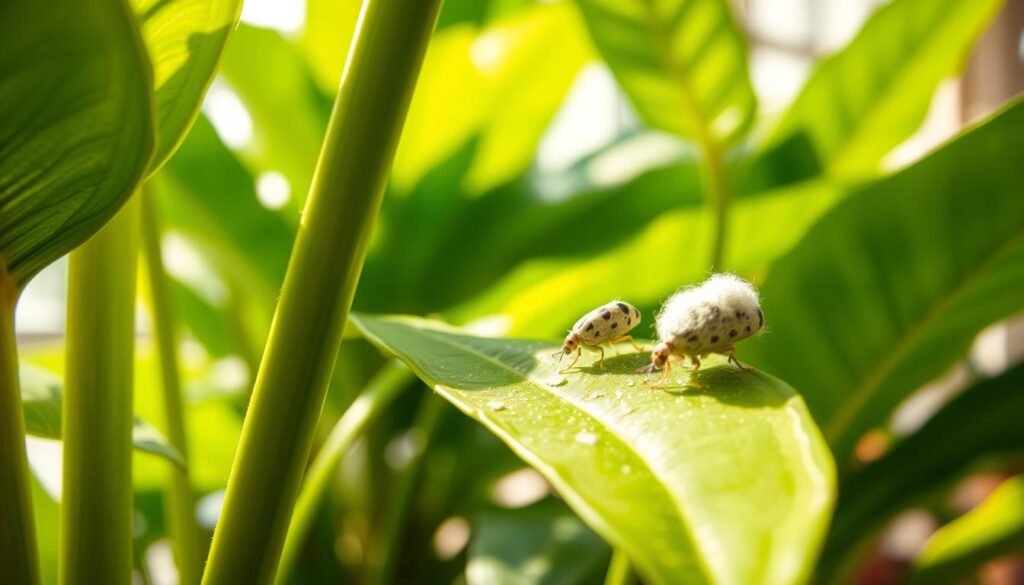
White, cottony wax on leaves and stems
Adults appear as small, oval, white blobs covered in powdery wax. They range from about 1/10 to 1/4 inch and often sit quietly while feeding on sap.
Where they hide
Check leaf joints, stem crotches, crowns, and the area near the soil line first. Tender new growth is a favorite because the sap flow is strong there.
Common lookalikes to rule out
Not all white fluff is the same. Scale looks like hard barnacles. Whiteflies flutter when disturbed. Woolly aphids cluster but move differently.
- Two-step ID: see white cottony wax, then gently probe to confirm an insect under the fluff.
- Adults vs crawlers: adults are fluffy ovals; crawlers are tiny and more mobile with less wax.
- Quick test: use a cotton ball or tissue to wipe a suspect patch — if it smears and reveals a body, act fast.
Tip: Finding a few adults is your best chance for easy removal. Check often and catch them while numbers are low.
Signs of infestation and plant damage to watch for
Look for sugary residue and ants—these are common clues that an infestation is underway.
Sticky honeydew is simply insect waste from sap feeding. You may find a tacky film on leaves or nearby surfaces. This residue often draws ants that “farm” the sweet drops for food.
Honeydew, ants, and black sooty mold
When honeydew accumulates, a black sooty mold can grow over it. The mold makes foliage look dirty and blocks light, which hurts plant growth.
Yellowing, leaf drop, and slow growth
Heavier pest loads cause leaves to yellow and fall. New shoots may be weak or deformed and overall growth will slow.
- Eggs and cottony egg masses can appear before many visible insects show up.
- Indoor settings often worsen an outbreak because natural predators are absent.
- Severity gauge: light (few bugs), moderate (multiple sites + honeydew), heavy (widespread + sooty mold + decline).
Tip: Take a weekly photo to track recovery and confirm plant growth is improving after treatment.
Containment first: what to do the moment you spot a mealybug
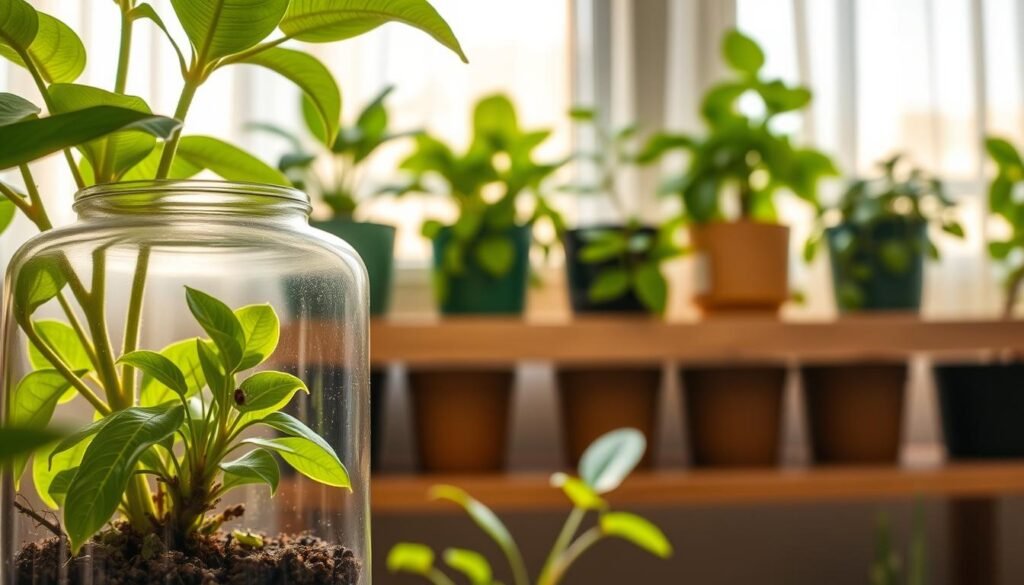
The instant you notice a white patch, treat that pot like it’s under quarantine. Move the affected plant away from your other indoor plants the same day. Distance slows crawlers and cuts the chance of spread across a shelf.
Isolate the pot to protect your collection
Why isolation works: tiny crawlers travel slowly, so keeping space between pots in your home creates a real barrier. For heavy infestation, consider discarding the whole container to protect nearby houseplants.
Prune, bag, and clean
Remove heavily infested leaves and stems first. This instantly lowers the number of insects and eggs you must battle.
- Disposal: bag pruned material, seal the bag, and put it in the trash—not compost. Make sure the seal is tight.
- Wipe shelves, windowsills, and pot rims; eggs and crawlers hide in edges and supports.
- Keep the isolated plant in quarantine while you treat and for a short observation period after symptoms stop.
Containment is not overreacting; it’s the fastest way to get rid of an infestation and save your houseplants.
Mealybugs on indoor plants how to remove with quick mechanical cleanup
A quick, targeted rinse can physically knock most adults and many crawlers off leaves and stems. Start with a gentle, steady stream in a sink, bathtub, or shower and aim directly into leaf axils and along stems. This flushes visible colonies and lowers numbers fast.
When this works best: sturdy-leaved varieties and light infestation levels. Fragile foliage may tear under high pressure, so lower the flow or skip rinsing for delicate specimens.
Practical step-by-step
- Cover the soil with plastic wrap to protect potting mix.
- Aim water under leaves, into joints, and along stems—don’t just spray the top surface.
- Gently blot dry and move the plant to a bright spot out of direct sun while foliage dries.
Repeat often. Mechanical cleanup is not a single cure. Re-rinse whenever you spot new adults or eggs so later sprays and spot treatments can reach exposed insects.
“Removing waxy buildup and egg masses lets treatments actually contact the pests.”
Instant-kill spot treatment with isopropyl (rubbing) alcohol
A simple rubbing alcohol spot treatment is a favorite among growers for fast, visible results. Alcohol kills pests on contact and dissolves their waxy shield, so you are not just pushing insects around.
Safe concentration: choose 70% isopropyl alcohol or less and always test one leaf first. Wait 24 hours to check for burn before treating the whole specimen.
Precision with a cotton ball or swab
Soak a cotton ball with rubbing alcohol and gently dab adults tucked into crevices, leaf joints, and crowns. Wipe each spot until the cotton shows no more white fluff.
Broader coverage with a spray bottle
For heavy infestation, mix a diluted alcohol solution in a spray bottle and mist stems and undersides of foliage. Let the solution sit briefly, then keep the plant out of direct sun while wet to prevent scorch.
Repeat treatment weekly until no new crawlers appear. Treat the entire specimen systematically—spot and sweep, not only the visible patches.

“A careful spot treatment can cut populations fast and make follow-up sprays more effective.”
Spray treatments that work against the waxy coating
A targeted spray routine gives coverage where fingers and swabs can’t reach. After rinsing and alcohol spot checks, sprays act as the coverage step that contacts hidden colonies and waxy shields.
Insecticidal soap for full-coverage contact
Use soap as a direct-contact solution. A DIY mix is simple: 1 teaspoon mild dish soap per 1 gallon warm water. Spray tops, undersides, stems, and leaf joints until runoff.
Commercial, fragrance-free insecticidal soap is gentler and often safer for sensitive foliage. Repeat weekly or every two weeks until no new signs appear.
Neem blends that disrupt feeding and growth
Mix 1–2 tbsp neem oil + 1–2 tsp mild detergent in 1 gallon warm water, or follow the product label.
Neem acts slowly: it interferes with feeding, development, and can repel survivors. Apply early morning or evening to reduce scorch risk and to avoid harming beneficial insects when outdoors.
Timing and repetition
Use a fine-mist sprayer and work in a bathtub or shower for easy cleanup. Repeat weekly for neem and weekly or biweekly for soap until you get rid mealybugs.
“Consistency beats one perfect product; repeat treatment is what stops re-emergence.”
When you need to escalate: severe infestations and hard-to-save plants
If cottony colonies keep reappearing despite steady care, it’s time to move from spot treatment to decisive action.
Defining a severe outbreak
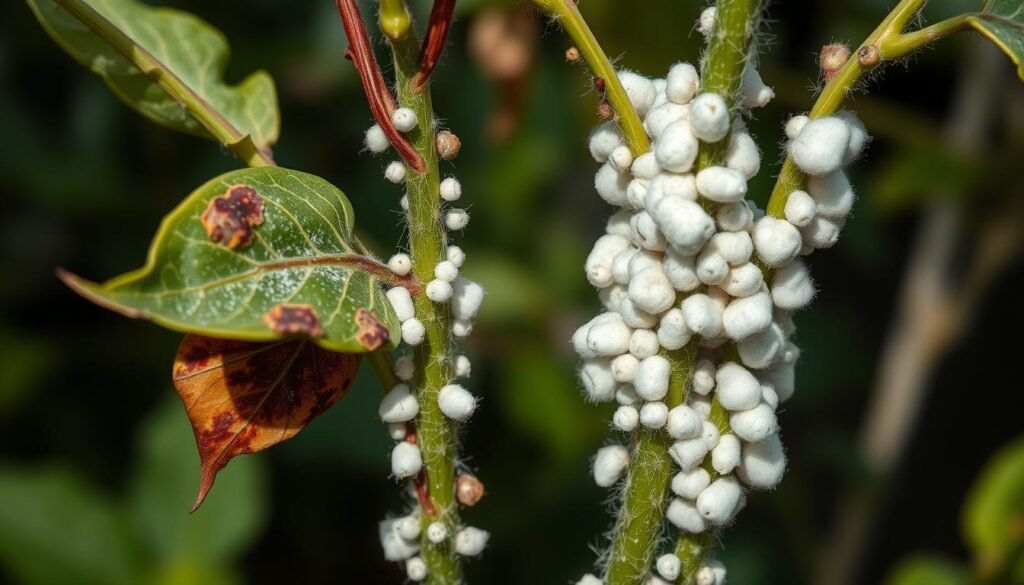
Severe means widespread colonies across many stems and leaves, recurring cottony patches after repeated care, and clear decline in growth or foliage.
Why contact insecticides often fall short
The waxy coating acts like armor, and colonies hide in crowns and crevices where sprays can’t reach. Contact insecticides miss eggs and sheltered adults.
When discarding is the right choice
If two or three weekly applications of insecticides fail, give yourself permission to discard a troubled houseplants. Removing the source can protect the rest of your collection.
Using stronger products as a last resort
Consider broad-spectrum options only after other steps fail. Read the label, use good ventilation, and keep kids and pets away while spraying.
- Bag and seal the plant before disposal, then clean nearby surfaces and tools.
- Biological aids like Cryptolaemus montrouzieri (the mealybug destroyer), lacewings, and parasitoid wasps help in greenhouses and outdoor plants but are less practical for rapid indoor control.
“Sometimes the fastest way to get rid mealybugs is to remove the ongoing source rather than repeatedly exposing your home to pesticides.”
For further tips on quarantine and recovery, see prevent spread.
Prevent mealybug infestations with a healthier indoor care routine
A weekly prevention habit keeps small cottony outbreaks from ever gaining a foothold. Spend ten minutes scanning stems and leaf joints, then perform one basic cleaning step.
Balance feeding and moisture. Excess nitrogen and constant dampness encourage soft, lush growth that attracts sap feeders. Water only when the topsoil feels dry and use a slow-release fertilizer on a conservative schedule.
A short quarantine for new plants
Keep new plants separate for two weeks. Inspect crowns and crevices daily and do not let leaves touch your established collection during quarantine.
Lower nighttime temperatures where possible
Cooler nights around 60°F slow reproduction. Even a small drop in night temperatures makes your space less welcoming to pests.
Keep leaves clean with regular rinses
Weekly water jets remove dust and dislodge early crawlers. Clean foliage photosynthesizes better and reveals any cottony wax sooner.
“Prevention is cheaper than cure: a few minutes weekly beats weeks of repeated treatments.”
| Action | Benefit | Frequency |
|---|---|---|
| Balanced fertilizing | Reduces soft new growth | Every 6–8 weeks |
| Quarantine new plants | Stops early spread | 2 weeks |
| Leaf rinsing | Removes dust and small crawlers | Weekly |
Conclusion
Regular, short checks and quick action are more powerful than a single deep clean. Identify mealybugs early, isolate the pot, wipe or rinse visible colonies, then follow with a targeted treatment on a weekly schedule. Repeat until no new signs appear.
Remember: you are not only treating what you see today—you are interrupting the next wave of crawlers so the infestation cannot restart. Consistency wins; a ten-minute weekly habit protects your wider collection.
If a specimen keeps declining or rebounds after steady care, it is practical and responsible to get rid of that pot to protect other indoor plants and houseplants. Most plants recover when pests are caught early and care returns to normal.
Quick checklist: isolate, rinse, spot-treat, spray, repeat, monitor.