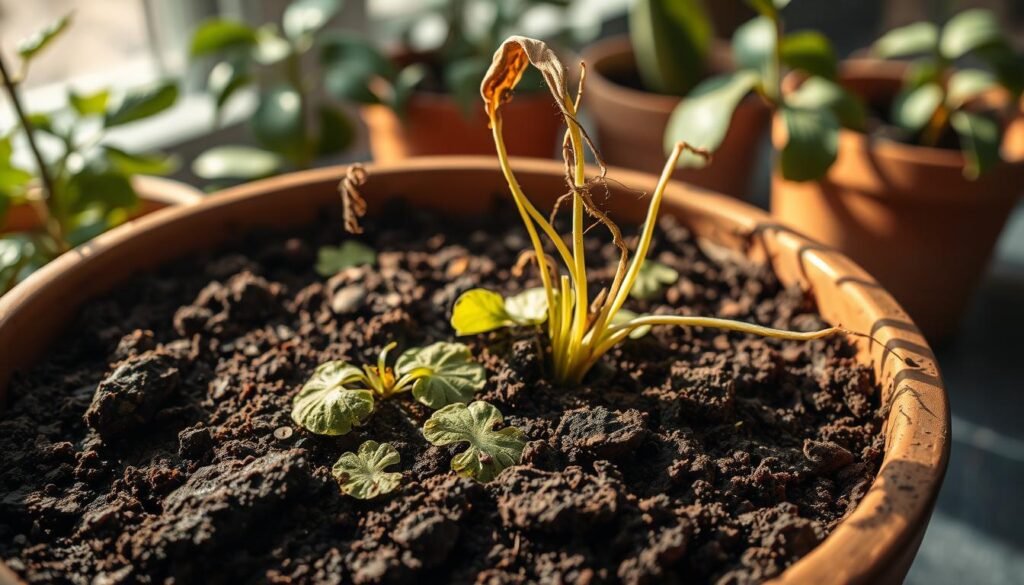

Surprising fact: up to 60% of flower failures trace back to stress signals and excess moisture, not pests.
If your buds fall before opening and your pot smells sour, these problems often share the same root. Both blighted blooms and musty soil usually come from shifts in watering, air movement, light, or humidity.
This short guide makes the fix clear. First, you’ll learn to diagnose the stress response quickly. Then you’ll get targeted tips to steady temperature, set a steady water routine, and improve drainage and airflow so roots can breathe.
Why it matters: vents, heaters, and cold windows create microclimates that stress a flowering plant fast. Healthy soil smells earthy; sour or musty odors warn of excess moisture and root stress.
Key Takeaways
- Falling buds and musty pots often stem from the same care issues: watering, airflow, and light.
- Most bud drop is reversible once you find the stressor and adjust conditions.
- Prevent moldy soil by improving drainage, reducing overwatering, and increasing air movement.
- Quick weekend checks—temperature, water schedule, humidity—can calm stressed houseplants.
- Healthy soil should smell earthy; sour or musty odors mean action is needed.
- Flower-specific notes will follow for orchids, hibiscus, gardenia, and African violets.
What bud drop looks like and why it happens indoors
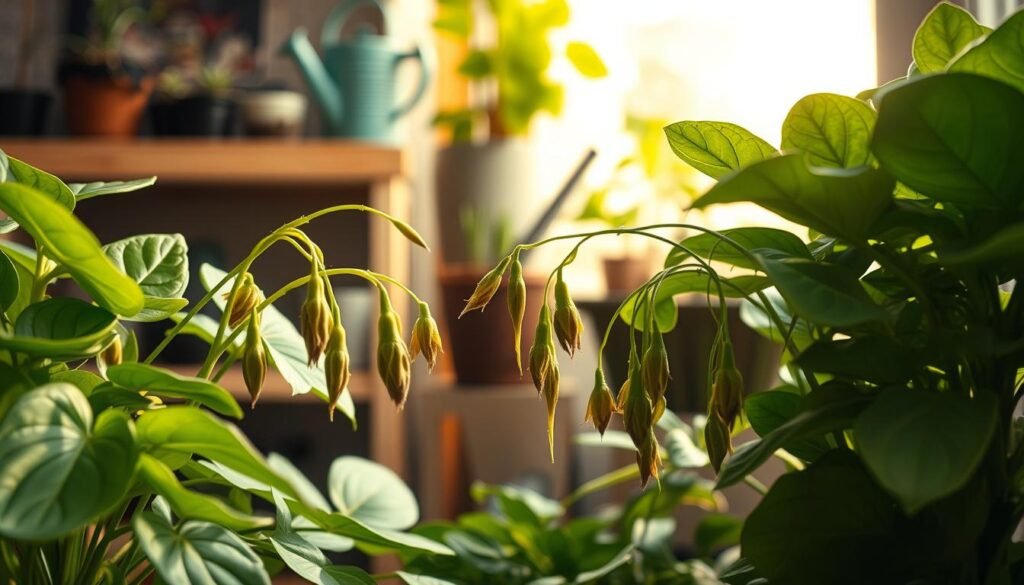
Noticing small flower parts falling before they open is your first clue that something in the room changed. Look closely: tiny rounded growths may yellow, shrivel, or fall clean off while leaves still look healthy.
Bud formation vs. completion: a plant can form flower buds without having the resources to finish development. Energy, water, and light must align for a bud to open. Forming a bud is not a guarantee a bloom will follow.
Timing gives you a diagnosis: early loss usually points to recent shifts in environmental conditions — low light, dry air, drafts, or sudden watering changes. Later losses, when larger buds drop near opening, often signal nutrition gaps, root stress, or pests.
Quick observation checklist
- Size: are the flower buds tiny or nearly open?
- Stem: is it pinched, dry, or soft at the base of the bud?
- Light and air: is the plant getting enough bright, indirect light and steady airflow?
- Humidity & temperature: check for dry heat or large swings from about 65–75°F.
Fast tip: the quickest way to stop further losses is to note what changed in the last 1–2 weeks and reverse that shift. Small fixes often solve the problems fast.
Quick diagnosis: what changed in your plant’s routine or location?
Start by asking: what changed in the room or routine this week? A short timeline often spots the problem faster than long tests.
Environmental checks first:
- Feel for drafts and note if the spot sits near vents or cold windows; sharp temperature swings stress blooms quickly.
- Check lighting and location: a moved pot or new shade can interrupt flower formation within days.
- Measure night temperature if possible—chilly nights near glass can shock developing growth.
Care changes to review
Review recent adjustments in watering, fertilizer, or care routine. Forgetting water then overcompensating (watering swings) is a common trigger.
New fertilizer strength or brand can create an upset. Moving or repotting while flowering also causes short-term stress to roots and stems.
Fast visual scan
Look at the leaves for yellowing, wilting, sticky residue, or tiny spots. Compare buds—are they plump or shriveled?
Surface soil checks: inspect for fuzzy mold, algae, compacted mix, or soil that stays dark and wet. Those are clear symptoms of excess moisture and low oxygen at the roots.
| Symptom | What to check | Likely trigger | Quick fix |
|---|---|---|---|
| Wilting leaves | Soil moisture, drainage | Overwatering or root stress | Lightly dry top layer; improve airflow |
| Yellowing leaves | Fertilizer history, light levels | Nutrient imbalance or low light | Pause feeding; increase bright indirect lighting |
| Fuzzy or dark soil surface | Surface mold or algae | Too much moisture, poor aeration | Clear top layer; let soil dry and repot if needed |
| Shriveled flower tips | Drafts, vents, temperature swings | Rapid temp changes or dry air | Move away from vents; stabilize temperature |
Simple record tip: jot one-line notes: watering day, window opened, heat on. A small log helps spot repeat triggers by the next bloom cycle. For more detailed troubleshooting, see this quick troubleshooting guide.
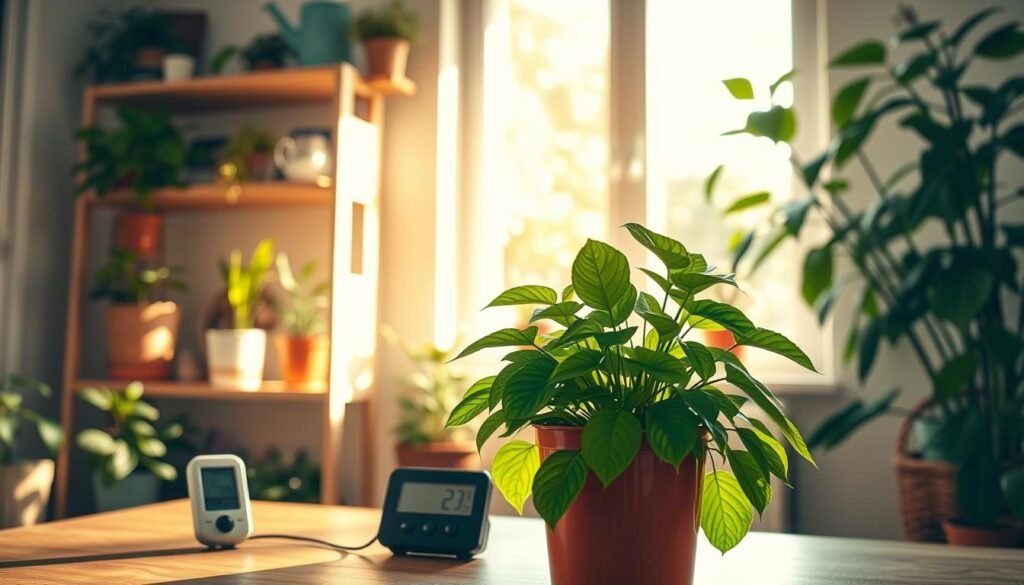
bud drop indoor plants causes you can fix in a weekend
A focused weekend can reverse most common flowering setbacks with a few steady adjustments. Start by grouping fixes into Stability, Hydration, Energy, and Resources so you can act fast.
Temperature, drafts, and stability
Even a 5–10°F shift from a door, vent, or cold window can trigger stress and lead to blossom loss. Use a simple thermometer and move the pot away from sudden drafts.
Watering and moisture balance
Overwatering and underwatering both cause problems. Do the finger test: if the top inch is dry, give water. Keep moisture steady to avoid swings that shock the roots.
Humidity and light
Low humidity in winter dries developing flowers before they open. Aim for 6–10 hours of bright, indirect light; a small grow light helps when natural light is weak.
Nutrients, pests, and moving the pot
Too much nitrogen favors leaves over blooms; pause fertilizer and choose bloom-focused formulas with more phosphorus. Avoid repotting or rotating while buds form.
“Check humidity, steady water, and light first—most losses end once conditions stabilize.”
Watering, airflow, and humidity to prevent musty smells and moldy soil
Keeping water balance and air moving around a pot prevents musty soil and unhappy roots.
When soil stays wet too long, oxygen drops and microbial activity turns the mix sour.
That foul smell signals low oxygen and active fungus in the top layer. Soggy soil also attracts adult fungus gnats and larvae that feed on young roots. This added pest pressure weakens the plant and hurts bud development.
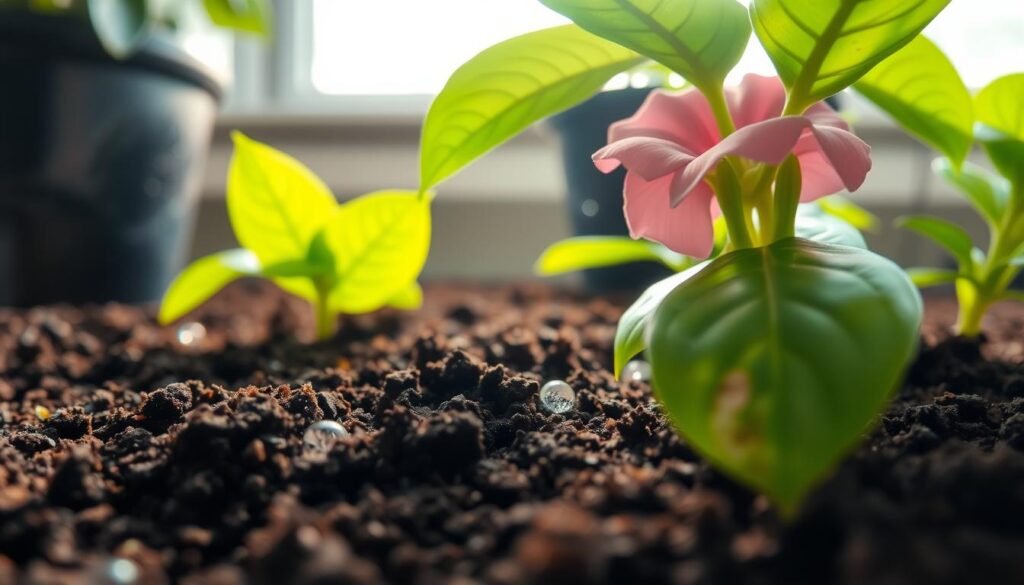
Simple watering routine
Water thoroughly, let excess drain, then empty saucers. Do not top off daily unless the pot truly needs it.
Check the top inch of soil before you water again. Keeping a steady schedule avoids sudden moisture swings and root stress.
Humidity done right
- Use pebble trays under pots to raise local humidity without wetting leaves.
- Group houseplants to create a shared microclimate.
- Use a small humidifier to lift room humidity safely; avoid constant heavy misting.
Air circulation tips
Space pots so leaves do not touch damp walls. Run a gentle fan across the room to reduce powdery residue and stale air.
“Good air and steady moisture keep fungal problems low and help buds open strong.”
| Issue | Quick sign | Action |
|---|---|---|
| Sour, musty soil | Wet surface, bad odor | Let top dry; improve drainage |
| Fungus gnats | Small flies near soil | Dry top mix; sticky traps |
| Powdery disease | White powder on leaves | Increase air flow; reduce humidity spikes |
Soil, drainage, and roots: stopping root rot before buds and leaves drop
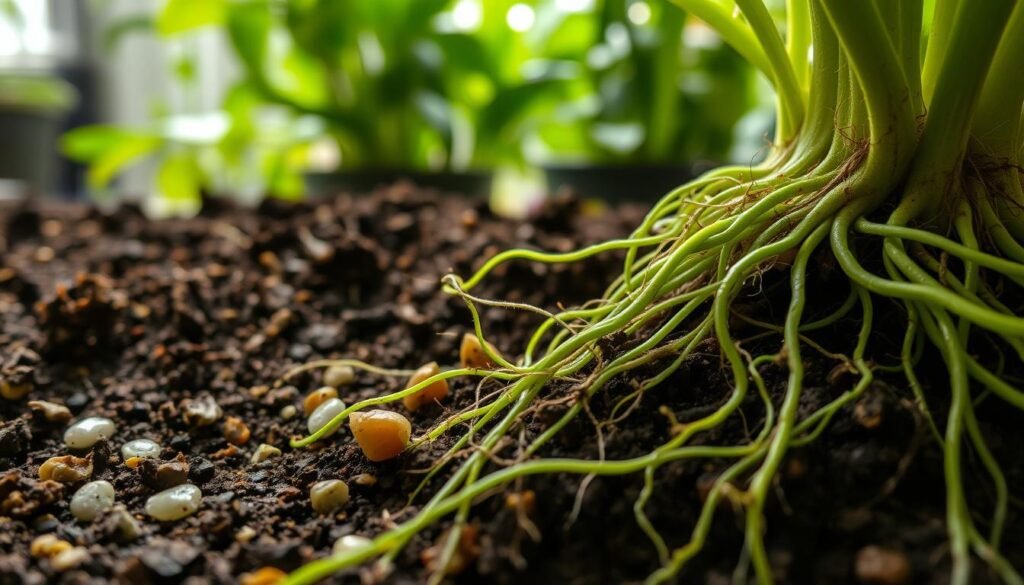
Healthy roots are the quiet engine behind every strong bloom, and poor drainage pulls that engine apart. Treat drainage as bloom insurance: roots need oxygen to support leaves and flowering effort.
Drainage essentials
Choose a pot with drainage holes and a saucer you empty after watering. Use a well-draining potting mix so water does not sit for days.
A proper setup is a pot that drains freely, a mix that contains perlite or coarse material, and a habit of letting the top inch dry before you water again.
Root rot warning signs
Watch for yellowing leaves, wilting, slow growth, a foul smell, or black, mushy roots when you inspect the soil. These are clear symptoms of root rot from excess water and fungal infections.
How to check and when to repot
Slide the plant out gently. Inspect roots for firmness and color. Trim only the soft, black sections and remove contaminated soil.
If rot is present on many roots, repot into sterile soil. Yes, it risks short-term stress, but leaving rot spreads problems.
Sanitation and aftercare
- Clean tools and sterilize pots before reuse.
- Discard contaminated mix and wash hands between handling specimens.
- After repotting, reduce water, boost gentle airflow, and pause fertilizer until new growth appears.
Quick rule: better drainage equals healthier roots, and healthier roots mean stronger leaves and blooms.
Fertilizer and nutrients for blooms without stressing the plant
A measured feeding plan helps flowers form while protecting root health and overall vigor. Good nutrition supplies the energy a flowering specimen needs without pushing soft leaf growth at the expense of blooms.
Choosing a bloom formula
Look for lower nitrogen and higher phosphorus on the label. Nitrogen fuels foliage, while phosphorus supports bloom set and strong flower development. A common bloom ratio is 10-30-20, which favors flowering over leafy growth.
How to avoid overfertilization and salt buildup
Use a diluted dose and a steady schedule rather than one heavy feeding. Too much fertilizer leads to salts that collect in potting soil and stress roots.
Flush the pot by watering thoroughly and letting excess run out every few months. That clears accumulated salt and keeps the mix balanced.
When to pause feeding
Stop all feeding if you see sudden wilting, leaf tip burn, stalled growth, or buds falling shortly after a feed—these are common salt-stress symptoms.
If roots are compromised or the plant shows clear symptoms, fix drainage and watering first. Resume gentle, gradual nutrient feeding only after steady new growth appears.
Quick rule: more fertilizer is not better—right amount and timing protect roots and encourage blooms.
Pests and diseases that cause bud drop, spots, and powdery residue
A few tiny pests or a faint powder on leaves can start a chain reaction of stress. Sap-sucking insects and soil pests interrupt water and nutrient flow so a flowering plant may abort flowers or show leaf spots.
Common insects to watch
Look for these ID signs:
- Fungus gnats: small flies hovering near soil — larvae feed on roots and harm young roots and moisture balance.
- Mealybugs: cottony clusters in leaf axils or on stems.
- Aphids: clusters on new growth that cause sticky residue and spots on leaves.
- Spider mites: tiny stippling and fine webbing on the undersides of leaves.
Plant-safe treatments
Start with gentle, repeatable options: neem oil, insecticidal soap, or a mild soapy water wash. Apply to all leaf surfaces and repeat every 7–10 days to catch new hatchlings.
Safety note: avoid broad chemical sprays in living spaces when possible; targeted, low-tox methods protect people and pets.
Fungal problems and ventilation
Powdery mildew appears as white or gray powdery patches on leaves and stems. It thrives with high humidity and poor air flow.
Clip badly affected leaves, increase ventilation, and reduce local humidity. Improved air and spacing often end an outbreak faster than fungicides alone.
Hygiene to prevent infections
Quarantine new additions, clean tools between uses, and remove dead debris from pots. Inspect houseplants weekly so small issues stay small.
Quick rule: early ID plus hygiene and airflow protects roots, leaves, and flowering effort.
| Issue | Sign | Action |
|---|---|---|
| Fungus gnats | Flies at soil surface | Let top dry; sticky traps; repeat soil treatment |
| Sap-suckers | Cottony clusters or sticky residue | Soapy wash; neem oil; repeat treatments |
| Powdery mildew | White powder on leaves | Prune affected leaves; boost air and reduce humidity |
Plant-specific sensitivity guide for common flowering houseplants
A plant’s tolerance for change varies by species; learning what each dislikes saves time and flowers. Below are quick, focused notes so you can stop bud loss faster without guessing across every flowering specimen.
Orchids
What they hate most: swings in temperature and erratic watering. Keep a steady temperature and a gentle watering routine.
Quick tip: avoid repotting or moving the pot while buds form; stability helps roots and flowers hold.
Hibiscus
What it hates: relocation and dry air. A sudden move or low humidity commonly triggers flower loss.
Place hibiscus where light and humidity stay steady. A pebble tray or small humidifier can help.
Gardenia
What it hates: inconsistent watering and wrong soil chemistry. Acidic, well-draining mixes work best.
Watch for yellow leaves or weak roots; those signs often point to soil or drainage stress affecting blooms.
African violets
What they hate: rough handling, sudden moves, and harsh light. These houseplants prefer mild, steady conditions.
Use gentle bottom watering or a wick method, moderate light, and keep temperature stable to protect flower set.
Consistent care beats quick fixes: matching temperature, humidity, watering, and light to each species is often more effective than adding new products.
For a deeper look at early flower loss and environmental signals, see this unspoken signal — why buds fall before they.
Conclusion
Stabilizing the room and routine often reverses stress signals more quickly than new products. Start by checking temperature and drafts, then confirm water timing and drainage. These simple steps protect roots and help buds hold.
Use a quick triage: check temperature, fix watering and drainage, evaluate light, then review fertilizer and inspect for pests. Watch soil and air for excess moisture that creates musty smells—those are warning signs, not merely cosmetic issues.
Let symptoms guide your actions. If you see wilting, yellowing, spots, or powdery residue, act early to prevent root decline and further bud loss. A short weekly inspection, watering by feel, seasonal humidity adjustments, and light checks form a reliable care rhythm.
With steady attention to roots, drainage, water amount, and conditions, most plants rebound and reward you with stronger buds and longer-lasting flowers. Keep these tips handy and stay patient—recovery is usually quick.