
Surprising fact: about 65% of U.S. homes with houseplants report visible tip damage each year, yet most cases trace back to care mismatches rather than pests. That gap explains why many people buy gadgets before checking the basics.
Brown tips on indoor plant leaves fix is often the search phrase people use when they see burned or dry edges. Two issues usually overlap: low room light that limits growth and the visible symptom on the leaf edge that worries owners.
This short guide shows what light can solve and what it can’t. We’ll start with a root-first diagnosis: soil, roots, drainage, watering method, and mineral buildup. Only after those checks do we consider bulbs and fixtures.
Grow lights matter: better light supports healthy growth and more efficient water use, but they do not revive necrotic tissue already on a leaf. Expect to stabilize the plant and encourage new, healthy shoots rather than perfection on every tip.
Key Takeaways
- Visible tip damage often signals care issues, not pests.
- Check soil, roots, drainage, and salts before buying lights.
- Grow lights help growth and water balance but won’t heal dead tissue.
- Learn what light types and specs to buy and safe placement.
- Goal: stabilize the plant and promote healthy new growth.
Why leaf tips turn brown indoors (and why they don’t “heal”)
Water moves upward through a plant, so the very ends of foliage are last in line for hydration. That means leaf tips often show stress first when supply can’t match loss.
How water movement and transpiration leave leaf tips last in line
Roots pull water up the stem and into veins that feed each blade. The flow reaches the farthest points last, so those areas suffer when water is scarce.
Transpiration is the ongoing loss of water through pores. In dry air or heat, the rate increases. If replacement water lags, the outer tissue dries faster and can die.
Necrosis basics: brown leaf tips are dead tissue
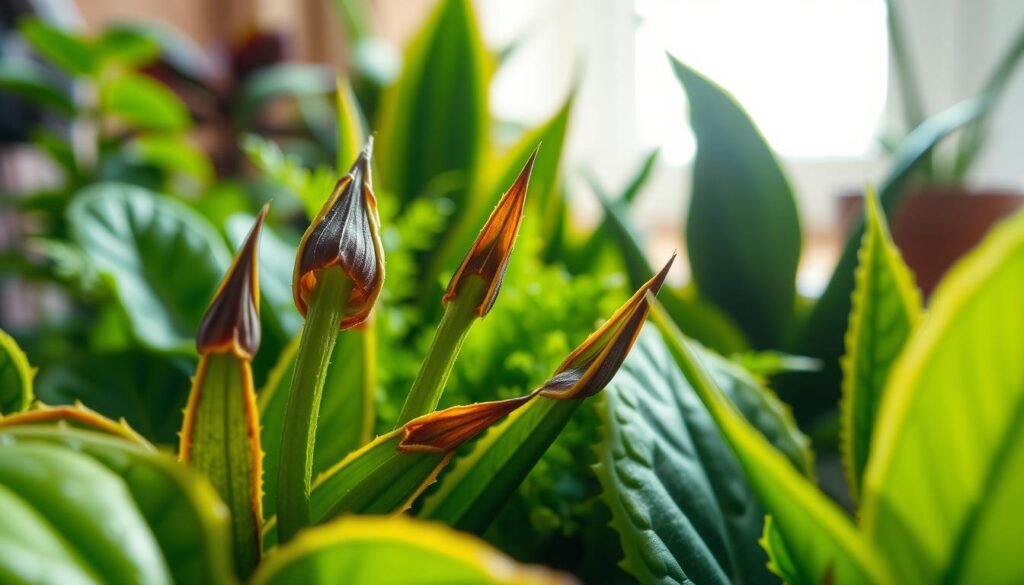
Necrosis means the tissue is dead and crisp. A brown leaf tip will not turn green again. Focus on preventing new damage rather than trying to revive old spots.
When browning is a bigger problem: fast spread, yellowing, and leaf drop
“If browning accelerates with yellow halos or active leaf drop, check roots and drainage immediately.”
- Rapid spread or wide yellowing signals root or rot issues.
- Brown edges alone don’t always mean underwatering; overwatering can cause the same symptom.
Next step: inspect roots and the pot setup, then review how you water, check for mineral buildup, and finally adjust humidity and light.
brown tips on indoor plant leaves fix: start with the roots and pot setup
Start troubleshooting below the soil line: most leaf edge problems trace back to what’s happening at the roots. A quick pot check often ends the guessing and points to a simple fix.
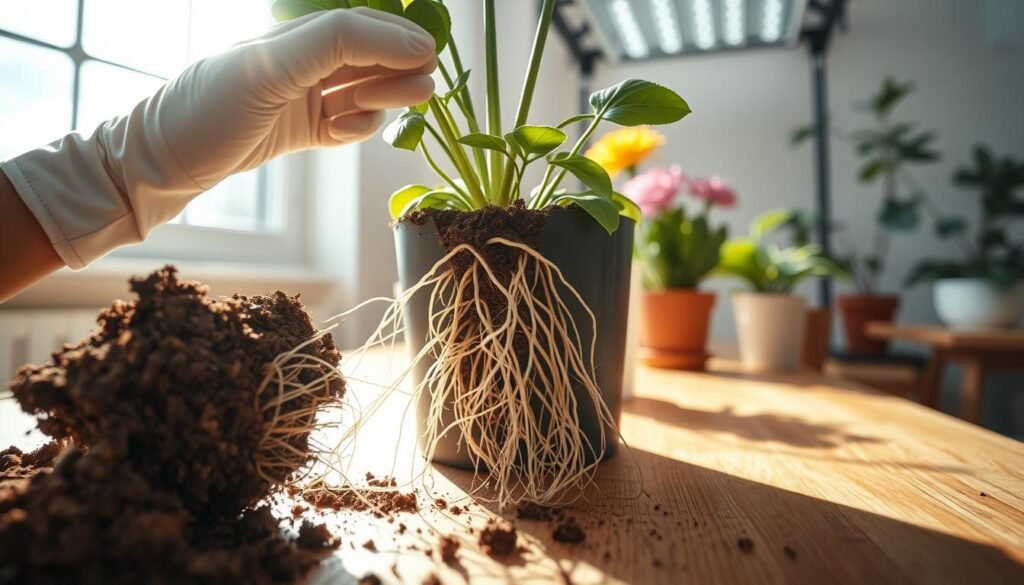
Slide the plant out and inspect roots for rot, odor, and color
Tip the pot on its side and coax the root ball free. Healthy roots are creamy white and firm with a fresh soil scent. Gray, black, or mushy roots that smell bad suggest rot and need action.
Check soil moisture and whether water reaches the whole root ball
Do the feel test: press the mix—cool and slightly damp is right. If edges are wet but the center is dry, water may be running down the sides. Break any crust, press soil back to the rim, then water slowly so it soaks through.
Confirm drainage and spot root-bound pots
Make sure drainage holes are open and saucers are emptied so roots don’t sit in water. Look for circling roots and little soil—those plant pots dry faster and need repotting. For severe rot, trim dead roots and repot into fresh substrate.
Watering mistakes that make brown tips turn brown (too little and too often)
How you water matters: too little or too often both cause the same ugly outcome. Many people assume dry soil equals underwatering, but the real problem is whether the whole root ball gets wet and whether roots can borrow air between waterings.
Underwatering symptoms
Look for soil that pulls away from the pot, a hard crust on the surface, or water that races down the sides when you pour. These signs mean the mix is too dry or you watered too lightly, so not all the soil reached the roots.
Overwatering and root rot
Counterintuitively, crispy edges can also happen when roots rot. Saturated soil reduces air and invites rot organisms. When roots fail, the shoots can’t get water even if the pot is wet, so tips still turn brown and leaves may yellow.
How to water correctly
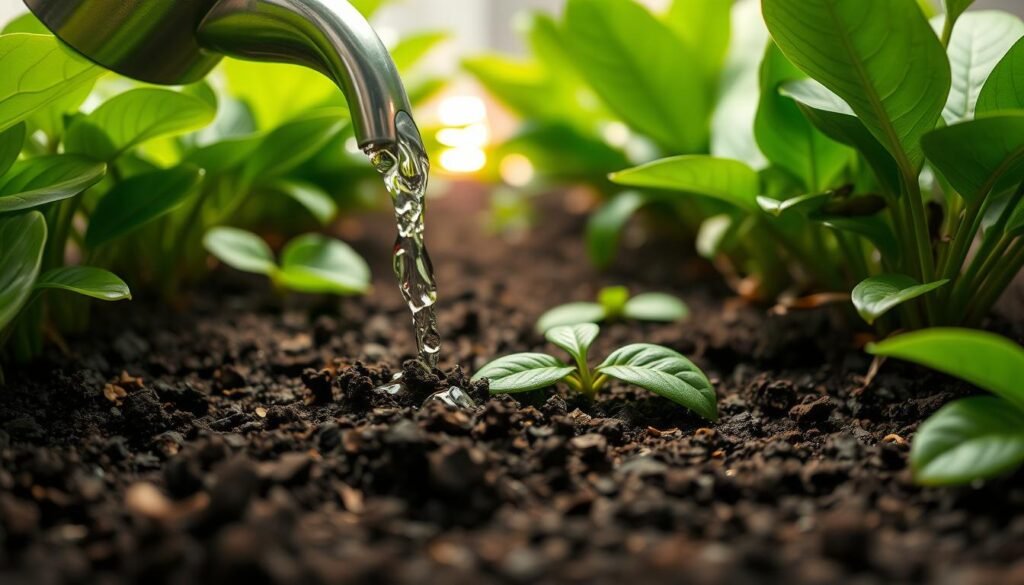
Check moisture at finger depth or with a meter. Water until it drains from the holes so the entire soil mass is moist, then wait until the top layer dries slightly before watering again.
- Seasonal note: winter, larger pots, and low light slow drying—adjust timing, not volume.
- Don’t do this: avoid daily splashes, leaving runoff in saucers, or assuming browning always means water more.
Salt buildup, fertilizer burn, and why you should flush soil
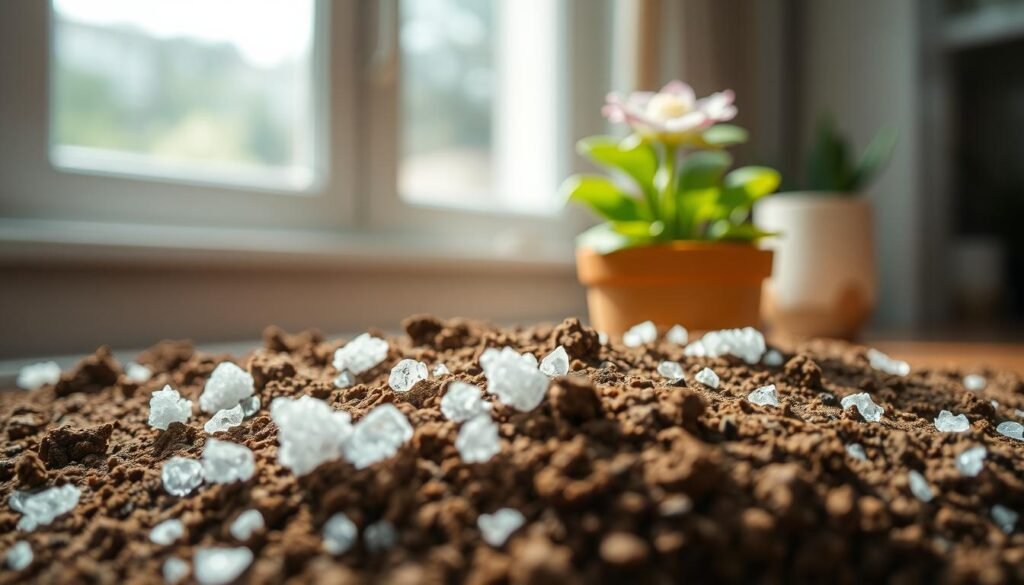
Leftover mineral salts build up in pots and can make water useless to roots. Over weeks or months, fertilizer minerals concentrate as water evaporates, leaving a white crust and stressed roots.
How excess salts create “physiological drought”
Fertilizer is mostly mineral salts. When salts accumulate, they raise the salt level in the root zone.
Physiological drought means the mix may be moist, but roots can’t absorb water because salt pulls moisture away. The result is dry, scorched edges and slowed growth.
Clues that salts are the problem
Look for a white crust on the surface, salt lines on saucers, or staining along porous pots. Worsening burn after feeding is another red flag.
How to flush soil safely
- Move the pot to a sink or shower and run lukewarm water through until the soil is soaked and clear runoff flows.
- Repeat this cycle 3–5 times, letting water drain fully each time.
- Discard all runoff—do not let the pot sit in it—and return the pot to a warm spot so the mix can dry evenly.
When flushing isn’t enough
If crusting returns, the mix is hydrophobic, or the soil is breaking down, repot into fresh substrate. Trim dead tips with clean, sharp scissors, following the natural leaf curve for a neat finish.
Tap water and chemicals that damage leaves over time
Tap water can be a slow, invisible culprit when minerals and treatment chemicals build up in pot mixes. Over weeks and months, those residues stress roots and show as scorched edges on new foliage.
Common culprits to know
- Fluoride and chlorine are added to many municipal systems. They can accumulate and irritate sensitive species.
- Sodium from softened water replaces calcium and magnesium and harms many houseplants.
Practical, low-cost steps
Let tap water sit overnight to let chlorine off-gas. Water deeply so excess drains out and does not concentrate near roots.
For sensitive specimens, upgrade to filtered, collected rain, or distilled water. Also, flush soil occasionally and repot when mixes crust or salts return.
Quick test: if scorch keeps returning despite good care, try a month-long trial with filtered water and compare new growth.
| Issue | Low-cost fix | Upgrade option |
|---|---|---|
| Chlorine / volatile chemicals | Let water sit 8–12 hours | Carbon filter or rainwater |
| High minerals / salts | Flush pot until runoff is clear | Use distilled or reverse-osmosis water |
| Softened water (sodium) | Use unsoftened supply or mix with rain | Install tap filter or collect rainwater |
Learn more about watering frequency and techniques to reduce buildup at watering schedules for flowering houseplants.
Humidity, airflow, and winter heating: preventing brown tips and edges
Winter heating often dries home air so fast that foliage loses moisture quicker than roots can replace it. Low humidity raises transpiration, so edges and tips show stress even when soil feels damp.
Low humidity dehydration: why brown leaf tips are common in winter
Heated rooms drop relative humidity, which speeds water loss through stomata. Browning often begins at the tip or along margins and can creep inward with a pale halo, depending on species.
What helps more than misting: humidifier, pebble trays, and measuring with a hygrometer
Measure first. A small hygrometer shows real humidity so you match solutions to the problem.
Most reliable: a room humidifier for steady humidity. For a quick boost, use pebble trays or group plants to create a microclimate. Gentle airflow prevents stagnation, but avoid blasting vents directly at foliage.
Note: Misting gives short relief and raises disease risk. Aim for consistent improvement to meet each specimen’s specific needs and encourage healthy new growth.
Other causes to rule out: temperature stress and pests in soil
Notice where the pot sits first; vents, windows, and registers shape leaf stress.
Ask location questions: is the plant in a heater stream, under an AC register, near a drafty door, or pressed against cold glass at night? Sudden heat or cold can produce scorch-like damage that looks like watering issues.
Scorch often begins at tips and edges and moves inward. The triggering event may have happened days earlier, so check recent moves or new sun patches.
Underground pests that start at the roots
Fungus gnat larvae and nematodes feed on roots and reduce water uptake. That stress shows as a brown leaf symptom and stalled growth.
Quick checks: watch for persistent gnats around the soil, unpot a suspect specimen to inspect roots, and confirm drainage holes and no standing water that attract pests.
Response and when to call for help
- Isolate the affected plant and improve drying and air flow.
- Refresh soil or treat the pot if pests are confirmed, rather than changing water routine reflexively.
- If a large specimen has major root loss, chronic collapse, or widespread damage, consult a local nursery pro or arborist.
Conclusion
, Stabilizing the root zone and watering method gives the fastest payoff for stressed foliage.
Start by checking roots and soil, then adjust how you water. Next, handle fertilizer salts with a careful flush or repot if needed. Improve humidity and room placement to reduce stress.
Brown leaf tips do not turn green, but the plant can recover. Trim ragged tips with clean scissors for a neater look. Trimming is cosmetic; true repair shows as healthy new growth.
Keep a weekly rhythm: quick soil check, a brief leaf scan, and a look at drainage. With steady care, correct light, and time, you’ll see greener growth and fewer repeat problems.