do indoor flowers need grow lights

Yellow Leaves on Indoor Flowers: The Most Common Reasons

Surprising fact: up to 60% of houseplants show yellowing in low-light rooms during fall and winter, often long before pests or watering errors appear.

Yellow leaves are often the first clear signal that a plant is short on energy. Light acts as food by powering photosynthesis, which turns carbon dioxide and water into the carbohydrates a plant uses for growth.

Readers mostly spot tired, pale foliage in darker rooms. The big question here is: do indoor flowers need grow lights, and when is added lighting the real fix versus masking another care issue?

This guide focuses on diagnosing yellowing caused by poor light and using supplemental bulbs safely. You will learn how to read plant signals, check window exposure, pick the right bulb, and set the right distance and hours.

Quick first step: note where your plant sits, count usable daylight hours, and watch new growth for paleness or stretching. Those clues tell you if light is the likely culprit.

Table of Contents

Key Takeaways

  • Yellow leaves often signal low energy from insufficient light rather than just watering errors.
  • Photosynthesis is the core process; without enough light, chlorophyll drops and leaves pale.
  • Assess window exposure and usable daylight before buying supplemental lighting.
  • Choose bulbs and placement based on plant needs, not wishful thinking.
  • Start by observing location, hours of usable light, and new growth shape.

Yellow Leaves on Indoor Flowers: What the Plant Is Telling You

When leaves fade toward yellow, the green pigment is often the missing clue. Chlorophyll drops when a plant receives too little light, so foliage shifts from healthy green to pale yellow or even whitish tones.
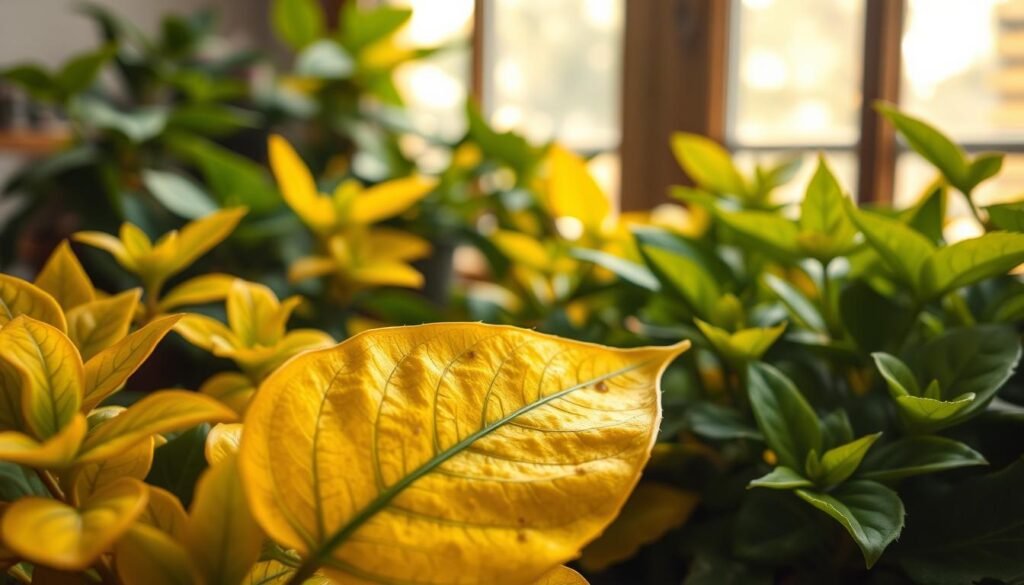
A close-up view of vibrant yellow leaves on potted indoor flowers, showcasing various textures and shades of yellow. The foreground features glossy green and yellow leaves with subtle blemishes to suggest plant stress. In the middle ground, delicate flower petals in soft hues contrast against the yellow leaves, highlighting their beauty. In the background, a softly diffused golden light filters through a window, creating a warm and inviting atmosphere that enhances the hues of the leaves. The composition captures an intimate moment in a cozy indoor space, filled with tranquility and a sense of nurturing, ideal for drawing attention to the message of plant care. The image should be bright and airy, emphasizing the themes of observation and understanding.

Interpret yellowing as a symptom, not a diagnosis. Look for patterns: even, washed-out yellowing points to low light, while patchy bleaching, crisp edges, or brown scorch spots suggest excess intensity or burning.

  • Low-light signs: even paleness, leggy growth, long internodes, and older leaf drop.
  • High-intensity damage: bleached patches, brittle leaves, or brown scorch near the surface of a lamp.
  • Checkpoint: yellowing plus stretched stems usually means low light; yellowing with crisp, bleached edges often means the source is too intense or too close.

Watch how the plants position themselves. Stems that lean and reach toward a window are a clear architecture clue of insufficient light. Once you link the symptom to its cause, you can decide whether to move the plant, change exposure, or add targeted supplemental lighting.

Do indoor flowers need grow lights in low-light homes?
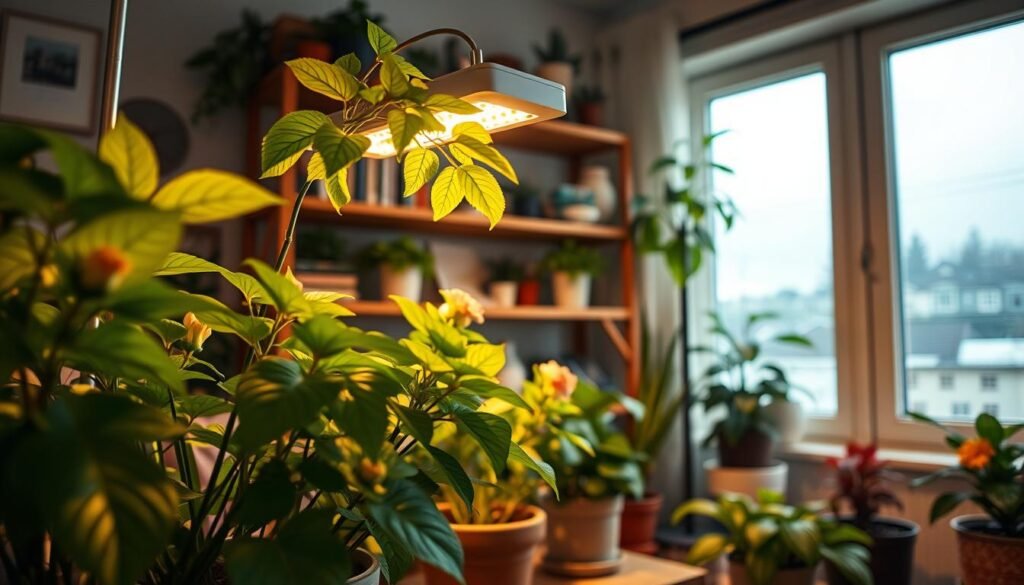
A cozy, well-lit indoor space featuring a variety of indoor flowers in pots, including vibrant green leaves and prominent yellow leaves on some plants. In the foreground, a bright, modern grow light is illuminating the plants, casting soft shadows that highlight their textures. The middle ground showcases a wooden shelf filled with these flowering plants, surrounded by a few books and decorative items. The background features a softly glowing window revealing a cloudy day outside, emphasizing the low-light environment of the home. Use a warm color palette to create an inviting atmosphere, with soft diffused lighting reminiscent of early morning light, captured from a slightly elevated angle to encompass the entire scene.

Short winter days or shaded windows often leave plants with enough green to live but not enough energy to bloom.

Answer: houseplants do not always require a supplemental bulb, but many benefit when natural light is weak, seasonal, or blocked.

When natural sunlight isn’t enough

Common low-light home scenarios include north-facing windows, heavy tree cover, tall neighboring buildings, or spots set back several feet from glass.

Seasonal change also matters: fall and winter reduce usable daylight, and that often cuts the energy available for buds.

Supplemental vs. sole light source

Use supplemental lighting to boost existing natural light for clearer growth and fuller blooms.

If no usable sunlight reaches the plant, a grow light can act as the primary light source and maintain steady development.

Why flowering houseplants often need higher light

Flowering plants use extra energy to form buds. In weak light they may stay alive but fail to set flowers.

Practical rule: if you cannot provide bright window light consistently, a targeted lamp is the easiest, most controllable fix.

  • Signs to choose a lamp: stretched stems, few buds, or pale new growth.
  • Realistic expectations: match the plant’s requirements and avoid excessive intensity that can stress leaves.
Situation Recommended use Expected result
Bright window (south/east) Supplemental only if shaded Better bud set, minimal lamp hours
North-facing or obstructed Grow light as primary or strong supplement Consistent flowering, controlled intensity
Short winter daylight Timed supplemental light (timer) Restored bloom cycles, steadier growth

Before buying, measure or estimate your natural light so you can pick the correct intensity and setup for reliable blooms.

Check Your Home’s Natural Light Before You Buy Any Lights

Before buying a lamp, count the hours of usable brightness at each plant spot. This quick audit saves money and prevents stress on foliage.
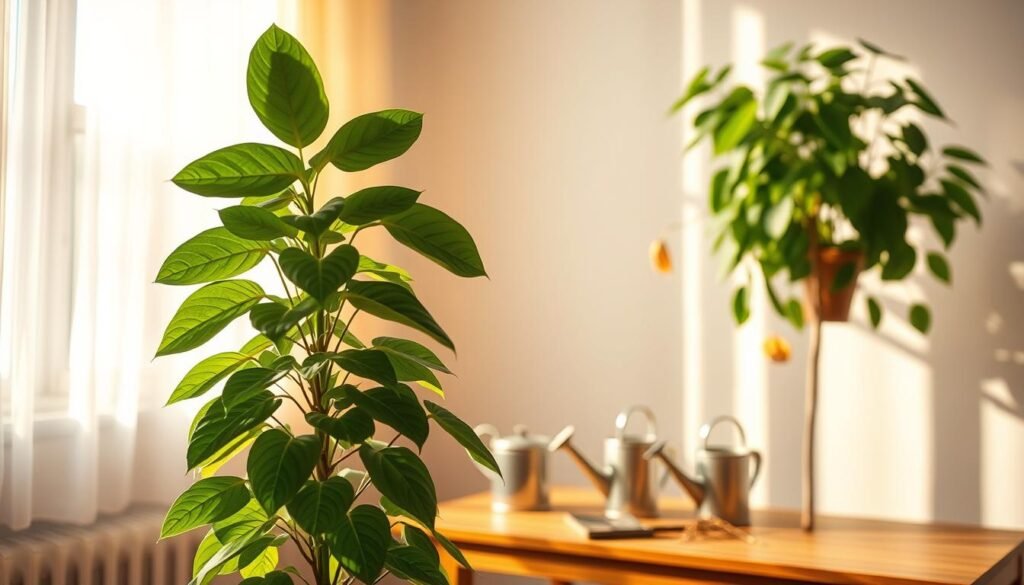
A serene indoor scene showcasing a bright, sunlit window with soft, golden rays illuminating the space. In the foreground, a vibrant, healthy indoor plant with glossy green leaves stands, while a few yellowing leaves dangle from another plant, hinting at neglect due to insufficient light. The middle ground features a wooden table adorned with gardening tools and a watering can, emphasizing a nurturing environment. In the background, sheer curtains diffuse the sunlight, casting gentle patterns on the wall. The atmosphere is warm and inviting, suggesting a peaceful home space that prioritizes natural light for plant health. The image is brightly lit, capturing the essence of sunlight during early morning, evoking a sense of hope and care in plant cultivation.

How to estimate sunlight hours and quality by window exposure

Note window direction (north, east, south, west) and record how many hours of direct or bright indirect sunlight arrive at the pot each day. Mark obstructions like trees, awnings, or nearby buildings.

Low, medium, and high light basics

Low light: a few usable hours of bright indirect light; plants grow slowly and dry slowly. Medium light: regular bright indirect sun for several hours; balanced growth and flowering possible. High light: direct sun or many bright hours; faster growth and more watering.

Match light requirements to your space

Compare what your plants require to the amount and intensity you measured. If the space falls short, moving the plant to a better exposure often fixes yellowing without extra lighting.

  • Track hours per day and note intensity.
  • Avoid overwatering in lower light—houseplants use less water there.
  • Once you know this baseline, you can pick the right lighting setup in the next section.

Choosing a Grow Light That Fixes Yellowing Without Stressing the Plant

Choosing a proper source is about matching spectrum, intensity, and placement. Make the choice by balancing budget, pot count, and where a lamp can sit relative to foliage.
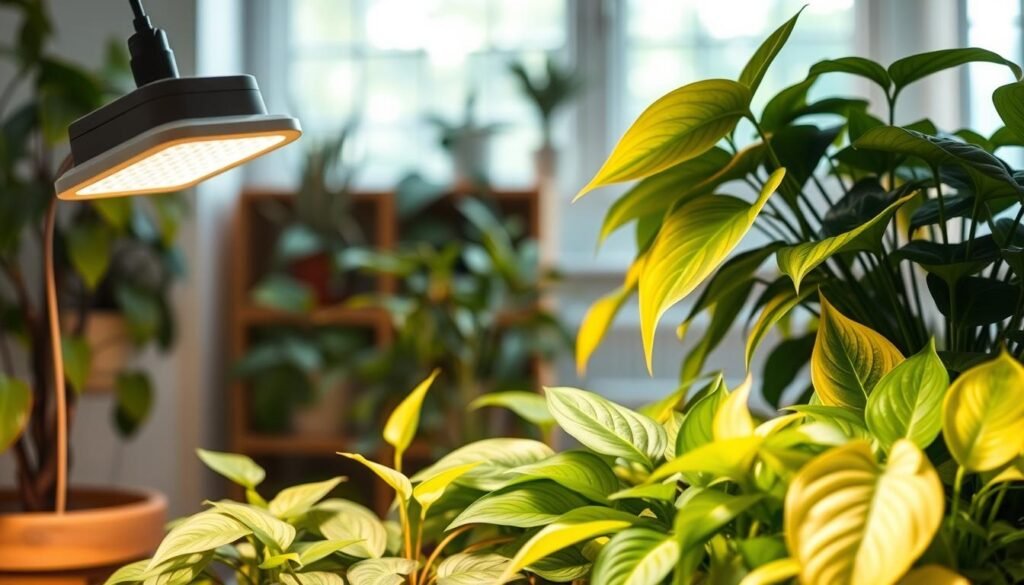
A serene indoor setting showcasing a variety of vibrant houseplants with yellowing leaves, indicating distress. In the foreground, a modern, energy-efficient grow light illuminates the plants with a soft, warm glow, highlighting their rich greens and yellow edges. The middle ground features a diverse collection of indoor flowers like peace lilies and pothos, some showing signs of improvement under the grow light, while others remain troubled. The background is a softly blurred interior, perhaps with a window letting in natural light, creating a harmonious balance of warmth and care. The atmosphere is hopeful and nurturing, conveying the positive effects of appropriate lighting on plant health. The image should be well-lit, capturing details of the leaves and textures with a slight depth of field.

Grow bulbs vs. dedicated fixtures

Grow bulbs fit existing lamps and cost less, but they can give uneven coverage and limited spectrum. A dedicated grow light costs more up front and delivers wider, more even coverage and flexible mounting.

Which type works best at home?

  • LED / led grow: energy-efficient, long-lived, low heat—best for most home collections.
  • Fluorescent lights: low heat and decent spectrum for small setups.
  • Incandescent: cheap but hot and inefficient—poor choice for foliage health.
  • HID: powerful but hot and better for large or commercial systems.

Spectrum and labels

Full spectrum white LEDs suit mixed collections. Blue light favors leaf strength and chlorophyll; red light helps blooming. Read labels: wattage shows power draw, lumens reflect human brightness, while plant-usable metrics matter most when available.

Practical takeaway: start with a reputable full spectrum LED sized for your area, then adjust distance and hours rather than blasting plants with excess intensity.

How to Position Grow Lights for Indoor Flowers

Small shifts in height can turn weak, pale growth into compact, healthy foliage. Correct placement balances usable intensity and safe heat for each plant. Use the rules below to avoid both yellowing from too little light and scorching from too much.

Distance rules of thumb

Distance controls how much intensity light reaches the canopy. Start with about 10–12 inches for mixed collections.

Use these starting points by bulb type and adjust as needed:

Bulb type Typical starting distance Best for
Incandescent ~24 inches Heat-tolerant, low-intensity needs
Fluorescent ~12 inches Foliage plants and small groups
LED (full spectrum) ~6 inches Flowering and compact collections

Heat management

If the bulb feels hot at plant height, raise it. Excess heat dries and browns leaves quickly.

Switch to a lower-heat light source if spots or crisp edges appear. That protects foliage while keeping intensity light safe.

Top-down placement for even coverage

Center the light source over the pot cluster and aim downward like the sun. This prevents one-sided stretching and produces even growth.

Use clamps, shelf mounts, or simple stands in apartments to get a stable top-down angle.

Adjust as plants grow

Check height weekly. As stems elongate or buds rise, lower or raise the fixture to keep the correct distance.

Signs to watch: bleaching, browning near the lamp, or continued reaching. If leaves bleach or brown, the light is too close; if the plant still stretches, it is too far.

How Many Hours of Light Do Indoor Flowers Need Each Day?

Plants keep time with light; consistent day length helps them balance growth and rest.

Photoperiod basics: predictable cycles of light and darkness let a plant process energy and reset hormones. Most species need a clear dark period—about eight hours—so avoid round-the-clock illumination.

General targets

For many foliage houseplants aim for about 12–14 hours of usable light per day. Flowering varieties often do better closer to 14–16 hours if you want more buds.

Using timers

Timers make keeping a steady schedule easy during short winter days. Set the timer, watch for tighter growth and more buds, then tweak if needed.

Fine-tuning tips

If a plant sits farther from the light source, it gets less intensity and may need more hours or a closer distance. Adjust one variable at a time and observe for 1–2 weeks.

Spectrum roles

Blue light strengthens leaves and chlorophyll. Red light encourages flowering. For most household setups a balanced full spectrum grow light is the simplest choice.

  • Avoid 24/7 operation—dark hours are essential for energy processing.
  • Start with hours first, then change distance or intensity if the plant still stretches or yellows.

Conclusion

Correcting a plant’s light source often returns color and tighter growth within weeks.

First, confirm yellowing matches pale color plus stretching. Then move the pot to brighter glass or add a single, targeted grow light or grow lights setup as needed.

Aim for the right spectrum, safe distance, and steady hours rather than more power. For most homes a full spectrum LED or led grow bulb stays cool and lasts long.

Read labels carefully: lumens show human brightness, watts show power draw, and plant-usable metrics like PPF/PPFD matter most when available.

Quick setup checklist: top-down mount, start at a safe distance, set a timer, and watch new shoots. Match each plant’s light requirements to its spot and scale the fix from one plant outward.

FAQ

What are the most common reasons leaves turn yellow on yellow-leaved houseplants?

Yellow foliage often signals stress. Common causes include low light that reduces chlorophyll, overwatering that suffocates roots, nutrient shortfalls (especially nitrogen), pests, and natural aging. Inspect soil moisture, root health, and leaf undersides to narrow the cause quickly.

How does low light cause leaves to fade from green to yellow?

Plants produce less chlorophyll when light intensity is too low, so leaves lose their green color and turn yellow. Reduced light also weakens energy production, causing slow growth and thin, pale foliage. Improving light quality or positioning helps restore color over weeks.

How can I tell the difference between bleached or scorched foliage and true yellowing?

Bleaching from too much direct sun or very intense artificial light looks washed-out, often with white or brown patches and crisp edges. True yellowing from low light is more uniform and soft, not dry. Check for leaf texture: scorched leaves feel dry and brittle; low-light leaves feel limp.

What are signs that a plant is “reaching” for light?

Look for elongated stems, wide spacing between leaves, and sparse upper foliage. Plants that reach often lean toward windows or light sources and may drop lower leaves. These are classic clues that light intensity or duration is insufficient.

When is supplemental lighting necessary in low-light homes?

Use supplemental lamps if windows face north, are shaded by trees or buildings, or during short winter days. If plants show pale leaves, leggy growth, or fail to bud, a dedicated light can provide consistent intensity and spectrum without relying on weak natural light.

Should supplemental lighting replace natural sunlight or just supplement it?

Supplemental light can both supplement and replace sunlight, depending on your goals. For most living rooms and bedrooms, supplementing a few hours improves vigor. When natural light is negligible, a sole artificial source with the right spectrum works well for healthy growth and flowering.

Why do flowering houseplants usually need more light to bloom?

Bud formation and flower production demand more energy than leaf maintenance. Higher light intensity and longer hours increase carbohydrate production, triggering bloom cycles. If a plant grows fine but won’t flower, raising light quality often solves the issue.

How do I estimate light hours and quality from window exposure?

East-facing windows offer morning sun, south-facing give the longest strong light, west-facing provide bright afternoon sun, and north-facing yield indirect, low light. Track direct sun hours and observe shadow sharpness: distinct edges mean strong light; diffuse shadows mean lower intensity.

What defines low, medium, and high light for houseplants?

Low light means bright enough to read near a window but no direct sun. Medium light includes a few hours of indirect or gentle morning sun. High light means several hours of direct sun or intense bright light; this suits sun-loving foliage and most bloomers.

How do I match a plant’s light requirement to my space to avoid recurring yellow leaves?

Read plant labels or species guides and compare to your window exposure. Place shade-tolerant varieties in north windows or farther from glass. Reserve south or west windows for high-light bloomers. When in doubt, choose a plant rated one level lower than your brightest spot.

What are the trade-offs between grow bulbs and full fixtures?

Grow bulbs (screw-in) are cheap and simple but offer limited coverage and spectrum control. Full fixtures provide even spread, adjustable intensity, and better spectrums for foliage and flowers. Consider room size, budget, and the number of plants when choosing.

Which light types work best for houseplants: LED, fluorescent, incandescent, or HID?

LEDs lead for efficiency, long life, and low heat. Fluorescent tubes (T5/T8) are affordable and fine for small setups. Incandescents run hot and are inefficient. HID systems suit large setups but are impractical for most homes due to heat and power needs.

Why are LED fixtures the popular choice for most plant owners?

LEDs use less energy, emit little heat, and last thousands of hours. They deliver targeted spectrums and even coverage with lower operating costs. Brands like Philips and Feit offer household models that balance cost and performance for hobby gardeners.

Should I choose full-spectrum lights or red/blue combos for foliage and flowering?

Full-spectrum lights mimic sunlight and support both foliage and flowering, making them a safe all-around choice. Red/blue focused fixtures can be effective for flowering or growth stages, but full-spectrum provides more natural color and flexible results for mixed collections.

What do wattage and lumens tell me about plant-usable light?

Wattage shows power draw, not plant usefulness. Lumens measure visible brightness for humans. Look for photosynthetic photon flux density (PPFD) or PAR output when possible—these indicate light plants actually use. Higher lumens plus good spectrum usually works for houseplants.

How far should I place a fixture from foliage to avoid damage?

Keep LEDs 12–24 inches above most houseplants as a rule of thumb, closer for low-power lights and farther for high-output models. Fluorescents can sit 6–12 inches above. Watch for leaf curling or bleaching and adjust distance accordingly.

How do I manage heat with hotter bulb types?

Use fixtures with ventilation, keep hotter bulbs away from delicate leaves, and provide air circulation with a small fan. Replace heat-prone bulbs with LEDs where possible to reduce burn risk and humidity shifts around pots.

Why is top-down placement recommended for even coverage?

Top-down lighting mimics natural sun, encouraging even leaf distribution and vertical growth. It reduces shadows and prevents plants from leaning. Use wide fixtures or multiple lamps for larger groups to avoid hotspots.

How long should plants get light each day to stay healthy?

Most foliage plants do well with 10–14 hours of light. Blooming varieties often need 12–16 hours during bud set. Equally important is a dark period—plants need night hours to process energy and regulate growth cycles.

Do I need a timer for consistent day-length in fall and winter?

Yes. Timers ensure stable photoperiods, which reduce stress and encourage regular growth and flowering. Automatic schedules are especially helpful when daylight hours shrink or household routines vary.

How should I fine-tune light duration based on distance and plant response?

If plants sit farther from the source, increase hours slightly. If foliage shows heat stress or bleached tips, reduce intensity or raise the fixture. Monitor new growth and leaf color for two to four weeks after adjustments.

What roles do red and blue wavelengths play for foliage vs. blooms?

Blue wavelengths strengthen leaf growth and compact habit, while red light supports flowering and stem elongation. Balanced spectrums or full-spectrum fixtures give both signals, promoting healthy foliage and better blooms when needed.

Comments

No comments yet. Why don’t you start the discussion?

Leave a Reply

Your email address will not be published. Required fields are marked *