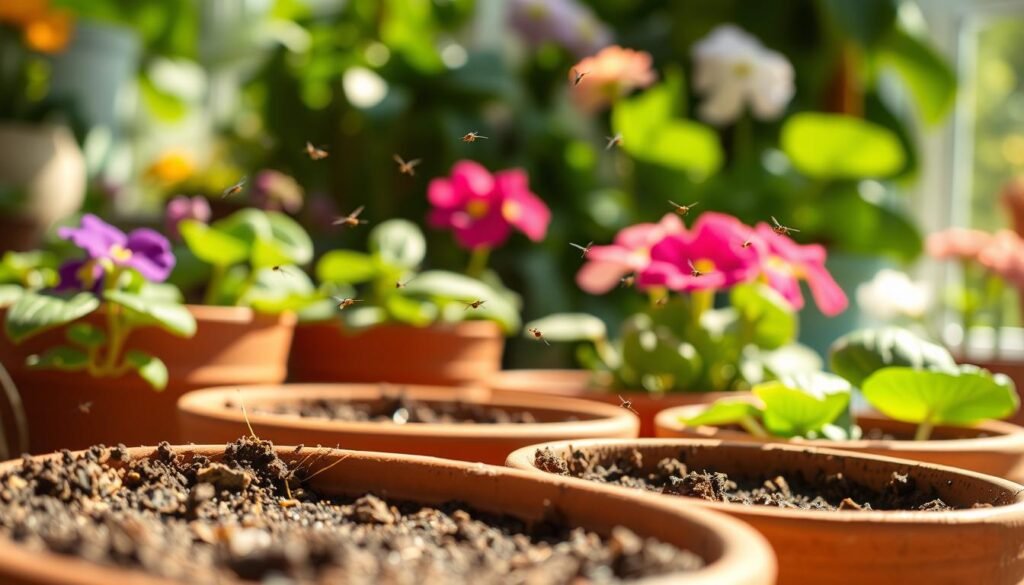

Fungus gnats are tiny flies that often show up around potted plants when potting mix stays damp. Adults are annoying, but the real damage can come from larvae feeding in the soil and nibbling young roots.
This short guide sets realistic expectations: you can cut down flying adults quickly, yet full control takes a bit more time and care. The goal is to break the life cycle without harsh chemicals.
We focus on a low-chemical method that mixes drying the mix, traps for adults, and targeted biological treatment for larvae. If needed, escalation options come later, but most infestations respond well to this plan.
Preview: identify the pest, confirm larvae in the soil, adjust watering and drainage, trap adults, treat the soil, and monitor progress. Doing these steps together stops the cycle and protects vulnerable plants.
Key Takeaways
- Fungus gnats thrive in damp potting mix and attack seedlings.
- Quick relief comes from trapping adults; long-term control targets larvae in soil.
- Start with drying, better drainage, and sticky traps.
- Use biological soil treatments before chemical escalation.
- Follow a step-by-step plan and monitor results over time.
Spotting Fungus Gnats in Houseplants Before the Infestation Explodes
Spotting a small pest problem early makes control much easier and less stressful.
Adults look like tiny mosquitoes: long legs, slim bodies, and dark gray or black coloring. They are leggy and hover near soil, unlike fruit flies, which appear rounder and stockier and often hover around fruit or drains.
Inside homes, watch for adults hovering over pots, popping up after watering, or clustering at the soil line. Those behaviors are a reliable tell that the problem is in the potting mix rather than elsewhere.
Spotting larvae in plant soil
Larvae are pale, almost translucent with a distinct black head. They live in the top inches of plant soil and cause the real damage by nibbling young roots.
Potato test: quick walkthrough
- Slice raw potato into small pieces and press a few just under the soil surface.
- Wait 4–8 hours, then lift the slices and inspect for crawling larvae.
- A few larvae means an early issue; many larvae means active breeding and faster spread.
Repeat the potato slices check while treating as a simple monitoring habit. Note that potato slices can pick up some larvae, but they mainly act as a detection and tracking tool because eggs and new larvae can appear faster than slices remove them.
Why Fungus Gnats Keep Coming Back in Flower Pots
Repeat outbreaks usually trace back to something simple: consistently damp soil around your plants. Moist mix invites fungus and keeps organic matter breaking down. That feedstock attracts egg-laying adults and supports hungry larvae in the top inches of the pot.
Moist soil, fungus, and organic matter: what they feed on
Fungus and decomposing bits are food for larvae. Rich potting mixes with bark or compost hold tiny bits that keep the cycle moving. If the surface stays wet, eggs hatch and larvae stay near the roots.
Overwatering and poor drainage: the breeding ground
Watering on a clock, decorative cachepots without drainage, or pots that lack holes trap water. Low airflow and dim light slow drying. Together, these habits turn pots into persistent hotspots for pest activity.
Why larvae are the real threat
Larvae nibble at roots, which can stunt or kill seedlings and cuttings. Even if adults vanish, eggs and larvae in wet soil recreate an infestation unless conditions change.
| Condition | What it does | What to check |
|---|---|---|
| Wet top soil | Encourages egg-laying and larvae near roots | Touch surface; smell for damp, musty scent |
| Poor drainage | Keeps mix saturated, supports fungus | Inspect pots and cachepots for standing water |
| Rich organic mix | Feeds larvae as matter breaks down | Note composted bark, peat, or fresh potting soil |
| Poor light & airflow | Slows drying between waterings | Assess placement and circulation |
How to Get Rid of Fungus Gnats Indoors by Breaking the Life Cycle
Control starts by hitting both flying adults and soil stages at once. Treating one stage only stretches the problem across cycles.
Target adults and larvae at the same time for faster results
Life cycle in plain terms: egg → larva → pupa → adult. Eggs hatch into gnat larvae, which feed in the top soil and then pupate. Adults emerge and lay more eggs.
Strategy: reduce adults now so fewer eggs are laid. At the same time, treat the soil to kill larvae that would become adult pests.
How long it can take based on the life cycle
Under warm, damp conditions a full cycle can be as short as ~17 days, often ~3 weeks in summer. That means realistic treatment time is several weeks.
Most plans run 4–8 weeks (one to two lifecycles). You may see fewer flying gnats in days, but full control requires consistency.
- Track sticky trap catches weekly — counts should fall each week.
- Keep watering routines aligned with treatments.
- Repeat soil treatments until trap counts stay low for a month.
| Action | What it targets | Expected result in time |
|---|---|---|
| Sticky traps | Flying adults | Lower adult numbers within days |
| Soil biological or peroxide drench | Larvae and pupae | Fewer emerging adults over weeks |
| Drying and better drainage | Egg survival and larvae food source | Slower life cycle; fewer new eggs |
Why it came back: stopping after the first drop in adults leaves eggs and larvae behind. They repopulate if you cut treatment short.
Consistency beats harsh products. Use a simple method, monitor traps, and repeat treatments on your watering cycle until the counts stay low.
Fast, Low-Chemical Steps You Can Do Today
Small changes this afternoon can make your potting mix much less welcoming. These moves work without special products and focus on drying the top layer and exposing eggs and larvae so they can’t thrive.
Let the top soil dry without stressing plants
Pause watering for a few cycles when a plant can handle a drier rest. Aim for the top 1–2 inches of soil to feel dry before you water again. For many species this means waiting until the surface is dry to about 1.5 inches.
Loosen the top layer to speed drying
Gently turn up about 2 cm (roughly 1 inch) of the top soil. This exposes eggs and larvae and helps the surface lose moisture faster. Do this carefully around roots.
Set realistic expectations
Drying the soil often reduces adults and fewer eggs are laid. Still, some larvae and pupae can survive at depth, so drying alone rarely finishes the job.
- Do improve airflow and light, clear saucers, and check moisture with a finger or meter.
- Don’t let plants suffer drought stress—some, like peace lilies and ferns, need more frequent water.
- Pair drying with a targeted larvae treatment for faster, more reliable control.
| Action | What it affects | Expected result |
|---|---|---|
| Pause watering | Top soil moisture, egg-laying | Fewer new eggs and lower adult counts |
| Loosen top layer | Surface eggs and larvae | Faster drying and more exposure |
| Improve airflow/light | Soil dry time | Shorter breeding window |
Stop Adult Gnats Now With Sticky Traps and Simple Traps
A few well-placed sticky pieces can cut adult numbers fast and give you breathing room.
Why adult control matters: fewer adults means fewer eggs laid while you treat the soil. Use traps alongside soil treatments for a complete approach.
Best sticky trap placement
Position sticky traps right at the soil line where adults emerge and hover. For small pots, trim a trap into a narrow strip and insert it near the rim.
Use traps as a dashboard
Check traps weekly. Replace when dusty or full. Falling catches show progress and guide further treatment.
Apple cider trap recipe and limits
Fill a wide jar with apple cider vinegar, add one drop of dish soap, and leave uncovered or cover with plastic wrap pierced with holes. This lures and drowns many flying pests.
“Sticky traps give fast visual feedback — but they don’t affect larvae below the surface.”
| Tool | Targets | Tip |
|---|---|---|
| Sticky traps | Flying adults | Place at soil line; trim for small pots |
| Apple cider trap | Flying adults | Refresh every 2–3 days; add dish soap |
| Combined use | Short-term population drop | Pair with soil treatment for lasting results |
Safety notes: keep traps out of reach of kids and pets. Make sure traps sit near plants, not across the room, and make sure vinegar traps are refreshed often for best pull.
Kill Fungus Gnat Larvae Safely With BTI (Mosquito Bits or Mosquito Dunks)
Killing larvae in the top inches of potting mix breaks the reproduction cycle.
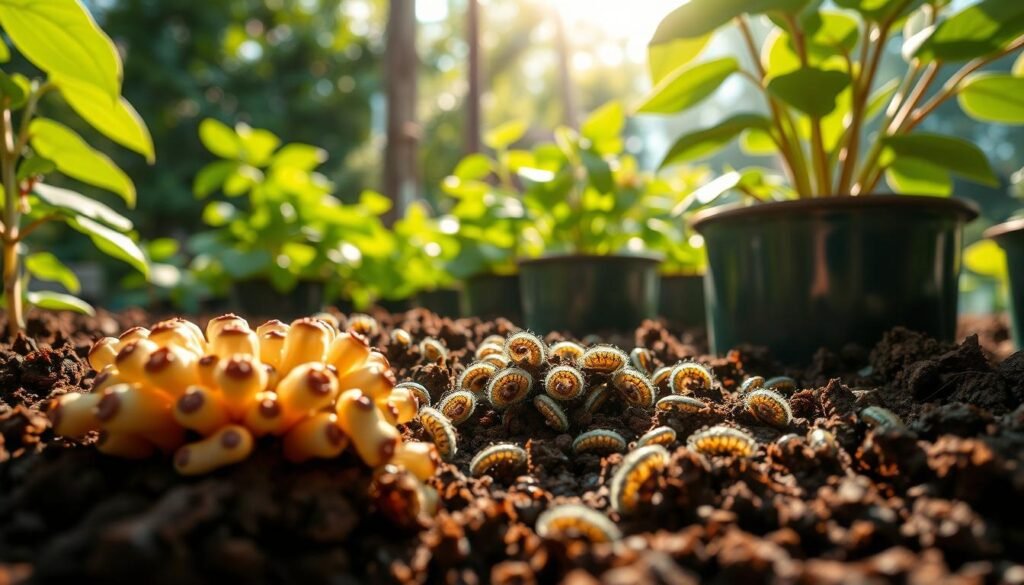
BTI is a naturally occurring bacteria (Bacillus thuringiensis israelensis) that targets larvae in soil. It attacks gnat larvae but is safe for most plants, pets, and people when used as directed.
Making mosquito bits “tea” (gallon recipe)
Pour about 1 gallon of warm (not boiling) water into a bucket. Add 1–2 tablespoons of mosquito bits and stir. Let steep 30 minutes up to overnight; warm water speeds extraction.
Strain through a fine mesh or old coffee filter so bits won’t clog a watering can. Use the liquid to water so the top layer of soil is saturated.
Using mosquito dunks
Break off roughly 1/4 dunk per gallon and soak overnight. Remove the dunk and save the rest for later use. Water with the soaked solution, making sure the top ~2 inches are wet.
Top watering versus bottom watering
Top watering is preferred since gnat larvae concentrate in the surface inches. Bottom watering works only if it wets that top layer fully.
Retreatment and pairing with traps
Retreat each watering cycle or at least every 1–2 weeks until trap counts stay low. Pair BTI use with sticky traps so adults are caught while larvae are prevented from emerging.
| Method | What it targets | Typical timing |
|---|---|---|
| Mosquito bits tea (1–2 tbsp/gal) | Soil larvae | Use each watering until counts drop (several weeks) |
| Mosquito dunks (¼ dunk/gal soak) | Soil larvae | Soak overnight; reuse remaining dunk; repeat with waterings |
| Top watering | Surface larvae | Most effective when top 1–2 inches are saturated |
Hydrogen Peroxide Soil Drench for Stubborn Fungus Gnat Larvae
A short, targeted peroxide soak can knock back stubborn larvae while breaking down into harmless water and oxygen. Use this as an escalation step when BTI or drying hasn’t finished the job.
Mixing ratios and timing
Tested ratio: mix 1 part 9% hydrogen peroxide with 6 parts water. Read the bottle concentration before mixing and adjust if your peroxide is weaker.
Apply the solution as a soil drench only after the top layer has fully dried. That timing prevents keeping the surface wet and improves contact with larvae in the top inches.
What the fizzing means
Fizzing indicates a reaction with organic matter and microbes. The active peroxide breaks down fast into oxygen and water, so fizz typically lasts ~30 seconds.
This fizz is normal. It shows the treatment reached active spots where larvae live.
Common mistakes that reduce results
- Re-wetting too soon — watering again before cycles are complete removes the benefit.
- Using the wrong concentration — household 3% needs different ratios; always check the label.
- Expecting a single drench to finish the problem — repeat on your watering cycle until adult trap counts stay low.
| Step | Why it matters | Tip |
|---|---|---|
| Mix 1:6 (9%:water) | Effective larval contact | Measure; label-check first |
| Apply after surface dries | Prevents prolonged wetness | Wet top 1–2 inches only |
| Use traps simultaneously | Stops new eggs | Place sticky traps at soil line |
Safe-use note: avoid splashes on delicate surfaces, store peroxide away from kids and pets, and clean spills immediately. Use sticky traps while treating so adults don’t keep laying eggs during the treatment period.
Natural Add-Ons That Help, But Rarely Finish the Job Alone
Natural additions won’t finish a heavy infestation, but they can cut the food source and help you track progress.
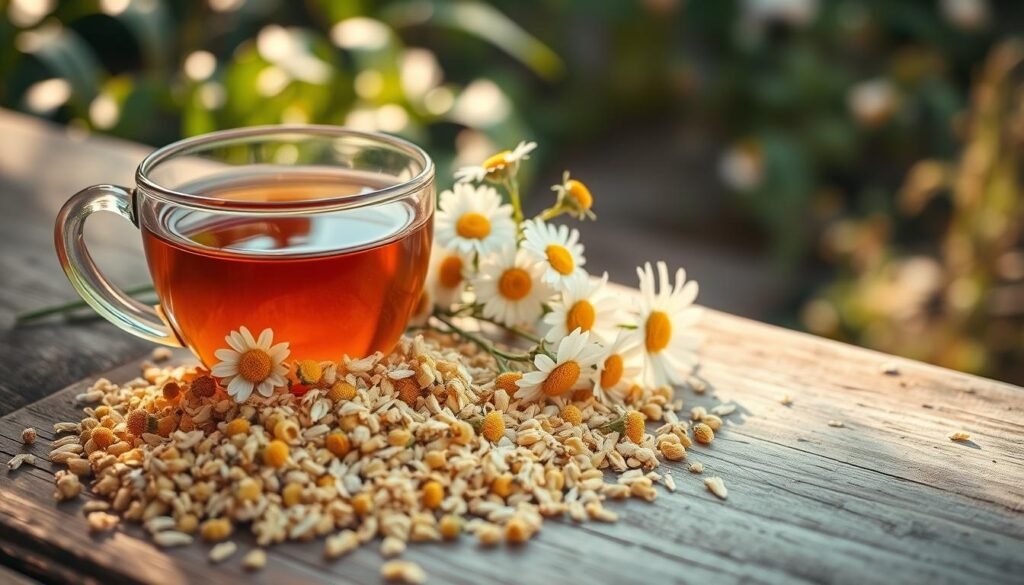
Chamomile tea as a mild surface fungicide
Brew a strong chamomile tea, let it cool, then dilute about 1:1 with water. Use it in place of one light watering aimed at the top inch.
The goal is not to drown larvae but to reduce surface fungus that feeds larvae. Repeat weekly while you run BTI or peroxide treatments.
Cinnamon for less attractive top soil
Lightly dust ground cinnamon on the soil surface. Cinnamon can slow fungal growth and make the top layer less appealing.
It won’t reach deep larvae, so treat it as a surface helper, not a full solution.
Potato slices for monitoring and modest knockback
Press a few potato slices onto the soil, wait 4–8 hours, then lift and discard any captured larvae. Each slice removes only dozens of larvae, while adults can lay many eggs.
Use slices as a quick gauge of larval activity, then continue BTI or peroxide plus sticky traps for full control.
| Natural add-on | Role | Best paired with |
|---|---|---|
| Chamomile tea | Reduces surface fungus, mild fungicide | BTI treatments and sticky traps |
| Cinnamon | Discourages surface fungal growth | Drying strategies and BTI |
| Potato slices | Monitoring and minor larval removal | Use alongside larvicide steps |
Escalation Options and Safety Notes for Indoor Use
When simple measures don’t stop surface larvae or traps stay crowded, step up your approach carefully. Escalation makes sense if sticky traps remain busy after several weeks or potato tests keep turning up eggs and wrigglers.
Food-grade diatomaceous earth on the surface
Food-grade diatomaceous earth can kill insects on contact when dry. Lightly dust the top soil where adults land and larvae move. It works best as a surface barrier and can cut emergences when paired with traps.
Be honest about limits: DE stops working when wet, so frequent watering pots may need repeated dusting or an alternate plan.
Handling fine powders safely
Fine dust can irritate lungs. Wear a mask, avoid breezy fans, and apply gently to keep airborne particles down. Keep pets and kids away during application.
Make sure you use food-grade DE, not pool or filter grade.
When repotting is the practical reset
Repotting helps for severe infestation or small collections of plants. Remove and discard old soil, rinse the pot, and use fresh mix. Treat nearby plants as well — eggs spread fast among pots.
| Escalation step | When to use | Key benefit | Limitations |
|---|---|---|---|
| Diatomaceous earth (food-grade) | Persistent surface larvae or many flying adults | Physical kill without chemicals | Fails when wet; reapply often |
| Repotting with fresh soil | Severe or repeated infestation | Removes most eggs and larvae | Labor, plant stress, careful disposal needed |
| Combined strategy | Multiple plants affected | Highest chance of lasting control | More time and coordination |
“Safety first: gentle application and dry conditions keep physical treatments effective and safe.”
Conclusion
Long-term success comes from pairing quick adult control with targeted soil treatment. Use sticky traps to cut flying adults now and a BTI “tea” during normal watering to kill larvae in the top mix.
Expect quick relief, but allow enough time for a full life cycle. Repeat treatments for several weeks until trap counts fall and activity stays near zero.
If counts stay high, escalate with a peroxide drench or food‑grade DE and consider repotting for severe cases. Finally, prevent return: improve drainage, avoid overwatering, and isolate new plants so a small issue doesn’t become a housewide infestation.