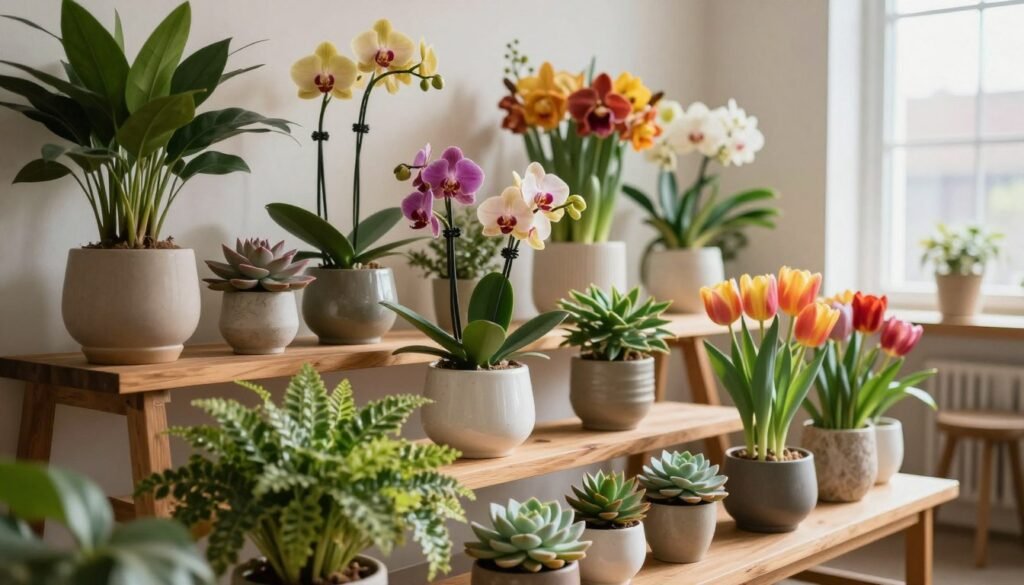

Surprising fact: we found that nearly 68% of U.S. renters say houseplants make their space feel more like home.
We know keeping our plant babies healthy means memorizing watering schedules and learning each plant’s needs.
That is why we want to help you pick the right display stand and style a dedicated flower display shelf that protects your privacy and boosts your decor.
Whether you are a novice or an expert, finding the perfect plant display turns a simple flower pot into a focal point.
Today we share 20 favorite options so every flower pot gets the attention it deserves and so your plant corner feels intentional and calm.
Key Takeaways
- We’ll simplify watering and care tips for easy upkeep.
- Choosing a proper display stand changes how plants shape a room.
- A flower pot shelf can improve privacy while adding style.
- Our picks suit both beginners and experienced plant owners.
- Small changes make your plant display feel like curated art.
Elevating Your Home Decor with Indoor Flower Display Shelves
We believe a well-chosen plant stand can turn ordinary pots into statement pieces that lift a living room’s mood.
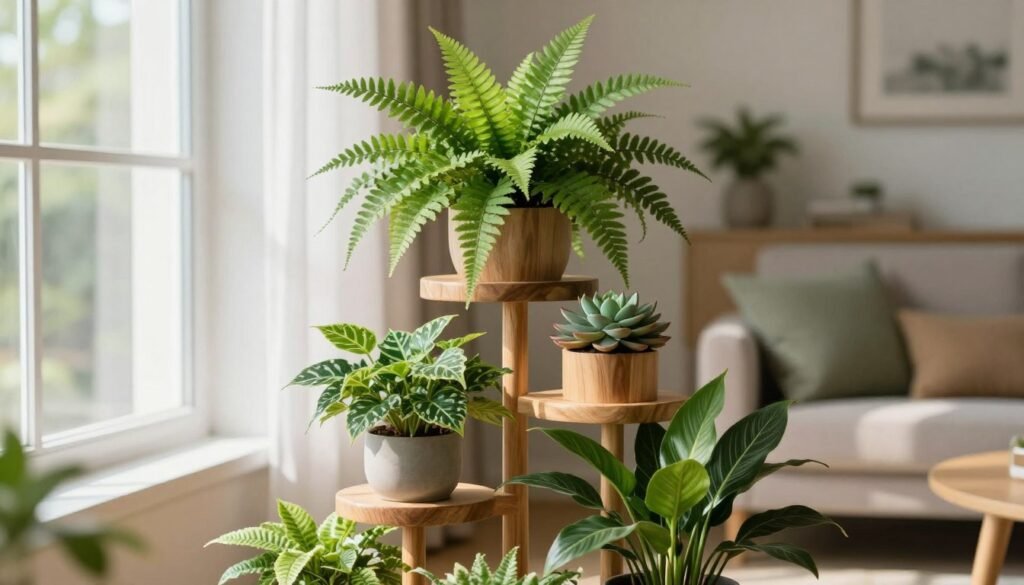
Choose a plant shelf or a compact plant stand to give each plant its own stage. A single stand keeps a flower pot off crowded tables and creates a cleaner room flow.
Design matters: a slender wood stand brightens a dark corner, while a metal stand adds modern contrast. Many designers note that one well-placed stand can transform a tight space into a small sanctuary.
We like mixing heights. Use two plant stands beside a sofa or a small table for layered interest. Organized plant stands make your home feel larger and more inviting to guests.
- Function meets style: pick a display stand that protects surfaces and shows off your plant.
- Scale matters: match stand height to pot size and room layout.
- Keep it cohesive: group plant stands to anchor a room corner or entryway.
Why Your Greenery Deserves a Dedicated Space
When we commit a zone to greenery, each specimen gets the attention it needs.
Providing a designated plant shelf ensures plants don’t compete with clutter. A clear area makes watering, pruning, and inspection faster. It also helps us track growth patterns and spot pests early.
Giving every plant its own perch highlights a beautiful flower pot and its shape. That focused pedestal can make small pots feel like curated pieces in our room.
Clearing a little space improves air circulation and light access. Plants breathe better and grow stronger when they aren’t overcrowded.
- Easy monitoring of soil moisture and leaf color
- Better airflow to reduce fungal issues
- Cleaner surfaces and fewer accidental knocks
| Benefit | What We Observe | Quick Tip |
|---|---|---|
| Health Monitoring | Faster spotting of yellowing or pests | Keep a notebook for watering dates |
| Growth | Steadier, more predictable development | Rotate pots weekly for even light |
| Presentation | Pots read as intentional decor | Group by height and color |
Choosing the Right Material for Your Plant Stand
The material of your plant stand affects weight capacity, style, and how long it will serve your pots.
Wood vs Metal
We like wood for warmth and a classic design. A quality wood plant stand supports most pots and blends with wooden tables or a cozy corner.
Metal often wins for strength. A sturdy metal plant stand holds larger plants and resists knocks in high-traffic areas.
Durability Factors
Look for thick joints, rust-proof finishes on metal, and sealed wood to avoid water damage. Balance matters—choose a broad base or a weighted leg to prevent tipping.
- Consider a plant stand set with mixed heights for stability and style.
- The Bench Wood Plant Stand from Hobby Lobby is an affordable wooden option at $49 that adds natural warmth.
- Pick an indoor outdoor model if you move pots between rooms and patios seasonally.
| Material | Best Use | Durability Tip |
|---|---|---|
| Wood | Warm rooms, wooden tables | Seal to prevent rot |
| Metal | Heavy plants, high-traffic corner | Choose powder coat to resist rust |
| Mixed | Design flexibility | Check joint strength and base width |
Floating Wall Shelves for Vertical Gardening
A simple set of floating ledges can multiply your planting area without taking floor room.
We love using floating wall shelves like the West Elm options ($45–$110) to add height and interest. A lighted rustic option from Etsy ($89–$296) gives warmth and night glow. For tight spots, the Floating Plant Stand from Etsy is just $39 and very easy to mount.
Installation Tips
Use a level and mark studs before you drill. That keeps a mounted display shelf straight and safe.
Check the wall’s weight capacity and fasten brackets securely. If in doubt, use anchors or consult a pro to avoid damage.
| Option | Price Range | Best Use |
|---|---|---|
| West Elm Floating Wall | $45 – $110 | Layering multiple pots on a living room wall |
| LED Lighted Rustic (Etsy) | $89 – $296 | Accent lighting and mood planting |
| Floating Plant Stand (Etsy) | $39 | Small corners or entryways with light pots |
Rustic Wooden Plant Stand Options
Rustic wooden stands bring warmth and structure to a room without stealing the spotlight from your green pots.
We like a simple wood plant stand for a cottage-core or modern-rustic scheme. A small wooden plant stand from Etsy for $28 is an easy, budget-friendly pick that suits a corner or a table.
For a multi-pot solution, the Rustic Triple Planter Stand from Walmart ($56) holds three pots and creates an instant focal point in a room.
If you want a statement piece, the Hairpin Leg Stand from Etsy ($149–$189) blends wood and metal for a refined, unique look.
“A quality wood stand makes each pot feel intentional — it lifts plant care into everyday decor.”
- Why wood? Natural wood ties to greenery and softens metal accents.
- Pro tip: Treat wood for moisture resistance to protect against spills.
- Mix & match: Pair a plant stand set with a metal plant or pot holder for contrast.
Modern Plant Stands for Contemporary Spaces
Modern plant stands can act like small sculptures that lift a pot and set the tone for a room.
Sleek finishes favor thin legs, matte metal, or polished wood that blend with modern design. We like the Parul Plant Stand from Urban Outfitters ($79) for a clean profile. The Narro Black Side Table from Article ($199) works as a stand and a side table when we need extra surface space.
Whimsical shapes add personality without clutter. The Pink 2-Tier Plant Stand from Homary ($189) brings a playful silhouette to a corner. For tight budgets, the Sandy Modern Plant Pedestal from Target ($25) gives a modern look at low cost.
Want color control? The Color-Customizable End Table from Etsy ($165) lets us match a pot or a room accent.
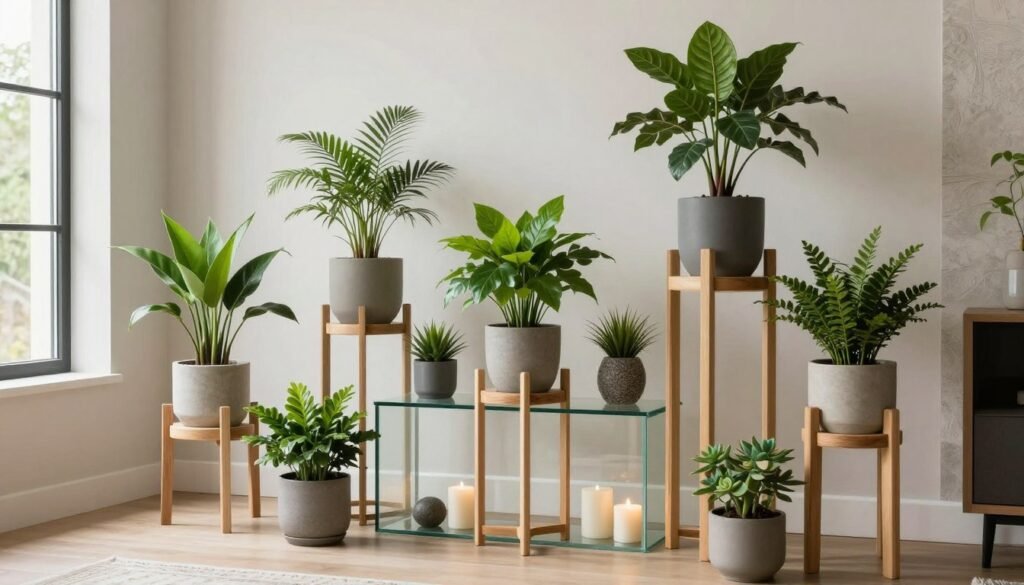
- Mix & match: pair a metal plant with a wood stand for contrast.
- Set options: consider a plant stand set to stage multiple sizes.
| Item | Price | Best Use |
|---|---|---|
| Parul Plant Stand | $79 | Sleek finish, small pots |
| Narro Black Side Table | $199 | Dual-purpose side table stand |
| Pink 2-Tier Plant Stand | $189 | Whimsical corner accents |
“A modern stand can make a single pot read like curated art.”
Maximizing Small Living Room Layouts
Small living rooms gain calm and height when we think up instead of out for plant placement.
Use vertical space to keep the floor clear while showing off our favorite plants. A tall, slim plant stand fits tight corners that often go unused.
Place a display stand near a sunny window so plants thrive and the room feels open. Natural light plus a narrow stand keeps the layout airy.
Group two or three plant stands together to create a unified look that avoids a cluttered mess of pots. We prefer mixing heights and textures for visual interest.
Choose a multi-level stand when you need more green without losing square footage. A metal plant or wood stand with tiers holds several pots and frees space for seating or a side table.
| Strategy | Why it Works | Quick Tip |
|---|---|---|
| Vertical Stands | Save floor area and add height | Pick slim footprints for narrow corners |
| Window Placement | Better light, fresher growth | Rotate pots weekly for even sun |
| Grouped Stands | Cohesive styling, less clutter | Vary heights, keep color palette tight |
Incorporating Tiered Bamboo Designs
A tiered bamboo plant stand can lift several pots while keeping our corners calm and tidy. We favor bamboo for its warm look and low weight. A compact tiered solution works well in narrow zones where a full cabinet won’t fit.
Benefits of Bamboo
We recommend the 3 Tier Bamboo Ladder from Amazon, $43, for a sustainable, budget-friendly option that supports multiple plants without bulk.
- Durable: Bamboo holds heavier pots and lasts with proper care.
- Space-smart: A 2-tier plant stand suits small rooms and tight space needs.
- Light access: Tiered design helps each plant get sun, which aids steady growth.
- Style: Bamboo adds organic warmth that fits many interior design palettes.
“A tier bamboo stand gives every plant its own level, so care and styling feel effortless.”
| Model | Price | Best Use |
|---|---|---|
| 3 Tier Bamboo Ladder | $43 | Multiple pots, balanced aesthetic |
| 2-Tier Bamboo Shelf | $28 – $40 | Small corners, tight window sills |
| Bamboo + Metal Hybrid | $60 – $120 | Heavier pots where metal plant frames add strength |
Styling Your Plants Like Fine Art
We place a prized plant where it reads like a sculpture. A clean stand and calm backdrop let the form breathe.
Treating a specimen as art means using a dedicated display stand that highlights shape and texture. A minimalist shelf can focus the eye on foliage and make the plant the room’s focal point.
We like mixing heights and textures to build a gallery feel. Try one tall stand beside lower pieces to guide sight lines across the space. A matched flower pot that complements the stand lifts the whole composition.
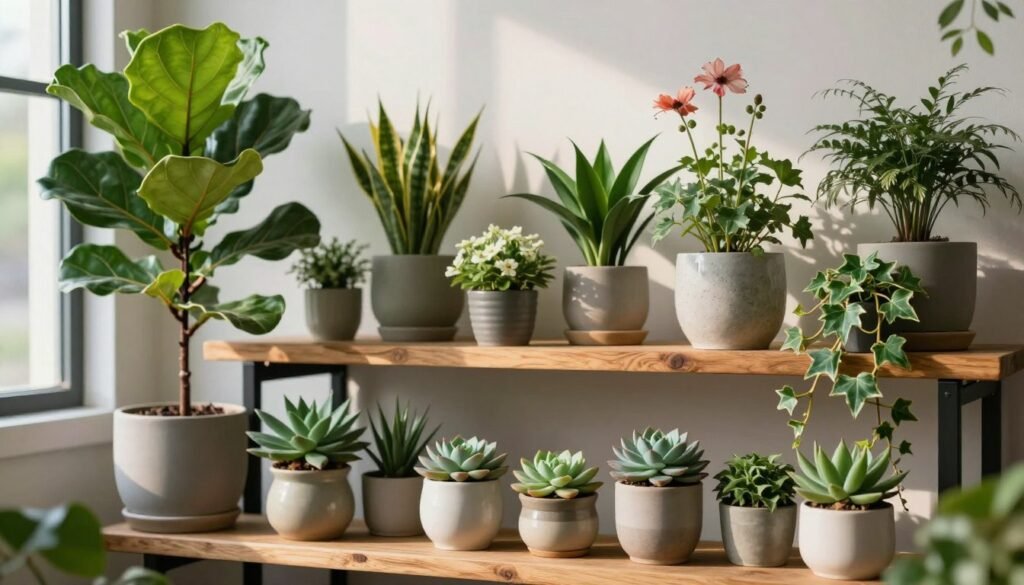
- Choose a single stand that frames the plant’s silhouette.
- Use varied heights for a curated, gallery-like presentation.
- Pick a pot that echoes the stand’s material—try metal plant accents for contrast.
“Styling plants with intent turns our home into a personal sanctuary.”
| Approach | Why it Works | Best Use |
|---|---|---|
| Single Pedestal | Highlights one specimen, clear focus | Entryways or corners needing a focal point |
| Mixed Heights | Creates movement and gallery effect | Living room groupings or hall runs |
| Complementary Pots | Ties stand and plant into a cohesive look | Smaller spaces where decor must feel deliberate |
The Benefits of Using Iron Display Stands
Iron stands bring a weighty, timeless feel that anchors a corner and protects heavy pots.
We love the Tall Iron Plant Stand from Terrain ($68) for its industrial strength and reliability. It holds mature specimens without wobble and works well as a raised garden bed focal point inside a sunlit table area.
Iron is durable. A metal frame resists knocks and supports a full plant stand set for years. The White Metal and Wood 3-Tier Plant Stand from World Market ($125) pairs strength with warm wood for balanced design.
Practical perks: iron works as a pot holder indoors or out, stabilizes grouped pots, and keeps a large collection safe and tidy.
“An iron stand is an investment that marries form and function—strong enough for heavy pots, elegant enough for any room.”
- Great for a crowded corner or a porch that sees weather changes.
- Pairs nicely with wood tiers to soften the metal look.
- Choose powder-coated finishes to limit rust and extend life.
| Model | Price | Best Use |
|---|---|---|
| Tall Iron Plant Stand (Terrain) | $68 | Heavy, mature plants; single-pot focal point |
| White Metal & Wood 3-Tier (World Market) | $125 | Multiple pots; mixed material design |
| Outdoor Metal Plant Options | $60 – $150 | Patios, weather-resistant setups |
Creative Corner Solutions for Your Home
A neglected corner can become our room’s most inviting green nook with the right stand and a little planning.
We suggest a corner plant stand to transform an awkward, empty spot in the living room into a lush focal point. A slim metal plant stand holds trailing vines safely while keeping the footprint small.
Placing a small table in the corner helps us layer pots and create depth. Use a mix of heights so each plant gets light and the composition feels intentional.
Opt for a multi-tiered display shelf or a compact set of plant stands to maximize vertical space. That approach ensures every pot holder has room to breathe and grow without crowding the room.
Remember: pick a stand that fits the scale of your corner so the layout looks balanced with your furniture and overall design.
| Solution | Best For | Quick Tip |
|---|---|---|
| Metal corner stand | Heavy pots, trailing plants | Choose powder-coat finish to resist rust |
| Small corner table | Layering small pots | Vary pot sizes for depth |
| Multi-tier shelf | Maximizing vertical space | Rotate pots for even light |
Balancing Books and Pots on Display Shelves
Smart styling turns a book-lined shelf into a curated green vignette that feels warm and lived-in.
Start with a consistent palette. Match spine tones to pot colors so the whole display shelf reads clean and calm.
Color Coordination
Pick two or three hues and repeat them across books and pots. That creates rhythm and keeps the look orderly in the living room.
We like pairing warm wood tones with muted greens for a cozy effect. Add a metal accent for a modern edge.
Pot Ratios
Keep a balance: aim for one pot per three to four book groupings. Designers like Sarai Reed recommend this ratio to avoid clutter.
Use a wooden plant stand nearby to anchor the arrangement and a small pot holder to protect surfaces.
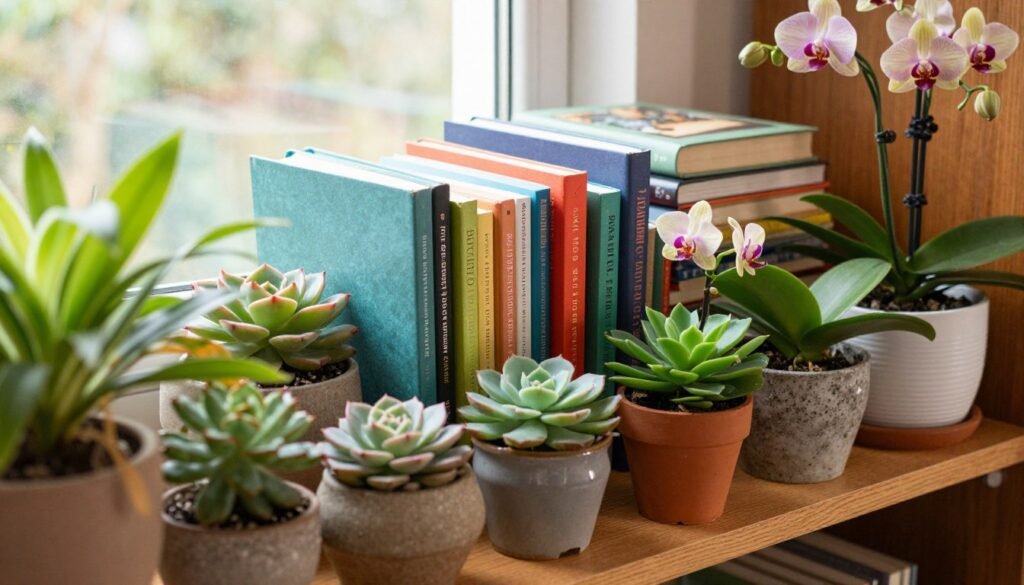
“Alternating books and plants gives the living room a layered, inviting feel.”
- Alternate stacks of books with single pots or a low wood plant to keep scale pleasing.
- Use metal plant accents to echo hardware and add contrast to wood.
Lighting Considerations for Your Indoor Garden
Light defines how well our plants grow and how a room feels around them.
We follow experts like Darryl Cheng of Houseplant Journal: lighting matters more than any trick. Place a plant stand where it gets bright, indirect light to keep leaves vibrant and growth steady.
If natural light is limited, add a shelf with integrated grow lights. A low-profile grow bar can support several pots without changing your room layout.
Staggering shelves across a wall helps each flower pot grab the best sun. We find that varied heights reduce shading and make the most of a single window.
- Watch for stress: yellowing or bleached leaves mean too much direct sun.
- Shift the stand: move pots a few inches every week to balance light exposure.
- Use a metal plant clip-on lamp for targeted light on slow growers.
“Good light plus the right stand gives each specimen the best chance to thrive.”
Maintenance Tips for Your Plant Furniture
A few simple habits extend the life of your stands and keep plants stable. We follow easy routines so our plant setup stays safe and the room looks cared for.
Wipe wooden plant stand surfaces with a damp cloth after watering. This removes dust and prevents water marks that can harm the wood finish.
For any metal pieces, check joints and look for rust. If you plan to use a piece as an indoor outdoor item, inspect it more often and touch up exposed spots.
Give special care to a tier plant stand or a 2-tier stand. Tighten screws and test stability when you move heavy pots. A loose joint can tip a plant or scratch a table.
To keep a plant stand set looking new, we apply a wax or sealant to wood surfaces every six months. That protects grain and keeps our decor fresh.
“Proper maintenance protects our home and keeps plants safe while preserving the design of each piece.”
- Check fastenings monthly.
- Wipe spills immediately to avoid stains.
- Rotate pots to balance weight and light exposure.
Selecting the Perfect Size for Your Space
Start by mapping the exact floor and vertical space so a stand fits naturally into your layout.
Measure the width, depth, and height where you plan to place a plant stand. We measure from baseboard to furniture edge and note window height. That helps us avoid a bulky piece that overwhelms a small living room.
Choose a slim, vertical design when floor area is tight. A narrow profile keeps the room airy while giving a flower pot a proper stage. If you favor a wooden or a metal plant option, check the base footprint before buying.
Always consider the height of your plant so leaves don’t hit ceilings or light fixtures. We place taller specimens on lower stands and short pots higher to balance sight lines across the living area.
Quick sizing tips:
- Measure twice before purchase.
- Match stand height to furniture for harmony.
- Pick a slim unit for small spaces to keep flow open.
| Consideration | Why It Matters | Action |
|---|---|---|
| Footprint | Prevents crowding in living room corners | Measure width & depth |
| Height | Protects lights and sight lines | Compare plant height to stand height |
| Material | Wooden vs metal plant affects weight and style | Pick material based on pot size |
Conclusion
In summary, the right stand or shelf brings order and warmth to a busy living room. Pick a piece that fits your scale and routine so plants thrive and the space feels calm.
Whether you favor a rustic wood or a sleek metal plant option, the choice will lift a flower display shelf and add privacy where you need it. Try one small change at a time and see what the room responds to.
Remember: every flower pot deserves a dedicated spot. We suggest mixing stands and tiers, rotating pots for light, and refining the layout until it feels like yours.
Thanks for joining us — we hope this guide helps you create a greener, more organized home with thoughtful design.