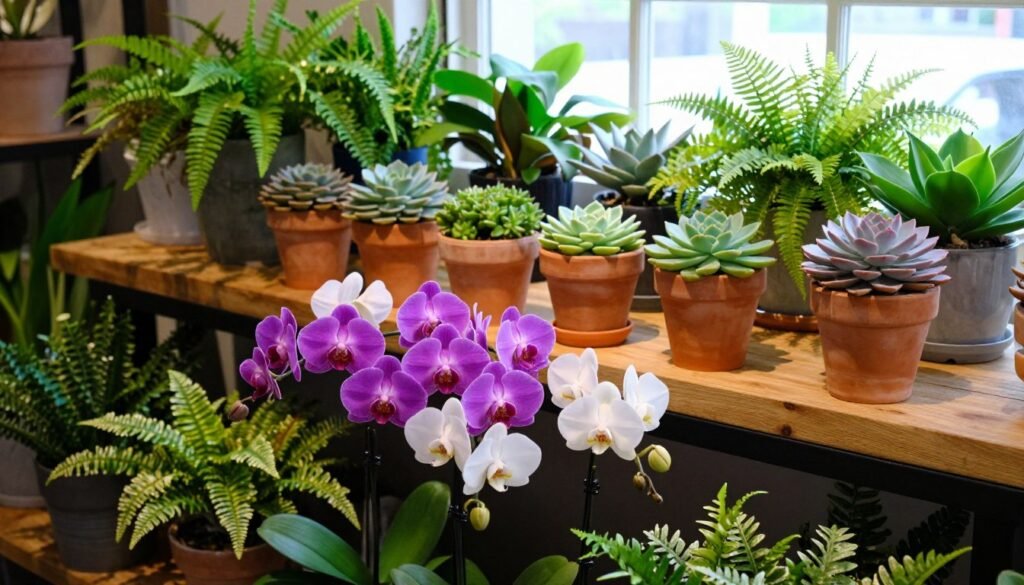

Surprising fact: recent studies show more than 70% of U.S. homeowners report improved mood after adding greenery to their rooms.
We believe a well-placed grouping can change a small room into a calm retreat. Using a few select specimens, we can bring life and fresh air into a home without overwhelming a space.
Over the last few years, demand has grown, giving us more variety in species, containers, and accessories. This means we have endless ways to add a natural touch while matching our decor style.
Our approach focuses on balance. We pair size, texture, and color so each piece feels like part of an artful arrangement. These simple choices boost well-being and make a room feel cared-for for years.
Key Takeaways
- Small groupings can transform a room quickly.
- Choose varieties that suit light and air needs.
- Mix textures and heights for visual interest.
- Containers and accessories tie the look to your home.
- We recommend starting simple and adjusting over time.
Getting Started with Your Indoor Greenery
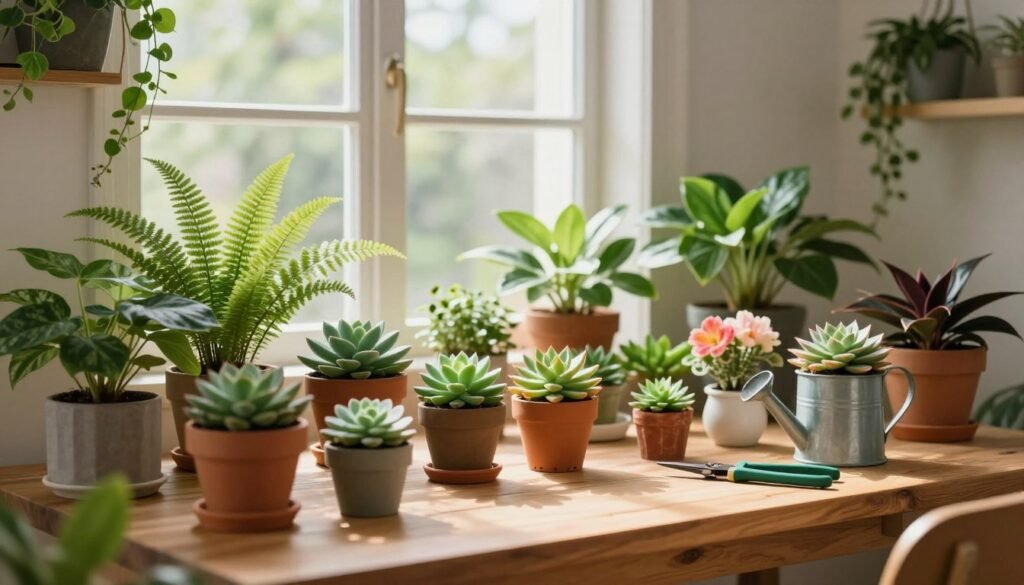
Choosing the right corner and learning a bit about care will save time and stress. We start by checking light levels, room temperature, and humidity in each space of our home.
Researching Growing Needs
Before you buy, note whether a spot gets bright sun, filtered light, or low light. Match each plant to its needs so it thrives.
Starting with Low-Maintenance Varieties
For our first collection, we favor fail-proof choices: ZZ plant, philodendron, snake plant, pothos, and spider plant. These houseplants forgive common mistakes and adapt to many rooms.
Start small and add one new specimen at a time. Group similar pots by shapes or color on a shelf to create a cohesive look that fits your living style.
- Research light and humidity for every purchase.
- Visit a garden center or check the LeafJoy® Atrium® Collection for high-light options.
- Choose planters and baskets that suit the bathroom, corner, or other areas where potted plants will live.
Essential Design Principles for a Plants and Flowers Indoor Display
Good design starts with two simple choices: light and setting. We map where sun, shade, and drafts fall in our home so each specimen sits where it thrives.
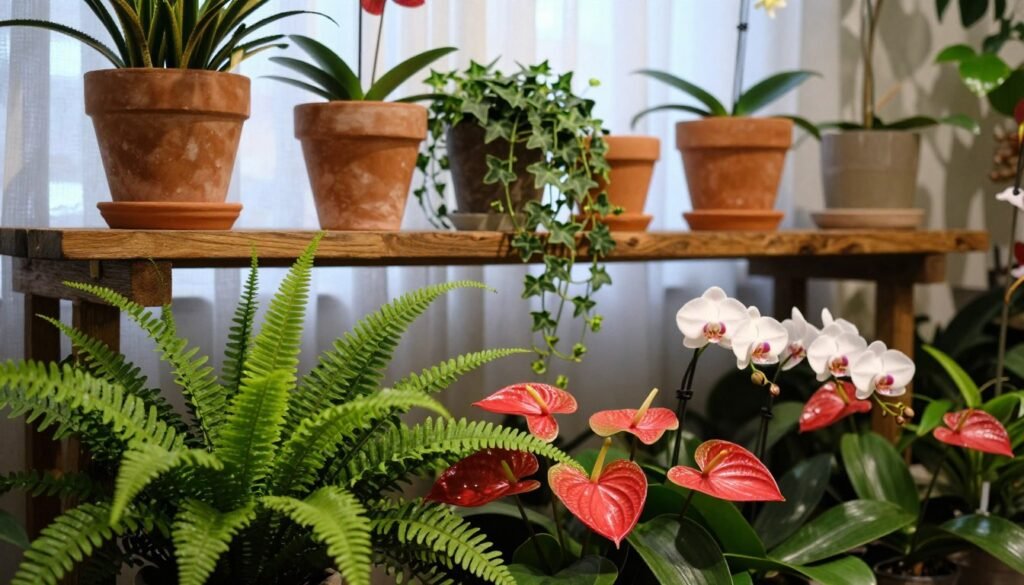
We use proportion, balance, and scale to create a calm focal point. Small pots mix with taller ones to form pleasing shapes. Grouping varied sizes adds visual interest without clutter.
Style matters: Art Deco favors geometry and a limited palette. Country style welcomes color and patterns. Modern rooms rely on clean lines and neutral tones, while eclectic mixes let us experiment freely.
- Lighting: Use light to highlight a wall as living art and to connect plants with nearby decor.
- Texture & color: Combine glossy leaves with soft foliage to boost contrast and life.
- Placement: Think about sightlines—arrange so shapes guide the eye across the room.
For color pairing tips that work in small rooms, see our color combinations guide. With these elements in place, our arrangements feel intentional and deeply tied to the home.
Selecting the Right Containers and Planters
Selecting a container is both a practical choice and a chance to add character to your space. We look at size, material, and drainage first. These decisions help a specimen thrive and tie it to the room’s design.
Upcycling Household Items
Vintage mugs, teapots, or galvanized buckets make charming planters once you add drainage holes. They bring personality and save money.
Glass jars, spice jars, and fish bowls work well as miniature terrariums for high-humidity specimens. For a soil-free option, try the leafjoy H20® collection, which fits neatly into glass vessels.
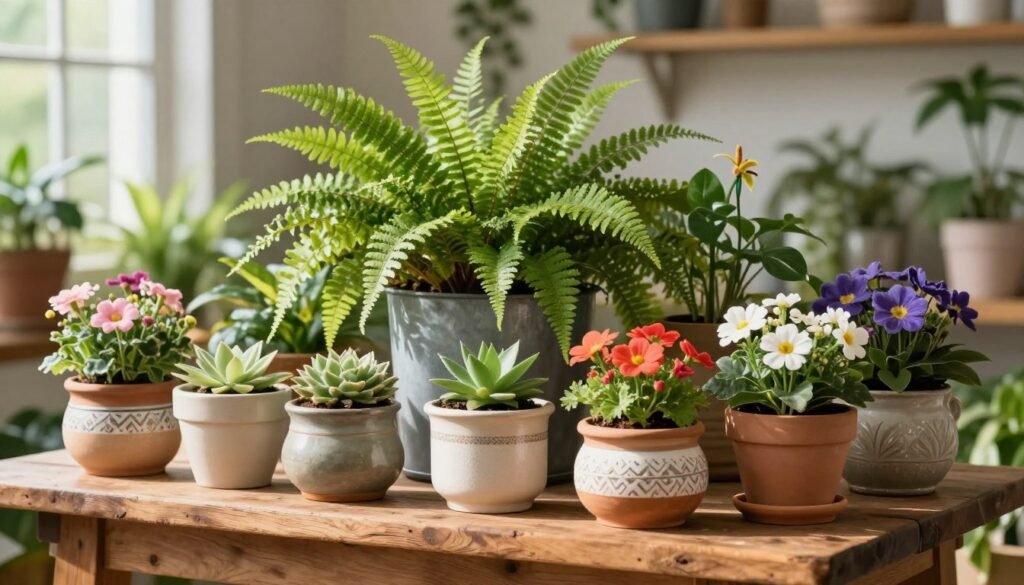
| Container Type | Best Use | Benefit |
|---|---|---|
| 3D-printed planters | Shelves, modern rooms | 60% bioplastic + 40% wood fibers; natural texture |
| Glass terrariums | High-humidity spots | Clear view; compact moisture control |
| Upcycled kettles & buckets | Rustic corners, bathrooms | Unique look; budget-friendly |
| LeafJoy H20® lines | Small shelves, tight spaces | Soil-free, ideal for growing in water |
- Browse thrift stores for kettles or enamel bowls to add character.
- Choose a 3D-printed planter for a sustainable, wood-like finish on your shelf.
- Match container color to your home palette to unify an unused corner or wall.
Creative Ways to Utilize Vertical Space
Using walls and ceilings wisely expands usable room while keeping surfaces clear. Vertical solutions save floor area and add visual interest. We pick methods that suit our home’s light and style.
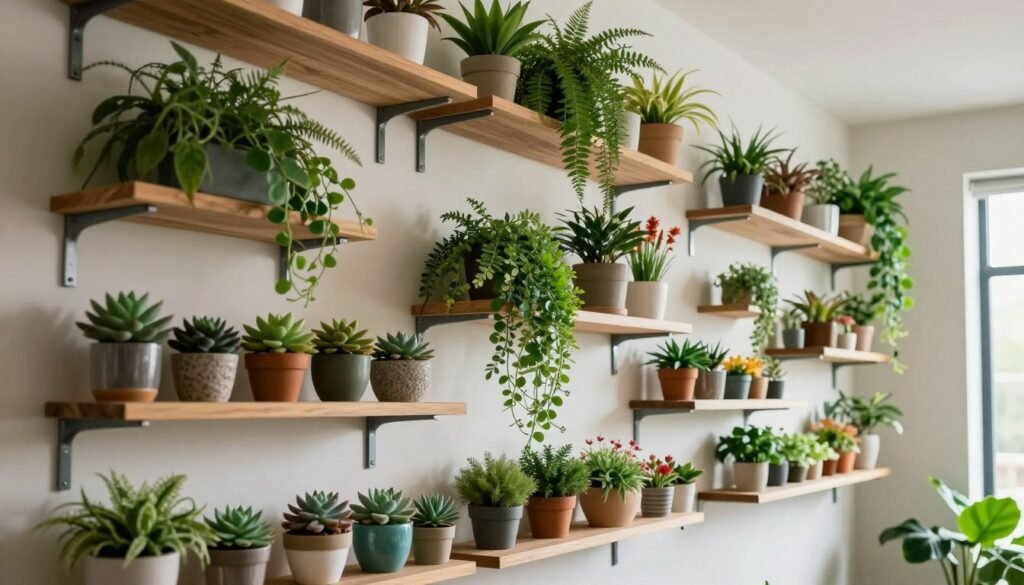
Hanging Baskets and Macramé
Suspending plants on macramé or metal frames frees floors and adds a handcrafted vibe. Install sturdy hooks in studs and avoid drafty spots. Hanging baskets near vents can stress a specimen quickly.
Installing Wall Shelves
A 4-tier bamboo shelf or floating shelves let us layer growth by height. Shelves help each plant get even light and create a living wall that’s easy to edit over years.
Using Decorative Ladders
We favor a simple folding wooden ladder for tiered planters. It offers balance and moves as needed.
“Suspending greenery adds artful movement while preserving practical surfaces.”
- Use the Hanging Table from Wayfair when surface space is limited.
- Choose strong anchors for ceiling hooks to support weight.
Bringing Nature into Specific Rooms
We place simple groupings on mantels, shelves, and in corners to make each room feel lived-in and calm.
Bathroom: For humid spaces, we recommend the leafjoy® SpaScene® Collection. Ferns, begonias, calathea, and orchids thrive there and give a spa-like vibe.
Office & work areas: Adding lush houseplants near your desk boosts creativity and helps focus. A small shelf with varied sizes keeps things tidy.
Living room & mantle: A fireplace mantle becomes a seasonal focal point when we mix pots, planters, and artful accents.
- Use glass containers with cork lids as mini terrariums for humidity-loving species.
- Group items in a corner to add color and life to unused space.
- Mix sizes and planters to tie pieces into your decor and style.
Whether you style a dining table for a special night or kit out a small shelf, these ways help nature fit your home.
Incorporating Decorative Accents and Dried Elements
Small accents can turn a plain shelf into a curated vignette that feels personal. We add tactile pieces and dried stems to bring lasting color without constant care.
Adding Stones and Textures
Colored pebbles or aquarium stones at the base of a pot tie a composition together. They add color, weight, and an instant sense of polish.
Dried arrangements give a room steady, low-maintenance color. We mix preserved stems with small art, family photos, or stacked books to form layered vignettes.
For hanging solutions, suspend a wooden branch from the ceiling and clip a few lightweight planters for a rustic focal point. Craft shops and aquarium stores are great sources for varied shapes, glass beads, and natural pebbles.
- Use small stones in pots to mask soil and boost texture.
- Combine dried stems with personal art to make a unique look.
- Try a branch-hung grouping for an organic ceiling feature.
“A mix of found objects and natural bits makes any room feel curated.”
Maintaining the Health of Your Indoor Garden
A steady care routine is the secret to long-lived green corners in any home. We check light, water on a schedule, and give each specimen a quick once-over each week.
Prevent pests early: We use Earth’s Ally 3-in-1 Plant Spray weekly to block spider mites and powdery mildew before they spread. A light misting keeps the air around a pot fresher.
Rotate items on shelves and hanging supports every few weeks so each side gets even light. This helps stems grow straight and keeps foliage dense.
Remove yellow or damaged leaves as soon as we see them. These bits can signal stress or age and removing them focuses the plant’s energy on new growth.
We clean leaves with a damp sponge or a gentle leaf shine spray to keep pores open and air moving. Regular checks for insects and disease save time and prevent bigger problems later.
“Consistent care, not perfection, keeps a home garden thriving for years.”
- Use Earth’s Ally weekly for protection.
- Rotate hanging and shelf specimens for balanced light.
- Prune and clean leaves to improve air flow and health.
- Inspect walls, corners, and bathroom spots regularly for pests.
Want a deeper look at our methods? Visit our about page to learn more about how we care for living collections in the home.
Conclusion
A thoughtful arrangement can turn a dull shelf into a room’s favorite corner. Important, balance care needs with your style so each piece feels at home.
Choose the right containers, use vertical space where it fits, and keep a simple maintenance routine. Start with one small specimen or build a full collection over time; both paths bring fresh life and calm to living rooms and work areas.
We encourage you to experiment with shapes, textures, and placement. Enjoy the process — gentle edits and steady care reward us with a vibrant, lasting room feature.