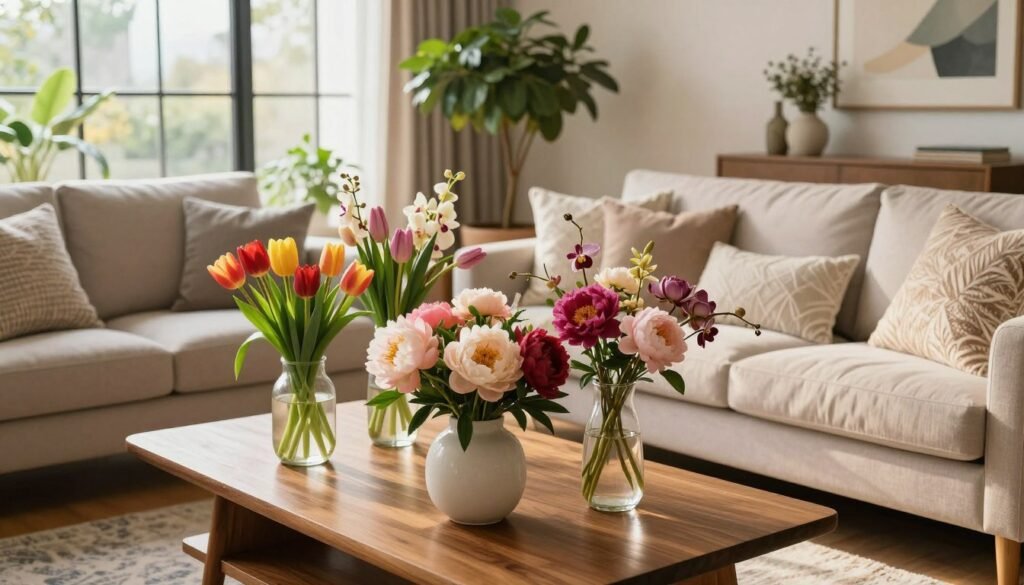

Did you know that adding plants can boost perceived comfort by up to 15% in a home? That simple change can transform a plain space into a calm, inviting area that guests love.
We believe crafting a striking indoor flower display living room starts with clear choices about size, light, and style. By choosing the right plant and placement, we make the most of any corner, shelf, or floor area.
Plants improve air quality and bring color and life to a neutral interior. Our guide walks you through selecting pieces that match your decor and daily habits.
Whether your house has a bright wall or a shaded nook, we show practical ways to arrange blooms so they feel intentional and easy to care for. Expect tips on scale, color, and light that make every room look polished.
Key Takeaways
- Start with light and size: match plants to the room’s conditions.
- Use a focal piece to anchor the space and add color.
- Choose low-maintenance plants if you want simple care.
- Think about scale: floor pieces differ from shelf accents.
- Small shifts in placement and color create big style gains.
Planning Your Indoor Flower Display Living Room
We begin by reading the room: its windows, walls, and the spots that get the most light.
Lighting Considerations
Light matters for plant health. Many species thrive in bright, indirect light rather than harsh sun. Place sun-loving plants close to windows and move shade-tolerant varieties into darker corners.
Quick tip: test a spot for a day. If it feels warm and bright mid-day, it will suit most sun-preferring plants.
Color Palette Selection
Harmonize your floral palette with existing paint and furniture to make the whole space feel cohesive. Matching pot tones or bloom colors to a wall paint creates a pro look with little effort.
“A cohesive palette makes plants look like a planned piece of decor, not an afterthought.”
- Assess natural light before choosing plants.
- Use large floor pieces to anchor a corner and small pots on shelves for subtle touches.
- Balance plant needs with your home design so every piece complements furniture and style.
Selecting the Perfect Vases and Containers
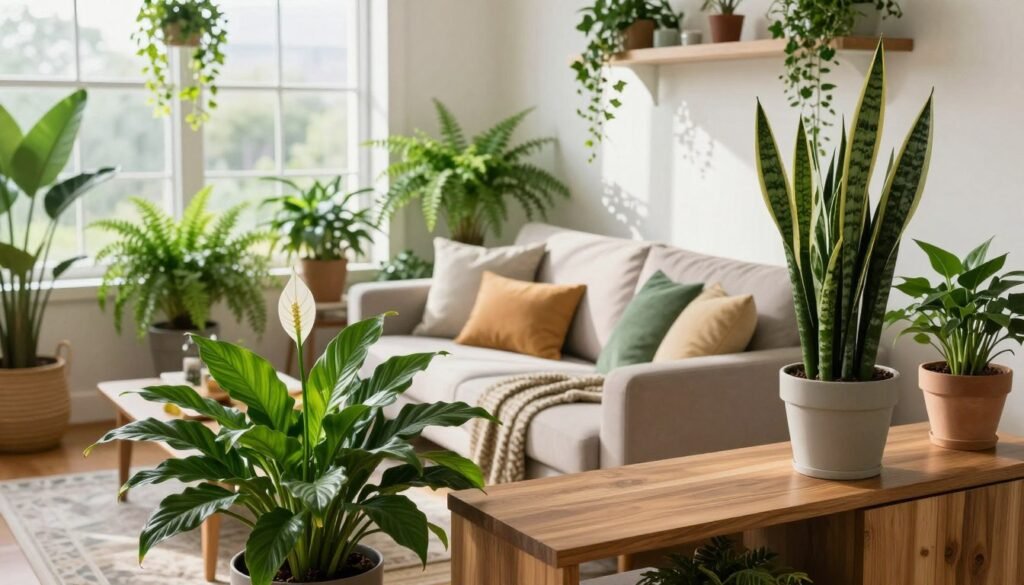
Choosing the right vase shapes the mood of a space as much as the stems you pick. We look at material, size, and texture first so the piece fits your decor and daily life.
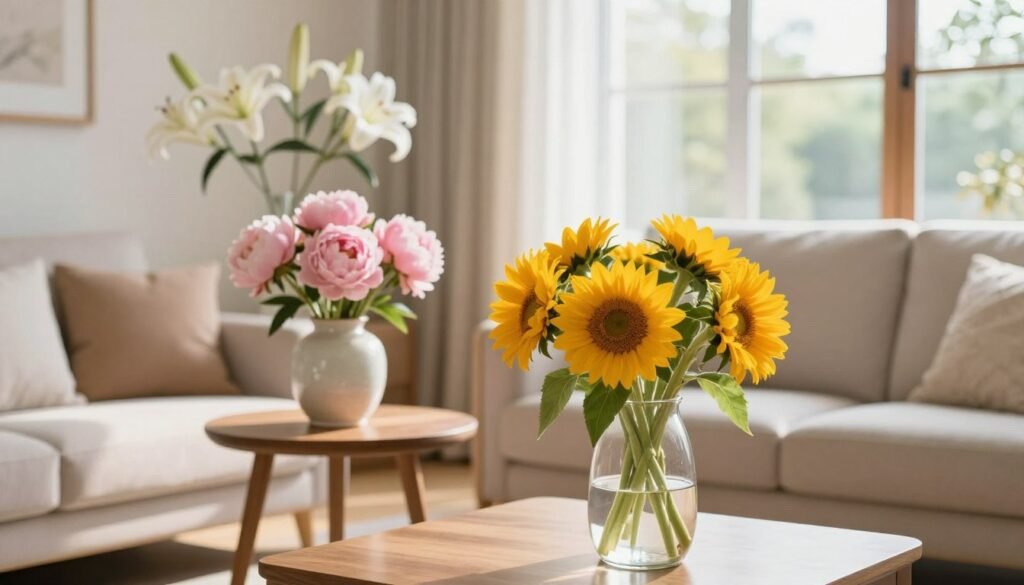
Sleek glass vases suit a modern living room. They let us see stems and water, which adds a clean, airy look to the home. For a warmer, traditional interior, ornate ceramic or vintage containers add weight and charm.
Mixing heights and textures on shelves or a console gives depth and visual interest. We suggest pairing tall glass vessels with short, textured ceramics to create contrast. Try three pieces in odd numbers for balance.
| Vase Type | Best For | Design Effect |
|---|---|---|
| Clear Glass | Modern living room, minimal decor | Clean, light, shows stems |
| Ceramic | Traditional interiors, warm color palettes | Textured, grounded, tactile |
| Vintage Metal/Wood | Rustic or eclectic shelves | Character, aged texture, focal piece |
| Mixed Set | Gallery style on console or floor | Dynamic height, layered look |
Tip: choose a vase color and scale that harmonize with your wall paint and furniture. The right container elevates plants and makes the whole room feel planned.
Strategic Placement for Maximum Visual Impact
Position taller stems and trailing pots to guide attention up and around the space. This simple move adds height and drama while keeping the floor clear.
We recommend using high shelves for trailing plants to add depth and visual layers. Place a statement plant in a corner to turn an empty wall into a focal point.
Utilizing Vertical Space
Vary height across groupings to create a composed look. Use side tables with glass vases to catch light and add sparkle to the room.
Soft lighting on a table display highlights textures and brings attention to your arrangement. That gentle glow also helps plants get light without harsh sun.
“A well-placed plant can turn a plain wall into a lively feature and make the whole house feel intentional.”
- Trail pots from high shelves to add depth to a wall.
- Group different sizes to create layered interest and bring life to a corner.
- Use glass vases on tables to reflect light and enhance style.
| Placement | Effect | Best For |
|---|---|---|
| High shelf with trailing pot | Adds depth and softens walls | Shelves, alcoves, above cabinets |
| Side table with glass vase | Catches light and creates a focal point | Seating areas, entry tables |
| Corner statement plant | Transforms empty wall into a lively feature | Large corners, near windows |
Matching Floral Arrangements with Interior Decor
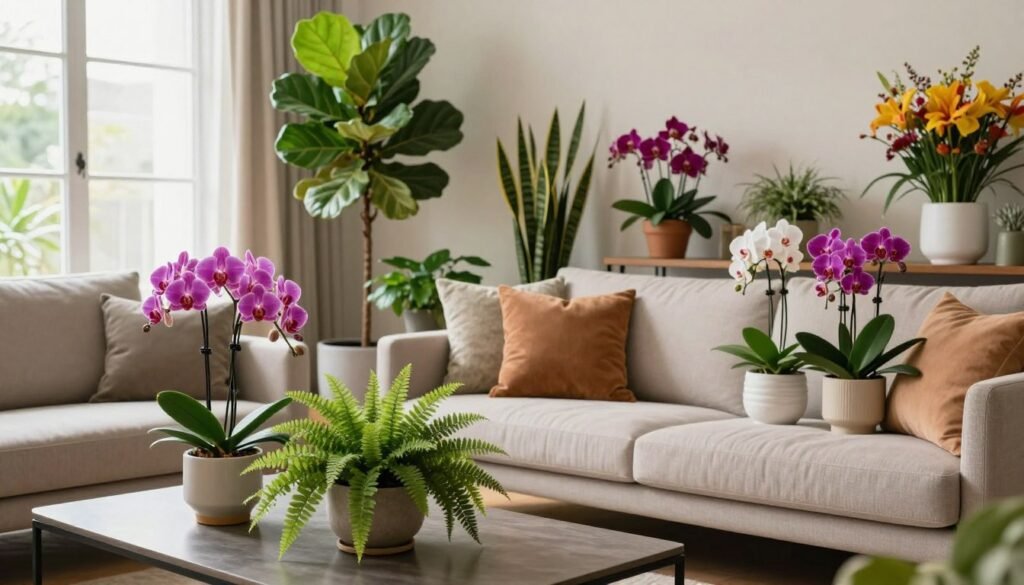
Color and texture choices in an arrangement can instantly tie a sofa, wall art, and shelves together.
Harmonize hues by picking blooms or stems that echo a color found in your furniture or wall art. A repeated tone makes the room feel intentional and calm.
Neutral bouquets with whites, creams, and light pastels blend well in modern living room schemes. They add a subtle touch without competing with patterned fabrics or bold paint.
Try this: use a vintage vase to link classic furniture with modern decor. A single antique piece can bridge styles and add personality to your home.
“A statement bouquet on a coffee table can be the focal point that pulls the whole space together.”
- Match arrangement colors to your palette for a professional look.
- Repeat a color from wall art to create visual continuity.
- Consider plant texture to complement upholstery and curtains.
- Use glass vases when patterns are bold to keep the look clean.
| Arrangement Type | Best For | Design Effect |
|---|---|---|
| Neutral bouquet | Minimalist living room, patterned fabrics | Calm, elegant, unobtrusive |
| Statement bouquet | Coffee table or console | Focal point, draws attention |
| Vintage vase with mixed stems | Classic furniture, eclectic interiors | Bridges old and new, adds character |
| Textured greenery | Sofas and heavy curtains | Adds depth and tactile interest |
For more on bringing style and plants together, see our approach to curated decor on about our design thinking.
Incorporating Potted Plants for Lasting Greenery
Choosing potted plants can make a room feel lived-in and cared for. We pick species that suit light, scale, and furniture to keep care simple and results striking.
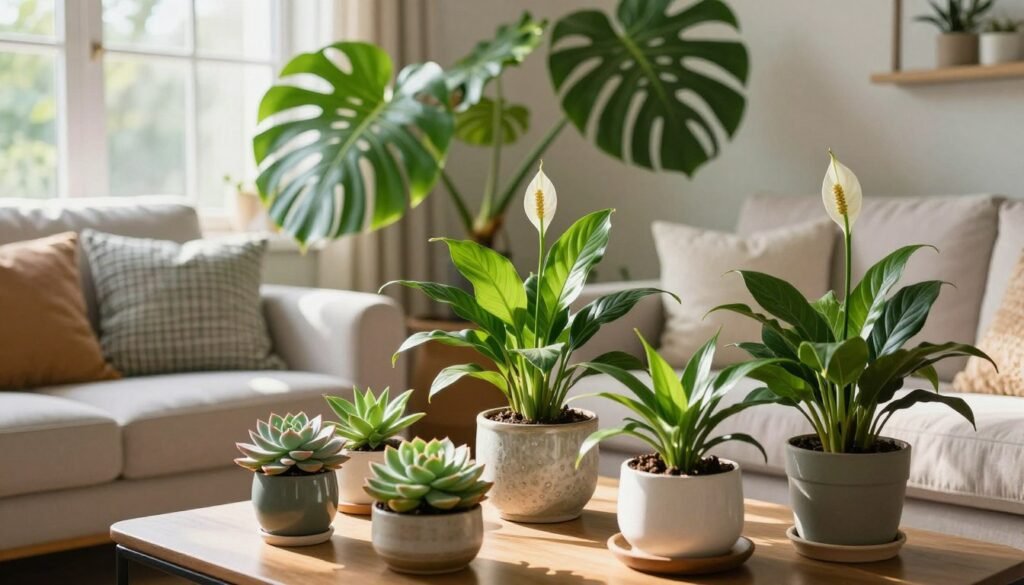
Air purifying varieties help keep the air fresh and add calm to a space. The Peace Lily cleans the air and brings a quiet elegance. Areca Palms are pet-friendly and thrive in medium, indirect light.
Low Maintenance Options
Snake Plants are drought-tolerant and ideal for busy people. The Umbrella Plant grows fast and adds height, while the Ruby Rubber Tree makes a bold statement in a large corner.
Pet Friendly Selections
For homes with pets, we recommend the Areca Palm. It purifies air and adds a tropical touch without risk to curious animals.
“By choosing the right plants for your space, you create a healthier home and a calmer atmosphere.”
| Plant | Benefit | Care | Best Placement |
|---|---|---|---|
| Peace Lily | Air purifier, elegant blooms | Moderate water, low-moderate light | Side table or shelf |
| Snake Plant | Low care, drought-tolerant | Water sparingly, bright to low light | Console or corner |
| Areca Palm | Pet-friendly, purifies air | Water every 10 days, indirect light | Near window, open space |
| Ruby Rubber Tree | Bold color, large leaves | Regular water, bright indirect light | Large corner statement |
Creative Ways to Use Flower Wall Art
Wall art can bring the energy of a garden into your living area without any upkeep.
Impressionist pieces by Monet or Van Gogh add cultural depth and vibrant color to a living room wall. They give a dramatic pop that lifts the entire space.
Botanical prints offer vintage charm and a touch of scientific detail. A small collection of framed plates or prints can turn a blank wall into a cohesive gallery of nature.
Modern floral photography focuses on the leaf and petal detail. A single large photograph makes a bold focal point. For tight spaces, a gallery of smaller prints on a narrow wall creates interest without crowding shelves or furniture.
- Use framed illustrations for a vintage vibe that suits classic interiors.
- Match prints to the plant species you keep at home to create cohesion.
- Mix painting styles to show variety and personal taste.
| Art Type | Best Use | Design Effect |
|---|---|---|
| Impressionist painting | Large blank wall | Vibrant color, cultural sophistication |
| Botanical prints | Gallery wall or above a console | Vintage charm, scientific detail |
| Macro photography | Focal point above a sofa | High detail, modern drama |
| Mixed collection | Staircase or small alcove | Eclectic interest, ties interiors together |
“Art lets us add color and plant motifs to a house without the care live plants need.”
Hanging tip: consider wall scale so each piece has room to breathe. Proper spacing and the right height keep the gallery balanced and in harmony with light and furniture.
Seasonal Flower Choices for Year-Round Beauty
Seasonal choices let us echo nature’s shifts in color and texture throughout the year.
Spring: Tulips bring bright tones and a fresh energy to the living room. They fit well on a console or low table where morning light wakes their color.
Summer: Sunflowers add bold cheer. A tall vase by a sunny wall or near a corner creates a joyful focal point that lifts the whole home.
Autumn: Chrysanthemums offer rich hues and a cozy vibe. Place them on shelves or a side table to pair with warm throws and wood tones.
Winter: Poinsettias provide a festive touch. Use them in a grouped collection to make the space feel welcoming through the holidays.
“Rotate blooms to keep the palette current — small swaps make a big difference.”
| Season | Best Bloom | Placement | Design Effect |
|---|---|---|---|
| Spring | Tulips | Console or coffee table | Fresh, colorful renewal |
| Summer | Sunflowers | Tall vase by window | Energetic, sunny focal |
| Autumn | Chrysanthemums | Shelves or side table | Warm, cozy texture |
| Winter | Poinsettias | Grouped on a corner table | Festive, inviting warmth |
By selecting seasonal plants that match your palette and light, we keep the house feeling fresh. A curated collection of seasonal stems is the easiest way to update decor and honor nature all year.
Minimalistic Approaches to Floral Styling
A single, carefully chosen bloom can change the mood of a space more than dozens of small stems. We use restraint to let one piece do the talking in a living room.
The single statement bloom is our go-to for a clean, modern look. Pick one striking plant or stem and place it in a simple glass vase so it becomes the focal point.
The Single Statement Bloom
We favor quality over quantity. A solitary orchid or lily draws attention to form and color without cluttering tables or shelves.
Place the vase on a clear surface, like a coffee table or console, so the plant holds the viewer’s focus. Keep nearby decor minimal to preserve calm and balance.
“A single, well-placed bloom proves that less can be far more impactful.”
- Choose a strong silhouette to create instant statement.
- Use a clear glass vase to highlight stem lines and water.
- Limit other objects so the plant anchors the space.
| Style | Best Spot | Design Effect |
|---|---|---|
| Single orchid | Coffee table | Elegant, serene focal |
| Long-stem lily | Console or side table | Architectural, refined |
| Bold green stem | Shelf with negative space | Modern, airy accent |
Conclusion
A thoughtful final touch can turn simple stems into a personal signature for your space. We hope this guide has inspired you to create a stunning arrangement that reflects your style and daily habits.
By choosing the right plants and containers, you can transform your home into a vibrant, welcoming sanctuary. Even a single statement bloom can shift the mood and focus of a seating area.
We encourage you to experiment with seasonal swaps, varied placement, and balanced scale until the result feels right. Thank you for joining us on this journey to master floral styling in your living spaces.