
Nearly 60% of U.S. households say adding plants changed how their rooms feel, and mums alone bring striking jewel tones every fall.
We believe the right color and placement can revive a room without major work. Chrysanthemums bloom in rich hues and show why spring is the ideal season to plant mums for long-lasting indoor flowering.
Place a plant where it gets bright light all day and you give those blooms the care they need to thrive through summer and even winter. Our approach focuses on simple routines that keep flowering plants healthy and attractive in your home.
Key Takeaways
- Chrysanthemums offer jewel-toned blooms that work well in home displays.
- Spring is the best time to plant mums for strong indoor flowering.
- Place plants where they receive bright light to support steady blooms.
- Consistent care helps flowering plants perform across seasons.
- Choosing the right color and plant can instantly refresh a room.
Why Indoor Flowers Transform Your Home
Adding living plants gives a house an instant sense of warmth and purpose.
We notice that bringing nature into our rooms improves mood and calms the mind. The U.S. floriculture market reached USD 6.70 billion in 2023, which shows more people choose indoor flowering plants for their spaces.
Each plant adds texture with lush green leaves and vivid blooms. The soil and foliage work together to freshen the air and make a home feel cleaner.
A well-placed plant can finish a small room and make it feel lived in. When we curate living decor, we practice biophilic design and connect daily life to nature.
| Benefit | Care Need | Visual Impact |
|---|---|---|
| Mood boost | Moderate watering | Softens lines |
| Air freshness | Quality soil | Textured leaves |
| Focal point | Light match | Adds depth to space |
Understanding Light Levels for Your Plants
Before anything else, understanding your room’s light will set your plants up for success. A quick check by a window tells us whether a spot is bright, dim, or just right for indoor flowering.
The Shadow Test
The shadow test is simple: hold your hand near the glass at midday and watch the shadow. A sharp, dark shadow means direct sun; a soft shadow shows diffuse or indirect light.
- Sharp shadow = too much direct sun for many flowering plants.
- Soft shadow = ideal indirect light for delicate leaves and blooms.
- Faint shadow = move the plant a bit closer to the window.
Finding Your Sweet Spot
Every plant has a “sweet spot” where it gets the right amount of energy to bloom. Monitor the soil and rotate pots so all sides receive even light.
“Light is the single biggest factor that decides how often you’ll need to water.”
If a plant stretches toward the glass or the leaves pale, it may be a bit too far or too bright. Adjust, observe, and make small changes in care until growth looks balanced and steady.
Mastering light is the foundation of long-lasting indoor flowering displays.
Best Flower Colors Indoors for Bright Spaces
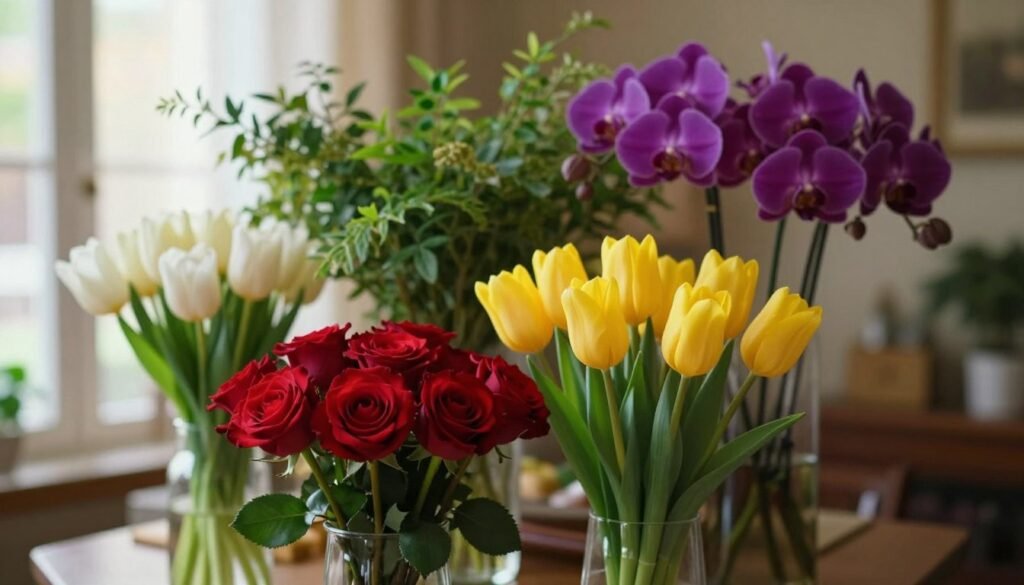
When natural light floods a space, pigments in blooms look richer and more alive. In bright rooms we can lean into vivid choices that feel intentional and fresh.
We recommend placing plants where they receive bright indirect light. This helps leaves stay healthy while keeping petals vibrant. A south-facing window or a wide, sunny ledge creates the dramatic effect that anchors a room.
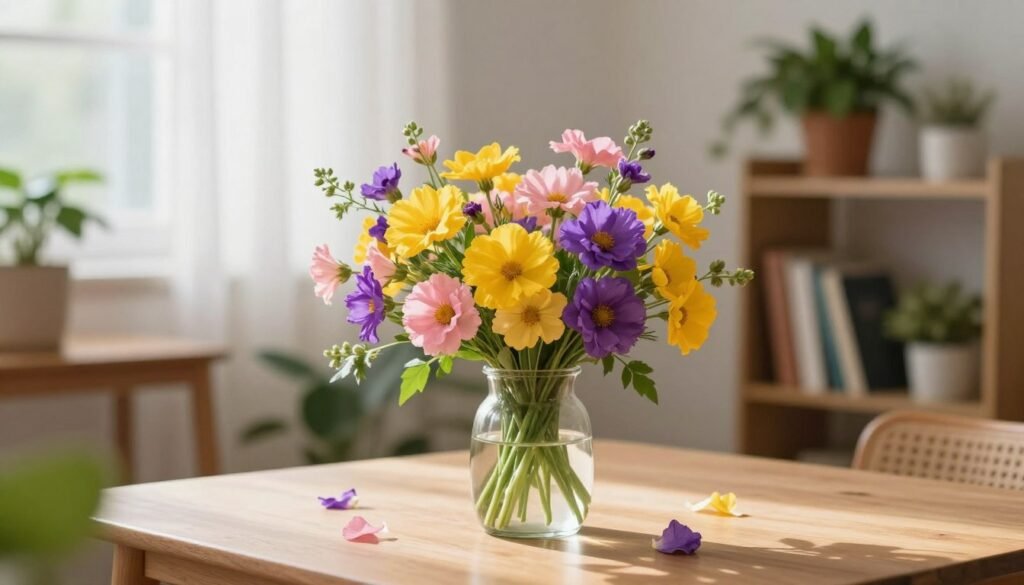
Choose plants that thrive in high-light zones so your flowers hold saturation and don’t fade. Mixing tones creates cohesion with your home‘s palette and ties the living display to the rest of the decor.
“A well-lit corner can turn a sunny shelf into a living centerpiece.”
- Bright rooms let natural pigments shine.
- Bright indirect light preserves color and health.
- Group high-light plants to form a bold, cohesive vignette.
Low Light Solutions for Dim Corners
Dim corners need not be empty—strategic choices bring life to north-facing rooms. We focus on options that tolerate lower light and ask for gentle routines.
Reliable Picks for North-Facing Rooms
Even in a shaded room, you can grow attractive flowering plants by choosing species adapted to less sun.
Pick resilient leaves—plants with thicker foliage cope better with limited energy from the sun.
“A slow-drying pot is normal in low light; match watering to the pace of the soil.”
- Watch the soil: it dries slowly, so reduce your watering cadence.
- If blooms lag, try moving the plant closer to a window for a few hours each day.
- Use a well-draining mix to cut the risk of root rot in dim spots.
| Feature | Why it matters | Practical tip |
|---|---|---|
| Leaves | Thicker leaves store energy in low light | Choose species with resilient foliage |
| Soil | Retention affects root health | Use light, well-draining mix |
| Watering | Too much causes rot | Let top inch dry before you water |
We recommend reliable indoor flowering plants that need minimal fuss. With modest attention, those once-forgotten corners become quiet, green highlights in the home.
Medium Light Favorites for Living Areas
A living room with steady, filtered light opens options for flowering plants that reward us with lasting bloom.
Living areas often give a sweet spot of indirect light that suits many popular choices. We find these conditions bring texture and soft color into communal spaces without harsh sun damage.
We love cyclamen here: its upright blooms and patterned leaves add a refined touch that lasts for weeks. Its compact habit fits on side tables or shelves and blends with both modern and classic decor.
Proper care is simple. Keep the soil moist but never waterlogged. Check the top inch before watering to avoid root issues.
“A steady light cycle and careful watering make medium-light plants reliable room companions.”
- Group several plants to create a layered, botanical vignette.
- Rotate pots periodically so leaves receive balanced light.
- Monitor light through the day; small moves help plants bloom consistently.
| Feature | Why it helps | Simple tip |
|---|---|---|
| Indirect light | Provides steady energy without scorch | Place near east or west windows |
| Soil moisture | Supports steady blooms | Water when top inch feels dry |
| Placement | Creates visual depth in a room | Cluster pots at varying heights |
The Beauty of Peace Lilies
With glossy green leaves and spoon-shaped white spathes, peace lilies are classic low-maintenance plants.
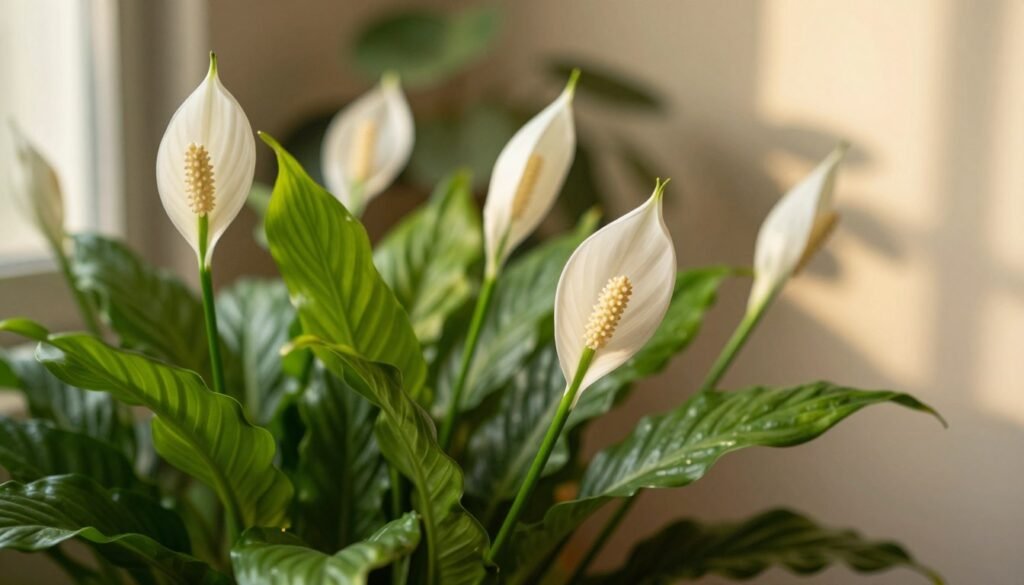
We recommend you keep soil lightly moist. Check the top inch of the pot and water only when the soil feels dry to the touch.
These plants tolerate low to moderate light, but they bloom more when placed in bright, filtered light away from direct sunlight. If the plant droops, it is usually asking for water; it will perk up after a drink.
Use a well-draining mix so roots do not sit in water. Regularly dust the leaves so the plant can photosynthesize efficiently and stay healthy.
Simple care—monitor the top inch soil, avoid long droughts, and give bright, indirect light—keeps peace lilies looking elegant for years.
- Shiny green leaves and white flowers add quiet style.
- Keep soil lightly moist; check the top inch before watering.
- Bright, filtered light encourages more blooms without direct sunlight.
Adding Drama with Anthurium
A single anthurium can lift a room with bold form and long-lasting color.
The heart-shaped leaves and vivid red, pink, or white blooms make this plant a standout choice for a polished interior. The striking bracts are actually modified leaves, and they can display for several months when cared for properly.
We place anthuriums in bright indirect light so the blooms keep their intense hue without scorch. To water, focus on the water top of the soil and allow it to dry slightly between sessions.
“With the right light and a little attention, anthuriums reward us with spectacular display for months.”
- Bold, waxy leaves add texture and depth to entryways or desks.
- These plants need modest care and repay us with long-lasting flowers.
- Wipe the leaves occasionally to remove dust and help the plant breathe.
- Place it where it gets steady, filtered light and check the soil top before watering.
Elegant Orchids for Long Lasting Blooms
Moth orchids bring quiet elegance and reward steady care with long, dramatic displays. These plants look delicate but are surprisingly resilient and can bloom for months when we follow simple routines.
Place orchids in bright indirect light, ideally by an east- or west-facing window. Rotate the pot occasionally so all sides get even light and keep the glossy leaves free of dust.
Water once a week and let the water run through until it drains from the pot. Avoid letting roots sit in water; good drainage prevents rot and helps the plant rebloom.
“With modest attention, orchids can remain in bloom for months and become a lasting centerpiece.”
- Orchids often hold their flowers for many months with little fuss.
- Position near filtered light and clean leaves to keep vigor high.
- Water weekly and allow full drainage to extend bloom life by weeks and months.
| Care Step | Action | Result |
|---|---|---|
| Light | Bright, indirect (east/west) | Steady blooming |
| Water | Once a week, drain fully | Healthy roots |
| Leaves | Wipe clean regularly | Better photosynthesis |
Vibrant Kalanchoe and Calandiva Varieties
Succulent blooms like kalanchoe reward simple routines with long-lasting display.
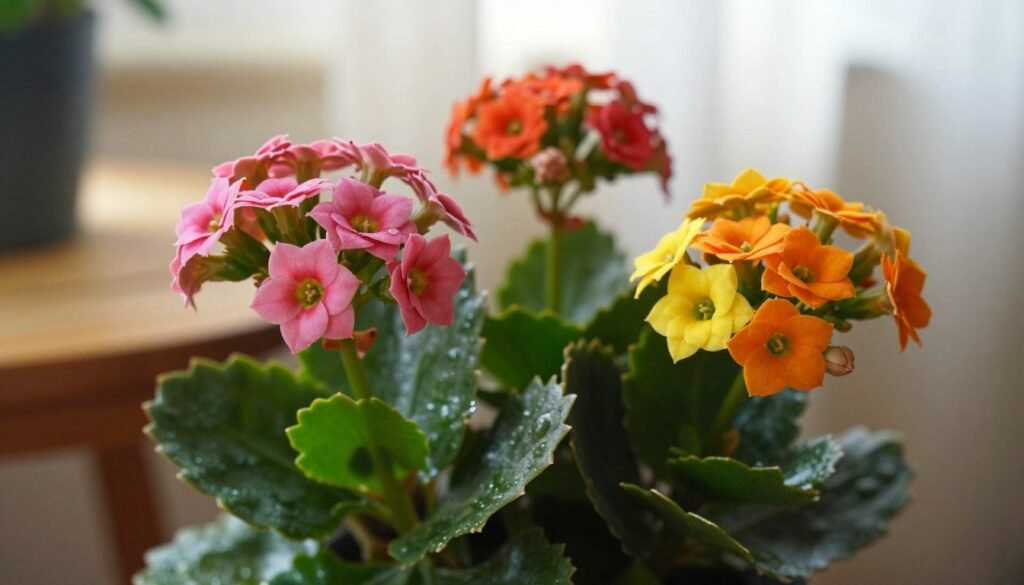
Kalanchoe and Calandiva produce clusters of small, vivid flowers in red, orange, pink, yellow, and white. Calandiva has double blooms that can last 6–8 weeks and lift any shelf or table.
Care Tips for Succulent Blooms
Place these plants in bright light and they will flower best. They tolerate a few hours of direct sunlight each day to encourage strong blooms.
Allow the soil to dry between waterings. Check the top inch soil and water only when the soil feels dry. Use the water top inch method to keep roots healthy.
Deadheading for More Flowers
Remove spent blooms to encourage new growth. Deadheading keeps energy focused on fresh buds and extends the season into spring and summer.
| Feature | Action | Result |
|---|---|---|
| Light | Bright light; some direct sunlight | Stronger, longer-lasting blooms |
| Water | Water when top inch soil is dry | Prevents root rot; healthy green leaves |
| Maintenance | Deadhead spent flowers weekly | Promotes new growth and more flowers |
“Glossy green leaves and clustered blooms make these plants ideal for busy gardeners.”
Trailing Hoya for Vertical Interest
A trailing Hoya adds soft vertical movement that changes a shelf into a living cascade. Its thick, waxy leaves stay attractive even when the plant is not in bloom.
We place Hoyas on high shelves or in hanging baskets so their vines can drape down. In bright indirect light they grow steadily and reward us with clusters of star-shaped flowers.
Let the soil dry slightly between waterings. Only water the water top when the top inch feels dry; Hoyas prefer to dry between sessions.
When a Hoya blooms, the fragrant, waxy blooms can perfume a room for months. That scent and the sculptural form make this plant a favorite for modern, boho, or minimalist styling.
“A single hanging Hoya turns vertical space into a focal point without fuss.”
- The trailing Hoya gives height and lush texture to tall shelving.
- Waxy leaves look polished even out of bloom.
- Simple watering and bright indirect light unlock long-lasting displays.
Seasonal Charm with Cyclamen
Cyclamen bring a surprised burst of charm to chilly rooms when most plants slow down. We treat them as seasonal guests that reward simple attention.
Cyclamen prefer bright, indirect light and a soil that stays slightly moist during active growth. Keep them in a cool spot to extend the life of each display for several months.
Allow a planned rest: after the main display, move the plant to a cool, darker area and withhold water for about two months. Then return it to light and resume gentle watering to coax new blooms.
- The cyclamen adds vivid color during a dormant season when other plants sleep.
- We love its butterfly-like blossoms and heart-shaped leaves for windowsills and tabletops.
- Provide bright, indirect light and keep the topsoil slightly moist while it actively grows.
“Treat cyclamen as a seasonal guest—give cool rest and gentle care, and it will return with charm.”
Mastering the Art of Watering
Watering well is less about schedule and more about reading the soil and the plant’s signals. With a small routine we avoid overdoing it and keep plants healthy.
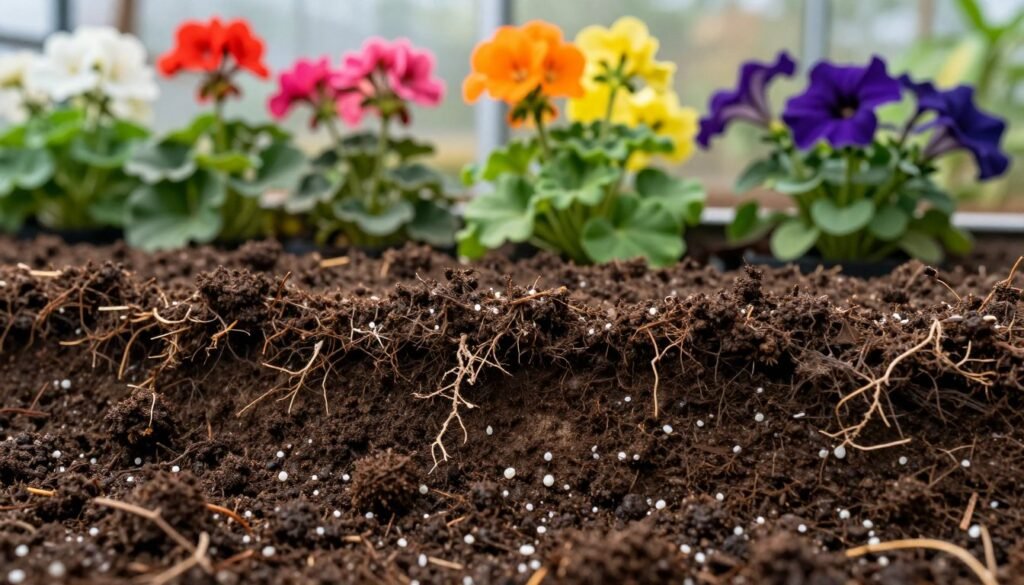
Start simple: check the pot before you water. Light, temperature, and time of year change every day, so a calendar rarely matches real need.
The Finger Test Method
Press your finger about one inch into the soil. If the top inch soil feels dry, it is time to water.
Use this quick check instead of fixed waterings. When the soil drys out a bit between sessions, roots avoid sitting in excess moisture. That helps new growth and cuts root-rot risk.
- Water slowly until liquid drains from the pot and then empty the saucer.
- Take a bit of extra time to observe leaves and weight of the pot for clues.
- Keep soil moisture in balance; trust the finger test for most plants.
“Master the finger test and watering becomes a simple, confidence-building habit.”
Boosting Humidity for Tropical Blooms
Tropical plants reward us when we raise humidity, mirroring the warmth they know in nature.
Try a pebble tray with a bit of water beneath the pot to lift local moisture. The evaporating water raises the surrounding air and helps fragile leaves stay plump.
Grouping pots together creates a shared microclimate. As plants transpire, they increase humidity for neighbors and often encourage more steady blooms.
We advise you to keep soil consistently moist but not soggy. High humidity can slow evaporation, so water cautiously and let the top layer breathe.
- Use trays or humidifiers for larger areas.
- Check for dry air signs like crispy leaf edges and act early.
- Balance moisture to avoid mold or root issues.
“A small boost in humidity can recreate the lush conditions many tropicals need.”
| Method | What it does | Quick tip |
|---|---|---|
| Pebble tray | Raises ambient moisture near the pot | Keep a bit of water, not submerged pot |
| Grouping | Creates a microclimate from shared transpiration | Cluster plants by light needs |
| Monitor & adjust | Prevents soggy soil and encourages blooms | Check soil and leaves weekly |
Troubleshooting Common Plant Issues
Small signs on a plant’s foliage often tell the full story of its needs. We treat yellowing, browning, and spots as clues, not failures.
Identifying Yellow Leaves
Yellow leaves usually point to too much water. Check the soil and lift the pot to feel weight. If it feels heavy, hold off on watering and let the top dry.
Slow adjustments work best: reduce water and watch for improvement over a week.
Addressing Brown Tips
Brown tips often mean dry air in your home or inconsistent humidity. Move the plant to a slightly more humid room or use a pebble tray.
Improve air circulation but avoid drafty vents that can worsen tip burn.
Managing Leaf Spots
Leaf spots may signal fungal issues. Keep leaves dry, remove affected foliage, and space plants so air moves freely in the room.
Even resilient plants like anthurium can stress when placed in direct sunlight or with erratic care.
“Catch problems early; small fixes prevent bigger ones.”
| Issue | Likely Cause | Quick Fix |
|---|---|---|
| Yellow leaves | Overwatering | Check soil, reduce water |
| Brown tips | Low humidity / dry air | Raise humidity; improve airflow |
| Leaf spots | Fungal infection | Remove spots; keep leaves dry |
Observe your plant in its room and adjust care step by step. By acting early, we restore vigor with minimal fuss.
Styling Your Indoor Garden Like a Pro
Think of each plant as an art piece that adds shape, texture, and color to a room.
Start with a single strong focal point—a large specimen that anchors the arrangement and draws the eye.
Group smaller pots around that anchor. Grouping in threes creates a fuller look and helps the plants share humidity.
Mix heights and leaf shapes so the display reads as layered, not flat. Trailing varieties soften hard furniture lines while upright plants add sculptural form.
- Focal point: one large plant to start.
- Grouping: cluster in odd numbers for balance and shared microclimate.
- Planters: choose a simple ceramic pot to finish the look.
- Placement: consider light and the available space before you arrange.
“A well-curated mix of form and foliage turns any corner into a calm, green retreat.”
If you spot yellow or stressed leaves, consult our yellow leaves guide for quick troubleshooting.
Conclusion
A calm routine and the right spot can turn a single pot into a lasting source of joy in your home. Match plants to light and your schedule, and they repay you with steady blooms and visual calm.
Whether you care for a winter cyclamen or a long-lasting orchid, focus on simple steps: check the soil, place plants where they get steady light, and adjust humidity as needed. Small changes often show results in just a few weeks.
We hope this guide sparks ideas to style your space and enjoy indoor flowering plants year-round. Keep observing, stay patient, and enjoy the rewards of a lively, green home.