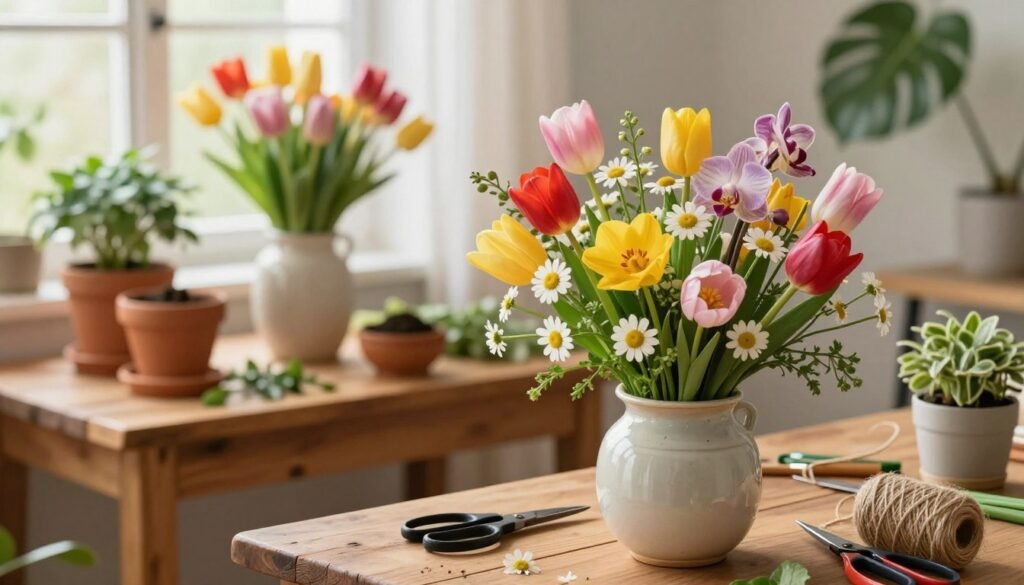

Surprising fact: nearly 70% of people say adding plants and blooms changed how their home felt within a week.
We believe transforming your living space can be simple and joyful. Our guide brings together tips from pros such as Heather Wingate, Amanda Mota, Jp Guay, and Mark Siredzuk.
In a small room, a thoughtful arrangement can save space and add color. We show fresh ideas that use water, greenery, and unusual vessels to lift any corner of your home.
Whether you are new or experienced, these projects teach easy ways to present blooms with a professional touch. We walk you through steps that make arrangements look intentional and full of life.
Key Takeaways
- Simple projects can transform a small space quickly.
- We share expert tips from wedding and studio florists.
- Use water and unique containers to boost impact.
- These ideas suit every room and personal style.
- Follow easy steps to create displays that feel professional.
Getting Started with Your DIY Indoor Flower Display
Start by assessing the light and layout of the room you want to brighten. Check how much direct sun reaches the area near a window. That determines which plants will thrive and which will struggle.
We suggest gathering materials from a small balcony garden, as Heather Wingate recommends. Using familiar plants saves cost and gives you a personal touch.
Consider tall houseplants like a fiddle-leaf fig if you want a focal piece. Experts note that caring for this plant can add purposeful routine for gardeners at any level.
Think in layers: mix low pots on shelves with taller pots on stands or bookcases. Variety of shelves and plant stands creates visual interest and uses limited space well.
- Check light levels in the room before you begin.
- Source materials from a balcony garden if you have one.
- Use different shelf heights and stands to shape the setup.
- Choose a container style that ties into your decor.
- Research each plant’s needs so indoor plants stay healthy.
“The LeafJoy Atrium Collection is ideal for plants that like bright spots near a window.”
For more background on our approach and sources, visit our about page at our story and methods.
Selecting the Right Faux and Dried Florals
Choosing between artificial stems and preserved blooms affects care, cost, and longevity. We look for realism, texture, and pieces that fit our room’s light and shelf height.
Sourcing artificial blooms
Heather Wingate notes many high-quality artificial plants on the market now look very realistic. We favor stems with varied leaf sizes to create depth.
Tip: mix silk and textured plastics so the arrangement reads natural from different angles.
Preserving your own flowers
For a natural touch, we dry stems from a local shop or press and hang our own at low humidity.
Keep dried pieces out of direct sunlight to protect color and fragile petals from air damage.
- Mix faux and dried: one of the best ways to avoid daily water and still keep a lively look.
- Combine large and small leaves to add texture for houseplants and artificial stems alike.
- Match scale to a shelf or tabletop so the arrangement fits the room’s visual level.
Crafting Floating Arbors for Dramatic Impact
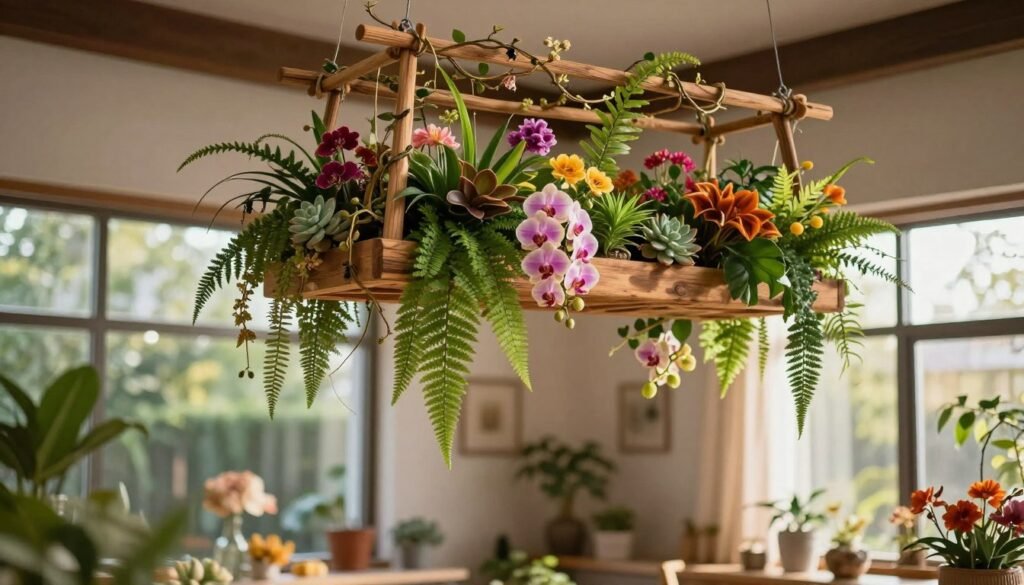
We can build a floating arbor to bring garden scale into our living room without crowding floor space.
Start with a flexible frame: Heather Wingate uses chicken wire as a base. The wire molds into tunnels so we can thread stems and interlock them for a secure hold.
Use three types of greenery to create balance and visual interest. Mix textures and tones so the arrangement reads full at every level.
Hang with care: fishing line gives strength while staying nearly invisible. Mount the arbor above a dining table or across shelves to craft an instant focal point.
- Choose silk plants for longevity if you want a piece that lasts years.
- Use wood boards to anchor ends if you need a rigid mount above a shelf or beam.
- Adjust hanging level to suit light and sightlines in your home.
| Material | Role | Quick Tip |
|---|---|---|
| Chicken wire | Base frame for threading stems | Mold into tunnels; secure ends to boards |
| Fishing line | Invisible hanging support | Tie in multiples for strength |
| Wood boards | Anchor points and neat finish | Match finish to room design |
Installing Cascading Hanging Florals
A grid of slender lines overhead creates a soft, drifting curtain of stems. At Post Creative Studio, Amanda Mota and Jp Guay mounted a ceiling grid about four inches below the ceiling to hang cascading greenery. The strings are spaced one foot apart to build density and depth.
Using fishing line for invisible support
We use fishing line because it holds weight but almost disappears against light ceilings. Make sure your ceiling grid is securely attached so the hanging plant strands stay safe.
Practical tips:
- Space strings ~12 inches for a full effect that reads like a living wall.
- Frame a chair or shelf — like the vintage IKEA Storvik lounge — to create a cozy nook.
- The bathroom is a great spot; humidity helps many stems stay fresh without extra water.
- Add soft back light to enhance the addition and build a calm, layered scene.
| Element | Measurement / Setup | Quick tip |
|---|---|---|
| Grid height | 4 inches below ceiling | Anchor into joists for security |
| String spacing | 1 foot apart | Adjust density for desired level of coverage |
| Support | Fishing line | Tie in multiples for heavier plants |
| Lighting | Soft back light | Creates depth and highlights layers |
Designing with Elegant Flower Garlands
Silk garlands let us stretch a single look across a table and tie a room together.
Laken Swan and Lauren Bercier of Something Borrowed Blooms champion this approach. Their Bianca Collection offers pre-arranged garlands and grand centerpieces that make styling simple.
We recommend ditching the single-centerpiece rule. Instead, run a garland from one end of the table to the other to build a continuous line of texture.
Layering is key. Mix garlands with potted plants and varied-height objects to create depth on a shelf or table.
- Level up: place taller stems behind lower greenery to give visual level and drama.
- Choose styles from the market that match your decor—rustic greenery or lush, blooming looks both work.
- Use garlands as a way to add a cohesive touch that links shelves, tables, and other surfaces.
When we group garlands with real plants and textured objects, the whole room feels unified and polished.
Exploring Creative Water Submersion Techniques
Using clear glass and water lets us reveal petals and stems like a miniature aquarium. These methods give a fresh way to experiment with colors and texture while keeping arrangements crisp and modern.
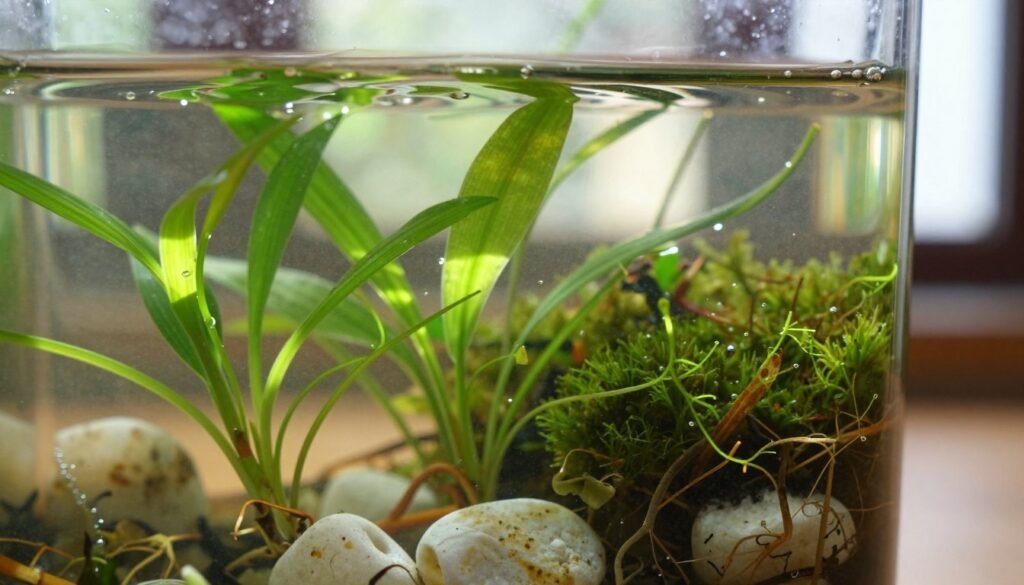
Freezing flowers in ice
Mark Siredzuk suggests making large decorative ice blocks with balloons. Fill a balloon with water, push in small rose heads, then freeze.
Peel away the balloon when solid and nest the ice in wide vases for a short-lived, striking effect. This technique amplifies color and adds a cool architectural level to a table or shelf.
Submerging stems in glass
We often tie vanda orchid heads with silver wire to hold them in place inside goldfish bowls—Siredzuk’s signature for guestrooms.
For reception-style pieces, submerge cymbidium stems in tall cylinder vases. Submersion refracts light and magnifies petal detail, so colors read richer from every angle.
- Use silver wire to keep stems arranged and submerged cleanly.
- Test combinations of plant types to explore varied colors and textures.
- Place submerged pieces at a low level or on a shelf to catch side light for best effect.
| Technique | Vessel | Key benefit |
|---|---|---|
| Ice-encased blooms | Wide vase or bowl | Temporary, dramatic cool color boost |
| Vanda heads in bowls | Goldfish-style bowl | Sculptural, sits well on small tables |
| Cymbidium stems submerged | Tall cylinder vase | Elegant vertical lines and magnified detail |
“Submerging flowers in water can refract light, which magnifies the vibrant colors and details of the petals.” — Mark Siredzuk
Creating Eye-Catching Pampas Clouds
Pampas clouds turn ordinary ceilings into soft sculptures that command attention. We use them to add a lush, tactile element to our rooms and to frame other plants and objects.
Rochelle Moseley explains that a 360-degree pampas cloud is meant to be seen from every side. We place these in an entryway or above a dining room table to maximize visual interest and to welcome guests.
She also recommends a 180-degree version for mounting over a mantel or along a feature wall. For a bedroom, attach pieces to boards above a headboard or a floor-standing mirror to add soft scale at eye level.
Mark Siredzuk suggests tying live stems to a simple frame for a hanging installation above a table. We like the idea of weaving string lights into the ties for a subtle sparkle at night.
- A pampas cloud acts like a plant chandelier, offering a major focal point that adds texture and interest to your home.
- Use boards as anchors for 180-degree arrangements to keep the piece tidy against walls.
- Place 360-degree clouds in open spots or above a shelf to play with height and light.
Making Delicate Flower Baubles
Glass baubles turn tiny stems into sculptural moments that float through a room.
Imogen Stuckes recommends glass over plastic for a more refined, sculptural look. Small stems—daisies, lavender, strawflowers, and gypsophila—sit neatly inside and read clean from every angle.
We hang these orbs in several simple ways to add interest at a new level. Try suspending them from branches placed in a vase, from cupboard handles, or from the end of curtain rails. Grouping baubles at mixed heights gives a dynamic, floating effect that brightens any shelf or corner.
Because they are small, these baubles offer a subtle addition for those who want an understated plant touch. We love how the glass catches light and makes each tiny bloom look suspended in mid-air.
- Placement idea: cluster three at varying heights for balance.
- Maintenance: swap stems regularly to keep color fresh.
- Style tip: choose clear glass for a sculptural, modern look.
Building Low-Maintenance Moss Art Walls
A preserved moss wall can act like a soft painting that improves air and calms a space. Celia White of WhiteHausLiving notes preserved moss can purify the air of toxins and also reduce noise at the room level.
These pieces last up to 25 years and add a crafted touch of greenery that fits any style. We like moss panels for living areas, shelves, or as a bold wall art feature.
Cleaning and dusting tips
Julie Sousa made a fake plant wall in her bathroom by fixing turf and weaving leaves through chicken wire. She keeps it fresh with a Swiffer and a mild mix of water, olive oil, vinegar, and lemon.
Quick care routine:
- Dust gently with a soft duster once a month.
- Spot-clean faux stems using the water-based solution Julie recommends.
- Place moss art away from direct sun or a hot window to protect color and level of humidity.
“Preserved moss art is a low-maintenance way to add greenery and a stress-free feel to your home.” — Celia White
| Benefit | Use | Tip |
|---|---|---|
| Air purification | Living wall | Place at breathing level |
| Low care | Bathroom or shelf | Dust monthly |
| Custom style | Handcrafted art | Match to room decor |
Utilizing Organic Vessels for Natural Texture
By soaking willow stems, we create pliable material for making organic containers that last for years.
Michal Kowalski of Blooming Haus recommends submerging twigs in warm water for 30 minutes up to 24 hours. This softens the fibers so we can weave them like traditional basketry.
These woven vessels add a gentle, living texture to a table and bring a tactile level that complements potted plants and cut stems.
Practical ways to use them include lining the base for moisture, or using a glass jar inside to hold water for fresh lilacs—these are also great for summer blooms.
- Pre-treating willow in water helps branches keep their shape for years.
- Try different twig types to find tension and texture that match your room.
- This sustainable method showcases creativity while keeping materials natural and long-lasting.
“Weave like traditional basketry and your vessel becomes a small sculptural home for plants.” — Michal Kowalski
Choosing the Perfect Spot for Your Greenery
Place plants where light, humidity, and sightlines match their needs, and they repay you with health and color.
We look for spots that mimic a plant’s native habitat. A bright sill or a corner near a window often works best for many houseplants.
Placing greenery near lush areas can lower stress and even improve sleep. The Home Depot and local garden centers carry the LeafJoy collection if you want easy options for different home environments.
Think about air and moisture: bathrooms and kitchens suit humidity-loving species. Sunny living rooms fit drier, high-light plants.
- Match habitat: choose a spot that mirrors the plant’s native light and humidity.
- Use windows: look for areas near a window so indoor plants get adequate light.
- Fill empty corners: houseplants make a small space feel intentional and improve air quality.
By selecting the right location, we keep plants vibrant and make greenery a calming part of daily life.
Unifying Your Home Decor with Plant Groupings
A thoughtful cluster of houseplants lifts a corner and clarifies the room’s style. We find that grouping pots of the same color or finish creates an instant, cohesive design that feels curated.
Mixing foliage adds contrast. Pair broad, dark leaves with fine, bright ones to build visual interest without clutter.
Use shelves at varied heights to stagger pots. This balances the scene and makes your plant collection read like a single styled object rather than a random set of containers.
Small rules, big impact: keep pot styles consistent, vary leaf shapes and colors, and place taller specimens at the back. These choices make your collection feel deliberate and elevate the room’s decor.
- Group pots by style or color to unify a corner.
- Mix leaf shapes and colors for visual interest.
- Arrange houseplants on shelves of different heights for balance.
- Treat your plants as part of the overall room design, not an afterthought.
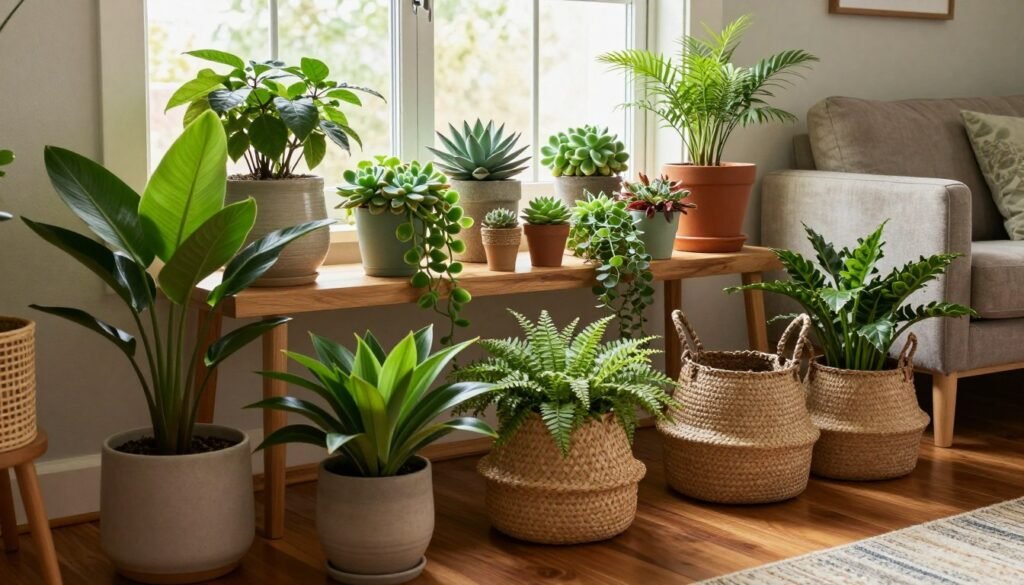
“Grouping pots with a shared style makes small plant clusters look intentional and polished.”
Refreshing Unused Spaces with Botanical Accents
A small, forgotten corner can become the room’s best feature with a few well-chosen plants. We like to pick pieces that suit the light and rhythm of the space so they feel effortless.
If you have an unused corner or a dark bathroom, adding an indoor plant brightens mood and adds texture. Even one small plant on a shelf near a window can turn a bland spot into a cozy green retreat.
Choose containers that match your decor so the new addition reads as part of your home, not an afterthought. We prefer simple pots or woven vessels that echo nearby colors and materials.
- Place houseplants where they get the right light instead of crowding them.
- Match pot finishes to furniture or textiles for a cohesive look.
- Use a compact plant to refresh a shelf, corner, or bathroom without extra fuss.
“Treat a forgotten nook like a tiny stage—one plant, the right pot, and sudden charm.”
| Location | Best plant type | Quick tip |
|---|---|---|
| Dark bathroom | Low-light houseplants | Choose humidity-tolerant species |
| Window shelf | Bright-light plants | Rotate for even growth |
| Corner nook | Taller foliage | Use a matching container to tie decor |
Incorporating Decorative Objects into Displays
A few chosen trinkets can shift a cluster of plants from casual to gallery-ready. We pair pots with books, family photos, and small pieces of art to add warmth and personality.
For a festive dining room table, we mix small plants with seasonal accents—candles, napkin rings, and a low runner. The result feels celebratory and layered without crowding the surface.
Tip: pick objects at three scales so the eye moves across the vignette. Use two or three matched colors to tie plant foliage to nearby decor or boards on a shelf.
- We like books and miniature art to give context to a group of plant pots.
- Find unique pieces at the market to echo your plant colors and mood.
- Arrange family photos and knick-knacks beside stems to tell a story.
| Object | Role | Quick tip |
|---|---|---|
| Books | Lift height | Stack to create tiers |
| Small art | Add focus | Lean on boards for easy swaps |
| Heirlooms | Personalize | Group with one matching pot |
“These small additions make plant arrangements feel like a curated part of the home.”
Maintaining Your Indoor Botanical Installations
Simple, regular upkeep is the secret to long-lasting botanical features that feel fresh in your home. We keep tasks small and steady so our living pieces stay healthy and retain their calming touch.
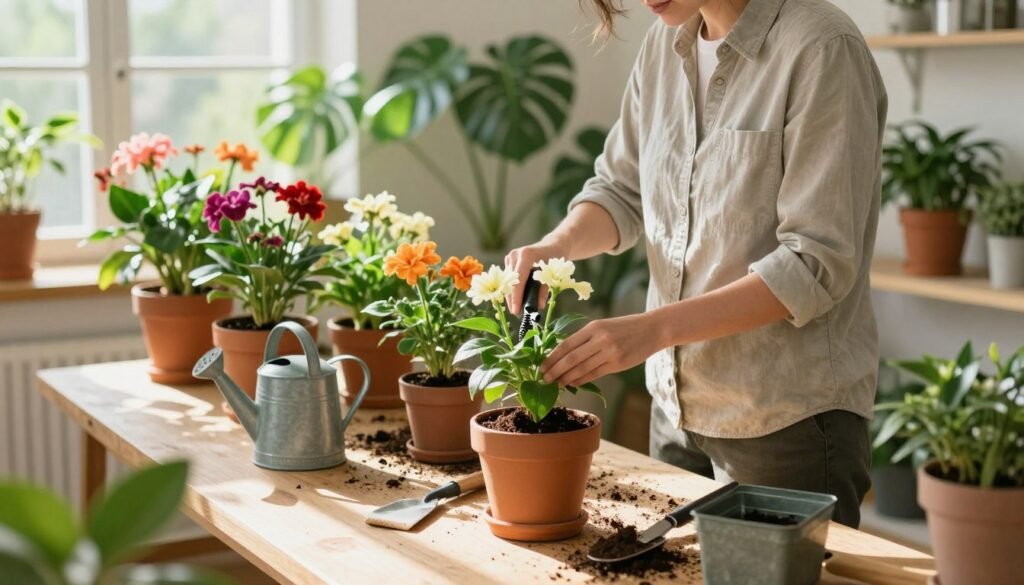
Houseplant cuttings often look great in clear glass jars, but make sure you change the water frequently to prevent rot. Check water levels weekly and refresh before cloudiness appears.
Dust builds up on hanging pieces and on preserved moss walls. We dust those areas every few months to help the air in our space stay clean and to keep texture and color bright.
- Check water: refill and replace for cuttings and submerged stems.
- Dust regularly: wipe leaves, moss panels, and hanging stems to support air quality.
- Know each plant: match care to the species so your installations remain a beautiful addition.
With consistent care, these pieces continue to purify the air and offer a soothing, living presence for years. Keep their needs in mind, and your plant arrangements will reward you with steady beauty and peace of mind.
“Routine checks and small actions keep botanical installations durable and delightful.”
Conclusion
Let’s wrap up with a few simple ways to keep your green ideas working for your home. We hope this guide inspired you to try a small project—whether a quick garland or a modest diy indoor flower display.
Make sure you choose plants that match light and air needs. Swap stems or top up water often. For hanging pieces, check anchors and lines so installations stay safe and neat.
These projects add life and improve air quality. With steady care they will charm your rooms for years. Keep your personal style in mind, treat each piece as an intentional addition, and enjoy how small acts refresh any space.