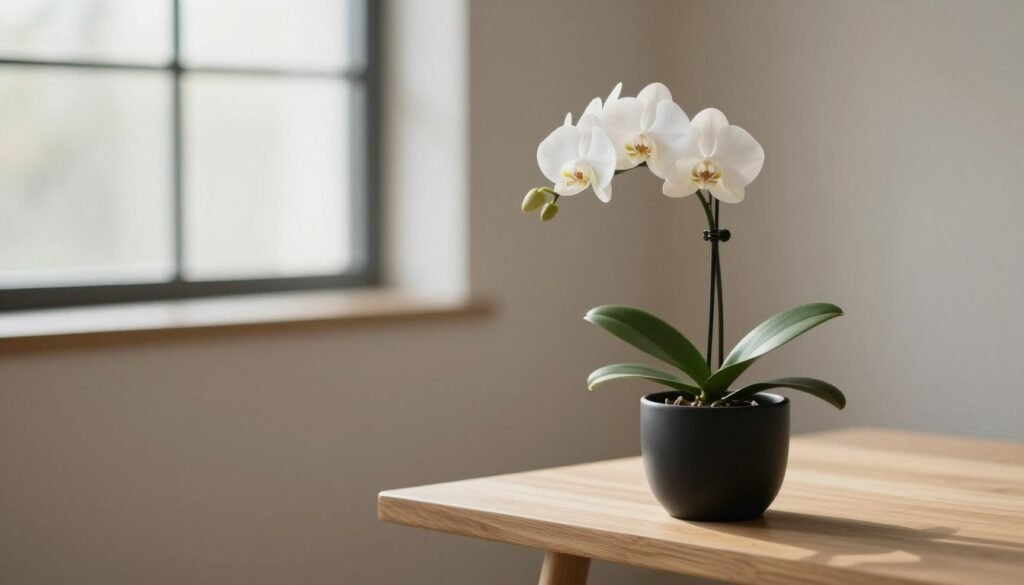

Did you know a single well-placed stem can change how people feel in a room by up to 30%? That surprising stat shows how small touches matter in our living spaces.
We created this guide to share 10 easy, elegant ideas for floral arrangements that suit a modern home. Our aim is simple: help you pick the right vase and blooms so each piece feels deliberate and calm.
Whether you favor a lone orchid on a table or a lush bunch of greenery in glass, we show ways to make your stems look professional. We explain how colour, shapes, water level, and leaves work together to set a serene style.
In short, these tips will help you transform corners of your house into peaceful spots with minimal fuss and maximum impact.
Key Takeaways
- Ten curated ideas to elevate your home with simple floral arrangements.
- Choose vases and stems deliberately for a calm, modern look.
- Single stems or green bunches can become strong focal points.
- Glass vessels, limited colour, and clean shapes create harmony.
- Practical tips on water levels, leaf placement, and stem length.
The Core Principles of Minimalist Indoor Flower Display
Caring arrangements begin with space. We let empty areas around stems show off each shape and texture. This gives a calm, considered look that lifts a room.
Focus on Negative Space
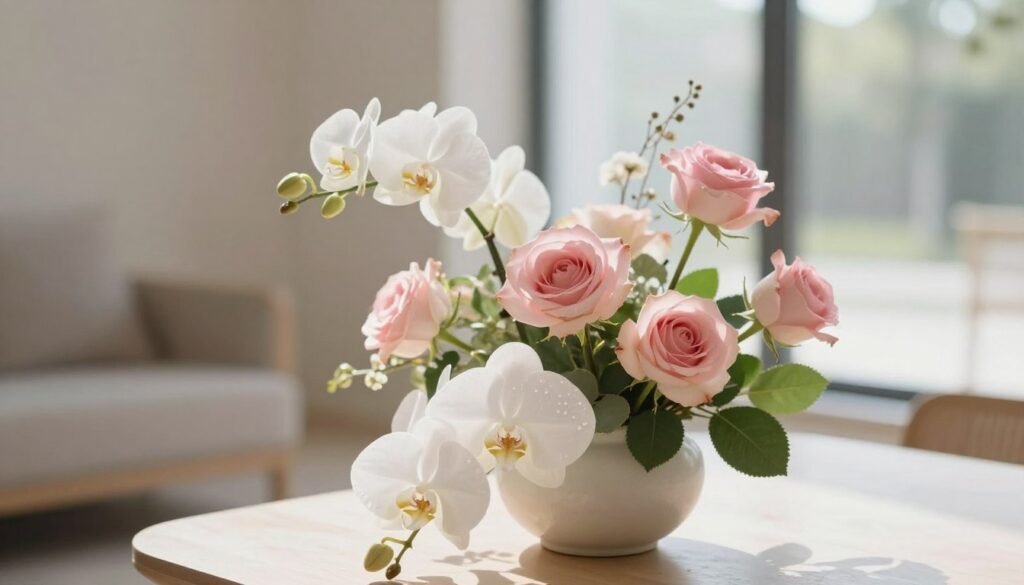
Negative space is the area around your blooms. It helps every stem and leaf read clearly. When we leave room, each element feels intentional rather than crowded.
Choose vases and positions that allow breathing room. A single stem beside a lamp or on a shelf becomes a quiet work of art.
Emphasis on Line and Form
We treat stems and leaves as lines in a sketch. The curve of a stem or the texture of a leaf becomes the main feature.
Use a limited colour palette—white, green, and muted tones—to keep harmony. Pay attention to water level and stem length so the shape stays clean.
- Let plants and vases work together; the vase should support the shape, not hide it.
- Prioritize texture and shapes over quantity; simple arrangements can look more refined.
- Be deliberate: small choices about water, stems, and leaves change the room’s mood.
Embracing the Power of a Single Statement Stem
Using a lone stem gives us a clear focal point that reads like art on a table.
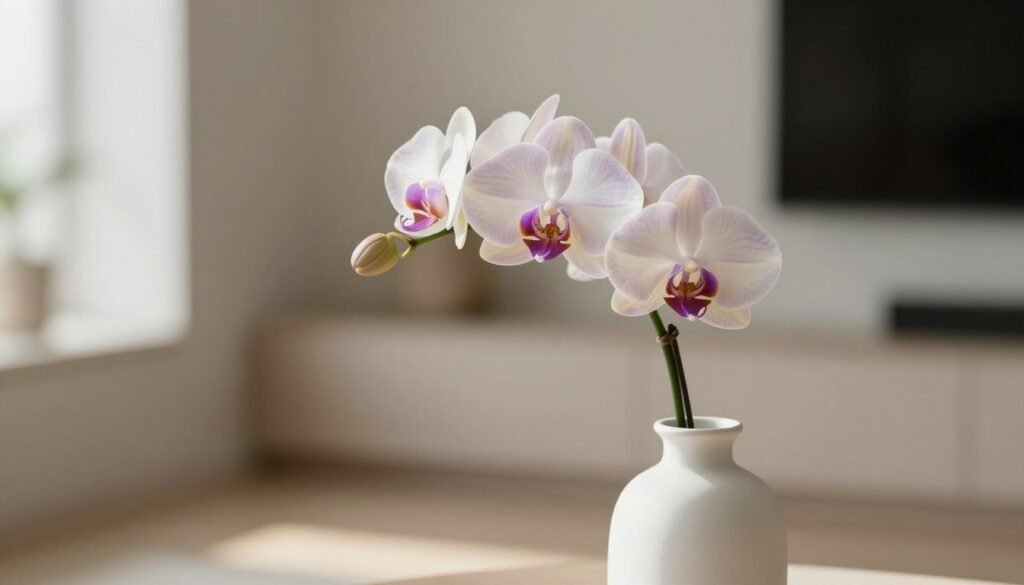
A single statement stem—an Orchid, Calla Lily, or King Protea—creates a bold look without clutter. We lean on shape and colour so the bloom becomes the room’s calm centre.
Choose a tall, thin vase in clear glass to hold the stem upright. A single stem on a side table or entryway brings an instant touch of class to the home.
We recommend high-quality blooms that match your palette. Keep water fresh and stems trimmed to preserve the line and form.
| Stem | Vase | Best Spot | Care Tip |
|---|---|---|---|
| Orchid | Tall clear glass | Entry table | Change water weekly |
| Calla Lily | Thin ceramic vase | Bedside table | Trim stems every few days |
| King Protea | Sturdy tall vase | Living room corner | Keep away from direct sun |
| Single garden rose | Short clear vase | Coffee table | Remove lower leaves in water |
Why it works: the single stem approach makes the stem read like a small piece of natural art. It elevates the style of the space and gives the home a thoughtful, quiet touch.
Modern Techniques for Bud Vase Groupings
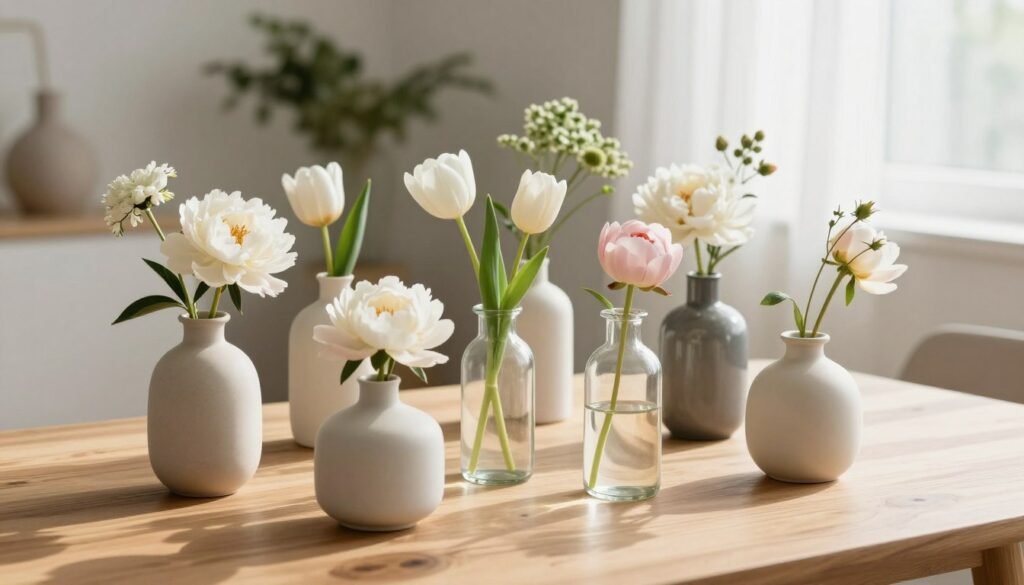
Group small vases to turn single stems into a cohesive, modern vignette. This approach uses three or five bud vases to spread interest across a surface in a simple, refined way.
Choosing the Right Vessel
We choose vases that complement the stems and the room. Mix glass and ceramic vases to add texture and keep the look relaxed.
Pick small, delicate flowers like Ranunculus, Daisies, or Baby’s Breath so each vase feels light and balanced.
- Center a row: place three or five vases down a dining table or windowsill to fill space without clutter.
- Match shapes to stems: select narrow-necked vases for single stems and wider mouths for fuller heads.
- Mix materials: combine clear glass with matte ceramic for an eclectic but cohesive style.
- Care tip: trim stems to the right height and change water regularly so plants stay fresh.
These simple ways turn small flowers into a unified look. With a thoughtful choice of vases and stems, we make sure each piece feels intentional and calm.
Sculptural Designs Inspired by Ikebana
Ikebana brings a sculptural calm to rooms by celebrating each stem’s natural line. We focus on balance, negative space, and the tension between shape and texture.
The base matters: a low, shallow bowl or pot gives us a broad plane to arrange stems. We often use a kenzan (flower frog) to hold stems at precise angles.
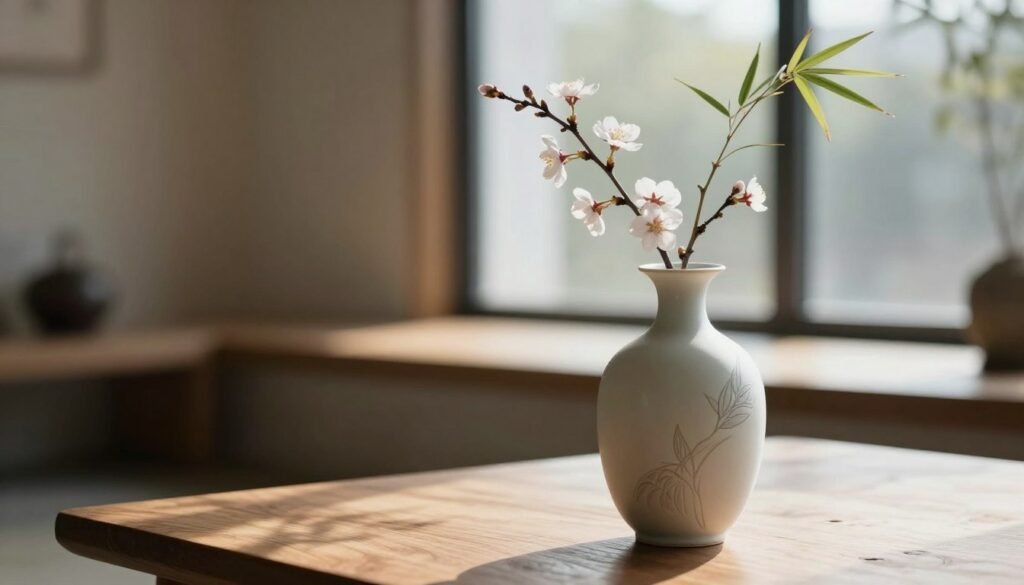
Choose interesting shapes—twisted branches, Irises, or Tulips—to create movement. A single curved branch and a few leaves make a strong look without crowding the space.
“Each placement is deliberate; the result reads like a small sculpture.”
- Ikebana is a traditional art that values line and balance.
- Use a shallow bowl and a kenzan to set stems at angles.
- Place arrangements on a coffee table so the design can be seen from all sides.
- Experiment with colour and unusual leaves for added texture.
Our tip: limit stems and trim often. Keep water fresh and let every plant have its own space so the design stays clean and calm.
Incorporating Dried Flowers for Lasting Texture
Dried stems and preserved greens bring lasting warmth and a tactile edge to any room. They work well when we want natural style without constant care.
Pampas Clouds
Pampas grass gives a bold, sculptural look with soft plumes that add height and texture. A few tall stems in a stoneware vase create a dramatic corner piece.
We also use dried lavender and bunny tails to introduce subtle colour and movement. These options are low-maintenance and last for months.
Preserved Greenery
Preserved eucalyptus and other dried greenery are excellent when we want a fresh feel without water. They pair nicely with terracotta or ceramic vases.
This approach blends the charm of natural plants with the ease of a preserved option. It’s also great for those who prefer fewer chores.
| Material | Look | Care | Best Spot |
|---|---|---|---|
| Pampas grass | Soft, sculptural plumes | No water; dust lightly | Entryway or corner |
| Dried lavender | Subtle colour and scent | No water; keep away from direct sun | Bedroom or shelf |
| Preserved eucalyptus | Fresh green tone | No water; replace if brittle | Bathroom or vase grouping |
| Bunny tails | Delicate texture | No water; handle gently | Coffee table or mantel |
Why try this: dried flowers and preserved greenery add enduring texture and warmth. They let us enjoy natural colour and shape without the upkeep of living plants.
Creative Ways to Display Blooms in Water
A simple bowl of water can turn a single stem into a serene centerpiece. We often float one perfect bloom in a wide, shallow vase to create calm on a dining table.
For a modern twist, we submerge orchid stems in a tall, clear cylinder vase. The glass magnifies petal colour and makes the flower read like small art.
Use distilled water in submerged arrangements to prevent cloudiness and keep colours bright. Distilled water also slows mineral build-up so the view stays clean.
- Float sturdy blooms like gardenias or orchids in a shallow bowl for an elegant table centre.
- Submerge stems in a tall cylinder to showcase detail from every angle.
- Place a water-based piece on a bathroom shelf or a wall-mounted ledge for a calm focal point.
“Water lets us appreciate the fine veins of petals and the gentle curve of stems.”
Our tip: keep arrangements simple. These aquatic ways bring a peaceful touch and modern style to any room, letting plants become quiet works of art.
Essential Tips for Maintaining Your Floral Arrangements
Good care keeps each arrangement looking deliberate and fresh for longer. Below we share quick, reliable ways to keep stems and blooms at their best.
Preparing Your Stems
Always cut the stem at an angle with sharp scissors or shears. This helps the stem drink water more easily and prevents blockages.
Make sure to remove any leaves that would sit below the water line. Leaves in water speed bacterial growth and cloud the view in a glass vase.
Water Care
Change the water every day or two to keep it clear and fresh. Use clean water and, when possible, filtered or distilled water to reduce mineral build-up.
Tip: rinse the vase and trim stems slightly each time you refresh the water. This simple routine saves time and keeps flowers looking better for longer.
Light and Placement
Keep arrangements away from direct sun, heaters, and drafts. Heat shortens bloom life, while cool, stable spots—like a shaded table or bathroom shelf—help them last.
For living plants or an orchid option, place pots where they get indirect light and check soil or water levels on a set schedule. These small habits make sure your home keeps a calm, natural touch.
“Proper maintenance is the best way to ensure your floral arrangements stay fresh and beautiful for as long as possible.”
- Quick checklist: angled cuts, remove submerged leaves, change water often, avoid heat.
- Use a clean pot or vase; it makes all the difference for living plants and cut stems.
Conclusion
We find that restraint often leads to the most striking, artful results.,
Embracing simple arrangements lets the natural form of each stem become the room’s quiet focal point.
Choose a clean vase and a tight colour palette to keep the look calm. A few fresh flowers or a single dried flower add lasting texture and charm.
Small choices about water and stem length change how plants read on a table or shelf. Even two or three blooms can make a big impact when shown with care.
We hope these ideas inspire you to bring a touch of nature and art into your home.