
Did you know that many Los Angeles homes boost well‑being by adding green elements to their rooms, with over 60% embracing biophilic design? That shift shows how much plants can change a space and our mood.
We believe a simple plant arrangement can turn your home into a living, vibrant sanctuary. In this guide, we help you pick plants, choose the right pots and planters, and match styles to your room.
Whether you’re new to houseplants or have a small collection, our tips cover hanging baskets, planters, and shapes that suit different sizes and lighting. We focus on light, soil, water, and care so your greenery looks and feels healthy.
Expect clear ideas that help you get creative with color, texture, and design. Small changes—the right pot, a glass option, or a well-placed plant—make a big difference in air quality and how your living spaces look.
Key Takeaways
- Plants are a quick way to improve mood and air in your home.
- Pick pots and planters that suit your room’s light and size.
- Learn basic soil, water, and care for lasting success.
- Mix hanging baskets, pots, and glass options for texture.
- Small design choices add color and make spaces feel welcoming.
Why Blooming Plants Transform Your Home
Blooming plants add an instant sense of warmth and movement to any room.
We find that blooms bring life and color that makes a space feel finished instead of flat. In Los Angeles, biophilic design shows that natural elements lift mood and make a home feel cared for.
These living decor pieces offer steady, quiet beauty. They soften hard lines and help a room feel balanced and calm.
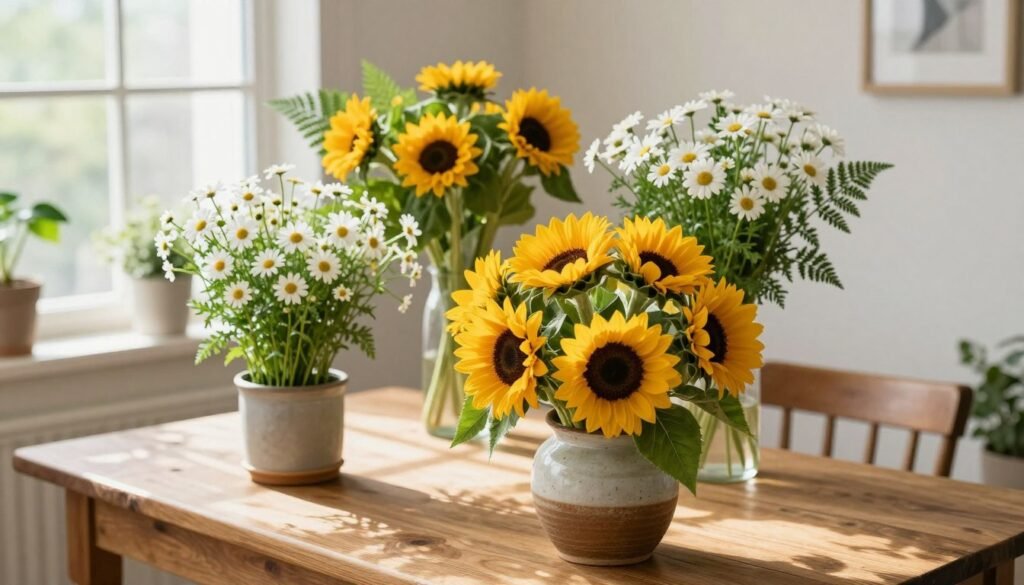
We recommend choosing plants that fit your lifestyle. The right plant acts like art over time, changing with seasons and light.
“Proper water and attention to soil keep blooms healthy and give lasting joy.”
- Mix planters and soil types to support growth year-round.
- Use a single well-placed display to create a focal point.
- Match color and texture to your decor for cohesive design.
| Benefit | What to Do | Result |
|---|---|---|
| Better mood | Add a blooming houseplant near natural light | Room feels warmer and more inviting |
| Visual interest | Rotate planters and mix sizes | Space gains depth and color |
| Natural balance | Use soil and watering routines | Living elements stay vibrant through time |
Choosing the Right Easy Indoor Flower Display
Picking the best varieties helps your room look curated while staying simple to care for. We focus on options that suit common light levels and busy schedules.
Top beginner-friendly varieties
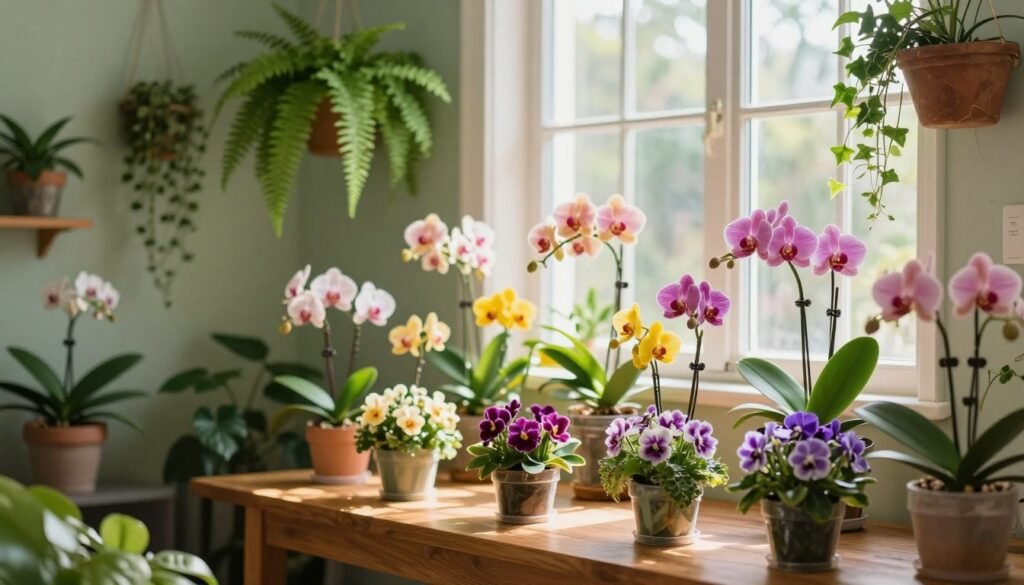
- Phalaenopsis orchids: a high-end look that blooms for years with bright, indirect light.
- Peace lilies (Spathiphyllum): they visibly droop when the soil needs water, so you always know when to act.
- Anthurium andraeanum: bold, long-lasting color in red, pink, or white for a modern look.
- Bromeliads: sculptural spikes that make a statement on a side table.
- Hoya (Wax Plant): great for hanging baskets; fragrant clusters and waxy leaves add texture.
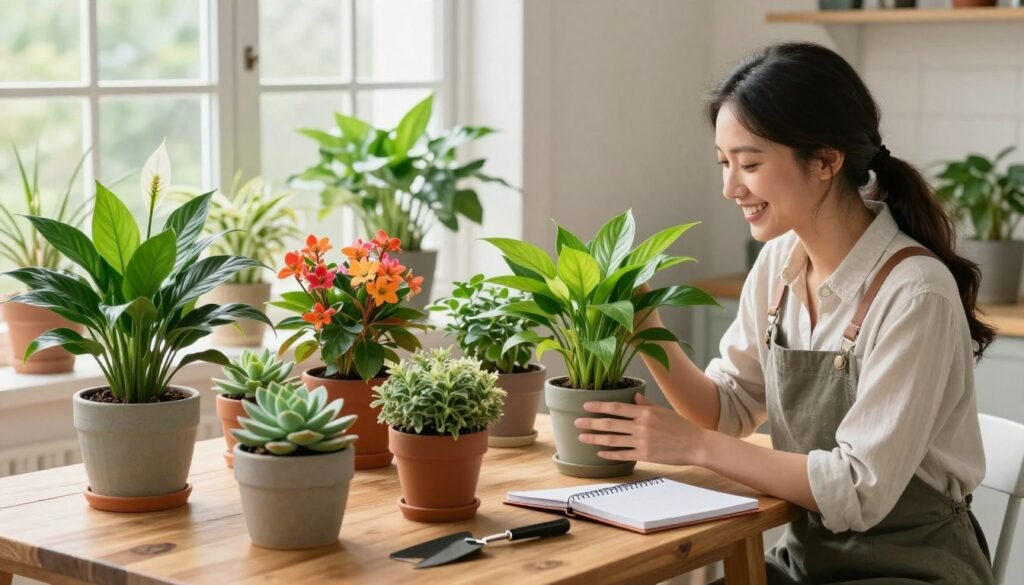
Matching plants to your light
Measure the light in your space before you buy. South-facing rooms support Phalaenopsis and bromeliads. Dimmer corners suit peace lilies and anthuriums.
“Match size and light first; design and pots come next.”
| Variety | Light | Best placement |
|---|---|---|
| Phalaenopsis | Bright, indirect | Reception desk, bright table |
| Peace lily | Low to medium | Living room corner, bedside |
| Anthurium | Medium | Office shelf, console table |
| Bromeliad | Bright, indirect | Side table, lobby |
| Hoya | Medium to bright | Hanging baskets, window |
Tip: When you group different types together, you create a lush, garden feel. Also, check for yellow leaves on indoor to troubleshoot common issues early.
Essential Care Habits for Lasting Blooms
Consistent routines are the biggest reason potted plants thrive over time. A few simple habits cut down problems and help blooms last season after season.
Mastering Watering and Drainage
Watering on a schedule matters. Orchids, for example, usually need water every 7–10 days to stay healthy and keep producing blooms.
Check the soil before you water. If the top inch feels dry, it’s time to water. This stops overwatering and root rot.
If a decorative pot has no hole, make sure the plant sits in a plastic nursery pot inside it. That protects roots and lets excess water escape.
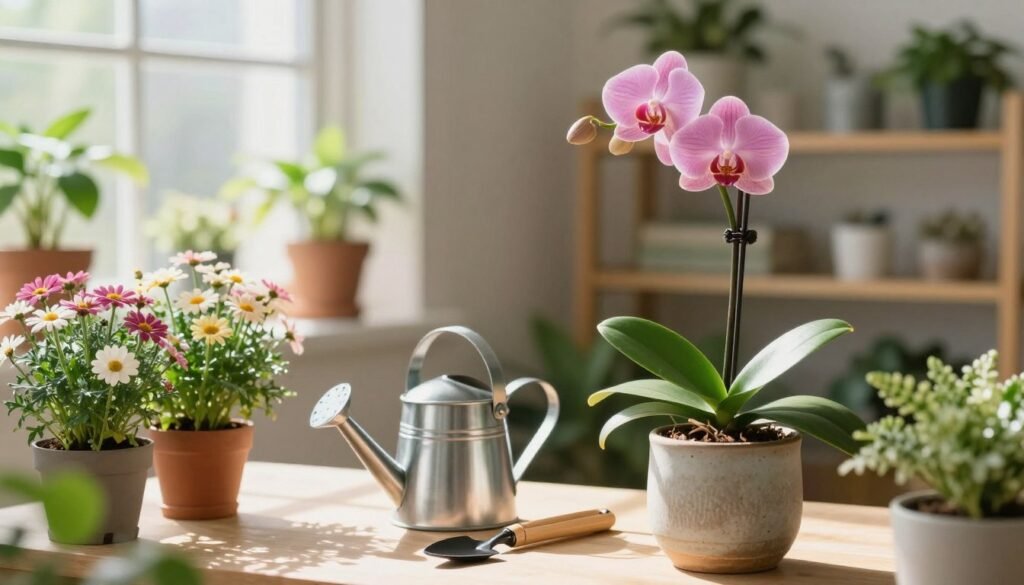
“Observe your plants — their leaves and growth tell you when to change course.”
- Place planters where they get bright, indirect light; light gives plants the energy to bloom.
- Group plants or use a pebble tray to raise humidity and improve air around leaves.
- Adjust watering and light with the seasons, and keep a steady care time each week.
For more on watering schedules by species, check our guide on watering frequency for indoor plants. Healthy plants forgive mistakes, so watch them and refine your routine as you learn.
Creative Ways to Style Your Indoor Plants
We often use height, color, and layered planters to make small spaces feel intentional.
Using Baskets and Stands
Wicker baskets add warm texture and suit many room styles. They make a plant feel like a cozy element in your home.
Arrowhead plants, for example, have thrived in hanging baskets for five years. That shows how baskets save space while adding living interest.
We recommend plant stands to add height. Stands help plants catch more light and give your tables a layered look.
Incorporating Colorful Pots
Mix matte ceramic pots in neutral hues for a modern look. They let the plants take center stage.
Colorful pots are also an easy way to insert personality. Repeat bloom colors in pillows or art to tie the room together.
Grouping for Visual Impact
Group several houseplants on a table or stand to create a lush focal point. We mix sizes and shapes to add depth.
Make sure to stagger heights and rotate plants so each gets proper light and water.
“Layering pots and planters creates a thoughtful scene that feels both curated and alive.”
- Use baskets for texture and hanging options for vertical space.
- Mix pots and planters to get a dynamic, layered arrangement.
- Repeat colors and shapes across the room for a cohesive look.
Thinking Outside the Pot with Unique Installations
Floating gardens and mounted arrangements let plants become architecture instead of just decor. We use simple frames and hanging systems to give greenery a new life. These ideas change how a space feels and how light moves through a room.
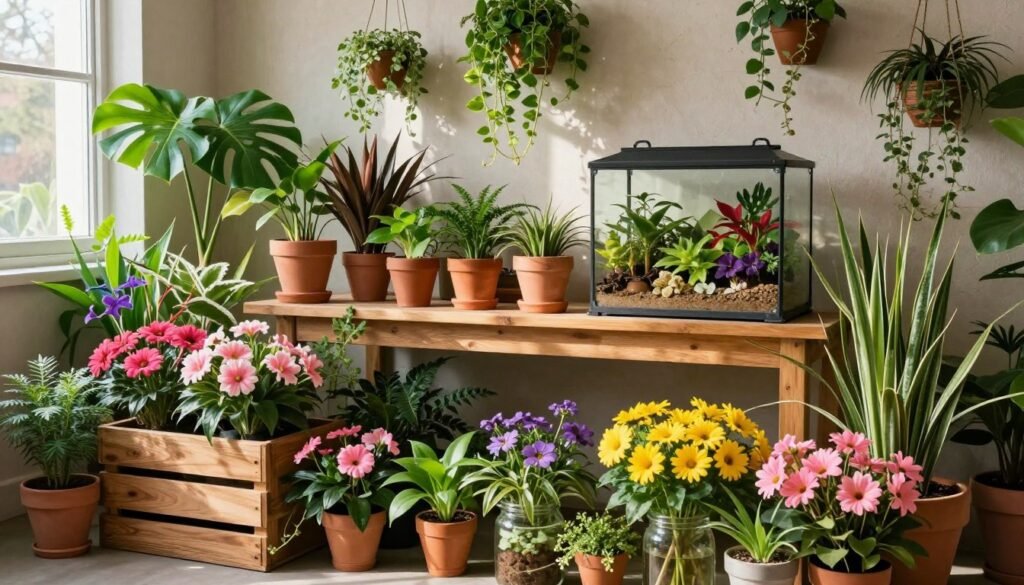
Try fishing line and chicken wire to craft cascading, hanging pieces that look like plants float in air. For a low-maintenance option, consider moss art that keeps its lush look for years.
Glass vessels make a dramatic option: submerge orchid stems in water to magnify color and form. Pampas clouds work well too — choose a 360-degree piece for a table or a 180-degree version for a mantel.
- Build a floating arbor above a console to add vertical life.
- Mix different types of greenery and dried elements for texture.
- Use minimal planters or no pots at all to make plants the primary decor.
“Creative installations let us enjoy plants in new ways and keep our rooms feeling fresh.”
We encourage you to get creative and combine glass, moss, and hanging shapes to match your home and the light you have. These ideas help plants become focal points without relying on traditional pots.
Troubleshooting Common Plant Challenges
Spotting trouble early helps us keep plants vigorous and looking their best. Below we cover quick signs and simple fixes so your room stays green and healthy.
Signs of Thirst and Light Issues
Watch leaves and soil. Drooping leaves or dry soil are the fastest clues a plant needs water.
If stems stretch or foliage leans toward a window, the plant likely needs more light. Move pots closer to bright, indirect light for a few weeks and note any change.
Managing Humidity and Airflow
Group houseplants or use a pebble tray to raise local humidity and help blooms hold longer. Moss art is a durable, low‑maintenance option and can last up to 25 years with proper placement and care.
Keep planters away from hot vents and strong drafts. Proper airflow prevents mold and crispy edges and gives each plant room to breathe.
- We suggest checking soil moisture weekly so you catch thirst early.
- For busy homes, plants like peace lilies clearly signal water needs.
- Troubleshooting is normal; learning to read greenery is the best way to succeed.
“By staying attentive, you catch issues early and keep your indoor plants thriving.”
Conclusion
A few thoughtful plants can shift how a room feels and make your home more welcoming.
We hope this guide inspired you to start an easy plant project and bring more life into your space. Small steps—one pot, a new stand, or a hanging piece—lead to big changes.
Remember that the best plant fits your light and the care you can give. Try different pots and baskets to see what suits your room and routine.
Get playful with grouping, mounting, or a simple tabletop arrangement. A well‑placed display becomes a focal point that lifts mood and adds texture.
Enjoy learning as you grow with your greenery. We love seeing homes transform when people add living accents and thoughtful care.