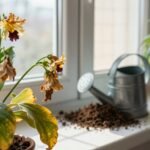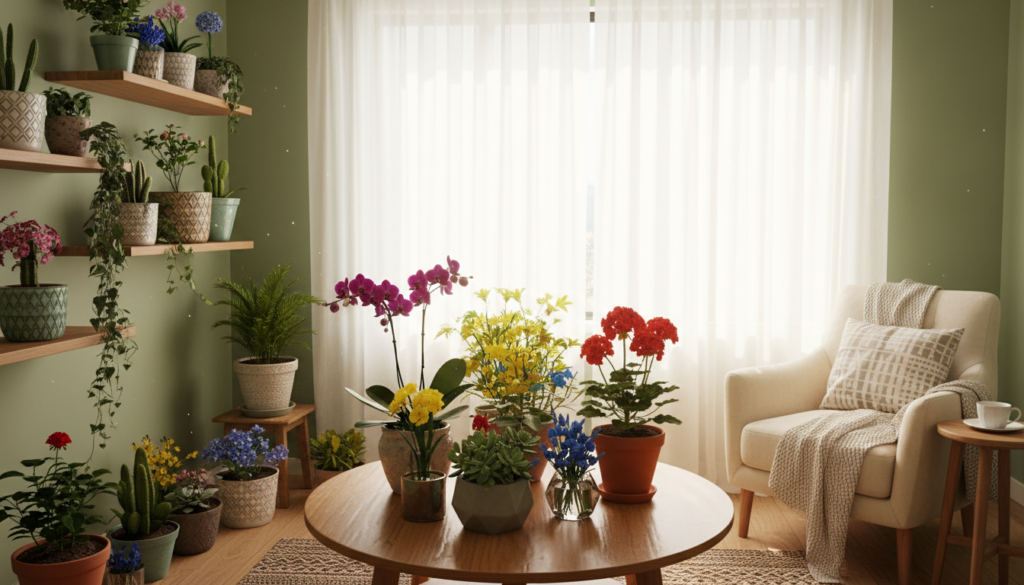

Did you know that adding just one small vase can lift mood scores by over 20% in tight living spaces? We found that statistic surprising, and it shows the real impact of good styling.
We believe that living in a cozy inner-city studio is the perfect way to show our personal style. B&M Florist suggests even the tiniest nooks can feel full of life and colour when we choose the right items.
From repurposed glass jars to a mini bouquet in the bathroom, we can brighten every corner of our home without crowding it. Mixing fresh elements with dried blooms helps our arrangement last longer and keeps our space vibrant over time.
By placing a jar on a sunny window sill, we create a mini garden that brings a touch of nature into living areas. These simple ideas let us add colour, texture, and a vase or two that match our style.
Key Takeaways
- One small vase can dramatically lift mood and style.
- Repurpose glass jars or candle holders as unique vases.
- Keep bathroom bouquets to 3–5 stems to avoid clutter.
- Mix fresh and dried elements to extend life and beauty.
- A sunny window sill makes a natural mini garden for living spaces.
Embracing the Indoor Flower Display Small Apartment Aesthetic
We treat plants as characters that shape the story of each room in our home. This approach makes styling feel intentional and alive.
Isabella Worsley shows restraint with three poppies that echo coastal wallpaper. The trio adds warmth without crowding the setting.
In Tangier, Umberto Pasti layers many plants to build an opulent, romantic mood. That kind of excess can make a living space feel lush and cinematic.
For a cleaner approach, William Smalley places a single fiddle-leaf fig in a bathroom to purify the air and create drama. One bold plant often reads better than many small pieces.
| Designer | Approach | Effect | Best for |
|---|---|---|---|
| Isabella Worsley | Three poppies matched to wallpaper | Warm, cohesive accents | Coastal and vintage rooms |
| Umberto Pasti | Layered plant maximalism | Opulent, romantic atmosphere | Living rooms and lounges |
| William Smalley | Single statement fiddle-leaf | Air purification and silhouette | Contemporary bathrooms |
We find many ways to curate our houseplants: echo paint tones, match furniture lines, or pick a single scale to suit the size of a space. These simple moves help our home feel cohesive and full of life.
Maximizing Vertical Space with Hanging Arrangements
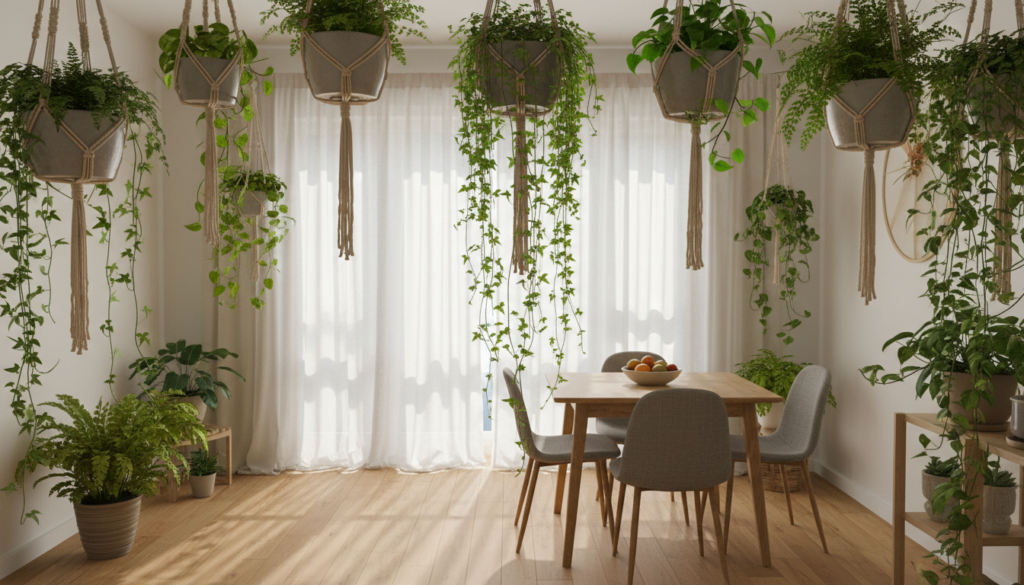
Using the ceiling and walls smartly opens new ways to style plants in any home. When we lift pieces off the floor, we expand usable space and create layered interest that makes a room feel taller.
Macramé and Wall-Mounted Displays
Macramé holders and wall-mounted test-tube vases turn empty walls into living art. We can cluster several vases to introduce colour and greenery without losing valuable floor space.
Pandora Taylor pairs a vintage plant stand in pale blue with a fern to echo room tones and add balance. That mix of stands and wall pieces gives a cohesive look.
Utilizing Ceiling Hooks
Ceiling hooks are a clever way to hang baskets and free up floor space. When we vary heights with plant stands and hanging pots, our plants form a dynamic composition.
- Use hooks to frame a window or kitchen area — as Rachel Chudley does against a lacquered blue wall.
- Choose a large rustic pot, like in Polly Ashman’s living room, to fill negative space and improve air quality.
- Mix hanging pieces with low stands to balance heights across the room.
Creative Uses for Mini Bouquets and Single Stems
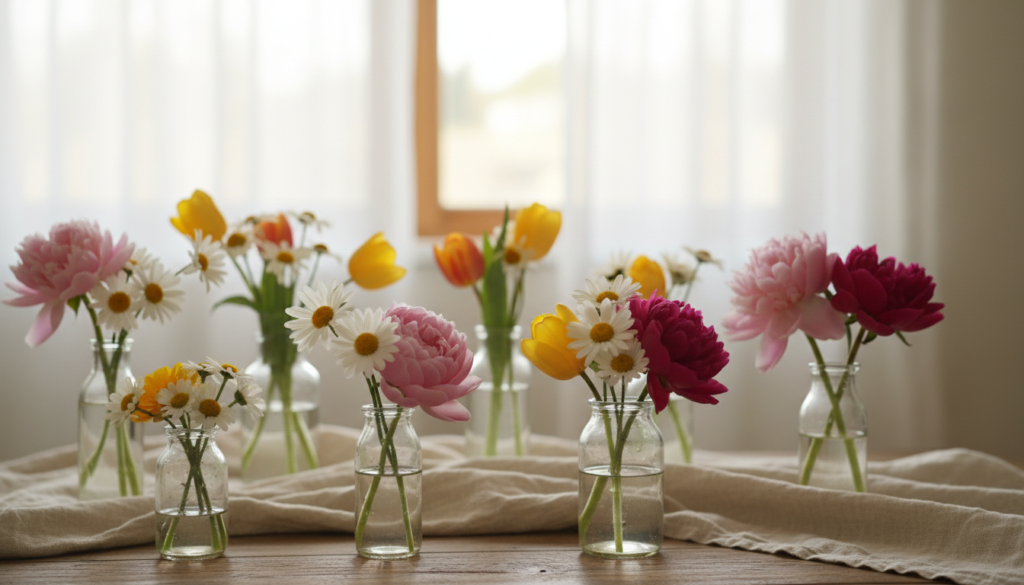
A single stem can transform a corner into a calm, curated moment. We use tiny arrangements to add character without taking over our space.
Styling Minimalist Single Stems
Place a statement protea in a ceramic vase on a coffee table to create a calm focal point. This keeps the room feeling curated and serene.
Drop a eucalyptus stem into the shower to add spa-like scent and to help purify the air. It’s an easy way to refresh the bathroom and lift mood in no time.
Quick ideas we love:
- Use a tall tulip or lisianthus as a statement piece on a hallway console.
- Keep a mini vase on your bedside stack to bring fresh elements to your bedroom.
- Repurpose glass spice jars to hold tiny bouquets for a sunny window or compact kitchen nook.
- Opt for a minimalist sprig of greenery to keep a clean look while enjoying live plants.
These small moves give us multiple ways to weave nature into our home. They add scent, shape, and color without crowding any room.
Selecting the Right Vessels for Your Decor
Choosing the right vessel can instantly change how a plant reads in our room. A textured jute or rattan basket lifts the look and adds warmth to the home. We often swap pots to refresh a corner without buying new plants.
Kathy Crisp arranges dried seed heads in vessels of mixed sizes on her bathroom mantlepiece to create a layered, sophisticated look. Milli Proust hangs bunches of Hydrangea paniculata ‘Limelight’ from kitchen beams to add rustic texture and save valuable space.
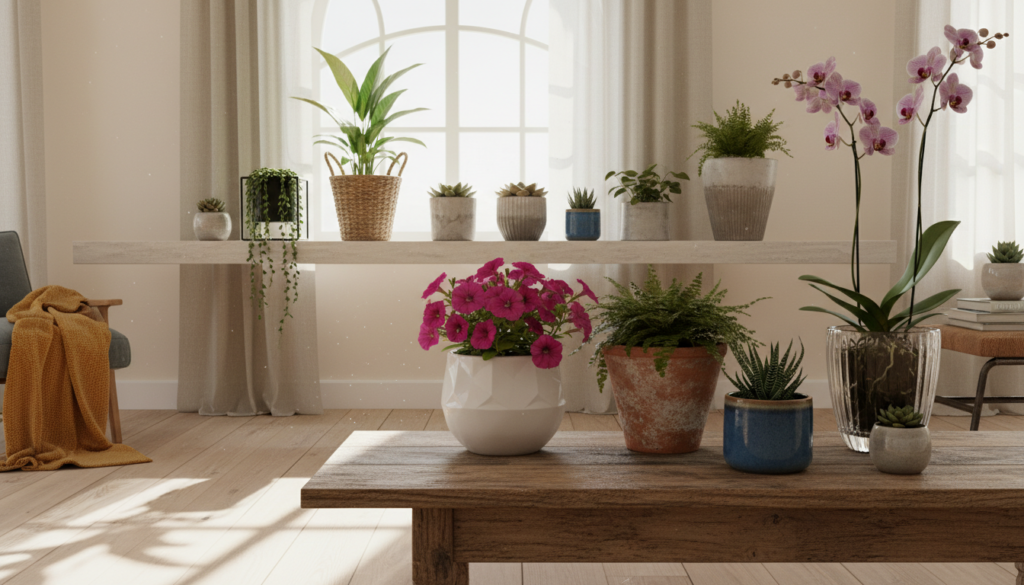
Hunting flea markets for a vintage jug or a statement ceramic pot is a fun way to give our houseplants character. The right pot ties planting schemes into table decor and makes a curated, intentional design.
“A pot should feel like it belongs to the room — not just hold a plant.”
- Use baskets for soft, tactile style.
- Mix sizes on a mantle for depth.
- Hang dried greenery to free up table and shelf space.
Incorporating Flowers into Unlikely Nooks
Finding unexpected nooks to add a pot or sprig makes styling feel playful and clever. We treat tiny corners as chances to add colour and quiet charm without crowding the room.
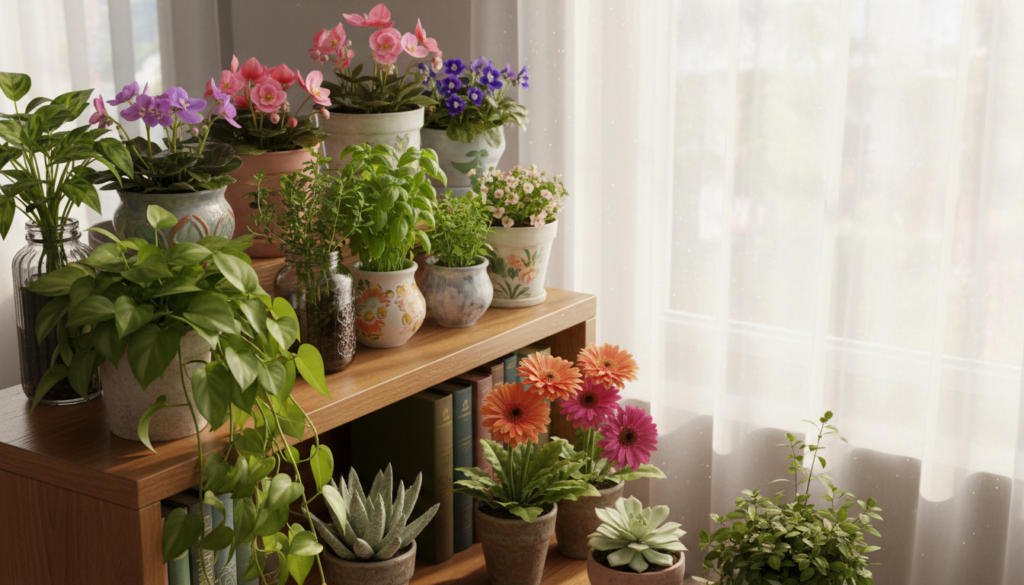
Bookshelf and Bedside Arrangements
Tuck a mini vase between books or on a bedside table to lift a shelf vignette. A single stem keeps the look calm and curated.
Kitchen Shelf Florals
In Kathy Crisp’s kitchen, eclectic ceramics hold a cluster of plants on one high shelf. Dense groupings like this are a smart way to maximize room while keeping floor space free.
Wardrobe Posies
Try a dried posy tucked into a wardrobe to scent linens and use hidden space for charm. We also like hanging pots from shelving — as seen on Vitsoe units — to save floor space and add living lines to a clean wall.
| Spot | Benefit | Quick tip |
|---|---|---|
| Bookshelf | Adds colour and pauses between books | Use a slim pot or mini vase |
| Kitchen shelf | Maximizes vertical use; frees floor space | Group pots for impact |
| Wardrobe | Fresh scent, hidden charm | Choose dried stems for longevity |
Choosing Hardy Blooms for Apartment Living
Picking resilient blooms keeps our rooms vibrant with minimal fuss. We look for stems that last in a compact home and suit our daily rhythm.
Long-lasting picks include chrysanthemums and alstroemeria. These cuts hold water well and often stay fresh for ages, so we change water less and enjoy more colour.
Sarah Raven’s East Sussex home uses dark tulips like ‘Black Parrot’ and ‘Merlot’ to echo the rich tones of a room. Anna Spiro’s Melbourne house shows how a large greenery arrangement can balance the scale of furniture and lift a dining table.
| Bloom | Vase life | Best for |
|---|---|---|
| Chrysanthemum | 10–14 days | Everyday table and console |
| Alstroemeria | 7–12 days | Kitchen nook or bedside |
| Kangaroo paw / Waxflower | 7–21 days (dry well) | Native choice; dries beautifully |
- Tip: Match flower tones to your home to make arrangements feel considered and cohesive.
- Try dried stems: they never wilt, need no water, and keep your living space stylish year-round.
Balancing Color and Scent to Enhance Your Mood
A careful mix of scent and hue can change how we feel in a room within minutes. We use color to set tone and scent to anchor it. Together they make a space feel intentional.
Creating a Spa-Like Atmosphere
Soft pinks and whites create a calm, romantic vibe. Bold oranges and yellows bring energy to our living area.
Lavender or jasmine in the bedroom helps us unwind after a long day. Fresh eucalyptus in the bathroom gives a spa scent and helps purify the air.
Kate Guinness’s garden room uses terracotta tiles and red chairs to make her plants pop. Beata Heuman places a tall palm in a corner to define the look of a room and add an urban-safari feel.
- Serene: soft tones + light scents for restful nights.
- Energetic: warm hues + bright blooms for lively mornings.
- Spa-like: eucalyptus or mint in wet areas to refresh and clear air.
| Goal | Colour | Scent | Best spot |
|---|---|---|---|
| Relax | Soft pinks, whites | Lavender, jasmine | Bedroom |
| Refresh | Terracotta, green accents | Eucalyptus, mint | Bathroom |
| Energize | Oranges, yellows | Citrus blends | Kitchen or living room |
Conclusion: Letting Flowers Reflect Your Personal Story
Your room becomes a memoir when each plant and vase reflects a moment you love. We believe focused choices turn a home into a vibrant, uplifting sanctuary.
Whether we frame pressed stems on a wall or style a single stem on a table, our selections speak for us. A well-placed pot or sprig adds a strong, clear touch to daily life.
Try different plants to see how they shift the mood and energy of a room. Learn more about our approach and care tips at about Blotanic.
Every bouquet has a story. Let your plants tell it, and enjoy coming home to a space that feels truly yours.