
Surprising fact: some common cuttings can root in as little as seven days, while woody shrubs may need months before they show steady growth.
Propagation is creating a new, independent plant from a cutting of an established specimen placed in conditions that favor root and stem growth.
This guide sets a practical range mindset: some cuttings form roots in days, many in a few weeks, and woody material can require months. Expect variability by species, cutting type, and environment.
You’ll get real timelines by types—fast vining houseplants, overwintered annuals, shrubs and trees, plus leaf and root cuttings—so you can match your project to the right benchmark.
We focus on cuttings (not seed) and offer visual cues you can use at home to confirm progress. Better technique and conditions—warmth, bright light, humidity, and an airy mix—move you toward the faster end of the time range.
Key Takeaways
- Expect a range: roots can appear in days, weeks, or months depending on species.
- Fast vining plants often root quickest; woody cuttings need patience.
- Environment matters: warmth, light, humidity, and an airy medium speed results.
- This guide gives quick timelines and deeper sections on water vs. soil methods.
- Use simple visual cues at home to confirm progress and troubleshoot slow rooting.
What “Propagation Time” Really Means From Cut to New Plant
Tracking progress from a bare stem to a rooted starter means watching three clear milestones. These markers help you judge success and plan the next step.
Rooting time vs. potting-up time vs. visible new growth
First, root initiation is when tiny roots appear below the medium. Second, potting-up time is when the cutting can handle a larger pot. Third, visible new growth shows the new plant is using its roots to feed leaves and stems.
How to tell when roots are forming
Two simple checks work well. New leaves often signal roots are present, since the cutting can now take up water. A gentle tug that meets resistance confirms that roots hold the cutting in place.
- Milestones: rooting time → potting-up → strong above-soil growth.
- Node note: cuttings with a node usually form roots faster because roots commonly emerge from nodes on the stem.
- Measure: aim for a stem with at least one healthy node and some leaves so it can survive transplanting.
How Long Does Plant Propagation Take in Water vs. Soil?
The medium you use—clear water or a damp mix under a dome—directly affects rooting speed. Water makes root development easy to watch, while a covered soil method often yields stronger, soil-ready roots faster.
Water timelines: For many leafy houseplants, new roots form at nodes in about a week. If roots look healthy and branched, most cuttings are fine to pot around three weeks. Make sure at least one node stays submerged and change the water when it looks cloudy.
Soil with a humidity cover
With a clear bag or dome over a moist mix, some cuttings root in 4–7 days. Most show good progress in 2–3 weeks. Keep the setup in bright light but out of direct sunlight and near 70–75°F (21–24°C) for best rooting.
When to switch to potting mix
Transplant when roots are branched and strong enough to handle. A useful rule is to pot when roots are roughly as long as the cutting or begin to fork. Avoid moving cuttings too early; weak roots can break during transplant.
- Quick compare: water = visible roots; soil + cover = sturdier roots sooner.
- Checklist: at least one node submerged, water level steady, replace cloudy water.
- Pitfalls: too much direct sunlight overheats cups; low light slows rooting even if the cutting looks alive.
Quick Timeline Snapshot by Cutting Type
Different cutting types fall into clear speed bands: days, weeks, or several months. Use this short guide to match your stem to the likely timeline and plan care accordingly.
Herbaceous and softwood
These are the fastest. When stems are actively growing (often May–July), many cuttings form roots in days to a few weeks.
Tip: keep humidity high and light bright for quickest rooting.
Semi-hardwood
Semi-hardwood stems are firmer and move water differently. Rooting here often requires more patience and a little humidity control.
Rooting hormone can help if progress stalls, since woody tissue is less tender than softwood.
Hardwood
Hardwood cuttings are taken in winter or early spring while dormant.
Expect root formation over 2–4 months; stable, cool conditions and steady moisture help success.
Needled evergreens
Needled evergreens behave like hardwood material. They often need 3–4 months and monthly checks for rooting progress.
“Patience with woody stems pays off—roots arrive on their own schedule.”
| Cutting type | Best season | Typical timeline | Notes |
|---|---|---|---|
| Herbaceous / Softwood | Active growth (May–July) | Days to 3 weeks | Fastest; minimal hormone needed |
| Semi-hardwood | Mid-summer to early fall | 2–6 weeks | Firmer stems; consider humidity and hormone |
| Hardwood | Winter / early spring | 2–4 months | Patience required; stable conditions best |
| Needled evergreens | Winter (dormant wood) | 3–4 months | Monthly checks; often benefits from hormone |
Fast-Rooting Houseplants and Vining Cuttings Timelines
Fast-rooting vining houseplants often surprise beginners with visible roots in a week. These stems root readily from nodes and do well in a cup of water or a damp mix under a dome.
Philodendron and pothos-style node cuttings
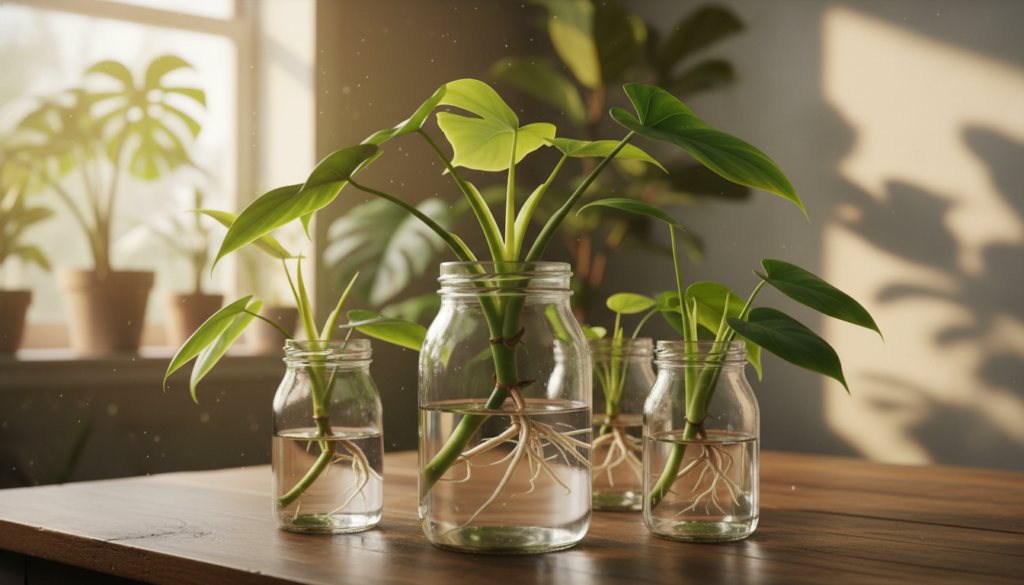
For philodendron cuttings, place at least one node in water. Roots commonly appear around seven days and are often ready to pot near three weeks.
Cut about halfway between nodes so each piece has a node and a few leaves. This gives a reliable start for new growth and a strong new plant.
Tradescantia and other easy stem propagations
Tradescantia roots quickly and tolerates shorter stem pieces. Even stems with several nodes spaced apart will show rooting along the length.
Tip: multiple short cuttings multiply your stock faster than one long stem.
Leaf-bud cuttings for philodendron and ivy
Leaf-bud cuttings use a tiny stem segment with a single leaf and bud. The stem forms roots while the bud makes a shoot.
“Leaf-bud pieces are a compact, efficient option when you want more starts from limited material.”
| Type | Best medium | Typical root start | Notes |
|---|---|---|---|
| Philodendron / pothos nodes | Water or moist mix | ~7 days | Ready to pot ~3 weeks |
| Tradescantia stems | Water | 5–10 days | Many nodes per stem |
| Leaf-bud cuttings | Moist mix | 1–3 weeks | Small material; produces shoot + roots |
Overwintered Annuals and Seasonal Cuttings Timelines
As daylight lengthens, many indoor survivors begin active growth and respond quickly to new cuttings.
Best window in the US: March is prime. Days warm and plant growth ramps up, so cuttings from overwintered stock root faster than they did in winter.
What “cuttings from cuttings” looks like indoors
Keep a healthy mother at home and harvest several branch tips once it shows vigor. Many non-woody annual cuttings root in 4–7 days, and most finish in 2–3 weeks under a mini-greenhouse cover.
Pinching and timeline effects
Pinching slows vertical growth briefly but forces branching. That pause is a small trade for denser growth and more future starts for pots and containers.
Simple setup and care tips
- Use small pots with a light soil mix and a clear bag or dome.
- Keep them in a warm room at about 70–75°F and a bright spot away from direct sun.
- Shuffle trays to the brightest spot if needed and limit how many pots you start at once.
“Start a few more cuttings than you think you’ll need — overwintered mothers often supply plenty.”
| Overwintered annual | Typical root start | Best setup | Notes |
|---|---|---|---|
| Pelargoniums / geraniums | 4–14 days | Small pot, light mix, clear cover | Ready to pot in ~2 weeks |
| Begonias | 7–21 days | Moist mix, dome or bag | Keep bright, avoid hot sun |
| Coleus / impatiens | 4–10 days | Water or moist soil, warm spot | Pinch to encourage bushiness |
Woody Plants and Shrubs Timeline Expectations
Woody material moves at its own pace; expect calendar shifts as stems mature. For shrubs and woody shrubs, timeline changes with seasonal tissue and moisture needs.
Softwood timing and pace
Softwood cuttings taken late spring through midsummer root most readily. Stems are still flexible and actively growing, so roots often appear faster.
Semi‑hardwood timing and why it can be slower
Semi‑hardwood cuttings (mid‑summer to early fall) have firmer wood. That firmness slows rooting and makes humidity control more important.
Hardwood timing in winter or early spring
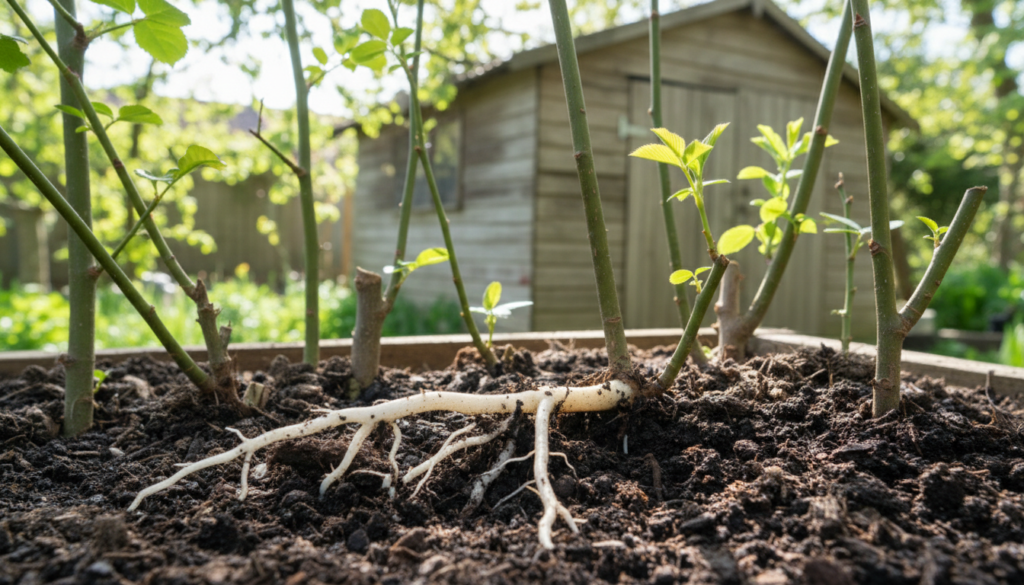
Hardwood cuttings taken in winter or early spring are dormant. Expect months for root development—commonly 2–4 months—so plan for a longer timeline.
Evergreens as hardwood cuttings
Needled evergreens keep foliage and lose water faster. Monthly checks are normal. Using rooting hormone often improves success, and avoid direct sunlight that overheats enclosed cuttings.
“Woody cuttings reward patience; timing and humidity make the difference.”
| Type | Best season | Typical rooting | Notes |
|---|---|---|---|
| Softwood | Late spring–midsummer | Weeks | Fastest woody option; bright light, high humidity |
| Semi‑hardwood | Mid‑summer–early fall | 2–6 weeks | Slower; sensitive to heat and humidity loss |
| Hardwood / Evergreens | Winter–early spring | 2–4 months (evergreens 3–4) | Longer time; monthly checks; use rooting hormone for better odds |
Leaf Cuttings and Root Cuttings Timelines
Leaf-derived starts often move more slowly than stem pieces because they must form both root systems and new shoots. That two-step process means timelines include an initial rooting phase and a later shoot phase.
Leaf petiole examples (African violet, peperomia)
With a petiole cutting, expect tiny roots in a few weeks and then several baby plantlets at the leaf base. Those new leaves and shoots grow gradually.
Tip: divide and pot when plantlets show a few true leaves. Start each piece in a small pot with a well-drained mix and label the date.
Leaf blade methods (succulents, rex begonia)
Some succulents and rex begonia form roots and shoots from wounds or veins. Succulent blades push new shoots at the base after roots appear.
Moisture rule: succulents rot if the mix stays too wet. Use a lightly damp mix and avoid enclosing sensitive leaves under plastic.
For rex types, keep the blade in contact with the mix so plantlets form along cut veins.
Root cuttings (taken during dormancy)
Root cuttings are harvested when the mother is dormant and stores energy in its roots. Each piece can sprout multiple new stems while the original root disintegrates.
Plant root pieces in a small pot of loose mix, keep them cool-to-warm per species, and expect a longer wait than for water-rooting vines.
“Leaf and root methods reward patience—results are slower but often multiply your stock.”
| Method | Typical first roots | When to pot | Notes |
|---|---|---|---|
| Leaf petiole | Weeks | After several plantlets form | Use small pot; divide carefully |
| Leaf blade | Weeks | When shoots appear | Keep succulents drier; rex needs contact with mix |
| Root cutting | Weeks to months | When stems have leaves | Harvest in dormancy; relies on stored energy |
Timing Factors That Speed Up or Slow Down Rooting
A balanced environment—steady warmth, bright indirect light, and good air—usually pushes cuttings toward quicker root formation. Rooting speed is an equation: warmth + humidity + oxygen + light. If one factor is off, the timeline stretches.
Temperature targets
Keep the medium around 65–75°F. Warm mix speeds root growth, while excess heat—sealed bags in sun or hot windows—can cook tissue and stall progress.
Light levels
Provide bright, indirect light. That supports photosynthesis and gives cuttings energy to form roots. Direct sunlight increases water loss and stress before roots exist.
Humidity and airflow
Use a mini-greenhouse (clear bag or dome) to reduce dehydration. Vent daily to refresh the air and avoid stale, soggy conditions that cause rot.
Water management in cups and pots
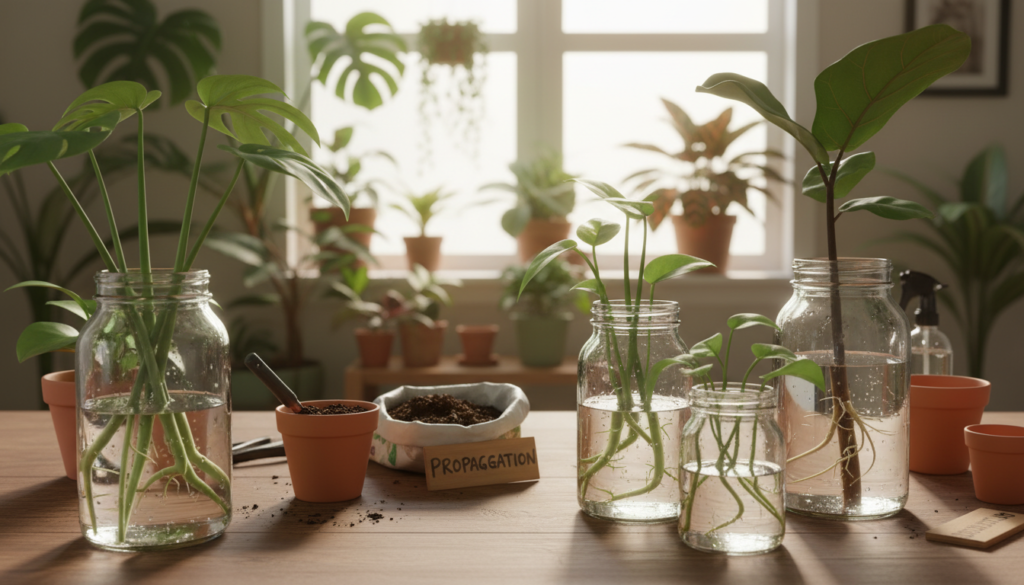
In water cups, keep at least one node submerged and replace dirty water often. In pots, avoid a waterlogged mix; choose a well-drained soilless mix (about 50% vermiculite / 50% perlite) so air and moisture balance.
Choosing the right cutting
Select healthy stems with multiple nodes. Remove flowers or buds and strip 1/2–2/3 of extra leaves so energy flows to rooting, not blooms.
- Quick checklist: 65–75°F; bright indirect light; dome with daily venting; airy mix; nodes submerged or in contact with medium.
- Avoid sealed pots in hot sun and waterlogged mixes that suffocate roots.
- For care tips on seasonal moisture, see adjust watering schedules.
“Small environmental fixes often shave days off rooting time—focus on warmth, humidity, oxygen, and gentle light.”
Step-by-Step: How to Take a Cutting That Roots on the Faster End
A clean, confident cut and simple setup are the fastest route from a stem to roots. Follow these clear steps to avoid common setbacks and land closer to the quick end of normal timelines.
Find the node and make the cut in the right spot
Trace from the newest leaves back to the junction where the stem thickens. That thickened point is the node—roots usually form there.
Make a swift, clean cut about halfway between nodes. For a bottom cut, slice just below a node so the cut stem sits beneath the soil or water line.
Prep the cutting
Strip the lower leaves so nothing sits in the medium and causes rot.
Cut large leaves in half and remove buds or flowers so energy goes to roots, not blooms.
Choose your rooting setup
Water cups let you watch root formation; keep at least one node submerged and change cloudy water.
For a soil mix, use a damp, airy mix and cover with a clear bag to hold humidity—this often yields sturdier, soil-ready roots.
Placement and care
Place cuttings in a warm room with bright, indirect light. Keep them out of direct sun and ventilate the bag daily.
Tip: consistency at home is the single best care step you can give. Small, steady conditions speed results.
- Quick checklist: find node → clean bottom cut → strip lower leaves → choose water or pot setup → warm, bright room.
“Good technique at the moment you cut often makes the difference between weak starts and fast, reliable roots.”
Rooting Hormone and Rooting Mix Choices That Affect the Timeline
A small dose of auxin plus a loose, well-drained mix can change slow starts into reliable rooting. For many difficult stems, those two choices reduce failures and shorten the effective timeline.
When a rooting hormone makes sense: use it for woody shrubs, semi‑hardwood material, and stubborn cuttings that otherwise stall or have low success rates. The auxin signal encourages the cutting to form roots sooner and with greater consistency.
Auxin types and strength guide
Look for IBA or NAA on labels. These are common synthetic auxins that work well across species.
- Herbaceous / softwood: ~1,000 ppm (0.1%)
- Semi‑hardwood: ~3,000 ppm (0.3%)
- Hardwood: up to ~8,000 ppm (0.8%)
Always follow product directions and match strength to the stem type so you don’t under‑ or over‑apply the hormone.
Best rooting mix for oxygen and moisture balance
Avoid dense garden soil. Choose a well‑drained soilless mix so roots get moisture without suffocating.
A simple, reliable option is 50% vermiculite and 50% perlite. This mix holds enough moisture but keeps good air around new roots.
Clean handling tip: pour a small amount of rooting hormone into a separate dish, dip each cutting, then discard the leftover solution. This prevents cross‑contamination and keeps your main bottle fresh.
“Auxin plus the right mix often turns a stubborn start into a steady root system.”
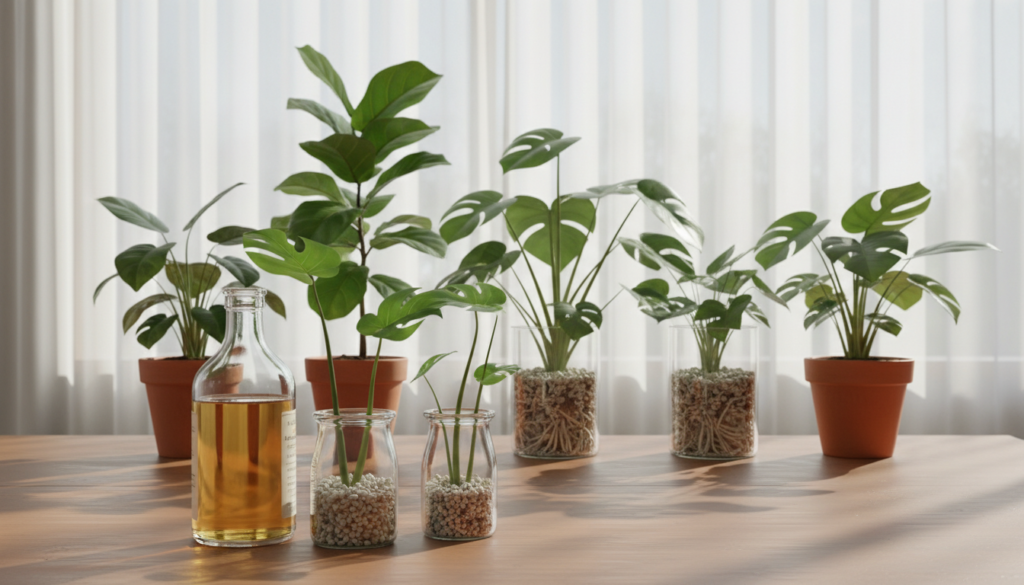
Troubleshooting Slow Propagation and Common Timeline Setbacks
When trays stall, a few quick checks usually reveal the real cause and a fast fix. The steps below diagnose common failures and give practical fixes you can apply today.
Cuttings that rot before they root
Signs: blackened bottom, mushy stem, or a foul smell.
These symptoms usually mean the rooting mix is waterlogged and lacks oxygen. Lighten the mix with perlite or vermiculite and check that pots drain at the bottom.
Reduce watering frequency and move cups or pots to a spot with gentle airflow so the medium can dry slightly between moistures.
Wilting and dehydration
Too many leaves on a cutting increase water loss before roots form. Remove about half to two‑thirds of the leaves.
Raise humidity with a clear cover and keep the setup in bright, indirect light—out of direct sun—to limit stress and speed growth.
Dirty tools and disease risk
Use healthy material and fresh soilless media. Clean tools and pots with a 10% bleach solution, rinse, and dry to avoid spreading disease.
Avoid reusing contaminated water; a single infected cup can ruin a number of cuttings fast.
Why winter can stretch timelines
Short days and dormancy slow growth and rooting. Expect slower progress, especially with woody material.
If results stall, reset: recut above any rot, take a fresh cutting from healthy tissue, and restart in a clean pot. For stubborn stems, a light dip in rooting hormone can improve odds.
Quick tip: diagnose rot, trim leaves, clean tools, and restart in fresh mix—these moves fix most timeline delays.
Conclusion
Successful starts come from pairing the right method with steady conditions. Propagation time varies by cutting type and environment, so match your choice to realistic expectations. This prevents frustration and improves results.
Many houseplant cuttings form roots fast, often within a few weeks. Woody shrubs and evergreens usually need months, so plan accordingly.
Clear success signals are new leaves plus a gentle tug that meets resistance. Wait for strong, branching roots before moving a cutting into a richer mix.
Water or mix both work when you control light, warmth, and humidity. Choose the option that fits your routine and the needs of your plants.
Label containers with the start date to track patterns. With clean cuts, correct node placement, and steady conditions, you can turn one stem into a thriving new plant with confidence.