
Nearly 40% of indoor gardeners say a treated cutting took root faster than one left plain — a small edge that can mean fewer failures and quicker results.
This guide explains what that edge actually is. A common propagation aid supplies or mimics natural auxin, the plant signal that triggers new roots. It is not magic, but it can raise success rates for difficult cuttings.
Clean technique, a good soilless mix, and steady moisture still matter most. Use the aid when stems are woody or slow to form roots. Skip it for easy-to-root species and very fresh, vigorous stems.
What you’ll get here: clear definitions, which formula fits your setup, step-by-step application, and the top mistakes that cause rot or failure in typical U.S. home conditions.
In short: this product can increase reliability and speed, but results depend on plant type, cutting health, and environment.
Key Takeaways
- It boosts odds for hard-to-root cuttings, but it’s not a cure-all.
- Technique, medium, and moisture are equally important to success.
- Best for beginners with repeated failures and for woody stems.
- Skip it for species that root easily from fresh stems.
- This is a practical how-to for typical U.S. indoor setups.
What Rooting Hormone Is and What It Actually Does for Cuttings
When you take a cutting, tiny chemical cues steer new growth at the wound site. One main cue is auxin, a naturally occurring plant signal that tells tissues when and where to form new roots.
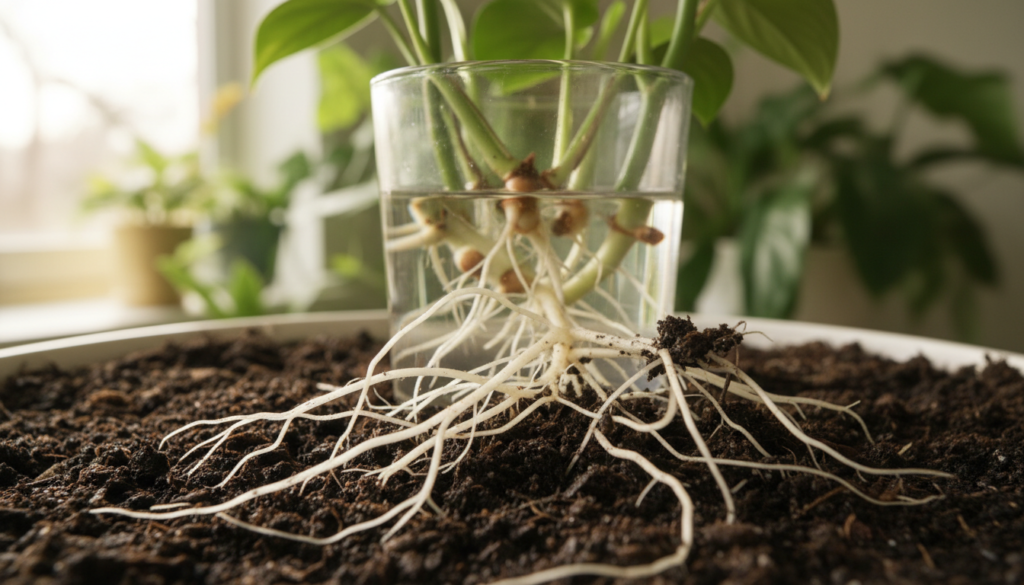
How auxin supports root growth
Auxin triggers cell division and directs cells near the cut to become root tissue. Some products contain or mimic auxin (often IBA) to speed that switch. Treated cuttings often show early bumps or nodules, then fine roots appear.
When it helps — and when it isn’t needed
Use a rooting hormone on woody stems, slow-to-root species, or when past attempts failed. These products can raise propagation success and sometimes include antimicrobials to cut rot.
“A little aid can mean roots form before the cutting dries or decays.”
Skip the product on very easy-to-root cuttings or when you already get reliable results with proper light and moisture. Remember: more is not better — correct amount and clean technique matter.
Learn more about plant orientation and light cues via how indoor flowering plants know which way to.
Choosing the Right Rooting Hormone for Houseplants
Different delivery methods suit different plants and workflows in the indoor garden.
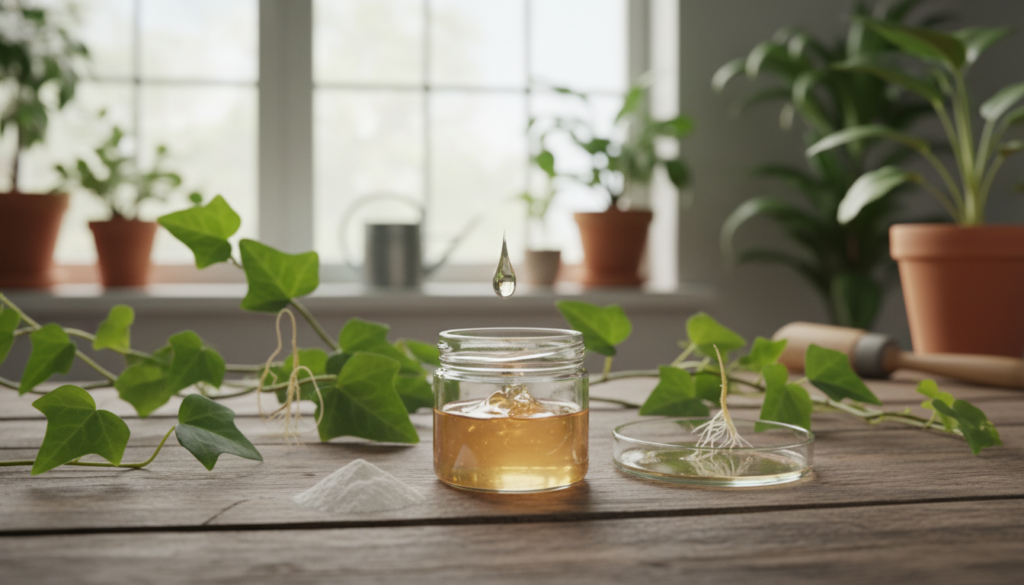
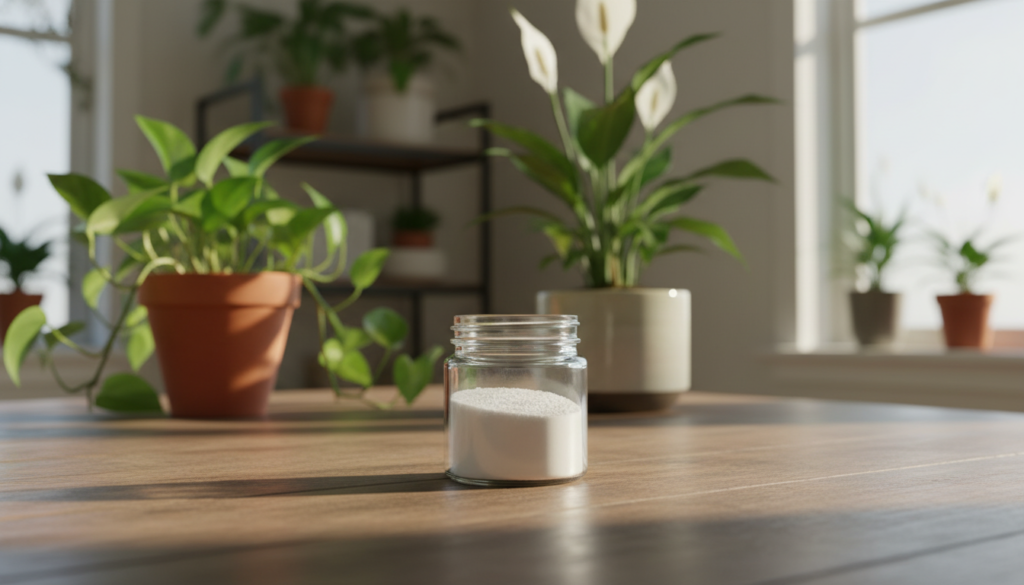
Powder works well when you need a long shelf life and an easy dry coat on the stem. It’s handy for quick dipping and travel-ready storage.
Gel gives clean, strong contact and is ideal for a tidy “dip and plant” routine. Use gel when you want even coverage and less dust.
Liquid is best for soaking or repeated dips. Liquids suit gardeners who prefer wet propagation or want to pre-soak hard stems.
How synthetic options help
Most store-bought products rely on IBA to mimic auxin and trigger root formation when a plant’s own signals are weak. Many formulas also add antifungal or antibacterial agents to cut rot in humid setups.
DIY alternatives and how to use them
Willow water: steep young willow cuttings, strain, and use neat in soil or diluted 50/50 for water propagation.
Honey solution: dissolve 2 tbsp honey in 2 cups boiling water, cool before dipping a cutting; honey adds mild antimicrobial support.
Cinnamon: dip the cutting in water so powder sticks, then coat the wound with cinnamon as a natural antifungal.
- Choose by goal: speed and ease → gel or liquid; cost and organic preference → willow, honey, or cinnamon.
- Prevent rot: pick products with microbial inhibitors when humidity is high.
How to Use Rooting Hormone for Houseplants Step by Step
Small, careful actions at each stage help a cutting commit to root growth. Start with a healthy, vigorous stem about 4–6 inches long while the parent plant is actively growing.
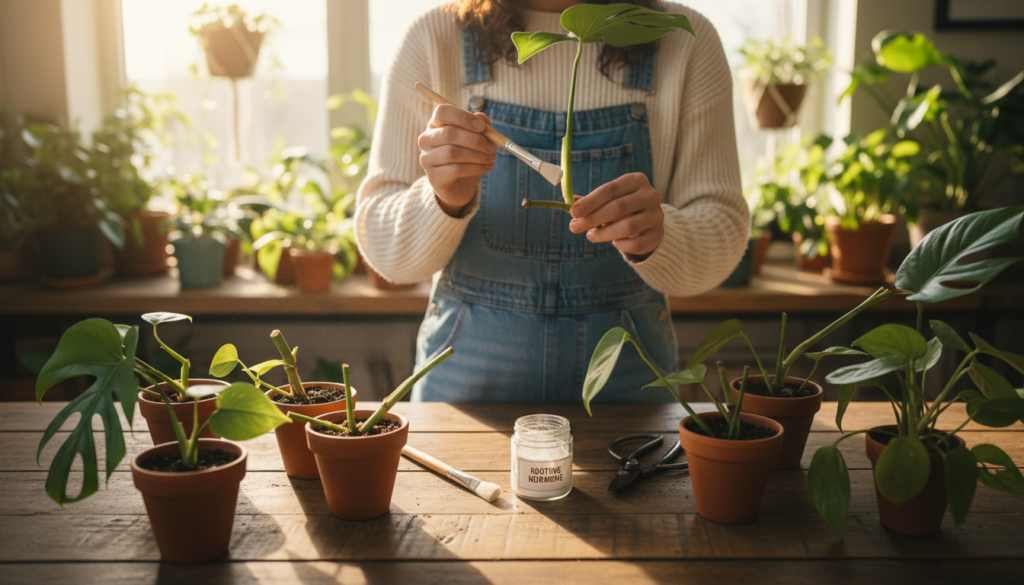
Select and prepare the cutting
Make a clean cut just below a node using a sharp, sterilized knife or scissors. Strip lower leaves so no foliage sits on the planting surface.
Handle the product and apply it
Pour a small amount into a separate dish to avoid contamination of the main bottle. Dip cutting into the product briefly, then tap off any excess to prevent tissue burn or dehydration.
Planting medium and humidity
Use airy media: potting mix amended with perlite, straight vermiculite, or plain perlite. Plant the treated end into the mix and water lightly.
Cover many leafy cuttings with clear plastic to keep humidity high. Do not cover succulents or cacti; they need drier air.
Timeline and transplant
Expect signs in 2–4 weeks: nodules, resistance when you tug, then visible roots. Wait until roots reach about 1 inch, then transplant gently into potting soil to avoid damaging delicate roots.
Common Mistakes and Pro Tips for Better Rooting Results
Most cuttings fail from simple, avoidable mistakes. Spotting and fixing these early saves time and increases success.
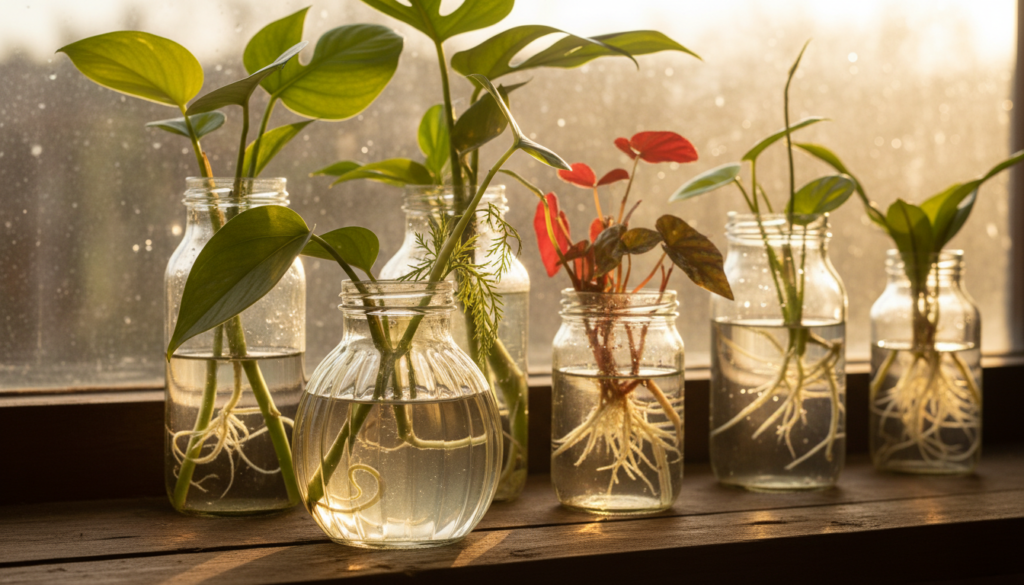
Why you shouldn’t use rooting hormone in water propagation
Powdered or gel products wash off in water, so the treated surface never keeps steady contact where new roots form. If you prefer water, skip powdered product and focus on clean, frequent water changes and healthy nodes.
Getting the amount right and avoiding excess buildup
Use a light, even coat. Too much dose can dehydrate or burn a stem and block water uptake at the cut. Tap off excess powder after dipping and avoid repeated re-dips to prevent buildup.
Preventing rot with bright, indirect light and clean technique
Keep media evenly moist but not soggy. Sterilize tools, plant without burying leaves, and use warm, indirect light.
- Quick checklist: clean tools, warm temps, bright indirect light, and airy media.
- Pre-poke holes to avoid scraping product off when planting.
- Handle cuttings by the upper stem or leaves and label trays to track success.
“A light touch and clean habit beat heavy doses every time.”
Conclusion
A healthy cutting and tidy technique beat guesswork every time. A light dab of rooting hormone can speed propagation for stubborn stems, but it performs best when paired with clean cuts, airy medium, correct dosing, and stable humidity and light.
Do this: cut below a node, strip lower leaves, apply a small amount and tap off excess. Keep the mix just moist and give bright, indirect light so new roots form without rot.
Never use standard rooting hormone in water—powders and gels wash off and lose effectiveness. Try one plant, track a single cutting week by week, and tweak sanitation and airflow. Small changes bring big success.