best time to propagate houseplants

Best Time to Propagate Indoor Plants: Month-by-Month Guide

Surprising fact: Research shows many common houseplants root up to three times faster in spring and summer than in winter.

This guide explains exactly what gardeners mean when they ask about the “best” time: faster rooting, stronger starts, and less stress on the parent plant in a typical US home.

Most plants can be rooted any month, but longer daylight and warmer rooms speed things up. You’ll see how seasonal light and indoor temperature affect results. This helps you plan new plants without harming your display.

We’ll preview a month-by-month plan so you can match your schedule to realistic outcomes. The guide shows when roots form quickly and when growth is slower. It also notes simple fixes like grow lights, warmth, and humidity support.

Expect a practical checklist for light, water, air flow, humidity, and when to pot up. A bit of planning makes creating multiple plants easy—great for gifts or filling empty pots in your home or garden.

Table of Contents

Key Takeaways

  • Spring and summer usually give the fastest rooting and strongest starts.
  • Year-round rooting is possible; indoor light and warmth matter most.
  • Small seasonal tweaks (lights, humidity) improve success in winter.
  • Plan ahead to protect the parent plant while making new plants.
  • Follow the checklist for repeatable results across common houseplants.

Why Propagate Houseplants and What “Best Time” Really Means

Careful cuttings and divisions let you multiply favorites while keeping the parent strong.

Benefits of propagation at home

Propagation refreshes a tired plant and fixes uneven, leggy growth. It also helps you expand your collection and create giftable starts for friends.

  • Multiply favorites without buying new pots.
  • Share healthy starts with neighbors.
  • Trim unruly growth and convert trimmings into new plants.

When timing matters for the parent and new starts

“Best time” is about more than faster roots. It means choosing a window when the parent plant can recover quickly and new shoots can get steady light and warmth.

Season How it helps the parent Why roots form faster
Spring–Summer Parent recovers with active growth Longer light and warmth boost growth
Fall Good for trimming before dormancy Moderate light, watch humidity
Winter Use only if parent is vigorous Slower roots; use supplemental light

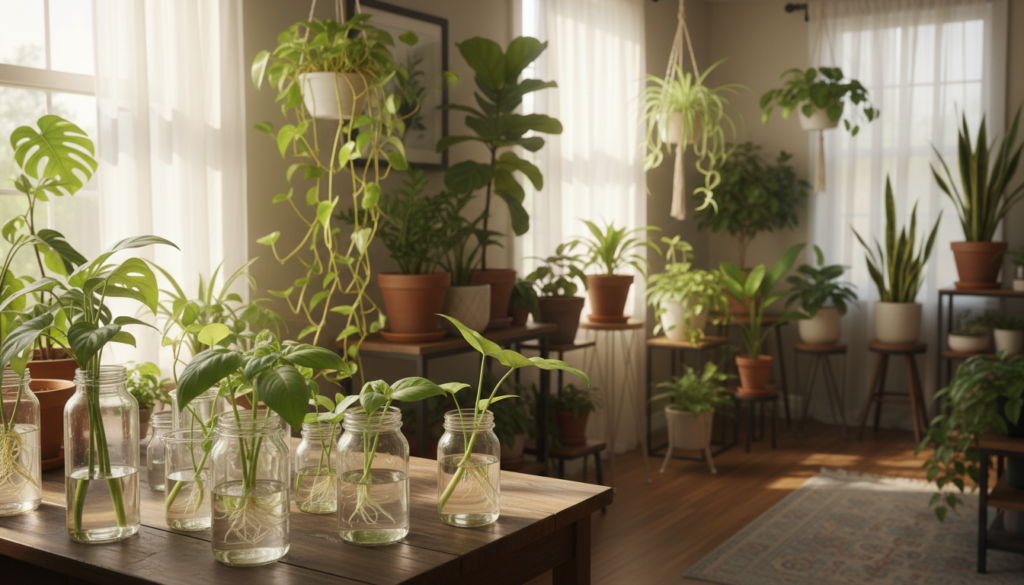
A serene indoor gardening scene showcasing a variety of houseplants in the process of propagation. In the foreground, a wooden table holds glass containers filled with water, displaying cuttings with roots beginning to emerge, illuminated by soft, natural light from a nearby window. The middle ground features lush green plants, like pothos and spider plants, with delicate tendrils cascading down. In the background, a bright, airy room filled with more houseplants, sunlight streaming through sheer curtains, creating a warm and inviting atmosphere. The overall mood is calm and nurturing, emphasizing the beauty and potential of propagating houseplants. The image is captured from a slightly elevated angle, showcasing the details of the plants and their environment.

Start with a healthy parent

  • Health checklist: no pests, no disease, active growth.
  • Avoid plants with mottling or weak stems.
  • Make sure you can monitor water, light, and humidity after taking cuttings.

Best time to propagate houseplants: Month-by-Month Guide

Seasonal shifts change how quickly cuttings form roots and when new leaves appear.
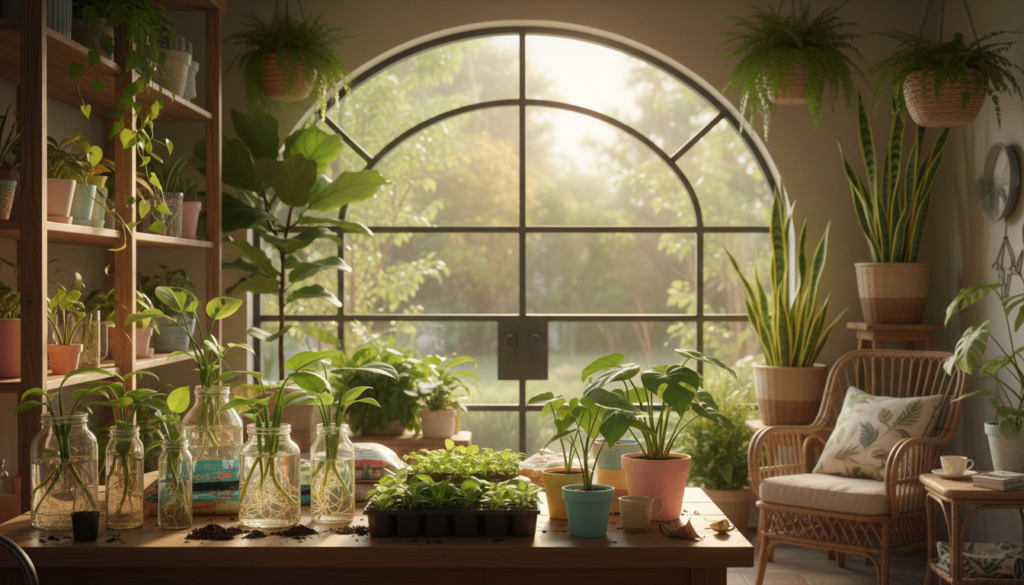
A bright and inviting indoor gardening scene filled with various houseplants in different stages of propagation. In the foreground, a potting bench is cluttered with vibrant green cuttings in water, well-rooted seedlings, and colorful pots ready for planting. The middle ground features a large window letting in soft, natural light, creating a warm glow that highlights the lush foliage. The background includes shelves adorned with established houseplants, showcasing a diverse range of species such as pothos, ficus, and snake plants, all thriving indoors. The mood is serene and nurturing, evoking a sense of tranquility and connection to nature, perfect for a home gardening enthusiast.

January–February: slow rooting, smart setups

Winter brings lower light and cooler window temperatures, so rooting cuttings often slows. Use a bright, warm room and steady humidity to help young roots form.

Trim leggy stems and take cuttings when reshaping—turn pruning into new starts rather than waste.

March: plan and prep

Make a list of plants to work on and gather pots, moss, and clean media. Batch tasks like water changes so spring feels organized, not chaotic.

April–May: peak spring push

This is the fastest season for new roots. Stem and leaf cuttings or divisions usually root quickly with warmth and good air circulation.

June–August: manage summer conditions

Warmth speeds rooting, but watch humidity and air so cuttings neither bake in hot windows nor dry from AC.

September–October: fall plant audit

Trim leggy growth and start cuttings early enough to establish roots before winter. Many will root fine but pause leaf growth until spring.

November–December: slow top growth, steady roots

Roots may still form while leaves rest. Don’t discard healthy propagules; a strong root system helps them produce new shoots when light returns.

For guidance on avoiding rot during any month, see root rot treatment and prevention.

How to Propagate Indoor Plants Successfully in Any Season

Choose a propagation path that matches a plant’s growth habit and your indoor setup for steady success.

Method matters: Most home work uses vegetative methods—cuttings, division, layering, or offsets. Cuttings suit soft-stem and vining species. Division works for clumping plants. Layering is great for trailing stems that root while still attached.
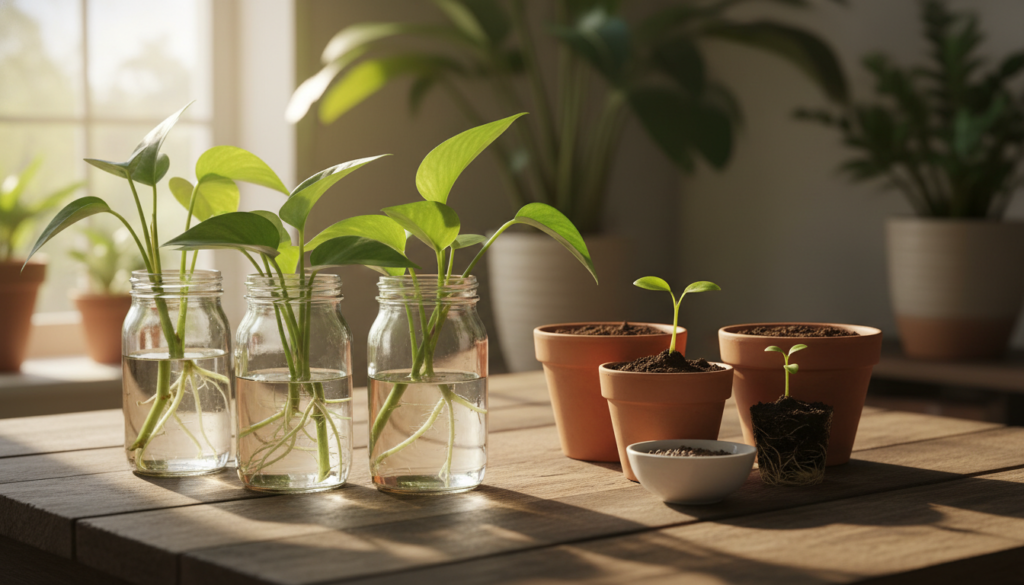
A close-up view of indoor plant propagation methods, featuring a variety of cuttings and seedlings arranged on a rustic wooden surface. In the foreground, display fresh plant cuttings in glass jars filled with water, showcasing their vibrant green leaves and healthy roots developing. In the middle ground, incorporate small pots with soil, some showing sprouting roots and delicate new leaves, highlighting the propagation process. The background should feature soft-focused, sunlit indoor plants, creating a warm and inviting atmosphere. Use natural sunlight pouring in from a window, casting gentle shadows for depth. The scene should exude a tranquil and nurturing mood, ideal for plant lovers and enthusiasts.

Water vs. soil rooting

Water makes roots easy to watch, but roots formed in a propagation medium usually adapt faster when you pot up. Soil or mix-rooting often gives sturdier roots and less transplant shock.

Dial in light, temperature, and air

Place cuttings in bright, indirect light and steady warmth. Keep gentle air flow to cut fungus risk without drying leaves.

Humidity hacks & ventilation

Cover a pot with a clear plastic bag to raise humidity near ~90% and prevent wilting. Open vents or lift the bag daily if heavy condensation forms.

When to pot up

Pot when you see several roots about 1 inch long, when a gentle tug meets resistance, or when new leaves appear. Don’t leave rooted cuttings too long in low-nutrient media; move them when roots are ready.

Method Good for Key sign to pot up
Cuttings Vines, soft-stem plants 1″ roots or new leaves
Division Clump-forming species separate shoots with roots
Layering Trailing, vining stems roots where stem touches soil

Step-by-Step Cutting Propagation for Common Houseplants

Start with clean tools and a clear plan. Use sharp shears or a knife and disinfect used pots by soaking them about 10 minutes in a 10% bleach solution. This cuts disease and lowers rot risk.
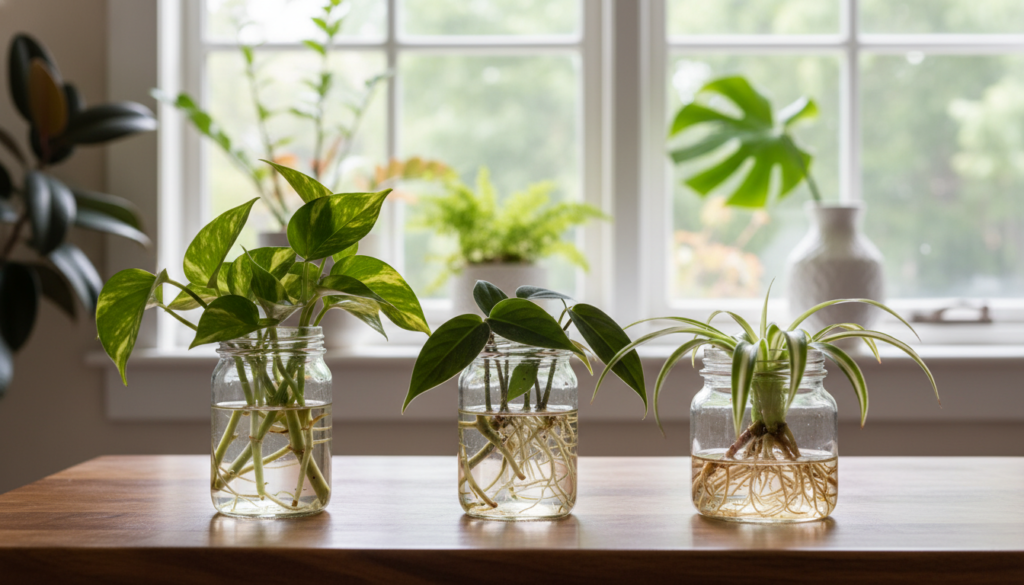
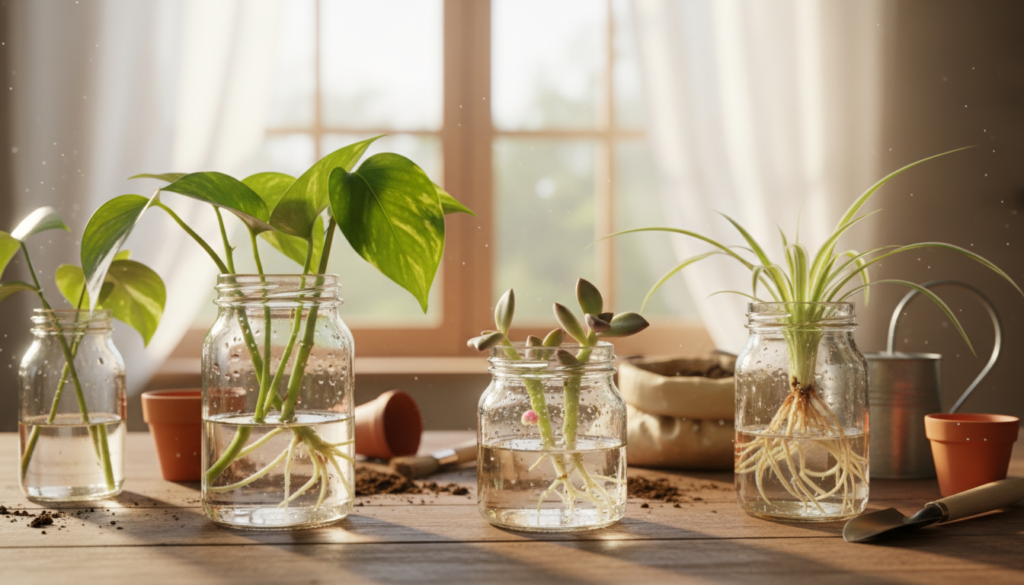
A serene indoor setting showcasing various houseplant cuttings arranged elegantly on a wooden countertop. In the foreground, vibrant and healthy cuttings of pothos, philodendron, and spider plants are displayed in clear glass jars filled with water, their roots visibly growing. In the middle ground, a well-lit window allows soft, natural light to filter in, casting gentle shadows on the plants. The background features elegant plant leaves and a hint of greenery from nearby pots. The overall atmosphere is calm and nurturing, emphasizing growth and the beauty of propagation with bright, inviting colors. The image should convey a sense of peace and warmth, suitable for a guide on indoor gardening.

Taking tip and single-node cuttings

Take tip cuttings from the top 2–3 inches of a stem. For single-node cuttings, slice above and below a node so one node sits under the media.

Leaf cuttings for african violet and begonias

Choose healthy leaves with full color and no spots. For African violet and begonias, insert the petiole or part of the leaf into damp peat or peat-perlite so new roots and shoots form.

Containers, media, and planting depth

Use clean pots and a moist mix: perlite, 50:50 perlite and peat moss, or a peat-lite mix. Make holes about 2 inches apart and roughly 2 inches deep. A 6-inch pot fits about six cuttings.

Rooting hormone, watering, and humidity

Lightly dip cut ends in rooting hormone powder — a thin coat helps; more is not better. Water gently so the media is damp, not dripping.

Cover with a clear plastic bag to keep humidity high (~90%). Vent daily if heavy condensation forms.

Easy starters for quick wins

Try pothos, spider plant, snake plant, zebra plant, or heartleaf philodendron. Most root in 2–3 weeks; begonias may take 4–6 weeks. Test by a gentle tug and pot up when roots are about 1 inch or when new leaves appear.

Conclusion

Starting a few cuttings in a bright room will often succeed, whether it’s winter or summer. Most plants root year-round, but spring and summer usually give faster results and easier recovery for the parent plant.

Winter work may show slow leaf growth while roots develop; patience, steady light, and fresh water help those cuttings wait for spring growth.

Make sure, maintain steady humidity, bright indirect light, and avoid soggy media that invites rot. Prioritize a healthy parent plant first—vigorous parents yield stronger cuttings and smoother recovery.

Start small with one or two easy plants at home. Watch for roots, then scale the process as confidence grows.

FAQ

When is the best month by month for propagating indoor plants?

Propagation works year-round, but activity peaks in spring and early summer—April through August—when light and warmth speed root and leaf growth. March is great for planning and prepping, while September and October suit cuttings you’ll root before winter. January, February, November, and December need gentler setups: low light, slower roots, and more humidity control.

Why should I propagate plants at home instead of buying new ones?

Propagating saves money, keeps rare or sentimental varieties, and helps you learn each plant’s needs. It also produces genetically identical plants, helps manage leggy or overgrown parent plants, and gives you backups in case pests or disease hit your collection.

How do I know the parent plant is healthy enough for cuttings?

Choose a parent with firm stems, glossy leaves, and no signs of pests, rot, or nutrient deficiency. Avoid stressed plants. A healthy plant roots faster and produces stronger offsets and leaves for leaf-cutting methods.

Which propagation methods suit different plants?

Use stem cuttings for pothos, philodendron, and coleus; leaf cuttings for African violets and many begonias; division for peace lilies and snake plants; offsets for spider plants and bromeliads; and layering for slow-stemmed shrubs. Match method to species for best results.

Water vs. soil rooting—what are pros and cons?

Water rooting offers easy root visibility and low mess, ideal for pothos and philodendron. Soil rooting reduces shock at potting time and lowers rot risk for some succulents and snake plant cuttings. Transition water-rooted cuttings carefully to avoid transplant stress.

How much light and warmth do cuttings need?

Bright, indirect light and temperatures between 65–75°F (18–24°C) suit most cuttings. Avoid direct midday sun that can scorch leaves and increase transpiration. In winter, use grow lights if natural light is weak.

How do I maintain humidity for successful rooting?

Build a simple humidity chamber with a clear plastic bag or dome over the pot, or place cuttings on a tray with damp perlite. Vent daily to prevent mold and ensure air exchange. Many tropical cuttings root faster with consistent humidity around 60–80%.

When should I pot up a rooted cutting?

Pot up when you see several healthy roots about 1–2 inches long, the cutting resists gentle tugging, or new leaves appear. For water-rooted cuttings, let roots thicken a bit before moving to soil to reduce shock.

What media and containers work best for cuttings?

Use well-draining mixes: perlite with peat or coco coir, or a sterile cutting mix. Clean, small pots or clear plastic cups let you monitor roots. For succulents and snake plant cuttings, use a gritty, fast-draining mix.

Should I use rooting hormone, and how do I avoid rot?

Rooting hormone can speed root formation for many species but isn’t necessary for easy propagators like pothos or spider plant. To avoid rot, use clean tools, sterile pots, fresh media, and don’t let cuttings sit in soggy soil—good drainage and proper ventilation are key.

Which plants are easiest for beginners?

Start with pothos, spider plant, snake plant, heartleaf philodendron, and tradescantia (wandering jew). These tolerate a range of conditions, root quickly in water or soil, and teach you the basics without high failure risk.

How long will it take for cuttings to produce new roots or leaves?

Timelines vary: many tropical cuttings root in 2–6 weeks, succulent leaf or stem cuttings can take several weeks to months, and divisions offer immediate growth. Temperature, light, and cutting health influence speed.

Can I take cuttings in winter, and how should I adjust care?

Yes, but expect slower growth. Provide supplemental light, keep temperatures stable, increase humidity, and reduce watering to prevent rot. Focus on low-light tolerant species or prepare cuttings for spring rooting.

How do I prevent common problems like mold, leggy growth, or failure to root?

Use sterile tools and fresh media, avoid overwatering, give bright indirect light, and ventilate humidity chambers. Take strong, healthy cuttings with at least one node and remove lower leaves to reduce moisture stress.

Is propagation safe for my full-grown specimen plants?

Yes, if you take only a few healthy cuttings and prune carefully. Removing some growth often stimulates new branching and improves the parent plant’s shape. Avoid heavy pruning on weak or recently stressed specimens.

Can I propagate from seeds indoors, and when is that appropriate?

Seed propagation suits plants where clones aren’t required or for starting new genetic lines. Start seeds when you can provide consistent warmth and light—often spring through early summer—or use heat mats and grow lights in cooler months.

Do I need special tools for propagation?

Keep a few essentials: sharp scissors or pruning shears, clean pots, label markers, rooting hormone (optional), and trays or clear cups for water rooting. A humidity dome or clear plastic bags and a spray bottle help maintain moisture for cuttings.

Comments

No comments yet. Why don’t you start the discussion?

Leave a Reply

Your email address will not be published. Required fields are marked *