
Surprising fact: many hobby growers report up to a 70% increase in new shoots when they switch to tiny, double‑leaf cuttings during active growth. That simple change makes a big difference for Ceropegia woodii owners.
String of Hearts is a trailing houseplant with patterned, heart-shaped leaves. Home gardeners often revive leggy vines through propagation when spacing and thin growth show up from low light.
The so-called butterfly concept uses very small segments — about 1/2 inch — with a node in the middle and a leaf on each side that look like wings. Growers favor this because each tiny cutting can sprout on both ends.
This short guide focuses on the butterfly method, not water or full-length cuttings. You’ll learn why it works, what supplies to pick, and a step-by-step routine for reliable results.
Key success tip: keep leaves dry while the node touches a lightly moist medium to prevent rot. Timing, light, and gentle airflow also shape success.
Key Takeaways
- Small double-leaf cuttings can produce shoots from both sides.
- This approach helps thicken leggy vines and refill a mother pot.
- Keep the node moist but the leaves dry to avoid rot.
- Best results come during active growth with bright indirect light.
- The guide focuses on supplies, steps, week-by-week expectations, and potting up.
Why the Butterfly Method Works for String of Hearts Vines
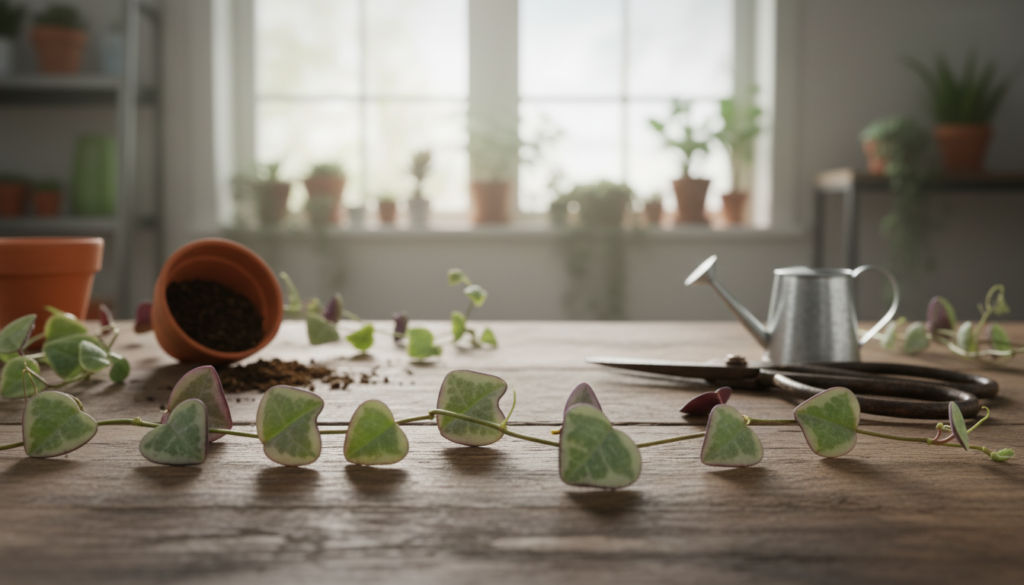
A half‑inch segment cut so a node sits between two leaves gives each cutting two chances to root. That small design concentrates energy at the node, the true engine for new vine growth.
What the pieces look like: these tiny “butterflies” are simply a short stem with a leaf on each side and the node centered between them. The pair of leaves acts as small energy stores while the node generates roots and shoots.
Where to cut: make clean snips on either side of a leaf pair so the node remains intact. Aim for roughly 1/2 inch so the cutting sits neatly on the surface of your medium.
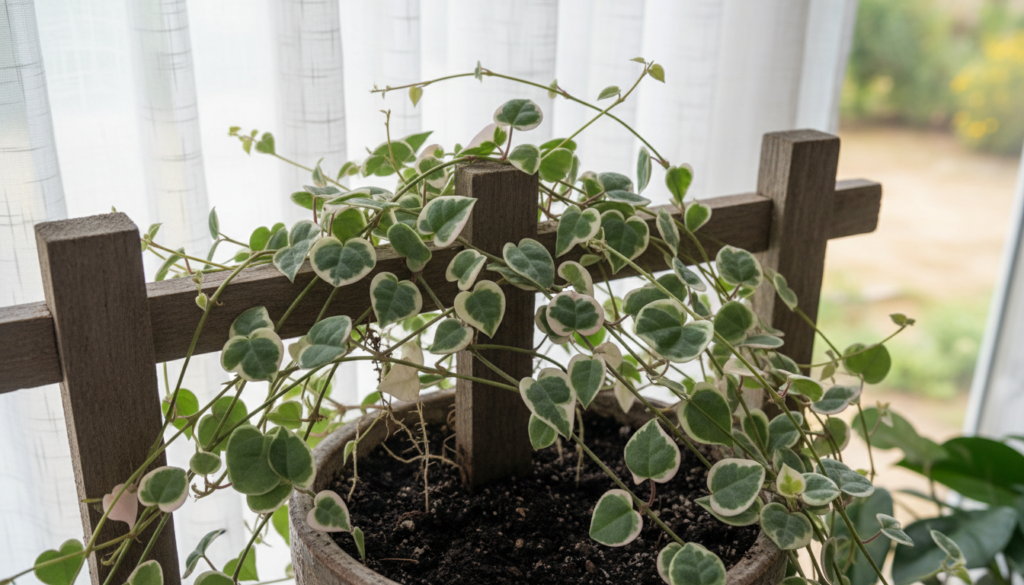
Why this helps: because the node sits in the middle, new vines can sprout in either side direction. That symmetric setup raises the chance of successful rooting and faster visible growth.
Timing and conditions: in the United States, late spring through summer is the easiest time to use butterfly cuttings—plants are actively growing and recover quickly after trimming. Indoor growers with warm temps and strong grow lights can use this way year‑round, but expect slower rooting outside peak seasons.
To get consistent results, keep bright indirect light and controlled moisture at the node while keeping the leaves dry. Next, prepare clean tools and pick a medium that holds node moisture but stays airy around the leaves.
Prep and Supplies for the string of hearts propagation butterfly method
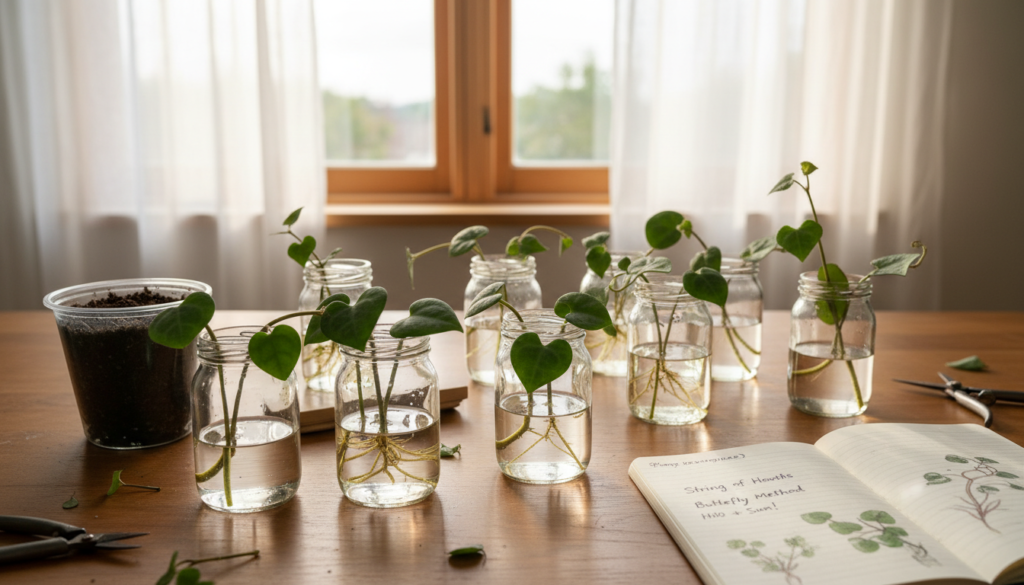
Begin with a close look at the mother plant to select firm, well-spaced vines and visible nodes. Choose stems that are turgid and free from yellow leaves or mushy sections.
Picking the right vine and spotting nodes
Nodes sit where each leaf pair meets the stem. Small brown aerial tubers appear near leaf bases and can speed rooting when pressed into the medium.
Tools to gather
- Clean, sharp scissors (sterilized) and optional gloves.
- A shallow container or tray and a clear lid (a reusable plastic takeout works well).
- Clean water for rinsing tools and dampening media.
Rooting setups: soil, sphagnum, or perlite
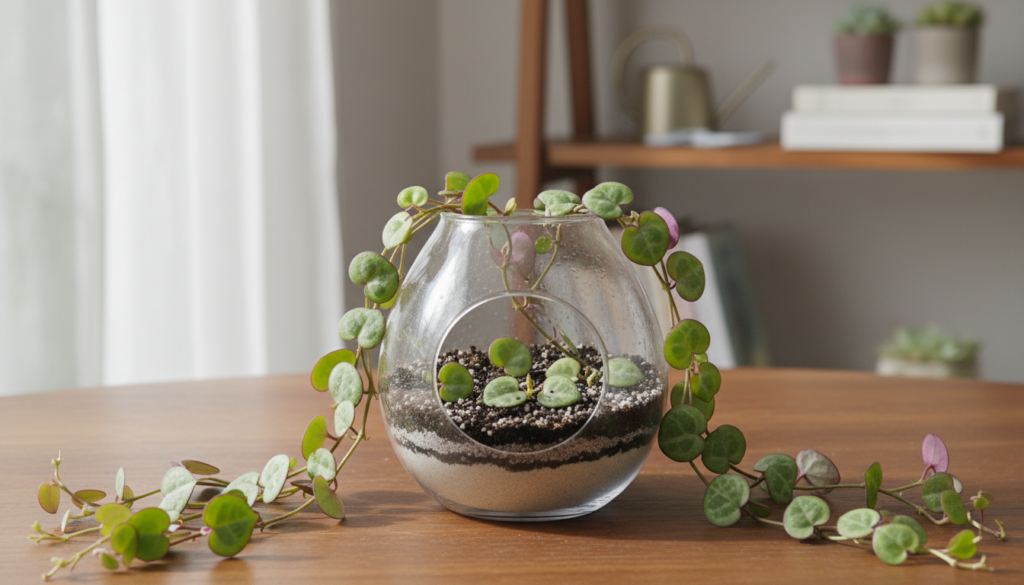
Soil: well-draining succulent soil makes potting up easiest but needs more misting. Sphagnum moss: holds moisture for fast rooting but can cling to roots at potting. Perlite in a prop box: layer moist lower perlite and a drier top to keep the surface less wet — this reduces leaf rot.
Optional boosters and hygiene
Rooting hormone can speed results; cinnamon is a gentle DIY antifungal. To prevent fungus gnats, use small bits of mosquito dunk or keep the setup ventilated. Open the clear lid occasionally to cut humidity and lower mold risk.
Quick choice guide: for lowest-maintenance humidity control pick a prop box with perlite or sphagnum moss. For easiest potting, start in soil.
How to Propagate String of Hearts Using the Butterfly Method Step by Step
Cut a long runner into tiny, half‑inch pieces that keep a node centered between two leaves. Aim for neat segments about 1/2 inch so each cutting has one node and two leaves. This size sits well on the surface and gives roots two directions to start.
Prepare your media
Perlite prop box: add 1–2 inches of perlite, wet slightly, then top with 3–4 inches of dry perlite so the surface is drier and leaves stay safe.
Soil: use well‑draining succulent soil. Start drier; wait a week before light misting to avoid leaf rot.
Sphagnum moss: soak 15–20 minutes, wring until damp (not dripping), and spread in a shallow container for faster rooting around nodes.
Placement, humidity, and airflow
Place cuttings on the top with the hearts facing up and the node touching or barely pressed into the surface. Keep leaves off wet media.
Use a clear‑lid container or a sealed plastic bag to raise humidity, but open every few days for fresh air to cut mold risk. If mold appears, increase airflow and reduce moisture.
Light, watering, and what to expect
Give bright, indirect light; avoid harsh midday sun which can bake cuttings. Water sparingly—keep nodes lightly moist without soaking the surface.
In perlite or moss you may see fuzzy white roots within a week. Over 2–3 weeks roots lengthen; new growth is the best sign the process worked.
Potting up and troubleshooting
Wait until roots are sturdy—about 2–3 inches—before potting. Tuck rooted cuttings into the top layer of a pot to thicken the crown and encourage cascading vines.
If rot shows, cut wettings back, increase airflow, and consult a short guide on root rot prevention for treatment tips.
| Setup | Layering / Prep | Best timeline | Notes |
|---|---|---|---|
| Perlite prop box | 1–2″ wet bottom, 3–4″ dry top | Fuzzy roots ~1 week | Surface stays drier; low leaf rot risk |
| Well‑draining soil | Pot/tray with dry start | Mist after ~1 week | Easy potting later; avoid soaking |
| Sphagnum moss | Soak 15–20 min, wring damp | Roots often visible ~1 week | Holds moisture; handle gently at potting |
| Humidity control | Clear lid or bag, open every few days | Maintain until roots form | Prevent mold with brief airing |
Conclusion
A few well-placed half‑inch pieces can turn a leggy vine into a lush display in weeks.
Quick recap: small double‑leaf cuttings with a central node are easy to root on top of your chosen medium. Use soil for simplest potting, sphagnum or moss for fast start, or perlite in a lidded tray to keep leaves dry.
Key rules: press the node into the medium, keep leaves up and dry, control moisture, and give steady airflow to avoid mold. Add healthy rooted pieces back into the mother pot to thicken vines and boost the plant’s look.
Start small, use clean tools, and be patient. Some cuttings won’t make it, but with care you should see enough new shoots to change a sparse string hearts into a fuller display. For related leaf issues consult this leaves curling guide.