
Surprising fact: up to 40% of houseplants that show early chlorosis start in north-facing rooms where light is gentler and soil stays damp longer.
Chlorosis is the technical name for plant yellowing. It happens when chlorophyll is interrupted. That makes pale growth a useful warning, not an automatic death sentence.
Expect slower growth in north-facing spots. Your plant will drink less and dry more slowly. That changes how you water, prune, and judge recovery speed.
Big cause categories to check first are simple: watering and drainage, root health, nutrients, light level, drafts, and pests or disease. A quick, steady diagnosis beats a rushed fix that often hurts more than helps.
This guide will give a clear how-to: quick checks, simple tools like your finger and a soil test, and realistic timelines so you can see improvement without overcorrecting.
Key Takeaways
- North-facing windows mean gentler light and slower drying.
- Pale leaves signal a problem but can often recover.
- Check watering, roots, nutrients, light, temperature, and pests in order.
- Use simple tools: touch the soil, inspect roots, prune sparingly.
- Diagnose first; change care step-by-step and track results.
Why indoor plant leaves turn yellow in low-light homes
Chlorosis is a simple signal: when chlorophyll drops, foliage loses its green pigment and starts turning yellow. That makes the whole plant look washed out and weak.
In low light a plant slows its growth. It uses less water and fewer nutrients. If you water as you did in brighter months, the soil can stay too wet and trigger more pale spots.
North-facing windows change the daily rhythm. Soil stays damp longer and transpiration slows, so recovery takes more time. Expect new healthy shoots rather than old parts regaining color.
Common patterns help with diagnosis. Lower leaves often go first, and the side facing away from the window may show uneven yellowing first.
- Check soil moisture with a finger or probe.
- Compare older versus newer plant leaves to spot nutrient or water issues.
- Assess total light each day; low totals point to reduced care needs.
Fast diagnosis: what to check first when leaves are turning yellow
Begin by observing patterns, not panicking—small clues point to the real problem.
A quick, ordered check prevents wrong fixes that make things worse.
Which leaves change first
Older, lower leaves going pale often mean the plant is reallocating nutrients or the roots are stressed.
If new growth is pale, the issue is likely recent and aboveground.
Read the pattern
Overall pale foliage points to low nitrogen or long-term low light.
Interveinal pale patterns usually hint at iron or magnesium issues.
Edge pale or browning shows potassium or salt buildup.
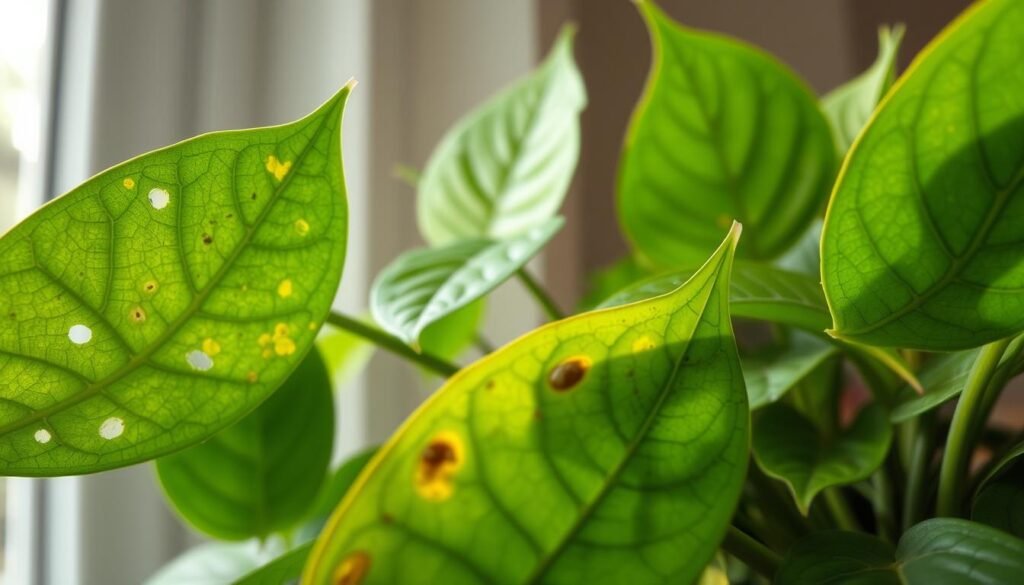
Spots often signal pests or fungal problems.
Do the soil “finger test”
Insert a finger two to three inches into the soil. If it feels damp, wait to water.
Only water when the top soil is dry to the touch—this beats a fixed schedule in low light.
Check exposure
In north-facing rooms, the shaded side often shows first symptoms. Rotate the pot and note changes over a week.
Keep a simple log: date, moisture, and visible signs. That record tells the real trend.
“Observe first, adjust next.”
| Step | What to check | Quick action |
|---|---|---|
| 1 | Which leaf age is affected | Compare lower vs. new growth; note pattern |
| 2 | Soil moisture | Finger test; delay watering if damp |
| 3 | Leaf pattern | Match overall, interveinal, edge, or spots to likely issues |
| 4 | Exposure side | Rotate pot; log changes over 7 days |
yellow leaves on indoor plants causes
Most discolored foliage traces back to a few repeat problems you can check fast.
Top cause: improper watering. Too much water suffocates roots; too little stops nutrient flow. Both scenarios turn healthy green to pale and limp.
Poor drainage mimics overwatering if the pot mix stays soggy after a regular routine. A well-draining mix and a pot with a hole solve this quickly.
Root damage and compaction
Compacted or rotting roots cannot move water or nutrients. Even with steady watering, the plant will show pale, dropping foliage.
Soil pH and nutrient lockup
Soil can hold nutrients that are chemically unavailable. That means feeding alone may not fix the issue until pH is balanced.
Other triggers
Low light, cold drafts, pests, viruses, and recent repotting may also stress a plant and prompt pale leaves.
| Cause | Typical sign | Quick check | First fix |
|---|---|---|---|
| Improper watering | Soggy or brittle foliage | Finger test 2″ down | Adjust schedule; water deeply, then wait |
| Poor drainage | Wet soil long after watering | Lift pot; check mix | Repot to airy mix and add hole if needed |
| Root rot/compaction | Stunted growth, soft roots | Slide plant out and inspect roots | Trim rot, refresh soil, repot |
| pH or nutrient lockout | General paleness despite feeding | Use a soil test kit | Adjust pH, apply targeted feed (nitrogen for old foliage) |
“Start with water and roots—most problems clear up there.”
Watering and drainage fixes for potted indoor flowers
Start simply: a quick change in how you water and how the pot sheds water can revive stressed growth fast.
Overwatering signs include soggy soil, a plant that wilts despite a wet mix, and a musty smell that hints roots can’t breathe. If these signs appear, stop top-up watering and let the mix dry before any more water.
Underwatering signs show as dry soil pulling from the pot edge, yellow tips, brown spots, or leaf drop as the plant conserves moisture. When you see these, give a deep soak and follow with a pause.
How to water correctly
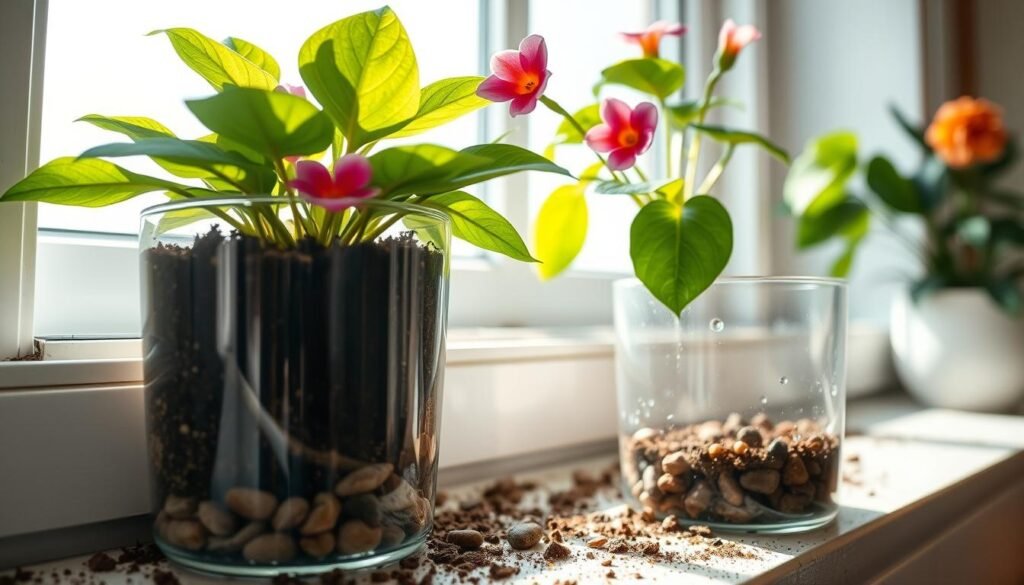
Use the finger test: poke two inches into the soil and water only when that layer feels dry. When you do, water deeply so excess runs out the bottom, then let the top inch or two dry before the next session.
Drainage essentials
Choose pots with drainage holes and avoid keeping a saucer full of standing water. Pick a potting mix that drains freely so roots get air as well as moisture.
What to do today: confirm moisture with the finger test, adjust your watering intervals, and watch whether leaves turn yellow or stabilize over the next 1–2 weeks.
Root and pot problems that cause yellowing leaves
A quick root check often reveals the true reason a pot-grown plant looks tired. If lower foliage keeps paling despite careful watering, suspect the root zone and potting mix.
When to inspect: persistent yellowing, slow growth, and soil that stays wet for days are clear signs you should look below the surface.
How to slide the plant out and inspect roots safely
Support the stem base, tip the pot on its side, and ease the root ball out. Gently remove excess soil to view the root mass and check moisture at the center.
Healthy roots versus rot
Healthy roots look pale to whitish-yellow and feel firm. Rotting roots appear dark, soft, and give off a foul smell.
Fixing compaction and damaged roots
If roots circle or feel tight, tease them apart and prune mushy sections with sterile scissors. Refresh the potting mix and repot into fresh soil to restore air flow.
Overpotting and moisture traps
A pot that is much larger than the root ball holds extra soil that stays wet. Extra moisture keeps roots too damp and can worsen decline.
- Repot up one size when roots are crowded but healthy.
- Choose a smaller pot when the root ball is sparse or soil stays soggy.
- If severe rot exists, trim to healthy tissue or restart with a new plant if most roots are lost.
| Sign | What to inspect | Action | When to choose |
|---|---|---|---|
| Soil wet for days | Core moisture, pot size | Improve drainage, repot if needed | If pot is much larger than root ball |
| Persistent pale foliage | Root color and firmness | Trim rot, refresh mix, repot | When rot is limited to sections |
| Crowded root ball | Circling roots, slow growth | Loosen roots, repot up one size | When roots are healthy but bound |
| Foul smell from soil | Extent of root rot | Remove rotten roots, consider restart | When most roots are dark and soft |
Light strategy for north-facing windows without scorching or stressing plants
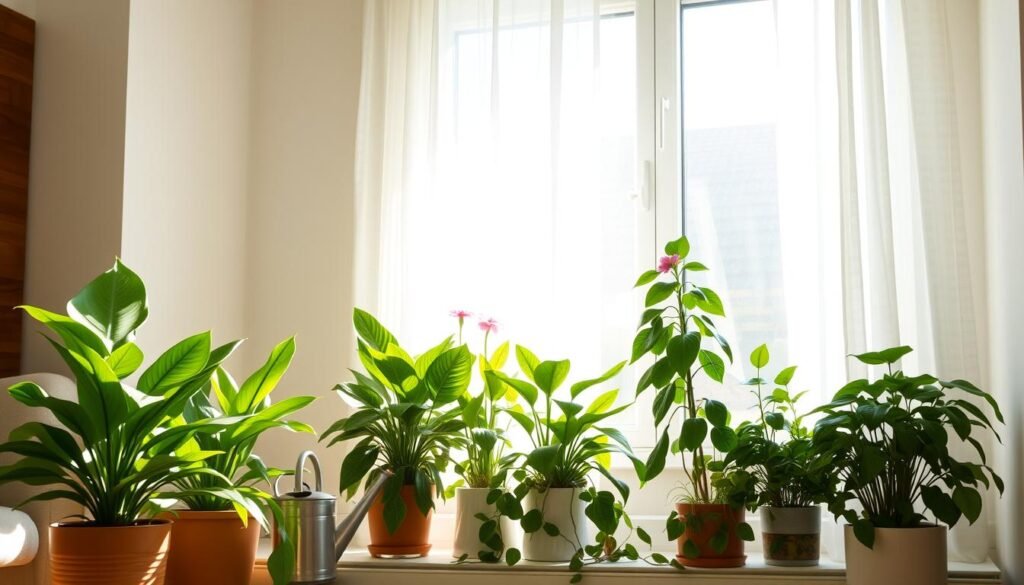
North-facing rooms give gentle daylight that keeps a plant alive but slows its energy enough that older foliage often fades first.
Low light vs. no light: soft window light supports survival but reduces growth. That reduced energy makes lower leaves the first to show pale edges and yellowing before new shoots are affected.
Classic uneven patterns are easy to spot. The side facing away from the window will often be paler while the window side stays greener. This creates a lopsided look that rotation fixes fast.
- Rotate the pot about a quarter turn each week to even exposure and prevent one-sided fading.
- Increase light slowly over a few weeks if you add a brighter spot so the plant adapts without shock.
- In U.S. winters, a small LED grow light can keep color steady and cut leaf drop; use it 8–12 hours with a timer.
Watch watering after boosting light: as growth resumes, the plant will use more water. Only change frequency after you monitor soil drying for a few cycles to avoid new issues.
Temperature swings, cold drafts, and airflow issues near windows
Rapid temperature swings near windows can stress foliage and show as soft, translucent spots. This is a common sign that air movement or cold air is harming a plant’s tissue rather than a watering problem.
Draft damage vs. cold shock
Draft damage usually triggers sudden yellow leaves and quick drop. The change is fast and affects outer growth first.
Cold shock can create pale, transparent spots between veins that look like tissue damage. Those spots may not recover and can spread if the source remains.
Where to place pots and avoid vents
Map your room: north-facing windows can be chillier in winter and gusty in doors and frames. Move a pot back a few inches from the glass and out of direct drafts.
Keep plants away from AC vents in summer and high-traffic doors in cold months. Small shifts in position often stop repeated stress to the same leaf.
Humidity support for tropical varieties
For tropicals, low humidity may also make issues worse. Use a pebble tray with water below the pebble line or a small humidifier to raise local moisture gently.
These measures reduce stress and lower pest risk that can follow dry, drafty conditions.
“Make one change at a time so you can see which adjustment stops the yellowing leaves.”
| Sign | Likely issue | Immediate action |
|---|---|---|
| Sudden leaf drop | Draft or cold gusts | Move pot away from window/door; monitor new growth |
| Pale, transparent spots | Cold shock | Relocate to warmer spot; avoid direct glass contact |
| Repeated damage on same side | Airflow turbulence | Rotate pot weekly; place further from vent |
| Dry, brittle edges | Low humidity | Add pebble tray or humidifier; check moisture |
Watch new growth for a few weeks after moving the pot. If fresh shoots look healthier, you likely addressed the issue. If spots spread despite relocation, consider a disease check and quarantine.
For flowering varieties near vents, see this guide to flowering houseplants that handle air vents for options that tolerate air movement.
Soil pH and nutrient availability: when fertilizers don’t fix yellow leaves
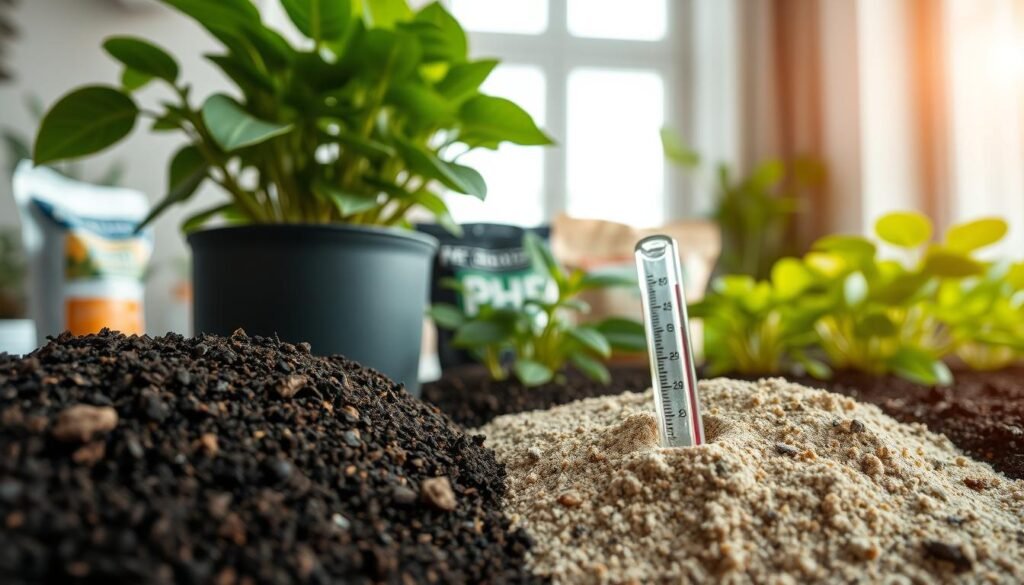
Soil pH quietly decides whether nutrients in the mix are usable or locked away. When pH sits outside a plant’s comfort zone, iron, manganese, and other elements can become chemically unavailable. That means a soil test often reveals the real issue even when feeders were used correctly.
Why fertilizer seems to fail: the nutrients may be present but inaccessible. Adding more feed can salt up the mix and make a deficiency worse. A simple pH imbalance is a common reason growth keeps turning pale despite regular care.
When to use a soil test
Run a test if watering and light are correct but discoloration persists. A kit gives numbers, not guesses, and most include amendment tips. Testing prevents overfeeding and helps you follow targeted corrections.
Target pH guidance
- General houseflowers: aim for about pH 6.0–7.0 for best nutrient access.
- Acid-loving species: prefer roughly pH 4.5–6.0.
- Retest after amendments and wait a few weeks to see improvement before adding more fertilizer.
Quick action steps: test the soil, adjust per the kit or lab recommendations, and monitor new growth. Remember, pH-driven nutrient deficiencies are about availability, not always a true lack of fertilizer in the soil.
“Test first, feed later — numbers beat guesswork.”
Nutrient deficiencies and hard-water problems that make leaves turn yellow
You can diagnose many garden nutrition issues just by noting which leaves lose color first. Use pattern clues instead of random feeding to find the real problem.
Nitrogen note: a nitrogen deficiency shows as general pale foliage that starts on older plant leaves and moves inward. Treat with a balanced feed and watch for recovery over a few weeks.
Magnesium vs. iron: both cause interveinal paling. Magnesium usually hits older foliage first. Iron shows between veins on new growth. Match the age of affected tissue before you apply supplements.
Potassium and tie‑ups: edge yellowing that later browns often signals low potassium. Too much of one nutrient can create a nutrient tie‑up and block uptake of others.
| Sign | Likely deficiency | Quick fix |
|---|---|---|
| Older foliage pale | Nitrogen | Apply slow‑release feed |
| New growth interveinal | Iron | Use chelated iron |
| Edge bright then brown | Potassium | Balanced fertilizer |
Water tip: use room‑temperature or rainwater if hard supply with excess calcium seems to block iron or manganese uptake.
Pests, disease, and leaf spots that can also cause yellow leaves
A spotting pattern that looks stippled or dusty often points to a pest problem rather than a watering error. Early checks stop spread and save nearby growth.
Spider mites and aphids: spotting sap-sucking damage
Suspect pests when foliage shows tiny stippling, patchy discoloration, or a dusty appearance, especially in dry air.
Look under the leaf surface for fine webbing (mites) or clusters of soft-bodied bugs (aphids). Treat early with a focused wash, insecticidal soap, or a miticide for heavy infestations.
Viral issues and when to quarantine
Blotchy, spreading pale patches across many leaves are a key sign of viral infection. These often cannot be cured.
Quarantine the affected plant, remove badly mottled leaves, and sterilize tools to protect other growth.
Leaf spot and lookalikes
Dark spots with pale margins usually indicate a fungus. White or straw‑colored rings may come from cold water splashes or aerosol burn.
Avoid cold water on foliage and skip leaf‑shine aerosols near sensitive specimens.
- Hygiene: remove fully pale leaves with a sterile tool; clean pruners and pots.
- Prevention: use room‑temperature water, improve airflow, and balance humidity.
“Early detection and clean tools keep pests and disease from becoming a room‑wide problem.”
| Sign | Likely issue | Action |
|---|---|---|
| Stippling or dust | Spider mites/aphids | Inspect underside; treat early |
| Blotchy spreading patches | Virus | Quarantine; sterilize tools |
| Dark spots with pale edge | Fungal | Remove spots; improve airflow |
Conclusion
Begin with a clear checklist: check soil moisture first, confirm drainage, then inspect roots before adjusting light or feed.
Some older leaves turning pale are normal. If discoloration spreads, act. Small, steady fixes work best.
Give each change time to show effect. You should see stabilization in 1–2 weeks and healthier growth after more time.
For north-facing spots, rotate weekly, water by the finger test, avoid drafts, and consider a small grow light in winter. Keep basic potting care and humidity steady to reduce pests and stress.
Final self-check: if signs persist after correcting water, light, and potting, test soil pH or inspect for pests and disease. Most cases of plant yellow are reversible once the real lack — light, oxygen at the root zone, or nutrient access — is fixed.