
Surprising fact: nearly 70% of apartment plant problems in cold months come from one habit — watering like it’s summer.
Growth slows when daylight shrinks and indoor air gets dry. That shift changes how you water, where you place pots, and how often you check soil.
This short guide on indoor flower care in winter is for U.S. renters who don’t need a greenhouse. Small, steady tweaks — window mapping, glass cleaning, rotating pots, or a modest grow light — keep things healthy.
Watch for the big risks: overwatering, weak light, low humidity, and pests. In tight spaces with shared HVAC and cold drafts, every placement choice matters.
Read on for step-by-step tips: where not to put pots, how to water less, soil and drainage fixes, humidity tricks, plus cleaning and pest checks. Use simple tools like a hygrometer and probe for small wins that add up.
Key Takeaways
- Adjust watering: water less often; avoid a summer schedule.
- Maximize light: clean glass, map bright spots, rotate pots.
- Placement matters: avoid cold drafts and direct heat vents.
- Monitor humidity: use a hygrometer and surface checks.
- Prevent pests: keep leaves clean and check soil regularly.
Why winter changes everything for indoor flowers and houseplants
Shorter daylight and drier air mean many houseplants shift into a slow, quiet mode.
During this season, a plant’s growth often slows or pauses. You will notice fewer new leaves and longer gaps between waterings. Even if your thermostat feels warm, usable light drops because days are shorter and sun angles change.
Low light makes plants use less water, so soil stays wet longer. That lingering moisture raises the risk of root rot, which makes overwatering the top winter killer in apartments.
Three problems usually work together: low light, low humidity, and excess water. Dry air can cause brown edges that look like thirst, yet roots may still sit in soggy soil. Warmer, drier rooms also invite pests like spider mites and mealybugs.
Quick checklist
- Expect slower growth and longer watering intervals.
- Watch for crispy tips that signal dry air, not always thirst.
- Prevent pests by keeping stable humidity and routine checks.
| Issue | What you’ll see | Simple fix |
|---|---|---|
| Low light | Slow growth, leaning stems | Move plants toward brighter windows; rotate regularly |
| Low humidity | Crispy leaf tips, dusty foliage | Group pots, use a humidifier or pebble tray |
| Overwatering | Yellowing leaves, soggy soil | Check deeper soil before watering; follow adjusted schedules |
For guidance on timing and volume adjustments, see our tips for adjusting watering schedules. Prioritize steady conditions over summer routines—observe more, do less.
Apartment light hacks that actually work in winter
Cold months cut usable sun hours, so a quick light map helps you use every bright corner. Start by tracking which windows get the most sun across the day.
Map exposures: south vs. east/west vs. north
South-facing windows usually deliver the strongest winter light. East and west give partial bright periods. North exposure tends to be the lowest for most plants.
Move plants closer to windows without chilling them
Slide pots nearer to glass, but leave a small buffer so leaves don’t touch cold panes or sit in a draft line. That keeps foliage safe while using extra light.
Rotate pots so growth stays even
Quarter-turn weekly or rotate each month. Even small turns prevent one-sided stretching and keep leaves fuller on all sides.
Boost daylight hours with easy grow lights
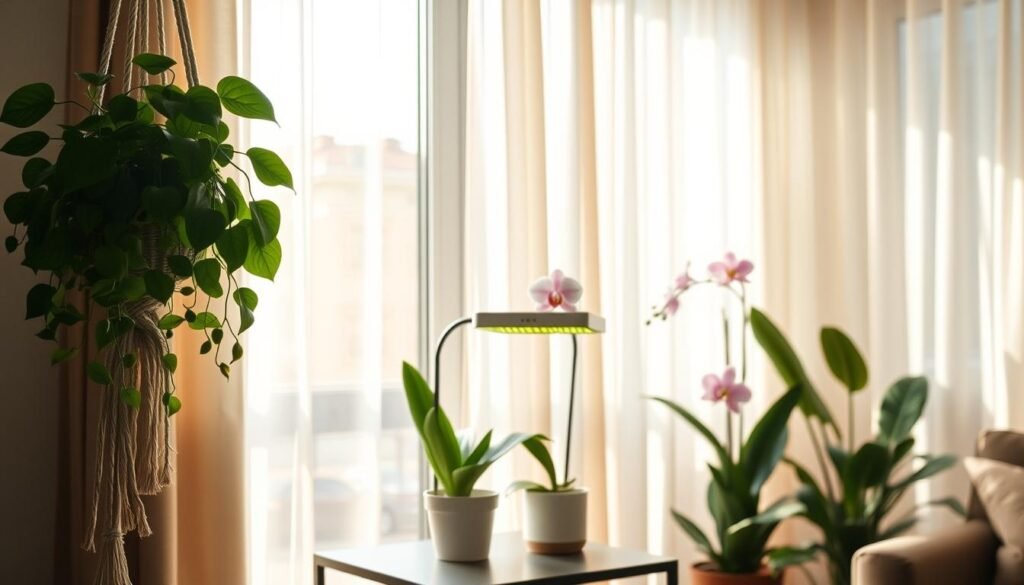
If bright time is short, add a simple bulb-in-lamp setup—many people use a Sansi 24W bulb for a modest boost. Keep the lamp close enough to be effective, use a timer, and avoid heat stress that can bleach leaves.
Clean windows and create vertical light real estate
Wipe grime and mineral build-up to regain usable light. Use stands, stools, and shelves by windows to stack more plants without blocking walkways.
“Observe your plants: stretched stems, smaller leaves, or soil that dries very slowly are clear signs you need more light.”
Placement rules: where your plants should not sit in winter
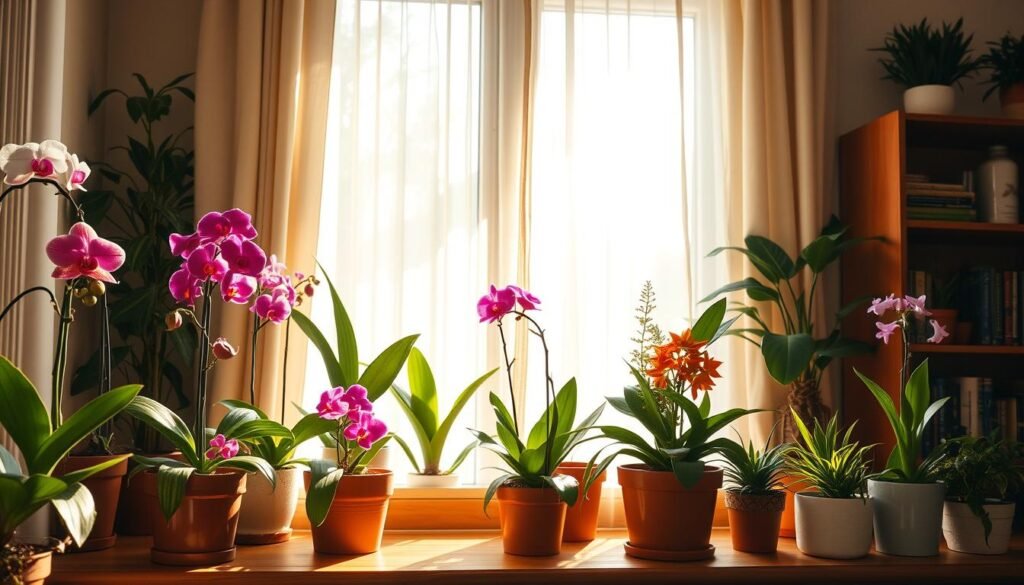
A sunny nook won’t help if a draft or vent beats up your leaves at night. Placement can be the make-or-break factor in small apartments. You might have good light but still lose pots to cold glass, moving air, or blasting heat.
Avoid frequent-door and leaky-window zones
Cold drafts form near entry doors and older windows that open often. Check any spot where you can feel moving air on your hand. Keep houseplant pots away from these danger zones.
Steer clear of heaters, vents, and fireplaces
Direct heat stresses leaves and dries soil fast. Keep pots far enough that leaves do not flutter and the mix does not dry unevenly. A good rule: leave at least 2–3 feet from vents or space heaters.
Rethink windowsills after sunset
Windowsills can be bright by day and the coldest spot at night. Try a “daytime sunbath, nighttime retreat”: move sensitive plants a foot back after dark to prevent chilled roots.
“Consistent temperature beats the brightest spot if that spot brings drafts or hot blasts.”
| Danger zone | What to watch for | Quick fix |
|---|---|---|
| Entry doors / leaky windows | Cold drafts; fluttering leaves | Move pots to a stable corner; seal gaps |
| Heating vents / radiators | Scorched leaves; dry soil | Keep 2–3 ft distance; use a tray for humidity |
| Windowsills at night | Chilled roots; leaf tip browning | Relocate after dark; use insulating mat |
Indoor flower care in winter watering: less often, less water, better timing
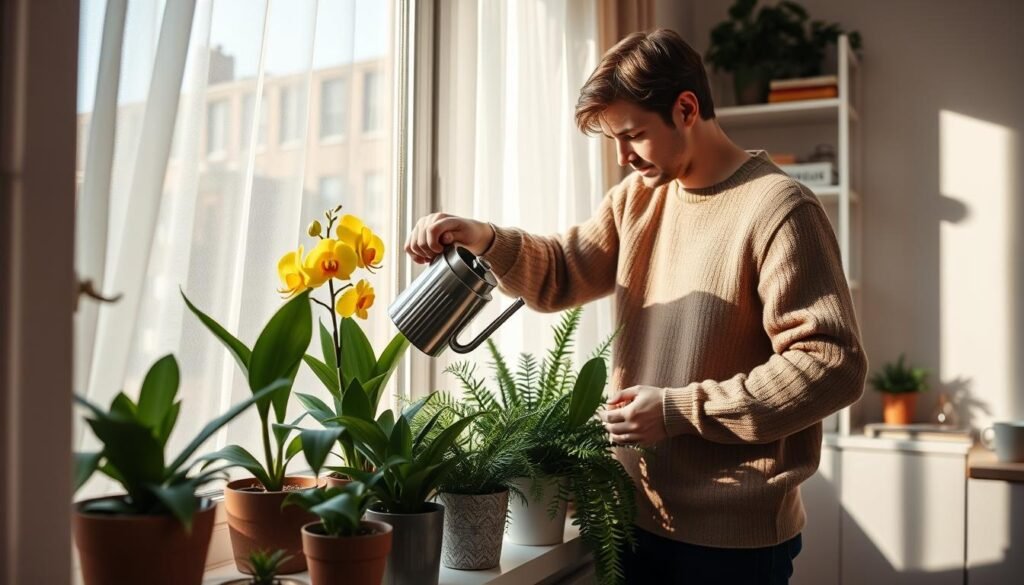
A simple shift—less frequent, smaller pours—keeps roots healthy during the cold months.
Core mindset: in colder months use “less often + less water.” Soil dries slower with lower light, so watering on a summer schedule raises the risk of root rot.
Practical steps
- Frequency: many pots move from weekly to about every 10–21 days, depending on pot size, mix, and light.
- Volume: reduce total pour by roughly 25% so the bottom stays airy rather than swampy.
- Temperature: use room temperature water to avoid shocking resting roots.
- No wet feet: always let pots drain and empty saucers after watering.
- Check deeply: test below the surface with a finger, skewer, or meter before you add more water.
Water earlier in the day so excess moisture can evaporate before cold nights near windows. Crispy leaf edges often mean low humidity, not thirst—so confirm soil moisture first.
“Yellow leaves plus a sour, wet-soil smell are red flags for overwatering and root rot.”
Soil, pots, and drainage tweaks that prevent winter root rot
Cold-season shifts make the same potting mix behave very differently than it did in summer. Less light and lower temps slow drying, so soil can stay soggy for days or weeks.
Recognize risky mixes and trapped moisture
If the soil feels dense, stays wet for many days, or smells musty, it likely holds too much moisture. Peat- or compost-heavy mixes are common culprits in colder months.
Drainage checks for small spaces
Confirm your pot has drainage holes and never leave a plant sitting in a filled cachepot. Raise pots slightly to add airflow under the base and speed evaporation.
Top layers, pests, and bottom-watering tips
Moss or rock toppings can keep the surface damp and invite fungus gnats; push them back or remove while you adjust watering.
For safe bottom-watering: place the pot in a shallow tray, set a 10–20 minute timer, remove when the top feels evenly moist, then let it drain fully. Avoid this method if the mix already retains water or the plant is dormant.
“One pot, one audit: check drainage, soil texture, and any coverings that trap moisture around the roots.”
Humidity strategies for dry apartment air
When central heat runs, room humidity can drop fast and your green corner shows it quickly.
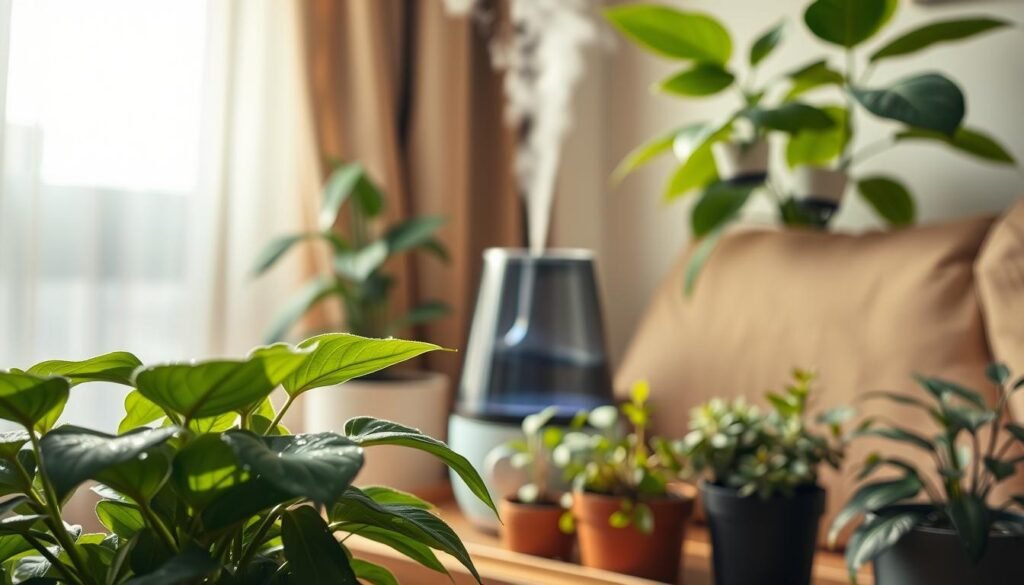
Why it falls: heaters, heat pumps, and forced-air systems dry the air, which many tropical plants don’t tolerate well.
Spot signs of stress
Low humidity shows up as crispy edges, dry tips, curled new growth, and leaves that look stressed despite moist soil.
Humidifiers, trays, and misting — honest comparison
Humidifiers give the most reliable boost and raise room levels consistently.
Pebble trays help locally but rarely raise room humidity enough for larger groups.
Misting is temporary and can increase fungal risk if foliage stays wet; if you mist, do it lightly in the morning so leaves dry during the day.
Create small humidity zones
Group plants to form a pocket of moisture, but leave airflow so leaves dry and pests don’t thrive.
Place the humidifier near the group (not touching leaves) and use a hygrometer first to confirm you need to increase humidity.
“Make sure higher humidity doesn’t slow soil drying too much—recheck watering intervals as you adjust.”
Temperature stability and overnight comfort for plants
Steady warmth beats perfection. Rapid swings from chilly windows at night to hot vents by day stress roots and slow growth. Aim for consistent conditions where your pots sit.
Many homes drop to about 64–65°F overnight and most houseplant types handle that just fine. If your room often falls into the low 50s (10–15°C), growth will slow and wet soil may linger, increasing rot risk.
Practical temperature rules
- Goal: stability over a “perfect” number — avoid wide daily swings.
- When to act: if nights hit ~50–59°F, add warmth for sensitive specimens.
- Water tie-in: colder room temps mean slower drying; cut back on watering.
Small-space heating and safety
Use a heat mat or a small terrarium cabinet to make a warm micro‑zone for tropical or needy plants. Keep some airflow to prevent mold and pests.
| Range (°F) | Effect on plants | Signs | Quick fix |
|---|---|---|---|
| Mid‑60s (63–67) | Generally safe for most types | Normal color, slow steady growth | Monitor; adjust watering slightly |
| Low‑50s (50–59) | Growth slows; soil stays wet | Droopy or dark leaves; root stress | Use heat mat or move to warmer spot |
| Below 50 | Risk of damage for tender plants | Leaf drop, brown tips | Supplemental heat or relocate |
“Watch the actual spot where your plants sit overnight, not just the apartment thermostat.”
Learning your apartment’s year patterns for night and day helps you manage hours of light, air flow, and watering across the season.
Fertilizing, pruning, and repotting in winter: what to pause and what’s okay
Treat winter as a recovery time for pots: maintenance, not growth acceleration, is the goal.
Why most houseplants don’t need feeding now: growth slows as light and metabolic activity drop, so roots use little fertilizer. Adding regular feed can leave salts behind and stress roots.
When light feeding is reasonable: if a plant sits under strong grow lights and shows new shoots, a weak dose can help. Otherwise, skip aggressive boosters until spring when natural growth resumes.
Make the simple checkpoint
Only fertilize if the pot is actively producing new leaves. To make sure you aren’t feeding a resting plant, watch for visible growth over several weeks.
Pruning rules
Limit heavy shaping now. Remove dead or damaged foliage, but save major cuts for spring. Small trims that tidy a plant are fine and reduce pest hiding spots.
Repotting timing
Repot like surgery: best done from spring through early fall when roots recover fast. Avoid routine repotting at this time unless you face severe root rot, a broken pot, or compacted soil.
If you must repot now, provide warmer air, steady light, and gentle watering. A heat mat can speed root recovery but use it cautiously and monitor moisture closely.
“Pausing growth-focused tasks now sets your pots up for stronger spring and summer returns.”
For apartment gardeners, the practical aim is stability. Do less this season so your small garden bounces back when days lengthen and real growth resumes.
Clean leaves, healthier plants: winter maintenance that boosts light capture
A quick leaf-clean makes a noticeable difference when sunny hours are limited. Dust blocks light and cuts photosynthesis. A few minutes of cleaning can return real energy to your plants.
Wipe dusty leaves so plants can “breathe”
Use a soft, damp cloth and support each leaf with your hand as you wipe. Work gently on large foliage to avoid tearing or bending the leaf.
Avoid silicone-based leaf shine products; they can clog pores and reduce gas exchange. Plain water is usually enough.
Shower-rinse and gentle options for delicate foliage
Sturdier pots can be rinsed in a shower or sink to remove grime and deter pests. Let them drip-dry fully before returning to windows or shelves.
For fuzzy or thin leaves, use a soft brush or light misting. Rubbing can damage delicate foliage and reduce photosynthetic area.
“Clean leaves capture more light — and that small boost shows up in healthier growth.”
- Schedule a quick leaf check monthly during low-light months.
- After cleaning, reassess placement and watering — brighter leaves may dry faster.
- Clean nearby windows too; clear glass increases usable light without moving plants.
Pest and problem prevention during the winter season
A quick weekly check can stop small infestations from spreading through your collection.
Heated, dry rooms and low light make plants easier targets during the colder season. A short routine keeps houseplants healthy and reduces harsh treatments later.
Catch common pests early
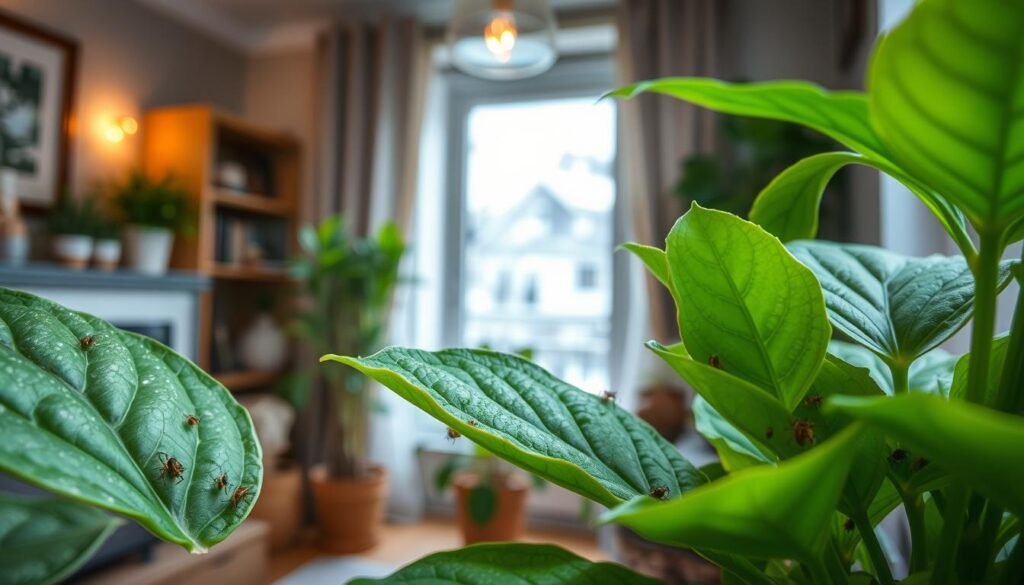
Look for fine webbing and stippling (spider mites), cottony white clusters (mealybugs), silvery scarring (thrips), and tiny flies hovering over wet soil (fungus gnats).
Quarantine new arrivals
Keep new or recently moved pots apart for about 4 months to be safe, but four weeks usually covers many lifecycles. Isolate them in a bathroom or bright corner and inspect weekly. When you treat, do so before rejoining your main group and make sure you’ve cleared signs of infestation.
White mold and moisture signals
White mold on soil often means the mix stays too wet. Scrape off the top layer, improve airflow, and reduce watering. Fungus gnats plus mold usually point to excess moisture; fix drainage rather than relying only on traps.
| Pest / Issue | Signs | Quick action |
|---|---|---|
| Spider mites | Fine webbing; speckled leaves | Wipe leaves, increase humidity, treat with miticide if needed |
| Mealybugs | Cottony clusters on joints | Isolate plant, dab with isopropyl alcohol, repeat checks |
| Fungus gnats / mold | Tiny flies; white mold on soil | Let soil dry, improve drainage, use sticky traps |
“Small checks each week save time and plants over the cold months.”
Conclusion
Focus on three basics now and your plants will rebound when days lengthen.
Maximize safe light, keep pots away from drafts and heat, and cut back on water volume and frequency. These moves solve most seasonal problems for a small apartment garden.
Use a simple weekly check: scan for pests, feel for drafts, probe soil below the surface, and rotate toward brighter windows. Measure humidity with a hygrometer before adjusting; grouping or a small humidifier works best when levels are low.
Clean leaves and windows regularly — dust-free foliage captures limited light far more efficiently. When spring arrives, resume repotting and feeding as growth returns.
With steady habits and quick checks, your houseplants can stay healthy all season and look great by spring.