
Surprising fact: small flies show up in over 40% of houseplant care reports when soil stays soggy for weeks.
Fungus gnats often mean too much moisture and the wrong container setup. Sealed decorative containers can trap water and turn roots soft and rotting. Experts like Justin Hancock at Costa Farms advise against planting directly into a sealed pot; use a removable inner pot so you can lift and water safely.
This guide explains the why, then shows practical fixes. You’ll learn how a proper planter, a saucer to catch runoff, or a pot with holes can stop the wet cycle that larvae thrive on.
What to expect: clear terms (pot vs planter, drainage hole vs drainage holes, saucer, decorative pot without drainage), simple tests you can try at home, and real-world tips to protect floors and shelves while you water.
Key Takeaways
- Fungus gnats thrive when soil stays wet—manage moisture to cut their life cycle.
- Sealed decorative containers can cause root rot; use removable inner pots for safe watering.
- Choosing a pot or planter with drainage holes reduces excess moisture risk.
- Saucers matter: they help you control runoff and water with confidence.
- Later sections will recommend specific planter styles and care routines for houseplants.
Why fungus gnats show up in indoor plants when pots trap moisture
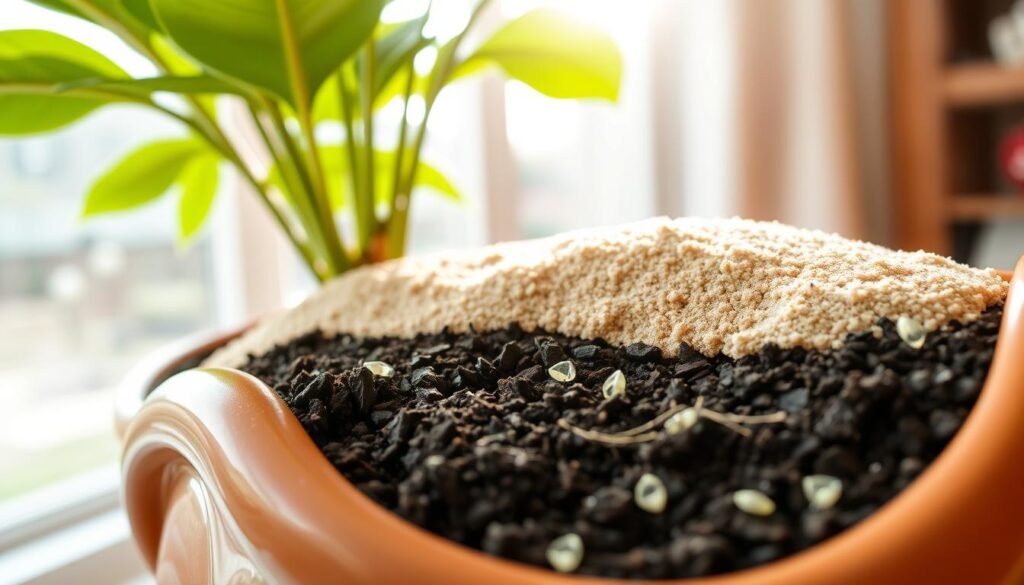
When soil sits soggy, fungus gnats find the perfect nursery for their larvae. Adults fly around the house and lay eggs in damp potting mix. The larvae eat decaying roots in that wet layer and keep the cycle going.
Overwatered soil and excess water at the bottom of the container
When a pot cannot release runoff, excess water pools at the bottom. That constantly damp zone feeds larvae and keeps adults returning after each watering.
How poor drainage can stress roots and invite pests
Poor drainage starves roots of air. Stressed roots slow growth and rot, making plants more vulnerable to disease and insects.
Why “pretty but sealed” decorative pots can turn into soggy planters
Glazed, sealed decorative pot designs trap moisture for days. Soil that never dries, a musty smell, and gnats after watering are clear spot-it clues.
Good news: you rarely need to toss a collection. Fix the watering routine, add a saucer or proper holes, and most issues clear up fast. Next, we’ll cover how simple holes in the planter stop this problem.
Drainage holes: the small detail that keeps houseplants alive indoors
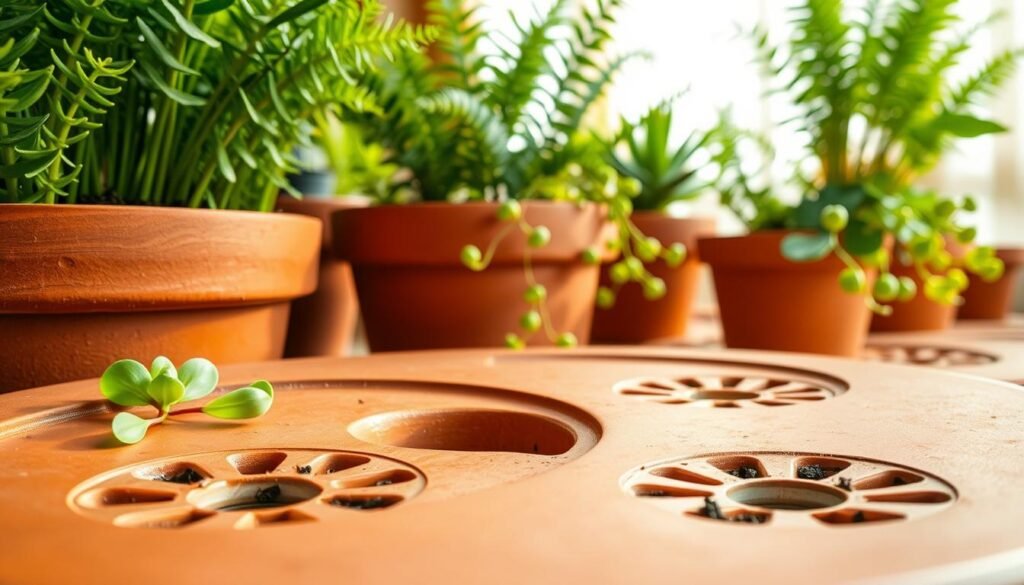
A few simple holes under the container do more to protect roots than any watering trick alone. Proper outlets let extra water escape, cut stagnant moisture, and boost oxygen around the root zone. That lowers rot risk and shrinks the chance of fungus gnats returning.
What they actually do for soil moisture and root health
Drainage holes let surplus water leave the pot so roots are not constantly wet. Better airflow at the bottom helps roots stay firm and healthy. If your decorative pot lacks exits, use a removable inner pot that you can lift to water, as Justin Hancock at Costa Farms advises.
How many holes and what size works
Multiple small holes often outperform one tiny outlet. Small pots do fine with a single 1/4″ hole. Larger pots benefit from several 1/4″–3/8″ holes spaced around the base.
Signs your current pot drainage isn’t working
- Water pools after watering
- Soil stays damp for days
- Fungus gnats return quickly
- Roots look brown or circle in soggy mix
“Use an inner pot with holes you can lift out to water; it gives control without ruining a decorative container.”
| Media | How it drains | Notes |
|---|---|---|
| Potting mix | Moderate; can compact | Breaks up slowly; needs clear holes |
| Orchid bark | Fast; airy channels | Works well in larger pots |
| LECA clay pebbles | Excellent bottom airflow | Helps if paired with a true outlet |
Note: holes help, but they don’t cure chronic overwatering. Good outlets give feedback and usually mean some runoff—so plan a saucer to protect floors.
Saucers and spill control: watering without wrecking furniture
A simple saucer turns runoff into a tool, not a threat, for watering around the house. It catches excess water that drains from the pot so you can water until the mix runs clear, then manage the collected liquid instead of letting it soak surfaces.
How a saucer helps manage runoff and timing
Use a saucer to catch runoff so you can water until water exits the bottom and then decide whether to empty the tray. Let the pot drain fully; standing in collected liquid for hours encourages root problems and insect issues.
When deeper trays make sense
Deeper saucers are great when you need a thorough watering to flush salts or fully hydrate soil. They reduce spill risk during a full pour and let you pause the process without puddles spreading across a shelf or floor.
Practical tips to prevent overflow and surface damage
- Lift the pot after watering to check the water level in the saucer.
- Place felt or cork pads under the saucer to protect wood or laminate.
- Use a heavy, wider tray in family rooms or spaces with kids and pets to avoid accidental spills.
- Choose plastic saucers for light, practical use or matching ceramic dishes for a cleaner look in decor-focused rooms.
Quick reality check: cachepots and sink watering work well when you need extra security. Next, we’ll recommend specific pot-and-saucer combos and planters that make regular watering easier while keeping moisture under control.
Best indoor plant pots with drainage for healthy, gnat-resistant houseplants
Choose a planter that handles excess water cleanly, stays stable, and matches common nursery sizes.
Buying criteria: look for reliable runoff, a saucer that fits, stable footing, easy cleaning, and compatibility with standard nursery inserts. These points help reduce lingering moisture and lower gnat risk.
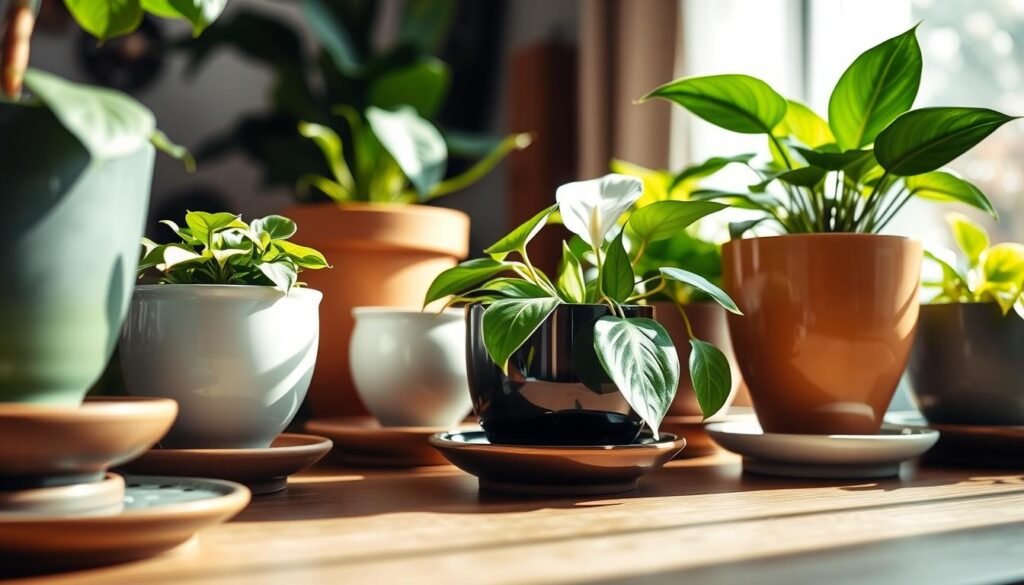
Everyday planter and saucer pairing
Pick a pot-and-saucer set that offers a true bottom outlet and a tray that actually holds runoff. A neutral finish works in most rooms and hides soil marks.
Good for: low-mess shoppers who water in place and want a tidy look.
Glazed ceramic option for home decor
Glazed ceramic balances decor and function. Choose one with a reliable bottom hole and a rim that cuts splash. It suits living rooms where style matters.
Lightweight plastic for easy moving
Plastic planters are light, quick to clean, and simple to rotate under windows. Look for a model sized to fit common nursery inserts and a saucer that clips on firmly.
Coated metal setup that won’t rust
Seek sealed seams and a powder coat finish to prevent corrosion. A metal container that includes a lined bottom or raised insert keeps water from staining surfaces.
Small sizes for succulents and tight-root mixes
Small pots dry faster and lower gnat risk. Use shallow sizes for succulents and choose a snug saucer to catch brief runoff.
Larger sizes up to about 16 inches
Large planters hold more moisture, so deeper saucers and slightly larger bottom holes are key. These work for fast-growing houseplants if you prefer fewer repots.
| Type | Material | Who it’s for |
|---|---|---|
| Everyday set | Ceramic or resin | Minimal mess shoppers; fits nursery pots |
| Decor ceramic | Glazed ceramic | Style-first buyers; living rooms, accents |
| Lightweight option | Plastic | Frequent movers; balcony or window rotation |
| Metal setup | Powder-coated metal | Modern decor; stain-resistant needs |
For creative displays that still manage runoff, see creative container ideas that pair style and function.
Choosing the right pot size and container shape for indoor flowers
Choosing the right container size helps prevent long-term wet pockets that invite pests.
Match size to the root ball
Overpotting happens when a pot is too large. Extra soil holds moisture for longer and raises gnat risk. Be gentle and step up only one size from the current root ball.
Why depth matters
Deeper containers can keep the lower zone wet, especially in a home where evaporation is slow. That means you may water less often, but the lower soil can stay soggy for more time.
Rim height and splash control
Taller rims cut splashes and keep stray potting mix contained during watering. That makes thorough watering cleaner on shelves and floors.
Space planning for shelves and windowsills
- Choose a stable base for narrow ledges.
- Account for saucer width and drip clearance.
- Pick shapes that match light and available space in the room.
Shape affects drying: wider containers dry faster across the surface; narrow, deep ones hold moisture lower down. For quick swaps, test standard nursery pot fits (4″, 6″, 10″) so cachepots and inserts work smoothly.
“Right-sizing your container saves time and protects roots from long wet spells.”
Materials that work best indoors: ceramic, clay, metal, plastic, and more
What your container is made of affects how quickly the soil breathes and dries.
Glazed ceramic vs. terra-cotta and clay
Glazed ceramic holds moisture longer and looks polished for decor. Unglazed clay or terra-cotta lets the surface dry faster but can chip or break more easily.
Wirecutter-style drop tests found terra-cotta breaks readily; some clay and resin pieces may chip but often survive normal bumps.
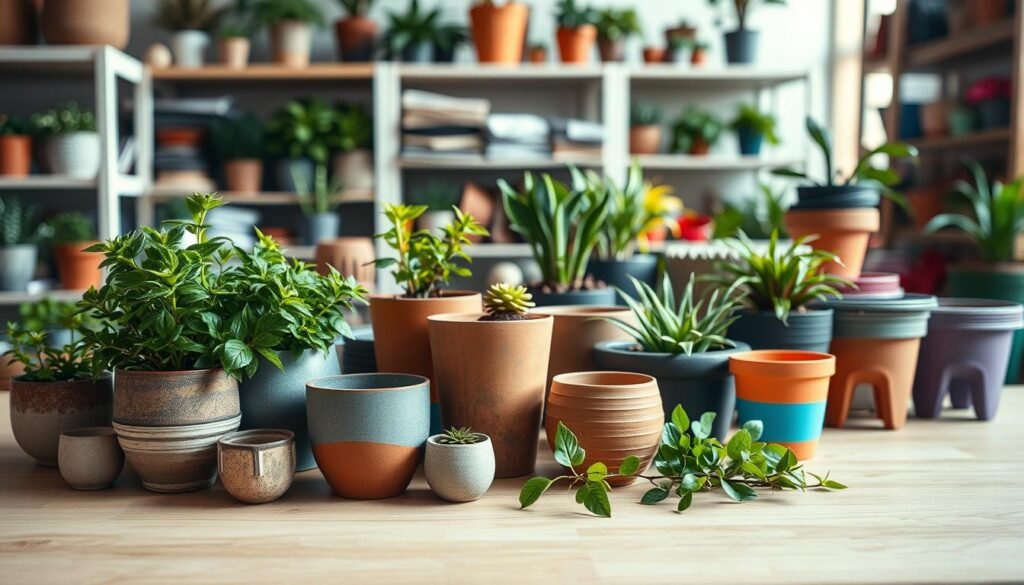
Metal planters: what to check
Choose metal planters with protective coatings, solid seams, and a lined interior. That prevents corrosion and leaking onto shelves or floors.
Plastic and resin: practical benefits
Plastic options are lightweight, easy to move, and rinse clean. Resin behaves similarly and is less likely to shatter than terra-cotta during everyday use.
What to avoid
Avoid wooden pots indoors; they rot over time and trap moisture against surfaces. Also skip liners made from thin plastic film—experts warn they tear and hide pooled water.
| Material | Pros | Cons |
|---|---|---|
| Ceramic | Looks good; holds moisture | Slower drying; heavier |
| Clay / Terra-cotta | Breathes; dries faster | Fragile; may chip or break |
| Metal | Modern look; durable if coated | Needs lining to avoid rust |
| Plastic / Resin | Lightweight; easy to clean | Can look less upscale |
Quick tip: pick materials that help you manage runoff and drying cycles. The right choice makes it easier to prevent gnats by keeping soil able to dry between waterings.
Drainage setups that fit your watering style
Two clear approaches handle excess water depending on how you like to care for houseplants.
Pot with holes and a saucer for watering in place
How it works: use a pot that has a drainage hole and set it on a saucer. Water until you see runoff, then let the soil finish dripping before you return the pot to its spot.
Empty or tip the saucer after 15–30 minutes so roots don’t sit in collected water. This method gives direct feedback on pot drainage and helps prevent long wet pockets that attract gnats.
Cachepot method: nursery liner inside a decorative pot
Why people choose it: a decorative pot without drainage keeps rooms tidy while a plastic nursery container inside handles the runoff. Never plant directly into containers without drainage; always use a removable inner pot.
Make sure the inner liner fits loosely enough to lift out without scraping. Allow a small air gap so water can run freely into the liner’s exit holes.
How to pull the inner pot out and water in the sink
- Lift the cachepot to a counter, tilt, and slide the inner pot up gently.
- Take it to the sink, water until the runoff runs clear, and wait for a minute or two to finish dripping.
- Set the liner back into the decorative container, wiping any spilled water from the outer pot.
Watch for tight fits; a stuck liner can tear or spill. If removal is hard, add a thin spacer or choose a slightly larger inner container next time.
“Consistent runoff control breaks the wet cycle that fungus gnats need to breed.”
| Setup | Where you water | Good for |
|---|---|---|
| Pot with hole + saucer | In place | Easy monitoring; quick feedback on pot drainage |
| Cachepot (inner nursery liner) | Sink or tub | Cleaner decor; no wet outer container; easy to lift and water |
| Shallow tray spacer | In place | Helps when inner liner fits tight; protects surfaces |
Workarounds when the planter isn’t perfect
You don’t have to give up a favorite planter just because it lacks a bottom exit. Try safe fixes that stop standing water and protect roots while keeping the decor you love.
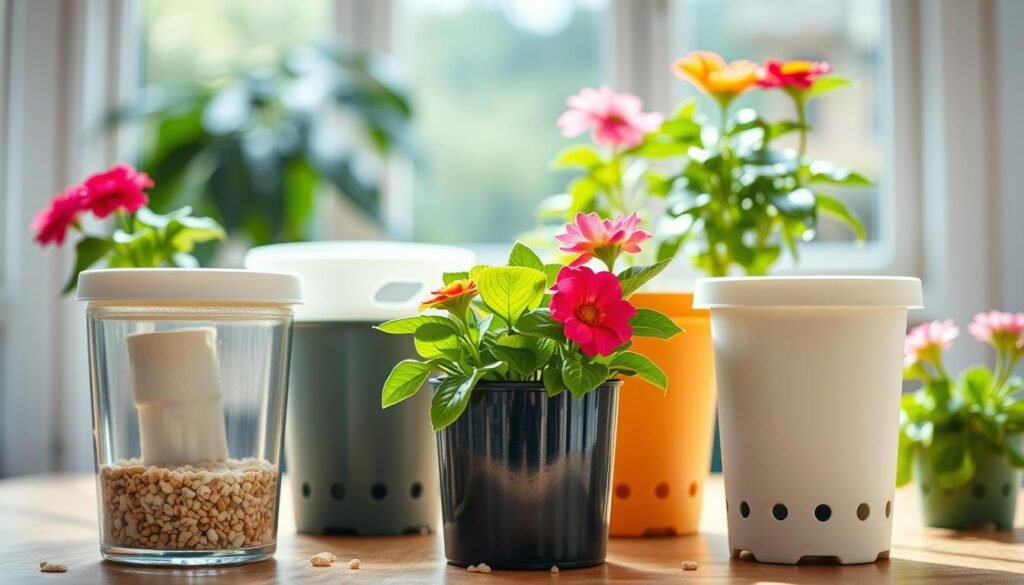
Drill a hole in ceramic the safe way
Use a ceramic bit and go slow. Secure the piece on a padded surface. Start at low speed and cool the bit with water to avoid cracks.
Quick metal fix
Mark spots, then punch through with a nail and hammer or a metal bit. Smooth sharp edges so the liner won’t tear and so the bottom won’t cut surfaces.
When a drain-hole plug helps (and when it risks trouble)
Plugs give flexibility. Remove the plug before watering heavily. If forgotten, excess water can pool and feed larvae.
Thin inner saucer and pebbles
Slip a slim plastic saucer inside a decorative pot to catch runoff and protect furniture. Add a shallow layer of LECA clay pebbles to raise the root zone slightly.
Note: pebbles improve airflow but do not replace a real exit in long-term setups.
| Fix | Good for | Quick tip |
|---|---|---|
| Drill ceramic | Sealed decorative pot | Use ceramic bit; cool often |
| Punch metal | Coated metal planters | Smooth edges; avoid seams |
| Inner saucer + pebbles | Temporary no-hole containers | Empty collected water after 20–30 min |
“Small upgrades save a favorite vessel and cut standing water risks.”
How we evaluate indoor planters in real homes
We test planters the way people actually use them at home — not in a lab. That means quick spills, routine cleaning, and steam from showers are part of every check.
Quality, finish, and cleaning
Inspect finish and feel. Check for wobble, sharp edges, and whether the saucer sits flat. Rinse, hand-wash, and run a careful dishwasher test to see if color or finish fades over time.
Drainage testing across media
For pots that have holes we fill three media: peat-free potting mix, orchid bark, and clay pebbles (LECA). We shake, water, and watch if the bottom clears or clogs.
This shows if pot drainage keeps soil from staying soggy and whether holes scratch or clog after repeated use.
Fit, sizes, and wear
Fit tests use standard 4″, 6″, and 10″ nursery pots. We check how easily an inner container drops in and comes back out for sink watering. Easy removal means less mess and fewer wet surprises that attract gnats.
Steam and moisture resistance
Finally, we expose pieces to repeated steam in a bathroom and bright kitchen. Metal, ceramic, plastic, and clay earn points when color and seal hold up over time.
“Real-home testing shows which containers keep plants healthy and keep your shelves clean.”
| Test | What we check | Why it matters |
|---|---|---|
| Finish & durability | Scratches, chips, wobble | Longer life, less mess |
| Drain media | Potting mix, bark, LECA | Hole performance, clogging |
| Fit sizes | 4″, 6″, 10″ liners | Easy watering, fewer spills |
Conclusion
Managing where water goes after a pour is the single most useful habit for healthier houseplants. Fungus gnats thrive when potting mix stays wet, so the root cause and the fix are clear: stop standing water and improve how a container sheds excess water.
Choose plant pots that offer reliable drainage holes and pair them with a saucer that fits the footprint. If you prefer a decorative pot without drainage, use a removable inner plant pot and lift it to water in the sink.
Protect roots, reduce stress, and cut pest appeal by auditing your collection: check holes, saucer fit, and your watering routine. Start by upgrading one or two problem pots, and learn more about timing by adjusting watering schedules.