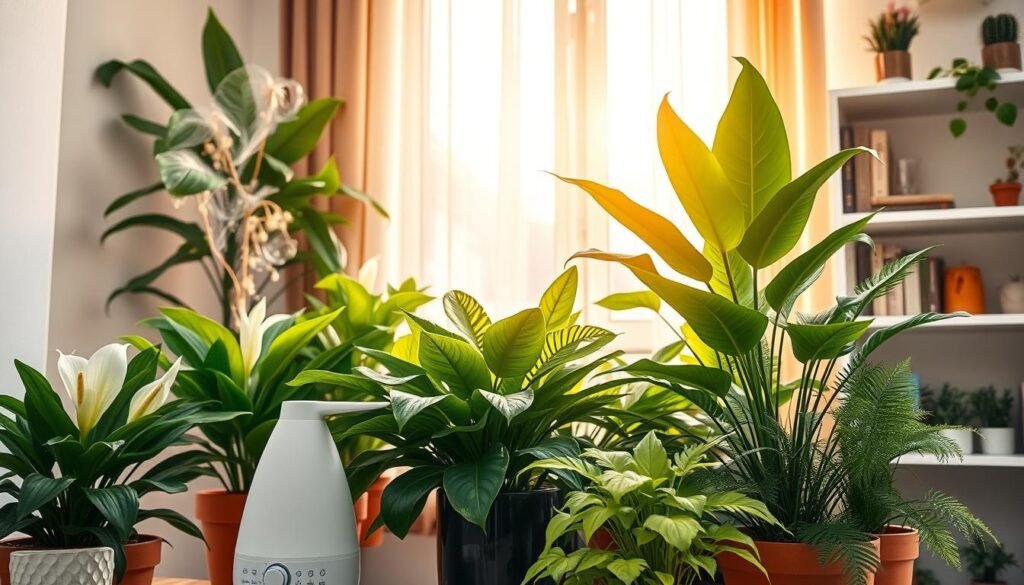

Surprising fact: many house species hail from tropical rainforests, and dry air in U.S. homes can cut leaf growth by a startling margin during winter.
Dry, heated rooms make blooms and foliage struggle even when watering seems correct. This guide shows practical ways and low-cost whole-room fixes that help plants recover without fancy gear.
The right spot is more than decor. It matches light, airflow, and moisture so daily care feels simple. We’ll walk room-by-room — bathroom, kitchen, laundry — and explain why some locations naturally support moisture.
Expect clear, no-guesswork setup: basic tools, visible signs to watch, and straightforward steps you can use now. We also cover common mistakes like constant wet surfaces, mold risks, and root issues while chasing moisture.
Key Takeaways
- Dry indoor air often stresses tropical-origin species during winter.
- Learn practical ways that use rooms to support moisture naturally.
- Choose spots that pair light, airflow, and humidity for each plant.
- Avoid wet surfaces and mold by following simple setup rules.
- Use basic tools and visible signs for a no-guesswork routine.
Understand Indoor Humidity and What Your Plants Need
Many common housegreens struggle quietly in winter air that feels fine to people. Heated rooms push moisture out of the air, and that can stress foliage long before soil looks dry.
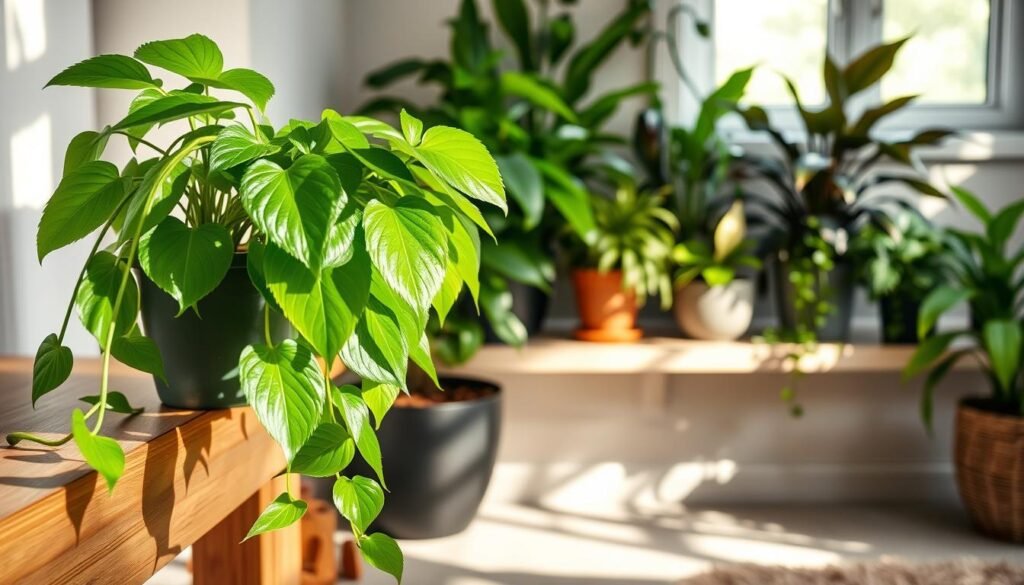
Why dry air stresses houseplants
Humidity means the amount of water vapor in the air. Central heat, cold windows, and tight insulation cut that vapor level. Many species evolved in humid forests and need higher room levels than most homes provide.
Practical target and what to watch
Aim for about 40–60% humidity for most common houseplants. If your home sits below that in winter, leaves will show the problem first.
Low and high signs
- Low: brown leaf edges, crispy tips, wilting, yellowing, slow new growth.
- High: fuzzy mold, soft stems, black spots, rot and mushy tissue.
Tools and a simple routine
Use a hygrometer for air moisture and a soil moisture meter to check the pot. This separates humidity issues from watering errors.
Quick routine: check the hygrometer when weather shifts, scan leaves for obvious signs, and confirm soil readings before adding water.
How to Increase Humidity for Indoor Plants Without Guesswork
Not every space needs a whole-room system; pick the right scale and save effort. Choose a whole-room approach when many houseplants share one bright area. Opt for a microclimate when only a few tropical specimens need extra moisture.
Whole-room vs. microclimate
- Whole-room: humidifier or consistent ventilation raises levels across a living space. Good when you keep several plants grouped in one room.
- Microclimate: grouping pots, pebble trays, or a small open water dish creates a pocket of stable air around sensitive plants.
Which plants to prioritize?
Put orchids, calatheas, and other tropical foliage together. These species show stress faster than drought-tolerant types like cacti or succulents.
Practical tip: concentrate the most sensitive plants in one spot and leave hardy specimens in drier areas. Better air moisture often lowers leaf crisping and drop, but it does not replace proper light, watering, and airflow.
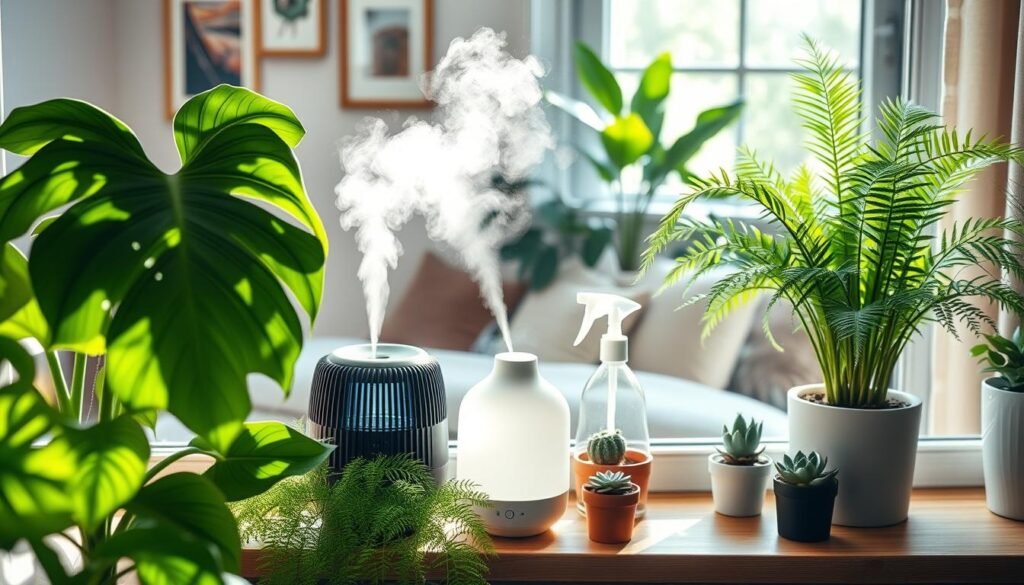
Next, we’ll cover steady equipment options and low-cost microclimate tricks that fit most budgets and rooms.
Use a Humidifier for the Most Consistent Results
For reliably higher moisture, a well-sized humidifier beats short-term tricks every time.
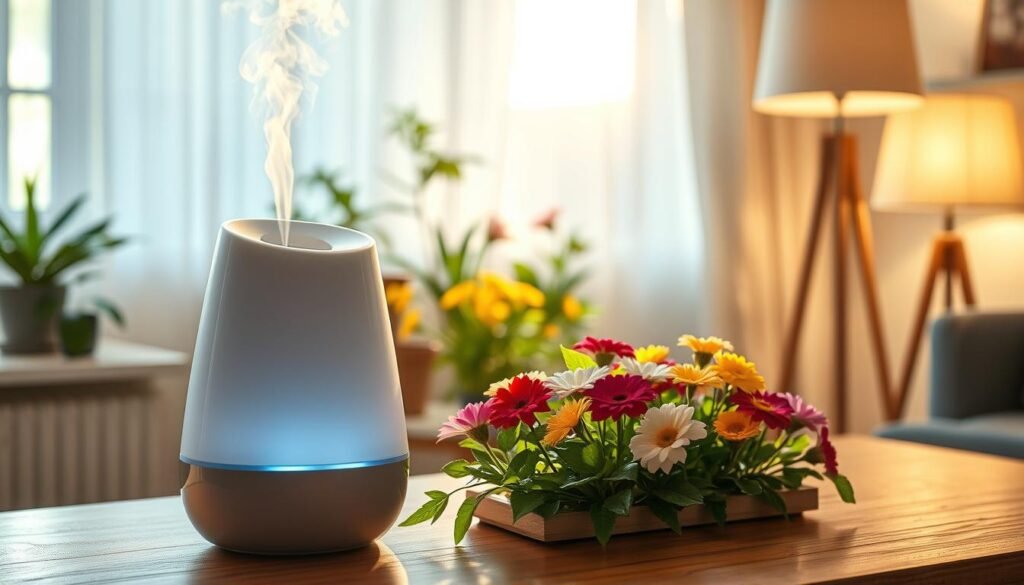
Why it works: When heated homes stay dry, a humidifier raises room humidity steadily. This is the best choice when you keep a lot of tropical specimens grouped in one area.
Pick the right size
Match the unit’s rated coverage to the actual room square footage. If coverage is too small, the unit will only mist the nearby zone rather than raise whole-room levels.
Filterless versus filtered
Filterless models cut recurring filter costs and lower mold risk from damp filters. Filtered units can trap minerals but need regular replacement.
Placement, comfort, and maintenance
Keep the unit near, not against, the plant group. Aim the mist away from walls and furniture to avoid constant condensation.
“Cleanability is the real buying test—mineral scale and film end most daily-use humidifiers.”
| Feature | Benefit | Care | Tip |
|---|---|---|---|
| Size rating | True coverage | Match sq ft | Measure the room |
| Filterless | No filter cost | Rinse often | Use distilled water if hard |
| Filtered | Particle capture | Replace filters | Watch for mold |
| Noise/light | Comfort | Choose quiet model | Cover bright LEDs |
Daily habits: rinse the tank weekly, wipe interior surfaces, and descale monthly if you have hard water. Consistent cleaning keeps the air clean and prevents unpleasant buildup.
For more watering and care planning, see watering schedules.
Create a Plant Microclimate with Trays, Grouping, and Covers
A tight cluster of pots forms a tiny ecosystem where steam and transpiration gather. Place pots close enough that leaves share air, and the local moisture will stay steadier than if each pot stood alone.
Pebble tray method:
- Pick a shallow tray and add a single layer of pebbles.
- Pour water until it sits just below the pot bottom—keep the pot raised above the water line.
- Confirm roots never sit in standing water; this protects against root rot while allowing evaporation.
Keep trays clean. Rinse pebbles, scrub the tray, and replace water weekly to stop algae and funky buildup.
Bonus boost: place a small dish of water or a full watering can in the center of a group to raise evaporation without changing usual care.
Top-dress soil with sphagnum moss on one pot to hold dampness near leaves. Keep moss moist but not swampy.
For single, very moisture-loving specimens, a glass dome helps at first. Vent it daily to avoid stale air and mold.
Mix and match: use a pebble tray for a windowsill group, add a water dish in the middle, and save a dome for a sensitive specimen. Small changes like these form a reliable microclimate that keeps foliage happier.
Read about resilient flowering varieties that handle air vents in this short guide: resilient blooms.
Pick Naturally Humid Rooms and the Right Light, Room-by-Room
Placing pots in the right room makes steady air and light work for you, not against you.
Bathrooms that work
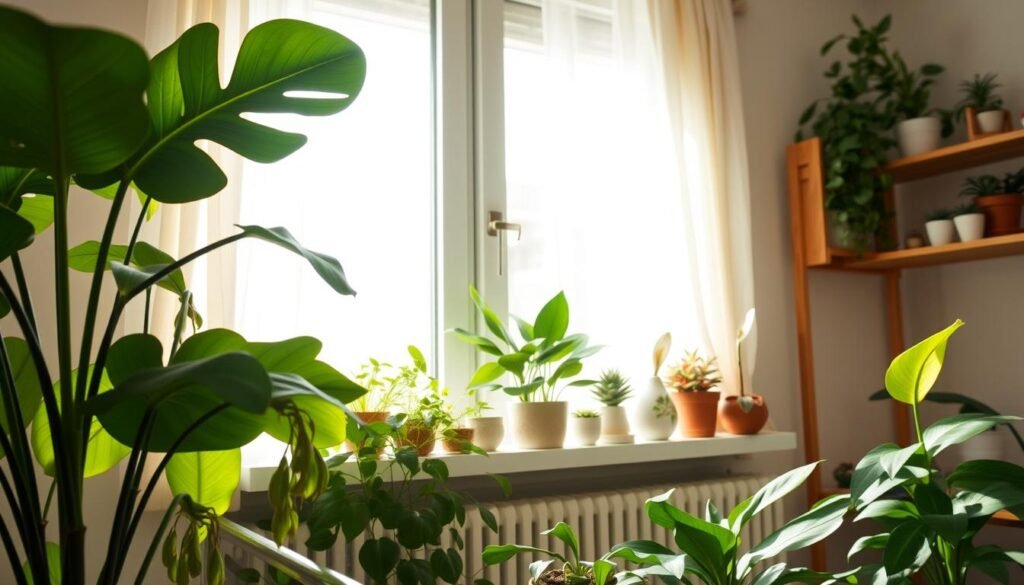
Bathrooms can be a simple solution because showers add steam on a regular day. A bathroom with a sunny south, east, or west window supports more flowering types.
In low-light bathrooms, choose tougher foliage that tolerates shade. Keep pots out of direct splash zones and rotate them weekly for even light.
Kitchens and laundry rooms
Cooking and warm laundry cycles raise moisture in the short term. Place pots away from direct heat, greasy counters, and cleaning sprays.
Elevate groupings on a top shelf or an open cart for safer access and better light, especially if you keep pets.
Watch temperature and drafts
Steady warmth during the day matters. Cold windows, HVAC drafts, and big swings in temperature can dry leaves faster than room moisture helps.
| Room | Best light | Placement tip | Main risk |
|---|---|---|---|
| Bathroom | South/east/west window | High shelf, away from splash | Mold on constant wet surfaces |
| Kitchen | Bright counter or shelf | Elevated, away from stove | Grease and heat |
| Laundry | Windowed area | On top of dryer or shelf | Temperature swings during cycles |
Use Misting and Showers Carefully for Short-Term Moisture
Short bursts of moisture work well as a temporary boost; treat them like spot first aid. Misting raises local moisture around leaves briefly, so it is best when you need a quick pick-me-up rather than a long-term fix.
Misting done right
Use a very fine spray and keep applications light. Aim at the undersides of foliage and avoid drenching soil. Repeat often enough that the surface feels slightly damp, not soaked.
When not to mist
Some fuzzy-leaf varieties trap water and can develop spotting or disease. Do not mist African violets, Purple Heart, or Philodendron micans velvet. These species hold droplets that invite rot.
Showering as an option
A lukewarm shower rinses dust and pests while adding brief moisture. Let pots drain fully before returning plants to bright, draft-free spots so leaves dry quickly.
“A 15-minute shower in a closed bathroom can drive bathroom moisture high enough to condense on windows—use this sparingly and watch for lingering wetness.”
- Set expectations: misting is short-term, not a room-level solution.
- For cacti and other drought-tolerant types, keep misting very light and infrequent.
- Rinse pots after a shower and avoid cold drafts while leaves dry.
Conclusion
, Start with a reading from your hygrometer and build a routine that fits your home’s rhythms. Measure the room air first, then match a steady solution to what the meter shows.
Priority: confirm baseline humidity, choose the simplest steady fix (an appropriately sized humidifier or a naturally humid room), and use microclimate ways such as trays and grouping for targeted support.
Do: group plants, keep trays and equipment clean, and watch soil moisture as you adjust air levels. Don’t: leave pots standing in water, ignore soil checks, or mist species that spot easily.
Small weekly care prevents most setbacks. Remember that air is one part of healthy growth—pair it with good light, watering, and steady temperature for the best results.