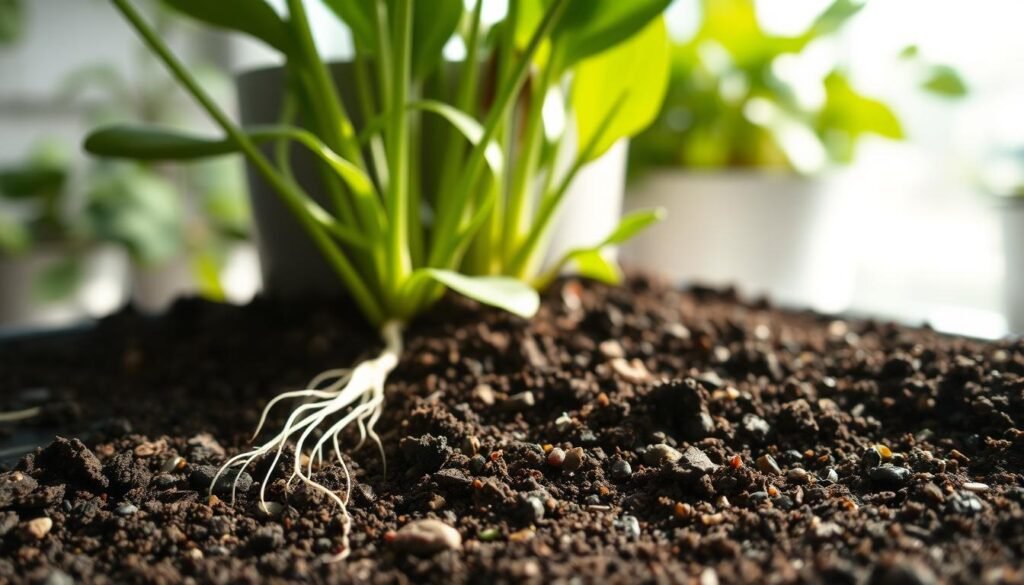

Surprising fact: studies show a single repot with a quality mix can speed growth noticeably in weeks, not months.
Busy schedules don’t have to mean drooping blooms. A few smart choices at home cut weekly fuss and keep plants healthy.
The Spruce testing found that a balanced mix improves moisture retention and plant health, while drainage holes stop waterlogging and root rot. Even great mixes still need proper light and watering.
This short buyer’s guide explains how to pick a bag that matches your watering time and plant type, what to read on labels, and which simple add-ins save effort week-to-week.
Buy once, simplify care: choose one versatile bag and maybe one amendment, and you’ll avoid many emergency repots and mystery decline.
Key Takeaways
- Right mix reduces watering frequency and supports steady growth.
- Look for balanced ingredients and measures of moisture retention.
- Pots with drainage holes prevent root stress and overwatering.
- Match your approach to the plant and how much time you have.
- One versatile bag plus an add-in often covers most flowering houseplants.
- Visit our guide to learn quick label checks and top simple amendments.
What Indoor Flowers Need From Potting Soil (So You Don’t Have to Work So Hard)
What your flowering houseplants really need is a medium that stays evenly damp and full of air. Pick a product that balances drainage and moisture so you don’t water every day or drown the roots.
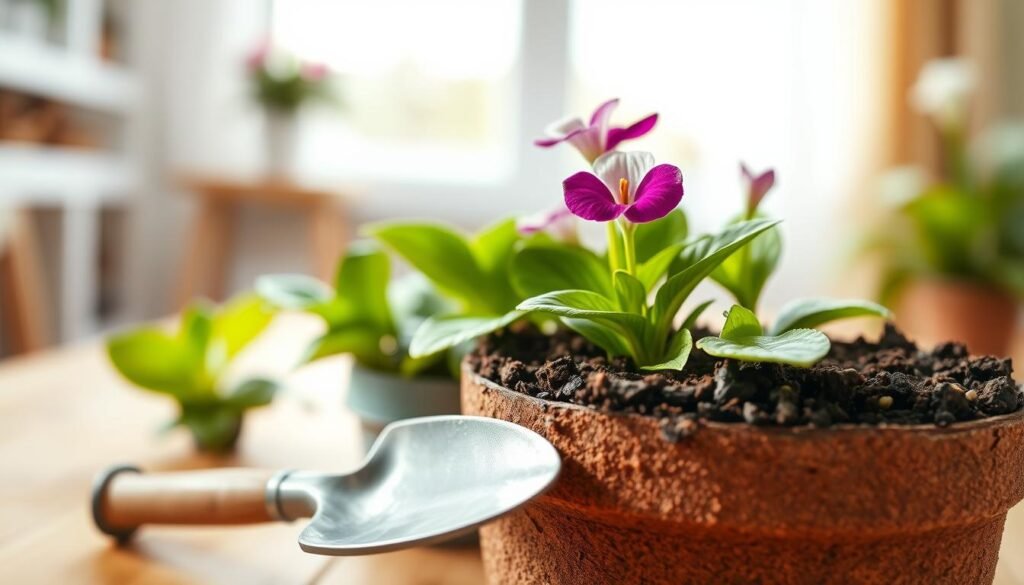
Drainage vs. moisture retention
Too much water suffocates roots and invites root rot. Too little leaves blooms limp. The goal is an even hold: enough wetness to feed plants, but quick exits for extra water.
Aeration and air pockets
Chunky ingredients like perlite, pumice, and bark keep the mix from packing down. That structure gives air around roots and helps stop fungus-gnat–friendly sogginess.
Nutrients and built-in support
Think of the medium as a place, not food. Slow-release fertilizer, worm castings, and mycorrhizae give lasting help so you feed less often. Espoma-style blends add these to lower fuss.
Peat moss vs. coco coir
Peat moss can go hydrophobic when very dry. Coco coir rewets more easily and is often a more sustainable swap.
- Texture/weight: heavier mixes hold water longer; chunkier mixes dry faster.
- Buying rule: prioritize balanced drainage, visible aeration bits, and a simple nutrient plan.
“An ideal potting mix holds ‘just enough water’ without drowning roots and has ‘plenty of air pockets.'”
best potting soil for indoor flowers: Top Picks for Busy Plant Owners
A single smart choice of mix can save hours of plant babysitting each month. Pick one reliable bag and you’ll spend less time fixing yellow leaves, bud drop, and soggy roots.
Best overall versatile pick:
Organic all-purpose mixes that work both inside and out
Espoma Organic Potting Mix stands out as an organic, multi-use option. It holds moisture well, comes in multiple bag sizes, and includes mycorrhizae plus earthworm castings to feed plants slowly.
Note: it feels heavier and coarser, so it may retain water longer. Some growers rotate in FoxFarm Ocean Forest or Happy Frog when they want extra nutrients.
Budget-friendly, reliable base
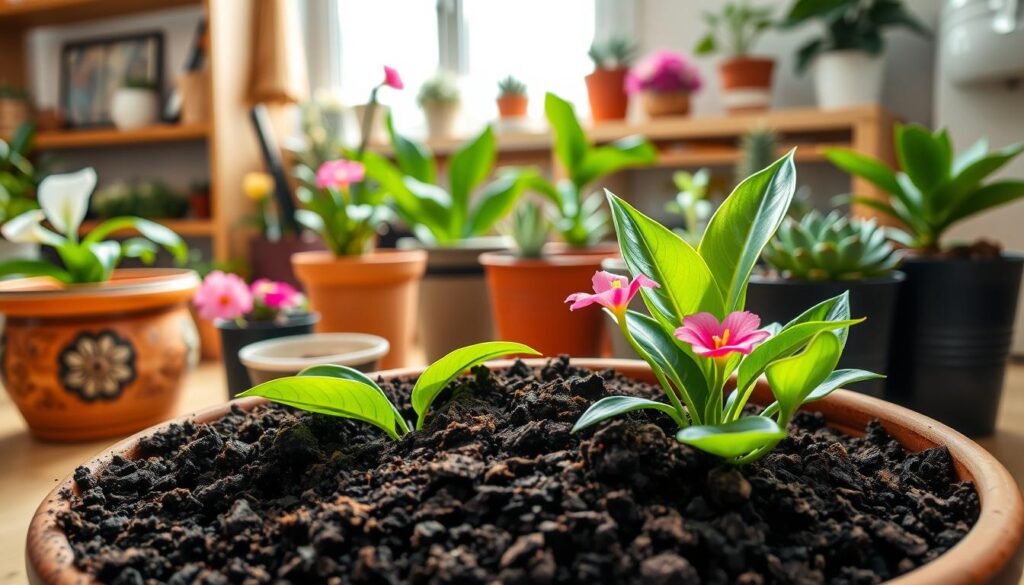
Miracle-Gro Indoor Potting Mix uses coco coir and perlite for easy rehydration and added air. It’s consistent, widely available, and a great everyday option.
That budget label doesn’t mean low quality: you may still need to top up nutrients later or add amendments depending on the plant.
When fast drainage matters
Choose a cactus-style mix when plants dislike “wet feet.” Back to the Roots Organic Succulents & Cacti Mix uses aged bark, horticultural sand, and perlite to speed drying.
Water slowly at first—bark can take longer to soak—then only water when the medium is fully dry.
- If you water often, pick chunkier, faster-draining mixes.
- If you forget sometimes, choose a balanced blend with better moisture retention.
- Need watering timing help? See a simple schedule at watering schedule guide.
| Option | Key ingredients | When to use | Care note |
|---|---|---|---|
| Espoma Organic | Mycorrhizae, worm castings, coarse mix | All-purpose repots, seedlings | Heavier feel; monitor drainage |
| Miracle-Gro Indoor | Coco coir, perlite, slow-release feed | Daily houseplants, budget shopping | Consistent texture; feed later |
| Back to the Roots Succulent | Perlite, horticultural sand, aged bark | Succulents, plants that hate wet feet | Water only when fully dry |
| FoxFarm Ocean/Happy Frog | Rich amendments, balanced mix | Nutrient-hungry bloomers | Great for rotation or blends |
“Choose a mix that matches how you water and the plant’s needs—it’s the easiest way to avoid most problems.”
Match the Mix to Your Flowering Plant Type (And Avoid Guesswork)
Matching habitat to media reduces trial-and-error and cuts routine care time. Different bloom types evolved with distinct needs, so the right mix helps roots thrive with less fuss.
Tropical flowering houseplants
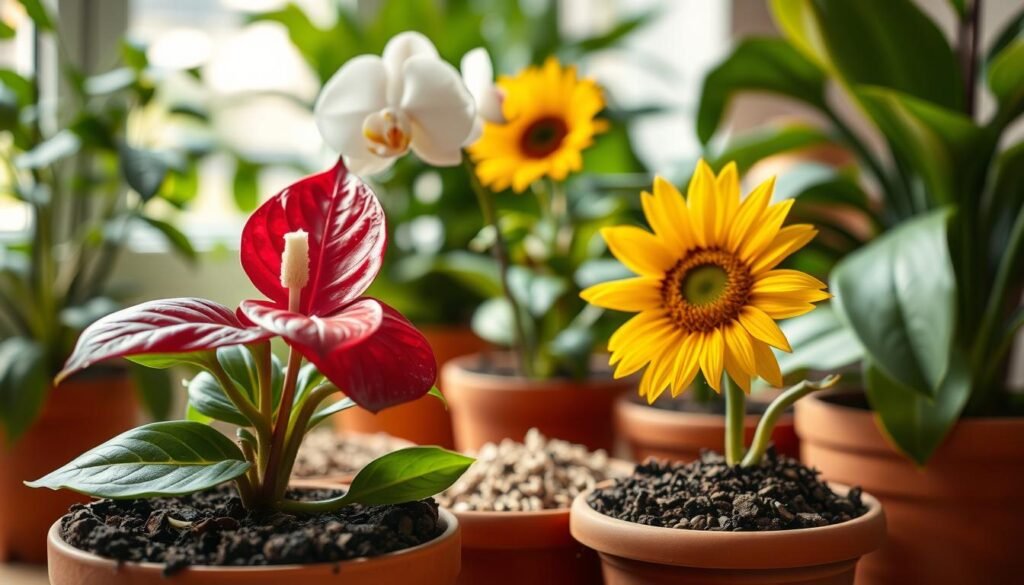
Tropical plants like steady moisture but also need air around roots. Kody J. Ketterling notes tropical mixes often use crushed lava rock, coconut husks, and a sandier base to balance moisture with drainage.
Succulents and cacti that bloom
Succulents demand chunky structure: pumice, coarse sand, or perlite. Let the medium dry completely between waterings—too much wetness is the fastest route to root trouble.
Orchids and epiphytes
Epiphytes need bark-forward mixes so roots can breathe. A practical blend is equal parts pine bark and coconut coir with a small amount of perlite. Dense, fine mixes will suffocate these plants.
African violets and picky bloomers
These plants like a slightly acidic, well-draining base. Typical mixes use peat or moss with perlite and sometimes vermiculite to hold a gentle, even moisture level without soggy roots.
When to use specialty vs. all-purpose
Specialty mixes are worth it for orchids, succulents, and African violets; they prevent chronic problems and save time long-term. Many tropical and general houseplants do fine in a quality all-purpose mix, especially if you tweak it with one amendment like extra bark or perlite.
“Match the mix to the plant’s native environment — it reduces fuss and keeps roots healthier.”
| Plant type | Key components | Care tip |
|---|---|---|
| Tropical bloomers | Crushed lava rock, coconut husks, sandy base | Keep evenly moist but avoid standing water |
| Succulents & cacti | Pumice, coarse sand, perlite | Water only when mix is fully dry |
| Orchids & epiphytes | Pine bark, coconut coir, perlite | Use open media; allow air to roots |
| African violets | Peat/moss, perlite, vermiculite | Maintain slightly acidic, evenly damp mix |
Low-Effort Care Routines That Keep Indoor Flowers Thriving
A few smart moves at repot and watering time prevent most common problems quickly.
Quick repot checklist
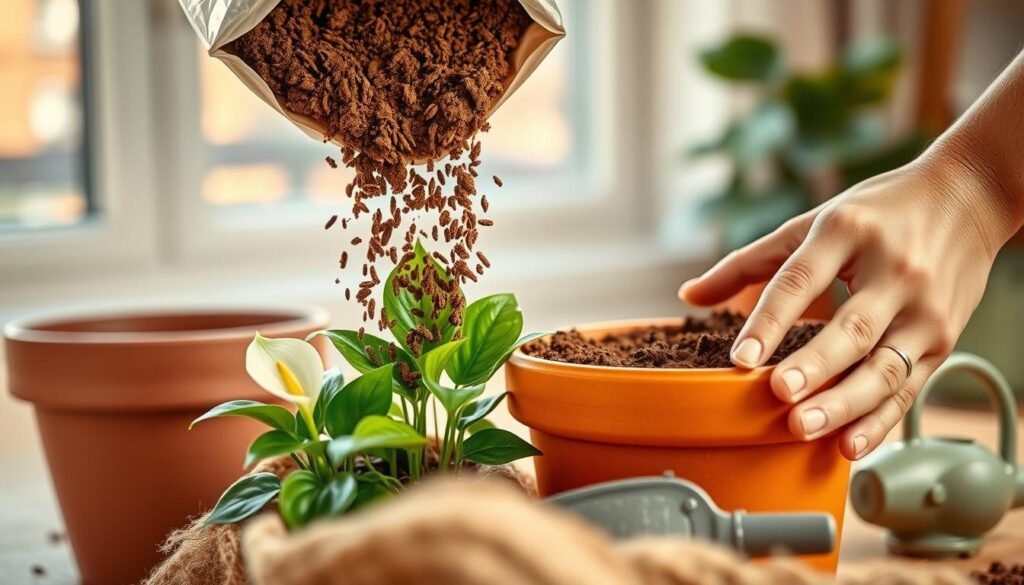
Pick the right pot size: avoid a massively oversized pot so the mix won’t sit too wet. Use fresh potting soil and always choose pots with drainage holes to stop waterlogging and root rot.
Simple repot flow
| Step | Action | Why |
|---|---|---|
| 1 | Prep area | Contain mess and work fast |
| 2 | Loosen root ball & refresh mix | Promotes healthy plant roots |
| 3 | Water in gently | Settles ingredients and removes air pockets |
Watering smarter, not more
Check moisture with a finger or lift the pot to feel weight. Avoid overcorrecting—peat-based mixes can turn hydrophobic when too dry. Re-wet slowly or bottom-water if the mix resists water. Coco coir rehydrates more easily and can save time when you miss a watering.
Amendments and feeding
Add perlite or pumice for extra drainage and air. Use bark chips or coco chips to add chunkiness for orchids and aroids. Add vermiculite when you want the mix to retain moisture longer.
Most mixes need nutrients refreshed every 3–6 months. Top-dress with slow-release or a light liquid feed rather than heavy, frequent fertilizing.
Reusing potting soil safely
Refresh usable potting mix by removing old roots, breaking clumps, and adding compost or a little fresh mix. Toss and replace if pests or disease were present to protect other plants.
“A monthly quick check of moisture and drainage prevents most problems and saves you time.”
Conclusion
A steady base that balances drainage, air, and moisture makes daily care much easier.
Core rule: choose a soil or potting mix that fits your plant’s watering style and schedule. Protect roots with good drainage, manage moisture so pots don’t stay soggy, and plan light feeding because nutrients fade over time.
Keep one reliable all-purpose potting soil at home and add a specialty option only when a plant truly needs it, such as orchids or succulents. Small amendments—perlite or bark—solve many common problems without frequent repots.
Match how you water to the mix: fast-draining mixes need careful, slower watering; moisture-retentive mixes benefit from restraint. Then pick one recommended bag, grab an amendment, and repot the plant that needs help first.
You’ll find gardening at home becomes simpler and more predictable when the foundation is right. Your houseplants will thank you—and your garden routine will feel easier to keep up.