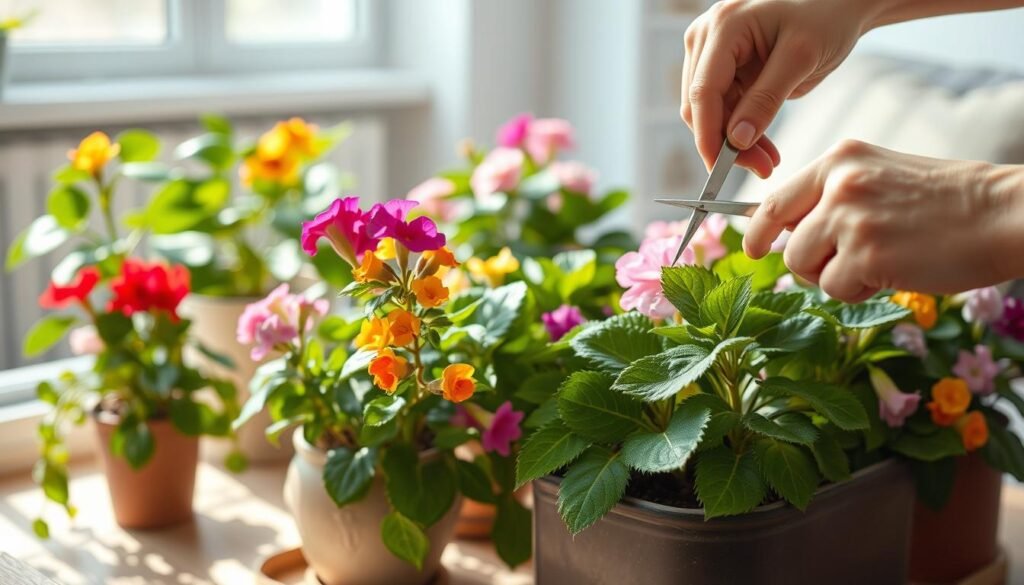

Surprising fact: gardeners who deadhead regularly see up to a 40% faster rebloom rate in many houseplants compared to those that leave spent blooms in place.
Deadheading is the simple act of removing spent flowers so a plant can send energy into new buds instead of seed production.
This short guide shows why technique and nutrition matter. Where and how you cut makes a difference. What you feed afterward matters, too.
Expect practical picks: product choices for fast growth, organic bloom support, slow-release convenience, and complete nutrition. You’ll also learn how to avoid common mistakes with plant food indoors.
This guide is for anyone growing African violets, begonias, peace lilies, orchids, kalanchoe, or other flowering houseplants in containers.
Indoor conditions—limited soil, different watering habits, and winter slowdown—change how plants respond versus outdoor gardens. Follow a clear framework: deadhead correctly, feed appropriately, watch for signs, and adjust through bud set and bloom cycles.
Key Takeaways
- Deadheading redirects energy from old blooms to new growth.
- Technique and proper indoor plant food both matter for reblooming.
- Product picks cover fast growth, organic options, and slow-release needs.
- Watch indoor-specific limits like pot size and seasonal slowdowns.
- Suitable for African violets, begonias, orchids, peace lilies, kalanchoe, and similar houseplants.
Why deadheading and fertilizer work together for nonstop indoor flowering
Pairing regular deadheading with targeted feeding keeps houseplants reblooming longer. Removing spent blooms stops a plant from wasting energy on seed production. That saved energy can fuel new bud formation instead.
What happens inside the plant after you trim
After a spent flower is cut away, a plant shifts growth priorities. It moves resources from flower maintenance to new growth points. That change usually triggers buds to form at nearby nodes.
How light feeding supports recovery
Container soil holds limited nutrients and they wash out with routine watering. A small dose of nutrients after deadheading helps rebuild buds, strengthen roots, and maintain healthy foliage and leaves that power photosynthesis.
- Why it works: Remove spent blooms, then replace key nutrients so the plant can build new buds.
- Rule of thumb: Deadhead first, then feed lightly unless the plant is stressed or resting.
- Stress management: Make clean cuts and time feeding to avoid shock.
Practical note: If a specimen drops buds or shows weak blooms, check trimming technique, light levels, and nutrient gaps before assuming one single cause.
How we tested indoor plant food and what “best” means for houseplants
We ran a straightforward, 30-day trial to compare nine common products in identical six-inch pots. This setup kept variables tight so readers can trust the results.
What we tracked: visible plant health, vigor, leaf color, new growth rate, and any pest or disease signs. We checked soil moisture and how each option reacted when water was added.
Scoring focused on real indoor needs. Ease of use (measuring and mixing), odor inside a home, effectiveness at promoting growth, and overall value per feeding were weighted highest.
- Design: 30 days, nine products, consistent six-inch pots.
- Why indoor tests differ: small soil volumes need clean dosing and low buildup.
- Price note: many solid picks fall in the $10–$20 range, but cost per application varies.
Read the label closely—concentrates need careful mixing. And remember: the ideal choice depends on your goals (more blooms, lush foliage, or low-maintenance care), not only on big NPK numbers.
Deadheading indoor flowers the right way
Keep deadheading simple and purposeful. A tidy, timely cut sends a clear signal to the plant to set new buds. Small, deliberate actions reduce recovery stress and speed rebloom.
Where to cut for common flowering houseplants
Remove spent blooms at the base of the flower stem. If a stem has nodes, cut back to a healthy node so the plant can reroute energy to nearby growth points.
Examples: pinch spent flowers on African violets, trim begonia flower stems, remove peace lily spathes, and follow orchid spike guidance by type.
Tools, timing, and clean cuts to reduce stress
Use sharp snips and sanitize blades to avoid tearing and disease. Make single clean cuts; avoid crushing stems.
Deadhead as flowers fade, not after they fully dry. That keeps the container tidy and encourages a new cycle of buds.
Avoid heavy deadheading right before a long period of underwatering. Hydrate so the plant recovers with less stress.
When to stop deadheading and let the plant rest
Pause if a specimen shows seasonal slowdown, reduced bud set, or pale leaves. At that time, focus on steady light, gentle watering, and root care rather than more cutting.
Remember: deadheading multiplies the benefit of good light and care. It’s a helpful way to nudge a plant, not a substitute for stable conditions.
Signs your indoor plants need feeding (and when it’s not a fertilizer issue)
Leaves that yellow or new growth that stays small are often the first sign that a pot is running low on support.
Before you reach for a feed, check light and watering. Low light and soggy soil mimic nutrient shortage. Fixing care often restores vigor without added minerals.
Yellowing, smaller leaves, and stalled growth
Common “time to feed” clues:
- Yellowing leaves on newer shoots
- Smaller new leaves than normal
- Slowed growth and fewer buds after prior blooms
Distinguishing light and watering problems from nutrient needs
Many issues look like a lack of nutrients but stem from care. Confirm light is adequate and your watering rhythm is steady.
Soggy soil can damage roots and block uptake, so the plant shows deficiency even when fertilizer is present. Let the pot dry a bit and test again before feeding.
| Symptom | Likely cause | Quick fix |
|---|---|---|
| Yellow new leaves | Low light or iron shortage | Increase light; consider gentle feed if care is stable |
| Small new leaves | Low nutrients or root crowding | Check pot size; light feeding after confirming conditions |
| Stalled growth | Overwatering or depleted mix | Adjust water schedule; feed lightly if growth still lags |
Mineral basics: plants need a balance of major minerals and trace elements. Too much or too little causes harm.
Decision rule: if light and water are steady and growth still stalls, a gentle nutrient plan is a safe next step. For mild signs, a balanced indoor plant food works better than a high-strength formula.
Essential nutrients explained: nitrogen, phosphorus, potassium, and beyond
Labels list numbers, but those digits only tell part of the story. The three numbers are N‑P‑K and show the concentration of nitrogen, phosphorus, and potassium before you dilute a product. Those figures help you pick a mix that matches how a plant uses energy.
NPK basics made simple
N (nitrogen) fuels leafy growth. Too much nitrogen makes lush foliage and fewer blooms.
P (phosphorus) supports roots and bud set. Many bloom cycles respond to a higher P ratio during bud formation.
K (potassium) helps overall function and stress tolerance, which matters in small pots where conditions change fast.
Secondary nutrients that matter
Calcium is critical and often missing. Calcium shortages can cause misshapen new growth and bud drop because calcium does not move within the plant.
Magnesium and sulfur
- Magnesium aids chlorophyll and steady leaf health.
- Sulfur supports protein building and long-term vigor.
Micronutrients: small but critical
Iron, boron, zinc, and other trace minerals keep long-lived houseplants healthy. Deficits show slowly in pots, so regular, balanced inputs prevent slow decline.
Quick rule: think NPK first, then check calcium and trace minerals. Good labeling and light soil and water care help your plant convert those minerals into steady blooms and growth.
Choosing the best fertilizer for indoor flowering plants by bloom stage
Different bloom stages call for different nutrient goals — choose the right mix to support buds, blooms, or recovery.
Bud set and bloom: why phosphorus matters.
Phosphorus at bud set
Phosphorus helps a plant initiate flowers and supports active root activity that sustains blooms in pots. Give a higher-P option during visible bud formation to support bud initiation and early bloom strength.
After flowering: rebuild foliage and reserves
Once blooms fade, switch to a balanced mix that promotes foliage and steady growth. This helps rebuild energy reserves without forcing weak, short-lived blooms.
Root support after repotting or pruning
After root work, use gentler feeds and keep moisture consistent. Stressed roots absorb poorly; a light, low-strength program reduces shock and aids recovery.
- Match feed to stage: bud, bloom, recover.
- Depending on plant type: African violets and orchids may need bloom-focused ratios during active display; foliage-heavy species prefer balanced blends.
- Avoid chasing blooms: steady light and correct dosing beat overfeeding every time.
Practical timing: feed in active growth, reduce during winter slowdown, and use very light doses if you must feed year-round.
Fertilizer types for indoor plants: liquid, water-soluble, and slow-release
Different formulations change the rhythm of care: some need weekly attention, others work for months after one application.
Liquid concentrates give the tightest control. A few drops per water can be adjusted by dose. That makes them ideal if you keep a small collection and check plants often.
Liquid concentrates for control and steady results
They mix into water and act fast. Frequent, light feeding reduces shock and helps steady growth.
Quick tip: lower the dose if leaves show leaf-tip burn or white crust on the surface of the soil.
Water-soluble granules for fast greening
Granules dissolve quickly and can green up foliage within days. They suit growers who want visible results fast.
Indoors, dilute carefully and avoid excess runoff. Too much dissolved salt can build up in pot mixes and harm roots.
Slow-release pellets for low-maintenance routines
Pellets release nutrients over weeks to months. They are a “set it and forget it” choice for busy or traveling plant parents.
They are harder to fine-tune in tiny pots and may accumulate salts over long time if you also feed with concentrated solutions.
“Match your delivery method to your watering rhythm and pot size; that choice shapes results more than brand names.”
Soil and water matter: wetter mixes move nutrients faster, raising the chance of salts building on the surface. Drier mixes slow release and make pellets last longer.
Our tests included organic concentrates, water-soluble granules, and slow-release pellets. Later product reviews map each type to real use cases and budgets so you can pick a formula that fits your routine.
Our top pick overall: Espoma Organic Indoor Plant Food (2-2-2)
A single, balanced feed can simplify routine care and steady rebloom in small collections. Espoma’s organic liquid concentrate earns that role by being gentle and easy to mix.
Why it wins
Gentle, balanced 2-2-2 formula supports steady foliage and regular blooms without pushing lush leaves at the expense of flowers. Mix roughly two teaspoons per gallon and you have a low-risk routine.
Key ingredients and how they help
Humic acid aids soil structure and nutrient access while beneficial microbes improve uptake efficiency. The concentrate also includes hydrolyzed poultry, soy, fish proteins, bone meal, and kelp extract to supply a broad nutrient base.
Who should use it and a real limitation
This bottle works best for small-to-medium collections that need a reliable, organic product. The 8-ounce size and frequent applications make the bottle less economical if you feed a large set of pots often.
- Indoor-friendly odor: mild and short-lived compared with many organics.
- Safe default: low burn risk when paired with proper light and deadheading.
- Results: steady plant health and easier rebloom cycles when used consistently.
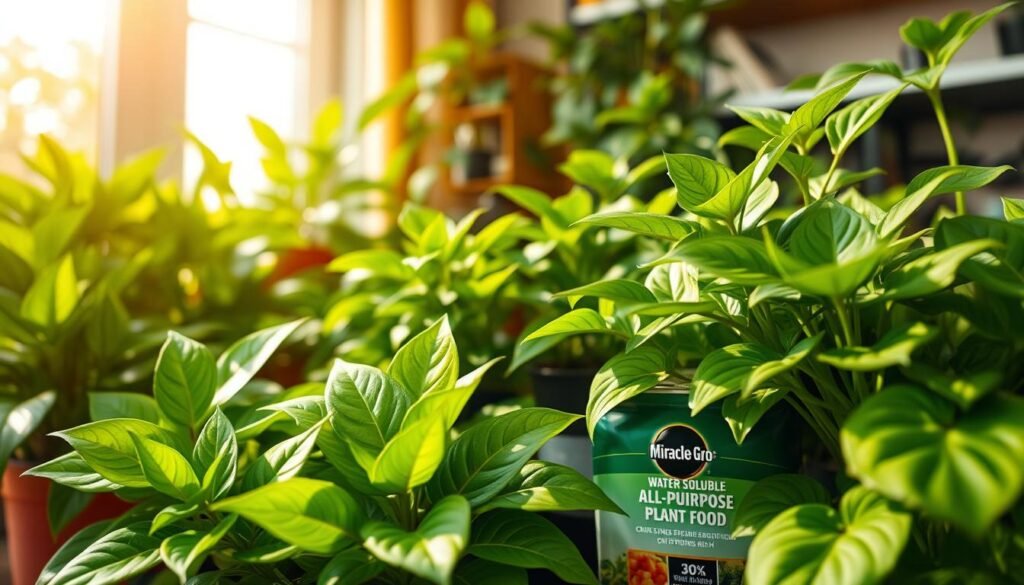
Best bang for the buck: Miracle-Gro Water Soluble All-Purpose Plant Food (24-8-16)
If you want fast greening and low cost per feed, a concentrated water-soluble option delivers visible results quickly.
What it is: water-soluble granules with an N‑P‑K of 24‑8‑16. It’s highly concentrated, has zero odor, and shows new growth and fuller foliage in about two days when mixed correctly.
Why shoppers choose it: the product gives big value per application and fast vigor for leafy houseplants. High nitrogen favors quick leaf growth and strong overall plant health across a broad range of specimens.
When to avoid it
Phosphorus considerations: the 24‑8‑16 ratio is nitrogen-forward. That makes it less ideal during bud set or when you want to push flower spikes.
If a plant is in active bud formation, pick a higher-phosphorus option instead of relying on this as your only feed.
Runoff and waste prevention tips
Because the granules are concentrated, measure precisely and dilute to the recommended indoor strength to avoid overfeeding small pots.
Water until soil is evenly moist but stop before heavy drainage that carries nutrients away. Capture runoff in a tray and reuse it for the next watering when it’s free of pests or disease.
- Quick take: excellent value and rapid growth for foliage-focused care.
- Not a perfect standalone choice if your main goal is stronger blooms.
- Measure, dilute, and manage runoff to get the most value from the product.
Best organic bloom support: Neptune’s Harvest Fish and Seaweed Fertilizer (2-3-1)
A gentle, organic fish-and-seaweed mix can nudge a tired specimen back toward healthy buds without harsh salts. Neptune’s Harvest is a liquid, OMRI-listed option with an NPK of 2-3-1 that supports bud set and steady growth.
Why mixes of fish and seaweed work well
Fish provides usable nitrogen and phosphorus while seaweed adds trace compounds that help a plant cope with stress. Together they promote strong roots and better bud development without forcing excessive leaf growth.
Odor reality check and how to manage it
Be honest: the product can smell fishy and that scent may linger about a day. Mix near an open window and wipe any spills off saucers. Good ventilation keeps the smell from becoming a household issue.
How to use and ideal cases
No measuring tool is included, so use a clean measuring spoon and rinse it right away. Follow label mixing rates and apply about every two weeks during active growth.
- Best uses: transplant shock relief, early root development, and gentle bud support after deadheading.
- Quick tip: avoid combining with high-salt synthetics to limit buildup in pot mixes.
Best slow-release option: Osmocote Plus Smart-Release Plant Food (15-9-12)
A slow-release option can smooth your feeding schedule and keep soil nutrition steady across months. Osmocote Plus uses coated pellets with an NPK of 15-9-12 that feed continuously for up to six months. That steady delivery helps prevent bloom stalls when you miss a scheduled dose.
Why slow-release helps if you forget feeding time
Slow-release pellets release nutrients gradually, so you do less mixing and tracking. The approach reduces spikes in salts and keeps a predictable supply that suits many indoor plants and a single houseplant collections.
Application basics for containers and small pots
Use the included scoop to push pellets into the top inch of soil, then water to activate the coating. For roughly two gallons of soil, the cost-per-application is very low, giving clear value over several months.
- Consistency: ideal if you skip a feed now and then.
- Limit: measuring for pots under 6 inches is tricky—err on the low side.
- Tip: watch the soil surface for white crust and flush with plain water occasionally if a plant is sensitive.
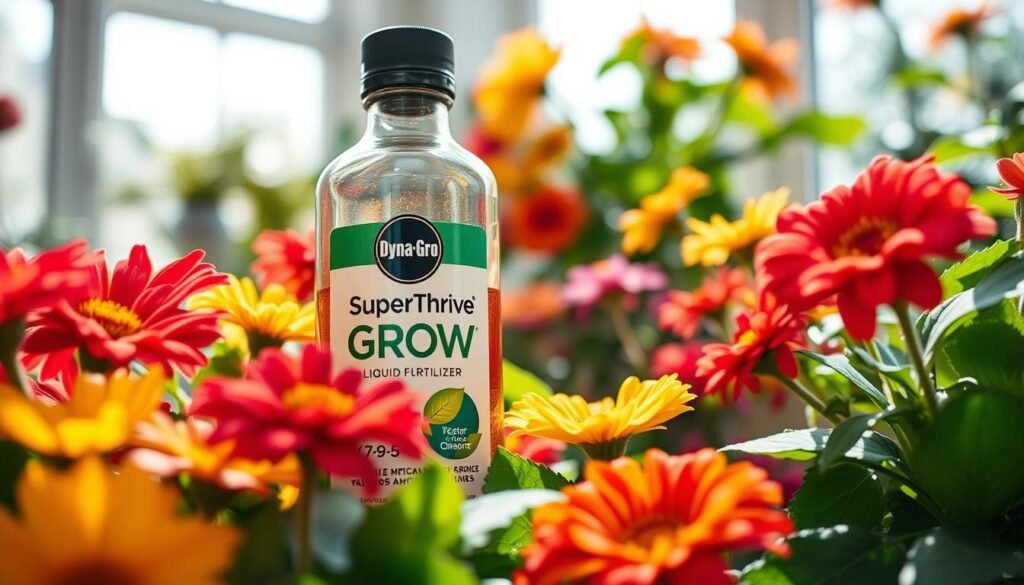
Best liquid for complete nutrition: Dyna-Gro SuperThrive Grow (7-9-5)
Complete liquid formulas simplify routine feeding by packing calcium and micronutrients into every gallon. Dyna-Gro SuperThrive Grow is a water-soluble concentrate with an NPK of 7-9-5 and about 2% calcium. That built-in calcium plus a broad slate of minerals helps avoid slow-developing deficiencies common in small pots.
Built-in calcium and micronutrients for long-term houseplant health
Why this works: the formula includes magnesium, boron, copper, iron, manganese, molybdenum, zinc, and 2% calcium. Calcium aids new growth and reduces bud drop or weak tips that can follow deadheading and rebloom cycles.
Dosing and measuring tips to avoid overfeeding
Tiny label doses can be hard to pour into small watering cans. Mix a larger batch at the light rate (¼–½ tsp per gallon) and keep it in a marked bottle to measure consistently.
Safe mindset: start at the lower rate, observe growth for two weeks, and increase only if leaves show steady vigor and no tip burn.
When to flush soil with clear water to prevent buildup
Frequent liquid feeding can leave salts in the soil. Every 6–8 weeks, or if you see white crust or crispy edges, run clear water through the pot until runoff is low-salt.
Flushing protects roots and keeps the minerals accessible rather than locked in crusted soil.
- Who this suits: growers who want consistent nutrient coverage and fewer missing minerals over time.
- Buyer’s guide note: if you deadhead a lot and push reblooming, steady, complete feeding usually outperforms occasional heavy bloom boosters.
Best for flowering plants: JR Peters Jack’s Classic Blossom Booster (10-30-20)
When blooms are the goal, a targeted bloom booster can shift a plant’s energy into more visible flowers. JR Peters Jack’s Classic Blossom Booster is a water-soluble granule with an NPK of 10-30-20, designed to support strong bud set and abundant display.
High-phosphorus formula that drives bloom and spike growth
Why it stands out: the high phosphorus number gives a clear push at bud set and during active flowering. That extra phosphorus helps encourage flower spikes and fuller blooms without endless leafy growth.
Tested results on common houseplants
In our trials the granules produced clear results: African violets and Rieger begonias showed abundant new flowers. A phalaenopsis orchid also began forming a fresh flower spike.
How to avoid overfertilizing with bloom boosters
Granules dissolve instantly and include a measuring scoop, so they’re easy to use and store. They’re inexpensive per feed—about $0.04 per application—yet powerful.
Warning: follow the label and use this as a phase-based tool, not every watering. To reduce root stress, water the pot first and then apply the feed.
| Feature | Details | Practical tip |
|---|---|---|
| Formulation | Water-soluble granules, NPK 10-30-20 | Dissolves instantly; scoop included |
| Test outcomes | More blooms on violets & begonias; new orchid spike | Use during active bud/flower windows |
| Risk | Easy to overfertilize | Follow label; switch back to balanced feed after bloom |
Other strong picks by plant type and growing goals
If your collection includes nonstandard types, a few targeted products make care simpler and more predictable.
Grow More Cactus Juice (1-7-6) — succulents and cacti
Low nitrogen keeps tissue firm and avoids stretchy, weak growth. A 1-7-6 liquid supports root health and bloom potential in slow-growing succulents without forcing lush foliage.
Dr. Earth Organic Life (4-6-5) — herbs and edibles
Slow-release pellets give steady nutrition and reduce dosing mistakes. The mild hay-like smell and no-manure recipe suit kitchen herb pots and small edible setups, feeding soil gently over weeks.
JR Peters Jack’s Classic (20-20-20) — all-purpose backup
This water-soluble, balanced option delivers quick greening in about three days and new buds in roughly a week when used sparingly. It’s useful across varied species but needs careful dilution in small pots to avoid buildup.
| Product | Form | N-P-K |
|---|---|---|
| Grow More Cactus Juice | Liquid | 1-7-6 |
| Dr. Earth Organic Life | Slow-release pellets | 4-6-5 |
| JR Peters Jack’s Classic | Water-soluble | 20-20-20 |
Match to goal: cacti need low nitrogen, herbs benefit from steady pellets, and mixed collections often do well with a balanced backup. Use accuracy and restraint, and pair feeding with deadheading when you want stronger blooms.
How to read a fertilizer label and match it to your indoor plant needs
A few label details reveal whether a mix truly supplies what small containers need.
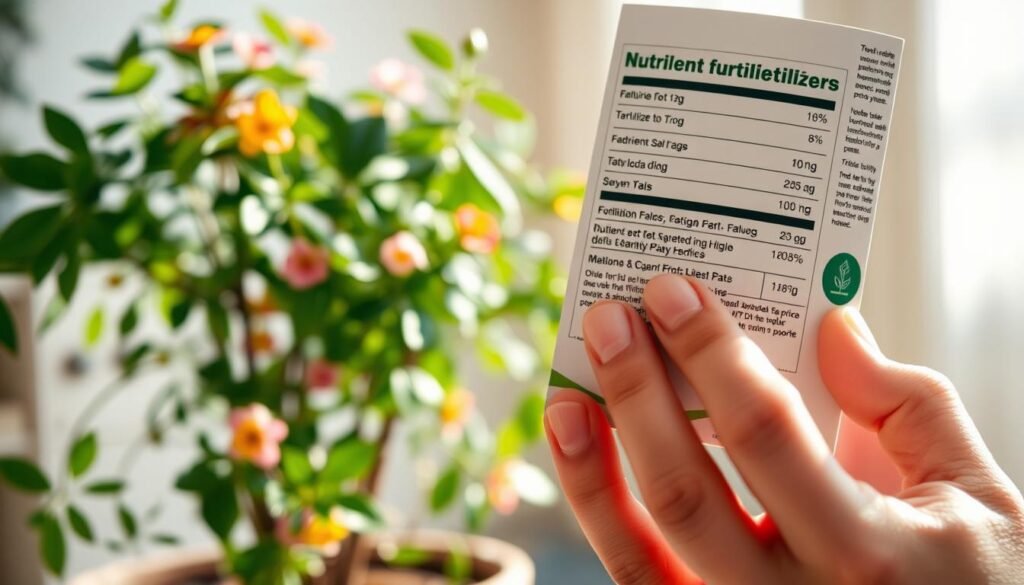
N‑P‑K numbers show the range of nitrogen, phosphorus, and potassium. Complete often means those three are present, but it does not promise calcium, magnesium, or trace ingredients that many potted mixes need.
NPK ratio, key ingredients, and “complete” claims
Scan beyond the front panel. Look for secondary minerals, microbes, or humic acid in the ingredients list. Those items change how a formula performs in small soil volumes.
Mixing, feeding frequency, and bottle size reality
Follow dilution rates exactly. More is not better—overfeeding causes salt buildup. Check bottle size versus how many containers you own; small bottles are fine for a few pots but costly at scale.
Match formula to soil, watering habits, and winter slowdown
If you water often, choose a light, regular feed. If you water rarely, slow-release pellets suit you better. Reduce feeding in winter when growth slows to avoid nutrient buildup.
| Label element | What it tells you | Quick action |
|---|---|---|
| N‑P‑K numbers | Primary nutrient balance | Pick higher P during bud set; balanced for recovery |
| Ingredients list | Shows micronutrients, organics, microbes | Choose humic acid or calcium if listed |
| Directions & bottle size | Mix rate, frequency, value per use | Follow label; scale bottle size to collection |
Avoiding fertilizer burn and overfertilization indoors
Salt buildup in tight pots can quietly damage roots and show up as scorched leaf edges. In small containers, excess minerals concentrate faster than in garden beds. That concentration causes visible damage before roots recover.
Common warning signs
- Crispy or brown leaf tips and edges.
- White crust on the soil surface or pot rim.
- Wilting even when the soil feels moist; leaf drop follows.
- Stunted growth and pale new leaves.
Safer feeding strategies
Feed lighter and more often. Use half-strength mixes for sensitive specimens and avoid adding nutrients to bone-dry soil. Keep watering steady so salts do not spike.
Flushing and protecting sensitive houseplants
Flush periodically with plain water to rinse excess salts. Run water through the pot until runoff is clear, then let the pot drain. Variegated and slow-growing plants tolerate salts poorly; treat them with gentler routines and less frequent dosing.
| Issue | What to do | Why it helps |
|---|---|---|
| Crispy leaves | Stop feeding; flush pot | Removes surface salts that burn tissue |
| White crust on soil | Pause nutrients; flush monthly | Prevents root damage from salts |
| Wilting with moist soil | Check roots; reduce strength | Excess minerals block uptake, causing stress |
Quick rule: don’t force rebloom after deadheading with heavier dosing. Recovery and balance beat intensity every time. If you see crust, pause feeding and flush right away.
Conclusion
A clear plan—trim, feed, and steady care—gets more buds with less guesswork. Deadhead correctly, choose a matched plant food, and keep light and watering consistent to push reliable rebloom in container collections.
Our top everyday pick is Espoma Organic Indoor Plant Food as a gentle, balanced daily choice. Use Jack’s Classic Blossom Booster during active bud set when you want a targeted bloom push, then return to a balanced routine.
Read labels, measure precisely, and use restraint; accurate dosing prevents most salt buildup. Remember secondary nutrients—especially calcium—and consider fish-and-seaweed blends when a specimen needs gentle recovery.
Tip: reduce feeding in winter when many houseplants slow growth. Action plan: deadhead today, pick one product that matches your plant type, and track new growth and flowering over the next month to fine-tune care.