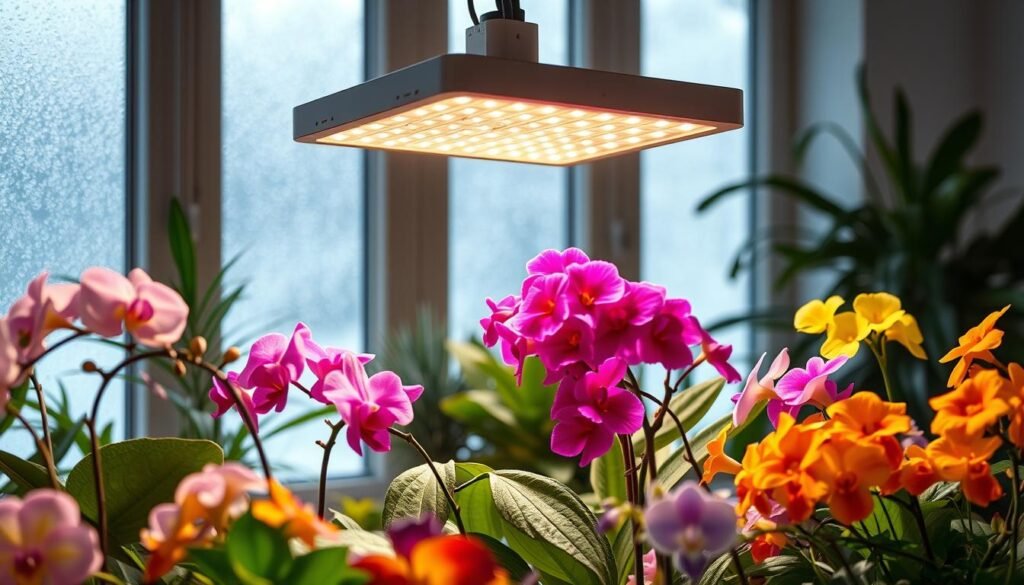

Surprising fact: many homes in the U.S. lose more than 60% of usable daylight in winter, and that drop can stall buds and cut blooms even when watering and soil care are perfect.
This buyer’s guide focuses on practical lighting choices that keep flowering houseplants alive and actively growing through the cold months.
Good lighting is more than “any LED.” You will learn about spectrum, intensity, placement, and fixture type so choices fit real-world rooms.
Full spectrum LEDs mimic natural light and work as a supplement by a window or as a primary source in darker spaces. We’ll cover setup tips like distance, timers, and coverage. Expect measurable targets in lux and foot-candles so you can make confident decisions.
Preview: decorative pendants for living rooms, utilitarian panels for focused gardens, and compact solutions for apartments will be compared by use case.
Key Takeaways
- Winter daylight drops can stunt bloom even with proper watering.
- Choose full spectrum LED options to approximate natural sunlight.
- Placement, intensity, and timers matter as much as fixture style.
- We provide lux/foot-candle targets to remove guesswork.
- Select decorative or utilitarian fixtures based on room and setup.
Why Indoor Flowering Plants Struggle in Winter and How Grow Lights Help
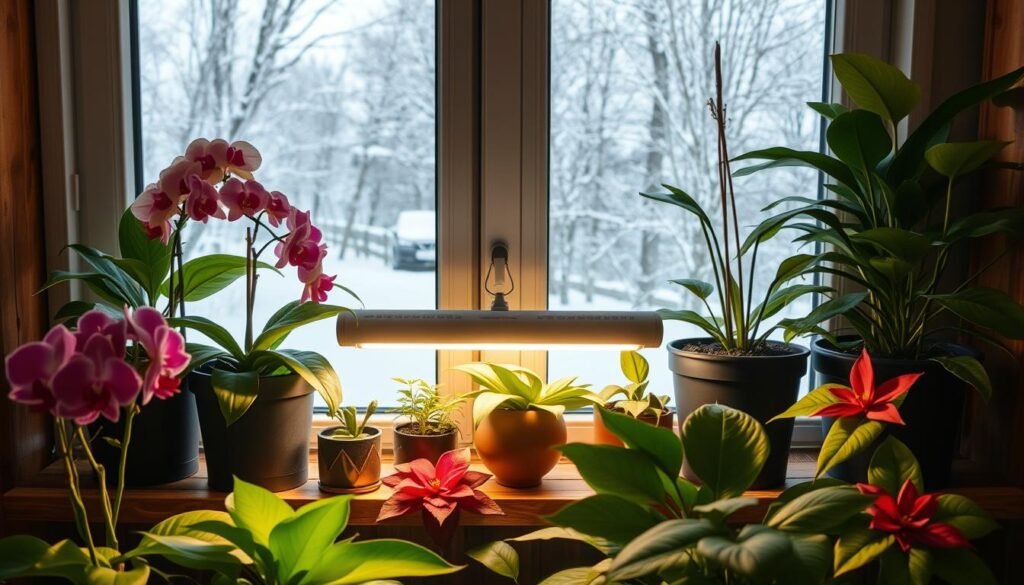
Winter sun sits lower in the sky, and that shift often turns bright spots into weak exposures. Rooms near a window get less direct sunlight, and overall conditions become darker. That defeats many species that need steady, bright light to set buds.
Not all standard LEDs supply the right wavelengths or intensity. Plants need specific spectra and enough output to support photosynthesis. Energy-efficient LED grow options can fill the gap when daylight is scarce.
Supplemental versus primary light
Supplemental light extends daily hours at a bright window. It pairs with natural light to keep blooms on schedule. Primary light means the fixture provides most of the energy the plant uses—necessary in rooms with no usable sun.
Signs your houseplants need more light
- Stretching or leggy stems and small leaves.
- Buds that drop or fail to open.
- Slow growth and faded foliage color.
- Plants leaning toward the window.
“If a plant can’t photosynthesize enough, it will conserve energy and skip flowering.”
Some low light houseplants may survive but rarely flower. Treating lighting as a controllable winter tool, alongside watering tweaks, gives better results without moving every pot. Learn how to adjust watering with seasonal care here.
| Situation | Best approach | Expected result |
|---|---|---|
| Bright window in summer → dim in winter | Use supplemental light hours near the window | Maintain bud set and steady growth |
| Room with little natural light | Install a primary light source of appropriate spectrum | Plants will photosynthesize and may bloom reliably |
| Low light survivors | Keep as foliage specimens; adjust expectations | Healthy foliage but limited or no flowering |
grow lights for indoor flowering plants: What to Look for Before You Buy
Before you click ‘buy,’ focus on usable output at the leaf level and how the unit fits your room. A short checklist keeps decisions practical and helps match fixture type to real needs.
Full spectrum lighting vs standard LED bulbs
Full spectrum LEDs mimic sunlight and support both leaf growth and bloom phases. Standard LED bulbs may look bright but often lack the balanced wavelengths plants use for photosynthesis.
Choose full spectrum when you want one fixture to handle both vegetative and reproductive stages reliably.
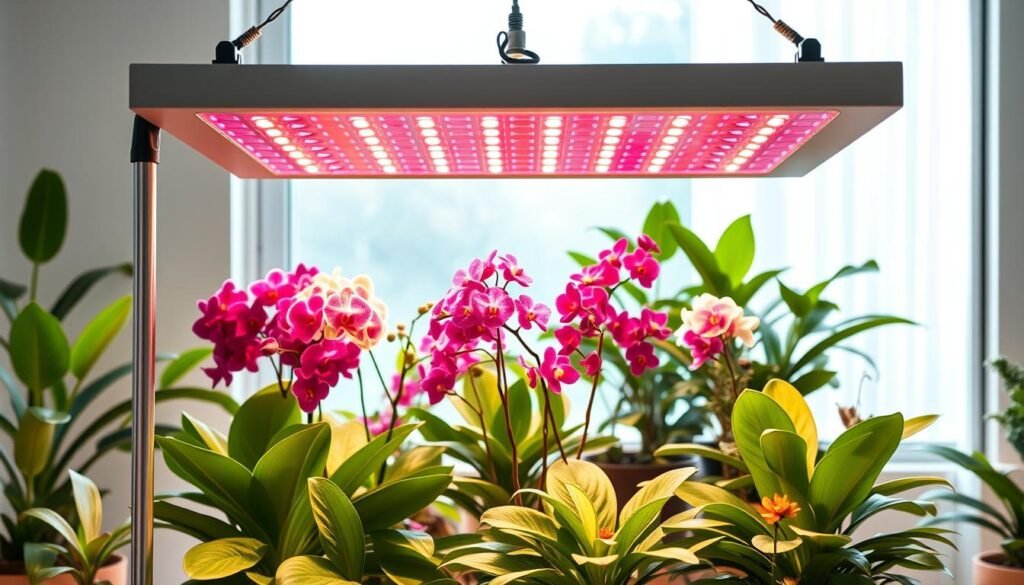
Light intensity and coverage area for flowering vs foliage
Flowering species need higher intensity than foliage-only types. Aim for higher usable output rather than relying on advertised wattage alone.
Remember: coverage claims depend on hanging height and beam spread. A single strong fixture fits a centerpiece plant; shelves often need multiple narrow bars.
Mounting style and space planning for homes and apartments
Pick mounts that suit room size: ceiling hooks, clamp mounts, or mobile stands. Cable management keeps setups neat and safe in small spaces.
Energy use and daily run time expectations
LED options are efficient, but winter runtimes add up. Compare wattage, estimated daily hours, and how many fixtures your collection requires.
| Type | Typical wattage | Coverage (at recommended height) | Best use |
|---|---|---|---|
| Bulb / A-style | 20–40 W | Small single pot (1–2 sq ft) | Spot lighting, bedside or lamp setups |
| Bar / Strip | 24–80 W | Linear shelves (up to 3–4 sq ft each) | Multi-pot shelves, kitchen herb rows |
| Panel / Flat | 40–200 W | Wide displays (4–10+ sq ft) | Centerpiece groupings, full-coverage benches |
Understanding Light Spectrum for Better Blooms Indoors
Think of spectrum as the recipe that decides how a plant develops—each wavelength plays a different role. It’s not just how bright a lamp looks to us; it’s which colors are present and how strong they are at the leaf surface.
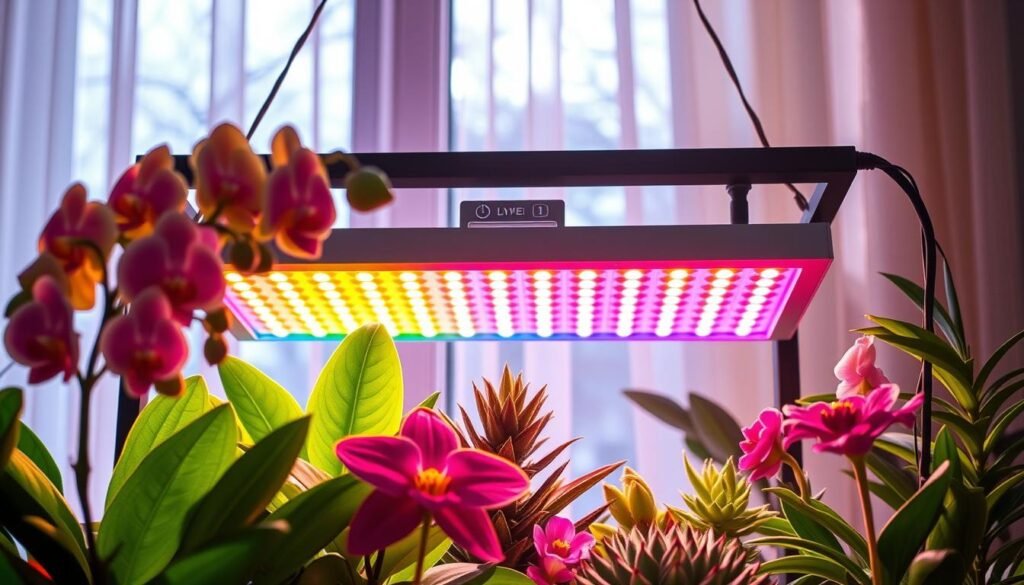
Red wavelengths and support for flowering
Red light (~660–730 nm) cues flowering and fruiting processes. Systems that emphasize red-rich output help buds set and support reproductive stages.
Blue wavelengths for compact growth and foliage
Blue (400–500 nm) promotes sturdy stems, strong leaves, and good chlorophyll production. Higher blue ratio keeps specimens compact and prevents stretching that can drop buds.
White and full-spectrum LEDs that mimic sunlight
White or full spectrum led units blend red, blue, and middle colors so the room looks natural while delivering usable wavelengths. Early red/blue-only “blurple” options worked, but full-spectrum fixtures are easier to live with and still effective.
“Spectrum and intensity must work together—one without the other limits results.”
Takeaway: If you want one versatile choice for mixed collections, start with a high-quality full spectrum led. Match that spectrum to enough intensity at the leaf level and buds respond reliably.
How Much Light Do Indoor Flowering Plants Need?
Measureable light numbers beat guesswork when you want buds to set and hold through winter. Use a handheld meter to compare natural daylight and your LED setup at the leaf surface. Judging by eye is unreliable.
Using a light meter: lux and foot-candles at plant level
Lux and foot-candles both measure illuminance. Foot-candles are common in grow guides in the U.S.; lux is metric. Always take readings at the leaf surface, not next to the fixture.
Why distance from the fixture changes results fast
Intensity falls quickly as you move away from a source. Small strip setups can read ~200–300 foot-candles when very close. A bar at 6–12 inches can hit ~700–800 fc.
Powerful panels may produce ~3000 fc at about 1 foot. A few extra inches can cut those numbers sharply.
Matching “low light” vs “bright indirect” to real measurements
Translate tag terms into numbers: low light often means under 100 fc; bright indirect is typically 200–1000 fc depending on the species.
Use these targets when you shop. Pick a grow light that can reach your target intensity at a realistic height and run time to meet your plant requirements without blasting the room all night.
| Common tag | Foot-candle range | Actionable note |
|---|---|---|
| Low light | Below 100 fc | Best as foliage specimens; flowering unlikely |
| Bright indirect | 200–800 fc | Use bar or strong bulb at moderate height; check at leaves |
| High light / full sun equivalent | 1000+ fc | Powerful panel or close placement; watch heat and duration |
Hanging Height and Placement Guide Based on Plant Light Levels
Where you hang a fixture often decides whether a bud sets or a leaf scorches. Use the ranges below as practical starting points. Measure at the canopy when you can, and adjust after one to two weeks.
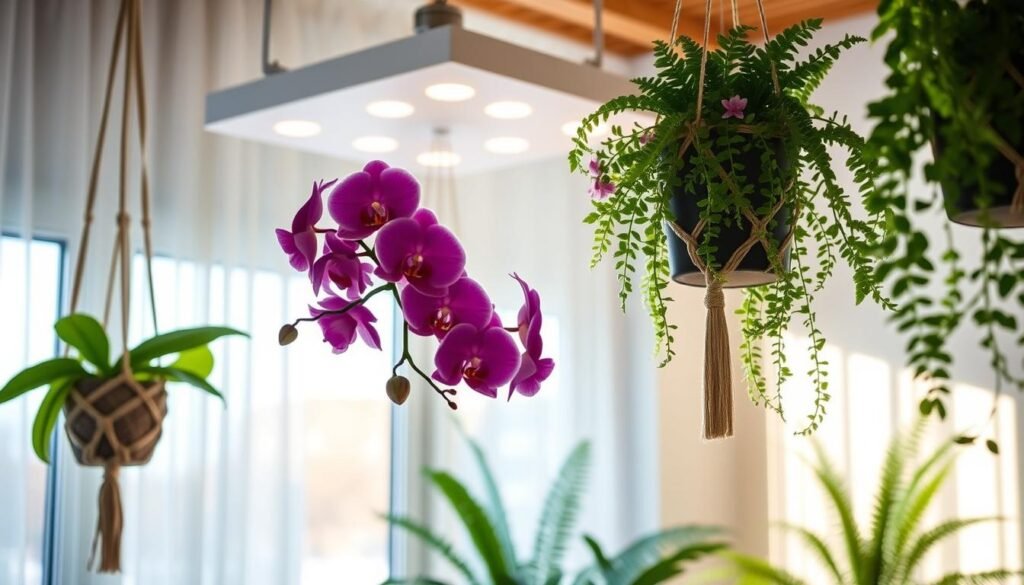
Full sun examples and close placement
Hibiscus needs the strongest placement and consistent timing to bloom. Use the Soltech Highland narrow-beam recommendation and keep the fixture 12–24 inches above the canopy.
High light specimens and distance ranges
Large Aspect units: 24–36 in above the tops. Small Aspect: 12–24 in. Good candidates include dwarf citrus and yucca. Raising the fixture increases coverage but lowers intensity, which affects bud set.
Medium light setup
Large Aspect: 36–48 in; small Aspect: 24–36 in. Species like nerve plant and Boston fern do well here. Start at the mid-point and tweak height based on new growth.
Low light placement and expectations
Large Aspect: 48–60 in; small Aspect: 36–48 in. Snake plant and pothos survive with higher mounts, but flowering is less likely unless you increase intensity and hours.
- Start at the recommended distance, take a meter reading if possible.
- Watch leaf posture and bud set for 7–14 days, then fine-tune.
- Keep airflow and heat management in mind with high-power fixtures to avoid scorch.
Picking the Right Fixture Type for Your Home Setup
Choose a lighting format that fits your room, your décor, and the way you care for plants. The best option is the one you’ll use consistently and can place at the right distance for good intensity.
Bulb-style units for targeted boosts
Bulb or A-style bulbs are the easiest entry point. Swap a lamp bulb for a Vita grow bulb in a reading chair or side table to give one flowering specimen a targeted boost.
Bar fixtures for shelves and kitchen herb rows
A Grove bar is ideal for even coverage across multiple pots. Bars work well on shelves and in narrow displays where spread matters more than a single hotspot.
Track systems for flexible angles
Track setups like the Highland LED track system let you aim heads at individual plants. They suit mixed collections and shift as the season or arrangement changes.
Tabletop and stand options for small spaces
Tabletop grow units and multi-tier stands are great for rentals and apartments. They often require no drilling and give height control while keeping décor-friendly lines.
Tip: Pick a design-forward fixture if you want it running in living areas. A pleasing look helps make consistent use the easy choice and keeps winter blooms on schedule.
Recommended LED Grow Light Options and What They’re Best For
Choose fixtures that match room style and measurable output. A living-room pendant can look great and still hit useful foot-candle targets, while a utilitarian panel gives raw power where daylight is missing.
Design-forward versus utilitarian panels
Soltech Aspect suits sofas and shelves: elegant finish, ~500–800 fc at ~4 ft, and a warm-white ~3000K feel that blends with household lighting.
SANSI 70W panel prioritizes output: ~3000 fc at 1 ft and ~300–500 fc at 4 ft. It works well in a basement or dedicated bench where power and coverage matter most.
Sizing coverage: small pots versus larger displays
Small pots do well under narrow, intense beams. Bar fixtures deliver ~700–800 fc at 6–12 in and are great for shelves with close mounting.
Large groupings need either higher-power panels or multiple fixtures to avoid dim edges and uneven results.
Narrow beam vs wide beam—when to choose each
- Narrow beam: spotlight a single specimen or reach down from high ceilings.
- Wide beam: even spread across multiple pots on a shelf or table.
| Type | Typical reading | Best use |
|---|---|---|
| Design pendant (Aspect) | 500–800 fc @ 4 ft | Living areas, single focal specimen |
| Panel (SANSI 70W) | 3000 fc @ 1 ft; 300–500 fc @ 4 ft | Grow benches, basements, raw power |
| Bar / strip | 700–800 fc close; 200–300 fc farther | Shelves, multi-pot rows |
“Pick the highest power you can mount and live with, then choose beam spread based on whether you light one or many.”
Setup Tips for Winter Success: Timers, Duration, Heat, and Adjustment
A steady evening routine with a timer is one of the simplest ways to coax winter buds into forming. Consistent day length tells a plant when to use energy and when to rest, so set a dependable schedule and stick to it.
Photoperiod basics: consistent schedules support blooming
Use a timer to extend short winter days. A common routine is to add a few hours in late afternoon and turn the fixture off at night. This mimics longer daylight and helps reproductive phases.
Airflow and safe spacing so fixtures can dissipate heat
Even efficient LEDs produce warmth at the housing. Keep some space between the lamp and foliage and allow airflow so heat and humidity don’t build up.
How to adjust height over time based on plant response
If stems stretch or buds drop, lower the unit or add hours. If leaves bleach, curl, or show stress, raise the fixture and reduce intensity. Track results over weeks, not days.
- Check leaf posture weekly.
- Increase energy only in small steps.
- Pair good airflow with steady lighting to improve outcomes.
| Issue | Adjustment | Expected result |
|---|---|---|
| Stretching | Lower light / add hours | Stronger stems, more buds |
| Leaf bleaching | Raise light / shorten exposure | Reduced stress, recovered foliage |
| Heat buildup | Improve airflow / increase spacing | Safer conditions, stable growth |
“A timer and modest spacing make the biggest difference in winter care.”
Conclusion
Choosing the right fixture and schedule turns reduced daylight into a manageable variable.
Pick a grow light that delivers the right intensity at the leaf surface and a full spectrum output you can run reliably. Match the type—bulb, bar, track, stand, or panel—to room size and how many plants you keep.
Measure existing natural light, choose a unit that hits your target, set a timer, and change height or duration slowly while you watch new growth. Low light specimens often keep foliage but usually need brighter, steady light to set blooms.
With the right LED selection and small adjustments, most houseplants will look healthier and more vibrant through winter—not just survive.