
Surprising fact: up to 70% of non-blooming house plants suffer from simple moisture errors rather than disease.
Most gardeners assume a fixed routine works, but water needs shift with light, pot type, soil, season, temperature, and humidity.
This guide frames the top care mistakes that quietly prevent blooms and shows a practical way to build a living, useful watering routine that fits real life in U.S. homes.
Expect simple diagnostics—finger test, pot-weight check, and moisture meter tips—and fixes you can do today, like watering to runoff and checking root-depth moisture.
We’re not giving a strict calendar. You’ll get a repeatable method to group plants, track dates, and adjust for winter, bright windows, or dry HVAC so blooms get a fair chance.
Key Takeaways
- There’s no one-size-fits-all; water by plant type, pot, light, and season.
- Avoid the biggest bloom-killers: too much water, too little, or shallow routine care.
- Use quick diagnostics: finger test, pot weight, or a moisture meter.
- Water deeply until runoff and check root-zone moisture, not just the surface.
- Group plants by needs and adjust your routine through seasonal changes.
- Small habit changes now can revive blooms fast.
Why watering mistakes stop indoor flowers from blooming
Moisture habits shape whether a plant uses energy to flower or just survive. Small errors in how you water can cut oxygen to the roots, dry fine feeders, or cause boom-and-bust cycles that cancel buds.
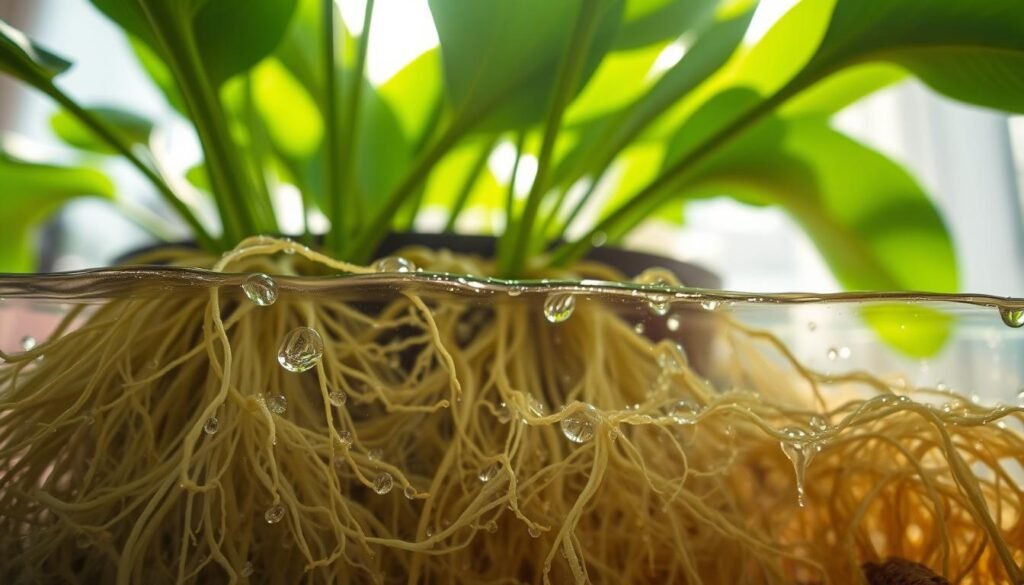
Too much water blocks oxygen to roots and triggers root rot
Giving too much water fills soil pores with liquid and pushes out air. Roots need oxygen to feed the plant. Soggy soil makes roots weak and invites rot, so the plant stops forming blooms.
Too little water dries roots and stalls bud formation
When a plant does not get enough water, fine feeder roots dry and die. The plant then shifts energy to survival, not buds. Drought stress delays or cancels flowering.
The “same day, same way” habit ignores plant-by-plant needs
Different plants, pots, and mixes dry at different rates. A strict calendar is a risky rule. Instead, check soil and watch signals so you avoid accidental plant death from kindness.
- Don’t assume more water = more flowers; chronic wet soil reduces blooms.
- Match how often you water to each plant’s needs and pot type.
- Simple rule: water by soil moisture and plant signals, not by date alone.
How to tell your plant needs watering before you change anything
Before you change anything, learn simple checks that tell you whether a plant truly needs watering. Use one objective test first so you don’t overwrite the pot or leave roots thirsty. These checks look below the top layer where most roots actually live.
Check below the surface, not just the top inch
Topsoil can feel dry while the root zone stays moist. Gently push a finger down an inch or two in small pots to judge real soil moisture.
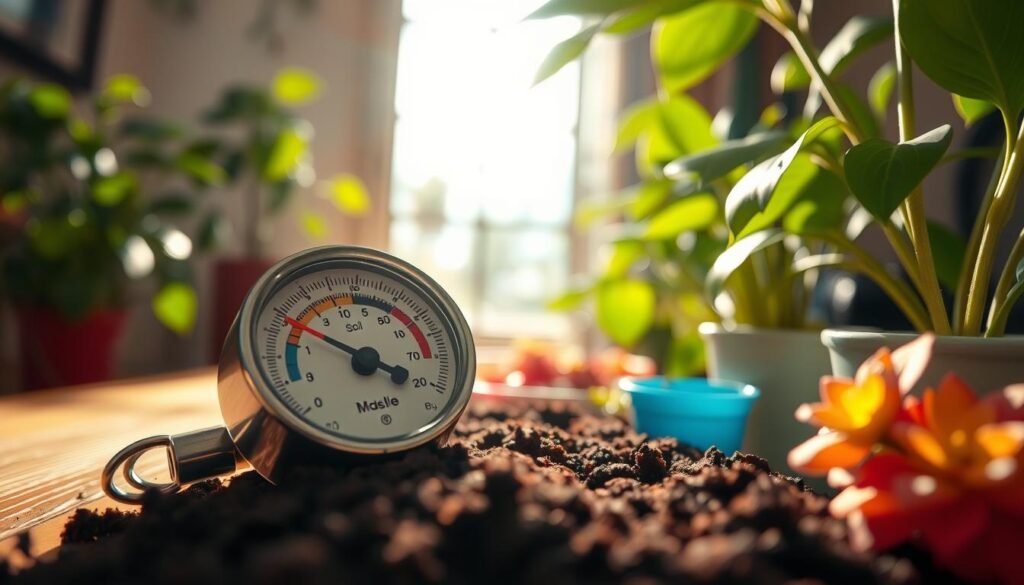
When to use a moisture meter
A moisture meter shines for large pots, hanging plants, and pots with top dressing. It reads deeper moisture so you don’t overreact to dry surface soil.
Try the pot-weight test
Lift a pot after watering and again when dry to learn the weight difference. That memory helps you spot dry pots fast without tools.
Wooden skewer for root-depth checks
Push a skewer to the bottom, pull it out, and check for damp soil on the stick. Clean and dry means the root zone likely needs water.
Read visual cues
Look for drooping leaves in many tropicals and wrinkling or softening in succulents. Still, confirm with one of the objective tests above before you act.
Bottom line: Decide that plants need watering only after a quick test. Once you can tell reliably, designing a simple routine becomes much easier.
Create an indoor flower watering schedule that fits your home
Turn random care into a simple plan you can keep during busy weeks or travel.
Group by type and frequency. Batch plants that need water weekly, every 2–3 weeks, or only when dry. Label pots or keep a quick list so you don’t mix types on a single care day.
Match frequency to light
Brighter windows and grow lights speed drying, so those pots need attention more often. Dim spots hold moisture and need water less often.
Adjust by season
Growth slows in winter, so aim to water less often and avoid long stretches of wet soil. Track how many days each pot takes to dry in summer versus winter.
Track dates and avoid double care
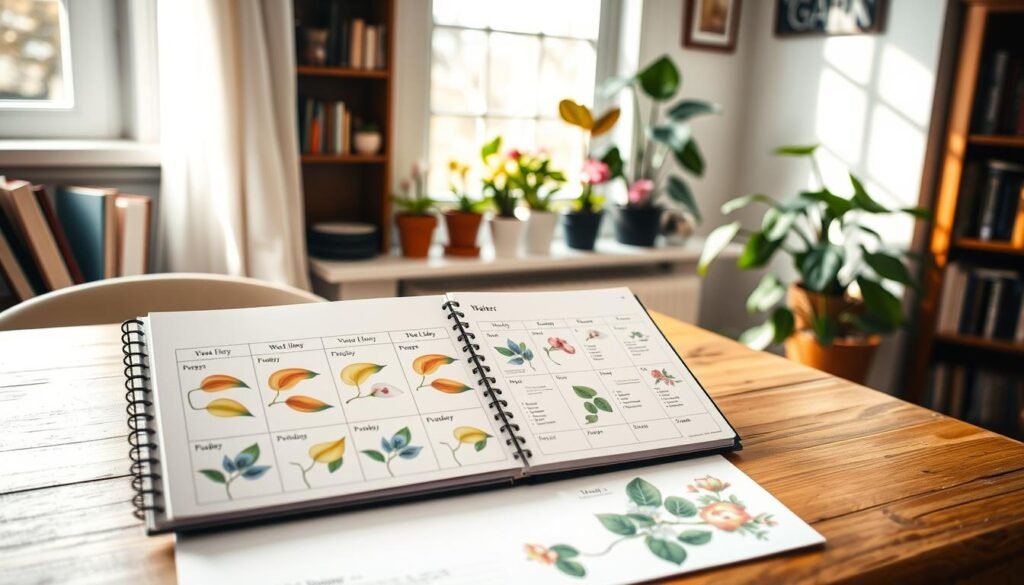
Use a phone reminder, a paper calendar by the sink, or a simple log noting dates and observations. A short weekly check tells you which pots need water and saves time.
| Group | Typical interval | Light tip | Notes |
|---|---|---|---|
| Thirsty types | Every 5–7 days | Place near bright window | Check weight before watering |
| Moderate types | Every 10–14 days | Medium light; watch top 2 inches | Record days dry in log |
| Slow-dry types | Every 2–3+ weeks | Low light; water sparingly | Water less often in winter |
- Keep a short weekly routine: check moisture, then water only the pots that need it.
- Tracking helps spot patterns like a pot drying in 6–8 days in summer and 12–14 days in winter.
- Make a plan you can keep—consistency beats perfect timing.
Watering schedule mistakes that quietly reduce blooms
Hidden errors in routine care shift a plant from flowering to mere survival. Small habits around how and when you water can quietly reduce blooms even when leaves look fine.
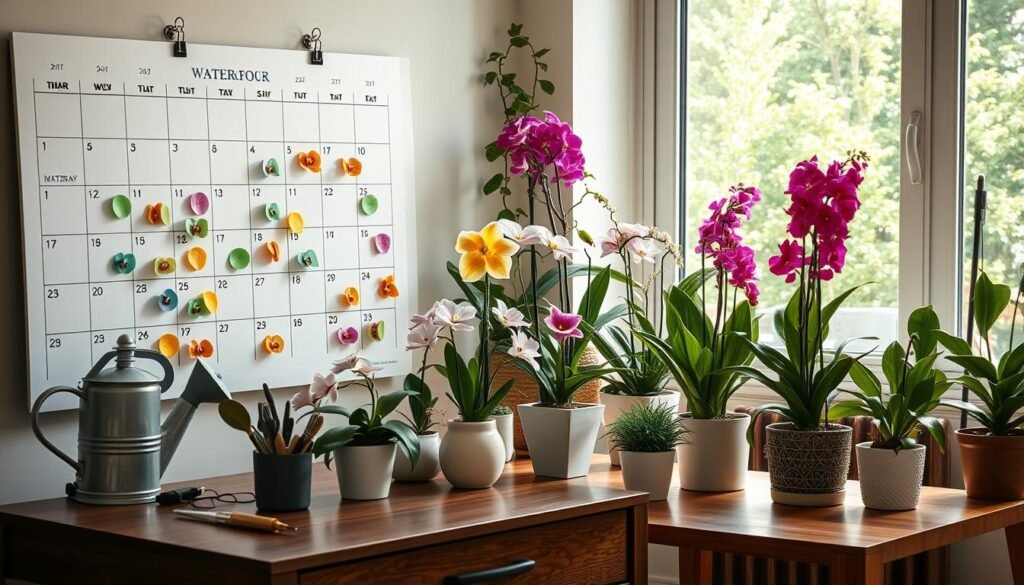
Checking vs. watering “just in case”
Many people often water without testing the soil first. That extra water can keep the root zone too wet and cut oxygen.
Fix: check moisture before you add water. Make watering a decision, not a habit.
Waiting too long and boom-and-bust cycles
Letting plants dry out fully then drenching them stresses roots. This stops buds from setting.
Fix: aim for steady moisture by testing soil and planning a repeatable time to check pots.
“Hit and run,” daily wet soil, and random timing
A quick splash wets only the surface. Water every day or at random times and you risk soggy soil or confused plants.
Fix: water deeply when needed, then return on consistent days you can keep—weekend checks work for busy homes.
| Mistake | Why it hurts blooms | Quick correction |
|---|---|---|
| Watering “just in case” | Chronic wet soil reduces oxygen and root function | Test soil; water only when root zone is dry enough |
| Boom-and-bust drying | Stress delays or cancels bud set | Check often; top up moisture before full wilt |
| Surface-only pours | Top layer wet, roots stay dry | Water until runoff to saturate full root ball |
| Daily or random timing | Creates soggy or unpredictable conditions | Pick consistent check days and stick to them |
How to water the right way so blooms have a chance
How you water matters as much as how often — good technique helps buds form and open. Use a method that reaches the full root ball so the plant can feed and set blooms.
Water deeply until runoff. Make sure you have a drainage hole and pour slowly until you see runoff. This ensures the entire soil mass is saturated and the roots get even moisture.
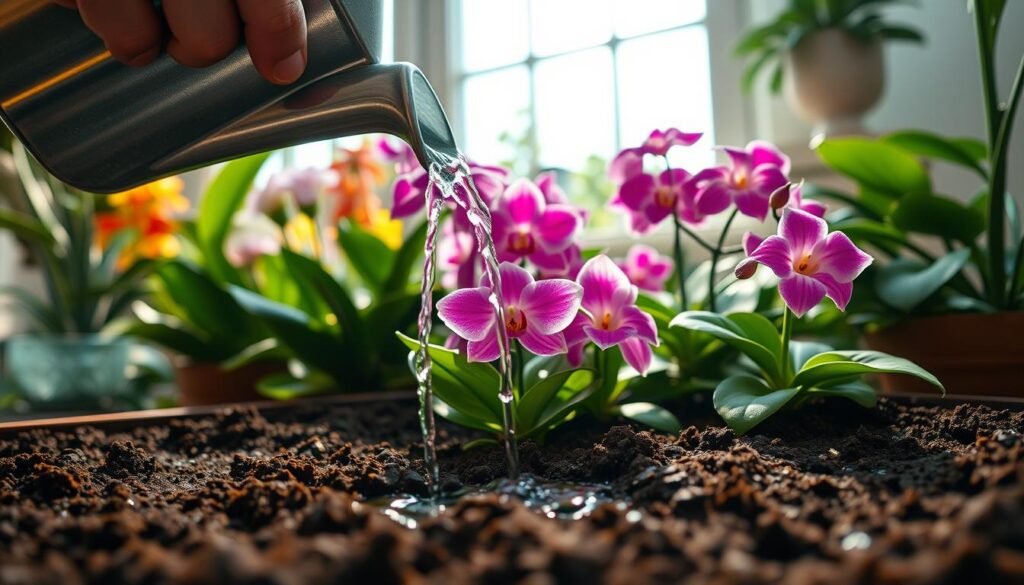
Top watering done right
Pour slowly and evenly around the pot. Pause so water can soak in, then continue. This way the full soil mass wets, not just one corner.
Bottom pot watering: when it helps and when it can hurt
Bottom pot fills can revive very dry mixes or protect fragile leaves. But make sure to alternate with top pours. Relying only on bottom pot methods can leave the upper soil dry and cause mineral buildup.
Prevent mess and protect floors
Use saucers, cork mats, or waterproof liners. Pour close to the soil with a long-spout can and drain trays after 10–15 minutes so pots don’t sit in water.
| Technique | When to use | Quick tip |
|---|---|---|
| Deep top pour | Most potted plants | Slow, even pour until runoff |
| Bottom pot soak | Very dry pots or delicate foliage | Limit sessions; follow with a top check |
| Succulents and succulents cacti | Only after soil dries fully | Deep soak, then long dry period |
| Mess control | Apartments and wood floors | Saucers, cork mats, drain trays |
Make sure your technique matches your routine. The correct way to water plus consistent checks is what moves leaves into real blooms over time.
Pot size, drainage, and soil mix mistakes that throw off your watering
How a pot breathes and how the soil holds water decide whether roots get steady moisture.
Why pot size matters
Small pots dry faster than large ones. A 4–6 inch size pot can need water every few days in bright light, while 10–14 inch containers often stay wet for many days.
That difference is one of the biggest reasons a “perfect” routine fails: the same care makes small pots thirsty and larger plants sit soggy.
Pot material, drainage, and root-ball issues
Unglazed clay and terra cotta breathe and lose moisture quickly. Plastic and glazed ceramic hold wetness longer. Match the pot material to how often you want to check moisture.
No drainage hole? Water can pool at the bottom and roots may sit in water even when the surface looks dry. Always use pots with drainage or add a layer that promotes flow.
Potbound roots reduce the soil volume that holds water, so tight root balls make plants get thirsty faster. Repot when roots circle the root ball.
Soil mixes and top-dressing
Heavy mixes hold water and slow dry-down. Fast-draining mixes let water pass quickly and need more frequent checks.
Top-dressing with moss, bark, or rocks looks neat but can hide wet soil and slow evaporation. Lift the top layer when you test moisture so you see the real condition.
- Practical rule: expect quick dry-down in 4–6″ pots; slower drying in 10–14″ pots.
- Match watering frequency to pot + soil, not to what another plant in your home seems to like.
Home environment and water quality mistakes that affect moisture and flowering
Even without moving a pot, shifts in air flow and water quality change how often a plant will want water.
Temperature swings and HVAC speed dry-outs
Warm rooms and vents pull moisture from soil fast. If a pot sits near a heat register or AC vent, it will want water sooner than pots in the same room.
Move sensitive pots away from direct airflow and check soil more often during heat waves or winter heating cycles.
Humidity changes alter watering frequency
High humidity slows evaporation and helps soil hold moisture. Dry house air, common with central heat, makes pots dry faster and stresses plants.
Simple fix: group pots, use a tray of pebbles, or add a humidifier so you don’t overcompensate with extra watering.
Tap water minerals can hide as stress
Hard water leaves salts that cause brown tips and stunted growth. This reduces a plant’s energy and can cut bloom potential.
“If your house has hard water, try filtered or rested room-temperature water to limit buildup.”
- Let tap water sit to off-gas chlorine.
- Use filtered water or occasional rainwater in hard-water areas.
- Adjust care rather than copy a friend’s routine—your house sets the rules.
Conclusion
Bloom success begins when you stop guessing and match care to real soil signals. Check below the surface, confirm with a moisture meter for large containers, then water deeply until runoff so the whole root ball is wet.
Water less often in winter and avoid daily ‘hit-and-run’ splashes that only wet the top. Remember that plant needs vary by pot, mix, light, temperature, humidity, and water quality.
Don’t water every day, don’t keep random times, and don’t skip a quick test. Treat your routine like a flexible plan: a consistent check-in plus small adjustments will beat a one-size rule.
Final tip: if unsure, verify moisture first. Track results for a few weeks—once houseplants stabilize, they are far more likely to set buds and hold blooms.