
Surprising fact: 60% of home plant problems come from overwatering, not thirst, and light is often the hidden trigger.
Light and watering act as twin controls for healthy plants. Change one and the other shifts. Bright spots speed drying and growth. Dim corners slow both.
In plain terms: direct light means close to a sunny window. Bright indirect is a few feet back or behind a sheer curtain. Low light is a shaded corner or north-facing room.
There is no single calendar for care. The simple rule is check the soil where roots live before you add more water. This guide gives a quick check-first routine so you stop guessing.
Most flowering plant troubles start with too much moisture. Follow the checks in this article and you will spot soil, pot, and leaf signals early. Practical troubleshooting is coming next.
Key Takeaways
- Light level and moisture are linked — change one, adjust the other.
- Use window direction and distance to place plants correctly.
- Bright spots dry soil faster; shaded areas slow use.
- Always check root-zone moisture before adding water.
- Overwatering is the top indoor plant risk; learn the signs early.
Start With This Rule: Water Based on Soil Moisture, Not a Fixed Schedule
Begin with a single rule — check what the roots need before you grab the watering can.
Fixed dates fail because two identical plants can dry at different speeds in separate rooms or pots. Many houseplants land in a broad range of 1–3 weeks between drinks, but that is only a starting point.
Factors that change this timeline include light and drafts, heating or AC cycles, pot size, and indoor humidity. These variables shift how fast the soil loses moisture and when your plant will need water.
Quick reality check
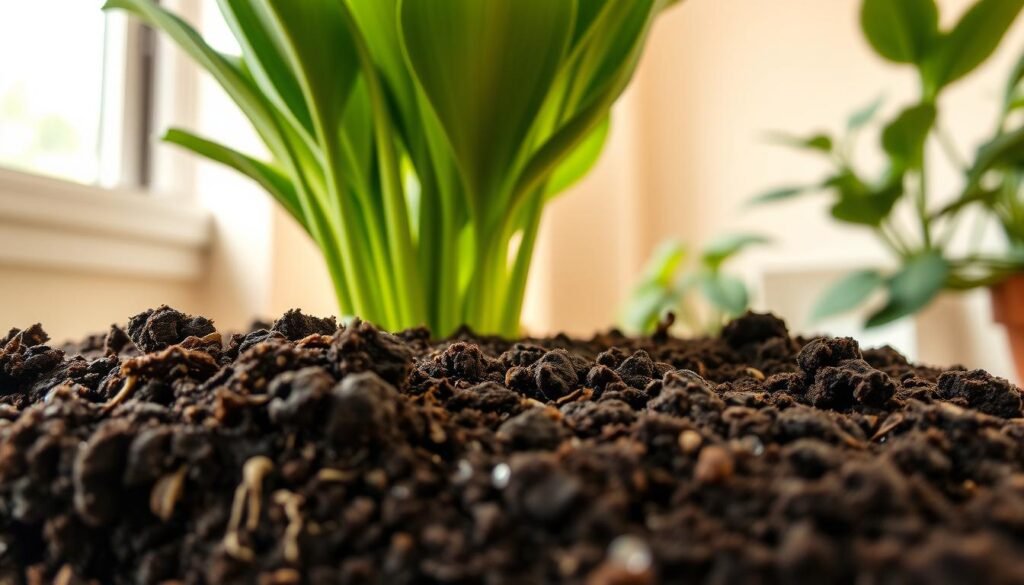
Plants need oxygen at the roots as much as liquid. Constantly wet soil cuts oxygen off and creates bigger problems than slightly dry soil.
- Shift your question from “Is it watering day?” to “Does this soil actually need water today?”
- Root-zone moisture is the true trigger for action.
- Tracking moisture beats memorizing calendar dates.
| Factor | Effect on Drying Time | Practical tip |
|---|---|---|
| Light | Speeds drying | Move back from a sunny window |
| Pot size & material | Small or porous pots dry faster | Use larger or glazed pots to slow loss |
| Humidity & HVAC | Low humidity and heat speed loss | Group plants or use a tray to raise local humidity |
Next: a fast, repeatable check anyone can do in under a minute per plant.
How Often to Water Indoor Flowers: A Practical Check-First Routine
A quick soil check saves blooms and prevents soggy roots.
Use the finger test to check below the surface
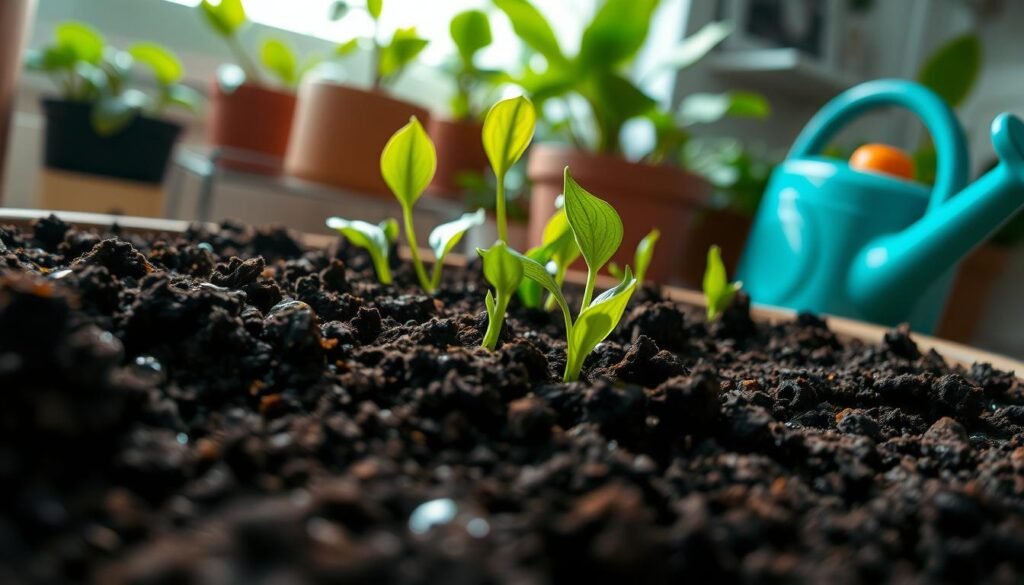
Push a finger about two inches into the potting mix. If the soil feels cool and slightly tacky, skip a drink. If it feels crumbly, warm, and not clinging, the root zone likely needs plant water.
When a moisture meter helps most
For large floor pots where fingers can’t reach, a moisture meter gives a fast read where roots live. Insert it near the edge and read the probe level before deciding. Two checks per month are fine for slow growers; check more often for active bloomers.
What “dry soil” looks like versus what roots actually feel
Top layers can look dry while deeper media stays damp. Trust the feel below the surface, not color. A quick routine: check → water thoroughly if needed → let excess drain → empty the saucer after draining.
- Tip: Some bloomers, like peace lilies, droop when thirsty. Still confirm soil before you give a drink.
- Bottom line: Keep roots healthy first; healthy roots drive better blooms and stronger stems.
Key Factors That Change Watering Frequency in Indoor Plants
A mix of species traits and room conditions decides a plant’s moisture rhythm.
Plant type and water requirements
Tropical bloomers like steady moisture, while succulents and cacti prefer longer dry intervals.
Match the media and pot to species needs and check roots before adding more liquid.
Light exposure and placement
More light speeds use; a seat by a bright window drinks faster than a shaded shelf.
Temperature and humidity
Warm rooms and forced-air heat raise evaporation. Low humidity pulls moisture from soil and leaves.
Season, growth rate, and soil mix
In winter many plants slow growth and need less. In summer active growth raises demand.
Heavier mixes hold moisture longer; chunky mixes drain faster. Top-dressing like moss or bark acts as a lid and slows surface drying—check deeper levels not just the top.
“All these factors stack, so the same species can need very different routines across rooms and time of year.”
| Factor | Effect | Quick tip |
|---|---|---|
| Plant type | Tropical vs succulent affects moisture use | Follow species needs and pot choice |
| Light | More light = faster drying | Move plants back or use sheer curtains |
| Temperature & humidity | Warm + dry = faster loss | Raise local humidity or group pots |
| Season & growth | Winter rest lowers demand | Reduce frequency during slow growth |
Pot and Drainage Basics That Prevent Root Rot
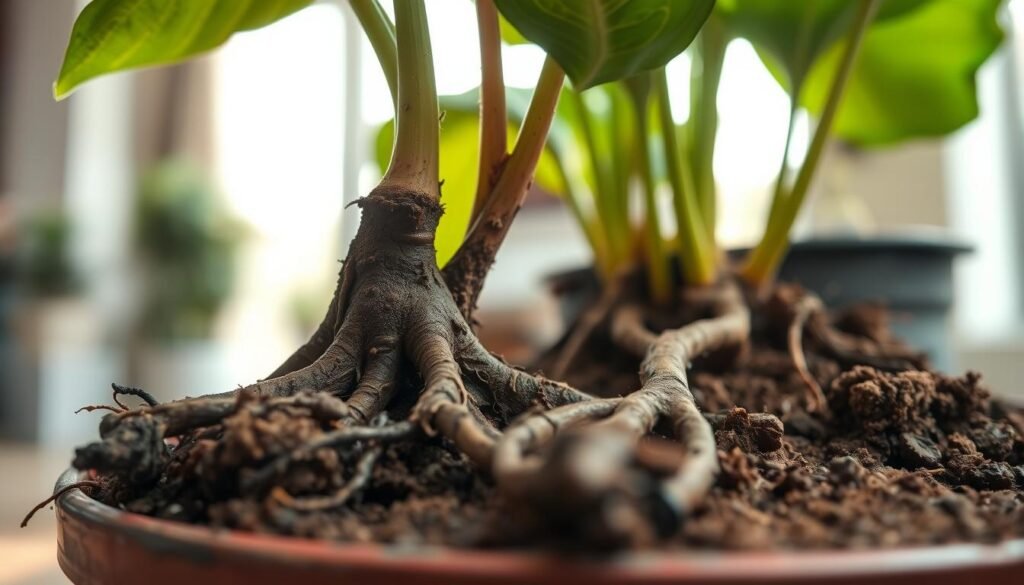
A pot chosen for form rather than function can quietly invite root rot if excess liquid has no escape. Good drainage lets oxygen reach the root zone and stops wet media from becoming a death sentence for roots.
Why drainage holes matter
Drainage holes let gravity remove extra water so soil stays aerated. When holes are missing, pockets of standing liquid form and oxygen is pushed out of the mix.
What actually causes rot
Root rot results when soil stays saturated for long periods. Lack of oxygen stresses roots, then fungal or bacterial rot sets in and spreads.
Pot size and root ball tightness
Small pots dry faster and may need more frequent attention. Oversized pots hold moisture longer and raise rot risk.
Root-bound plants can dry unevenly because roots fill the media; loose root balls with unused soil can remain wet longer.
Material matters: terra cotta, plastic, glazed ceramic
| Material | Moisture behavior | Practical tip |
|---|---|---|
| Terra cotta / unglazed clay | Porous; breathes and dries faster | Use for plants that prefer drier media |
| Plastic | Retains moisture longer | Good for species needing steady moisture |
| Glazed ceramic | Like plastic, holds moisture | Avoid for species prone to rot unless drainage is excellent |
Simple saucer and cachepot rules
For decorative cachepots, keep the plant in a nursery pot with holes. Water at the sink, let it drain fully, then return the pot.
Use a saucer to catch drips, but never let the pot sit in standing water for long; empty the saucer after drainage.
- Bottom line: Pots and drainage choices control moisture around roots. Healthy roots mean steady blooms; chronic soggy soil often causes bud drop and decline.
How to Water Correctly So Plants Get What They Need
Pouring slowly and evenly across the pot helps roots use moisture where it’s available.
Top-watering technique: Pour gently over the entire soil surface so water soaks the full root zone rather than channeling down one groove. Aim for an even, steady flow across the pot until liquid runs from the drainage holes.
The thorough soak standard: Water until runoff appears, then stop and let the pot drain fully. This flushes salts, wets deeper media, and discourages shallow rooting.
Why “hit and run” backfires: Small, frequent splashes can leave the center dry while the rim stays damp. That creates uneven pockets, encourages surface roots, and adds chronic stress.
“Good watering is a cycle of soaking and then allowing some drying and air back into the mix.”
- Air matters: Roots need oxygen; let the soil breathe between thorough soaks.
- Water the soil, not the leaves: Moisture on foliage can invite pests and disease.
- Bottom watering basics: If the mix repels surface water or runoff races down the sides, place the nursery pot in a basin with a few inches of water for 5–10 minutes. Remove, let it drain, and confirm the top feels damp.
- Caution: Relying only on bottom soaking may cause mineral buildup. Alternate with top-soaks and occasional flushing from above.
Best Time to Water and How Seasonality Changes Everything
A simple schedule based on daylight helps you care for plants when they are most active.
Pick morning or early afternoon for routine checks and light care. These hours let you see runoff, check drainage, and spot pests or stress while the plant’s pores are open and evaporation is quicker.
Daytime benefits
Practical best time: morning or early afternoon makes tasks easier and reduces the risk of leaving pots damp overnight.
Seasonal tweaks
As daylight shrinks and temperatures fall in winter, reduce frequency because growth slows and the soil holds moisture longer.
In summer, expect higher growth and higher use; increase checks and supply only when the root zone needs it.
- Re-check during seasonal transitions rather than using last month’s routine.
- Keep a short log in a notes app or calendar so you avoid accidental double-supply when demand drops.
- Flowering species can be extra sensitive in winter; paused growth plus wet mix invites problems.
Quick reassurance: If you check root-zone moisture first, you’re already making the right seasonal adjustments. For more on adjusting schedules for bloomers across seasons, see adjusting watering schedules for flowering houseplants.
Tap Water, Filtered Water, and Water Temperature
Not all municipal supply is equal—mineral content and chlorine can slowly show on leaves.
When tap works: Many common house plant varieties tolerate local tap. If your municipal supply is mild, you may not see any harm.
When minerals cause trouble: Hard supply leaves brown tips or spotty foliage after months. These signs point at salt and mineral buildup, not pests.
Simple upgrades and routines
- Let water sit a few hours if chlorine is present, or use a basic filter for everyday use.
- For sensitive species, use distilled, reverse-osmosis, or collected rain.
- Keep a small container in the room so liquid reaches room temperature before you pour; this helps roots.
- Avoid ice cubes for tropical pots — cold shocks stress root systems over time.
Calm note: If your plant looks healthy on tap, keep the routine. Only change when you see tip browning or poor bloom. For schedule tips and species guidance, see watering schedule for flowering plants.
Spot the Signs: Underwatering vs Overwatering Before It’s Too Late
A droop isn’t a diagnosis; the soil feel is the test. Both lack and excess liquid can make leaves sag. The quick check of the root zone clears the confusion.
Overwatering clues
Look for soggy soil, stems that feel soft or mushy, and leaves that yellow or develop dark brown patches. Fungus gnats may appear over persistently wet mixes.
The real danger: prolonged sogginess cuts oxygen to roots and raises the risk of root rot, which can kill a plant quickly.
Underwatering clues
Leaves may droop, wrinkle, or curl. The pot can feel unusually light, and soil can pull away from the pot edges as it shrinks.
When the mix is too dry, roots cannot transport nutrients, so buds and blooms fade faster and plants may lose vigor.
Immediate steps if you suspect overwatering
- Stop adding liquid and move the plant where it gets brighter, indirect light if that helps drying.
- Ensure full drainage: empty saucers and check that holes are clear.
- If soil stays saturated, consider the rescue option: slip the plant from the pot, remove soggy mix, trim blackened roots, and repot into fresh, airy media.
“Many plants may recover from underwatering more easily than from overwatering—so resist that ‘just in case’ splash.”
| Symptom | Overwatering | Underwatering |
|---|---|---|
| Soil feel | Cold, soggy | Dry, pulling from pot |
| Leaves | Yellowing, soft, dark spots | Droop, wrinkle, crisp edges |
| Weight of pot | Heavy | Very light |
| Serious risk | Root rot—loss of roots and decline | Stunted growth and bud drop |
Conclusion
Make the root-zone moisture the rule, and caring for plants becomes easier.
Adjust light placement, pot choice, and soil mix — each dial changes drying speed. Bright spots dry faster; large, dense pots hold moisture longer.
Quick tips, water evenly across the surface, allow full drainage, and never leave pots sitting in pooled liquid. This pattern prevents many common problems.
Summer growth raises demand; winter slows it. Check with a finger or a meter for larger containers. Simple tests remove doubt and curb overwatering.
Small adjustments beat dramatic change. Remember: bright spot dries faster; bigger pot dries slower; winter needs less; drainage prevents disaster.