
Surprising fact: nearly 60% of houseplant problems start with wrong watering, not pests or disease.
In this short guide you will learn how to spot key signs, how to water correctly, and when to feed so you don’t burn stressed roots. Water is vital for nutrient uptake, photosynthesis, and moving sugars through the plant. That means fertilizer only helps when roots can actually absorb nutrients through properly moist soil.
Watering errors are the top cause of decline, and symptoms can look alike—wilting may come from too little or too much water. Start by checking soil moisture before changing care. This guide pairs watering and feeding because timing matters.
Here’s the quick flow: check soil moisture → confirm underwatering versus overwatering → fix watering method → improve pot, soil, and drainage → then fertilize during active growth. US home conditions—HVAC, winter heat, summer sun—change how fast soil dries, so base routines on checks, not a calendar.
Good news: most underwatered plants recover if you correct moisture and feed carefully during new growth.
Key Takeaways
- Check soil moisture first; wilting can mean too dry or too wet.
- Fertilizer works only when roots can absorb nutrients.
- Fix watering technique, potting mix, and drainage before feeding.
- Adjust routines for home heating and sunlight conditions.
- Prompt, consistent care lets most plants recover fully.
Why watering matters for indoor flowers before you fertilize
Think of water as the delivery truck: without it, fertilizer stays locked in the potting mix and can’t reach the plant’s feeding zones. Nutrients must dissolve in moisture to move into fine root hairs where uptake happens.
How water supports nutrient absorption, photosynthesis, and growth
Water is the transport system that carries dissolved nutrients from soil to tissue. It also plays a key role in photosynthesis, helping produce the glucose that fuels new leaves, buds, and steady growth.
How water stress increases pest and disease risk
Healthy roots need a balance of moisture and oxygen to absorb food efficiently. When soil dries and roots struggle, plants show deficiency-like symptoms even if the mix contains nutrients.
- Delivery first: fertilizer is food; water is the delivery.
- Energy: photosynthesis depends on water to make fuel for growth.
- Defense: chronic water stress slows growth and weakens natural defenses, making houseplants more vulnerable to pests and disease.
Start with consistent watering tailored to each plant and room. Water first, then feed—this simple rule improves nutrient uptake and helps avoid burned roots.
Signs of underwatering indoor flowers
You can spot low-moisture stress by checking leaf posture, texture, and how the soil feels below the surface.
Leaf cues to check first
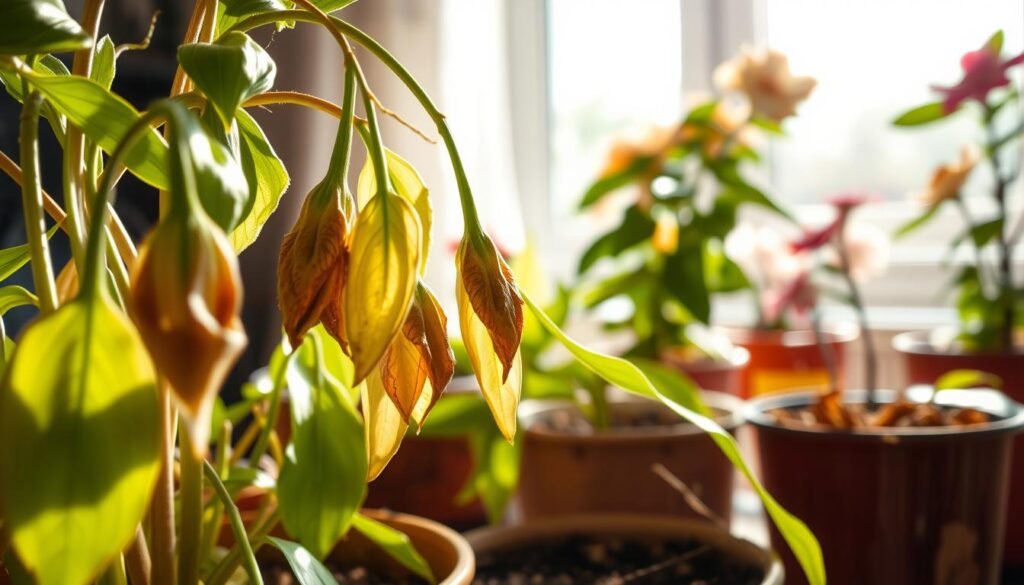
Drooping leaves that perk back up after a deep watering are a classic, fast signal. Try a thorough soak and watch for recovery within a day.
Damage patterns on foliage
Curling, browning, and crispy texture usually start at the outer parts. Look for brown tips and dry edges rather than yellowing.
Succulents show wrinkly leaves when they lack water. Tender flowering plants may feel paper-thin before they go crisp.
Performance and soil clues
Slow growth, smaller leaves, and stalled blooms happen when a plant conserves resources. Check the soil: if it feels dry a few inches down, is hard or hydrophobic, or pulls away from the pot walls, the mix is very dry.
Root-level signals
Advanced checks reveal desiccated roots and compacted, crumbly soil. Severely underwatered plants can look “stuck” and may need deep rehydration rather than light misting.
- Quick checklist: droop then rebound after water; curling brown tips; wrinkly succulent leaves; dry soil below the surface; gaps along pot walls; brittle roots.
- Always verify moisture depth before pruning or fertilizing.
| Visible Cue | What it looks like | Quick action |
|---|---|---|
| Leaf rebound | Droops, then perks after soak | Deep water and recheck next day |
| Leaf damage | Curling, brown tips, dry edges | Trim only dead parts; rehydrate first |
| Soil feel | Hard, pulls from pot, feels dry below surface | Soak until runoff; consider repotting if hydrophobic |
| Roots | Dry, shriveled, brittle | Deep soak and evaluate for recovery or repot |
Overwatering vs underwatering: how to tell the difference fast
Quick checks at the pot can save a plant: look at the soil, lift the pot to gauge weight, and feel stems at the base before you change care.
Why confusion happens: both drought and excess water can cause drooping leaves because damaged roots either can’t deliver moisture or they are rotted and fail to move it. That makes a simple soil check essential.
Fast clues for excess water problems
- Yellowing leaves and leaves turning yellow at the tips or edges with soft texture.
- Mushy stems near the base or a sour, rot-like smell from wet soil.
- Soil that stays soggy for days, mold on the surface, and fungus gnats flying around.
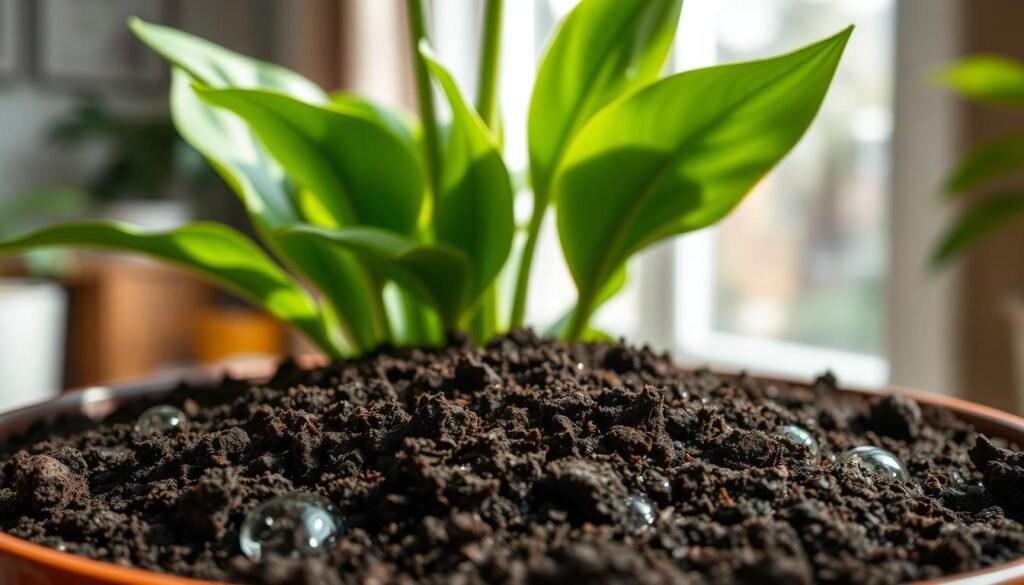
Decision rule: if the soil is wet at depth and stems are soft, pause watering and improve drainage. If the soil is dry below the surface, water deeply.
Three quick ways to check soil moisture
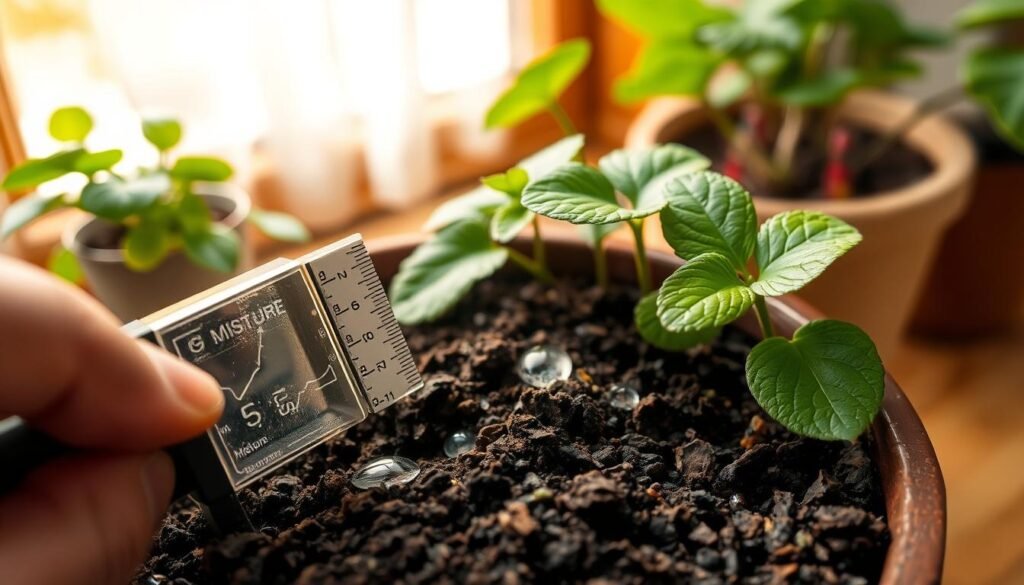
- Finger test: push a finger 1–2 inches down to feel dampness below the top layer.
- Chopstick test: insert and then inspect the stick for clinging damp soil.
- Pot weight: lift the pot; an oddly light pot usually means dry roots, while a heavy pot signals excess water.
| Problem cue | What to check | Quick action |
|---|---|---|
| Leaves turning yellow | Soft, limp foliage | Check soil moisture depth; pause watering if wet |
| Mushy stems | Soft base, possible rot smell | Hold watering; improve airflow and repot if needed |
| Persistently soggy soil | Surface mold, gnats, heavy pot | Let dry; treat pests and adjust drainage |
When in doubt, always check the soil and adjust your before pruning or feeding. A steady habit of quick checks prevents harm and helps plants recover fast.
How to check soil moisture the right way (so you don’t guess)
The soil surface can lie—verify moisture where roots actually live before you water.
Core idea: the top layer often dries faster than the root zone. If you only touch the surface, you risk overwatering. Learn to check deeper so each plant gets the right amount.
How deep to check when the soil feels dry on top
For many houseplants, test at least the top inch. If that inch is dry, probe deeper to confirm the root zone is ready for water.
Succulents and cacti need more dry surface—aim for about 2 inches dry before adding water.
How plant type changes the target
Dry-down means the percentage of potting mix that should dry before you water again.
- 25% dry-down: trailing and moisture-loving species that like most soil slightly damp.
- 50% dry-down: typical for many foliage houseplants—half the pot should lose moisture before the next soak.
- 100% dry-down: succulents and some bulbs that need the whole root zone dry.
Use the same, consistent way to read moisture: finger test, chopstick, or pot weight. Make one weekly check-in day and water only the plants that need it. Proper soil moisture watering protects roots and makes fertilizer actually work when you feed later.
How to water indoor flowers correctly when they’re underwatered
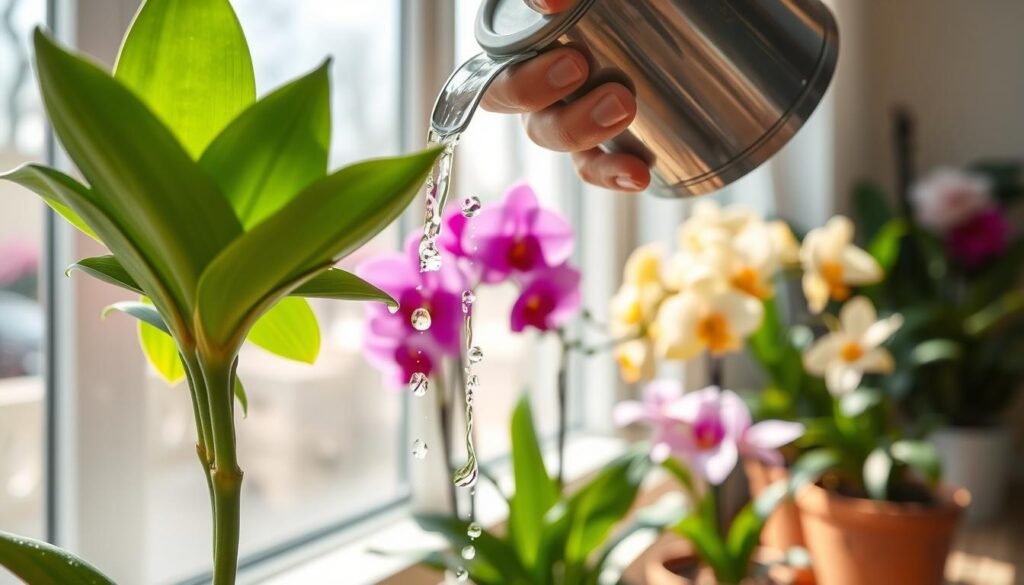
Start with slow, even water applied to the whole surface; pause so the mix soaks in, then repeat until you see steady drainage from the drainage holes.
Deep watering technique
Rescue watering means watering across the entire soil surface, not just one side.
Pour slowly so the water soaks down instead of running off. When water drains from the holes, the whole soil column has rehydrated.
Handle runoff and saucers
Let runoff collect for 10–20 minutes, then empty the saucer or cachepot.
Do not let roots sit in standing water. That prevents oxygen getting back to the root zone and avoids root loss.
Room-temperature and tap-water tips for US homes
Use room-temperature water to avoid shocking sensitive roots in a cold or hot room.
Tap water is usually fine. If your supply smells strongly of chlorine, let a jug sit uncovered overnight so chlorine can dissipate.
Follow-up: recheck the soil after a couple of days. Very dry mixes can rewet unevenly, so test a few inches down before your next watering.
Fixing the setup: soil, pot, and drainage that prevent repeat problems
A plant’s setup determines how long water hangs around the roots, so fix the foundation before tweaking your watering routine.
Choose well draining soil that moves moisture the right way
Well draining soil lets water soak in, spread through the mix, then leave through the holes. It should never stay swampy around the roots.
Look for mixes with perlite, bark, or coarse sand. These parts keep air and water balanced so roots get oxygen and consistent moisture.
Why drainage holes at the bottom are non-negotiable
Pots need a clear exit for excess water. Drainage holes at the bottom stop waterlogging better than side vents or only using a decorative cachepot.
If your current container lacks proper holes, plan to switch to one that has pot drainage holes. That single change prevents many common problems.
Spot rootbound plants and when repotting restores balance
Check for roots circling the bottom or a tight root mass. Water may rush straight through, or the plant wilts quickly after a soak—both signs that roots have taken over the pot.
Rootbound conditions leave too little soil to hold moisture, so plants dry faster even when you water often.
Repotting tips: choose a slightly larger pot, tease or trim circling roots gently, add fresh mix, and water in well after planting. This restores a stable moisture way and often triggers new growth.
| Problem | What to look for | Quick fix |
|---|---|---|
| Poor draining mix | Soil stays soggy, slow drying | Repot with well draining soil containing perlite or bark |
| No bottom holes | Water pools; roots sit wet | Move to a pot with pot drainage holes; avoid long-term cachepot use |
| Rootbound | Roots circle, water rushes through, fast wilting | Repot to larger container, loosen roots, use fresh mix |
Adjust watering by light, room conditions, and season
Light and room temperature shift how fast a pot dries, so tune your checks to the current conditions.
Brighter light + warmer room increases growth and transpiration. That means plants use more water and soil will go dry faster. Check moisture more often during long sunny days, heat waves, or when pots sit near a south-facing window.
Cooler rooms and low light slow evaporation and lower water use. The same schedule that worked in summer can cause overwatering in winter.
Quick practical rules
- Increase check frequency when light and room heat rise, but only water when the target moisture is met.
- In cooler, dim spaces, test deeper before you water; avoid automatic top-ups.
- Watch for HVAC blowers, drafty windows, and humid bathrooms — each alters evaporation and plant water needs.
“Adjust checks not habits; water only when the soil and plant need it.”
Simple rule: change how often you test moisture as conditions change. Pair quick symptom cues with a finger or chopstick check to separate overwatering from underwatering and keep plants healthy year-round.
When to fertilize indoor flowers (and when to wait)
Fertilizer only helps when roots can actually take up nutrients—so timing matters more than product choice. Never feed a thirsty plant. If the soil is dry, water first so salts in fertilizer don’t burn fine roots and so nutrients can move through moist soil.
Never fertilize a thirsty plant
Water first to protect roots and improve uptake. Check soil moisture with a finger or chopstick. If the mix is dry at depth, add water and wait until the root zone is evenly moist before applying any food.
Time feeding to active growth
Feed when the plant shows new leaves or buds and is using more water. Scale back during slow-growth months when houseplants rest. That way you match nutrients to real growth.
Practical feeding routine
Pick one weekly check day: water any thirsty plants, then feed only those that are hydrated and actively growing. Use light, regular amounts—follow label rates and err on the low side.
- Do not double-feed to catch up.
- Hold feeding for stressed plants until roots recover.
- Pair good watering with steady feeding for best results.
Conclusion
Healthy pots start with a quick moisture check — that single step prevents most problems. Check soil moisture below the surface before you water, and you’ll avoid many common mistakes that hurt leaves and roots.
Look for drought cues like droop-then-perk after a soak, dry crispy leaf edges, and soil pulling away from pot walls. By contrast, yellowing leaves, mushy stems, and a soggy mix usually point to too much water.
Fix the way: deep soak with good drainage, dump runoff, then improve soil and pot setup if needed. Only fertilize once the root zone is hydrated and the plant shows new growth.
Use these simple tips consistently and adjust for light and season. For a detailed watering schedule by plant type, see watering guidelines for flowering houseplants. Most houseplants recover quickly when roots get steady moisture and extremes are avoided.