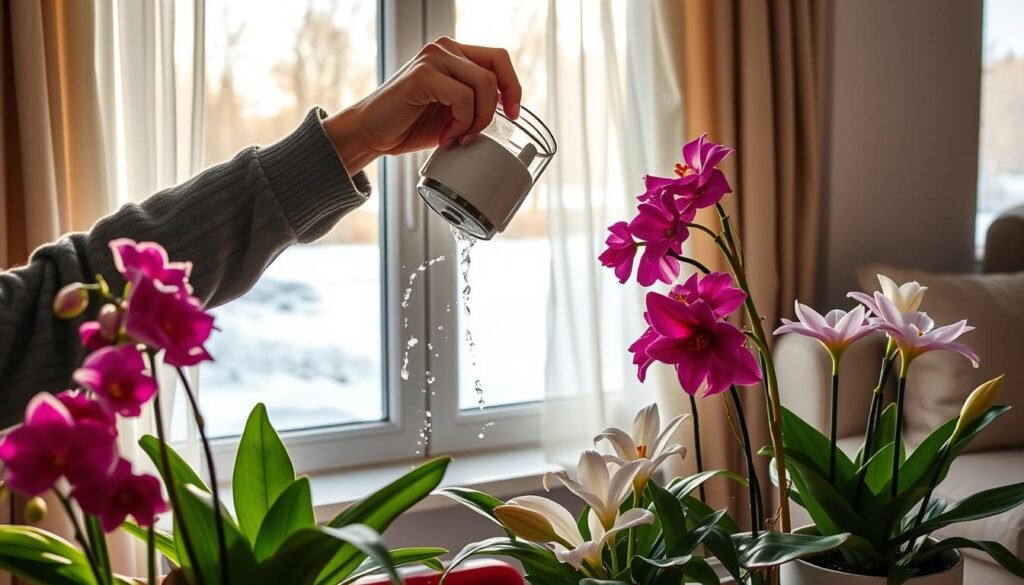

This quick guide helps you keep buds and blooms healthy during the colder months. Growth slows when days shorten and light drops, so plants take up less moisture. At the same time, heated rooms cut humidity and can dry leaves faster.
Bud drop means buds fall off before they open. It often spikes when moisture or room conditions change suddenly. Overly wet soil is the top winter killer because it stays soggy longer.
The goal here is simple: match care to real plant needs, not a calendar. Start by fixing light, temperature, and humidity. Then check soil moisture at the root zone with a finger, dowel, or moisture meter before you water. Finally, use good drainage and avoid puddles.
This article focuses on practical checks so you can stop guessing. There is no perfect every-X-days schedule; care depends on your home, the plant type, and growth stage. Most houseplants bounce back from slight dryness more easily than from being too wet.
Key Takeaways
- Match watering to actual soil moisture, not the calendar.
- Fix light, temp, and humidity before changing water habits.
- Use simple checks: finger test, dowel, or a meter at root level.
- Avoid soggy soil; good drainage protects buds and roots.
- There’s no one-size schedule—watch your room and your plant.
- Plants tolerate slight dryness better than prolonged wetness.
Why Winter Changes Your Plant’s Water Needs and Triggers Bud Drop
When daylight shrinks, plants slow down—and their water needs follow suit. Fewer light levels mean less photosynthesis, which lowers growth and slows root uptake. This simple chain reaction is the core reason many buds fall off during colder months.
Shorter days and lower light reduce water uptake
Less light means less energy for growth. Roots pull water more slowly, so soil stays moist longer. Over time, this can suffocate roots if you keep the same summer routine.
Heaters and dry air make care trickier
Forced heat drops humidity by about 10–15% and creates bone dry air. Leaves and potting mix can lose moisture faster even when growth has slowed, which sends mixed signals to the plant.
Overwatering is the top winter risk
Too much water reduces oxygen at the roots and raises root-rot risk. Buds are energy-intensive, so plants drop them to conserve resources before obvious decline.
“Look for real signs—wet soil with wilting, yellow leaves, or soft stems—before you add more moisture.”
- Compare summer vs winter: summer uses water fast; winter needs less overall.
- Check roots and soil, not just surface dryness.
- Adjust based on light levels, temperature, and humidity over the coming months.
| Condition | Summer | Winter | Care Tip |
|---|---|---|---|
| Growth | Fast | Slow | Reduce frequency; check root zone |
| Soil Drying | Quick | Slow | Wait for dry root zone before adding water |
| Air | More humid | Often dry | Use humidifier or group plants |
| Top risk | Under-watering | Over-watering | Balance moisture with oxygen for roots |
Set Up the Right Conditions Before You Water
Start by stabilizing the room so your plants stop getting mixed signals from sudden changes. Fixing light, temperature, and humidity first makes other care steps work. Environmental stability keeps buds from dropping while you adjust how often you add moisture.
Light levels and placement
Move flowering indoor plants closer to a bright window during the day. Rotate pots weekly for even growth. If natural light is low, add a simple grow light; many growers use Sansi 24‑watt bulbs for small setups.
Protect from temperature swings
Cold glass at night can chill roots, while vents or radiators blast dry air and scorch foliage. Keep pots off the cold sill after dark, away from drafty doors, and several feet from heat sources.
Measure humidity and act
Use an inexpensive hygrometer to see if your room needs help. If readings run low, choose a small humidifier or group plants to build a local humid microclimate.
Misting and pebble trays often give brief relief but rarely change long-term humidity.
Keep eye on trends over time rather than one reading. That helps you decide the right support for the season and the year.
Clean leaves and windows
Wipe dusty leaves with a soft damp cloth and clean windows so more light reaches foliage. A clean leaf photosynthesizes better and holds buds longer under lower light levels.
- Why this matters: Many “watering fixes” fail if conditions stay unstable.
- Steadier light + steady temperature + adequate humidity = better bud retention while you refine care.
Watering indoor flowers in winter the right way
Start each watering decision by checking below the dry top layer—roots live deeper than the surface suggests.
Check soil moisture at root level, not just the surface. A dry crust can hide a soggy root ball. Use a probe or meter to confirm moisture where roots sit.
Tools that help:
- Moisture meter or color-indicator sensors: insert to root depth, test several spots, and wipe probes clean after use.
- Wooden dowel/skewer test: push near the root zone, wait a few minutes, then remove—dark soil or soil clinging to the dowel means it’s still wet.
- Sustee-style indicators or soil sensors: useful for consistent monitoring in larger pots.
Adjust watering frequency and use less water without dehydrating blooms. Extend intervals slowly and recheck after a few days. When you do water, use smaller amounts that wet the root ball rather than flooding the pot.
Drainage rules are non-negotiable. Ensure drainage holes, empty saucers right away, and never let pots sit in standing water—no “wet feet.”
Bottom-watering vs top-watering: Bottom fills the root zone evenly and cuts surface fungus gnat risk, ideal for African violets, begonias, and some orchids. Top-watering flushes salts and is better when you need to rinse the soil; choose by plant type and how fast the mix dries.
Good winter water practices produce steady moisture cycles, fewer sudden swings, and better bud retention on flowering plants.
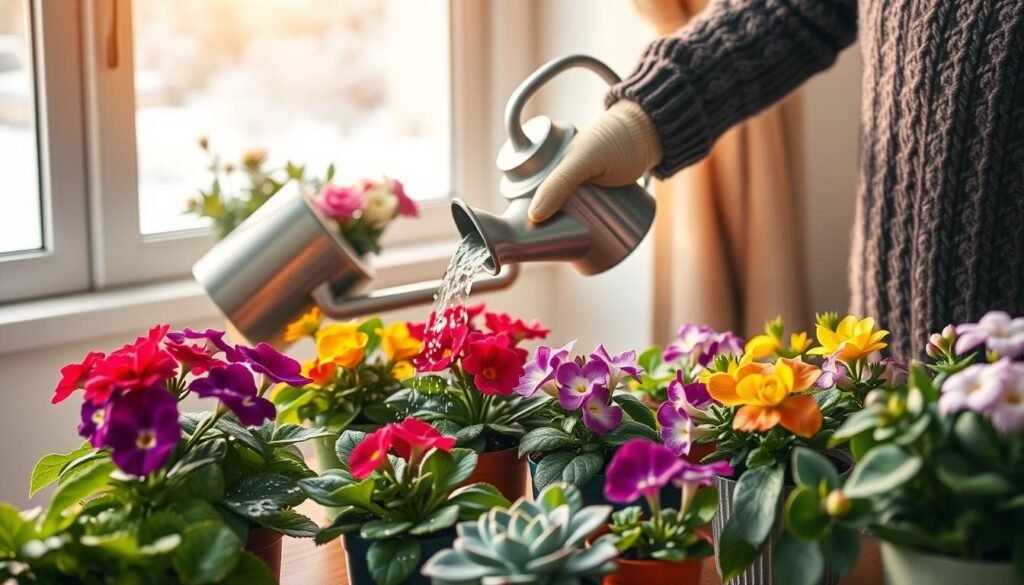
How to Prevent Bud Drop While You Adjust Watering
Preventing bud drop starts by decoding what your plant is telling you, not by following a fixed routine. Check growth and room conditions first, then make small changes so buds have time to recover.
Match care to plant type and seasonal growth
Flowering tropicals often keep light growth, while many species slow drastically. Learn which of your plants still show new stems or buds and which are stalled.
When growth is minimal, plants need less water and less frequent moisture cycles. Use smaller amounts and longer waits for slow growers.
Decode confusing signals
Crispy edges or dry tips may mean dry air or heat exposure, not a thirsty pot. Group plants to raise local humidity and move pots from vents or cold glass.
Look at soil and root zone before acting. That helps you tell whether damaged leaves come from low humidity or soggy mix.
Stress minimizers that protect buds
- Keep a stable spot and avoid moving pots often.
- Maintain consistent light hours and steady temperature.
- Avoid swinging between drought and soaking; small adjustments win.
Early signs of too much water
Watch for a heavy pot that stays heavy for days, persistent wet soil, slight droop that does not recover after top-soak, and gradual yellowing of leaves.
Fungus gnats often appear when soil stays soggy. Let the root zone dry a bit to cut gnat numbers and protect buds.
Bud checklist:
- Keep blooms away from drafts and cold panes at night.
- Stabilize light before making major moisture changes.
- Choose a stable, warm spot and avoid sudden moves.
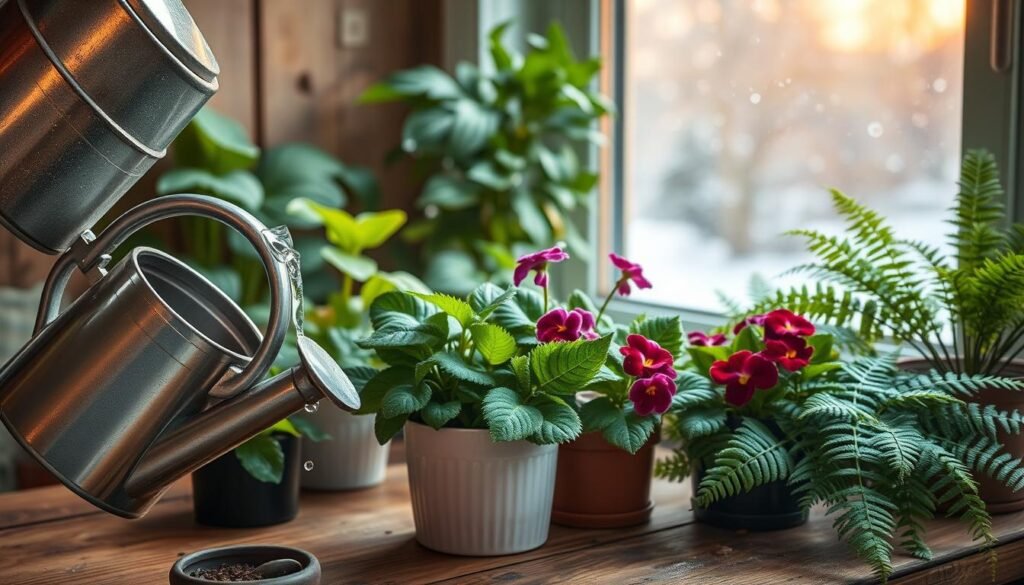
Fix Overwatering Fast and Reduce Root Rot Risk
A soggy pot can kill roots fast — act the moment you spot warning signs. Catching problems early gives the best chance to save the root system and preserve healthy leaves and buds.
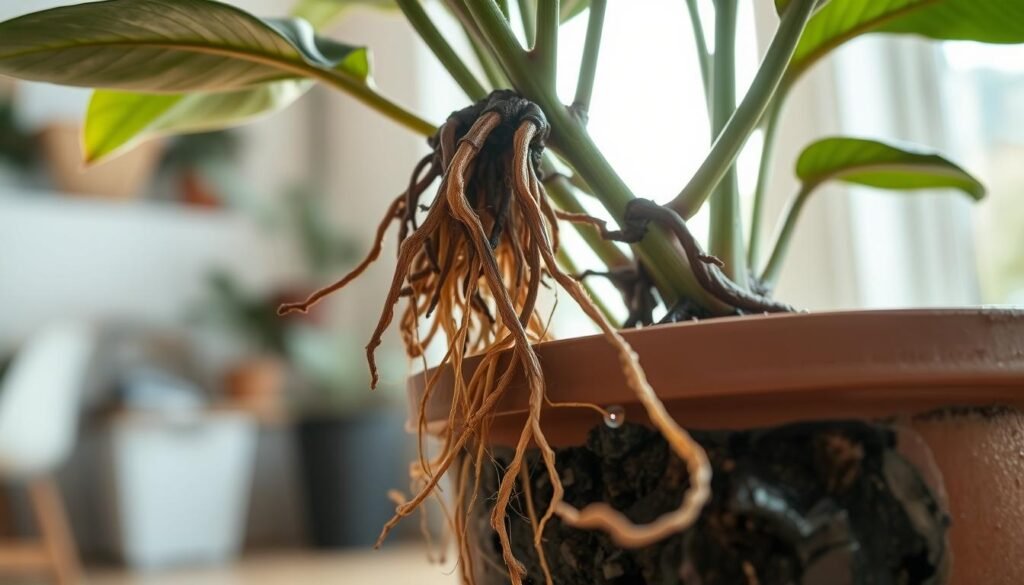
Common winter signs: yellowing or wilting leaves, mushy stems, leaf drop, mold on the soil surface, and standing water in saucers. These occur because waterlogged soil blocks oxygen and stresses roots, which then fail and rot.
Immediate triage
- Stop adding water and empty any saucer or tray right away.
- Move the pot to a warmer, brighter spot — gentle light increases evaporation and root activity.
- Improve airflow with a small fan set on low; avoid cold drafts and direct hot vents.
When to check roots
If the pot stays heavy for days, gives off a sour smell, mold appears, or stems turn soft, it’s time to inspect roots. These are escalation signs that simple fixes won’t solve.
Step-by-step root rescue
- Gently slide the plant from its pot and shake off soggy soil.
- Rinse roots in lukewarm water and trim black or mushy sections with clean shears.
- Clean the pot, add fresh, airy mix, and repot. Keep moisture checks at root depth before any further water.
Prevent repeat problems: reduce the amount you water per session, confirm moisture at root depth, and always use pots with fast drainage.
Pest note: fungus gnats thrive in constantly wet topsoil. Let the surface dry, improve drainage, and avoid much water to cut their chance of appearing.
Recovery may take time; many plants recover slowly and often improve once spring brings stronger light and warmer growth conditions.
Conclusion
Successful winter care boils down to steady conditions, real moisture checks, and cautious watering.
Stabilize light, temperature, and humidity first. Then verify root‑zone moisture, not just the surface, before you add water. Use pots with fast drainage and never let a saucer hold standing water — the simple “no wet feet” rule protects roots and buds.
Remember: most plants need substantially less water than during summer. Adjust watering slowly based on your room and each plant’s needs.
Quick weekly checklist: light level, drafts or vents, humidity reading, pot weight, soil feel at depth, and saucer status. Conditions improve by spring, so today’s care helps your plants thrive later.