indoor flowers wilting causes

Underwatering vs Heat Stress: Why Indoor Flowers Wilt (Even With “Moist” Soil)

Ever seen a flowering plant go limp even though the pot feels damp? That confusing sight is common in many homes. Plants can look thirsty when roots can’t work properly, so symptoms mislead quick fixes.

This short guide helps you tell underwatering from heat stress and spot when root stress or overwatering is the real problem. You’ll learn a simple diagnosis-first approach so you avoid adding water on instinct.

Wilting and drooping often start with subtle changes: soft stems, limp leaves, and blooms that hang lower than usual. Catching these early keeps damage small and recovery fast.

We’ll ground advice in real home scenarios—heating cycles, sunny windows, and dry air that shift through the day. Expect quick checks you can do now, then clear fixes if deeper problems show up.

Table of Contents

Key Takeaways

  • Moist soil can still fail roots; damp mix doesn’t always mean healthy roots.
  • Compare simple signs to tell underwatering from heat stress quickly.
  • Start with diagnosis before you water again to avoid making things worse.
  • Watch early leaf and stem changes to catch trouble fast.
  • Home heating and light patterns can change plant needs across the day.

Why “Moist” Soil Can Still Mean a Thirsty, Stressed Indoor Plant

A pot that feels damp can still hide roots that can’t access moisture. When the mix is dense or stays soggy, oxygen near the roots drops and the root zone struggles to move water up the stem.

That mismatch creates a classic paradox: moist soil, yet the whole plant looks limp. Overwatering is not just adding too much water at once — it can be watering too often for the mix, pot, and indoor conditions. Treat the soil and roots like the plant’s plumbing.
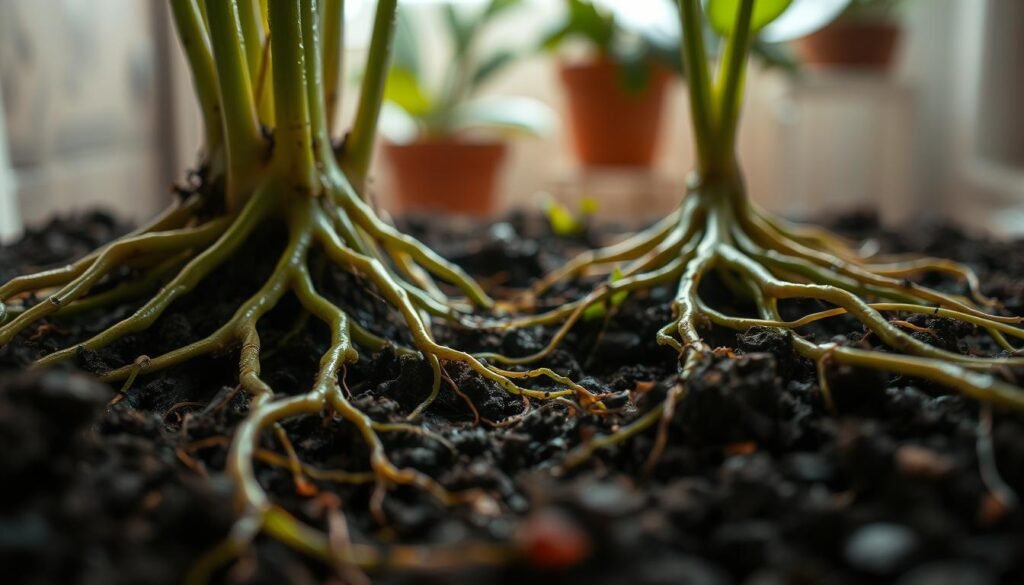
An intricately detailed close-up of moist soil roots, showcasing the delicate network of vibrant, healthy roots intertwined with dark, rich soil. The foreground features glistening, damp roots surrounded by small clumps of earth, capturing the moisture that indicates a potentially stressed plant. In the middle ground, soft greens of indoor plant foliage peek through, suggesting the life above the soil level. The background introduces a subtle blur of a cozy, indoor setting with soft, diffused natural lighting filtering in, giving a warm and nurturing atmosphere. The image should feel intimate, focusing on the complexity of root systems while evoking the hidden struggles of indoor plants. Use a shallow depth of field to emphasize the roots, with an inviting, earthy color palette that reflects both moisture and the challenges of plant health.

Quick visual clues and what they may mean

  • Drooping leaves or general limpness — roots may be stressed and not absorbing properly.
  • Yellowing across many leaves — common sign of root rot, poor drainage, or nutrient lock-up.
  • Crispy brown edges on a leaf — can point to dry air, salt build-up, or mineral issues, not just lack of water.
Visible Cue Likely Soil/Root Issue Quick Check
Widespread yellowing + limp Overwatered or compacted soil Smell soil, check drainage holes
Single yellow leaf Normal aging or minor stress Monitor before changing care
Crispy brown margins Dry air or salt/mineral build-up Inspect soil surface, flush if crusty

These signs need context. Heat, low humidity, and irregular watering can stack on top of root stress. Next, we’ll show simple checks to confirm the real problem before you change your care routine.

Indoor flowers wilting causes: How to Tell Underwatering From Heat Stress

Seeing drooping leaves after watering is a clear prompt to check heat, humidity, and root access — not just add more water. Use a quick decision path to find which problem bucket your plant falls into.

Heat stress: bright windows, vents, and swings

Hot sills, direct sunlight, or HVAC blasts raise leaf temperature fast. That makes stems and leaves sag within hours.

Look for rapid drooping near a window or vent and warmer-than-usual pot edges as a sign of heat stress.

Dry air and low humidity

Dry air causes leaves to lose water faster than roots can replace it. Winter heat or strong AC makes crispy edges and steady droop.

Underwatering patterns

Soil can hide dry pockets or become hydrophobic, repelling the next pour. Inconsistent watering leaves part of the root ball dry even after surface wetting.

When overwatering looks like underwatering

Wet soil with limp leaves often means root stress. Roots that can’t breathe won’t move water up, so the whole plant looks thirsty.

Simple at-home checks

  • Finger test — probe 1–2″ down for real moisture.
  • Moisture meter — gives an objective read and helps prevent extra watering.
  • Pot weight — lift a dry vs. just-watered pot to feel the difference.
  • Check the drainage hole for wetness before you add more water.

“A quick check of temperature, air, and root access beats reflex watering.”
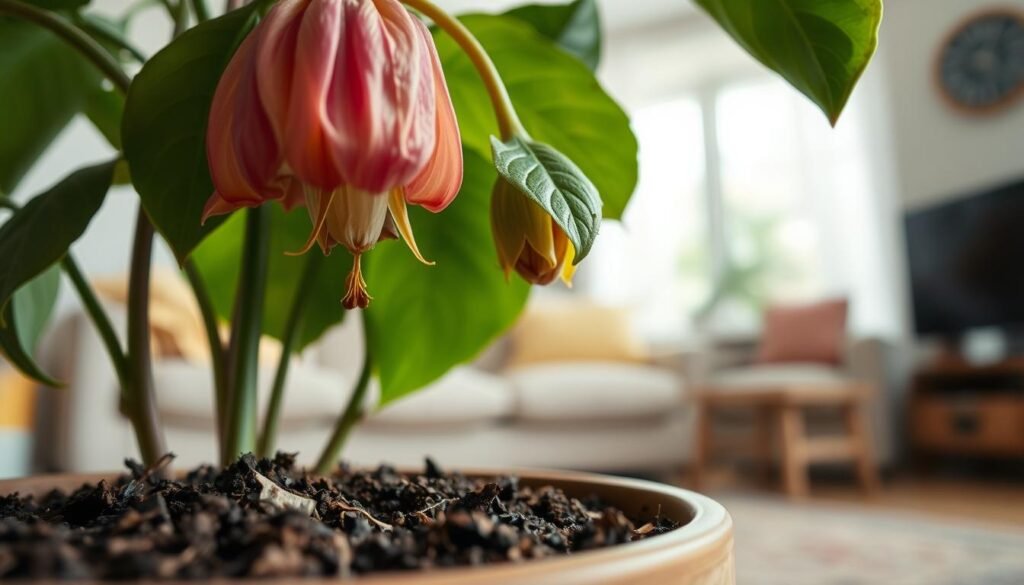
A close-up view of an indoor potted flower, visibly drooping and wilting, with leaves curling downwards due to stress. The petals are slightly faded, showcasing signs of neglect, surrounded by rich, moist soil that contrasts with the plant's unhealthy state. In the foreground, focus on the drooping flower and its deteriorating leaves, capturing fine details of the texture and color variations. The background features a softly blurred domestic environment, such as a bright, airy living room with gentle natural light filtering through a nearby window, enhancing the feeling of warmth and slight discomfort. The mood is one of concern and need for care, illustrating the consequences of underwatering and heat stress on indoor plants.

2-minute checklist: feel pot weight, probe soil, note nearby window/vent heat, and scan leaves for crisp edges or rapid sagging. Those simple steps tell you whether to adjust light, raise humidity, repot, or pause watering.

Other Common Problems That Make Indoor Flowers Wilt

When a quick moisture and heat check doesn’t solve the issue, other common problems often explain limp leaves. Tackle these in a simple order so you don’t waste time or harm the plant.

Not enough light

Low light slows growth and cuts how much water a plant uses. That mismatch can leave the pot too wet for the plant’s needs and invite root stress.

Rootbound pots

A tight pot with crowded roots dries unevenly and holds less reserve water. Repot into a slightly larger container to restore balance and steady uptake.

Pests and sap-suckers

Check the undersides of plant leaves for aphids, spider mites, mealybugs, scale, and whiteflies. Fungus gnats show up near wet soil. Remove or treat pests promptly to stop sap loss and stress.

Fertilizer and salt build-up

White crust on the soil surface means excess salts. Flush the pot with plenty of water until runoff clears. If crust returns, cut back on fertilizer and repot when needed.

Water quality

Mineral-heavy tap water can cause brown tips and stress over time. Let tap water rest 24 hours or use filtered/rain water for sensitive houseplants.

“Check light and pot size first, then inspect for insects, and finally address fertilizer or water quality.”
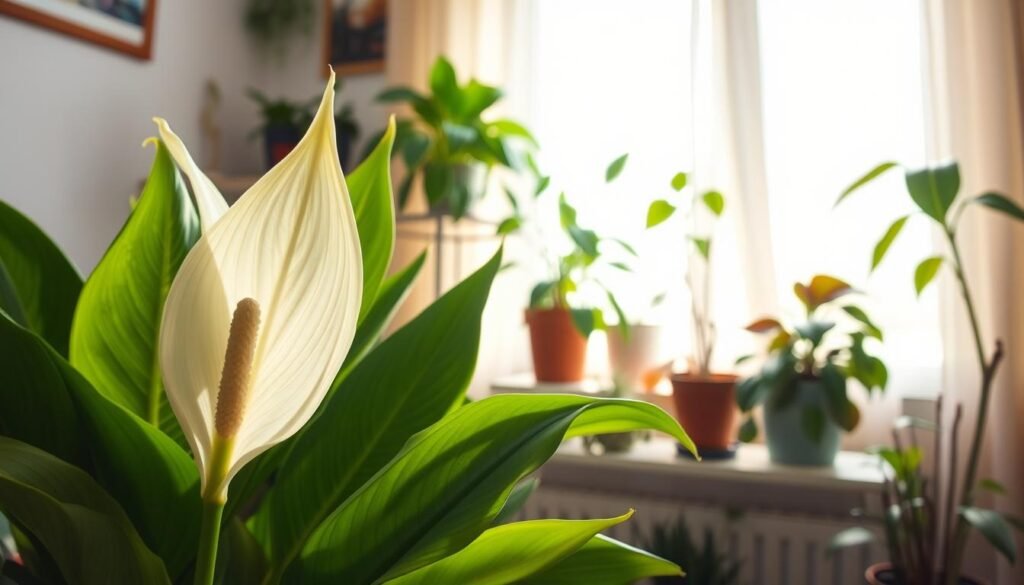
A cozy indoor setting featuring a variety of beautiful houseplants exhibiting signs of wilting, like drooping leaves and faded colors. In the foreground, a close-up view of a wilted peace lily, its soft white blooms contrasting with green, unhealthy leaves. In the middle ground, a shelf filled with other diverse plants like a snake plant and pothos, all lacking vigor. The background captures a softly lit window with sheer curtains, allowing gentle sunlight to stream in, creating a warm atmosphere. The scene should embody a sense of quiet concern while highlighting the delicate balance of care required for indoor flowers. Use a shallow depth of field to emphasize the wilting plants, with natural lighting to enhance the colors and textures.

Problem Quick sign First fix
Low light Leggy stems, slow growth Move nearer a bright window
Rootbound pot Roots circling, fast drying Repot to next size up
Pests Sticky residue, tiny insects Inspect leaves, treat or rinse
Salt build-up / water quality White crust, brown tips Flush soil; use rested or filtered water

How to Fix Wilting Indoor Flowers Fast (Without Guesswork)

Quick rescue steps give the best chance of recovery. Pause automatic systems, confirm the problem, then apply the smallest effective change first.
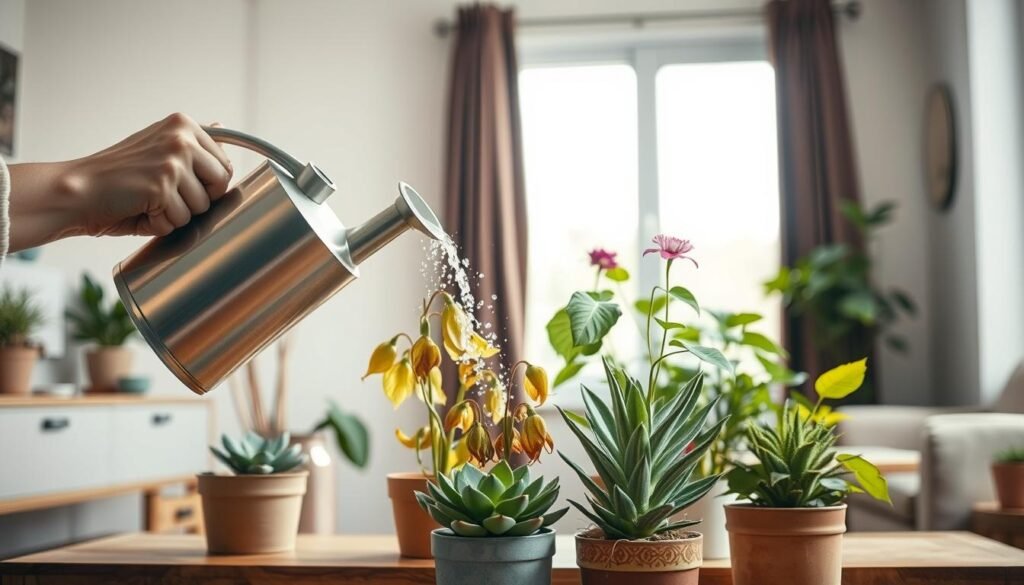
A serene indoor scene focused on a stylish, well-lit room with various wilting indoor flowers in pots. In the foreground, a pair of hands gently watering the drooping plants using a sleek, modern watering can, demonstrating careful plant care. In the middle ground, several potted plants display signs of heat stress, such as yellowing leaves and wilting flowers, contrasting against a vibrant green succulent beside them. In the background, soft natural light streams through a nearby window, enhancing the atmosphere of tranquility. The color palette includes warm earth tones mixed with fresh greens, creating an inviting yet urgent mood of restoration and care.

Adjust watering the right way

Water thoroughly: soak until runoff, then let the pot dry to the depth your species prefers. Resist daily sips that create wet and dry zones.

Improve drainage and root health

Repot into a looser mix or larger container when soil stays dense. Trim any brown or mushy root tissue and refresh the mix if rot is limited.

Restore moisture balance

Aerate compacted soil by poking holes so water penetrates. Add humidity with a pebble tray, mist briefly, or run a small humidifier for dry rooms.

Move for better conditions

Place nearer a bright window but not against hot glass. Keep plants away from vents and allow gentle air flow to stabilize leaves and reduce stress.

Targeted pest control

Inspect leaf undersides, rinse in a sink, then use a labeled indoor spray (insecticidal soap, neem, or a pyrethrin product) per label directions. Repeat as needed.

“Start with a pause, check roots and light, then apply one correct fix at a time.”

Action Same-day effect 7-day expectation
Proper deep watering Leaves may perk Soil evens out, less droop
Repot / trim roots Limited, cleaner roots New growth, steadier uptake
Add humidity Leaves feel less crispy Improved leaf tone, less stress

Conclusion

Before changing anything, use quick checks of leaves, pot weight, and soil depth to find the real problem.

The main takeaway: wilting with “moist” mix usually points to the roots or soil condition, not just how often you add water.

Most drooping episodes are fixable when you diagnose first and change one variable at a time. Rule out heat or vent stress, test drainage, confirm the right amount of watering, then check light, pot size, pests, and salt build-up.

Make a simple home routine: a short leaf check, a quick soil probe, and small care tweaks by season or day. Some plants perk up in a day; root and soil fixes can take weeks to show full recovery.


FAQ

What’s the difference between underwatering and heat stress when my houseplant is drooping?

Underwatering shows when soil is dry throughout and leaves feel limp, crispy, or curled. Heat stress happens when roots can’t keep up with water loss: leaves droop even if the topsoil feels moist. Check root zone moisture with a finger or meter and note placement near hot windows or vents — heat often causes rapid wilting during the day and partial recovery at night.

How can soil that seems “moist” still cause a thirsty, stressed plant?

Potting mix can develop dense, compacted layers or dry pockets that hold surface moisture while roots can’t access water. Heavy mixes or overwatering can also create low-oxygen conditions that impair root uptake. Gently dig a bit to inspect or use a moisture meter to verify moisture at root depth rather than relying only on the surface feel.

What visual clues tell me whether the problem is root-related or just too much heat?

Look for yellowing combined with soft, brown roots — a sign of rot from poor drainage. Pure heat stress usually shows wilting, pale leaves, and scorched edges from sun or hot air. Crispy edges plus very dry soil points to underwatering. Take note of leaf color, texture, and how the plant responds overnight.

How does heat from windows, vents, or lamps cause plants to droop?

Direct sun through a south-facing window or hot air from HVAC vents raises leaf and soil temperature, speeding transpiration. If roots can’t replace water quickly, leaves collapse to conserve moisture. Move sensitive plants away from hot spots or use sheer curtains and adjust vent direction to reduce stress.

Can low humidity make my plant wilt even if soil is fine?

Yes. Dry indoor air forces leaves to lose water faster than roots can supply it. Tropical species suffer most. Raise ambient humidity with a pebble tray, room humidifier, grouping plants, or occasional misting to reduce leaf water loss and ease wilting.

How do I spot underwatering patterns versus inconsistent watering or hydrophobic soil?

Underwatering usually shows evenly dry soil and uniformly shriveled leaves. Inconsistent watering creates mixed symptoms: some leaves limp while others look fine. Hydrophobic soil repels water and forms dry clumps after drought; water runs off or pools. Rehydrate stubborn soil by submerging the pot in a tray until bubbles stop and soil re-wets.

Why do plants sometimes look overwatered but the soil is soggy and leaves still droop?

Soggy mix can suffocate roots, leading to rot and reduced uptake. Leaves wilt because damaged roots can’t move water upward, mimicking thirst. Gently lift the plant to check root health, ensure drainage holes are clear, and trim black, mushy roots before repotting in fresh, airy mix.

What quick at-home checks will tell me whether to water or wait?

Try the finger test (insert to knuckle); if soil feels dry at root depth, water thoroughly. Use a moisture meter for more accuracy. Lift the pot to gauge weight — light pots usually need water. Also, examine the drainage hole area for dampness and smell the soil for sour rot odors.

Could lack of light make my plant droop even if water and humidity are fine?

Yes. Low light slows photosynthesis and weakens roots, reducing water uptake and causing flaccid growth. Move the plant to brighter, indirect light near an east- or west-facing window or supplement with a grow light to restore vigor.

How does being rootbound affect water behavior and plant posture?

A crowded root ball holds less soil, dries quickly, and can limit nutrient uptake. Roots circling the pot may choke or fail to reach fresh water, resulting in quick wilting between waterings. Repot into a larger container with fresh potting mix when roots show at drainage holes or the plant dries out fast.

Can pests make leaves droop, and which pests should I watch for?

Sap-sucking pests like aphids, spider mites, mealybugs, and scale weaken plants by extracting fluids, causing yellowing and limp foliage. Fungus gnats harm young roots and can stress plants too. Inspect undersides of leaves and stem crevices, and treat infestations early with rinsing, insecticidal soap, or labeled indoor-safe products.

How do fertilizer salts or bad tap water cause stress and drooping?

Excess salts from overfeeding create a white crust on the soil and can pull moisture away from roots, leading to leaf burn and droop. Hard water adds minerals that build up over time. Flush the pot with clean, filtered or rested tap water, adjust feeding schedules, and repot if salts persist.

What are fast, reliable fixes to revive a drooping plant without guessing?

First, assess moisture at root depth, pot weight, and root health. If roots are healthy and soil dry, water deeply until excess drains. If soil is soggy and roots slimy, remove the plant, trim rotten roots, and repot in fresh, well-draining mix. Improve humidity, move away from heat sources, and address pests or nutrient issues as found.

When should I call a professional or consider replacing a plant?

Seek help from a local nursery, extension service, or professional if roots are extensively rotted, pests persist despite treatment, or recovery stalls after basic fixes. If most foliage and roots are dead, replacing the specimen and learning preventive care may be the best option.

Comments

No comments yet. Why don’t you start the discussion?

Leave a Reply

Your email address will not be published. Required fields are marked *