
Surprising fact: up to 60% of houseplants show yellowing in low-light rooms during fall and winter, often long before pests or watering errors appear.
Yellow leaves are often the first clear signal that a plant is short on energy. Light acts as food by powering photosynthesis, which turns carbon dioxide and water into the carbohydrates a plant uses for growth.
Readers mostly spot tired, pale foliage in darker rooms. The big question here is: do indoor flowers need grow lights, and when is added lighting the real fix versus masking another care issue?
This guide focuses on diagnosing yellowing caused by poor light and using supplemental bulbs safely. You will learn how to read plant signals, check window exposure, pick the right bulb, and set the right distance and hours.
Quick first step: note where your plant sits, count usable daylight hours, and watch new growth for paleness or stretching. Those clues tell you if light is the likely culprit.
Key Takeaways
- Yellow leaves often signal low energy from insufficient light rather than just watering errors.
- Photosynthesis is the core process; without enough light, chlorophyll drops and leaves pale.
- Assess window exposure and usable daylight before buying supplemental lighting.
- Choose bulbs and placement based on plant needs, not wishful thinking.
- Start by observing location, hours of usable light, and new growth shape.
Yellow Leaves on Indoor Flowers: What the Plant Is Telling You
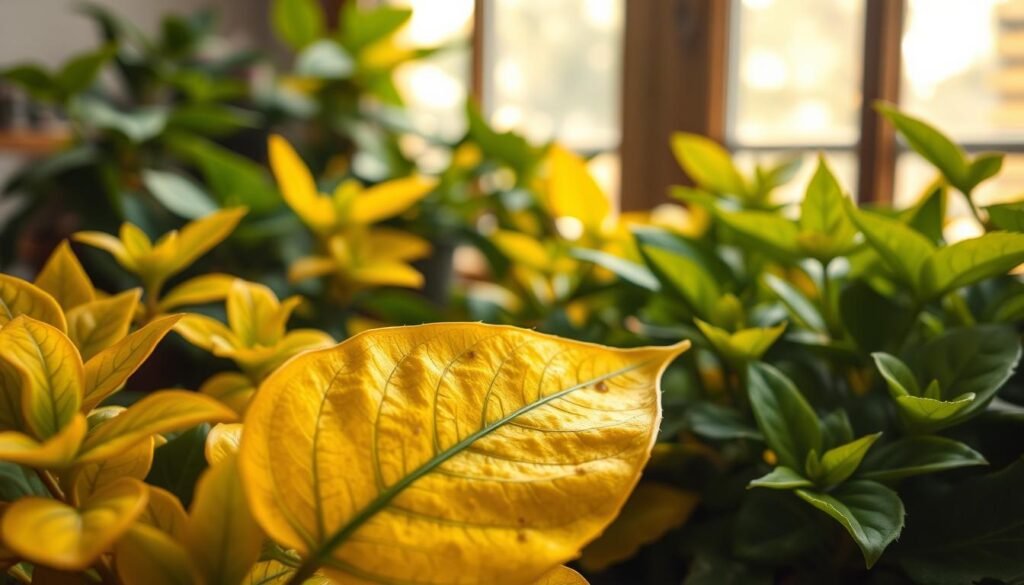
When leaves fade toward yellow, the green pigment is often the missing clue. Chlorophyll drops when a plant receives too little light, so foliage shifts from healthy green to pale yellow or even whitish tones.
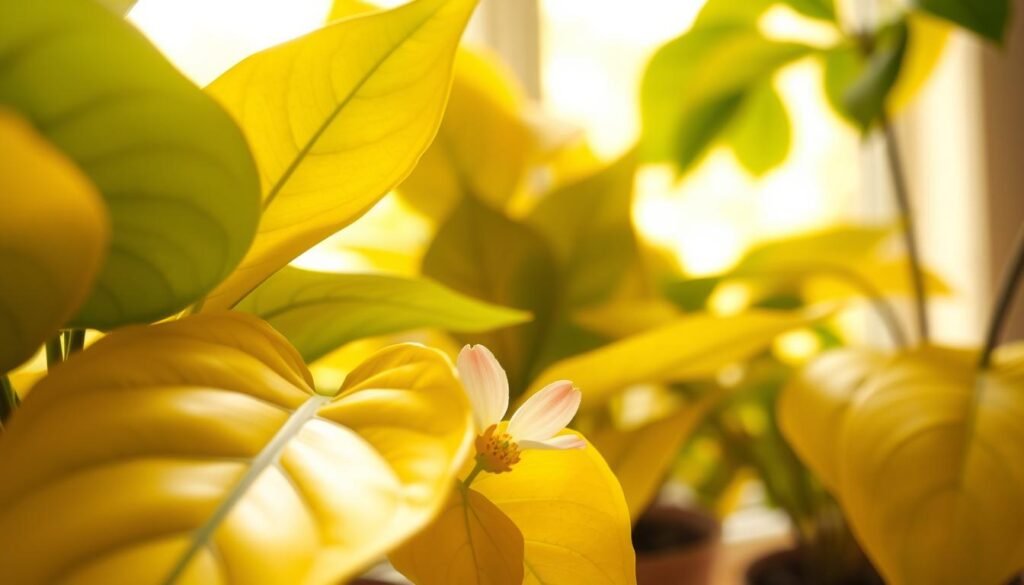
Interpret yellowing as a symptom, not a diagnosis. Look for patterns: even, washed-out yellowing points to low light, while patchy bleaching, crisp edges, or brown scorch spots suggest excess intensity or burning.
- Low-light signs: even paleness, leggy growth, long internodes, and older leaf drop.
- High-intensity damage: bleached patches, brittle leaves, or brown scorch near the surface of a lamp.
- Checkpoint: yellowing plus stretched stems usually means low light; yellowing with crisp, bleached edges often means the source is too intense or too close.
Watch how the plants position themselves. Stems that lean and reach toward a window are a clear architecture clue of insufficient light. Once you link the symptom to its cause, you can decide whether to move the plant, change exposure, or add targeted supplemental lighting.
Do indoor flowers need grow lights in low-light homes?
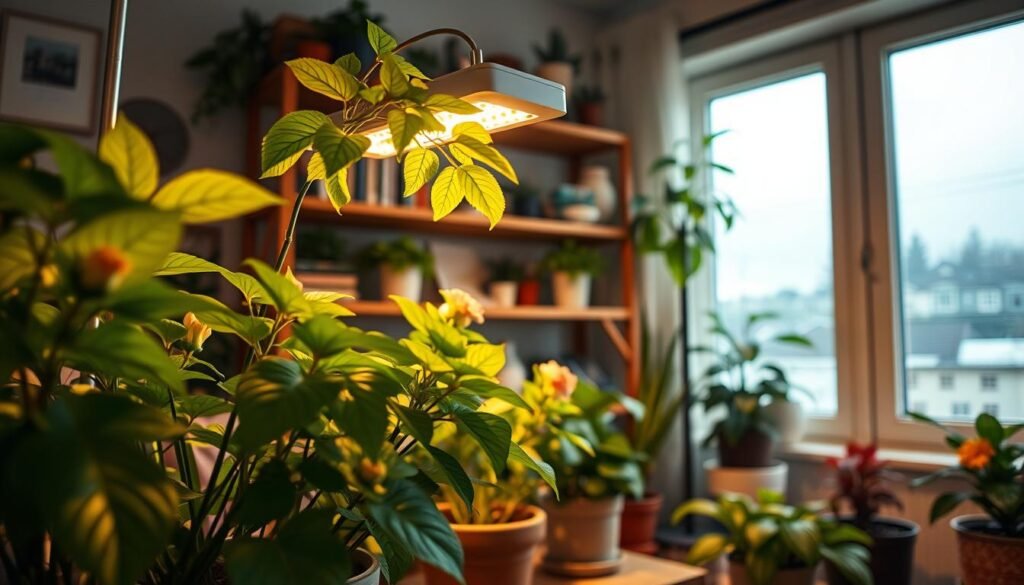
Short winter days or shaded windows often leave plants with enough green to live but not enough energy to bloom.
Answer: houseplants do not always require a supplemental bulb, but many benefit when natural light is weak, seasonal, or blocked.
When natural sunlight isn’t enough
Common low-light home scenarios include north-facing windows, heavy tree cover, tall neighboring buildings, or spots set back several feet from glass.
Seasonal change also matters: fall and winter reduce usable daylight, and that often cuts the energy available for buds.
Supplemental vs. sole light source
Use supplemental lighting to boost existing natural light for clearer growth and fuller blooms.
If no usable sunlight reaches the plant, a grow light can act as the primary light source and maintain steady development.
Why flowering houseplants often need higher light
Flowering plants use extra energy to form buds. In weak light they may stay alive but fail to set flowers.
Practical rule: if you cannot provide bright window light consistently, a targeted lamp is the easiest, most controllable fix.
- Signs to choose a lamp: stretched stems, few buds, or pale new growth.
- Realistic expectations: match the plant’s requirements and avoid excessive intensity that can stress leaves.
| Situation | Recommended use | Expected result |
|---|---|---|
| Bright window (south/east) | Supplemental only if shaded | Better bud set, minimal lamp hours |
| North-facing or obstructed | Grow light as primary or strong supplement | Consistent flowering, controlled intensity |
| Short winter daylight | Timed supplemental light (timer) | Restored bloom cycles, steadier growth |
Before buying, measure or estimate your natural light so you can pick the correct intensity and setup for reliable blooms.
Check Your Home’s Natural Light Before You Buy Any Lights
Before buying a lamp, count the hours of usable brightness at each plant spot. This quick audit saves money and prevents stress on foliage.
How to estimate sunlight hours and quality by window exposure
Note window direction (north, east, south, west) and record how many hours of direct or bright indirect sunlight arrive at the pot each day. Mark obstructions like trees, awnings, or nearby buildings.
Low, medium, and high light basics
Low light: a few usable hours of bright indirect light; plants grow slowly and dry slowly. Medium light: regular bright indirect sun for several hours; balanced growth and flowering possible. High light: direct sun or many bright hours; faster growth and more watering.
Match light requirements to your space
Compare what your plants require to the amount and intensity you measured. If the space falls short, moving the plant to a better exposure often fixes yellowing without extra lighting.
- Track hours per day and note intensity.
- Avoid overwatering in lower light—houseplants use less water there.
- Once you know this baseline, you can pick the right lighting setup in the next section.
Choosing a Grow Light That Fixes Yellowing Without Stressing the Plant
Choosing a proper source is about matching spectrum, intensity, and placement. Make the choice by balancing budget, pot count, and where a lamp can sit relative to foliage.
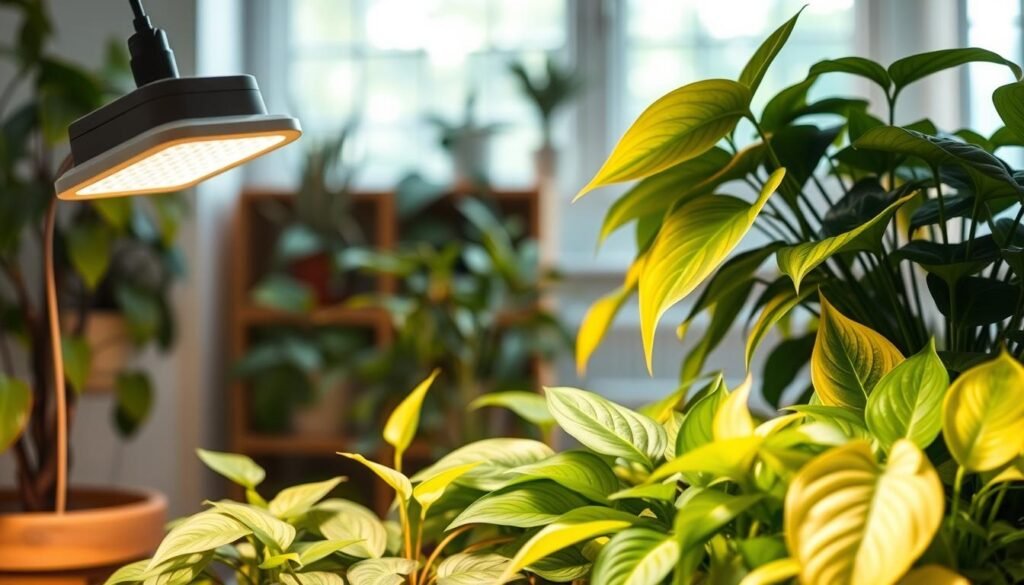
Grow bulbs vs. dedicated fixtures
Grow bulbs fit existing lamps and cost less, but they can give uneven coverage and limited spectrum. A dedicated grow light costs more up front and delivers wider, more even coverage and flexible mounting.
Which type works best at home?
- LED / led grow: energy-efficient, long-lived, low heat—best for most home collections.
- Fluorescent lights: low heat and decent spectrum for small setups.
- Incandescent: cheap but hot and inefficient—poor choice for foliage health.
- HID: powerful but hot and better for large or commercial systems.
Spectrum and labels
Full spectrum white LEDs suit mixed collections. Blue light favors leaf strength and chlorophyll; red light helps blooming. Read labels: wattage shows power draw, lumens reflect human brightness, while plant-usable metrics matter most when available.
Practical takeaway: start with a reputable full spectrum LED sized for your area, then adjust distance and hours rather than blasting plants with excess intensity.
How to Position Grow Lights for Indoor Flowers
Small shifts in height can turn weak, pale growth into compact, healthy foliage. Correct placement balances usable intensity and safe heat for each plant. Use the rules below to avoid both yellowing from too little light and scorching from too much.
Distance rules of thumb
Distance controls how much intensity light reaches the canopy. Start with about 10–12 inches for mixed collections.
Use these starting points by bulb type and adjust as needed:
| Bulb type | Typical starting distance | Best for |
|---|---|---|
| Incandescent | ~24 inches | Heat-tolerant, low-intensity needs |
| Fluorescent | ~12 inches | Foliage plants and small groups |
| LED (full spectrum) | ~6 inches | Flowering and compact collections |
Heat management
If the bulb feels hot at plant height, raise it. Excess heat dries and browns leaves quickly.
Switch to a lower-heat light source if spots or crisp edges appear. That protects foliage while keeping intensity light safe.
Top-down placement for even coverage
Center the light source over the pot cluster and aim downward like the sun. This prevents one-sided stretching and produces even growth.
Use clamps, shelf mounts, or simple stands in apartments to get a stable top-down angle.
Adjust as plants grow
Check height weekly. As stems elongate or buds rise, lower or raise the fixture to keep the correct distance.
Signs to watch: bleaching, browning near the lamp, or continued reaching. If leaves bleach or brown, the light is too close; if the plant still stretches, it is too far.
How Many Hours of Light Do Indoor Flowers Need Each Day?
Plants keep time with light; consistent day length helps them balance growth and rest.
Photoperiod basics: predictable cycles of light and darkness let a plant process energy and reset hormones. Most species need a clear dark period—about eight hours—so avoid round-the-clock illumination.
General targets
For many foliage houseplants aim for about 12–14 hours of usable light per day. Flowering varieties often do better closer to 14–16 hours if you want more buds.
Using timers
Timers make keeping a steady schedule easy during short winter days. Set the timer, watch for tighter growth and more buds, then tweak if needed.
Fine-tuning tips
If a plant sits farther from the light source, it gets less intensity and may need more hours or a closer distance. Adjust one variable at a time and observe for 1–2 weeks.
Spectrum roles
Blue light strengthens leaves and chlorophyll. Red light encourages flowering. For most household setups a balanced full spectrum grow light is the simplest choice.
- Avoid 24/7 operation—dark hours are essential for energy processing.
- Start with hours first, then change distance or intensity if the plant still stretches or yellows.
Conclusion
Correcting a plant’s light source often returns color and tighter growth within weeks.
First, confirm yellowing matches pale color plus stretching. Then move the pot to brighter glass or add a single, targeted grow light or grow lights setup as needed.
Aim for the right spectrum, safe distance, and steady hours rather than more power. For most homes a full spectrum LED or led grow bulb stays cool and lasts long.
Read labels carefully: lumens show human brightness, watts show power draw, and plant-usable metrics like PPF/PPFD matter most when available.
Quick setup checklist: top-down mount, start at a safe distance, set a timer, and watch new shoots. Match each plant’s light requirements to its spot and scale the fix from one plant outward.