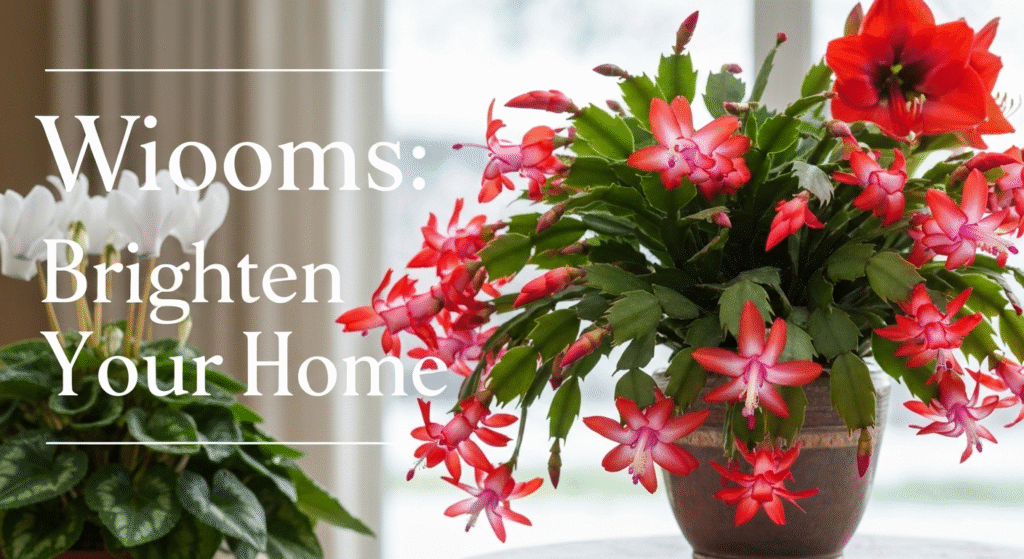

When the days grow short and the world outside turns gray, our homes can start to feel a bit dull. The vibrant colors of the garden are a distant memory, and the lack of sunlight can make everything seem dreary. But here’s the thing: your indoor space doesn’t have to reflect the winter blues. Nature has a clever solution in a special group of houseplants that are naturally programmed to put on their best show during the coldest, darkest months of the year. These winter-blooming plants bring a burst of life and color right when we need it most.
My name is Kamil Khan, and for years, I’ve been fascinated by the rhythms of indoor plants. My journey started with a single, stubborn Christmas cactus that refused to bloom, which sent me down a path of discovery into how light, temperature, and a plant’s internal clock work together. Since then, I’ve filled my home with these seasonal bloomers, learning their quirks through trial and error. My goal is to share what I’ve learned, blending hands-on experience with clear explanations to help you successfully bring the magic of winter flowers into your own home.
Understanding the Science of Winter Blooms
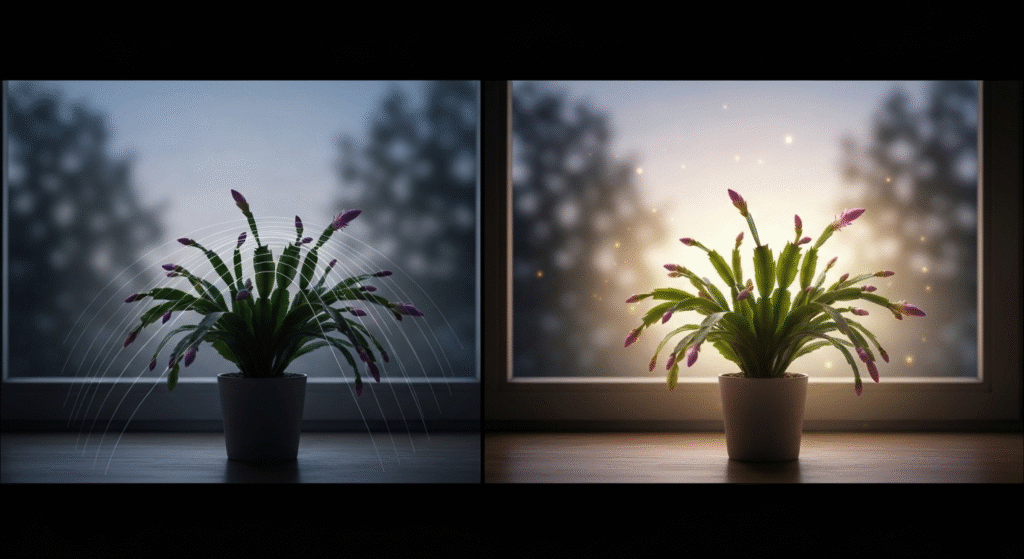
Have you ever wondered why some plants choose the shortest days of the year to flower? It’s not a coincidence; it’s a brilliant survival strategy rooted in science. The primary driver behind this phenomenon is called photoperiodism—how an organism reacts to the length of day or night. Many winter-blooming houseplants are “short-day” plants. This means they require a certain period of long, uninterrupted nights to trigger the hormonal changes needed to produce flower buds.
In their native habitats, this timing ensures they bloom when pollinators are active or before a dry or intensely hot season begins. Inside our homes, the shorter daylight hours of fall and winter naturally mimic these conditions. As the sun sets earlier and rises later, these plants receive the signal that it’s their time to shine. Temperature also plays a key role. For many species, a drop in ambient temperature, especially at night, works alongside the short days to initiate the blooming process. Understanding this simple science is the first step in helping these plants thrive.
Our Top Picks for Winter-Blooming Houseplants
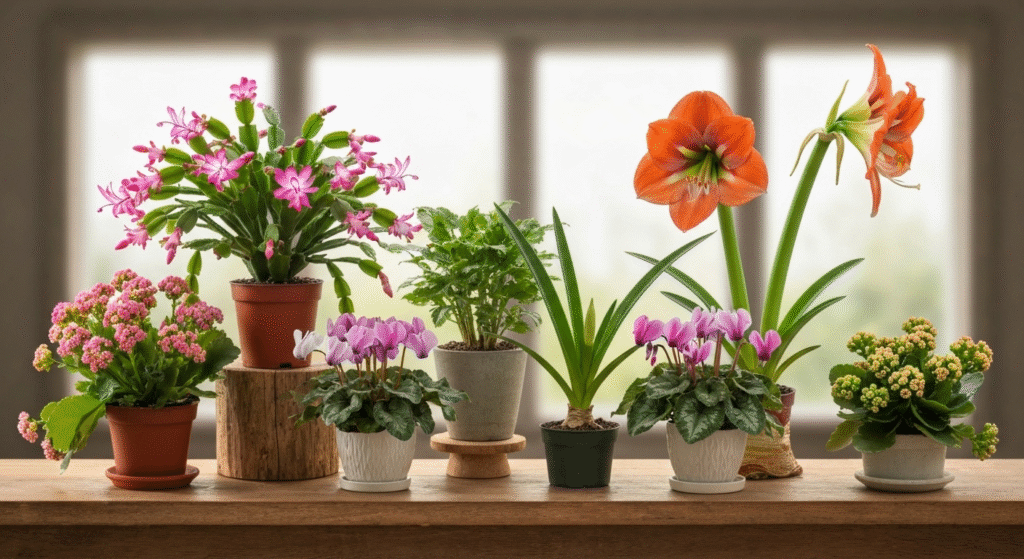
Getting vibrant color in winter is all about choosing the right plants. Here are some of the most reliable and beautiful options that can brighten any room, along with the specific care they need to flourish during the colder months.
The Christmas Cactus (Schlumbergera bridgesii)
The Christmas cactus is a classic for a reason. Its gracefully arching, segmented stems burst into a cascade of brilliant flowers in shades of pink, red, white, and purple right around the holidays. Unlike desert cacti, these are tropical plants native to the coastal mountains of Brazil, where they grow on trees. This background is key to understanding their needs.
From my own experience, the biggest mistake people make is treating them like their desert cousins. They don’t want to be baked in the sun or left to dry out completely.
Light and Temperature Needs
To set buds, a Christmas cactus needs those signature short days. Starting in the fall, it requires about 12-14 hours of complete darkness each night. It also benefits from cooler temperatures, ideally between 50-65°F (10-18°C). I usually move mine to a cooler, less-used room in October for about 6-8 weeks until I see tiny buds forming at the tips of the stems. Once it buds, you can move it back to a warmer spot to enjoy the show. For the rest of the year, it loves bright, indirect light, like that from an east-facing window.
Winter Watering Schedule
While the plant is budding and blooming, it needs consistent moisture. The soil should be kept lightly moist, but never soggy. Water thoroughly when the top inch of soil feels dry to the touch. Let all the excess water drain away, as letting it sit in a saucer of water is a sure way to cause root rot. After it finishes flowering, you can reduce watering slightly, allowing the soil to dry out a bit more between waterings.
| Care Aspect | Requirement | Notes |
| Light | Bright, indirect light | Avoid direct, intense sun which can scorch the stems. |
| Temperature | 60-70°F (15-21°C) for growth | 50-65°F (10-18°C) in fall to encourage buds. |
| Water | Keep soil lightly moist when blooming | Reduce water slightly after flowering. |
| Darkness | 12-14 hours of darkness per night in fall | Essential for setting flower buds. |
Cyclamen (Cyclamen persicum)
With their heart-shaped leaves and delicate, upswept petals that look like butterfly wings, Cyclamen are true winter stunners. They come in vibrant shades of pink, red, lavender, and white and bloom profusely for months, often from late fall through early spring. They are native to the Mediterranean, which tells us they prefer cool and humid conditions.
Light and Temperature Needs
Cyclamen thrive in cool temperatures and will quickly fail in a hot, stuffy room. Their ideal daytime temperature is between 60-68°F (15-20°C), with a slight drop at night. They need bright, indirect light to bloom well. A north or east-facing window is often perfect. Direct sun will burn their leaves and cause the flowers to fade prematurely.
Winter Watering Schedule
Watering is the most critical part of Cyclamen care. They are very sensitive to both over- and underwatering. The best method I’ve found is to water from the bottom. Place the pot in a shallow dish of water for about 20-30 minutes, allowing the soil to soak up moisture through the drainage holes. This keeps water off the corm (the bulb-like base) and leaves, which helps prevent rot. Always pour out any excess water afterward. Water only when the top of the soil feels dry.
| Care Aspect | Requirement | Notes |
| Light | Bright, indirect light | A north or east-facing window is ideal. |
| Temperature | 60-68°F (15-20°C) | They suffer in heat; keep away from radiators. |
| Water | Water from the bottom when topsoil is dry | Avoid getting the leaves and corm wet. |
| Post-Bloom | Plant will go dormant in summer | Reduce water and let leaves die back. Store in a cool, dark place. |
Amaryllis (Hippeastrum)
For pure drama and spectacle, nothing beats an Amaryllis. From a large, unassuming bulb emerges a tall, thick stalk topped with several enormous, trumpet-shaped flowers. Available in rich reds, pure whites, pinks, and striped varieties, they provide a stunning focal point during the winter.
Most Amaryllis bulbs you buy in the fall are primed and ready to bloom. The process is incredibly simple and rewarding, making it a great plant for beginners.
Light and Temperature Needs
Once you plant the bulb, place it in a warm, sunny spot to encourage the stalk to grow. I find that a south-facing window works perfectly at this stage. Rotate the pot every couple of days to keep the stalk growing straight towards the light. Once the flowers begin to open, moving the plant to a slightly cooler location with indirect light will help the blooms last much longer.
Winter Watering Schedule
When you first plant the bulb, water it thoroughly and then wait until you see the first signs of green growth before watering again. Overwatering a dormant bulb can cause it to rot. Once growth is active, water whenever the top 1-2 inches of soil feel dry. The plant is quite thirsty while it’s growing its tall stalk and large flowers.
| Care Aspect | Requirement | Notes |
| Light | Bright, direct sun during growth | Move to indirect light once flowers open to prolong blooming. |
| Temperature | Normal room temperature (68-75°F / 20-24°C) | Cooler temps help blooms last longer. |
| Water | Water sparingly until growth appears, then regularly | Keep soil moist but not waterlogged. |
| Post-Bloom | Can be saved to rebloom next year | Cut stalk, let leaves grow, then allow a dormant period. |
Kalanchoe (Kalanchoe blossfeldiana)
Kalanchoe is a cheerful and widely available succulent that is often coaxed into blooming for the winter months. It produces dense clusters of tiny, star-shaped flowers in bright shades of red, orange, yellow, and pink that can last for weeks on end. Its fleshy, dark green leaves make it an attractive plant even when it’s not in bloom.
Light and Temperature Needs
Like the Christmas cactus, Kalanchoe is a short-day plant. To get it to rebloom, it needs about 14 hours of complete darkness every night for 6-8 weeks. It prefers bright, indirect light and can even handle a few hours of direct sun. It is quite happy in average room temperatures.
Winter Watering Schedule
Being a succulent, Kalanchoe is very sensitive to overwatering. Its thick leaves store water, so it’s best to let the soil dry out completely between waterings. During winter, its water needs are even lower. I check mine every couple of weeks and only water when the pot feels very light and the soil is bone dry.
| Care Aspect | Requirement | Notes |
| Light | Bright, indirect light to some direct sun | Too little light leads to leggy growth. |
| Temperature | Average room temperature (60-75°F / 15-24°C) | Protect from frost. |
| Water | Allow soil to dry out completely | Overwatering is the most common cause of failure. |
| Darkness | 14 hours of darkness per night to rebloom | This is crucial for setting buds. |
A Quick Comparison of Winter Bloomers
Choosing the right plant depends on your home’s environment and the level of care you can provide. Here’s a simple table to help you compare these colorful options at a glance.
| Plant | Light Needs | Water Needs | Temperature | Ease of Care |
| Christmas Cactus | Bright, Indirect | Moderate | Cool to Average | Easy |
| Cyclamen | Bright, Indirect | High (Careful) | Cool | Moderate |
| Amaryllis | Bright, Direct (Growth) | Moderate | Average to Warm | Very Easy (First Bloom) |
| Kalanchoe | Bright, Indirect/Direct | Low | Average | Easy |
Troubleshooting Common Winter Blooming Issues
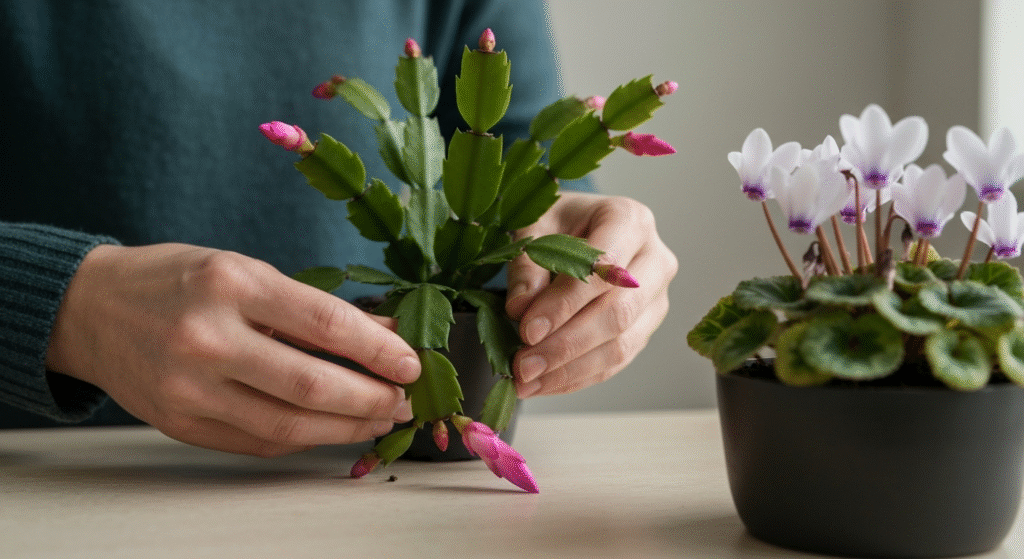
Even with the best care, you might run into a few challenges. Here’s how to tackle some common problems based on what I’ve seen over the years.
My Plant Won’t Bloom!
This is the most frequent issue, and it almost always comes down to one of three things for short-day plants like the Christmas cactus and Kalanchoe:
- Not Enough Darkness: The most common culprit. The long night period must be uninterrupted. Even a brief exposure to light from a lamp or TV can reset their internal clock. Try placing the plant in a closet or covering it with a box overnight.
- Wrong Temperature: Many of these plants need a cool period to trigger budding. If your home is kept consistently warm throughout the fall, the plant may not get the signal to bloom.
- Improper Watering: Both over- and underwatering can stress the plant and prevent it from flowering.
Why Are the Flower Buds Dropping?
Sudden bud drop on a Christmas cactus is heartbreaking. It’s usually a sign of stress. The most common causes are:
- Sudden Changes: Moving the plant to a new location with different light or temperature after it has set buds.
- Watering Issues: Letting the soil get bone dry or keeping it too wet can cause the plant to drop its buds to conserve energy.
- Drafts: A sudden cold draft from a window or door can shock the plant.
The Leaves are Turning Yellow
Yellowing leaves, especially on a Cyclamen, often point to a watering problem.
- Overwatering: This is the most likely cause. The soil is staying too wet, and the roots are suffocating or starting to rot. Allow the soil to dry more between waterings.
- High Temperatures: Cyclamen leaves will start to yellow and wilt if the room is too warm as the plant prepares to go into dormancy.
Frequently Asked Questions
Can I get my Amaryllis to bloom again next year?
Yes, absolutely. After the flowers fade, cut the stalk down to about an inch above the bulb. Continue to water it and place it in a sunny window. Let the leaves grow all spring and summer. In late summer, stop watering, let the leaves die back, and store the bulb in a cool, dark place for 8-10 weeks to rest before starting the process again.
Do winter-blooming plants need fertilizer in the winter?
It depends. For plants like Amaryllis that are actively growing and flowering, a balanced liquid fertilizer every 2-4 weeks can be beneficial. For plants like the Christmas cactus and Cyclamen, it’s best to stop fertilizing in the fall to encourage blooming and only resume once new growth appears in the spring.
What’s the difference between a Christmas cactus and a Thanksgiving cactus?
They are very similar, but you can tell them apart by their leaf segments. Thanksgiving cactus (Schlumbergera truncata) has pointed, claw-like projections on the edges of its segments. The Christmas cactus (Schlumbergera bridgesii) has more rounded, scalloped edges. Their bloom times are also slightly different, as their names suggest.
How long will the flowers on my Cyclamen last?
If kept in ideal cool conditions with proper watering, a healthy Cyclamen can produce flowers continuously for two to three months. The key to longevity is keeping it cool and avoiding heat sources.
Conclusion
Bringing winter-blooming houseplants into your home is more than just decoration; it’s a way to stay connected to the cycles of nature even when the world outside is dormant. Plants like the Christmas cactus, Cyclamen, Amaryllis, and Kalanchoe are living proof that color and life can thrive in the most unexpected seasons. With a little understanding of their unique needs for light, temperature, and water, you can transform a dreary room into a vibrant oasis.
The effort is minimal compared to the reward of seeing a brilliant flower unfurl in the middle of January. These plants don’t just brighten our homes; they lift our spirits. They remind us that even during the darkest times, there is always beauty to be found if you know where to look.