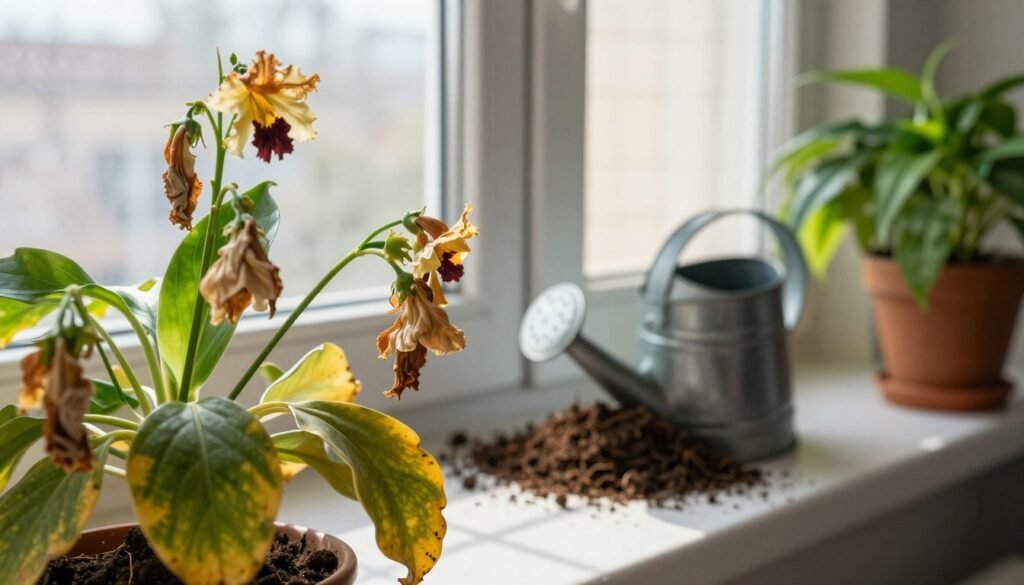

Surprising fact: a Brooklyn apartment with hundreds of plants showed that most “no blooms” cases traced back to six repeatable fixes, not mystery pests or genetics.
Many houseplants look healthy yet hold lots of leaves and no buds. That pattern usually signals a care mismatch rather than a fatal disease.
This short guide frames 12 common causes so you can diagnose the problem step by step. We focus on practical fixes: light intensity, fertilizer choice, seasonal cues, repotting, and winter humidity.
Expect clear, safe steps to restart a bloom: improve light without sunburn, tweak watering, check roots, and set the right photoperiod. Some plants simply need more maturity or were forced to bloom in greenhouse conditions and will rest afterward.
This article is built for a typical US home, including apartments with limited window exposure. Later sections give plant-specific restart tips for peace lily, anthurium, orchids, hibiscus, and African violet.
Key Takeaways
- Most cases of no blooms are solvable care issues, not permanent damage.
- Check light, fertilizer, potting mix, humidity, and seasonal cues first.
- Lots of leaves but no buds means the plant is surviving but missing a trigger.
- Some species need time or specific dormancy signals to bloom again.
- The full guide offers targeted fixes and plant-specific restart steps.
Quick diagnosis: what your plant is telling you about flowering
Start by reading your plant’s current signals: leaves, stems, and any hint of buds reveal whether basic needs are met or a trigger is missing.
Healthy leaves but no buds: common meaning
Healthy foliage with no buds usually means the plant has enough energy to grow but lacks a bloom trigger.
That trigger is most often brighter light, a different feeding balance, or a seasonal cue. Leggy growth and pale leaves point to low light or low nutrients rather than disease.
How long since the last bloom
Check the last bloom date against the species’ normal flowering period. Some plants bloom all year, while others flower once or twice per year.
Simple rule: if it’s been longer than one full period, treat this as a diagnostic signal, not bad luck.
Fast checks: light, watering, roots, and recent changes
- Measure light: note window direction and hours of bright light.
- Review watering: are you overwatering or letting the mix stay soggy?
- Quick root reality-check: healthy roots are firm and white/tan; mushy roots mean rot and no buds until roots recover.
- Note recent care changes: moves, new fertilizer, or HVAC cycles can alter conditions fast.
Compare your plant to credible images for clues like stretched growth or faded color. Change one variable at a time — light first for most flowering plants — so you can see what actually restarts blooms.
why indoor flowers stop blooming: the most common reasons indoors
When a plant refuses to set buds, the cause is usually one of a handful of predictable stresses. Start with light—intensity matters more than a “bright room.”
Key limits: low light prevents bud formation. Too much new light can scorch leaves and pause development. Many plants also need at least 8 hours of true darkness; some short-day species require ~15 hours uninterrupted.
Water errors are next. Overwatering kills roots and halts blooms. Underwatering causes bud drop or no blooms.
Fertilizer mistakes are common. High nitrogen feeding makes lush leaves but few flowers. Repeated feeding without flushing creates salt buildup and root burn. Pot-bound plants, poor drainage, or compacted soil cut oxygen at the roots and suppress flowering.
Other blockers include winter dry air, temperature swings, or missing a cool-night trigger that some species need for bud set. Finally, several plants require a rest period—reduced water, lower fertilizer, and cooler temps—to rebloom.
| Cause | Effect | Quick Fix | When to Call a Pro |
|---|---|---|---|
| Low light | No buds, leggy growth | Move to brighter spot; add grow light gradually | If no change in 8 weeks |
| Over/under watering | Root rot or bud drop | Deep water, then wait for mix to dry; improve drainage | Rotting roots or persistent pest issues |
| Wrong fertilizer / salt buildup | Leafy growth; weak roots | Switch to bloom NPK; flush monthly | Severe root burn or soil crusting |
| Temperature / humidity issues | Failed bud set | Provide cool nights, raise humidity in winter | Chronic greenhouse conditions needed |
Light fixes that restart blooms in flowering houseplants
A quick light audit often reveals the missing signal that keeps buds from forming. Bright, steady exposure is the most direct way to coax many species into bloom.
Right window, right intensity: In a typical US home, south windows give the strongest light, east and west provide good morning or afternoon rays, and north windows are dimmest. For many flowering plants, aim for about six hours of bright, indirect light. Move a plant 1–3 feet closer to glass to increase intensity without scorching.
Extending light safely in winter
When days shorten, add a full-spectrum grow light on a timer. Give consistent daily hours rather than random sunbaths. Place the lamp so leaves get even illumination to reduce scorch risk.
Gradual increases to avoid leaf damage
Introduce stronger light slowly: start with two extra hours, then add an hour every few days. Rapid change causes yellowing or brown marks and halts growth. In summer, a sheltered outdoor stint can boost bud set for sun-loving species.
- Spot low-light cues: leggy stems, pale leaves, and few buds.
- Make changes steady and measurable to support bud formation, not stressed foliage.
Darkness and photoperiod: when night length matters for flowering
Photoperiod is the plant’s sense of day and night. It uses that period to switch from leaf growth to reproductive development. Night length, not just daytime light, can trigger buds to form.
Short-day species that need long, uninterrupted dark nights
Some common houseplants are sensitive. Poinsettia, chrysanthemum, and gardenia often need about 15 hours of continuous darkness for several weeks to set buds.
How stray light at night can halt bud formation
Small bursts of light from hallways, lamps, or TVs can break the dark period. Even brief glow can reset a plant’s internal clock and delay bud development.
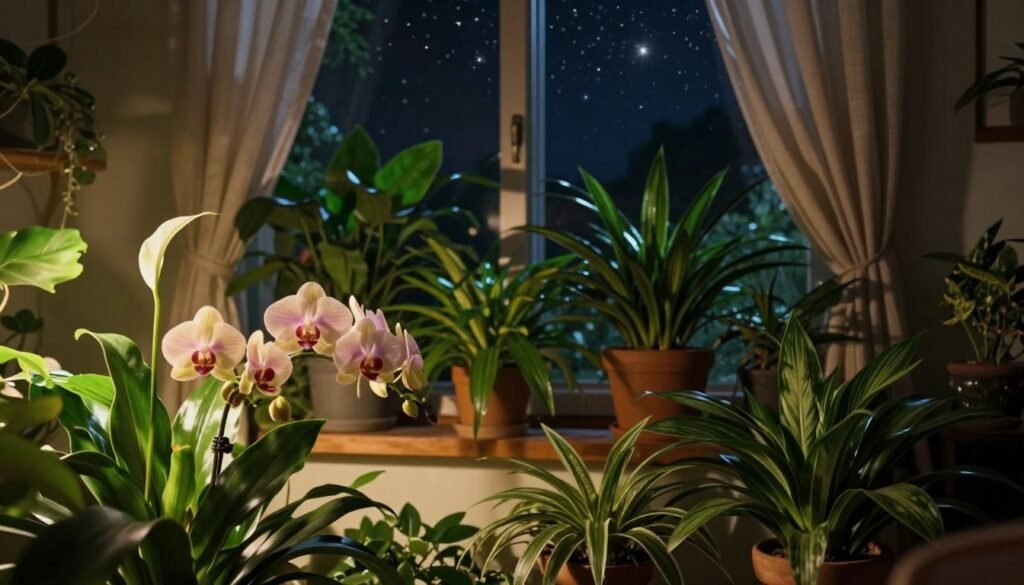
Minimum darkness most houseplants need
Even non-sensitive plants do best with a steady dark window. Aim for at least 8 hours of true darkness so growth stays steady and stress stays low.
- Darkness hygiene: move plants away from evening lights, use a consistent dark room, or cover breathable pots safely.
- Pair these fixes with brighter daytime light; long nights won’t help if days are too dim.
- Troubleshoot: if buds appear then stall, re-check late-evening exposure and nearby light leaks.
| Issue | Effect on buds | Simple fix | When to reassess |
|---|---|---|---|
| Interrupted dark period | Buds fail to form | Move plant, block light, or cover nights | After 2–3 weeks |
| Too short nights | No trigger for set | Extend darkness to 8–15 hrs depending on species | If no bud set in one full period |
| Bright days but poor nights | Stalled development | Improve daytime light and ensure true dark | When buds stall or drop |
Watering, soil, and roots: the bloom-blocking trio
Fixing how you water, what’s in the pot, and the state of the roots usually brings quick, visible improvement. These three factors interact and set the baseline for healthy growth and flowering.
How to water correctly
Soak deeply, then wait. Water until excess drains, then let the mix start drying before you water again. Daily light sips cause chronic soggy soil, low oxygen, and weak roots.
Drainage and container basics
- Always use pots with drainage holes.
- Empty saucers so runoff doesn’t sit and rot roots.
- Be cautious with decorative cachepots; they can trap moisture and harm the root zone.
Root health check and repotting
When repotting, inspect roots. Healthy roots are firm and pale. Mushy, dark, or foul-smelling roots mean rot and need trimming.
Repot when soil compacts, drains slowly, or the plant has lived in the same pot for years. Refreshing mix often restarts blooms; African violets commonly respond within weeks.
Choosing the right soil
Tropicals prefer airy, moisture-retentive mixes. Cacti need fast-draining soil. Orchids do best in chunky bark so roots get air. Match media to plant needs, and the other fixes will finally work.
“Consistent watering, suitable soil, and healthy roots are the foundation—without them, light and fertilizer changes rarely bring reliable results.”
Fertilizer strategy for more blooms (without pushing leafy growth)
Fertilizer choices shape whether a plant sends energy into green growth or into blooms. A high-nitrogen feed makes vigorous leaves, but that often comes at the expense of flower set.
Read N-P-K carefully: choose a bloom-leaning ratio such as 5-10-5 or 10-30-20 to favor phosphorus and bloom development. Dose by label instructions and lower strength rather than doubling rates.
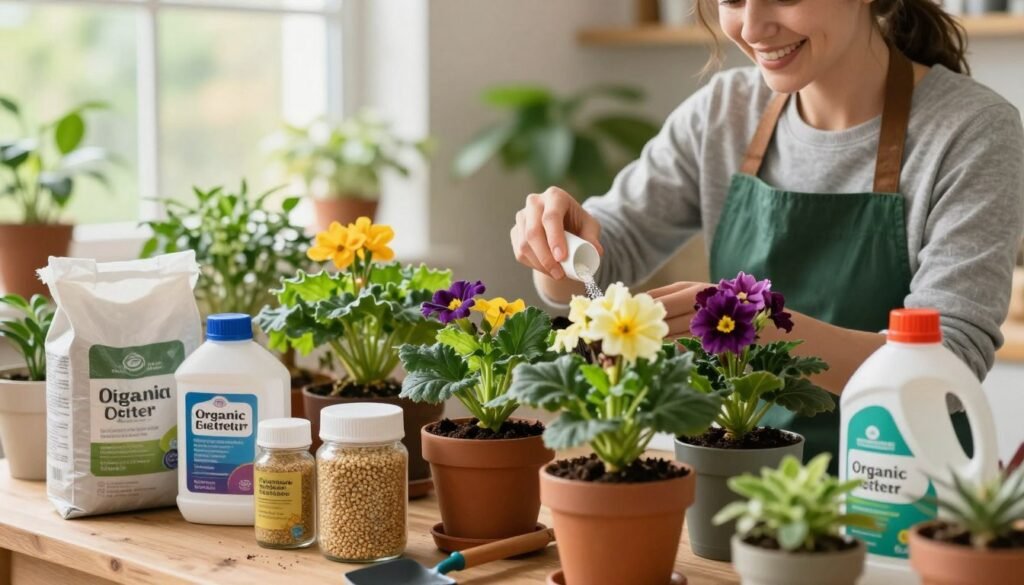
Practical feeding schedule
Feed active growers about every 2–4 weeks during spring and summer. Reduce or pause feeding in fall and winter when growth slows. For many orchids, dilute feed weekly at quarter strength works better than heavy doses every few weeks.
Micronutrients and salt management
Soilless mixes often lack trace elements. Deficiencies show as pale leaves or stalled buds. Add a balanced fertilizer that includes micronutrients.
Monthly flush: run plain water through the pot until it drains freely to remove salt buildup. This prevents root burn that kills future blooms.
| Issue | Effect | Quick fix |
|---|---|---|
| High nitrogen | Leafy growth, few buds | Switch to bloom NPK |
| Salt buildup | Root stress, stalled buds | Flush monthly with plain water |
| Missing micronutrients | Pale leaves, no bloom | Use balanced fertilizer with trace elements |
“Correct feeding plus regular flushing supports steady bloom cycles instead of random spurts of leaves.”
Temperature, humidity, and seasonal cues that trigger bud development
A subtle change in night chill or air moisture can trigger a hidden program for bud development. Many houseplants rely on mild seasonal signals rather than constant warmth to set buds.
Humidity fixes for tropical flowering plants during winter
Heated homes in winter have very low relative humidity. Tropical plants respond poorly to dry air and often halt bud growth.
Practical fixes: place a small humidifier near grouped plants, move humidity-loving species to a steamy bathroom with light, or use pebble trays. Grouping raises local humidity without constant misting.
Cool nights and temperature drops that help set buds
Many species need cooler night temperatures to switch from vegetative growth to reproductive development.
Examples: gardenia and citrus often set buds when nights drop to about 55°F (13°C). Orchids commonly initiate spikes after a fall temperature drop with cooler nights and warm days.
Dormancy done right: reducing water and fertilizer to mimic a rest period
Dormancy, or a controlled rest, tells a plant to save energy for spring. Reduce water and pause fertilizer for several weeks to mimic natural cycles.
Avoid cold drafts and heater blasts; extreme swings will stress buds and cause drop. After light and root issues are fixed, try this cue checklist: humidity support first, then a gentle night temperature drop for species that benefit.
“A gentle cool-down and steady moisture are often the cues that turn healthy leaves into flowers.”
| Trigger | Effect | Simple action | When to change |
|---|---|---|---|
| Low humidity (winter) | Buds fail to form | Use humidifier; group plants; pebble trays | 2–4 weeks with no bud progress |
| Cool nights | Initiates bud set | Lower night temp by 5–10°F for weeks | If no spikes after one seasonal cycle |
| Dormancy/rest | Prepares plant for spring bloom | Reduce water; stop fertilizer for 6–12 weeks | After growth slows in fall |
Pruning and deadheading to encourage reblooming
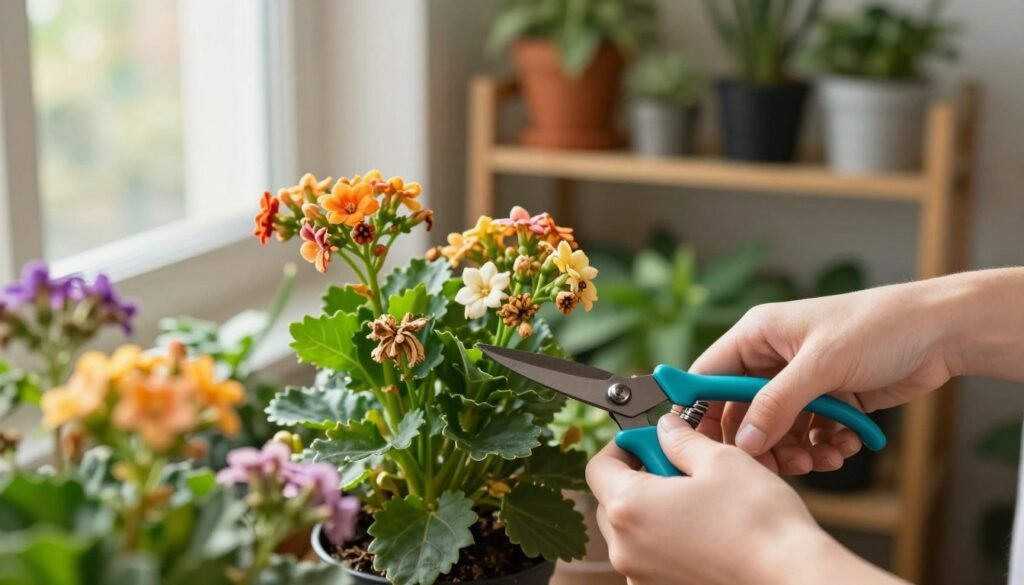
Cutting at the right moment can be the single best nudge for more flowering stems. Pruning and deadheading direct a plant’s energy toward new buds instead of seed or excessive leaf growth.
Timing matters: avoid removing future buds
Many spring bloomers set buds on last year’s wood. Prune these only after flowering ends.
By contrast, many summer-flowering species bloom on new growth. Those respond well to earlier pruning that encourages fresh shoots.
Deadheading to keep energy focused
Remove spent blooms and seed pods. This prevents seed formation and sends resources back into the plant for more flowers.
Use clean shears and clip just above a healthy node or leaf cluster so new stems can emerge.
Pinching back for fuller growth
Pinch young tips to force branching. More branches mean more potential flowering stems in spring and summer.
Do this during active growth, not during a rest period.
- Practical tools: sharp shears, rubbing alcohol to sanitize, and clean hands.
- Cut at a slight angle just above a node when appropriate.
- Prune one change at a time after light and watering are stable.
| Timing | Type | Simple action |
|---|---|---|
| After bloom | Spring bloomers (old wood) | Prune lightly once flowers fade |
| Early growth | Summer bloomers (new wood) | Prune to shape and encourage shoots |
| When recovering | Phalaenopsis orchids | Trim spike just above a node to allow possible rebloom |
“Prune with purpose: well-timed cuts help plants trade leaf energy for repeat blooms.”
Plant-specific bloom restarts and realistic expectations at home
Not every specimen will flower reliably in a typical home. First, identify the species and learn its natural bloom period. That tells you whether a lack of flowers is a care issue or normal rest.
When not flowering is normal
Many foliage-focused plants rarely bloom indoors. Also, retail blooms are often forced under greenhouse light and temperature. After purchase, some plants need months or even years before they bloom again.
Peace lily
Give bright, indirect light and avoid overpotting; slight root tightness can encourage blooms. Keep watering steady and raise humidity in winter with a humidifier or bathroom placement.
Troubleshoot: still leafy? Re-check light; buds drop? Check humidity and temperature swings.
Anthurium
Maintain steady warmth above about 60°F and keep soil lightly moist, not soggy. Feed with a balanced fertilizer on a regular schedule to support repeat flowering.
If it stays leafy, re-check room temperature and feeding frequency.
Orchids
Provide brighter light plus a deliberate rest: cooler nights for several weeks often trigger a spike. Use an airy orchid mix to protect roots and allow oxygen to reach the root zone.
If buds form then drop, review watering and container drainage.
Hibiscus
Hibiscus needs true sun indoors — moving it to direct window light can restore bloom cycles. Prune to encourage branching and use a growing-season fertilizer low in nitrogen for more flowers.
Persistent leafiness often means light or fertilizer balance is off.
African violet
These respond to steady, even light, gentle fertilizer, and consistent watering. Avoid temperature swings and keep conditions stable to promote repeat bloom cycles.
When nothing changes, inspect roots and refresh soil or potting mix if compacted.
“Set realistic timelines and adjust one variable at a time: light first, then water, then soil and feeding.”
Conclusion
Conclusion — clear order to restart flowering: confirm the plant’s normal cycle, then address light safely, protect true darkness when needed, correct watering, and verify root health.
Fertilizer is a support tool, not a shortcut. Use the right N-P-K for blooms, feed in season, and flush monthly to avoid salt buildup.
Remember humidity, cooler night cues, and a brief rest can trigger many species once basics are stable.
Keep a simple log of light hours, watering days, and feed dates so you can link actions to results.
Practical next step: try one fix this week — usually more or better light — then reassess in two to four weeks before changing another variable.