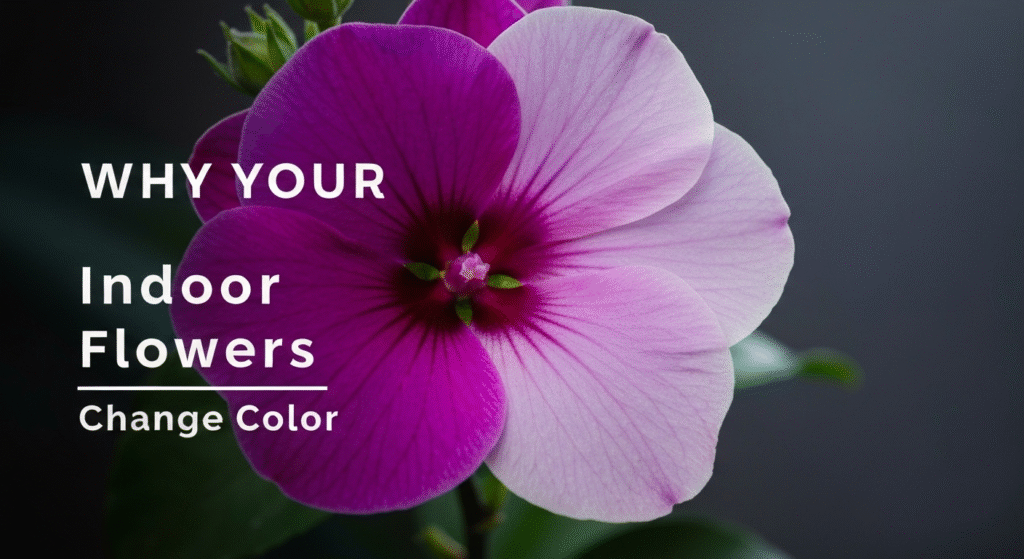

Have you ever watched a vibrant, newly opened flower on your houseplant and felt a little burst of pride, only to see its brilliant color slowly fade or shift over the next few weeks? It’s a common experience. A bright pink orchid might soften to a pale lavender, or a crisp white peace lily spathe might develop a green tint. The first thought for many plant owners is often a worried one: “Did I do something wrong? Is my plant sick?”
It’s a valid concern, but in most cases, the answer is no. This color transformation is not a sign of failure but a fascinating and completely natural part of the flower’s life cycle. The change reveals a hidden story about the plant’s biology, its energy management, and its ultimate purpose. Understanding this process can change your perspective from worry to wonder, allowing you to appreciate the full, beautiful journey of each bloom from start to finish.
My name is Kamil Khan, and I have spent years exploring and writing about the world of indoor flowers. My passion isn’t just about keeping plants alive, but about understanding why they do the things they do. Through countless hours of observation and research, I’ve learned to read the subtle cues they send, like the graceful aging of a flower. This article comes from that experience, aiming to demystify the color-changing process. My goal is to share clear, research-backed explanations that empower you to become a more confident and knowledgeable plant owner.
The Science Behind Flower Color: A Quick Look at Pigments
Before we can understand why colors change, it helps to know what creates them in the first place. Flower color is not just one thing; it’s a cocktail of natural pigments within the plant’s cells. Think of these pigments as the plant’s personal set of paints. The three main groups that color our indoor gardens are anthocyanins, carotenoids, and chlorophyll.
Anthocyanins: The Blues, Purples, and Reds
Anthocyanins are the artists behind the most dramatic colors in the plant world. They create the deep reds of a hibiscus, the vibrant purples of an African violet, and the rich blues of some orchid varieties. These pigments are water-soluble and are stored in the cell’s vacuole, which is like a tiny water balloon. One of the most interesting things about anthocyanins is that their appearance is highly sensitive to pH levels. A slight shift in the cell’s acidity can cause a flower’s color to change from red to purple or even blue. This sensitivity is a key reason why these colors are often the first to change as a flower ages.
Carotenoids: The Yellows, Oranges, and Bright Reds
If anthocyanins are the dramatic artists, carotenoids are the steady, reliable ones. These pigments are responsible for the sunny yellows of a begonia, the cheerful oranges of a clivia, and some warm reds. Unlike anthocyanins, carotenoids are fat-soluble and are locked into the plant’s cell structures. This makes them much more stable. As a result, yellow and orange flowers often hold their color for longer or simply fade to a paler version of their original shade rather than shifting to a completely different hue.
Chlorophyll: The Green in Buds and Fading Blooms
We all know chlorophyll as the pigment that makes leaves green and powers photosynthesis. But it also plays a role in flowers. Many flower buds start green because they are filled with chlorophyll, helping generate energy for the coming bloom. As the flower opens, the plant often breaks down the chlorophyll to reveal the brighter pigments underneath. Curiously, as a flower ages and the plant starts to reabsorb its energy, chlorophyll can sometimes make a comeback, giving old blooms a greenish cast.
| Pigment Type | Common Colors | Key Characteristic | Example in Houseplants |
| Anthocyanins | Reds, Pinks, Purples, Blues | Water-soluble; sensitive to pH changes. | African Violet, Orchids, Christmas Cactus |
| Carotenoids | Yellows, Oranges, Warm Reds | Fat-soluble; very stable. | Kalanchoe, Flowering Begonia |
| Chlorophyll | Green | Powers photosynthesis. | Present in buds and in aging white flowers. |
The Natural Aging Process: How and Why Colors Shift
A flower’s primary job is a simple one: attract a pollinator. It uses its vibrant colors, scent, and shape as a giant billboard to say, “Come here!” Once that mission is accomplished—or after a certain amount of time has passed—the plant’s priorities change. Maintaining a bright, energy-intensive flower is no longer the goal. The plant’s focus shifts to developing seeds or conserving energy for new leaves and future blooms. This is when the aging process, known as senescence, kicks in.
Pigment Degradation and Fading
The first and most common change you’ll see is a simple fade. The plant begins to actively break down the complex pigment molecules it worked so hard to create. This is especially true for the less stable anthocyanins. The chemical bonds that create the vibrant colors are broken, and the color intensity diminishes. A deep fuchsia may soften into a pale rose, or a rich purple may lighten to a soft lilac. This is the plant’s way of recycling valuable resources.
From my own experience with Phalaenopsis orchids, I’ve noticed this process is incredibly gradual. A bloom that was a saturated magenta when it opened might take three to four weeks to slowly fade to a dusty pink before it finally wilts. It’s a slow, graceful transition, not a sudden collapse.
pH Changes Within Flower Cells
As flower cells age, their internal chemistry changes. The pH level inside the cell’s vacuole, where anthocyanins are stored, can drift. This shift directly impacts how the anthocyanin pigment appears to our eyes. It’s why some pink flowers might take on a purplish tint as they get older, or vice versa. The pigment itself hasn’t changed, but its environment has, altering its color expression. This is a subtle but fascinating part of the aging process that shows just how dynamic a living flower is.
Energy Reabsorption and the Return of Green
One of the most surprising changes for many is when a flower starts to turn green. This is most common in long-lasting white or pale-colored flowers, with the Peace Lily being the classic example. The white spathe isn’t a true flower but a modified leaf. As it ages, two things happen: the pigments that made it white (or other colors in different plants) break down, and the plant either creates or reveals the chlorophyll that was there all along. The spathe begins to photosynthesize, turning into a functional leaf to produce a little extra energy for the plant before it finally dies back.
Common Houseplant Examples of Natural Color Change
Seeing these principles in action with familiar plants makes the process much clearer. Each plant has its own unique way of aging, and learning to recognize these patterns is part of the fun of indoor gardening.
The Peace Lily’s Transformation
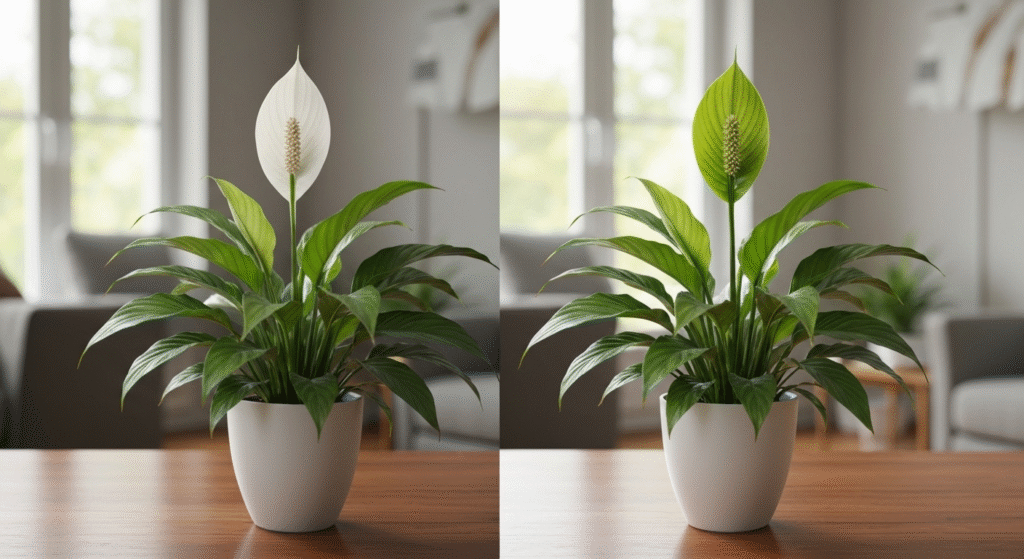
The journey of a Peace Lily (Spathiphyllum) bloom is a perfect lesson in chlorophyll’s role. A new bloom emerges as a pristine white spathe. For weeks, it stands tall and bright. But after its peak, you’ll notice a gradual shift. It starts at the edges or in stripes, a pale green that slowly deepens and spreads until the entire spathe is a leafy green. This isn’t a sign of sickness; it’s the spathe transitioning to an energy-producing role. It will stay green for weeks or even months before it eventually turns yellow or brown and can be trimmed off.
Orchids (Phalaenopsis) and Their Graceful Fade
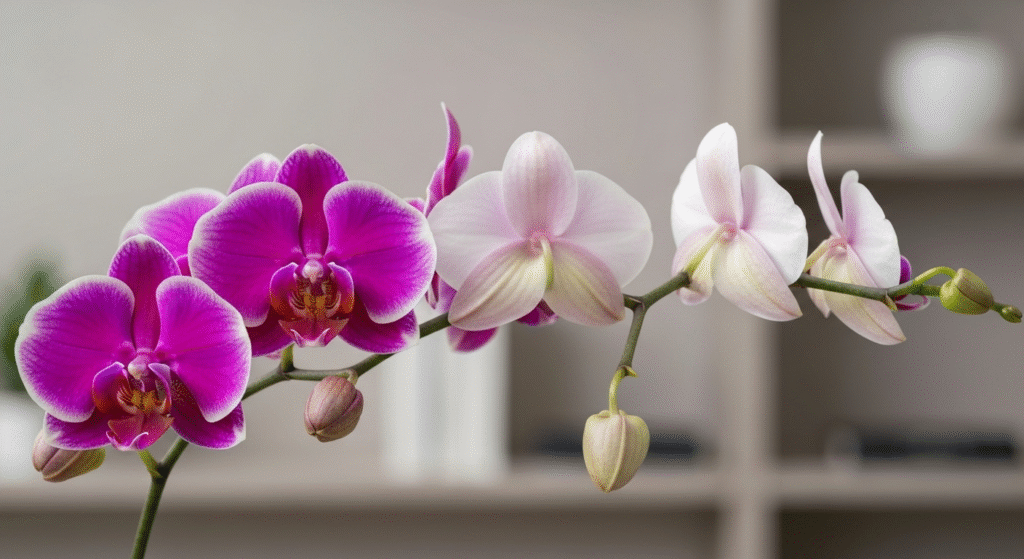
Moth orchids are prized for their incredibly long-lasting blooms. Their aging process is typically a slow, elegant fade. The colors soften, losing the saturation they had at their peak. I have a yellow orchid with red stripes that demonstrates this perfectly. When it first blooms, the yellow is a bright, buttery color. As the weeks go by, it becomes a much softer, creamier shade, and the red stripes look more muted. This slow fade is a clear indicator of natural, healthy aging.
The Shifting Hues of a Christmas Cactus
A Christmas Cactus (Schlumbergera) bloom has a much shorter life, but it still shows noticeable changes. The flowers often appear a slightly different shade when they first open compared to when they are at their peak. As they begin to age over several days, you might see the colors deepen or take on a slightly bluish undertone before the flower wilts and drops. This is due to those sensitive anthocyanin pigments reacting to changes in the aging cells.
| Houseplant | Initial Flower Color | Aged Flower Color | Primary Reason for Change |
| Peace Lily | Bright White | Leafy Green | Pigment breakdown reveals underlying chlorophyll. |
| Phalaenopsis Orchid | Saturated Pink/Purple | Pale, Muted Pink/Lavender | Gradual degradation of anthocyanin pigments. |
| Kalanchoe | Bright Yellow/Orange | Pale Yellow/Cream | Slow breakdown of stable carotenoid pigments. |
| African Violet | Deep Purple | Softer, slightly reddish purple | pH shift in cells affecting anthocyanin expression. |
Distinguishing Natural Aging from Health Problems
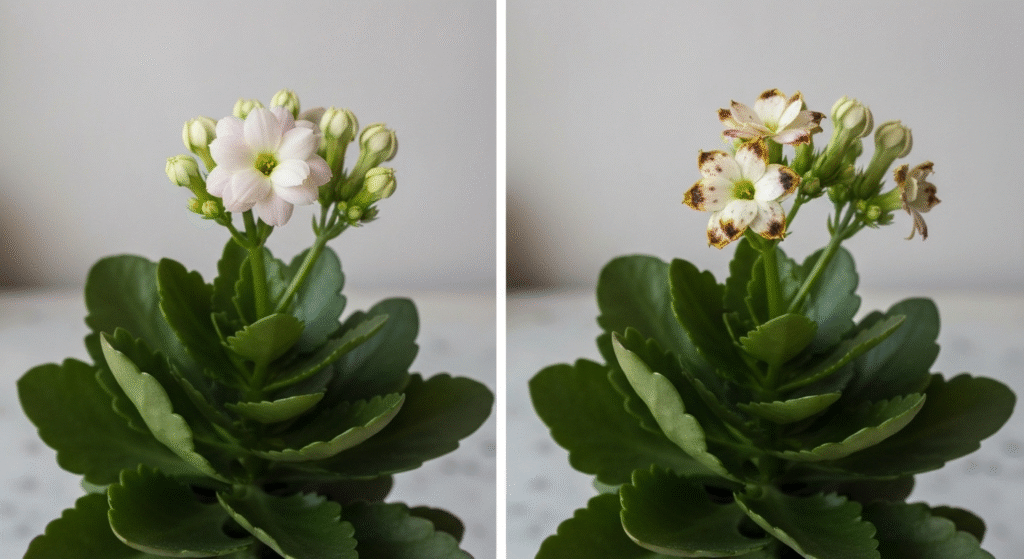
Here’s the most important part: how to tell the difference between a flower gracefully aging and a plant calling for help. The key is to look at the big picture. Natural aging is specific to old flowers, while health problems usually affect the entire plant.
Signs of Trouble: When Color Change Is a Red Flag
Pay attention when you see symptoms that go beyond a simple, gradual fade on the oldest blooms. These are signs that something else is going on.
- Sudden Widespread Changes: If new buds, fresh flowers, and old flowers all wilt, fade, or get spots at the same time, this points to an environmental shock. This could be from overwatering, underwatering, or a sudden temperature change like a cold draft.
- Crispy Brown Edges or Spots: If the petals are developing brown, dry edges or dark, mushy spots, it’s not old age. Browning can be a sign of low humidity or sunburn. Soft, dark spots often point to a fungal issue like botrytis, which is common in cool, damp conditions.
- Yellowing Leaves: A naturally aging flower occurs on an otherwise healthy-looking plant. If the color change on the flowers is accompanied by yellowing leaves (especially newer ones), you likely have a systemic problem. This is a classic sign of root rot from overwatering or a potential nutrient deficiency.
- Visible Pests: Always check the flowers and buds for tiny insects. Pests like aphids and thrips feed on plant tissues and can cause discoloration, spots, and deformed blooms.
The following table provides a side-by-side comparison to help you diagnose what you’re seeing.
| Symptom | Natural Aging (Healthy Plant) | Potential Problem (Stressed Plant) |
| Color Fading | Gradual fade on the oldest flowers after they have been open for a while. | Sudden fading or wilting on both new and old flowers. |
| Browning | The whole flower wilts and turns brown after fading. | Petals develop crispy brown edges or dark, soft spots while still colorful. |
| Green Tint | Occurs slowly on old white or light flowers as they transition. | Not a typical stress symptom; the plant has other, more obvious signs of distress. |
| Affected Area | Only affects the oldest, most mature blooms. | Affects buds, new flowers, and leaves as well. |
| Plant’s Overall Look | The rest of the plant, including leaves and stems, looks green and healthy. | The plant may have yellowing leaves, drooping stems, or visible pests. |
Can You Slow Down Flower Color Change?
While you can’t stop the natural aging process, you can certainly take steps to ensure your flowers look their best for as long as possible. A healthy, stable plant will support its blooms for its maximum lifespan.
- Consistent Care is Key: Avoid extremes. Water your plant thoroughly when the soil is appropriately dry, but don’t let it sit in a soggy saucer. Irregular watering stresses the plant, and the first thing a stressed plant does is sacrifice its flowers.
- Provide the Right Light: Most flowering houseplants prefer bright, indirect light. Too much direct sunlight can scorch delicate petals and bleach the color out prematurely, significantly shortening the life of the bloom.
- Avoid Shocks: Keep your plants away from cold drafts, heating vents, or sudden temperature swings. A stable environment allows the plant to function without stress, which means it will hold onto its flowers longer.
- Deadhead Spent Blooms: Once a flower is clearly faded and wilted, snipping it off is a good practice. This process, called deadheading, stops the plant from wasting energy on trying to produce seeds from the old flower. Instead, it can redirect that energy toward maintaining its other blooms or producing new ones.
Frequently Asked Questions
Why did my bright pink flower turn pale?
This is most likely due to natural pigment degradation. As the flower ages, the plant begins to break down the anthocyanin pigments that create the bright pink color. This causes the color to fade to a paler shade before the flower eventually wilts.
Is it normal for my white peace lily flower to turn green?
Yes, this is perfectly normal and a classic sign of aging for a Peace Lily. The white spathe is a modified leaf. As it gets older, the white pigments break down, and the underlying green chlorophyll becomes visible, allowing the spathe to help with photosynthesis.
How can I make my indoor flowers last longer?
You can’t stop aging, but you can maximize a flower’s lifespan by providing excellent care. This includes consistent watering, providing bright indirect light, keeping the plant in a stable environment away from drafts, and deadheading (removing) blooms as soon as they are spent.
Do all flowers change color when they get old?
Nearly all flowers undergo some change, but it’s much more noticeable in some species than in others. Flowers with unstable anthocyanin pigments (pinks, purples) tend to show more dramatic shifts or fading. Flowers with stable carotenoid pigments (yellows, oranges) may just get slightly paler.
Conclusion
The shifting colors of an aging houseplant flower are not a sign of a problem but a beautiful, final chapter in its life. It’s a visual reminder of the plant’s efficient and resourceful nature, as it gracefully recycles energy to prepare for future growth. By learning to distinguish this natural process from signs of distress, you can trade worry for appreciation. You can enjoy the bright, bold peak of a new bloom and also find beauty in the soft, muted tones of its graceful exit. This understanding deepens your connection to your plants, turning simple observation into a rewarding experience.