
Surprising fact: most house greenery shows stress from overfeeding more often than from underfeeding — and a simple routine fixes that.
This guide defines a clear feeding + watering approach that keeps growth steady in a typical U.S. home. Think of a feeding day tied to watering day: nutrients move with water, so timing matters more than big doses.
We’ll set expectations for a seasonal plan — spring, summer, fall, winter — that follows light and growth, not a one-size-fits-all regime. Use small, regular half-strength meals; roots prefer steady meals to occasional heavy bursts.
Safety first: less is often more indoors. Half-strength mixes help avoid the common “killed with kindness” problem, and regular flushing every 4–6 weeks removes hidden salt buildup from pots.
Key Takeaways
- Pair feeding with watering to keep nutrients moving and growth predictable.
- Use half-strength feeds regularly to reduce stress and root damage.
- Follow a seasonal plan that adapts to light and growth cycles.
- Flush potting mix every 4–6 weeks to prevent salt buildup.
- The guide will include exact frequencies, tweaks by species, and troubleshooting tips.
Why your pots need feeding and why timing matters
A container’s soil is a limited pantry; without replenishment, nutrients run low fast.
Pots don’t get natural inputs like leaf litter or migrating roots. Over weeks and months, watering dissolves and washes out soluble nutrients, even when the foliage looks healthy.
How potting mix ages
Fresh potting mix starts rich. Over time it becomes tired. A houseplants left in the same mix can show pale leaves or slow development despite regular watering.
When plants actually use food
Roots absorb food best during active growth. Feed during the growing season when you see new leaves, longer internodes, or firmer root activity.
“Light, not the calendar alone, drives energy and the need for nutrients.”
- Finite reservoir: potting soil holds limited reserves that decline over time.
- Timing: feeding in a rest period risks salt buildup and root stress.
- Signal-based care: follow visible growth cues rather than fixed dates.
| Condition | Sign | Action |
|---|---|---|
| Fresh mix | Vibrant leaves | Light feeding during growth |
| Tired soil | Paler growth | Repot or refresh media |
| Low light rooms | Slow growth | Delay feeding until energy increases |
In many US homes, active growth ramps up in spring. If your plant shows growth, feed lightly; if it rests, pause for several months.
Core Rules for a Safe, Effective Feeding Routine
A safe feeding routine hinges on three core ideas: what, when, and how much. Follow these rules and you’ll avoid common mistakes like salt buildup or sudden leaf burn.
Understanding N‑P‑K
N‑P‑K is simply the recipe on the bottle. Nitrogen builds leaves. Phosphorus helps roots and flowers. Potassium strengthens the whole plant and improves stress tolerance.
| Nutrient | Role | When to emphasize |
|---|---|---|
| Nitrogen | Leaf growth and green color | Active leafing and spring growth |
| Phosphorus | Root and bloom support | Repotting, bloom set, root development |
| Potassium | Overall vigour and stress resistance | Heat, drought, or seasonal shifts |
Why light controls appetite
Light level sets how fast a specimen uses water and nutrients. A specimen by a bright window uses far more than one in a dim hallway.
Only increase feeding when light and visible growth rise. Otherwise keep doses light to prevent salt stress.
Why half strength is the safe default
Many labels are written for outdoor plants in full sun and heavy watering. For home care, use half strength as the starting point.
Practical caution: never mix stronger than the label, and when in doubt go weaker. Tie feeding to your regular watering day so it becomes an easy habit.
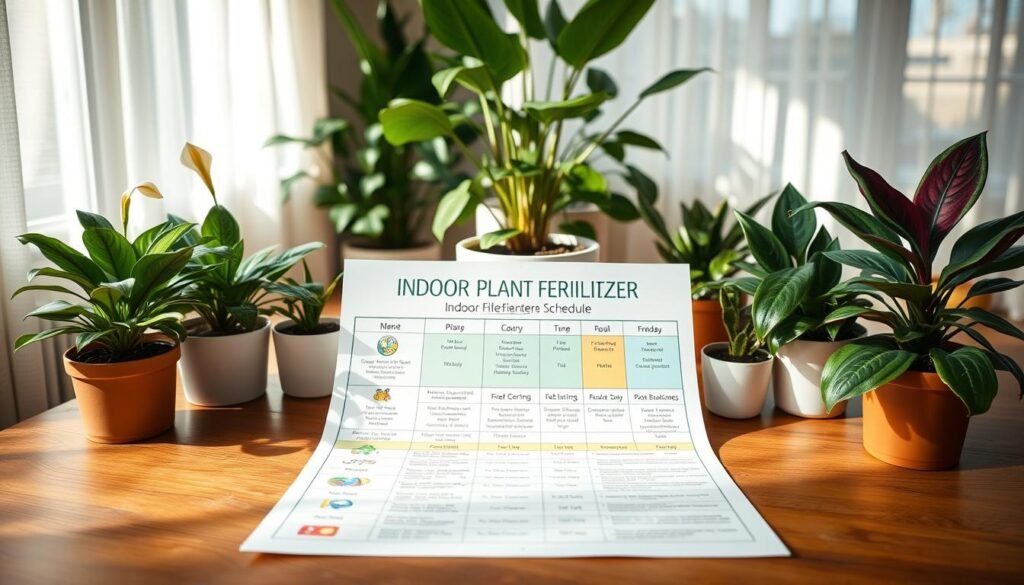
Indoor Plant Fertilizer Schedule by Season
Seasonal care is about watching growth signs and adjusting feeds, not rigid dates. Use light and new leaves as your guide and treat the plan below as a flexible calendar you can copy.
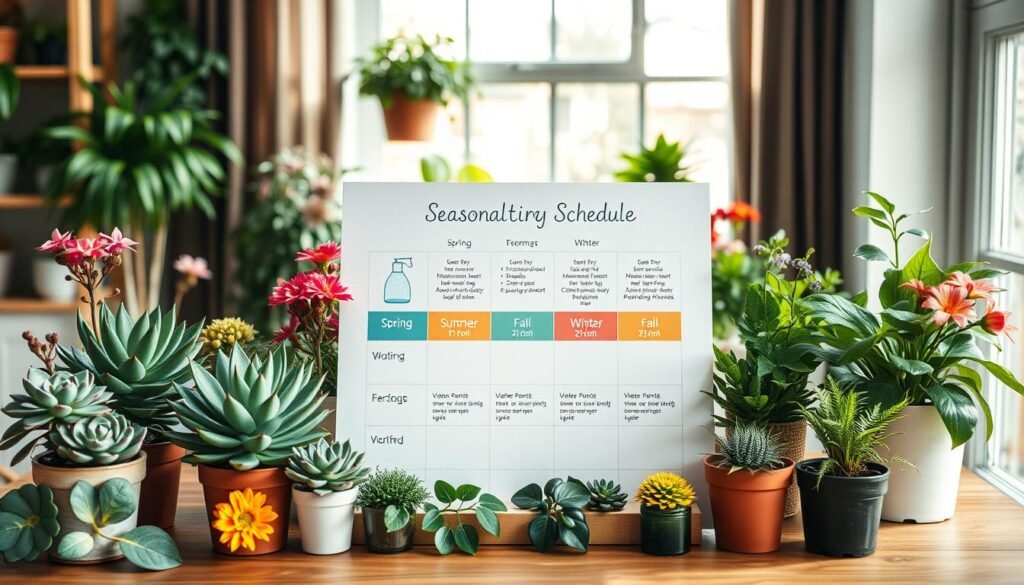
Spring
Frequency: weekly at half strength (or every 2–4 weeks for low-light rooms).
Action: restart feeding when new growth appears, often around March in many U.S. homes. Start gently and watch leaf response.
Summer
Frequency: weekly half-strength; heavy feeders may take a small midweek half feed.
Action: increase support where light and growth are high, but keep doses conservative and flush every 4–6 weeks.
Fall
Frequency: taper to every other week (or every 4–6 weeks in dimmer rooms).
Action: slow the cadence as daylight shortens to reduce salt risk while supporting lingering growth.
Winter
Frequency: pause for 4–8 weeks when growth stops; under grow lights feed monthly at half strength.
Action: only feed if you see active growth—otherwise rest to avoid buildup.
Repotting
Wait 1–2 weeks after repotting before the first feed. Fresh mix often contains nutrients and roots need time to settle.
“Tie feeding to growth and light, not to the calendar alone.”
| Season | Frequency (typical) | Key action | Notes |
|---|---|---|---|
| Spring | Weekly (half strength) or 2–4 weeks | Restart at first new leaves | Begin gently; monitor color |
| Summer | Weekly; heavy feeders may need midweek boost | Support rapid growth | Flush every 4–6 weeks |
| Fall | Every other week or 4–6 weeks | Taper feeding as light drops | Reduce dose to avoid salts |
| Winter | Pause 4–8 weeks or monthly under lights | Only feed if growth continues | Rest if growth stops |
How Much Fertilizer to Use Without Burning Roots
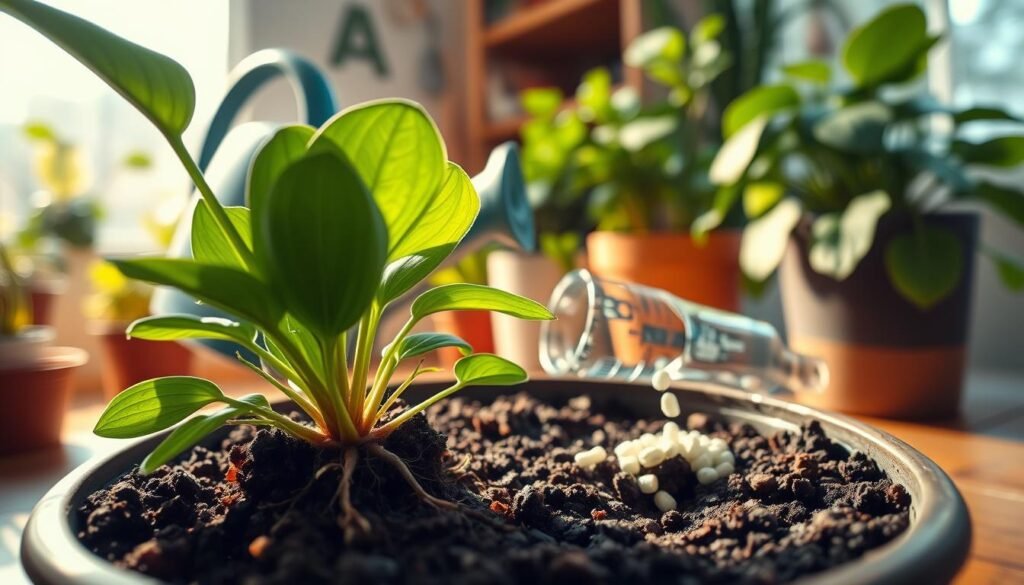
Mix at half the label rate. For many liquid products that list 2 mL per liter, use 1 mL per liter instead. For U.S. measures, halve teaspoons per gallon—example: 1 tsp per gallon becomes 1/2 tsp per gallon.
Why dosing on watering day helps
Apply feed when you water. Moist soil spreads nutrients evenly and keeps concentrated salts away from delicate tips. Never pour concentrate onto bone-dry mix—moisten first to avoid instant burn.
Watch list: early burn signs
- Brown tips and crispy edges on new or older leaves.
- Sudden droop after feeding or stalled new growth.
- Dark, scorched patches near pot rims or surface.
Quick recovery steps if you overfed
- Flush the pot thoroughly with plain water until runoff is clear.
- Let the pot drain completely and skip the next feed.
- After one normal watering cycle, resume at weaker strength and check response.
| Action | US measure | Metric |
|---|---|---|
| Typical half-strength mix | 1/2 tsp per gallon | 1 mL per liter |
| When to apply | On regular water day | After moistening dry mix |
| Recovery | Flush with plain water | Skip next feed; resume weaker |
Practical tip: measure into a small cup, stir well, and label cans with the exact amounts so you repeat the same safe amounts each time.
Watering, Flushing, and Leaching to Prevent Salt Buildup
Salt buildup sneaks into soil and can undo months of careful feeding. Soluble salts come from concentrated feeds and minerals in hard water. Over time they collect near the surface and at pot rims, where they harm roots and block nutrient uptake.
How and when to flush
Flush every 4–6 weeks with plain water to leach salts. Run copious fresh water through the pot until runoff flows freely and looks clear. Let the pot drain fully and then empty the saucer immediately so roots do not sit in runoff.
Signs of salt buildup
Look for a white crust on the soil surface or around pot rims. That crust is a visible cue that soluble salts have concentrated and need removal.
Drainage basics and special cases
Make sure pots have drainage holes. Never let runoff pool under pots; reabsorption keeps salts near roots.
Self-watering systems trap salts in reservoirs. During a flush, empty and rinse those reservoirs and then refill. In hard-water areas use filtered, distilled, or rain water occasionally to lower mineral load.
| Problem | Sign | Action | Result |
|---|---|---|---|
| Soluble salts | White crust on soil or rim | Flush with plain water until clear runoff | Restored nutrient uptake |
| Pooled runoff | Soggy mix; musty smell | Empty saucer immediately; repot if needed | Healthier roots, less rot risk |
| Self-watering reservoir | Mineral film in reservoir | Empty and refill during flush; periodic full rinses | Lower salt accumulation |
| Hard tap water | Faster mineral buildup | Use filtered or rain water for flushing | Slower salt accumulation |
“Regular leaching keeps roots happy and allows nutrients to flow.”
Match Fertilizers and Frequency to Your Plant Type
Different growth types—leafy, succulent, flowering, and orchids—need distinct mixes and cadences. Use the base half‑strength plan for most houseplants, then tweak frequency and formula to suit growth speed and light exposure.
Leafy growers (pothos, philodendron, monstera)
Use a balanced ratio such as 3‑1‑2 or 2‑1‑2 at half strength. This supports lush leaves without forcing weak, spindly growth in average light.
Succulents and cacti
Feed lightly and less often: half strength every 2–4 weeks in late spring and summer only. These slow growers store water and do best with a gentle product that won’t build salts.
Flowering houseplants
For bloom support, choose formulas with slightly higher phosphorus and potassium. Keep mixes weak; increase frequency only if the plant shows active bud set and enough light.
Orchids in bark
Use the “weakly, weekly” rule. Apply a dilute mix and water until it runs through; bark holds little nutrition, so good runoff matters more than big doses.
| Type | Ratio / Note | Frequency |
|---|---|---|
| Leafy houseplants | 3-1-2 or 2-1-2 (half strength) | Every watering during growth |
| Succulents & cacti | Low N, light mix | Every 2–4 weeks in late spring/summer |
| Flowering houseplants | Extra phosphorus for buds | Every other watering when blooming |
| Orchids (bark) | Very dilute, soluble | Weakly, weekly with full runoff |
Practical tip: adjust frequency more than strength. Keep solutions gentle, watch leaves and growth rate, and pick a trusted product that fits the species.
Troubleshooting: Hungry vs. Overfed Plants, Plus Micronutrients
Small visual cues separate a hungry specimen from one suffering salt stress. Use a short checklist and simple tests to decide whether to feed, flush, or wait.
Quick diagnostic checklist
- Feed: slow growth, smaller new leaves, and an even paling that improves after a diluted feed.
- Flush/stop: dark leaves with poor growth, curling, burned margins, or a sharp smell from wet soil.
- Wait: signs of thirst (wilting that revives after water) rather than lasting pale growth.
Micronutrients that matter
Iron shows as yellow new leaves with green veins. Magnesium causes striping or dull older foliage.
Complete mixes include these micronutrients so minor deficiencies usually respond to a correct, gentle feed.
Water quality and pH basics
Aim for water near pH 6–7 so nutrients dissolve and move to the roots. Hard tap water can raise pH and add salts that mimic overfeeding.
Test water with simple strips and occasionally flush pots to limit buildup.
Simple habits to keep results consistent
- Set phone reminders for flushes and feeding times.
- Keep one measuring spoon and label mixes with strength and date.
- Write short notes on how long it took for new growth to improve so adjustments are evidence‑based.
| Problem | Sign | Action |
|---|---|---|
| Hungry | Slow growth; smaller new leaves | Apply a half‑strength feed and monitor |
| Overfed | Burned margins; sharp soil smell | Flush thoroughly; pause feeding |
| Micronutrient lack | Iron or magnesium symptoms | Use a complete mix or targeted supplement |
Conclusion
Keep care simple: feed on your chosen watering day with half‑strength mixes during active growth, taper in fall, and pause or feed monthly under grow lights in winter. This gentle approach protects roots and supports steady recovery over weeks and months.
Two anchor habits: feed at half strength on watering day, and flush pots with plain water every 4–6 weeks to prevent salt buildup. These habits outpace one‑off intensity for healthier plants.
Watch light and new growth, not the calendar, to adjust the schedule. If you see stress, flush first and restart gently—it’s easier to fix underfeeding than root burn.
Practical next step: pick one weekday for feeds, label the can with the correct measure, and keep a short log so care improves over time.