string of pearls propagation

String of Pearls Propagation: Fix Bald Spots Fast

Surprising fact: many home gardeners report that healthy cuttings root within two to three weeks, filling sparse pots far faster than waiting for new shoots.

The beaded trailing plant Curio rowleyanus, also called string pearls, shows bald spots as thin tops, leggy stems, or bare soil patches. These gaps make an older specimen look tired.

String of pearls propagation is the quickest, most reliable fix. By re-rooting healthy stems onto the soil surface you can redirect growth and restore that classic pearls-on-a-string look.

This short guide previews easy methods: soil-on-surface, inserting nodes into mix, water rooting, single-leaf attempts, and division. Each method suits different skill levels and timeframes.

Good news: with a clean cutting and simple watering care, beginners can expect rooted cuttings in weeks and visible new growth soon after.

Table of Contents

Key Takeaways

  • Identify bald spots: thin tops, leggy stems, bare soil.
  • Re-root healthy stems on the soil surface to fill gaps quickly.
  • Methods covered: surface, node insert, water, leaf, and division.
  • Rooting usually occurs in a few weeks; growth follows soon after.
  • The article includes tools, soil, light, timeline, and aftercare steps.

Why propagate string of pearls to fix bald spots and boost growth

Older trailing pots often look sparse because the top crown gets shaded and stems rush outward. The plant shifts energy to long runners, leaving the center thin and bare. That makes an otherwise healthy specimen look tired.

Propagate string to replant healthy nodes where you want new shoots. By laying or planting cut segments at the soil line you force roots and branches to form closer to the pot rim. This fills bald spots without buying another pearls plant.
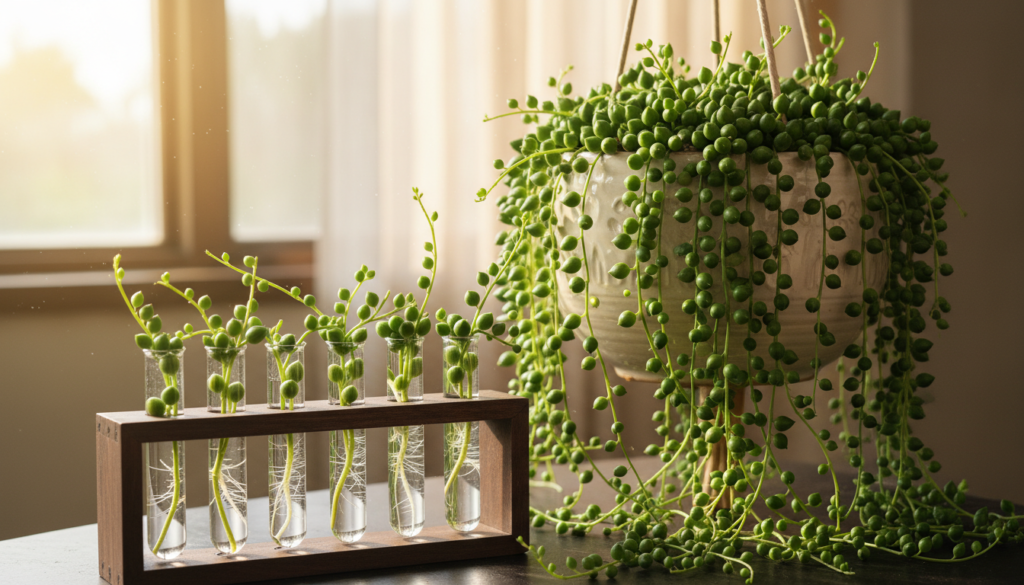
A lush arrangement of propagated string of pearls plants, showcasing their unique bead-like leaves in vibrant green hues. In the foreground, a small propagation station holds several cuttings in clear water, roots just beginning to emerge, symbolizing new growth and rejuvenation. The middle ground features a healthy, cascading plant draped elegantly down a hanging planter, emphasizing the lushness of thriving leaves. The background is softly blurred, hinting at a sunlit window with gentle rays illuminating the scene, creating a warm and inviting atmosphere. The composition highlights a sense of calm and vitality, perfect for gardening enthusiasts seeking to restore and enhance their plants' health. Capture the image from a slightly elevated angle, allowing for a clear view of both the cuttings and the flourishing plant.

Prune and reuse: trim leggy vines and press those cuttings onto the surface or into fresh mix. The trimmed plant branches up and the cuttings become new trails on top, giving a fuller look fast.

  • Why older pots get sparse: vines trail, the crown is shaded, and energy shifts to long stems.
  • Best U.S. seasons: aim for spring and summer — rooting is quicker and growth is stronger.
  • Off-season note: you can still propagate in fall and winter indoors, but expect slower rooting and less vigorous shoots; plan extra time.

Overall, propagating string pearls refreshes growth, encourages branching, and controls size. What matters most next: correct time, warm temps, bright indirect light, and drainage-focused potting choices to maximize success.

Prep for success with soil, light, and the right container

Good setup equals faster recovery. Start by choosing a gritty, well-draining soil that keeps oxygen near the roots and lets excess water leave quickly.

Two soil mix options: use a ready-made cactus/succulent soil as-is if you are experienced. If your home is humid or you overwater, lighten the mix with extra perlite.

DIY recipe: 2 parts potting mix + 2 parts coarse sand + 1 part perlite. This blend helps drain fast and keeps delicate roots healthy.
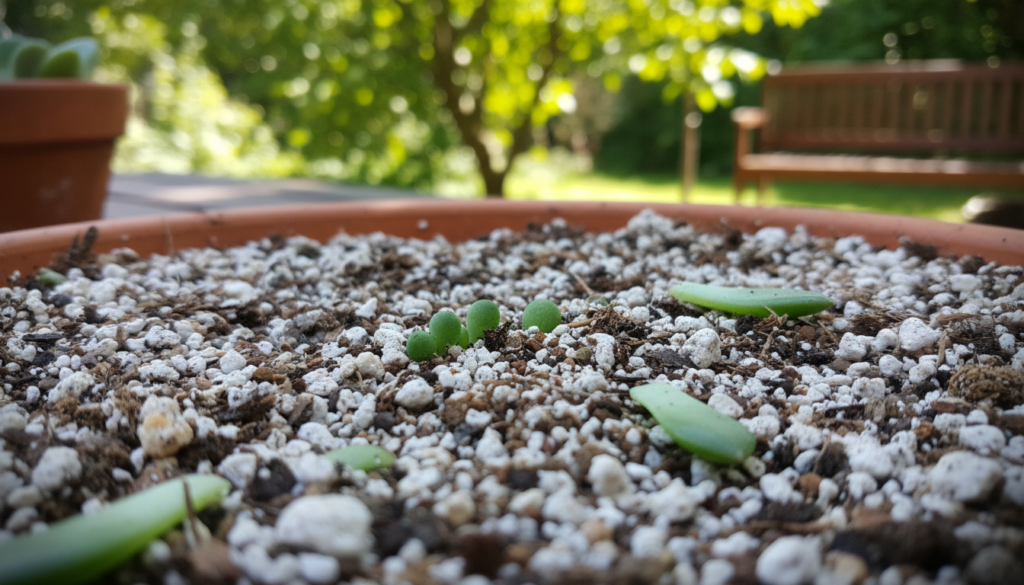
A close-up of gritty soil mix designed for succulent propagation, featuring a blend of coarse sand, perlite, and organic matter. The foreground showcases the texture of the soil, with small pebbles and organic fibers clearly visible. In the middle ground, there are a few scattered succulent leaves, particularly String of Pearls, hinting at propagation efforts. The background captures a softly blurred garden space, filled with gentle natural light filtering through leaves, creating a warm and inviting atmosphere. The image should have a shallow depth of field to emphasize the soil blend, with a slight vignette around the edges, enhancing focus on the gritty texture, conveying a sense of preparation and success in gardening.

Drainage basics: always use a pot or container with drainage holes. Never let the container sit in leftover water, and add a coarse layer (expanded clay) if the mix compacts.

Shallow, wide containers work well because stems can touch the soil and root where they land. Bright, indirect light and warm temps (around 70–75°F) speed rooting.

“Let cut ends callus for 1–2 days before planting to reduce rot risk.”

  • Tools: clean scissors or pruners, spray bottle, paper clips to pin stems, small jar for water rooting, and optional rooting hormone.
  • Prep checklist: sanitize tools, prep the soil mix and container, and decide where the pot will live before taking cuttings.

String of pearls propagation methods that work

Use targeted cuttings and easy steps to refill bare spots without buying new plants.

Pick healthy stems: choose firm, plump leaves on green, unblemished stems. Avoid mushy sections that rot in soil or water.

Cutting at the leaf node

Take 4–6 inch cuttings and snip just below a leaf node. Nodes are where new roots form, so that exact cut matters.

Soil surface method for bald spots

Lay stems across the top of the soil so nodes touch the surface. Pin them gently with paper clips to keep contact. This fills gaps fast with minimal transplant shock.

Planting nodes under the mix

Strip 2–3 inches of leaves from the lower section. Let the cut end callus for 1–2 days, dip in rooting hormone if you like, then plant so several nodes sit under soil for stronger anchoring.

Water rooting and transplant timing

Submerge only nodes; keep leaves above the water line. Change cloudy water. Move to soil once roots reach about 1 inch to reduce shock.

Single-leaf and division methods

Single-leaf attempts are slower and less reliable because one leaf stores less energy than a stem cutting. For dense pots, split the root ball and repot sections to create multiple fuller plants.
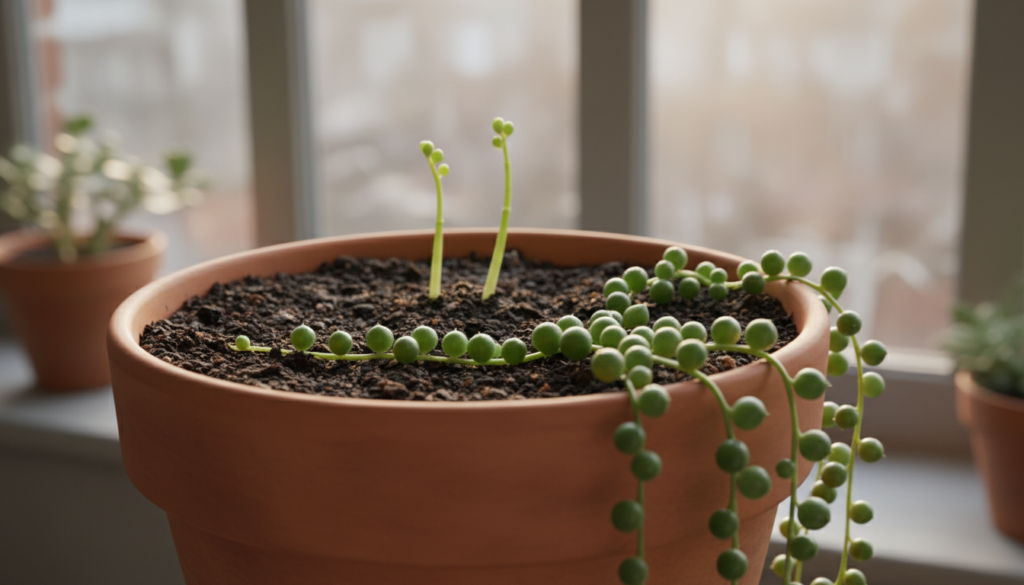
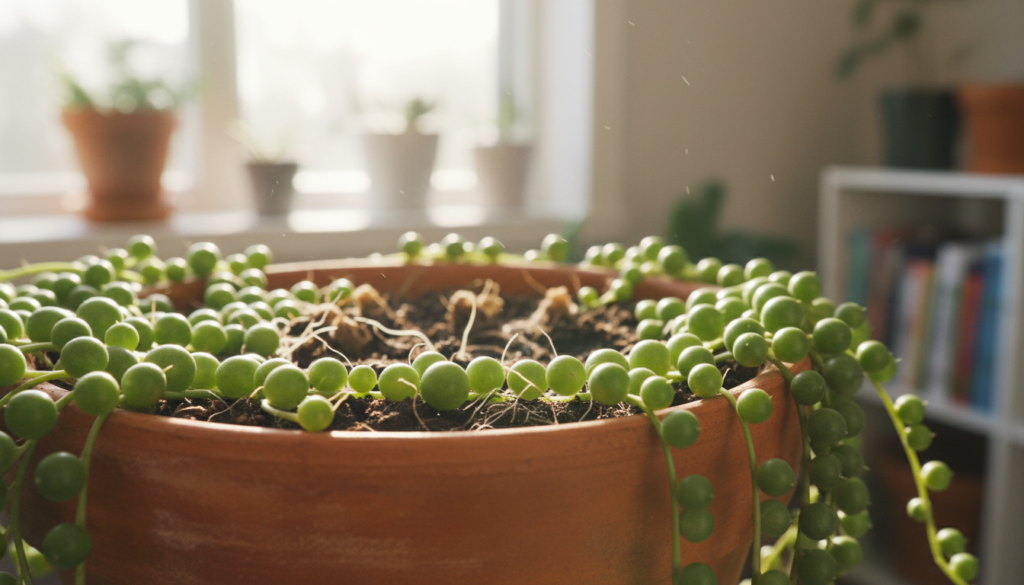
A serene indoor gardening setup featuring a String of Pearls succulent plant prominently displayed in the foreground. The pot is filled with rich, dark soil, showing a textured surface scattered with glistening pearls of the plant. In the middle ground, a few healthy, cascading strands of the String of Pearls drape elegantly over the edges of the pot, while a couple of new shoots emerge, indicating successful propagation methods. The background includes a softly blurred window with natural sunlight streaming in, creating a warm and inviting atmosphere. A shallow depth of field emphasizes the plant, while the overall mood is calm and nurturing, perfect for a plant care article.

Method Best use Time to root Transplant cue
Surface soil Fill bald spots 3–4 weeks Visible tiny roots at nodes
Inserted nodes Stronger anchoring 3–4 weeks New shoots and root feel
Water Quick root view 2–4 weeks Roots ~1 inch long
Leaf Experimenting only 4+ weeks New node or tiny roots

Tip: place several cuttings around the pot top so new trails balance and the finished plant looks fuller.

For more on reversing leggy growth and how to place new cuttings, see how to fix leggy stems.

Rooting timeline and what to expect week by week

Weeks of slow change are normal; this schedule tells you what to watch for each week.

Callusing (day 1–2): let cut ends dry and form a thin seal. This small step lowers rot risk when you place cuttings in soil or water.

Week 1–2

Callus finishes and the plant shifts energy to healing. Keep cuttings in bright, indirect light and warm temps. Avoid heavy watering.

Week 2–4

Roots begin to form. Look for fine white threads at nodes. Many cuttings root in about 3–4 weeks under steady conditions.

After week 4 (growth and potting)

New growth usually appears after roots show. For water-rooted pieces, transplant when roots reach about 1 inch. In soil, wait until gentle tug shows resistance — that means a healthy root system.

Timeframe Sign to watch Action
Day 1–2 Callus forms Place cuttings in a dry, bright spot
Week 2–4 Fine white roots Keep light steady; water sparingly
Week 4+ New shoots Pot into small container; encourage steady growth

Tip: if you reach week 4 with no roots, reassess light, temperature, and moisture before taking more cuttings.

Aftercare to keep cuttings alive and prevent rot

After rooting, your cuttings need a gentle shift in routine to avoid rot and encourage steady growth. Follow a simple plan for watering, light, and placement so new roots establish without stress.
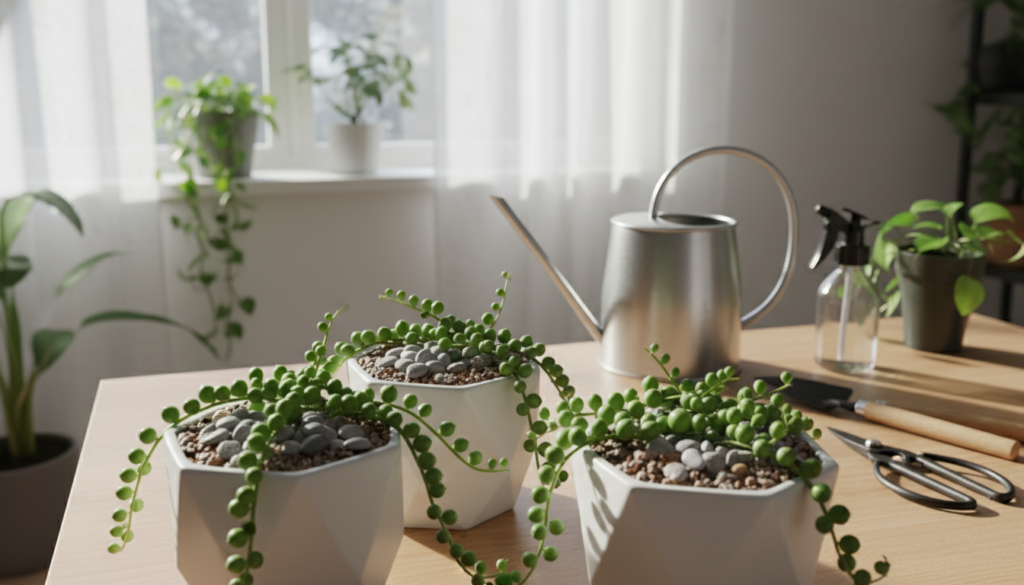
A bright, indoor gardening scene showcasing a string of pearls plant (Senecio rowleyanus) in the foreground. Focus on several vibrant, healthy cuttings of string of pearls in small, modern pots with well-draining soil, accentuated by pebbles on top. The middle ground features a watering can and tools neatly arranged, emphasizing aftercare essentials. In the background, soft natural light filters through a nearby window, casting gentle shadows that create a serene, nurturing atmosphere. The colors should evoke freshness, with greens and earthy tones predominating. Capture this image from a slight angle to highlight the lushness of the cuttings, providing depth and dimension, while maintaining a professional, clean aesthetic.

Watering strategy while rooting vs once roots are established

While cuttings form roots, keep the top soil lightly moist. Mist or dab water when the surface starts to dry — not soggy, just slightly damp.

Once roots are established, change to the classic succulents pattern: let the soil dry completely between waterings. In many U.S. homes that means watering only once or twice a month.

Signs of underwatering and overwatering

Use the pearls and leaves to diagnose problems:

  • Shriveled pearls mean underwatering; increase water slightly.
  • Mushy, translucent pearls or soft stems point to overwatering and early rot; reduce water and improve drainage.

Where to place your pot for steady growth

Indoors: pick a bright spot with indirect light near a window. Outdoors: start in partial sun and acclimate slowly to avoid leaf burn.

Seasonal note: during spring summer growth you may water a bit more often, but always check dry soil and firm pearls first.

Rot prevention: prioritize drainage holes, fast-draining soil, and avoid letting the pot sit in a saucer of water.

Safety note: toxicity risks for pets and kids

Keep trailing plants out of reach. The species is toxic if ingested and can cause vomiting or diarrhea. Secure containers and quickly remove dropped pearls to keep curious pets and children safe.

Success looks like new pearls forming at nodes, firmer strings, and a fuller top as multiple rooted cuttings trail together and fill bald spots.

Conclusion

Small cuttings placed where you want new growth will remake a tired trailing pot. Take healthy stems, target the nodes, and use the soil-surface method to fill bald spots fastest.

Repeat when you trim: you can propagate string pearls each time you prune. Over time one leggy plant becomes a dense, cascading pot.

Choose your way: soil for ease and less shock, water for visible roots. Callus the ends first, expect roots in about three to four weeks, then watch new shoots appear.

Keep trimming to maintain shape and let the soil dry between deep waterings to avoid rot. Store pots out of reach—these plants are toxic to pets and kids.

Next action: pick one method today, set the pot in bright indirect light, and check progress weekly so you can adjust watering early.

FAQ

What’s the fastest way to fix bald spots on a string of pearls plant?

The quickest fix is taking healthy stem cuttings with visible nodes and either laying them on top of gritty, well-draining potting mix or tucking the nodes just under the surface. Keep the cuttings bright but out of direct midday sun, mist lightly if the air is very dry, and roots should form in a few weeks. Use a shallow container with good drainage to encourage quick establishment and reduce rot risk.

Why should I propagate pearls to improve an older, leggy plant?

Propagating lets you create new, fuller strands from the plant’s healthiest growth. By rooting shorter, fresher cuttings and replanting them near bald areas or in a new pot, you replace sparse upper growth with dense, cascading stems. This renews the appearance without stressing the original plant.

When is the best time of year in the United States to root cuttings for faster results?

Spring and early summer are ideal. Warmer temperatures and longer daylight speed root development and new leaf growth. Aim to take and root cuttings once night temps stay consistently above about 55°F for best success.

What soil mix should I use for successful rooting and long-term growth?

Use a gritty, well-draining mix made from cactus or succulent potting soil blended with pumice, perlite, or coarse sand. This prevents waterlogging and reduces root rot. Avoid heavy garden soils and mixes that retain too much moisture.

How important is drainage, and how do I ensure my pot drains well?

Drainage is crucial. Choose pots with one or more drainage holes and add a layer of coarse material like broken terracotta or pebbles if needed. A breathable terra cotta pot also helps wick excess moisture away from roots.

What light and temperature conditions help cuttings root fastest?

Bright, indirect light with warm temperatures around 65–75°F speeds rooting. Avoid direct hot sun that can scorch cuttings. A bright east- or west-facing window with filtered light is ideal.

What tools and supplies should I gather before taking cuttings?

Have clean, sharp scissors or pruning shears, a clean container, your gritty potting mix, labels, and rubbing alcohol to sterilize tools. You may also want rooting hormone powder to boost success, though it’s not required.

How do I choose the best stems and where should I cut?

Select healthy, plump stems with several leaves and visible nodes. Cut just below a node using a sterile blade. Aim for stems 3–6 inches long so you have multiple nodes to root from.

What’s the soil-surface method for filling bald spots?

Lay cuttings gently over the pot surface so nodes contact the soil. Pin them down with hairpins or small U-shaped wires to keep nodes in place. This encourages roots to form where the stem touches the mix and fills bald areas naturally.

How do I plant cuttings with nodes under the mix?

Insert the cut end and one or more nodes just under the surface of the gritty mix, keeping the rest of the stem above. Firm the mix around the node to maintain contact but don’t compact it too tightly to allow airflow.

Can I root pearls cuttings in water, and when should I transplant them?

Yes, water rooting works. Place cuttings in a shallow container with only the nodes submerged and change the water every few days. Transplant once white roots reach about 1 inch long—move to a gritty potting mix and reduce watering while roots adapt.

Does single-leaf propagation work for this plant?

Single-leaf propagation is possible but much slower and less reliable. Leaves can produce roots and tiny new growth from the node, but success rates and speed lag behind stem cuttings. Use single-leaf only when stems aren’t available.

When should I use division instead of cuttings?

Division works well for mature, crowded pots. Gently separate root clumps and replant sections into fresh, well-draining mix. Division gives you larger, established starts that recover faster than individual cuttings.

How long do cuttings need to callus before planting?

Let cut ends dry and callus for 1–3 days depending on humidity and temperature. Callusing reduces the chance of rot when planted in moist mix. Thick, plump stems may need less time than very juicy ones.

When will I see roots form and what does successful rooting look like?

Roots commonly appear in 2–4 weeks with good conditions. You’ll see tiny white root tips at nodes or roots visible in water. After roots develop, new leaves and thicker stems indicate healthy establishment.

How long should I wait before potting up or encouraging new growth?

Wait until roots are 1–2 inches long and new growth appears before handling or repotting. This usually takes 3–6 weeks. Once established, gradually increase water and light to encourage fuller growth.

What watering approach keeps cuttings alive without causing rot?

Water sparingly while cuttings are rooting—keep the mix barely moist but not wet. After roots form, water more thoroughly but allow the top inch or two of mix to dry between waterings. Always use a well-draining mix.

What are signs of underwatering and overwatering in the leaves?

Underwatered leaves shrivel, wrinkle, and look dull. Overwatered leaves become soft, translucent, and may fall off; browning at the base often signals rot. Check soil moisture and adjust watering quickly.

Where should I place my pots indoors or outdoors for steady growth?

Indoors, place pots in bright, indirect light near an east- or west-facing window. Outdoors, choose a sheltered spot with morning sun and afternoon shade. Avoid cold drafts and intense midday sun.

Are there safety risks around pets and children?

Yes. This plant is moderately toxic if ingested and can irritate skin. Keep pots out of reach of pets and children, and wash hands after handling cuttings or soil. If ingestion occurs, contact your veterinarian or local poison control.

Comments

No comments yet. Why don’t you start the discussion?

Leave a Reply

Your email address will not be published. Required fields are marked *